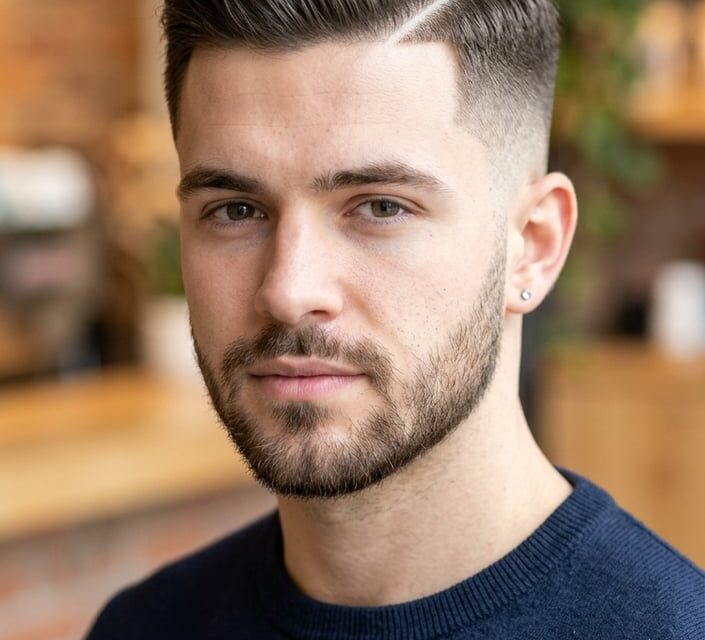
You want a go-to list of haircuts that keep you looking sharp no matter the season or trend cycle. This article gives you 17 proven styles that work across hair types, face shapes, and lifestyles so you can pick a dependable look with confidence.
Flip through practical options—from low-maintenance classics to modern takes on timeless cuts—and find the style that fits your routine and personality. PRO TIP
1) Classic Crew Cut

The crew cut keeps things simple and functional while still looking sharp. You get short hair on top with a gentle graduation on the sides and back, which makes it low-maintenance and easy to style.
This cut works well for most hair types and face shapes, especially if you want a clean, professional look. It also grows out gracefully, so you won’t end up with awkward lengths between visits to the barber.
Ask your barber how short you want the top and how tight the taper should be; small adjustments change the overall vibe from conservative to slightly modern. Use a light matte paste or nothing at all for a natural finish that requires only a quick morning touch-up.
PRO TIP
If your hair is fine, keep a bit more length on top to add perceived thickness. For thick or curly hair, a slightly shorter top with a controlled taper on the sides reduces bulk and makes styling easier.
2) Ivy League Cut

The Ivy League cut gives you a refined, versatile look built on a short crew cut with enough length on top to part and sweep. It reads polished without feeling stiff, so you can wear it to work or a weekend outing with minimal fuss.
You can keep the sides tapered or add a low fade for a modern touch. The top stays long enough to style a side part, a gentle pompadour, or a textured sweep depending on your mood and hair type.
This cut suits most face shapes because the length on top balances proportions while the shorter sides clean up the silhouette. If you have straight or slightly wavy hair, the Ivy League is especially easy to shape and maintain.
Maintenance is simple: trims every 4–6 weeks and a small amount of product are usually enough. Use a light pomade, cream, or styling paste to control shine and hold without weighing your hair down.
PRO TIP
Ask your barber for a slightly longer top if you want more styling options, or request a tighter taper for a sharper, more contemporary finish.
3) Short Textured Crop

The short textured crop gives you a tidy silhouette with just enough edge to keep things modern. It keeps the sides short and controlled while the top stays choppy and layered for natural movement.
This cut works on straight, wavy, or slightly curly hair and makes thick hair easier to manage. If your hair is fine, the point-cut layers create the illusion of density without extra weight.
Styling takes less than five minutes: use a small amount of matte paste or clay, rake it through with your fingers, and define a few pieces at the front. You can wear it neat for work or tousled for a relaxed weekend look.
Ask your barber for point cutting or a light razor finish on top to enhance texture and avoid blunt lines. Specify how much length you want left in front—shorter bangs read sharper, while a slightly longer fringe softens the face.
PRO TIP
For low upkeep, get a trim every 4–6 weeks to keep the sides tidy and the top proportional. On humid days, mix a little sea salt spray with matte product for extra grip and lasting texture.
4) Disconnected Undercut
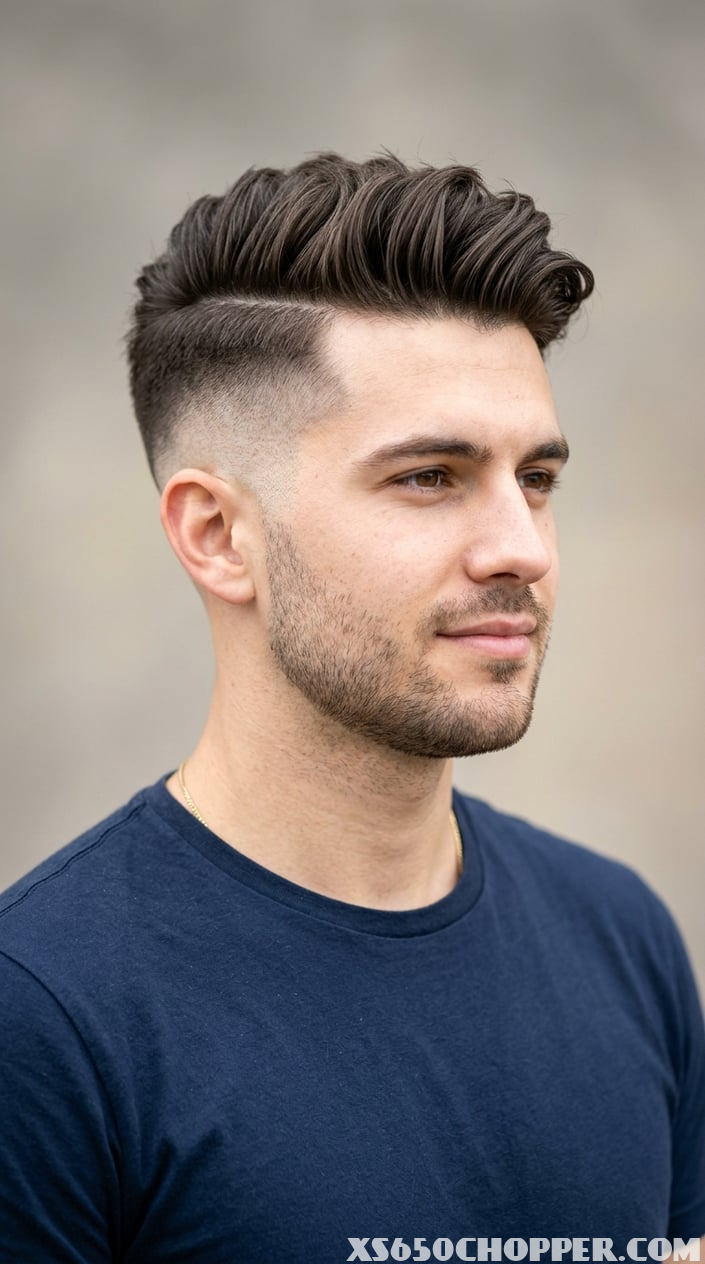
The disconnected undercut pairs a very short or shaved side with a longer top, creating a clear, intentional break in length. You get a bold, modern silhouette that still feels versatile enough for many looks.
This cut works on most hair types because you control the top’s texture and length. Wear it slicked back for a polished look, textured for a casual vibe, or long and swept for something more dramatic.
Maintenance depends on how sharp you want the contrast. Expect more frequent barber visits for the sides if you want that crisp disconnect, while the top only needs styling and occasional trims.
PRO TIP
Ask your barber to show both the side profile and top view before they finish. Small adjustments to the length on top or the height of the disconnect can change how formal or relaxed the cut reads on you.
5) High Fade with Side Part

The high fade with side part pairs a sharp, high-contrast fade on the sides with a clear, defined part on top. You get a clean, polished look that works for both casual and formal settings.
This style creates strong lines that frame the face and draw attention to the hair on top. You can keep the top short and neat or leave it longer for more texture and movement.
Ask your barber for a crisp part—either natural or shaved—so the transition between the top and the fade reads clearly. A high fade starts well above the temples, giving the style its signature height and contrast.
Styling takes just a few minutes: use a light pomade or cream to keep the part visible without making the hair look stiff. Comb or brush along the part for a tidy finish, or rake with fingers for a softer effect.
PRO TIP
If your hairline or part isn’t naturally strong, request a slightly tapered part or a fine hard part line from your barber. That small detail makes the haircut read sharper and lasts longer between visits.
6) Low Taper Fade

The low taper fade blends the sides and back close to the skin while leaving more length on top. You get a clean, understated look that works for both casual and professional settings.
This cut starts just above the ear and graduates down toward the neckline, creating subtle contrast rather than a dramatic drop. It pairs well with textured crops, pompadours, side parts, and natural curls.
Maintenance is low compared with high fades; you’ll typically need a touch-up every 3–6 weeks depending on how sharp you like the edges. Styling on top is flexible: add a matte paste for texture or a light pomade for a sleeker finish.
The low taper fade suits most face shapes because it preserves weight on top while keeping the perimeter tidy. If you have thinning hair, the gradual blend can create a neater silhouette without exposing too much scalp.
PRO TIP
Ask your barber to show the starting point for the taper before they cut, and bring photos of the top style you plan to wear. Small adjustments to the taper height or clipper guard can change the whole feel of the haircut.
7) Pompadour

The pompadour balances volume on top with shorter sides, creating a clean yet bold silhouette you can dress up or down. It adapts to many hair types, from straight to wavy, and works with fades, undercuts, or classic tapered sides.
You control the height and texture. Ask your barber for more length on top if you like a dramatic lift, or request textured scissors work for a relaxed, modern finish.
Styling takes just a few products: a medium- to strong-hold pomade or clay gives lift and hold, while a blow dryer helps set volume. Comb or finger-style the top depending on whether you want a sleek, polished look or a more natural, tousled finish.
The pompadour suits many face shapes, especially oval and square profiles, because the added top balances proportions. If you have a round face, keep the sides tight and the top taller to create length.
Maintenance ranges from weekly trims to keep the shape, to daily styling for a defined look. You can also soften the style by letting the top grow slightly and using a lighter product for texture.
PRO TIP
Tell your stylist the amount of daily styling you’re willing to do; they’ll tailor the cut to match your routine and hair texture.
8) Quiff

The quiff balances volume and control, giving you a polished yet effortless look. It lifts hair at the front and sweeps back, which adds height and frames your face.
This style adapts well to many hair lengths and textures. You can wear a classic, full quiff for more formality or a textured, modern quiff for casual days.
Ask your barber to keep the sides shorter while leaving enough length on top to create lift. Tell them how much height you want—subtle or dramatic—so they can tailor the taper and blending.
Use a lightweight pomade or matte paste to shape the quiff without weighing it down. Blow-dry while directing hair backward and upward for lasting volume, then finish by sculpting with your fingers or a comb.
You can pair the quiff with fades, undercuts, or a natural taper depending on the look you prefer. It suits most face shapes because the added height helps balance proportions.
PRO TIP
If your hair is fine, use a root-lifting spray before blow-drying to build volume. For thicker hair, a small amount of product goes a long way—start light and add more only if needed.
9) Comb Over Fade

The comb over fade pairs a neatly styled top with tapered sides for a clean, modern look you can dress up or down. You get the sharpness of a fade and the versatility of a combed top, so it suits both professional and casual settings.
This cut adapts to most hair types and face shapes by altering length and fade height. Keep the top longer for more volume, or shorten it for a subtler finish.
Styling stays simple: blow-dry to add direction, then use a matte pomade or light wax to define the part and keep hair in place. You can go for a hard part shaved by your barber or a natural part for a softer appearance.
Maintenance involves routine trims every 3–5 weeks to preserve the fade’s crisp lines and the combed top’s shape. Ask your barber for guard numbers and taper placement to match your head shape and lifestyle.
PRO TIP
Request a mid or low fade if you want a timeless, understated look; choose a high fade for a bolder, trend-forward effect.
10) Buzz Cut (Induction Cut)

The induction buzz cut keeps hair extremely short and even all over. You get a clean, utilitarian look that requires almost no daily styling.
This cut suits many face shapes because it removes distractions and emphasizes your bone structure. It works especially well if you want a low-maintenance haircut or are dealing with thinning hair.
Ask your barber for a specific clipper guard number to control length. A #1 or #2 guard gives the classic induction appearance; shorter guards move closer to a military-style shave.
Maintenance is simple: touch-ups every 2–4 weeks keep the edges sharp and the length uniform. You can handle trims at home with clippers if you prefer, but a professional fade of the neckline and sideburns refines the finish.
The buzz cut pairs well with facial hair if you want balance and contrast. A neatly trimmed beard or stubble can add warmth and help frame your face.
PRO TIP
Bring a photo and state the exact guard number to avoid miscommunication. If you’re trying the buzz cut for the first time, start a little longer — you can always go shorter.
11) Classic Side Part

The classic side part is a simple, refined haircut that suits most face shapes and hair types. You part your hair on one side, keep the sides shorter, and leave the top long enough to comb neatly.
This style reads as professional and approachable, which makes it a reliable choice for work, events, and everyday wear. It also transitions well between formal and casual looks depending on styling products and how tightly you comb it.
For styling, a lightweight pomade or cream gives control without stiffness; use a comb for a clean line or your fingers for a softer finish. Regular trims keep the part defined and prevent the sides from looking unkempt.
You can adapt the side part by varying the fade or taper on the sides, or by adding texture on top for a modern edge. If you have thick or wavy hair, ask your barber to remove bulk so the part lays flatter.
PRO TIP
Ask your barber to create a natural-looking hard or soft part depending on how sharp you want the style. Practice combing the part while your hair is damp to make styling quicker and more consistent.
12) Curtain Bangs (Modern Middle Part)

Curtain bangs split down the middle and fall to each side, framing your face with a soft, natural shape. The look traces back to the 1990s but adapts easily to contemporary textures and lengths.
This style suits straight, wavy, and loosely curly hair. It works whether you keep length at the top or pair it with faded or tapered sides for a cleaner silhouette.
You can wear curtain bangs casually tousled or styled neatly with a light product. That flexibility makes it a practical choice for both weekend and workplace looks.
Maintenance is low compared with more structured cuts, but occasional trims keep the curtain shape balanced. Use a blow dryer and round brush for volume, or let it air-dry for a relaxed finish.
PRO TIP
Ask your barber to balance the curtain length with your face shape—slightly longer bangs soften a square jaw, while shorter curtains open up the forehead.
13) Slicked-Back Taper

The slicked-back taper combines polished length on top with neatly tapered sides for a balanced, versatile look. You can wear it sleek and formal or add texture for a more relaxed vibe.
Ask your barber for length on top that reaches at least a few inches so you can comb it back, and request a gradual taper on the sides and neckline. That taper keeps the style clean around the ears and emphasizes the longer top without appearing heavy.
Use a medium- to strong-hold pomade or cream depending on your hair type. Apply to damp hair, comb back from the forehead, and finish with a light blow-dry if you want extra volume and control.
The style suits most face shapes, especially oval and square faces, because the taper creates structure while the slicked top elongates the profile. It also adapts well to straight, slightly wavy, or thick hair; very curly hair may need more product or smoothing work.
Maintenance is simple: trims every 3–6 weeks preserve the taper and keep the silhouette sharp. You can vary the finish — high shine for formal settings, matte for casual days — to match your wardrobe and mood.
PRO TIP
For easier daily styling, sleep with a loose top knot or use a satin pillowcase to reduce morning frizz. If you want a more lived-in look, work a texturizing paste through the mid-lengths after combing, then lightly ruffle with your fingers.
14) Undercut with Hard Part
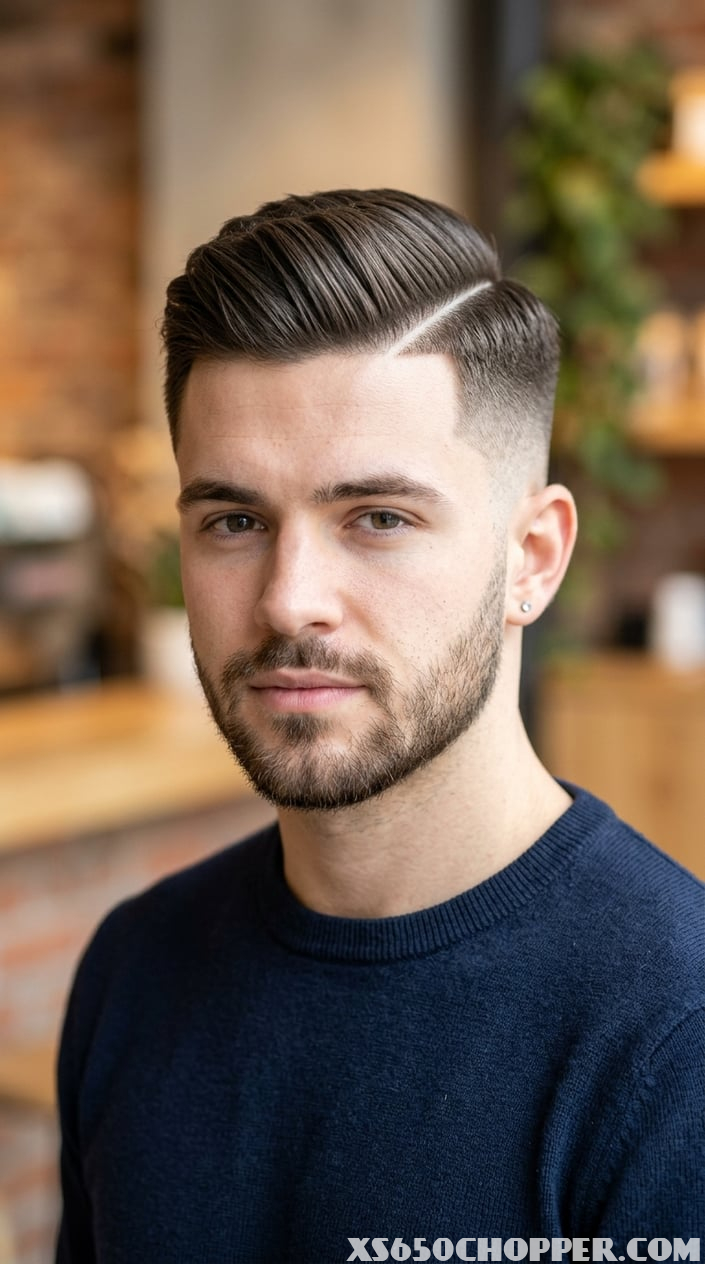
The undercut with a hard part pairs short, clipped sides with longer hair on top and a clean, shaved line that defines the part. You get a sharp, modern look that still reads classic because the contrast stays simple and intentional.
This style works for many hair types. Straight and slightly wavy hair show the hard part most clearly, while thicker hair gives the top more volume and structure.
Ask your barber for the exact placement of the hard part—closer to the crown softens the contrast, while a higher line makes the disconnect more dramatic. Maintenance is low: a light trim every few weeks keeps the sides tidy and the part crisp.
Styling takes only a few products. Use pomade or cream for a sleek, polished finish, or a matte paste for textured, casual looks. You can slick the top back, sweep it to the side, or mess it up for a relaxed vibe.
This cut fits both professional and casual settings because you control how neat or undone it appears. It also pairs well with facial hair; a trimmed beard balances the strong lines of the cut.
PRO TIP
Ask for a faded transition on the sides if you want a softer contrast that’s easier to maintain.
15) Messy Tousled Top

Messy tousled tops give you a relaxed, modern look that works for almost any age. The style balances casual texture with a deliberately undone finish, so it feels effortless rather than unkempt.
This cut typically keeps more length on top with shorter sides and back to frame the face. You can tailor the degree of messiness by adjusting the length and layering; shorter layers create separation, while longer layers produce softer movement.
Styling is simple and quick. Work a small amount of matte paste or sea salt spray through damp or dry hair, then use your fingers to lift and scrunch for natural volume. Finish with a light-hold spray if you want the texture to last through a long day.
The messy tousled top suits most face shapes, especially oval and square types. It also pairs well with fades, undercuts, or tapered sides to add contrast and keep the look polished.
Consider maintenance when choosing this style. You’ll need regular trims every 4–8 weeks to prevent the top from becoming too heavy and losing its textured shape.
PRO TIP
If your hair is fine, add a volumizing product and blow-dry while lifting at the roots to create fuller texture. For thicker hair, use a clay or paste to define pieces without weighing hair down.
16) French Crop with Fade

The French crop with fade pairs a short, textured top and cropped fringe with tapered sides for a clean modern look. You get the sharpness of a fade while keeping the top easy to style and low maintenance.
This cut suits most face shapes because the fringe can be adjusted to balance your features. Ask your barber for a cropped front if you want to minimize a high forehead or a slightly longer fringe to soften a square jaw.
Choose the fade height to match your style: a low fade reads more conservative and blends subtly, while a high fade creates stronger contrast and a bolder silhouette. The amount of texture on top changes the vibe too—soft texture looks natural, while choppy layers feel edgier.
Maintenance is straightforward; regular visits every 3–6 weeks keep the fade crisp and the crop controlled. Use a light paste or matte clay to define texture without weight, and refresh the fringe with a quick blow-dry or finger-combing.
PRO TIP
Ask for point-cutting on the top to avoid blunt lines and to enhance movement. If you have thinning hair, a slightly longer, textured top with a low fade helps add perceived density.
17) Long Layered Shag
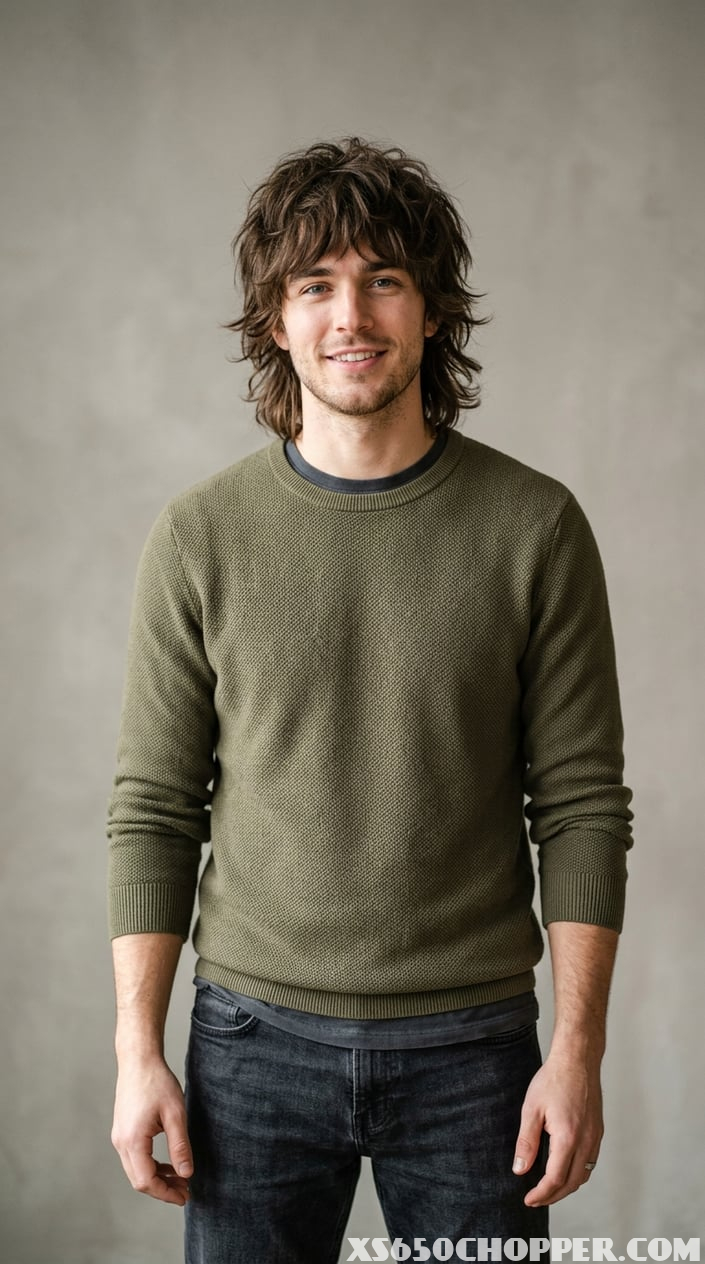
The long layered shag gives you textured movement without heavy styling. Layers remove bulk and create a lived-in look that sits naturally around your face.
This style works well on straight, wavy, and slightly curly hair. It suits most face shapes because you can adjust the length and fringe to balance your features.
You can wear it loose for a casual, undone appearance or add light product for definition. A small amount of texturizing spray or matte cream enhances separation without weighing the hair down.
Ask your barber for long, disconnected layers and a soft, feathered fringe. Tell them how much length you want to keep so the shape frames your face rather than overwhelms it.
Maintenance is low compared with other long styles. You’ll need periodic trims every 8–12 weeks to keep the layers fresh and prevent split ends.
PRO TIP
When styling, scrunch a salt spray into damp hair and let it air-dry for effortless texture. If you prefer more control, use a blow dryer with a diffuser on low heat and finish with a light paste to shape pieces.