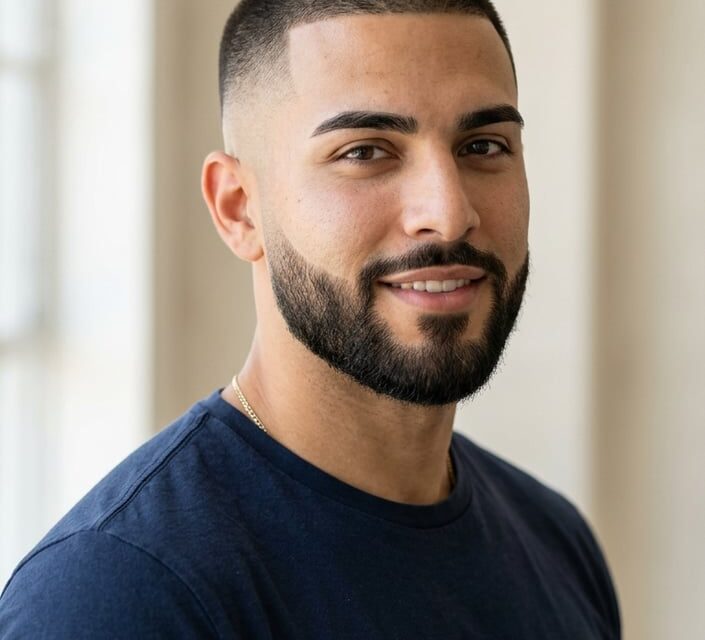
You’re about to explore seven buzz cut styles that simplify your grooming while letting you control the look your head projects. Each style offers a different balance of maintenance, edge, and personality, so you can pick one that fits your face, lifestyle, and confidence level.
You’ll learn which buzz cuts suit different head shapes, how fades and textures change the vibe, and what to ask your barber to get the exact result you want.

Think beyond a single clipper guard: subtle changes like a short fringe, a beard blend, or a hard part can make a basic buzz cut feel distinctly yours.
1) Classic Induction Buzz (Guard 0–1)
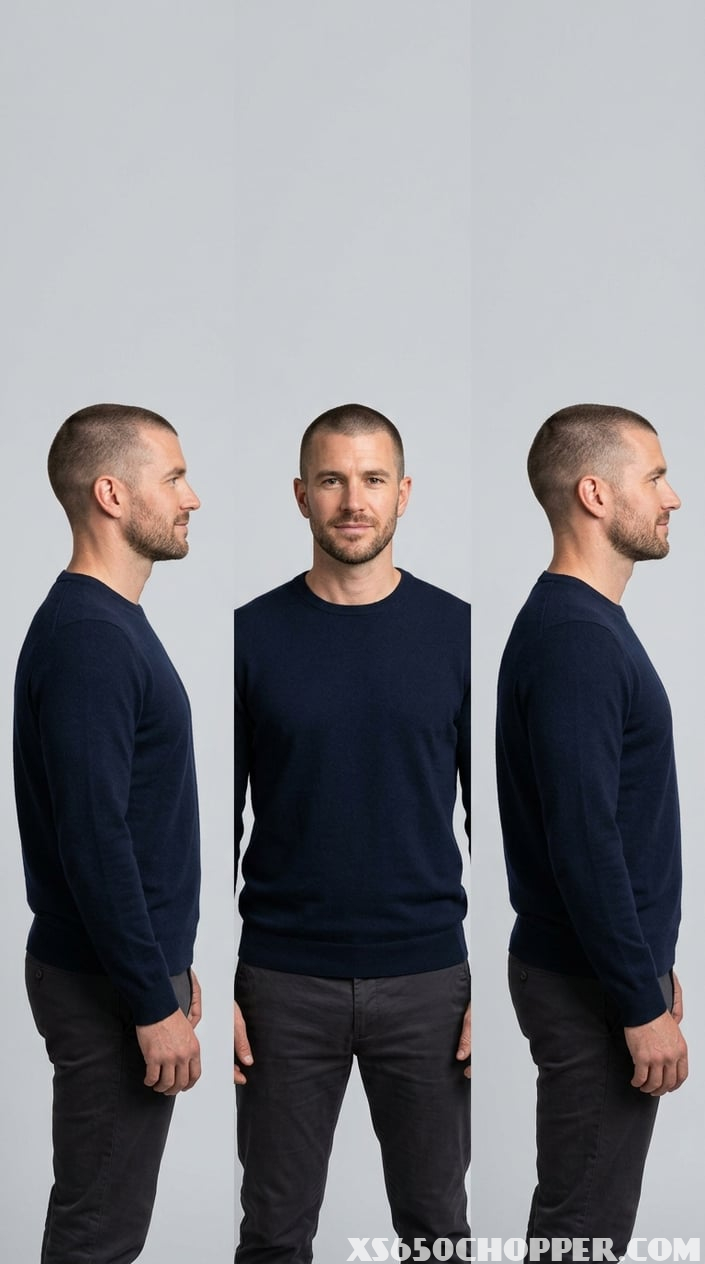
The induction buzz cuts hair extremely short, typically using a #0 or #1 guard — sometimes no guard at all. You get a near‑shaved look that’s clean, simple, and unmistakably low‑maintenance.
This style suits a wide range of face shapes, especially if you want to emphasize bone structure or simplify your morning routine. It can also help if you’re dealing with thinning hair; the uniform short length reduces contrast between sparse areas and fuller patches.
Expect to touch it up often. Very short lengths show regrowth quickly, so plan on clippers every 1–2 weeks to keep the crisp look.
Scalp care matters more with this cut because more skin is exposed. Use a gentle moisturizer and sunscreen on exposed areas, and consider a soothing aftershave balm if you shave down to the skin.
PRO TIP
Ask your barber about a 0.5 guard or slightly longer setting if your scalp is sensitive or if you want a tiny bit of texture. Keeping the hairline edged cleanly creates structure without adding length.
2) Ivy League Buzz Cut
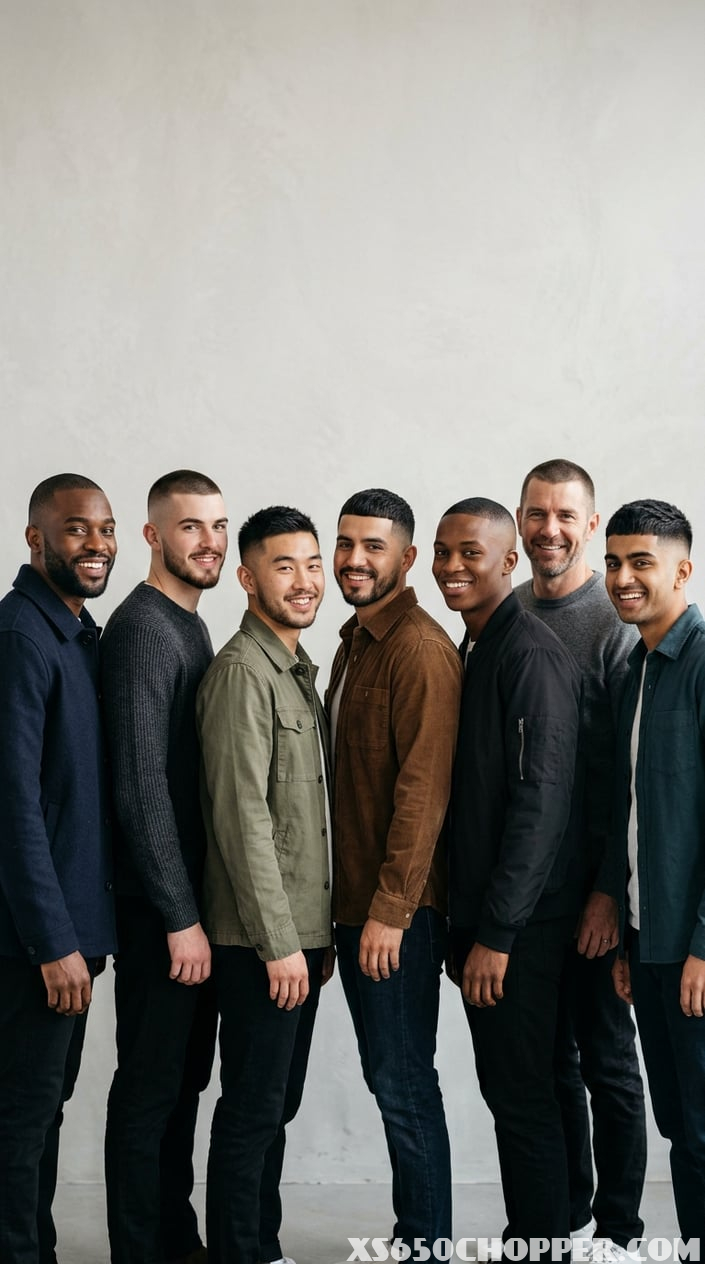
The Ivy League buzz cut keeps the top slightly longer than a traditional buzz, so you can brush or part it when you want a cleaner, more finished look. It balances low maintenance with a touch of versatility, making it a solid choice if you want something neat without losing style options.
Sides and back are tapered short, often with clippers, while the top measures a few extra millimeters to an inch, depending on how much texture you want. That small length on top lets you create a subtle side part, sweep the hair forward, or simply leave it textured for a more casual vibe.
This cut suits many face shapes because the longer top can be adjusted to lengthen or soften your features. If you have a prominent forehead or strong jawline, ask your barber to tailor the top length and taper height to enhance your proportions.
Styling requires minimal effort: a dab of matte paste or light pomade and a quick comb-through usually does the trick. You’ll get more hold and definition with a thicker product, or go product-free for an easy, lived-in finish.
PRO TIP
Ask for a slightly longer top and a tapered skin-off the sides rather than a full buzz; that combo keeps the classic Ivy look but gives you styling flexibility.
3) High and Tight Buzz Fade

The high and tight buzz fade pairs a very short top with a clean, sharp fade on the sides and back. You get a neat, low-maintenance look that still reads intentional and stylish.
This cut draws from military roots, so the silhouette stays close to the scalp with slightly more length left on top. That small amount of top length gives you room to texture or push hair forward for subtle variation.
The high placement of the fade creates a strong contrast that emphasizes your hairline and facial features. It works well if you want a masculine, no-nonsense style that doesn’t scream “done-up.”
You can customize the top length from a nearly shorn induction buzz to a slightly longer crop. Ask your barber for specific guard numbers or show a photo to get the exact proportions you want.
PRO TIP
If you have a strong jawline or angular features, the high and tight will highlight them; if your head shape is rounder, ask for a slightly softer fade to reduce harshness.
4) Caesar Buzz Cut with Short Fringe

The Caesar buzz cut pairs the clean uniform length of a buzz with a short, forward-cut fringe. You get a neat, masculine silhouette that still shows a bit of personality through the cropped bang.
This style works well if you want minimal daily styling. The short fringe helps soften a receding hairline and draws attention to the face without adding bulk.
Ask your barber for a very short clipper length on the sides and back, with slightly more length left on top to form the horizontal fringe. You can keep the top around a number 2–4 guard depending on how pronounced you want the fringe to be.
Texture matters even on short hair. Use a lightweight matte paste or salt spray to push the hair forward and create subtle definition without shine.
The Caesar buzz looks good on most head shapes, especially if you balance the fringe length to your forehead height. If you have thick hair, the fringe will sit solidly; finer hair may benefit from slightly longer top length for better coverage.
PRO TIP
Tell your barber you want a blunt, horizontal fringe and show how short you want the front—photos work best. Regular trims every 3–5 weeks keep the fringe sharp and the overall shape tidy.
5) Skin Fade Buzz with Beard Blend

The skin fade buzz with a beard blend pairs a closely cropped top and tapered sides with facial hair that ties the look together. You get sharp contrast at the temples and a softer, more natural transition where the beard meets the skin.
This style suits many face shapes because the fade can be placed low, mid, or high to change the visual proportions. A low fade keeps the focus lower on the face, while a higher fade makes the top and beard stand out more.
Keep the beard trimmed to complement the fade — too full and it will overpower the crisp sides, too sparse and the balance is lost. Use clippers and a trimmer to shape the cheek line and neckline so the beard blends smoothly into the faded sides.
Choose beard length to match your hair density and face shape. Short stubble or a neatly cropped full beard work best to maintain the clean, structured vibe that the skin fade creates.
PRO TIP
Ask your barber to match the fade’s end point with the beard’s highest natural hairline for the most seamless blend. Regular maintenance every 2–4 weeks keeps the fade sharp and the beard proportionate.
6) Textured Burr Cut (Guard 2–3)

The textured burr cut keeps hair short and low-maintenance while adding surface movement. You get the tidy, nearly military look of a burr but with texture that prevents the cut from reading flat.
Ask your barber for a guard 2 or 3 on top, blended into the sides. Tell them to use clipper-over-comb or point-cutting to create subtle texture rather than a uniform, shaved surface.
This style suits most face shapes because the short length emphasizes bone structure. It also works for straight, wavy, and slightly curly hair; the texture helps hair lie naturally and reduces visible scalp contrast.
Maintenance is simple: a trim every three to five weeks keeps the shape crisp. Use a light matte paste or cream if you want to boost separation on top, but most people leave it product-free for the easiest routine.
PRO TIP
If you have a cowlick or uneven growth, ask the barber to cut slightly longer in that area and texturize around it. This hides irregularities and keeps the cut looking intentional.
7) Disconnected Hard Part Buzz

The disconnected hard part buzz pairs a close, clipped buzz on one side with a sharply shaved part and slightly longer hair on top. You get a bold, modern silhouette that reads both tidy and intentionally edgy.
This style relies on contrast. The hard part is a precise, razor-shaved line that separates the longer top from the closely buzzed sides, creating a clear visual break.
Keep the top length short to medium so it still reads as a buzz variant, but allow a bit of texture for movement. That short texture gives you options: brush it forward, sweep it to the side, or leave it tousled for a casual vibe.
Ask your barber to make the part crisp and low to mid on the head, depending on your natural hairline. A clean shave of the part every few weeks preserves the disconnect; otherwise it will soften as hair grows back.
This look fits most face shapes but works especially well if you want to emphasize strong jawlines or cheekbones. If you have thinning hair or a receding hairline, the hard part can create a deliberate structure that distracts from sparse areas.
Use a small amount of matte paste or light wax to add definition without shine. Keep maintenance simple: regular buzz trims and part touch-ups at the barber will keep the style sharp.
PRO TIP
Bring photos to your barber and explain how high or low you want the part. Saying “crisp, clean line” and specifying top length in clipper guards helps avoid misunderstandings and gets the disconnected look you want.