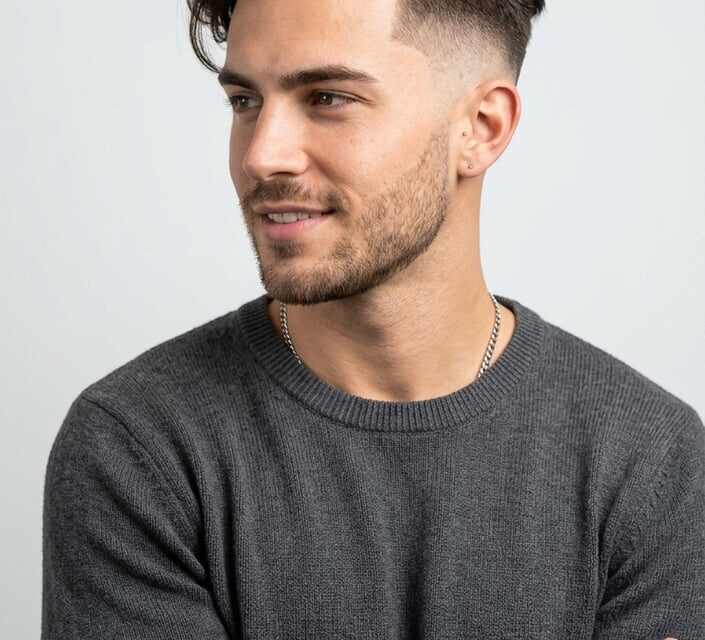
You deal with thick hair every morning — and you want styles that cut bulk, add shape, and actually cooperate with your natural texture. This article shows nine practical haircut ideas that tame volume and give you clean, wearable results so your hair looks intentional, not like a bulky mess.
You’ll find options from short, scissor-refined looks to longer layered styles that add movement without weight. Use the quick styling tips and pro-minded guidance to pick a cut that fits your routine, face shape, and the way your hair naturally falls.
1) Textured Crop with Short Sides

A textured crop with short sides tames thick hair without removing its natural volume. You get a clean silhouette on the sides while the top remains choppy and layered to reduce bulk.
This cut works well if you want low daily maintenance. The shorter sides create contrast, which makes the textured top look intentional rather than bulky.
Styling stays simple: apply a small amount of matte paste or clay to damp or dry hair and use your fingers to define pieces. You can push the fringe forward for a classic crop or tousle it slightly for a more lived-in look.
Ask your barber for point-cutting or razor texturizing on the top to remove weight and add movement. Keep the sides and back neatly tapered or faded to avoid a boxy outline.
Consider face shape when choosing length on top. If you have a rounder face, leave a bit more height; if your face is long, keep the top shorter to balance proportions.
PRO TIP
Request your barber take bulk out through slicing rather than thinning shears; that preserves natural density while preventing a frizzy, spread-out finish.
2) Disconnected Undercut with Long Top

The disconnected undercut pairs closely trimmed or shaved sides with a noticeably longer top, creating a sharp, deliberate contrast. That clear break between lengths helps remove bulk from the sides while keeping weight and movement on top.
This style works well with thick hair because the long top gives you room to shape texture without the sides adding extra mass. You can wear the top slicked back, messy, or textured depending on your mood and face shape.
Ask your barber not to blend the sides into the top; the point of the cut is the visible separation. Keep the sides tight to minimize volume, then let the top remain long enough to style and control fullness.
Maintenance is straightforward: regular side trims every 2–4 weeks preserve the disconnect and prevent the cut from losing its intended silhouette. Use a medium-hold product for control or a texturizing paste to break up density without flattening your hair.
PRO TIP
If your hair is very thick, have the barber slightly remove bulk from the underside of the top rather than thinning across the visible surface. That preserves a full look while reducing the weight that makes hair sit heavy.
3) Layered Medium-Length Shag

A layered medium-length shag reduces bulk while keeping natural volume and movement. You get texture without the heaviness that makes thick hair look boxy.
The cut uses lots of short to mid-length layers through the crown and sides. Those layers break up weight, create shape, and make styling faster.
Face-framing layers soften the jawline and highlight cheekbones. Tell your stylist whether you want a more tapered finish or a chunky, lived-in look.
Styling stays simple: towel-dry, apply a light texturizing cream or sea-salt spray, and scrunch or finger-comb. Blow-dry with a diffuser or air-dry for softer waves.
This shag works well on straight, wavy, or slightly curly textures. It adapts easily—grow it out a bit for more flow or trim the ends for a sharper silhouette.
PRO TIP
Ask your barber for razor or point cutting to avoid blunt ends that amplify bulk. Bring a photo of the exact shag texture you like to ensure your stylist matches your vision.
4) Tapered Pompadour for Thick Hair
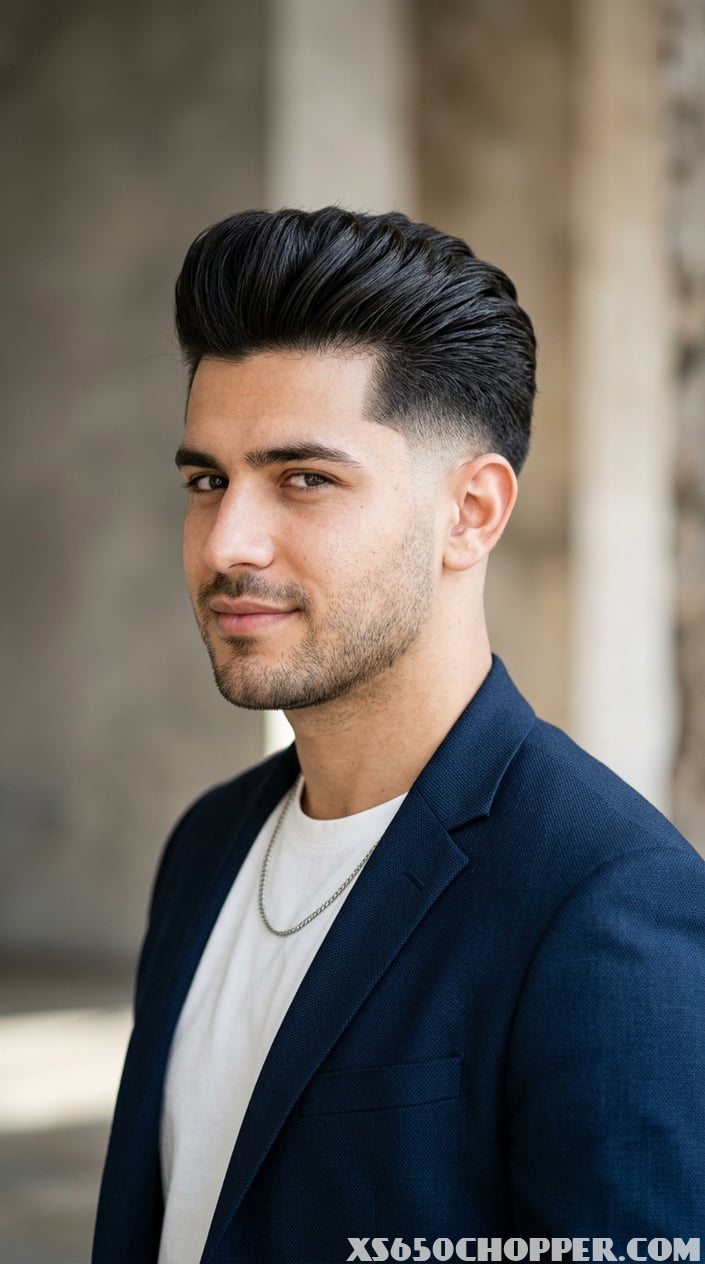
The tapered pompadour gives you height and control without the bulk that thick hair can create. You keep length on top for the classic pomp while the sides and back taper down cleanly to reduce visual weight.
Ask your barber for a gradual taper rather than an abrupt fade; this softens the transition and maintains a balanced silhouette. The taper also makes styling easier because excess hair is removed from areas that tend to puff out.
Use a medium-hold pomade or cream to shape the top while preserving natural movement. Apply to damp hair, work through from roots to ends, then lift and smooth back with a comb or fingers for a modern, lived-in finish.
If you want more volume, blow-dry the top while directing hair backward with a round brush. For lower-maintenance days, rough-dry and use a matte product to tone down shine and keep texture visible.
PRO TIP
Tell your barber how much lift you want on top and how tight you prefer the taper; small adjustments change the whole look. Regular trims—every 4–6 weeks—keep the taper crisp and prevent the top from becoming unmanageably heavy.
5) Short Caesar with Thinned Top

The short Caesar gives you a controlled, low-maintenance silhouette that reduces bulk across the crown. Keeping the sides short and the fringe forward creates structure while directing attention away from heavy volume.
Tell your barber you want the top thinned rather than shortened uniformly. Strategic thinning shears remove weight and create movement without sacrificing the Caesar’s characteristic blunt fringe.
Texture matters: a little point-cutting at the front softens the line, and light product—matte paste or clay—helps you shape the fringe forward. Apply product to damp hair and use your fingers to define the top; avoid heavy creams that can clump thick hair.
If you have a strong hairline or mild recession, the cropped fringe can help mask the forehead while still looking modern. This cut works equally well for straight and slightly wavy hair, and it pairs nicely with a taper on the sides for a neat finish.
PRO TIP
Ask for internal thinning rather than surface layering to prevent the top from looking choppy.
6) Skin Fade with Heavy Fringe

A skin fade with a heavy fringe balances sharpness and volume so your thick hair looks controlled, not bulky. The fade removes weight at the sides and back, while the top keeps enough length for a dense, textured fringe that draws attention forward.
You can wear the fringe blunt and straight across for a bold statement, or sweep it slightly to the side for a softer effect. Texturizing scissors or point-cutting will break up density and make styling easier without losing the fringe’s weight.
This cut works well if your hair naturally holds shape; it also suits straight to slightly wavy textures best. If your hair is curly, ask your barber to lower the contrast between the fade and top so the transition appears smoother.
Use a matte paste or clay to define the fringe and reduce shine. Apply product to dry hair, shape the fringe with your fingers or a comb, and finish with a light mist of flexible-hold spray if you need extra staying power.
PRO TIP
Ask your barber for a soft scissor finish on the fringe edge rather than a hard, blunt line if you plan to grow the fringe out. This keeps the look intentional as the length changes.
7) Classic Crew Cut with Razor Texturing
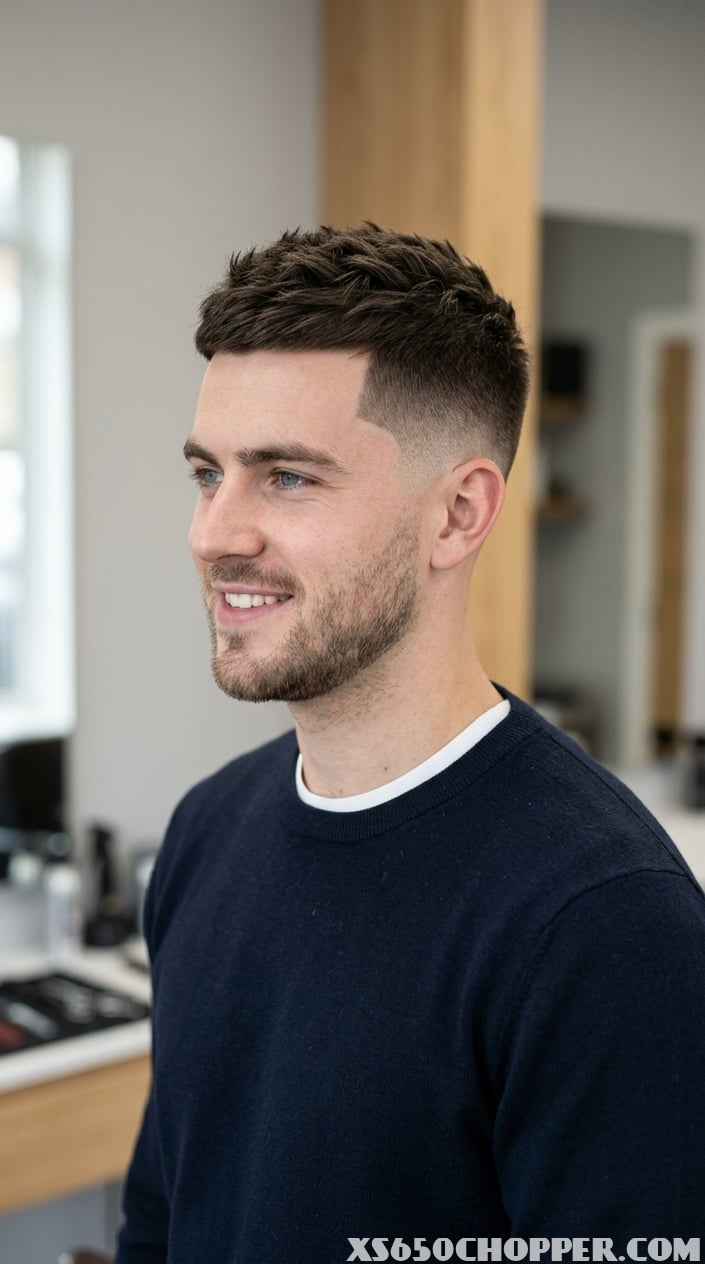
The classic crew cut keeps the top short and neat, while razor texturing removes bulk and adds movement. You get a cleaner silhouette without sacrificing structure.
Razor texturing thins dense sections and creates softer edges. That prevents the “pillow” look that thick hair can sometimes form.
Ask your barber for a short top with tapered sides and subtle razor-chopped layers on top. The razor work should be sparing—focused where your hair feels heaviest—so the cut stays tidy and age-proof.
Styling takes just minutes. Use a light cream or matte paste to define the texture, working product in with your fingers for a natural, piecey finish.
Maintenance is straightforward: plan trims every 4–6 weeks to keep the shape and prevent the thicker parts from bulking out. If you prefer lower upkeep, push to the longer end of that range and ask for slightly more taper on the sides.
PRO TIP
Bring a photo and point out where your hair feels thickest. That helps your barber place the razor cuts precisely for a balanced, low-volume result.
8) Long Layered Curtain Hairstyle
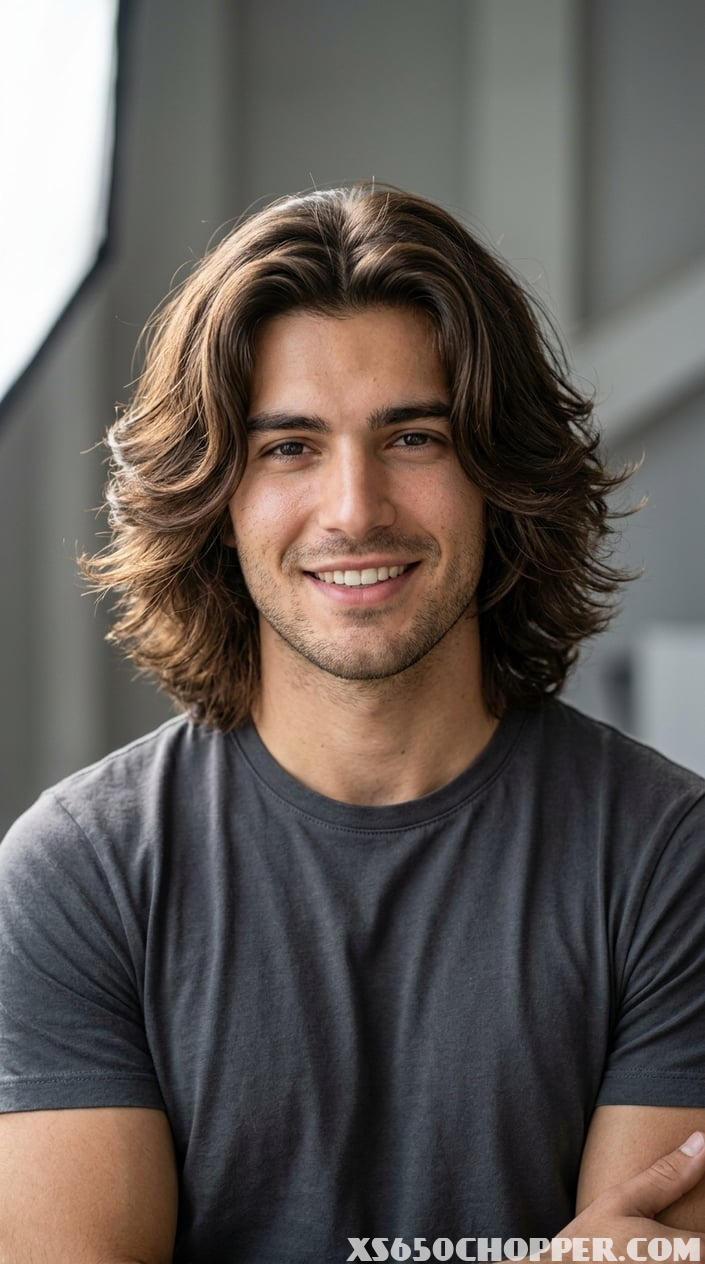
The long layered curtain hairstyle works especially well for men with thick hair because the layers remove bulk while keeping natural volume. You get the classic center-parted look that frames the face without creating a heavy, helmet-like shape.
Ask your barber for long, face-framing layers that start around the cheekbones and blend down through the lengths. The layering creates movement and prevents the hair from falling flat or puffing out at the sides.
Styling stays simple: towel-dry, apply a light cream or leave-in conditioner, then blow-dry with a round brush or your fingers to guide the curtain. For added texture, use a small amount of matte paste or sea-salt spray and work it through the mid-lengths and ends.
This cut suits many face shapes, especially oval and round, because the vertical lines of the curtains visually elongate the face. If you have very curly hair, ask for slightly longer layers to keep the curtains defined without excessive shrinkage.
Keep maintenance low by getting a trim every 8–12 weeks to preserve the shape and prevent uneven weight. You can grow the style longer for more dramatic movement, or shorten the layers slightly for a neater, more controlled curtain look.
PRO TIP
When drying, blow-dry with the part damp and direct hair away from the part first, then define the curtain by directing hair toward the center. This technique helps the hair naturally fall into a soft, even curtain without extra product.
9) Ivy League with Scissor-Over Comb Layers

The Ivy League already gives you a clean, refined shape while keeping enough length on top to style. Adding scissor-over-comb layers reduces bulk and creates controlled texture without sacrificing the classic, side-parted silhouette.
Scissor-over-comb on the sides and back produces a soft taper that blends naturally into the longer top. That controlled taper prevents the stacked, boxy look thick hair can form with clippers.
On top, layered scissor work thins weight and allows the hair to move, so a quiff, comb-over, or brushed-up finish sits neatly instead of puffing out. You still get that polished, preppy appearance, but with much less maintenance and fiddling.
Ask your barber to keep more length in the front for styling options, while using graduated scissor layers through the crown to manage density. Point-cutting and subtle texturizing through the ends will further break up weight for a lighter, airier feel.
Use a small amount of matte paste or lightweight cream to define the layers and control frizz. Work product through damp hair and shape with a comb or fingers; avoid heavy gels that flatten movement or add unnecessary shine.
PRO TIP
Bring photos showing the length and shape you want, and mention “scissor-over-comb taper” specifically. That phrase tells your barber to remove bulk with scissors for a softer finish tailored to thick hair.