You can tweak a goatee and unknowingly make your face appear longer—small shaping choices change proportions. This article shows the common shaping and trimming mistakes that stretch your face so you can spot and fix them quickly.
You’ll learn which goatee habits to avoid and how subtle adjustments restore balanced proportions.
PRO TIP
1) Too-long goatee tip (extends below chin)
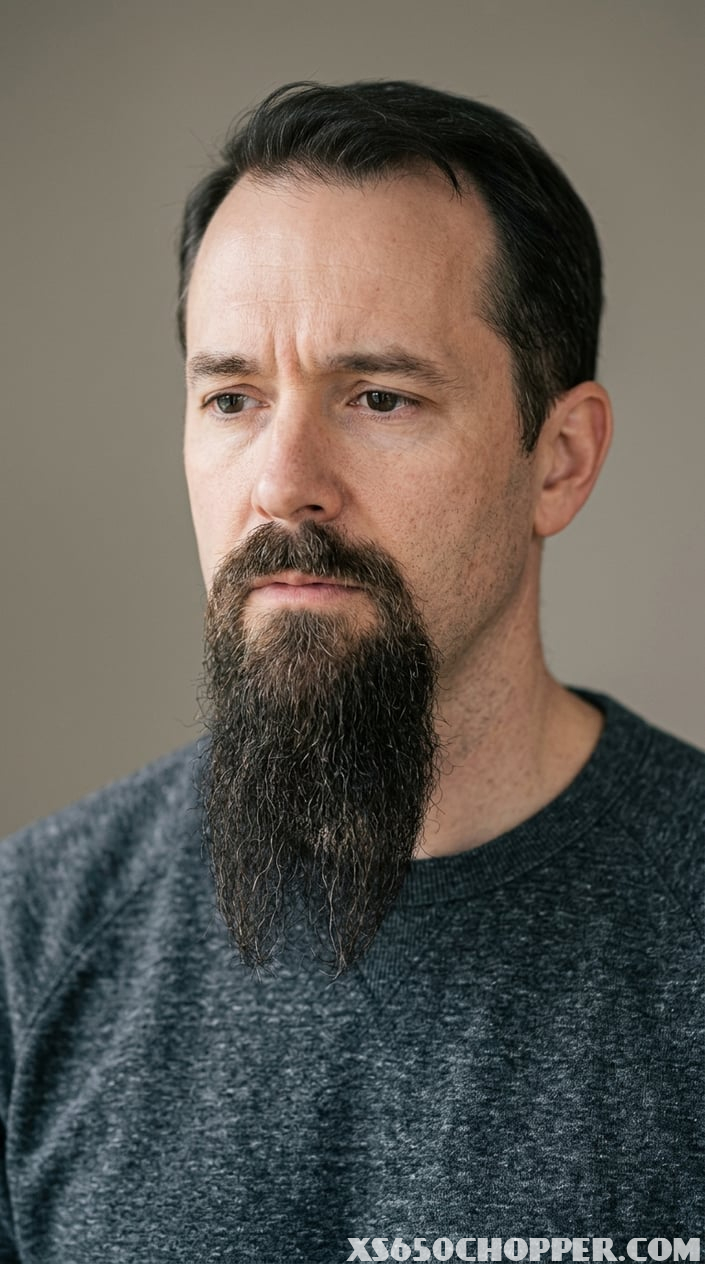
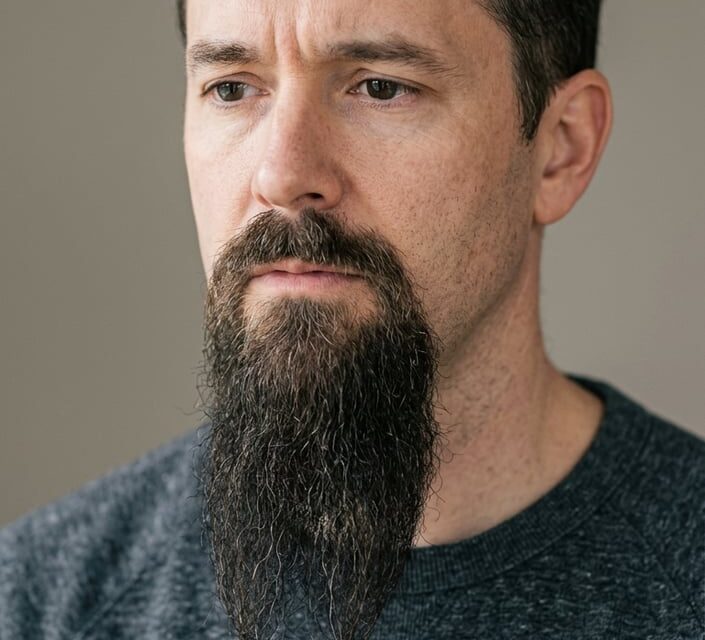
A goatee that drops well below the chin adds vertical visual weight and can make your face look longer. When the tip extends onto the neck, it draws the eye downward and lengthens your profile, especially if your jawline is narrow or your face is already long.
Keep the tip close to the chin to maintain better facial balance. Aim for the goatee to end just at or slightly below the chin point, rather than several finger-widths down the neck.
Trim with small, controlled cuts and check the shape from different angles. Use a trimmer with a guard for uniform length, then switch to a bare blade or detail trimmer to refine the outline at the very tip.
If you prefer a longer style, balance it by widening the goatee slightly at the jawline or adding a fuller mustache. That broader horizontal weight offsets the downward pull and prevents an overly elongated look.
H3 PRO TIP
Use a handheld mirror to view your chin area from below while trimming. This low-angle perspective reveals how far the goatee truly extends and helps you stop at the natural chin point.
2) Tapered sides left too short
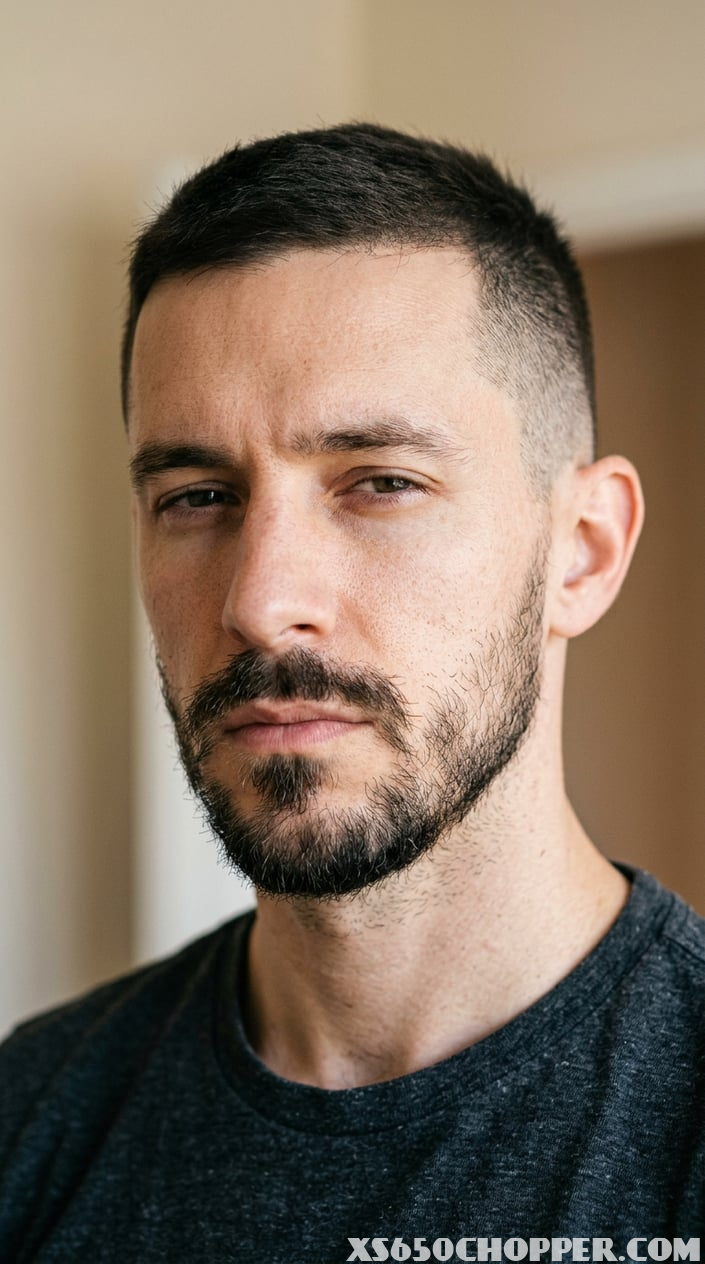
When you taper the sides too aggressively, you shorten the visual width of your face. That creates an unbalanced look that makes your chin and nose appear more prominent.
Short tapered sides remove the natural frame a goatee provides. Without that lateral mass, the eye travels down the center of your face, accentuating vertical length.
You might think a tight taper looks neat, but if your goal is to avoid a longer-looking face, aim for a gentler gradient. Leave more hair along the cheekline and blend gradually into the jaw to preserve horizontal balance.
Keep the transition soft rather than abrupt. Use a higher guard or stop a bit earlier on the clipper to maintain some fullness, then tidy stray hairs with scissors for precision.
PRO TIP
Hold the clippers at a slight angle and pass them slowly when blending the sides. That small change prevents over-shortening and keeps your goatee proportional to your face.
3) High neckline (shaved above Adam’s apple)
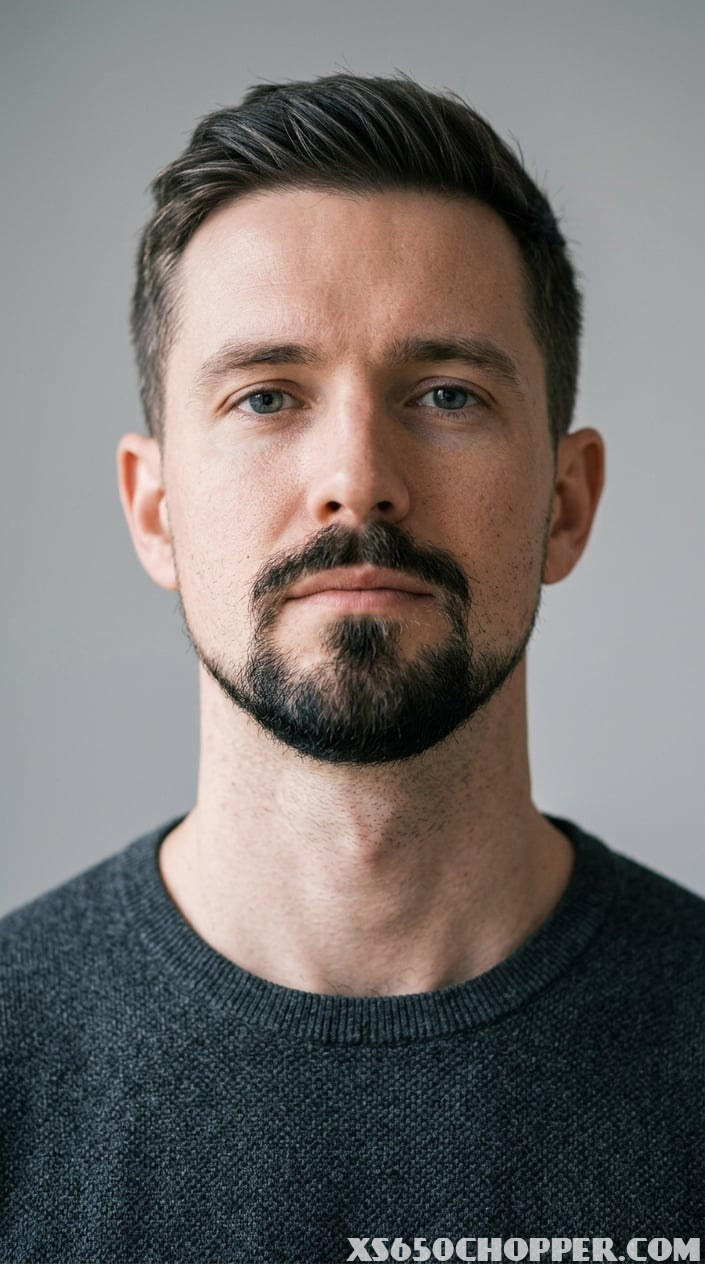
Shaving your neckline above the Adam’s apple shortens the visual distance between your jaw and chin. That makes the lower face look compressed, which actually lengthens the appearance of your upper face by contrast.
A high neckline also removes natural jaw definition. Without that shadow and frame, your goatee can sit awkwardly on a longer-looking face.
You may be tempted to follow a sharp, high line because it feels tidy. But trimming too high reduces beard fullness and draws attention to the forehead and cheek area instead of balancing proportions.
Find the correct spot by placing two fingers just above your Adam’s apple. The top of those fingers marks a reliable guide for a natural neckline that keeps your goatee proportionate.
Use a trimmer with a guard and start higher, then step downward if needed. Work from center to sides with small strokes, keeping the line curved and soft rather than a harsh horizontal cut.
Trim gradually and check in a mirror from different angles. Small adjustments prevent overcorrection, which is harder to fix once you’ve removed too much hair.
PRO TIP
If you struggle to judge the line, tilt your chin down and mark the crease where neck meets chin. That crease usually aligns close to the two-finger rule and helps you maintain a low, natural neckline that balances your face.
4) Pointy chin extension without balancing mustache

A long, sharply tapered goatee draws the eye straight down. If you pair that pointy chin extension with little or no mustache, your face can start to look longer and more narrow than it really is.
The visual effect happens because the chin becomes the dominant focal point. Without a mustache to anchor the upper face, the bottom-heavy shape exaggerates vertical length.
You can keep a pointed goatee and avoid the elongated look by adding a subtle mustache or a light soul patch. Even a thin, well-groomed mustache helps distribute attention across the face and creates better balance.
Trim the chin point so it doesn’t extend dramatically past your jawline. Shortening the tip and blending the sides softens the downward pull and preserves the pointed style without overstretching your proportions.
Maintain clean edges along the cheeks and neckline to avoid a disconnected appearance. That crisp framing supports symmetry and prevents the chin from overpowering the rest of your features.
PRO TIP
If you want a sharper look without lengthening your face, keep the mustache narrow but defined and scale the chin point shorter. Small adjustments make a big visual difference.
5) Disconnected soul patch with full sideburns

A small, isolated soul patch can draw attention to the center of your chin, and when it sits apart from a fuller sideburn line it can create a visual imbalance. That contrast often makes the lower face appear narrower while the upper sides read heavier, which elongates your face rather than balancing it.
If your sideburns are thick and continuous down to the jawline, they visually widen the cheek and temple area. The tiny disconnected chin tuft then looks like an afterthought, pulling the eye downward and exaggerating length.
Keep the proportions intentional. Either broaden the chin area with a fuller goatee or trim the sideburns shorter to match the minimalism of the soul patch. Matching density and alignment helps maintain a balanced horizontal plane across your face.
PRO TIP
Use a trimmer with adjustable guards to experiment gradually. Trim a little at a time and step back to check proportions in natural light.
6) Uneven trim creating an elongated center strip
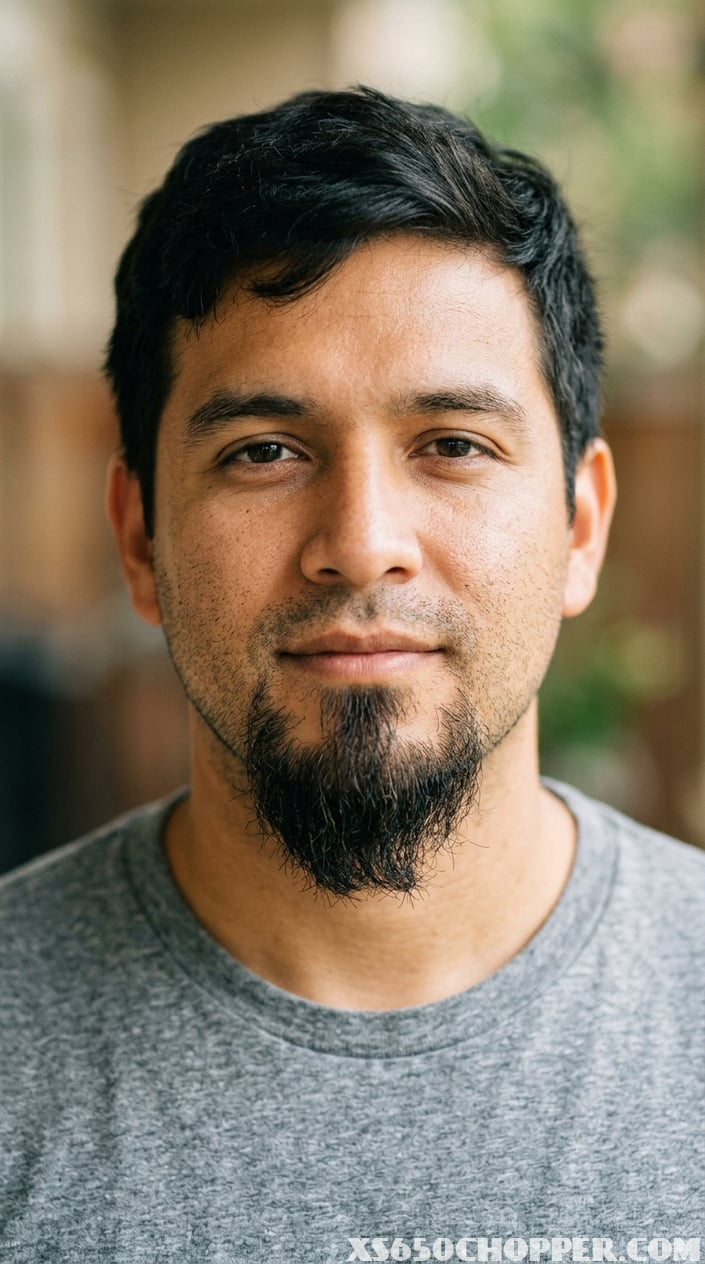
When you trim the sides shorter than the middle, the goatee draws the eye down a narrow vertical line. That contrast makes your chin look longer because attention concentrates on the thin center strip rather than the full lower face.
Uneven length can happen from rushing or using the wrong guard. Small differences in clipper height create a visible channel; the effect grows as hair is kept longer on the center.
Fix the shape by blending gradually from the center to the cheeks. Use a comb and a mid-length guard, then step down one guard at a time while checking symmetry in a mirror.
If you prefer a narrower center, keep the center short enough that it doesn’t act like a visual stripe. Shorter center hair reduces the elongated look while still preserving a defined goatee.
PRO TIP
Trim with dry hair and natural light when possible. Work slowly, snip conservatively, and double-check with photos so you can spot any unintended vertical emphasis.
7) Overly sharp chin point (extreme V-shape)
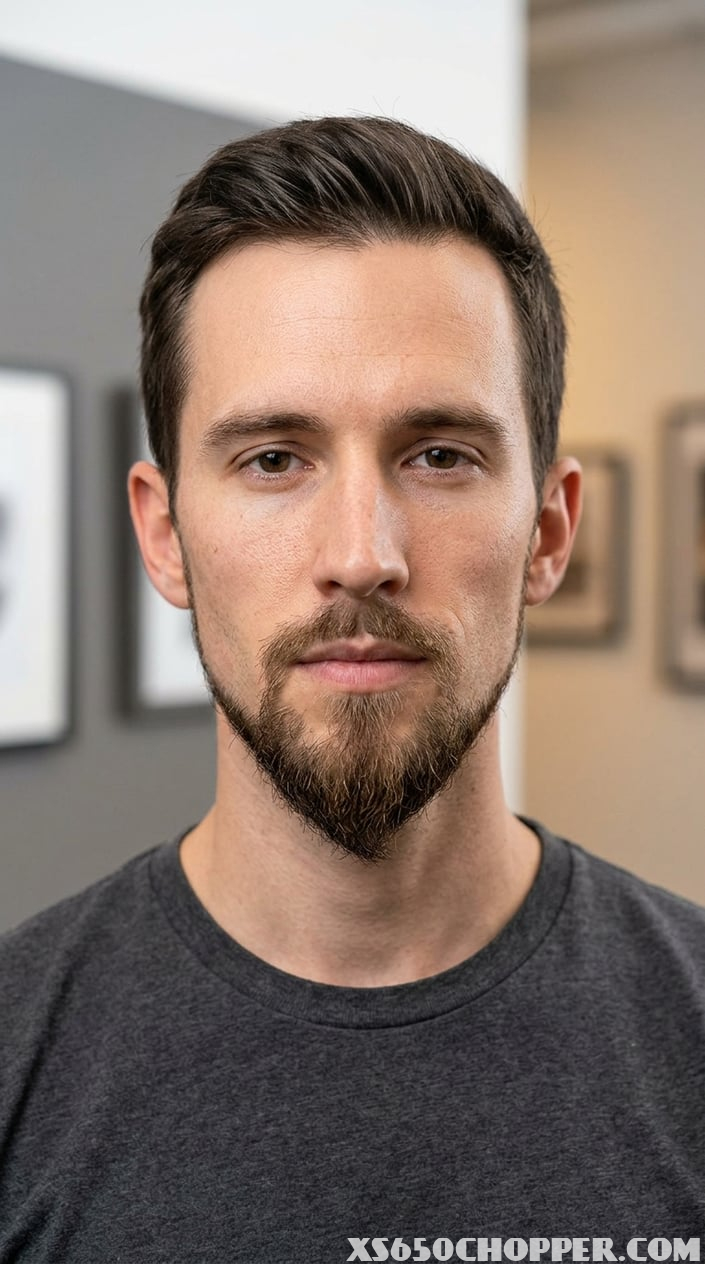
An extreme V-shaped goatee can draw the eye straight down, which often makes your face appear longer than it actually is. The acute angle creates a strong vertical line that emphasizes chin length instead of balancing your facial proportions.
If your face is already long or oval, a razor-sharp point will exaggerate that length. Shorter, rounder faces suffer too, because the elongated tip pulls the visual center downward and narrows the appearance of your jaw.
A very thin, tapered point can also look unkempt as it grows out unevenly. Hairs at the tip tend to splay and stray, so maintenance becomes more frequent and mistakes more visible.
PRO TIP
Soften the point slightly by rounding the tip or widening the base. That small change reduces the vertical pull and creates a more balanced, natural look.
Trim with the grain and blend the sides into the chin area to avoid a stark V. Use a trimmer guard for consistent length, then touch up the outline with a precision trimmer or small scissors.
If you prefer a sharper aesthetic, limit the length of the point so it doesn’t extend far below your natural chin line. Shorter points preserve style without overstretching your facial proportions.