
You’re about to explore 20 barber-recommended men’s haircuts that balance style, practicality, and how they suit different face shapes and hair types. Expect clear guidance on versatile cuts—from low-maintenance buzzes and classic tapers to textured crops, fades, and longer, layered looks—so you can pick a haircut that actually works with your lifestyle and hair.
This article breaks down each option with styling tips, the vibe it creates, and what to ask your barber to get the look right. Use these recommendations to narrow choices, communicate confidently at the chair, and leave with a cut that fits your routine and personal style.
PRO TIP
1) Textured Crop with Skin Fade

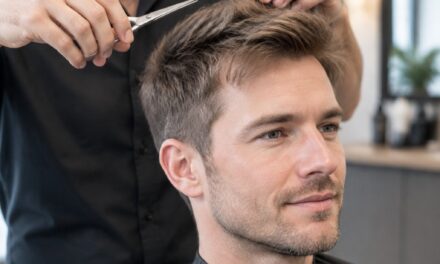
The textured crop with a skin fade pairs short, choppy layers on top with very tight skin-edged sides. You get a modern, clean silhouette that still feels relaxed and effortless.
This cut works well on straight to wavy hair and helps add movement without heavy styling. If your hair is thick, the texturing removes bulk; if it’s fine, the layers create the illusion of density.
Ask your barber for point-cutting or razor texturing on the top to achieve those natural, fragmented ends. Request a skin fade that blends from the scalp up to the longer top; specify how high you want the fade to sit.
Styling takes minutes: use a small amount of matte paste or sea salt spray, scrunch or rake through the top, and finish with a light touch of product to hold texture. You can wear the fringe forward, pushed up, or messy depending on your mood.
This style grows out gracefully, so it’s forgiving between visits. Still, plan for a touch-up every 3–6 weeks to keep the fade crisp and the top shaped.
PRO TIP
Bring photos to your barber and explain how much maintenance you want. That helps them tailor the fade height and texturing to match your hair type and daily routine.
2) Classic Taper with Side Part
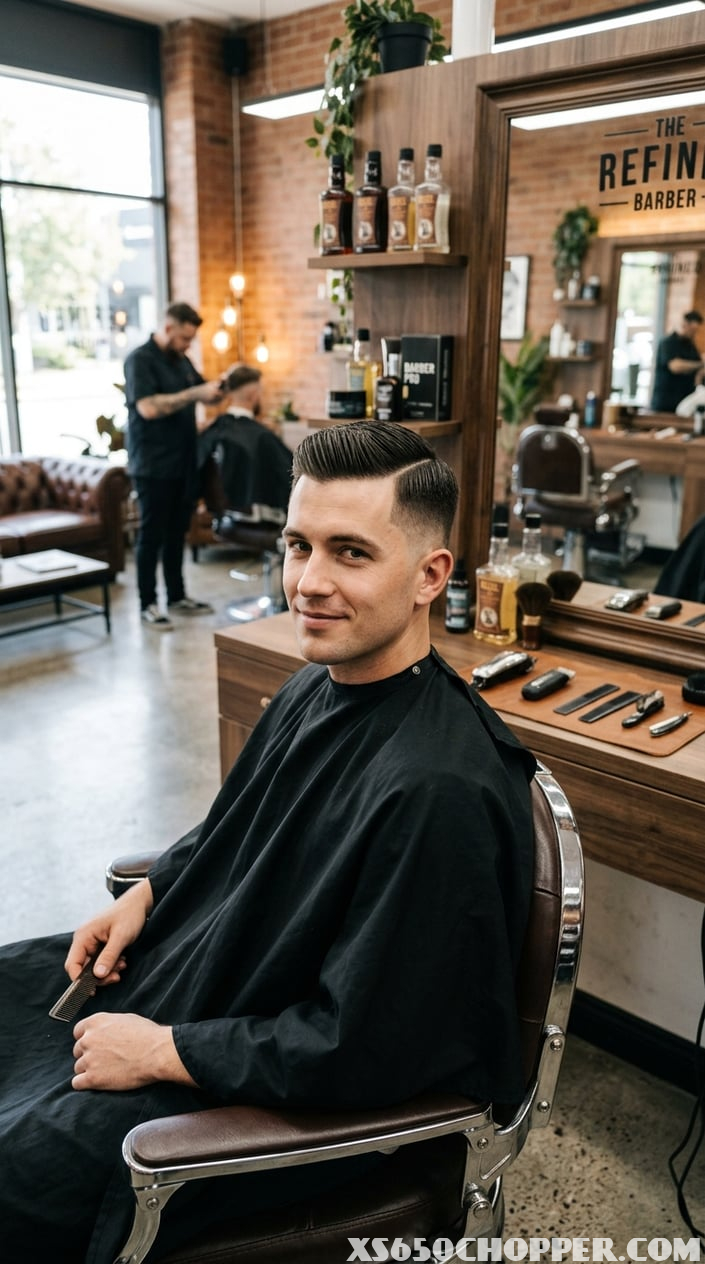
The classic taper with a side part pairs clean, short sides with more length on top that you can neatly part. You control how formal or relaxed it looks by changing the part’s sharpness and the top’s texture. Barbers recommend it because it adapts easily to most face shapes and hair types.
Ask your barber for a gradual taper at the sides and back, leaving enough length on top to create a defined side part. You can choose a soft, blended part or a razor-defined line for a sharper look. If you prefer a modern edge, request a slight skin fade near the temples while keeping the overall taper classic.
Styling is simple: towel-dry hair, apply a small amount of pomade, cream, or matte paste, and comb the top into place. Use your fingers to loosen the texture for a casual finish, or a fine-tooth comb for a slick, professional appearance. The cut holds well with minimal daily effort, making it practical for busy routines.
This haircut grows out evenly, so you don’t need frequent visits to maintain shape, though a touch-up every 3–6 weeks keeps the part crisp. It also transitions well between office and weekend settings, so you can change products and finish to fit the occasion.
PRO TIP
Ask your barber to set the part in the direction your hair naturally falls; it will reduce styling time and make the part look more natural. If you have fine hair, add a light volumizing product to give the top more presence without weighing it down.
3) Disconnected Undercut with Pompadour

The disconnected undercut with a pompadour pairs a sharp, short side with a voluminous, swept-back top. You get a bold contrast that reads modern and intentionally styled.
This cut suits many hair textures, though it works best if your hair has some natural lift or density. Your barber will leave length on top while removing tapering on the sides to create that unmistakable gap.
Styling takes a bit more effort than a basic cut, but results reward the routine. Apply a pre-styling product for volume, then use a strong-hold pomade or clay to shape the pompadour and keep the lift all day.
Maintenance includes regular trims every 3–5 weeks to preserve the clean disconnect and prevent the sides from blending in. You’ll also want to refresh the top’s shape regularly so the pompadour remains structured rather than falling flat.
PRO TIP
Ask your barber for a scissor-cut top if you want softer movement, or clippers for a more rigid pompadour. Bring photos of the exact height and silhouette you like to avoid mismatched expectations.
4) Modern Mullet with Layered Top

The modern mullet keeps the classic back length but updates it with a textured, layered top that adds movement and polish. You get a balanced silhouette that’s less extreme than vintage mullets and more wearable day-to-day.
Ask your barber for graduated layers on the crown and top, leaving the back longer for that signature contrast. The layers create lift and make styling easier, especially if your hair has natural wave or slight curl.
Sides can be tapered or faded to suit your face shape; a low taper softens the look, while a higher fade makes it edgier. You control how bold the change feels by choosing how short the top and sides get.
Styling stays simple: use a light cream or texturizing paste to define layers without stiffness. Refresh the shape with a quick blow-dry and finger-combing, and you’ll keep the cut looking intentional rather than messy.
PRO TIP
Bring photos showing the amount of top layering and back length you want, and describe how much daily styling you’ll do. This helps your barber tailor the cut so it fits your hair type and routine.
5) Curtain Haircut (Middle Parted Flow)

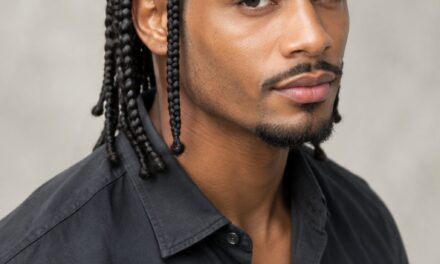
The curtain haircut splits your hair down the middle and lets the top fall to each side, creating a relaxed, face-framing look. It works with straight, wavy, or slightly curly textures and suits many hair lengths from short to medium-long.
Barbers recommend it because it balances the face without requiring daily precision. You can wear it soft and natural or add product for more definition and hold.
Ask your barber for long layers on top and tapered or faded sides to keep the shape tidy. Tell them how much fringe you want so the curtains sit at cheekbone or jawline level, depending on your face shape.
This style pairs well with casual and smart outfits; you can slick it back for a polished finish or finger-style it for a looser vibe. It grows out gracefully, so maintenance mainly involves regular trims to remove split ends.
PRO TIP
Use a lightweight cream or sea-salt spray to enhance natural movement without weighing your hair down. Dry with a blow dryer while guiding hair with your fingers for extra volume and symmetry.
6) Short Buzz Cut with Line Up

A short buzz cut with a line up pairs a close, even clipper cut with a crisp, defined hairline. You get the simplicity of a buzz cut while the lineup adds sharpness and structure to your face.
This style works well if you want low maintenance but still care about a polished appearance. It suits many head shapes and can help frame your forehead and temples more distinctly.
Maintenance is simple: trim the overall length every 2–4 weeks and refresh the lineup every 1–3 weeks depending on how fast your hair grows. Use clippers for the all-over cut and a trimmer or razor for the straight edges to keep the lines clean.
You can vary the length slightly—higher guards give a softer, more uniform look while shorter settings create a tougher, military-inspired finish. Adding a subtle fade at the sides softens the transition and modernizes the cut.
Keep your scalp healthy by moisturizing and using sunscreen when spending time outdoors. If you have thinning hair or a receding hairline, this style minimizes contrast and often appears neater than longer styles.
PRO TIP
Ask your barber for a precise lineup that complements your natural hairline; trying to force a perfectly straight hairline can look unnatural. Bring a reference photo so you both share the same vision.
7) High and Tight Military Cut

The high and tight pairs very short, faded sides with a slightly longer top for a sharp, no-nonsense look. You get a clean silhouette that reads neat and disciplined without much daily effort.
This cut traces back to military grooming standards, so it emphasizes function: easy maintenance, minimal styling, and a tidy profile. It works well if you prefer low upkeep or need a professional, authoritative appearance.
Face shape and hair type matter. If you have a strong jawline or square face, the contrast between the short sides and modest top enhances definition. Thinner hair can still suit the style when the top remains short; thicker hair takes the shape well and can be textured on top for a modern twist.
Ask your barber for how high you want the fade and how much length to leave on top. Bring a photo to avoid miscommunication and specify clipper guard numbers if you know them. You can request a skin fade or a more conservative tapered fade depending on workplace rules or personal taste.
Styling is simple: a bit of matte paste or wax and light fingertip shaping usually suffices. For a more contemporary look, have your barber add subtle texture or a slight disconnect between top and sides.
PRO TIP
Tell your barber how frequently you plan to maintain the cut; a true high and tight needs touch-ups every 2–4 weeks to keep the crisp fade.
8) Slicked Back Undercut
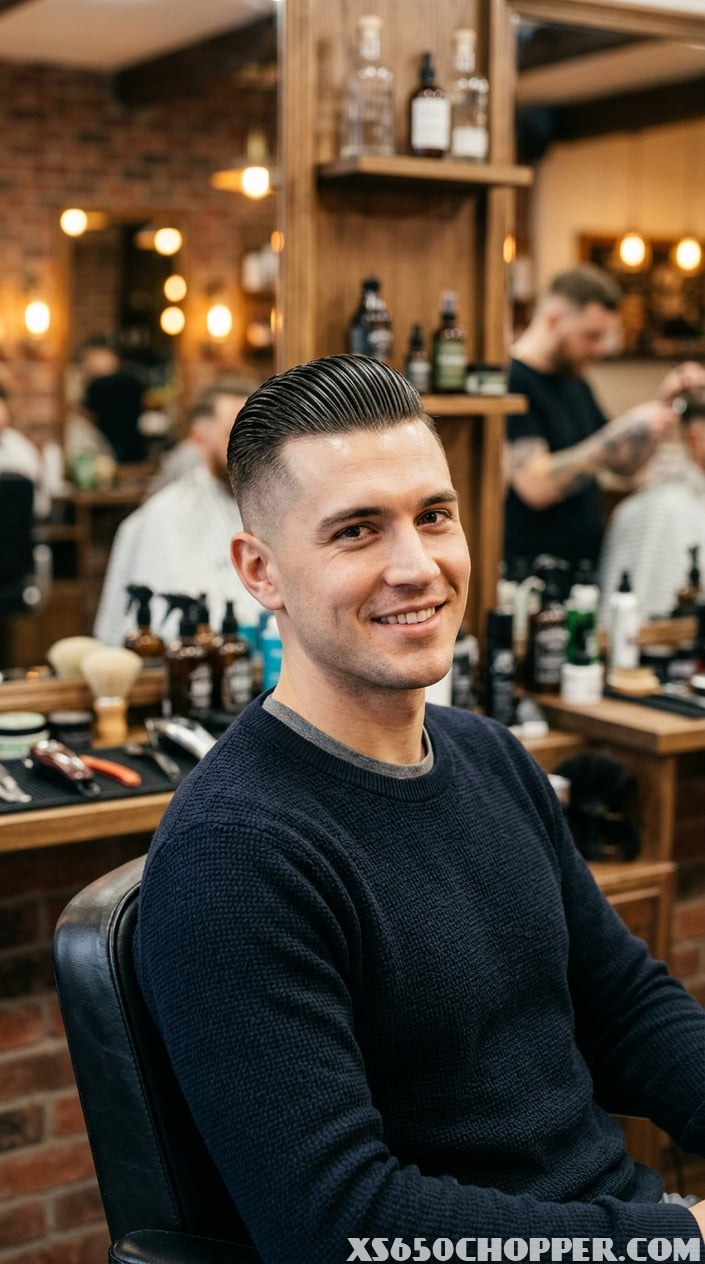
The slicked back undercut pairs short, clipped sides with a longer top that you comb back for a clean, intentional look. You get a sharp contrast that reads modern while still nodding to classic grooming.
This style works for many hair types, but it’s easiest with straight to slightly wavy hair. Thick hair gives more volume; fine hair needs lighter products and more frequent trims to keep the silhouette defined.
Ask your barber for a disconnected undercut or a fade on the sides depending on how bold you want the contrast. Tell them how long you want the top to be — usually enough to comb back comfortably — and whether you prefer a softer blend or a stark line.
Use a medium-hold pomade or clay to slick the hair back without making it look greasy. Apply to towel-dried or dry hair, comb through from front to back, and finish with a dab of texture product if you want a more natural, matte effect.
Maintenance is straightforward: regular trims every 3–6 weeks on the sides and occasional thinning or shaping on top. You’ll also want to develop a daily styling routine that matches your preferred finish — classic shiny or modern textured.
PRO TIP
If your hairline recedes or you have a cowlick, ask your barber to adjust the length and angle on top to camouflage those areas. Smaller changes in taper and length can make the slicked back undercut look balanced and effortless for your face shape.
9) Ivy League (Princeton) Cut

The Ivy League, also called the Princeton or Harvard cut, keeps the sides tidy and the top long enough to part and sweep. It blends the short structure of a crew cut with a refined side part, giving you a smart, versatile look.
You can wear it neat and classic for work, or loosen the top for a more casual, textured finish. It suits most face shapes, especially those with strong jawlines, because the length on top lets you control balance and proportion.
Styling requires minimal time: a light pomade or matte paste and a comb are often enough. Ask your barber for tapered sides and a slightly longer top — about 1.5–3 inches — so you can side part or sweep it back.
Maintenance is low to moderate; schedule trims every 4–6 weeks to keep the taper clean. If you prefer a modern twist, request a low fade on the sides or add subtle texture on top for movement without losing the classic silhouette.
PRO TIP
Ask your barber to show you two parting options during the cut — a defined part and a softer, natural break — so you can decide which fits your daily routine.
10) French Crop with Heavy Fringe
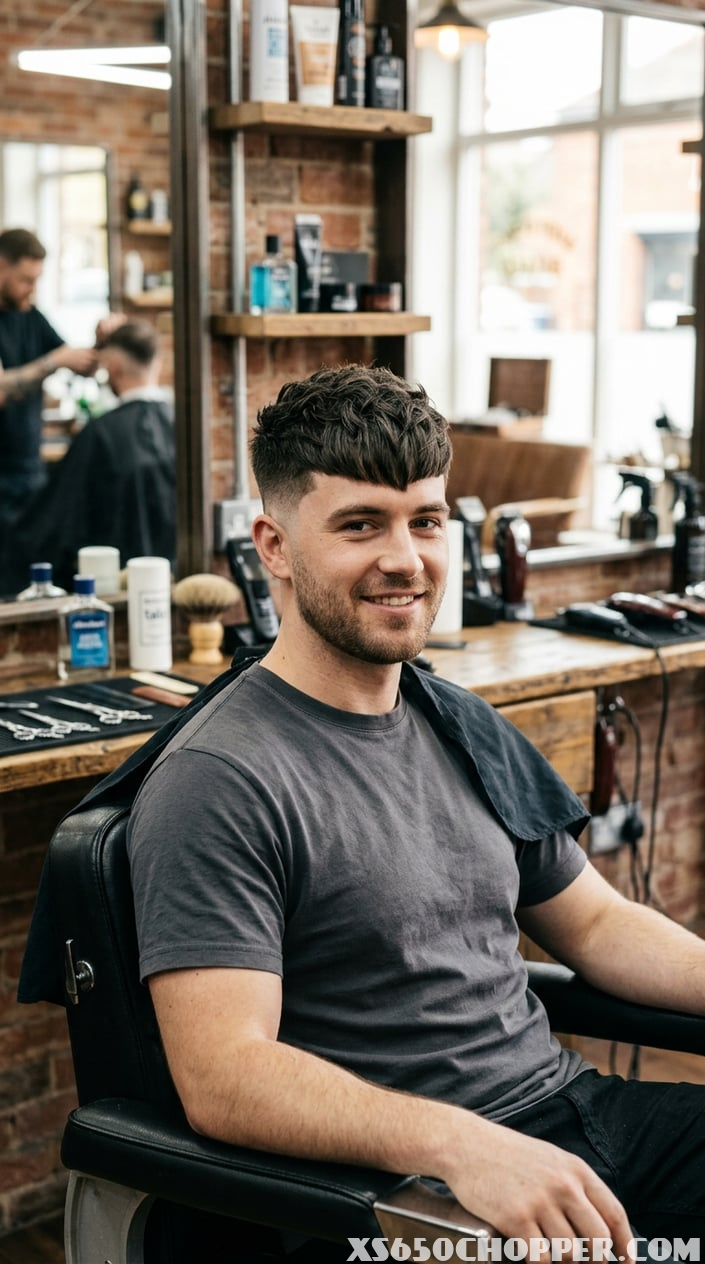
The French crop with a heavy fringe gives you a bold, defined front that frames your face and draws attention to your eyes. It pairs short, tapered sides with a thick, blunt fringe that sits low on the forehead.
This cut works well if you want low daily maintenance but a strong stylistic statement. The top stays textured so you can shift between a flat, forward look or a slightly tousled finish depending on your mood.
Ask your barber for a heavier weight at the front and softer texturing through the crown to avoid a helmet effect. Keep the sides faded or tapered short to emphasize the contrast between the fringe and the rest of your hair.
Styling is simple: use a small amount of matte paste or clay, work it through damp hair, and push the fringe forward. For more separation and movement, use a light sea-salt spray before applying product.
If you have thicker hair, this cut holds shape well and looks intentional without much effort. For fine hair, shorter length and more textured layering at the fringe will help create the illusion of density.
Face shape matters. The heavy fringe suits oval and longer faces best because it shortens vertical length, while round faces may need a softer, side-swept fringe to avoid appearing wider.
PRO TIP
Tell your barber how low you want the fringe to sit and whether you prefer a blunt or slightly choppy edge. Bring photos and ask for small gradual trims until you find the exact length that flatters your face.
11) Long Layered Men’s Cut
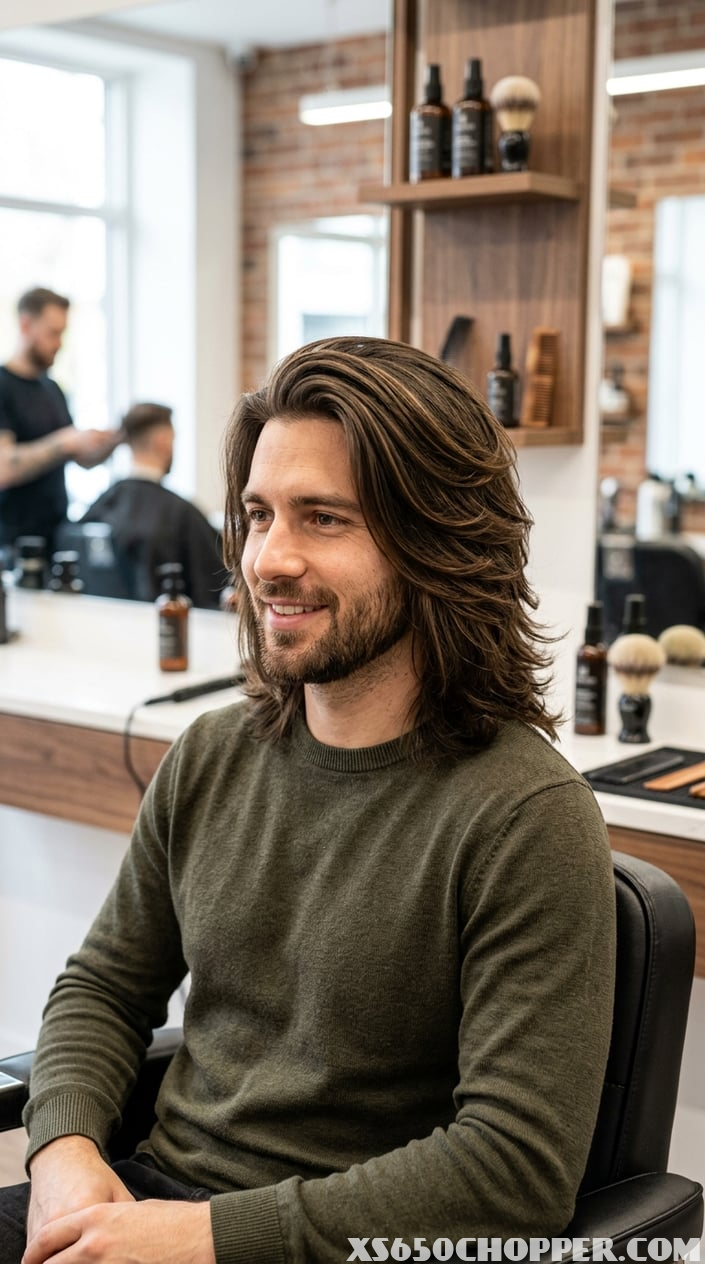
Long layered cuts add movement and reduce bulk while keeping length. You can wear them loose for a relaxed look or style them back for more polish.
Layers create natural texture and help hair sit better around your face. They work well with wavy, straight, or slightly curly hair and suit most face shapes when tailored by your barber.
Ask your barber to remove weight without sacrificing length; face-framing layers and subtle graduation at the ends keep the shape controlled. Regular trims every 8–12 weeks prevent split ends and keep layers defined.
Use lightweight cream or sea-salt spray to enhance texture without stiffness. For a sleeker finish, apply a small amount of smoothing balm and comb through while damp.
PRO TIP
Tell your barber how much volume you want and point out any cowlicks or growth patterns. That guidance helps them place layers where they flatter your head shape and make styling easier at home.
12) Temple Fade with Comb Over

The temple fade with comb over pairs a sharp, tapered temple fade with a longer, swept top for a clean but stylish look. You get crisp edges around the temples that frame your face while the combed top adds polish and movement.
This style works on straight to wavy hair and suits many face shapes because the fade keeps the sides neat and the comb over lets you control volume. Ask your barber for the fade height you prefer—low for a subtle effect, mid for balance, or high for a bolder contrast.
Styling takes minutes: towel-dry, apply a small amount of matte paste or light pomade, and comb or finger-style the top to the side. For more texture, use a blow-dryer on low while lifting at the roots to add natural lift and hold.
Maintain the crisp temple lines with regular touch-ups every 2–4 weeks depending on how fast your hair grows. You can vary the look by changing the part line, adding a subtle skin fade, or pairing the comb over with a textured crop on top.
PRO TIP
If you want more volume, keep a bit more length on top and use a volumizing product; for a sleeker finish, choose a cream or pomade and comb through while damp.
13) Messy Medium-Length Shag

The messy medium-length shag gives you lived-in texture with movement and volume. It works well if you want a relaxed look that still reads intentional and modern.
Layers are the key — choppy, disconnected layers create that signature shag silhouette and prevent the weight that flattens medium-length hair. Ask your barber for soft, razor-cut ends and layers that frame the face without looking overly styled.
This cut suits most hair types, especially straight to wavy textures that benefit from added separation. Curly hair can wear a shag too, but it usually needs longer layers and careful thinning to avoid bulk.
Styling stays simple: towel-dry, apply a small amount of sea salt spray or matte paste, and scrunch or tousle with your fingers. Let it air-dry for the most natural texture, or use a blow dryer with a diffuser for added volume on the roots.
Maintenance is low to moderate — expect a trim every 6–10 weeks to keep the layers fresh and ends tidy. You can let it grow out for a more relaxed shape, but periodic shaping preserves the cut’s intended movement.
PRO TIP
Tell your barber you want “choppy, face-framing layers and textured ends” and show photos of the exact amount of messiness you like. This helps avoid a too-uniform or too-heavy result.
14) Caesar Cut with Textured Top

The Caesar cut keeps its signature short fringe but adds a textured top for modern movement. You get the neat, forward-brushed fringe of a classic Caesar with more lift and separation on top.
Ask your barber for short sides and a slightly longer crown that’s cut to create layers. Texture shears or point-cutting give the top a choppy finish that reads casual yet controlled.
This version works well with straight and slightly wavy hair. If your hair is very curly, request slightly longer length on top so the texture shows without shrinking too much.
Style by towel-drying to damp, then apply a small amount of matte paste or texture clay. Work the product through your hair with your fingers, push the fringe forward, and tease the crown lightly to keep volume without stiffness.
Maintenance is low: trims every 4–6 weeks preserve the shape and textured detail. You’ll want occasional heavier trims if you prefer a cleaner perimeter or shorter sides.
PRO TIP
Tell your barber you want a forward fringe with disconnected texture on top. That instruction helps them balance the blunt front with a relaxed, layered crown for an updated Caesar.
15) Skin Fade Crew Cut

The skin fade crew cut pairs a classic crew top with very short, even sides that taper down to the skin. You get clean contrast that sharpens your profile while keeping the top short and manageable.
This style works well if you want a neat, modern look without much daily fuss. It highlights facial features and can make thick or textured hair look more intentional.
Ask your barber whether a low, mid, or high fade suits your head shape and hairline. A low fade keeps things conservative, a mid fade adds balanced contrast, and a high fade gives a bolder, more contemporary edge.
Styling is simple: a light pomade, matte paste, or sea salt spray helps define texture without weighing hair down. For very short crew tops, you might only need a quick brush or your fingers to keep the shape.
Maintenance involves regular fades every 2–4 weeks to preserve the crisp transition. Trimming the top every 4–6 weeks keeps the crew silhouette tidy and proportional.
PRO TIP
Bring photos to your barber and describe how high you want the fade and how much length to leave on top. This ensures your barber tailors the cut to your face, hair type, and lifestyle.
16) Burst Fade Mohawk
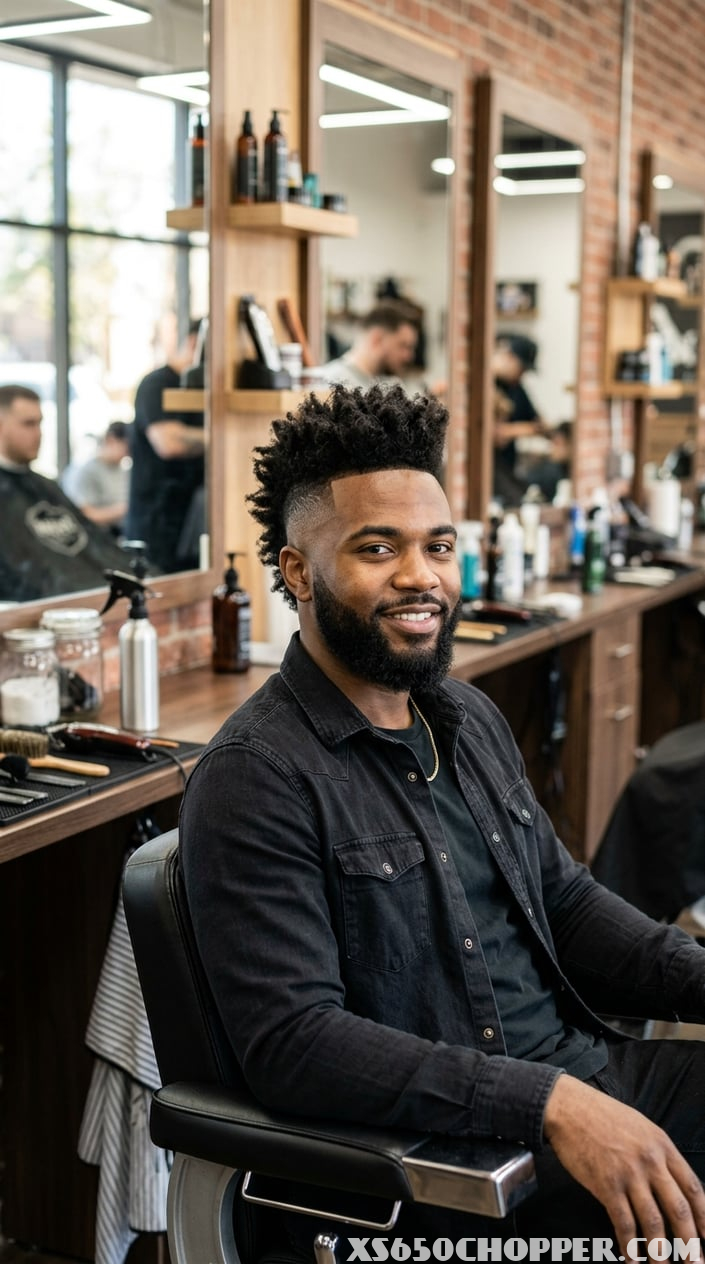
The burst fade mohawk pairs a focused, curved fade around the ears with longer hair along the center of your head. It keeps the rebellious silhouette of a mohawk but reads cleaner and more wearable for everyday life.
This style works with straight, wavy, or curly hair; tight curls add texture and bounce, while straighter hair gives a sharper, architectural look. You can scale the length on top from a subtle ridge to a dramatic strip, depending on how bold you want the effect.
Request a burst fade specifically when you sit in the barber chair so the taper arcs behind the ear and down the nape. Bring photos and discuss fade height, top length, and whether you want skin or clipper graduations for a precise result.
Maintenance is straightforward: use a light pomade, matte paste, or curl cream to define the center strip and control flyaways. Regular touch-ups every 2–4 weeks keep the fade crisp; longer top lengths allow slightly longer intervals.
PRO TIP
Ask your barber to blend the transition subtly if you prefer a softer look, or ask for a sharp disconnect if you want high contrast.
17) Bro Flow (Medium-Length Natural Flow)

The bro flow keeps hair at a medium length and encourages natural movement away from your face. It generally sits past the ears and uses soft, subtle layers to avoid bulk and maintain shape.
This cut works well on straight, wavy, and loosely curly hair. You get an effortless look that still reads groomed, especially when the top is blended into slightly shorter sides.
Ask your barber for medium-length layers with a natural flow and movement. Bring two or three reference photos showing front, side, and back views so they understand the direction and length you want.
Styling is low-effort: towel-dry, apply a light cream or sea-salt spray, and push hair back with your fingers. You can add a small amount of matte paste for hold without stiffness if you want more control.
The bro flow suits many face shapes when tailored correctly. Your barber should adjust layer length and side tapering to balance your forehead, jawline, and profile.
PRO TIP
Tell your barber you want “soft layers, not blunt cuts” and show how much length you want behind the ears. Regular trims every 6–8 weeks keep the shape clean without losing the relaxed flow.
18) Hard Part with Low Fade

The hard part with a low fade gives you a clean, modern edge without being flashy. A precisely shaved line creates a distinct separation between the longer top and the closely tapered sides, making styling simpler and more intentional.
This cut works with many top styles — comb-overs, textured crops, and subtle pompadours all pair well. The low fade keeps the taper understated and professional while the hard part adds structure and visual interest.
Maintenance is straightforward: you’ll need touch-ups on the shaved part every few weeks to keep the line sharp. Regular trims on the sides preserve the fade, and occasional shaping of the top maintains your desired volume and texture.
PRO TIP
Ask your barber where to place the hard part based on your hairline and cowlicks. Positioning the line slightly off-center often looks most flattering and helps your natural growth pattern cooperate.
19) Disconnected Short Quiff
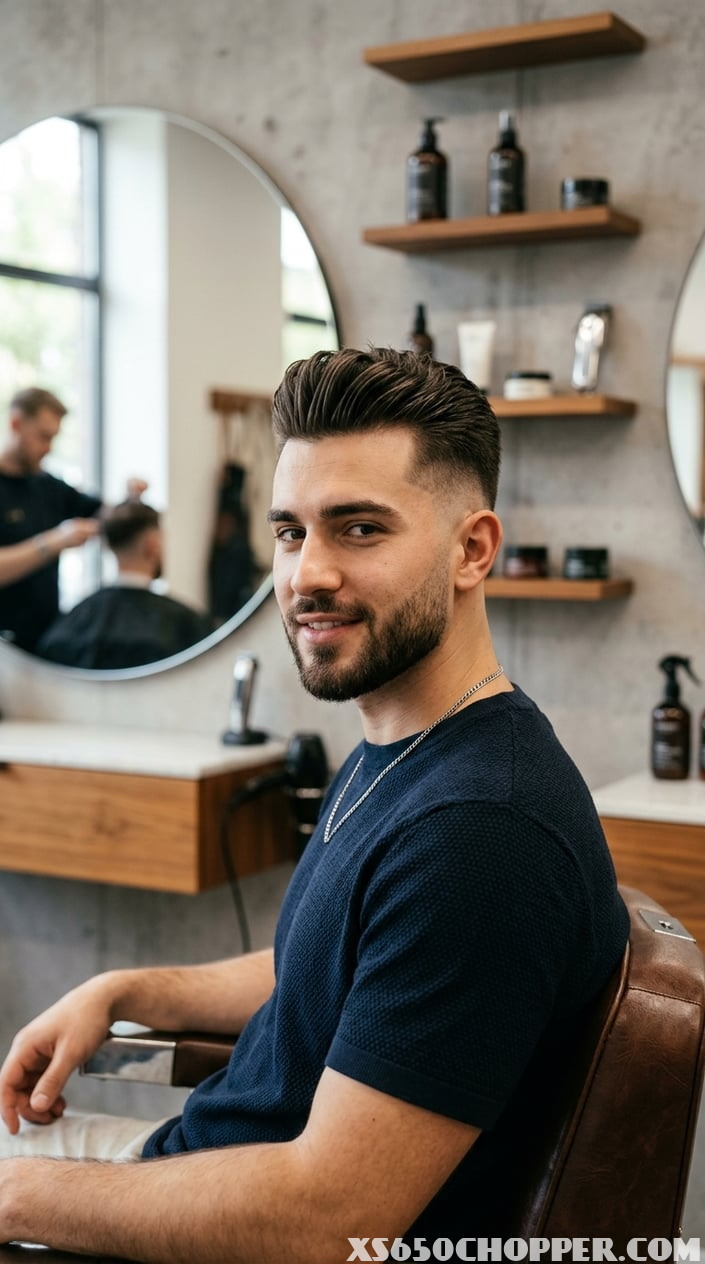
The disconnected short quiff pairs a voluminous front with sharply cropped sides, creating a clear contrast that frames your face. It feels modern and clean without demanding long lengths, so it works well if you like a bold look but prefer low maintenance.
You style the top with a matte paste or light pomade to build lift and texture. Use a blow dryer and your fingers or a small round brush to train the quiff upward, then finish with a bit of product to hold shape without stiffness.
Ask your barber for a strong disconnection between the top and sides—either with clippers faded down or scissor-cut short sides—so the quiff reads clearly. Tell them how much volume you want up front and whether you prefer a softer transition or a sharp line for a more dramatic effect.
This cut suits most face shapes because you can adjust the height and taper to balance your features. If you have finer hair, keep the top slightly shorter and use volumizing products; thicker hair benefits from more length on top for a fuller quiff.
PRO TIP
Work in small amounts of product and build gradually to avoid weighing the quiff down. Re-style with a little water or a dab of leave-in conditioner on low-humidity days to refresh the shape without washing.
20) Classic Pompadour with Tapered Sides

The classic pompadour pairs height and volume on top with clean, tapered sides for a timeless look. You get a style that flatters many face shapes while remaining versatile for both casual and formal settings.
Ask your barber for length on top that allows you to sweep the hair back and upward. The sides should be tapered cleanly toward the ears and neckline to emphasize the height and keep the overall silhouette neat.
Use a medium-hold pomade or cream to build volume and maintain a natural sheen without stiffness. Blow-dry while lifting at the roots to lock in shape, then finish by sculpting the front with a comb or your fingers for the amount of lift you prefer.
This cut works well on straight to slightly wavy hair and adapts to thicker textures with layered point-cutting. If your hair is very fine, keep slightly more length on top to create the appearance of fullness.
PRO TIP
Ask for a soft taper rather than an extreme undercut if you want an easier, low-maintenance grow-out. Regular trims every 3–6 weeks will preserve the shape and keep the sides tidy.