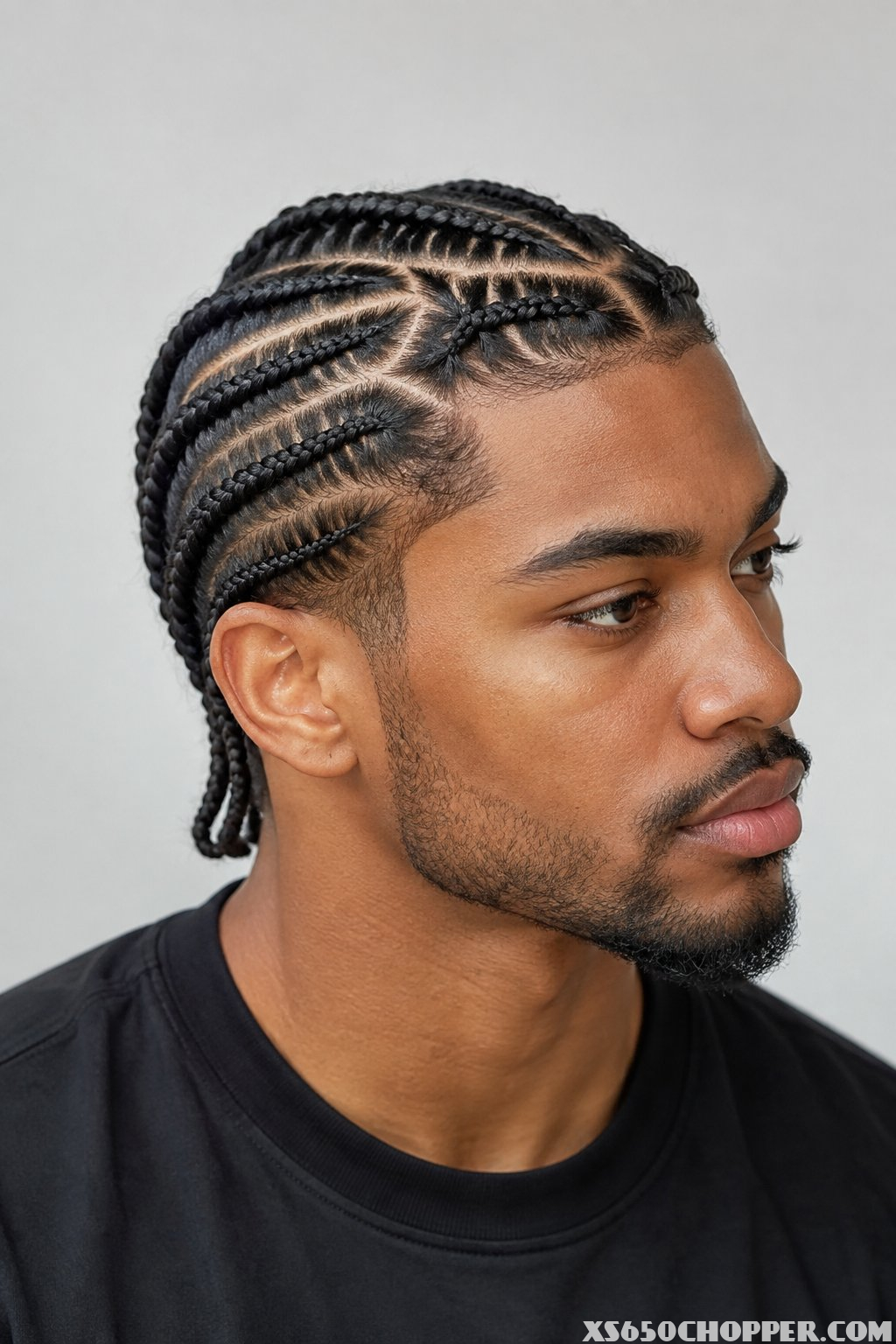
Cornrows give you a polished hairstyle with strong visual structure and practical hold. Straight-back cornrows with a low taper fade suit most men seeking a clean, versatile look because the neat braid pattern pairs easily with casual and professional styling.
Your choice of pattern, braid size, fade, and hair length shapes the final result. Simple straight-backs keep attention on your hairline and texture, while stitch parts, zigzags, and geometric designs create more visual detail. A skilled braider should also adjust tension to protect your scalp and edges.
Quick picks:
- Best everyday style: Straight-back cornrows with a low taper fade
- Best bold pattern: Spiderweb cornrows with a clean line-up
- Best length-focused look: Cornrow man bun with undercut
- Best statement cut: Braided mohawk cornrows with a burst fade
1) Straight-Back Cornrows With a Low Taper Fade
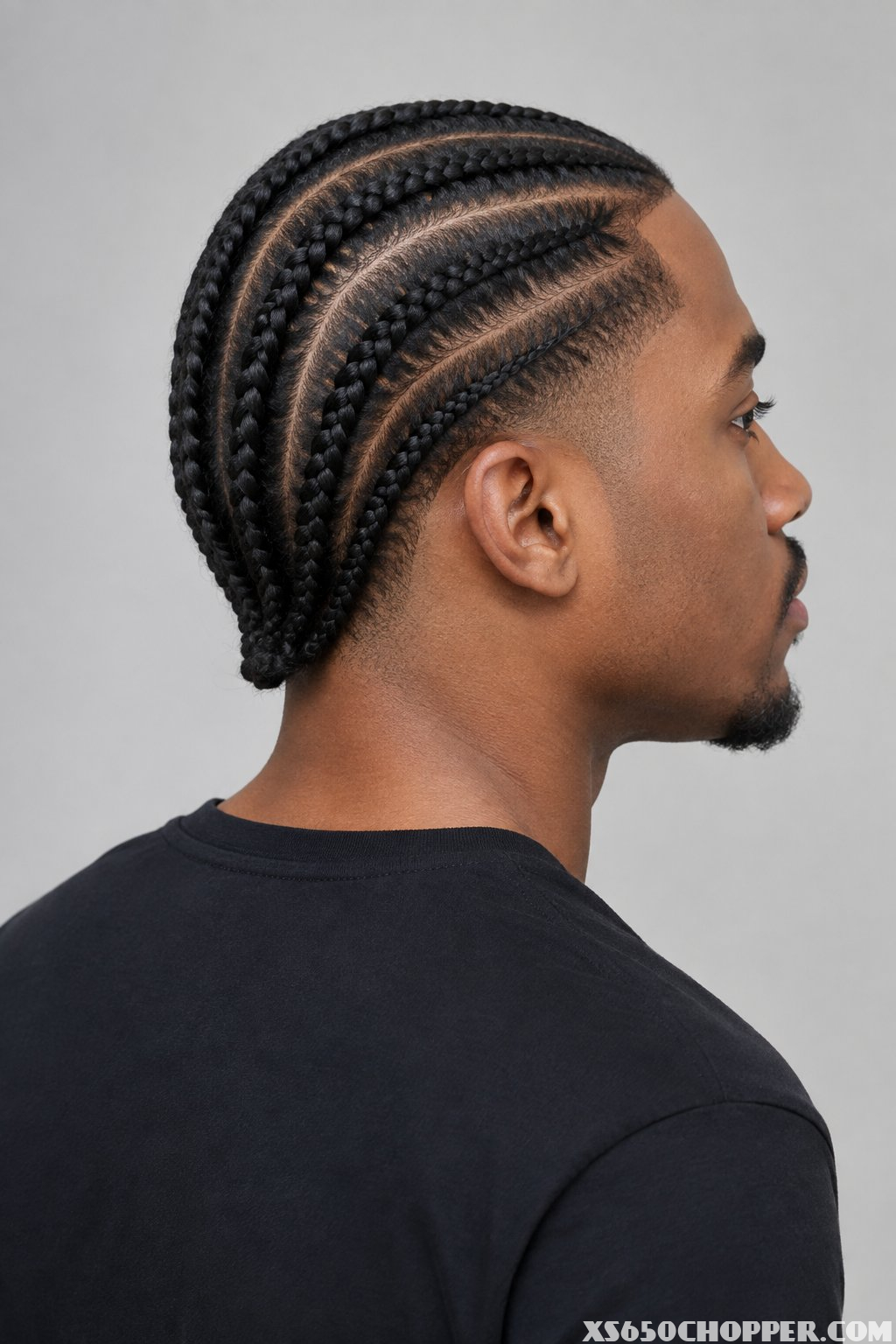
Straight-back cornrows with a low taper fade give you a balanced style for work, weekends, and formal events. Parallel rows draw the eye toward the crown, while the gradual taper keeps the sides neat without creating a dramatic contrast.
Ask your barber to clean the neckline and temples while leaving enough weight around the braid base. Medium-sized rows provide a practical balance between definition and styling time.
PRO TIP
Apply light scalp oil along the parts and sleep in a satin durag to reduce friction.
2) Six Stitch Cornrows With a Mid Skin Fade
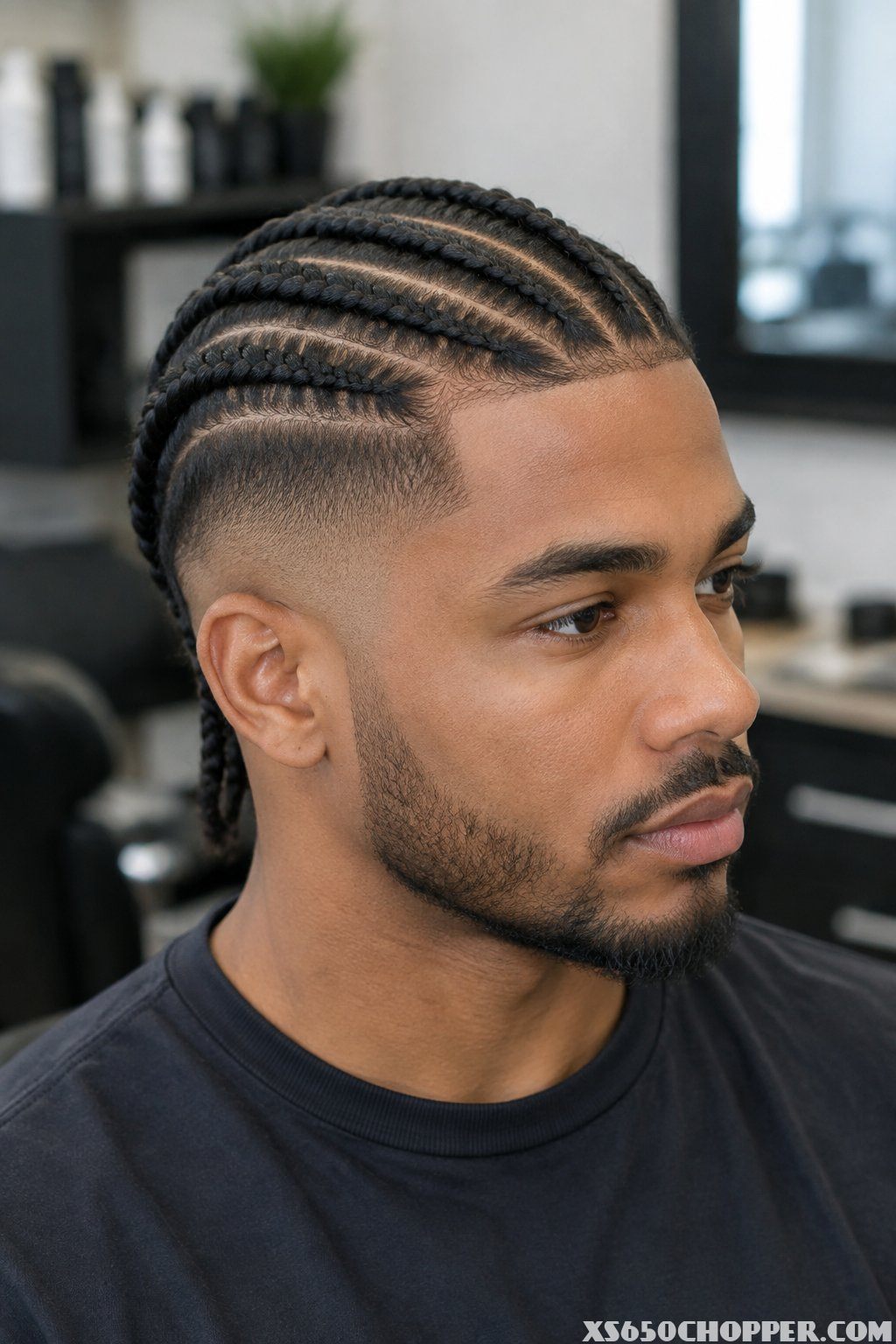
Six stitch cornrows with a mid skin fade create a crisp, athletic profile. The defined parting gives each row a clean border, while the skin fade exposes the sides for sharp contrast.
This design works well when you want visible structure without an elaborate scalp pattern. Keep the rows evenly spaced and request a precise line-up around the forehead.
PRO TIP
Bring a reference photo showing the exact number of rows and fade height so your barber can match the proportions.
3) Classic Straight-Back Cornrows
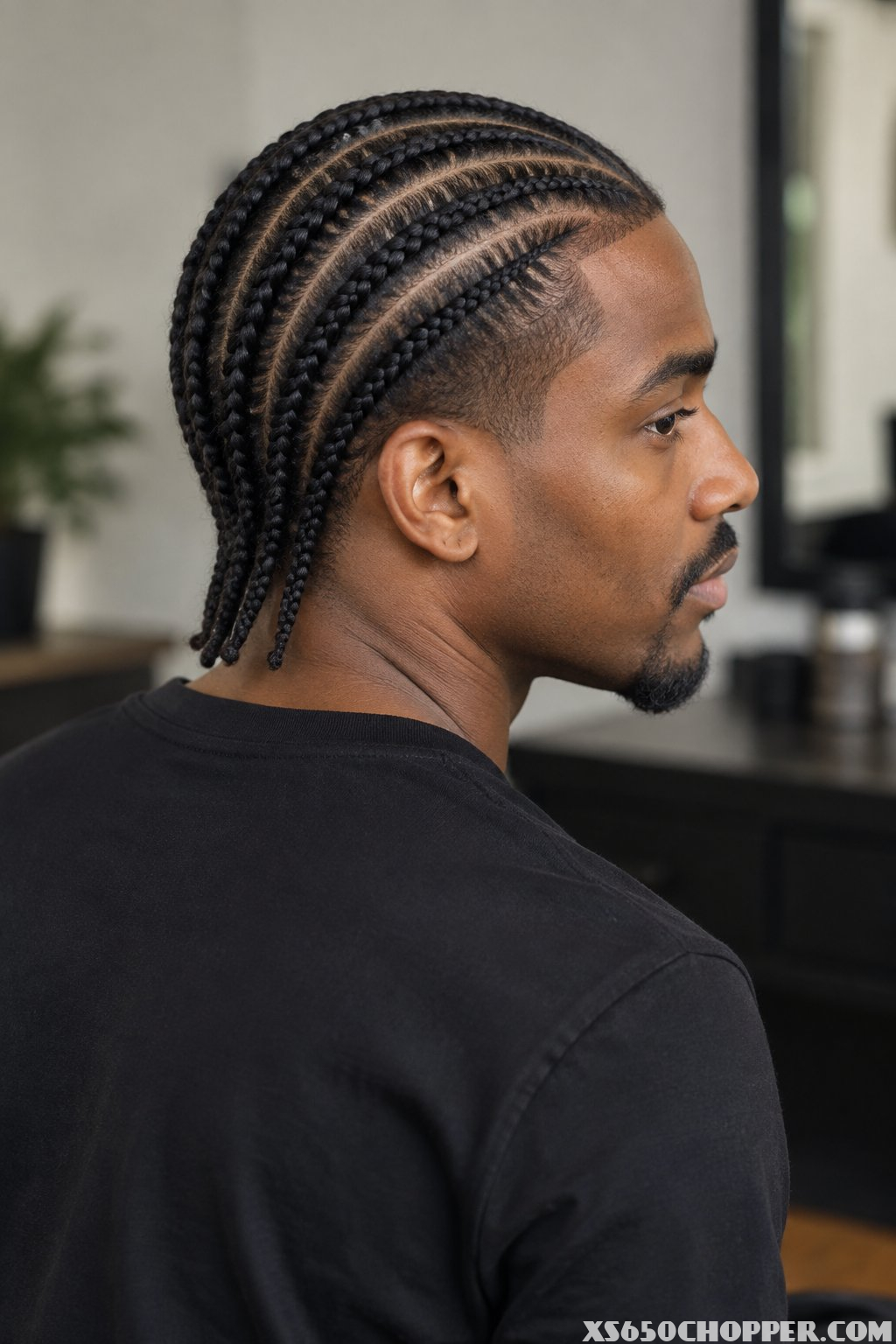
Classic straight-back cornrows offer a low-key, dependable look with clean direction from the hairline to the nape. The pattern suits short-to-medium hair and keeps daily styling simple.
Choose smaller rows for finer detail or larger rows for a bolder appearance. A natural neckline preserves the traditional finish, while a light edge-up adds definition.
PRO TIP
Request moderate tension around the hairline, especially if your edges feel sensitive after braiding.
4) Zigzag Cornrows With a Temple Fade
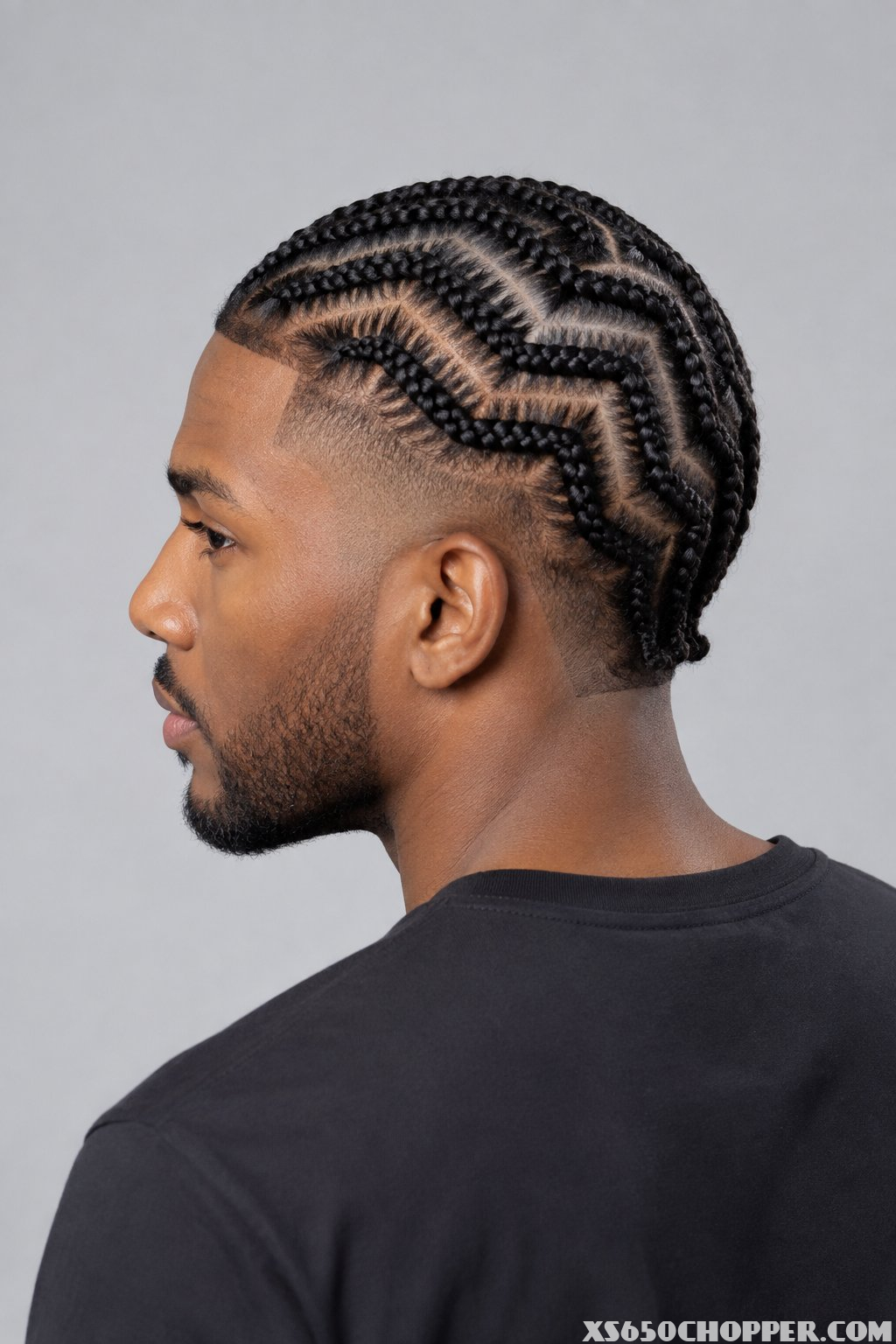
Zigzag cornrows with a temple fade turn a familiar braided base into a more artistic style. The angled parts create movement across the scalp, and the temple fade keeps the design framed.
This look needs precise sectioning, so choose a braider who works comfortably with curved or angular patterns. Medium-length hair gives the zigzags enough room to remain visible.
PRO TIP
Keep the zigzags moderately sized when you want the pattern to stay readable as the hair grows.
5) Feed-In Cornrows With a Burst Fade
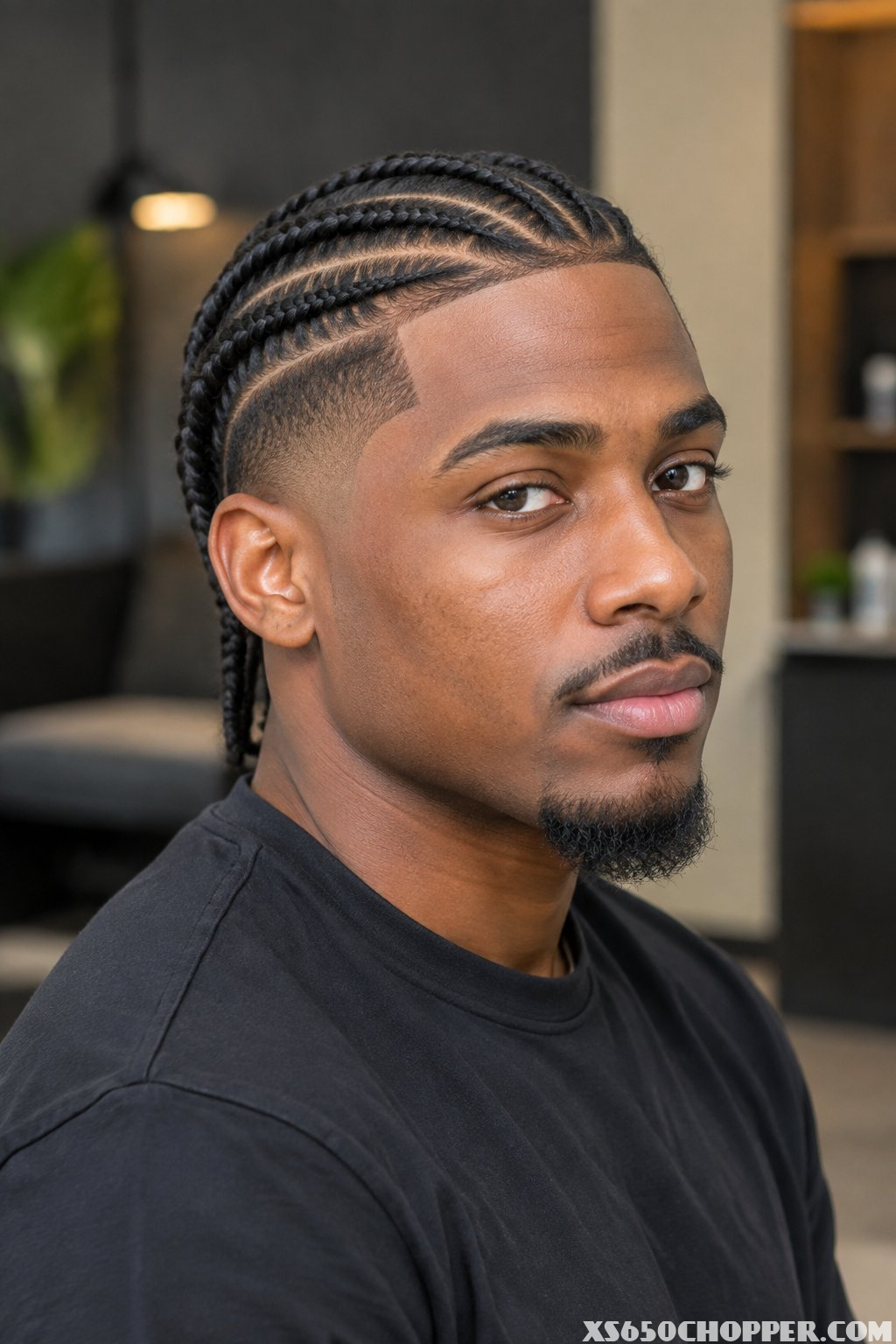
Feed-in cornrows with a burst fade create a smooth transition from a natural-looking hairline into defined braids. The burst fade curves around the ears, giving the style a rounded silhouette.
Feed-in technique helps the rows build gradually, which produces a flatter finish at the front. This pairing works especially well when you want texture on top with energetic shaping around the sides.
PRO TIP
Ask for braid thickness that matches your natural density so the feed-in transition looks even.
6) Crisscross Cornrows With a High Taper
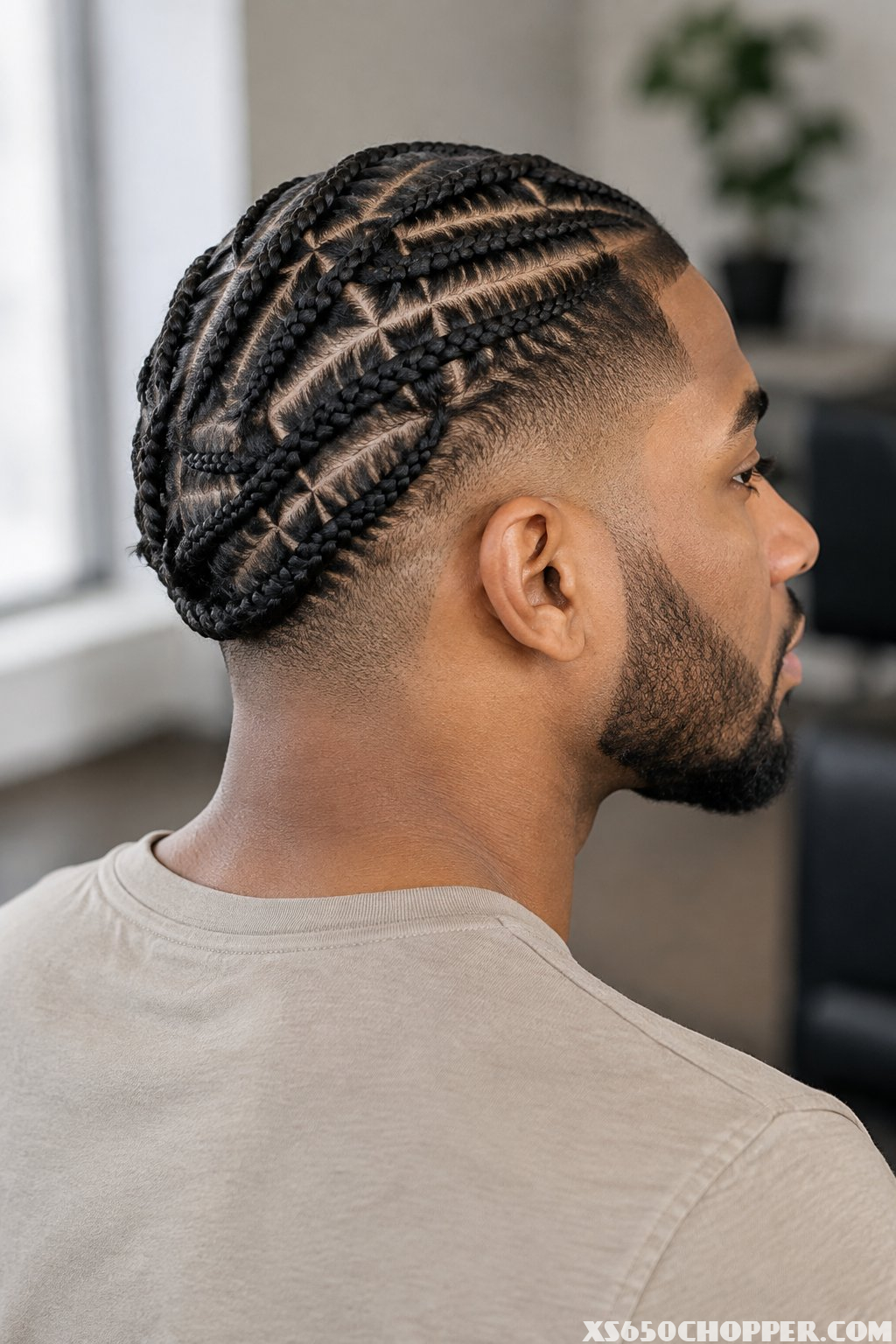
Crisscross cornrows with a high taper deliver a sharp, graphic finish. Intersecting rows add dimension across the top, while the elevated taper opens up the sides and emphasizes the pattern.
The style suits medium-to-long hair with enough length for secure intersections. Keep the design focused on the top when you want a wearable result that remains easy to maintain.
PRO TIP
Use a light braid mousse along the finished rows to smooth flyaways without creating heavy buildup.
7) Pop Smoke Braids With a Low Fade
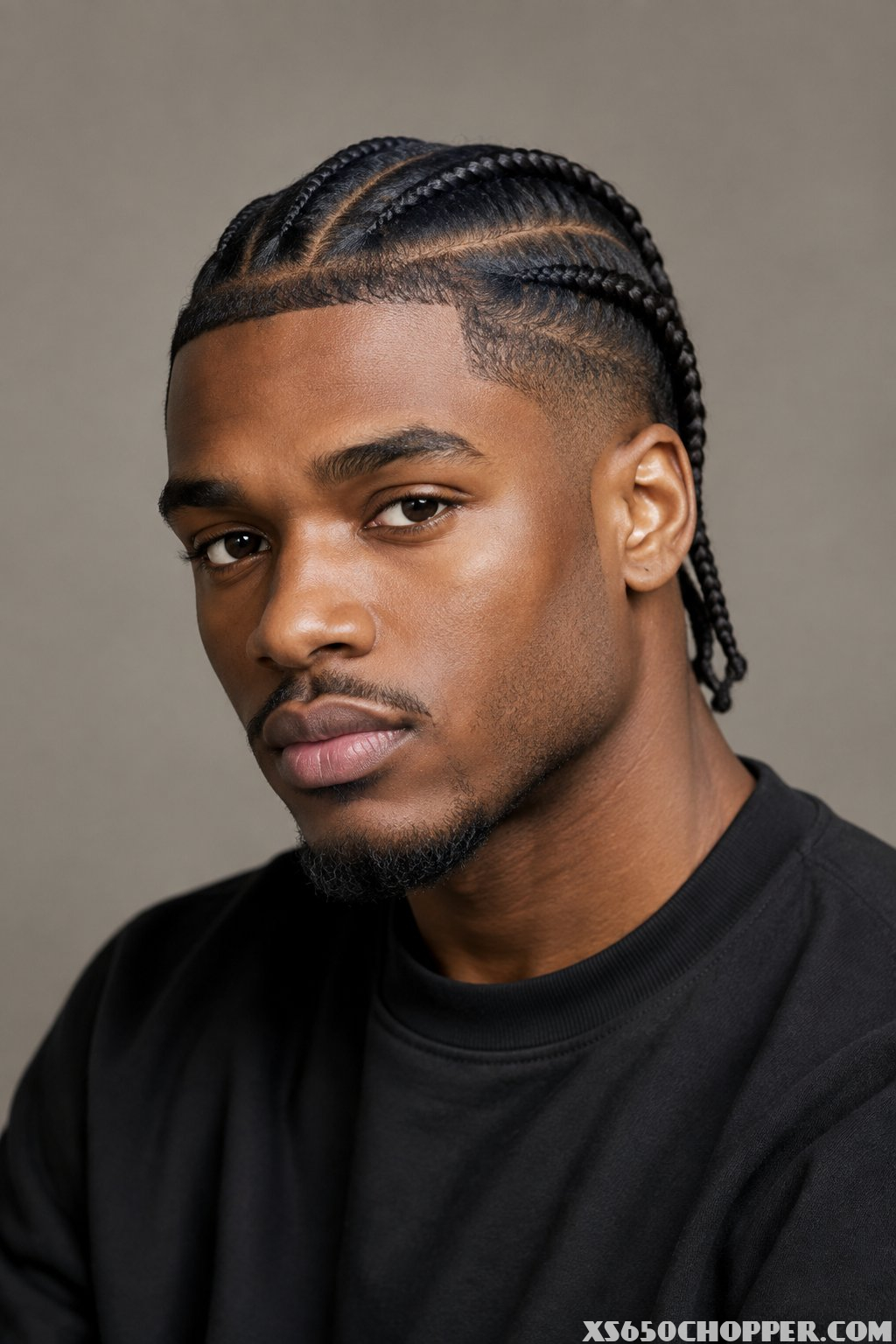
Pop Smoke braids with a low fade give you a bold layout built around paired or grouped rows. The braids often run back along the head, creating a strong directional pattern with a relaxed finish at the sides.
This style needs enough length for the rows to sit securely and maintain their shape. A low fade keeps the look grounded and makes the braid pattern the main feature.
PRO TIP
Confirm the braid direction before starting because small changes in part placement alter the entire layout.
8) Spiderweb Cornrows With Clean Line-Up
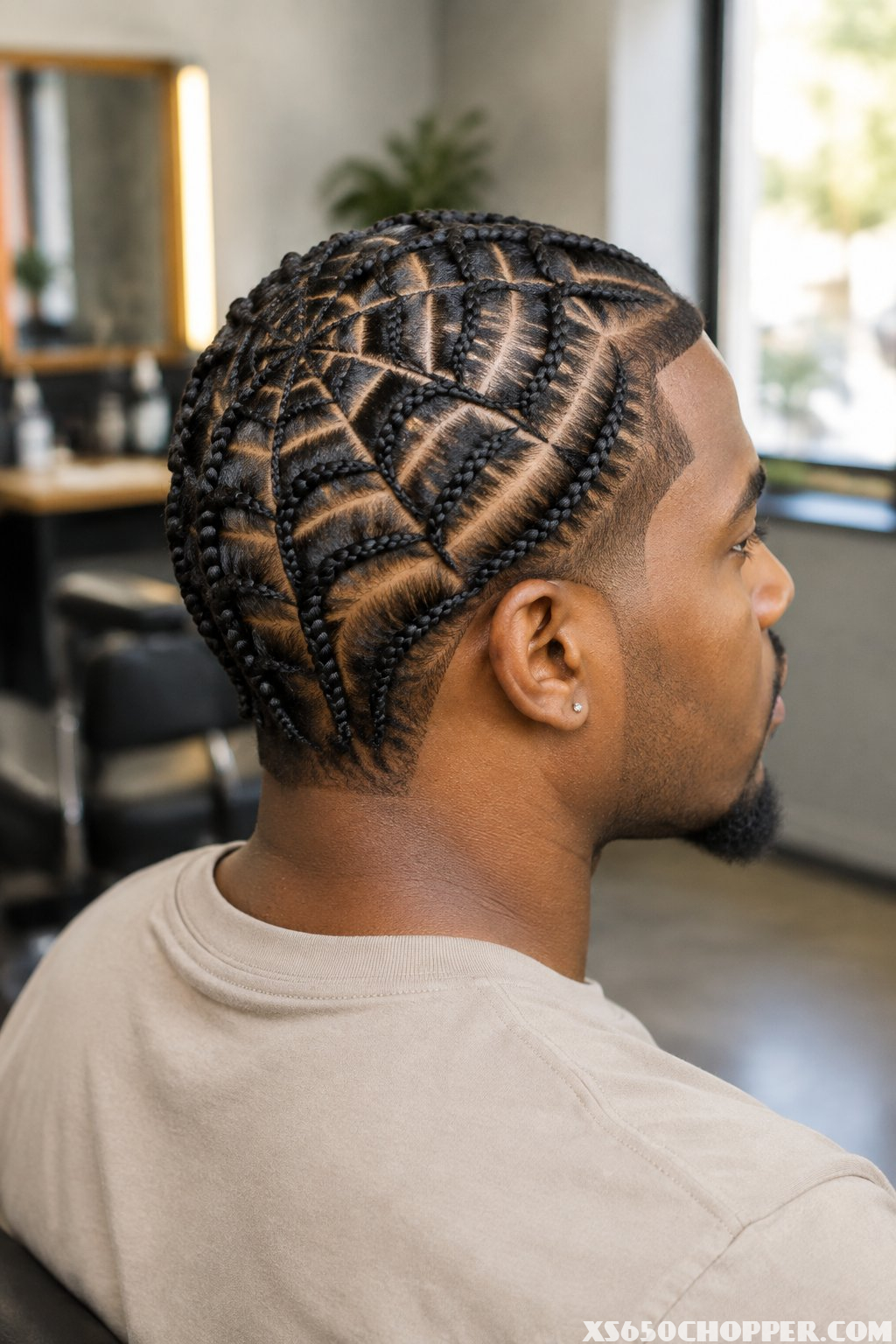
Spiderweb cornrows with a clean line-up create a detailed radial pattern that stands out from every angle. Sections spread from a central point, producing a web-like design across the scalp.
The style requires accurate parting and consistent tension. Pairing the pattern with a sharp forehead edge gives the design a finished frame without adding a separate fade.
PRO TIP
Schedule this pattern with an experienced braider because uneven central sections become noticeable as soon as the braids are complete.
9) Two-Layer Straight-Back Cornrows
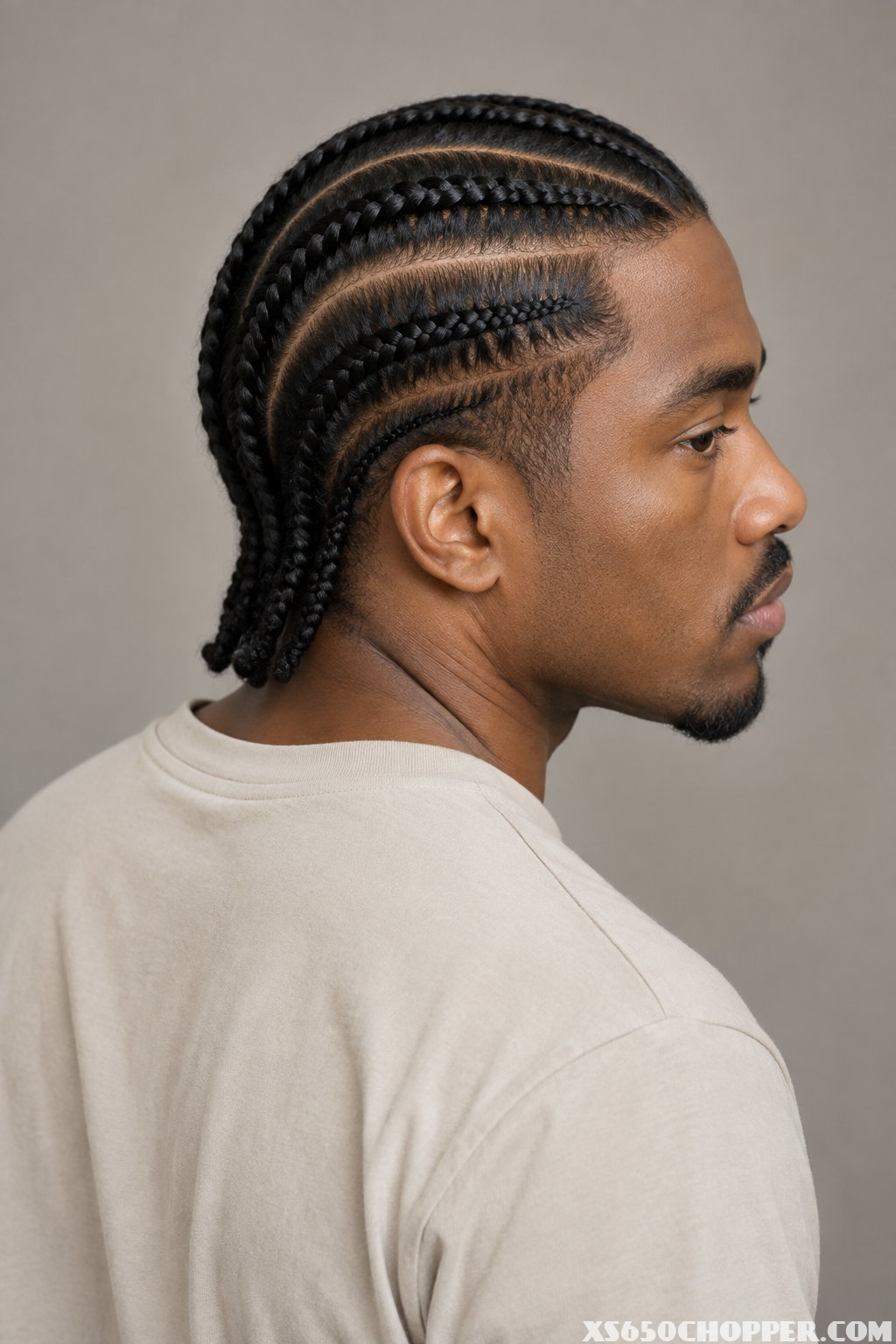
Two-layer straight-back cornrows stack rows across different heights to create added depth. The upper layer provides the main direction, while the lower layer fills the sides and back with a layered appearance.
This design suits medium or longer hair and works with a taper, fade, or natural sides. Keep the part lines clear so the two levels remain distinct as the style grows out.
PRO TIP
Choose a slightly larger braid size for each layer when you want the separation to remain visible.
10) Freestyle Stitch Cornrows With a Drop Fade
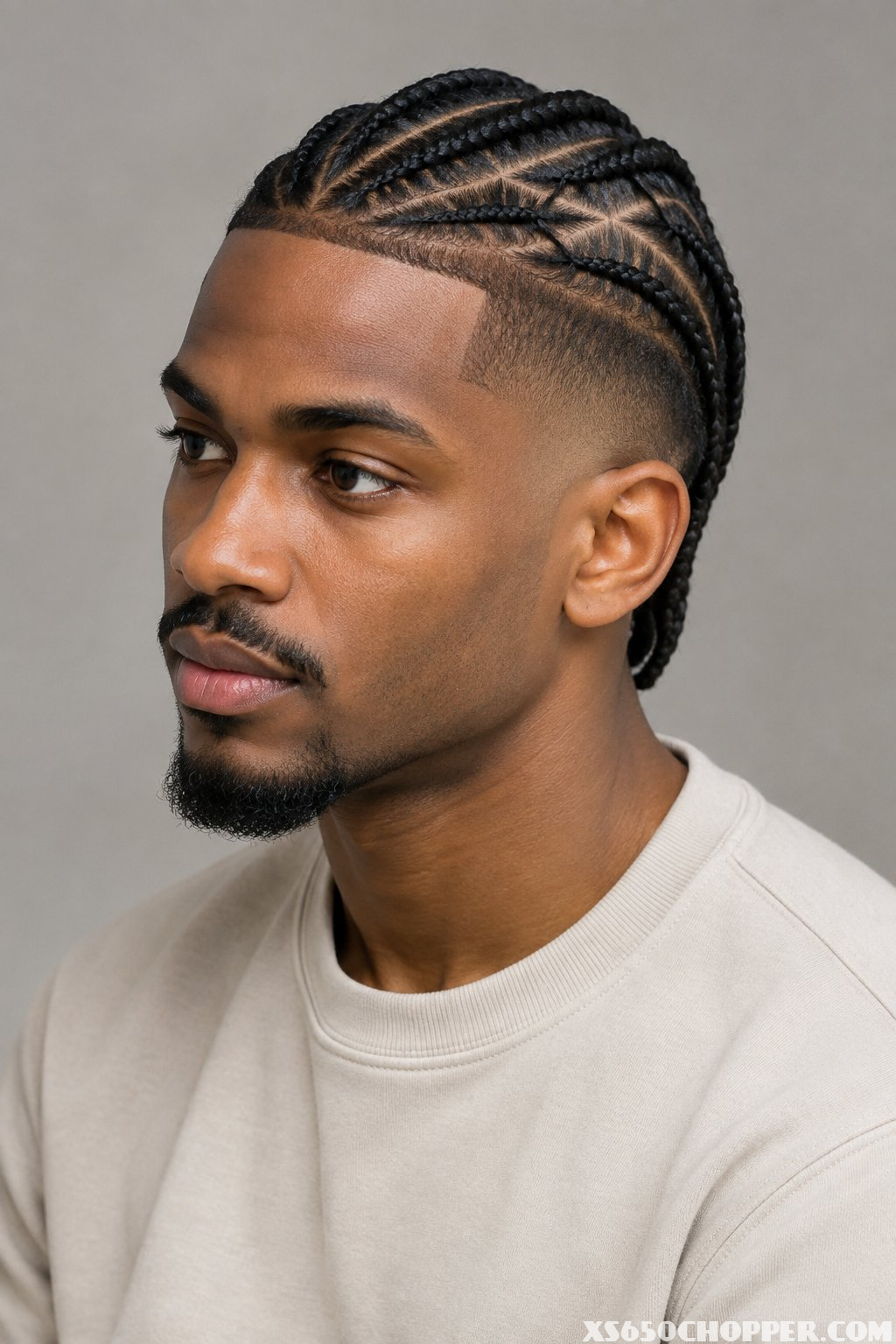
Freestyle stitch cornrows with a drop fade give you room for creative lines, curves, and directional changes. Stitch detailing makes the parts look precise, while the drop fade follows the head shape toward the neckline.
This option works when you want a customized design that does not follow a repeated grid. Show your braider the desired flow and agree on the fade height before the first part is made.
PRO TIP
Keep the freestyle pattern balanced across both sides when you want a polished finish suitable for formal settings.
11) Box Braids With Cornrowed Sides
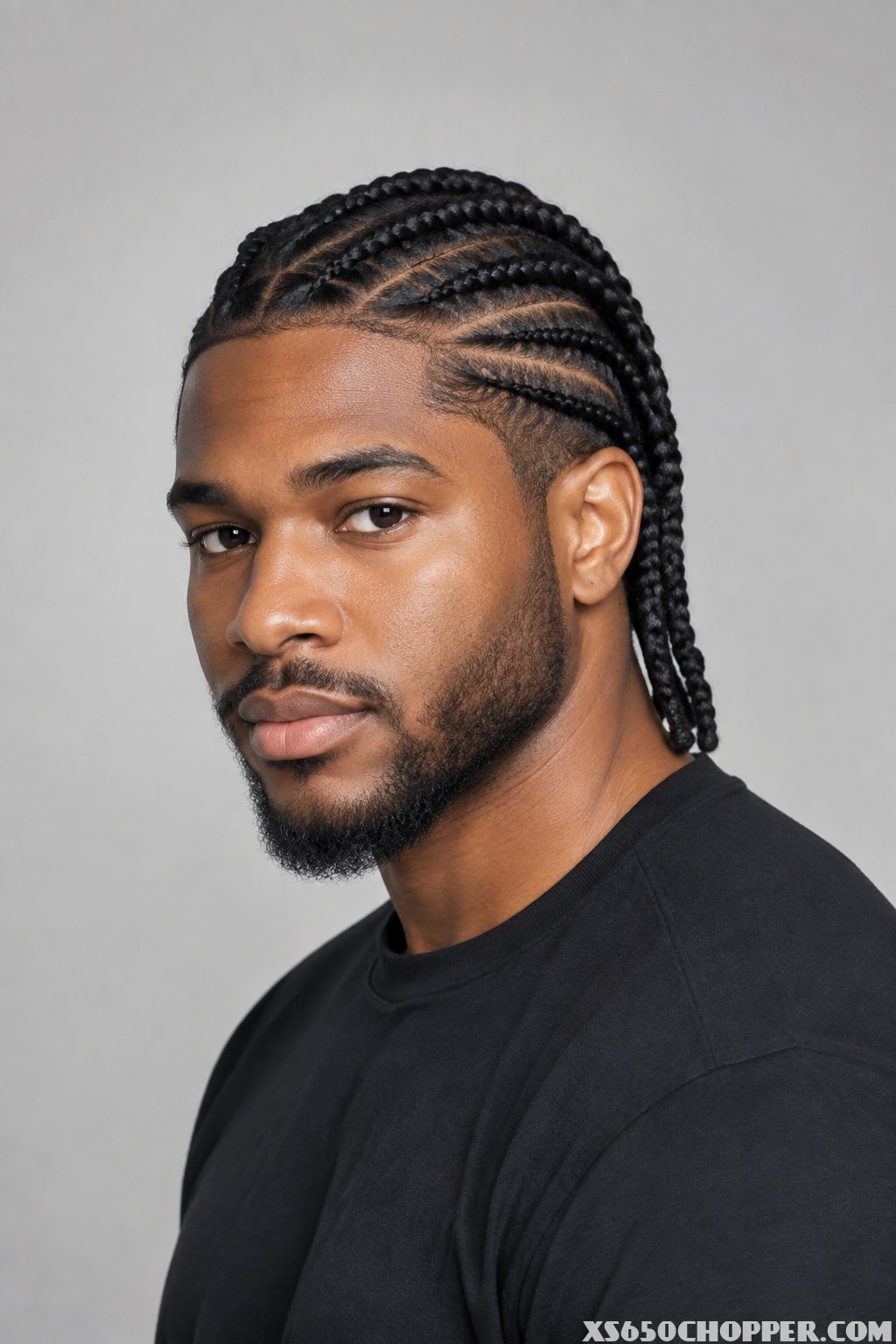
Box braids with cornrowed sides combine loose braid movement on top with tight, directional detail around the temples. The contrast gives you more styling flexibility than a fully cornrowed design.
You can wear the box braids down, tie them back, or add accessories when the length allows. Clean side cornrows keep the silhouette controlled while the top provides volume.
PRO TIP
Ask for consistent box sizes so the loose braids fall evenly and avoid excess weight on isolated sections.
12) Cornrow Man Bun With Undercut
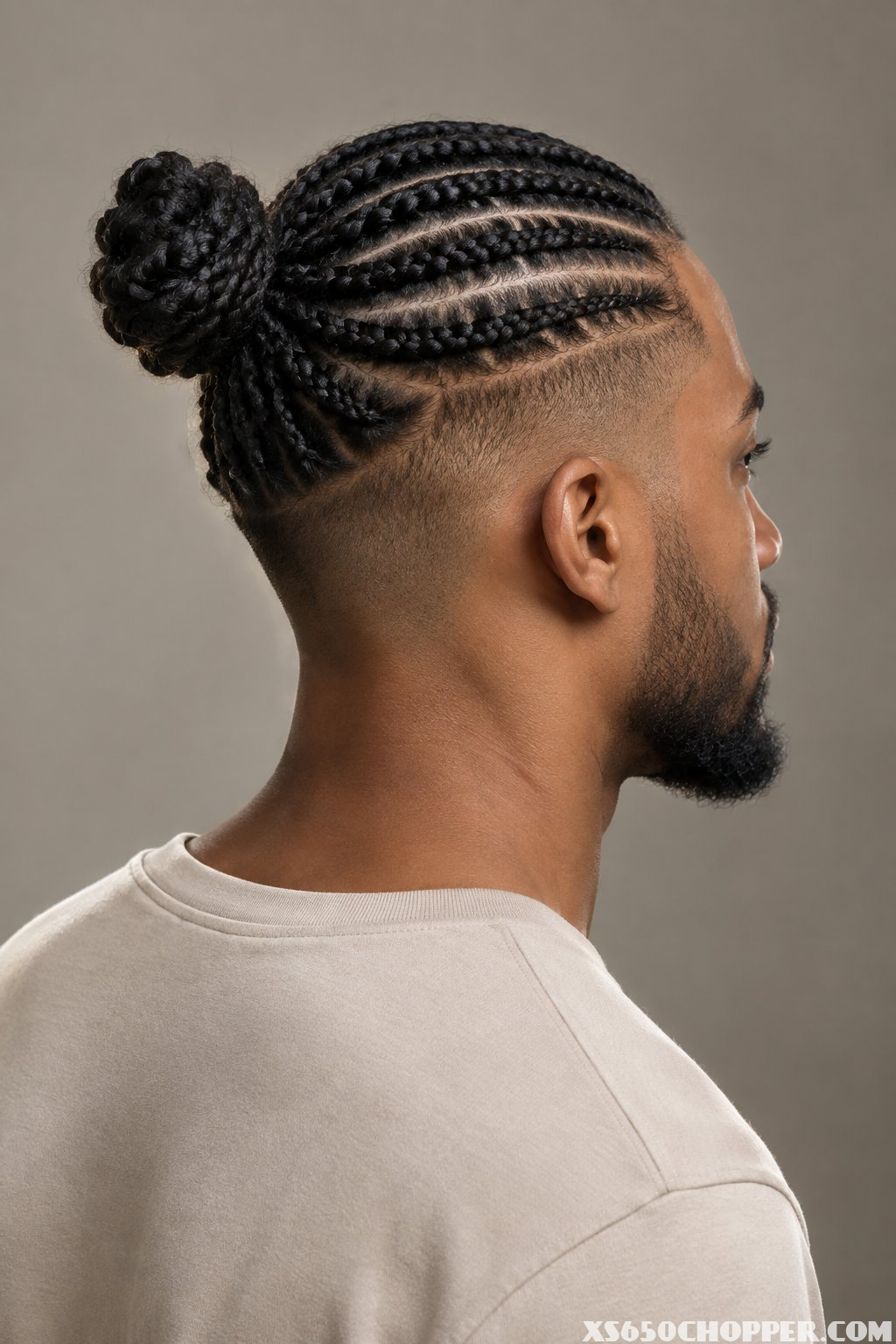
A cornrow man bun with an undercut gives you a practical way to showcase longer braided hair. Rows run toward the crown and gather into a bun, while the undercut keeps the lower sides compact.
You need enough length for the braids to reach the gathering point without pulling at the front. A clean undercut creates a strong boundary between the braided top and exposed sides.
PRO TIP
Use a soft, snag-free hair tie and avoid wrapping the bun too tightly during sleep.
13) Tribal Pattern Cornrows With a Sharp Line-Up
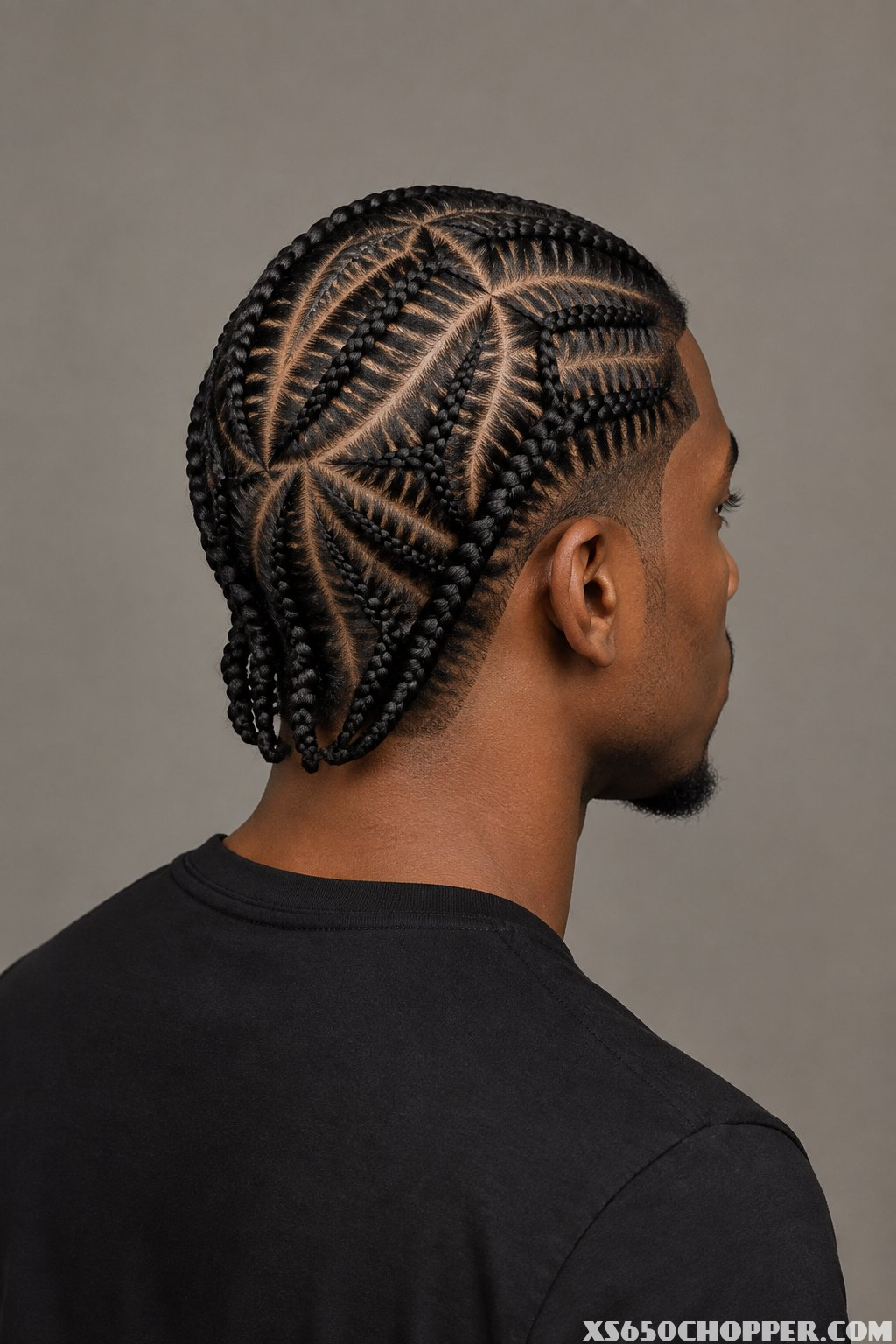
Tribal pattern cornrows with a sharp line-up use geometric sections to create a high-impact custom style. Curves, angles, and central motifs give the scalp a designed appearance, while the line-up frames the face.
This look benefits from medium-to-long hair and a braider skilled in symmetrical parting. Keep the edges crisp without repeatedly reshaping the natural hairline.
PRO TIP
Agree on the central motif and side balance before braiding so the finished design matches your face and head shape.
14) Side-Swept Cornrows With a Bald Fade
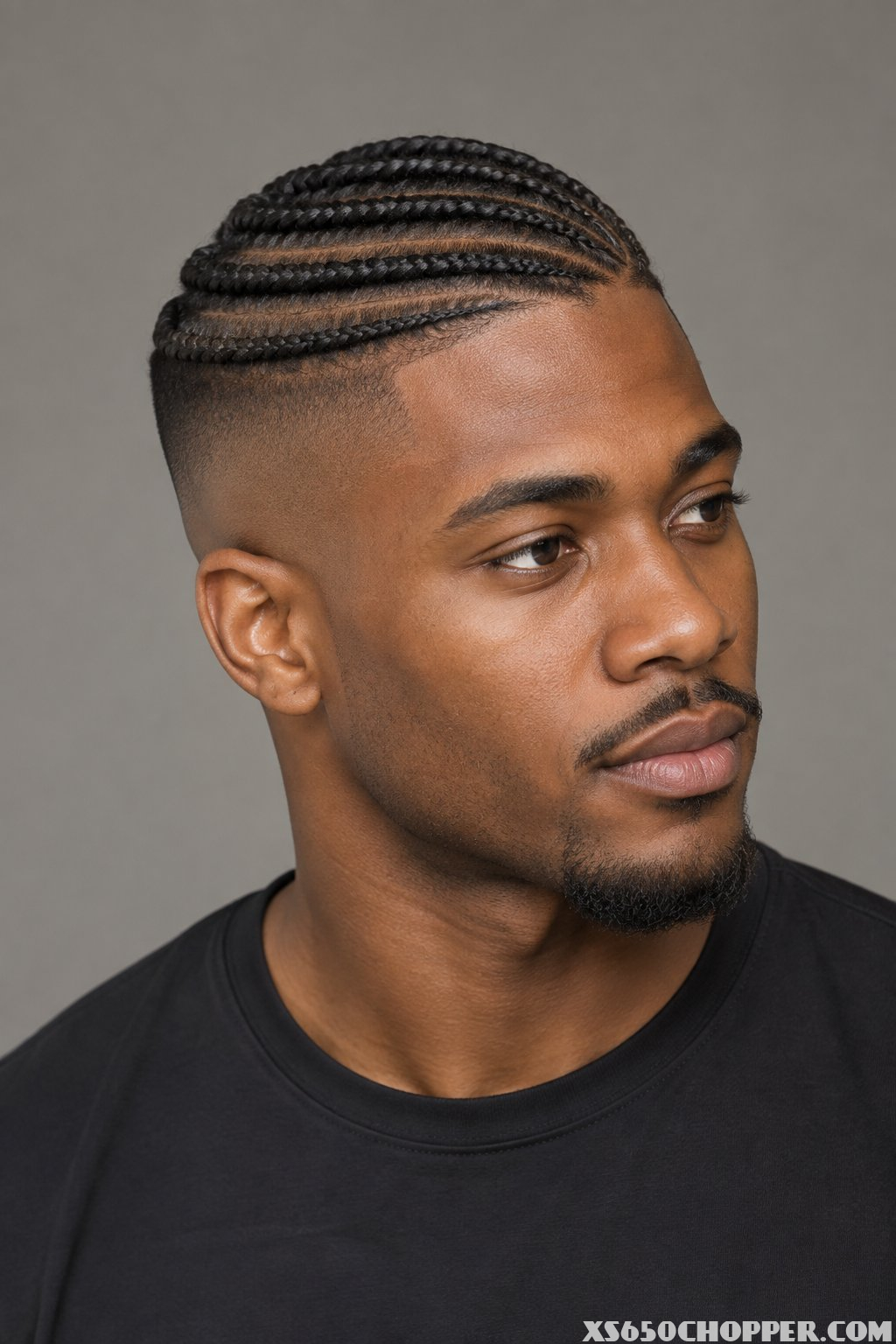
Side-swept cornrows with a bald fade create a strong diagonal flow across the head. The braids guide attention toward one side, while the closely shaved fade gives the style a clean, high-contrast edge.
This look suits hair with enough length to maintain the sweep and enough density to keep the rows full. A defined part at the side reinforces the direction.
PRO TIP
Tell your barber which side you want the braids to favor before the sections are mapped out.
15) Braided Mohawk Cornrows With a Burst Fade
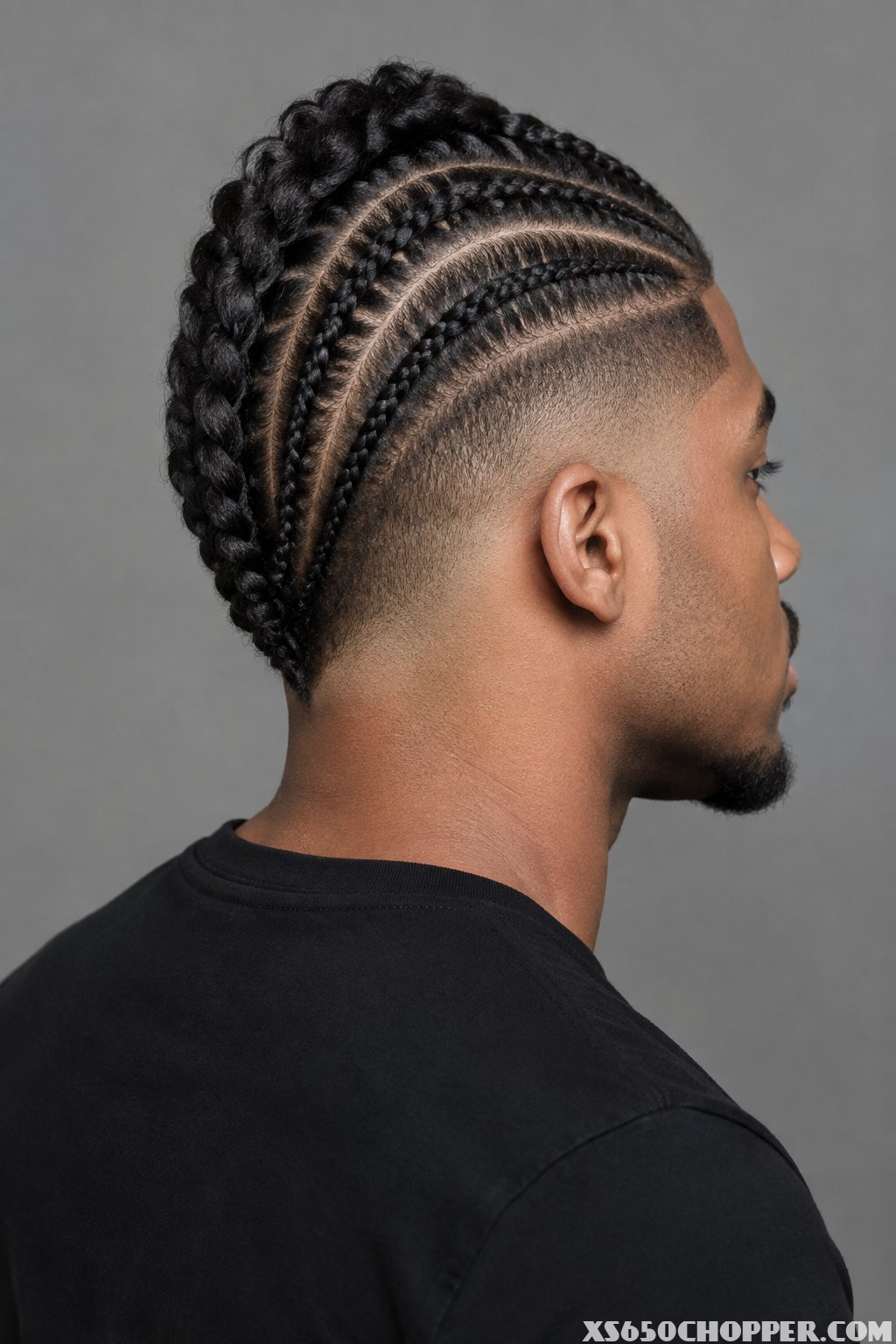
Braided mohawk cornrows with a burst fade focus height and direction along the center of the head. The sides curve into a burst fade, leaving the braided strip visually raised.
This design suits you when you want a statement hairstyle with a sporty outline. Keep the central braids moderately thick so the mohawk shape stays distinct as the sides grow.
PRO TIP
Ask for a controlled central width that matches your hair density and keeps the silhouette proportional.
How to Choose a Cornrow Style
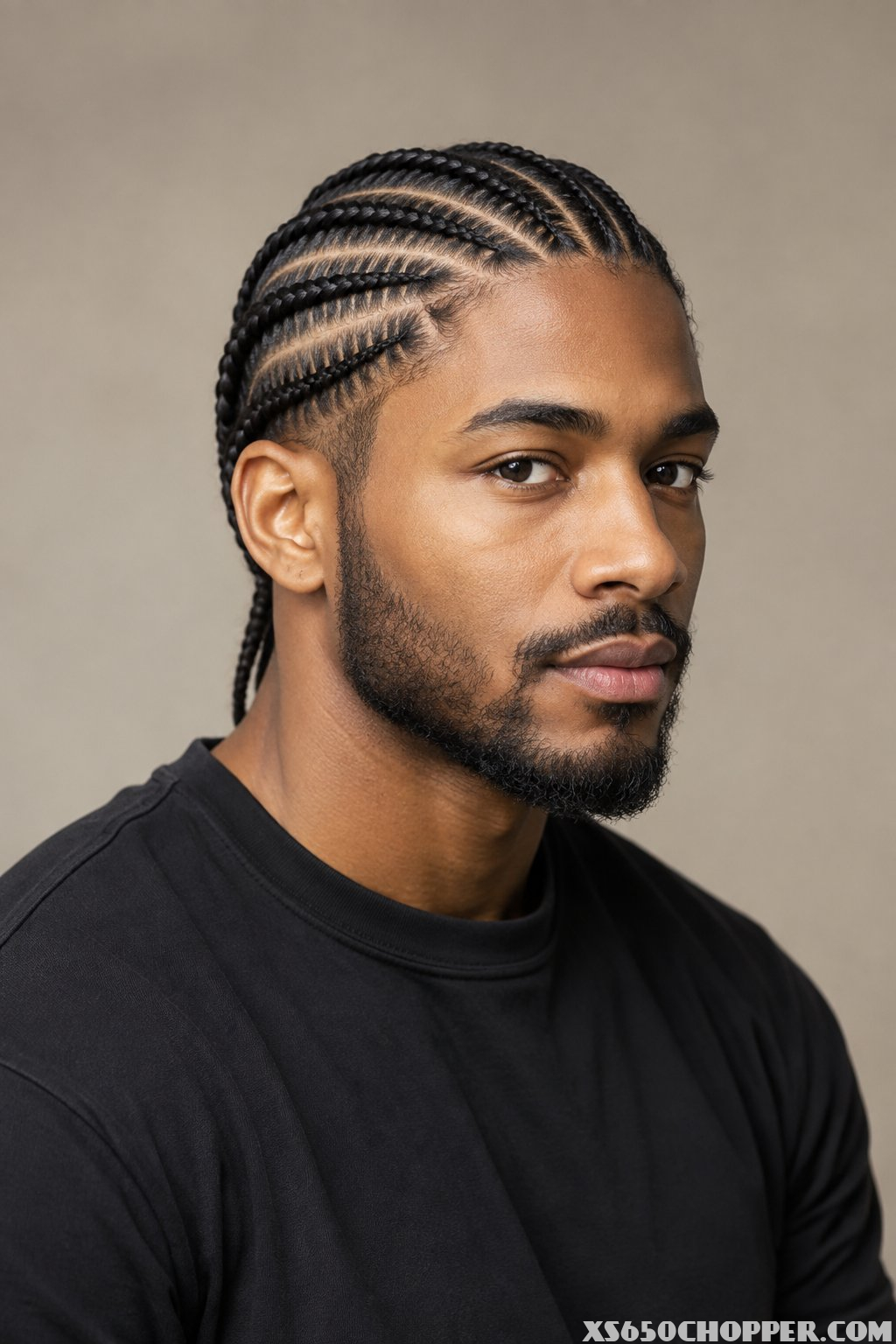
Which Cornrow Pattern Suits Your Face Shape?
Straight-back and side-swept patterns create length through directional lines, which suits rounder faces. Wider horizontal sections or layered designs add visual balance to longer face shapes.
Angular faces pair well with curved parts, softer zigzags, or rounded motifs. Your hairline, forehead height, and natural density should guide the final pattern more than a face-shape label alone.
How Much Hair Length Do You Need for Cornrows?
About 2 inches of textured hair gives a braider enough length for small, secure cornrows, while 3 to 5 inches supports more patterns and longer sections. Longer hair helps with man buns, box braids, and designs that gather toward the crown.
Your texture and shrinkage affect the usable length. A consultation lets your braider check whether the hair will hold the chosen pattern without excessive tension.
Should You Pair Cornrows With a Fade or Taper?
Choose a taper when you want a gradual, conservative finish around the temples and neckline. Choose a fade when you want stronger contrast and more exposed scalp around the braided top.
A low fade keeps the silhouette understated, while a mid or high fade makes detailed braids stand out. Match the cut to your workplace, maintenance schedule, and preferred level of contrast.
Keeping Cornrows Clean and Long-Lasting
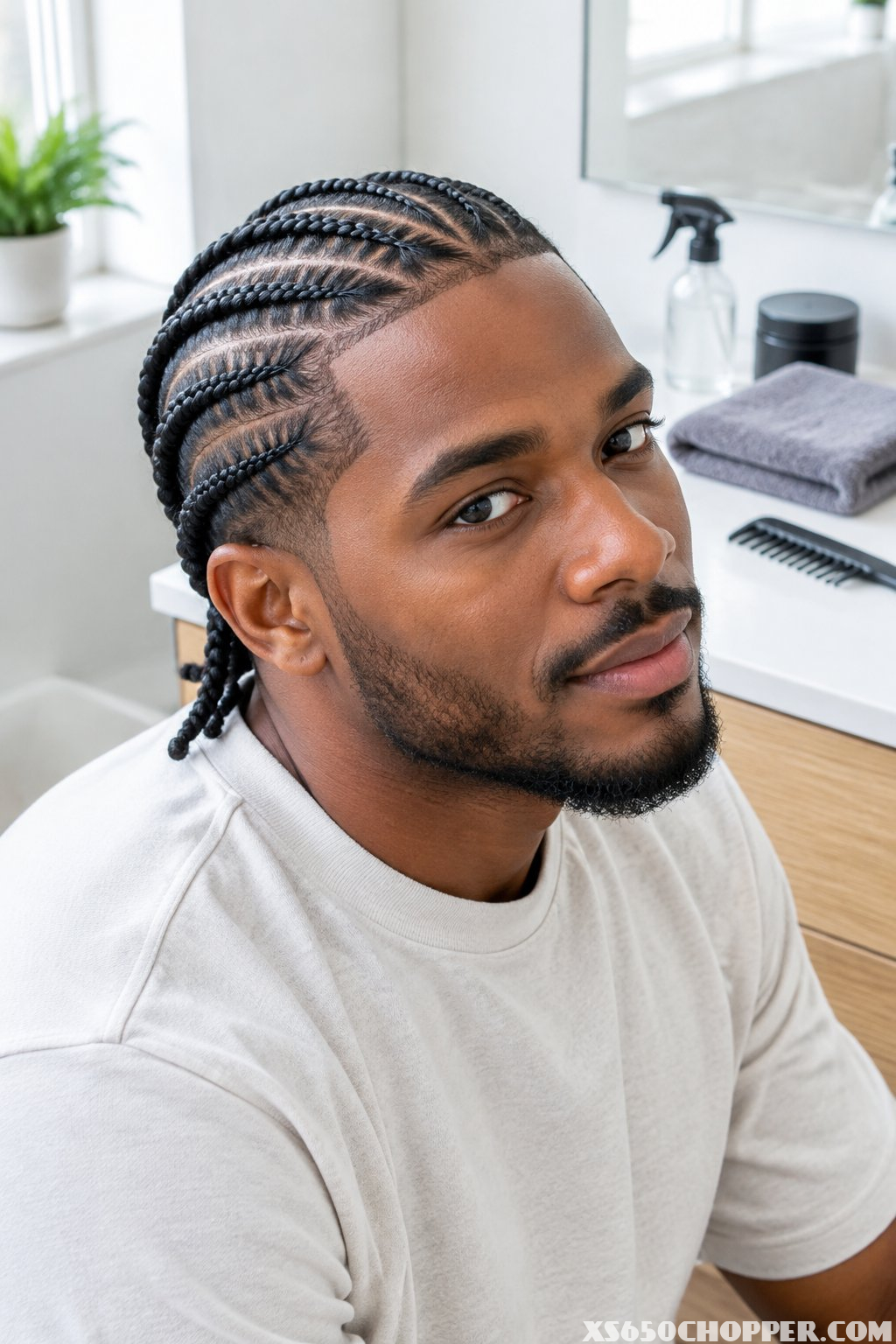
How Often Should You Wash Cornrows?
Wash cornrows about once a week, adjusting the schedule when you sweat heavily or use several scalp products. Dilute shampoo with water, apply it along the parts, and massage with your fingertips instead of scrubbing across the braids.
Rinse thoroughly and press the hair with a towel to remove moisture. Let the scalp dry fully before covering it or going to bed.
How Can You Prevent Frizz and Scalp Buildup?
Use a light leave-in spray or braid-safe moisturizer on the scalp and braids. Avoid heavy grease, which can collect dust around the parts and make cleansing more difficult.
Sleep in a satin or silk covering, and smooth loose hairs with a small amount of mousse. Keep hats and durags clean so they do not transfer oil or buildup back onto the scalp.
When Is It Time to Take Cornrows Out?
Take cornrows out when you notice persistent itching, soreness, raised bumps, visible buildup, or significant frizz around the roots. Most styles stay presentable for about two to six weeks, depending on growth, wash frequency, pattern, and tension.
Unbraid gently with your fingers and a wide-tooth comb, then cleanse and condition the hair. Give your scalp a break before installing another tight style.