A cross tattoo gives you a lasting symbol of faith, sacrifice, heritage, remembrance, or personal strength. The strongest designs match the meaning you carry with a style that suits your body, wardrobe, and comfort with visibility.
The best cross tattoo ideas for men combine clear symbolism with durable linework, thoughtful placement, and a scale that preserves detail as the tattoo ages. You can choose a Celtic pattern for heritage, a memorial design for someone you lost, or a clean wrist cross for quiet devotion.
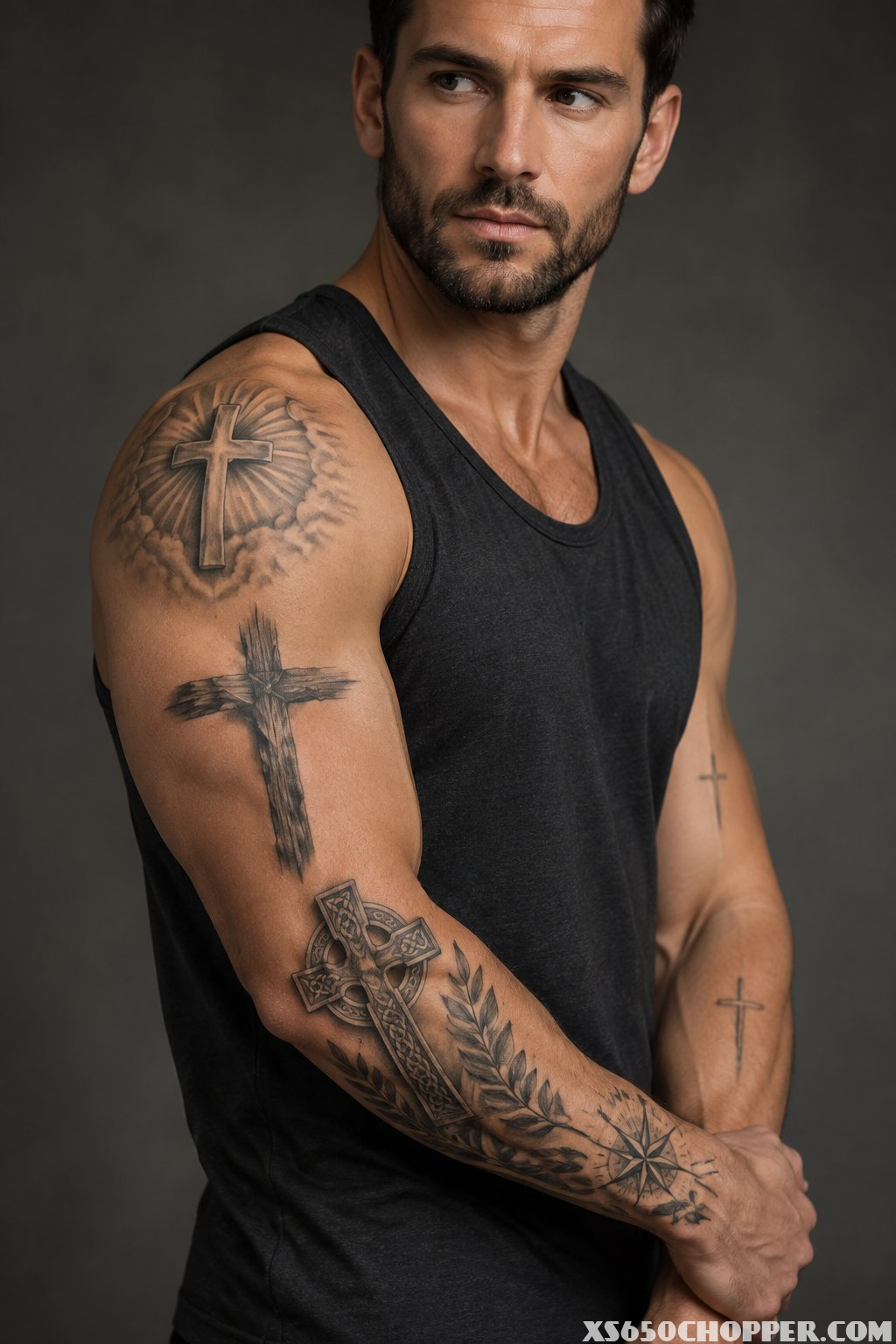
1) Celtic Cross With Intricate Knotwork
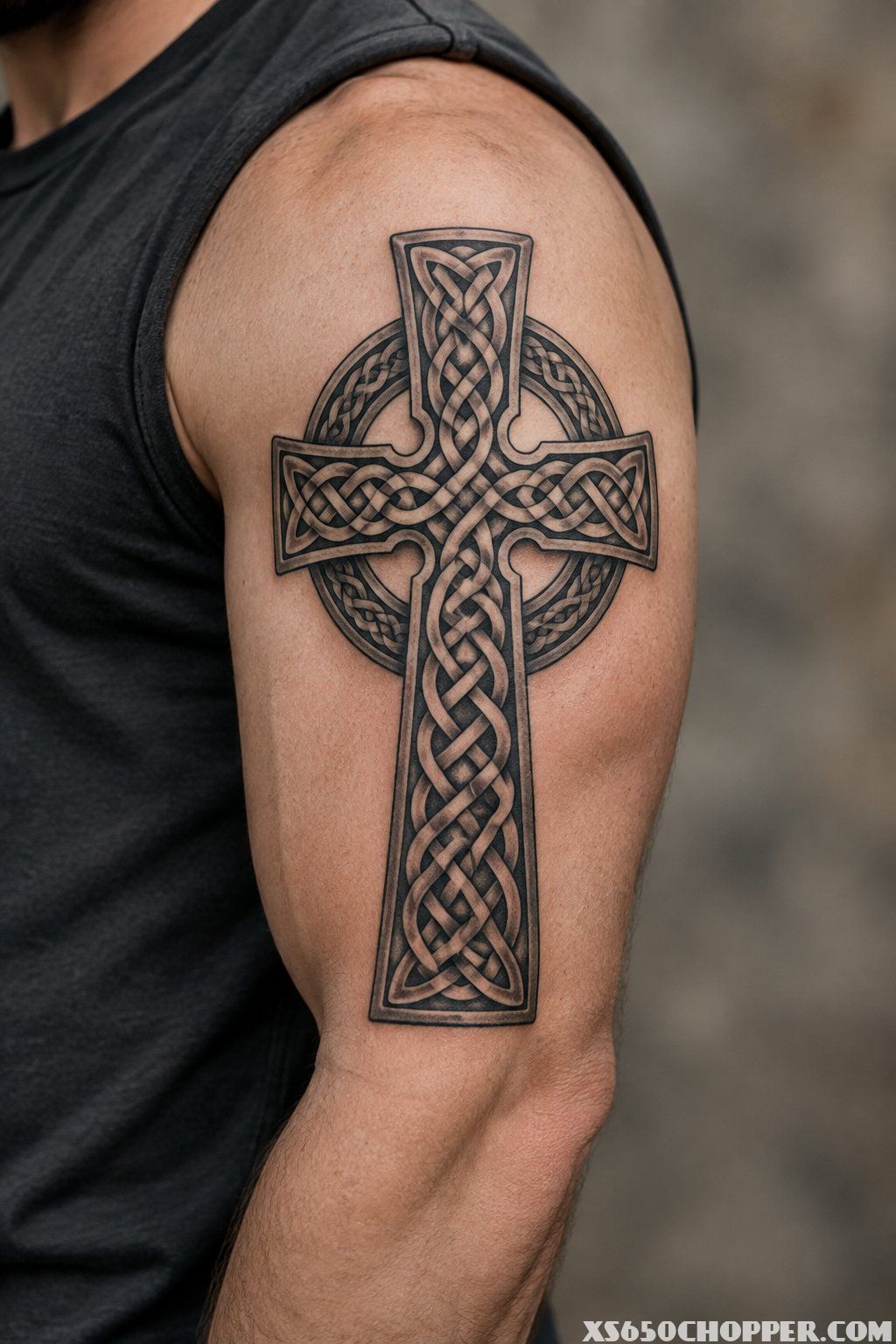
A Celtic cross with intricate knotwork connects Christian faith with Irish or Scottish heritage and the idea of continuity. Interlaced bands create visual depth while giving the tattoo a strong, structured silhouette.
Your upper arm, shoulder, or calf provides enough room for clean knots and balanced proportions. Ask your artist to keep the smallest loops open so they remain readable after healing.
PRO TIP
Bring a family emblem, regional pattern, or meaningful date to the consultation. Your artist can incorporate it into the knotwork without overcrowding the cross.
2) Three Crosses on Calvary Hill

Three crosses on Calvary Hill represent the crucifixion scene and create a complete landscape composition. The central cross carries visual emphasis, while the two smaller crosses establish depth and narrative.
This design works well across the upper arm, chest, or back, where a horizon and sky can frame the scene. Black-and-gray shading gives the hill and clouds a solemn, timeless character.
PRO TIP
Use a wider placement when you want the three crosses to remain distinct. A narrow forearm may force the landscape into cramped proportions.
3) Realistic Wooden Cross With Nail Details
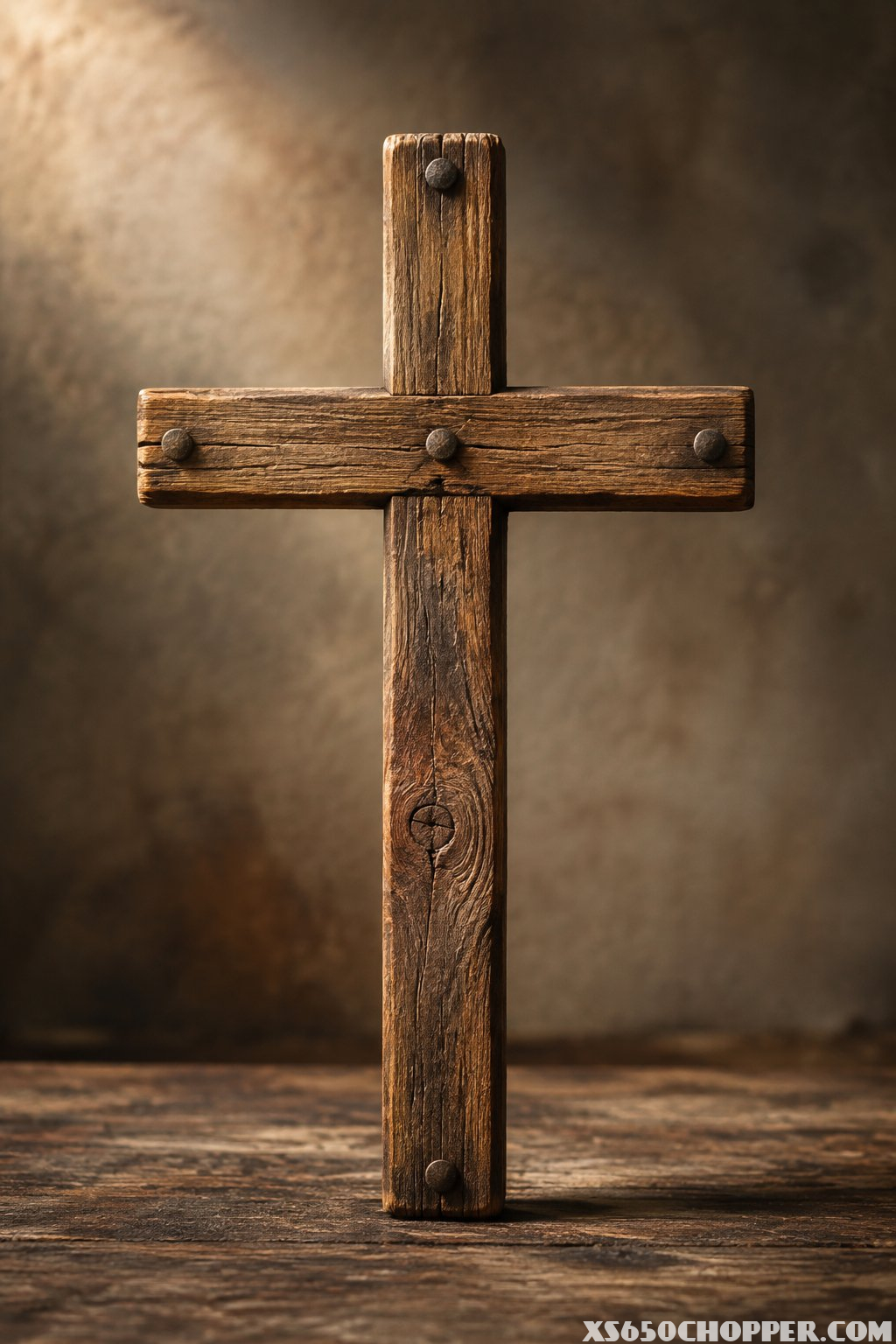
A realistic wooden cross with visible nails emphasizes sacrifice, humility, and the physical reality of the crucifixion. Wood grain, rough edges, and metal texture give the piece a rugged appearance.
Your forearm, bicep, or calf offers enough length for convincing grain direction and dimensional shading. Brown and gray ink create a natural palette, while blackwork gives the same concept a heavier presence.
PRO TIP
Choose an artist experienced in realism and texture. Nail heads and wood grain need controlled contrast to remain recognizable after the skin settles.
4) Blackwork Tribal Cross Chest Piece
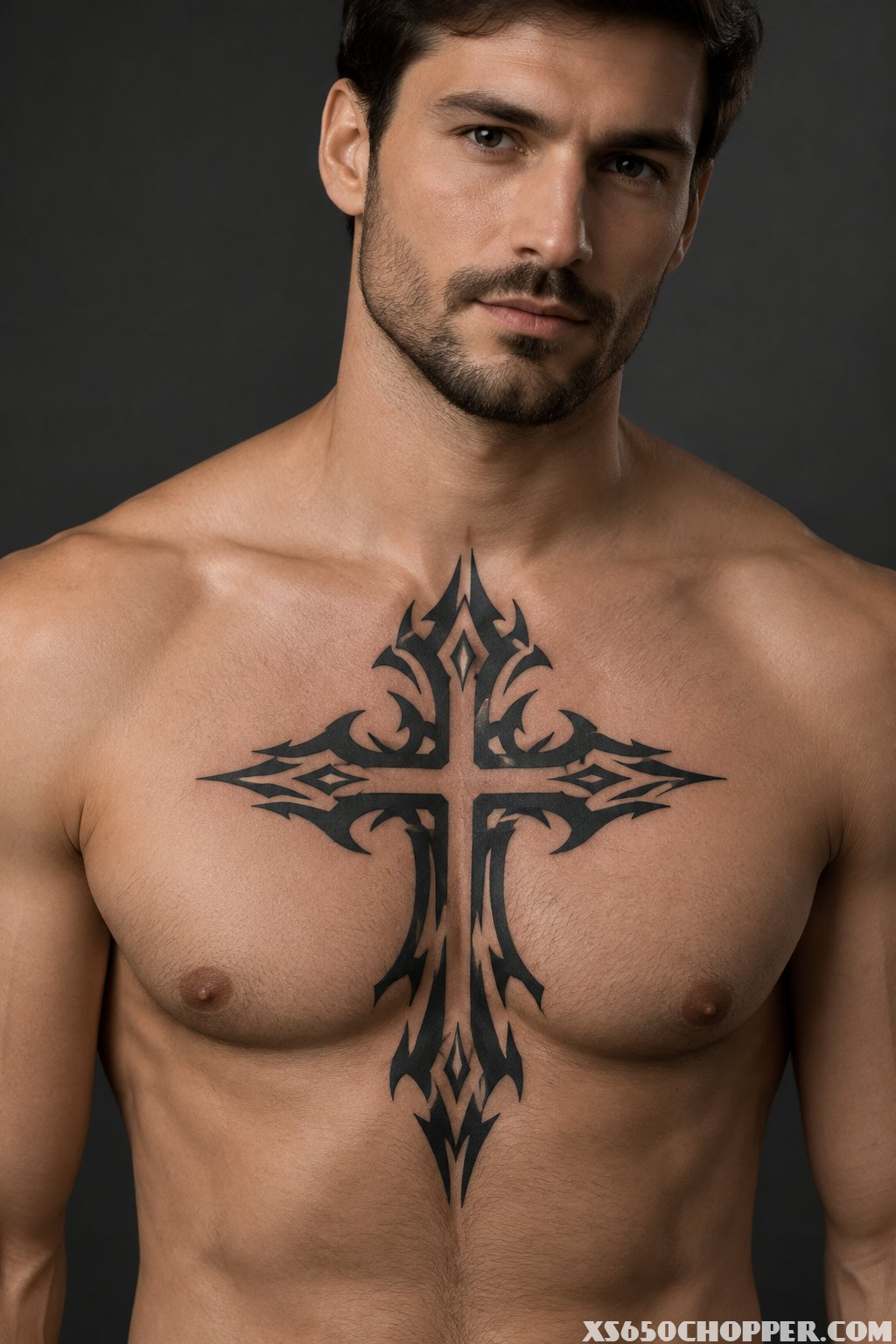
A blackwork tribal cross makes a forceful chest statement through heavy fills, sharp geometry, and heritage-inspired patterning. It can represent faith, protection, identity, or a connection to family traditions.
The chest supports a large symmetrical design with strong visual impact. Work with an artist who can discuss the cultural origins of the patterns you want, especially when adapting Polynesian, Native American, or African-inspired elements.
PRO TIP
Keep the central cross recognizable before adding surrounding patterns. Strong negative space helps the design read clearly across the chest.
5) Gothic Cross With Ornamental Filigree
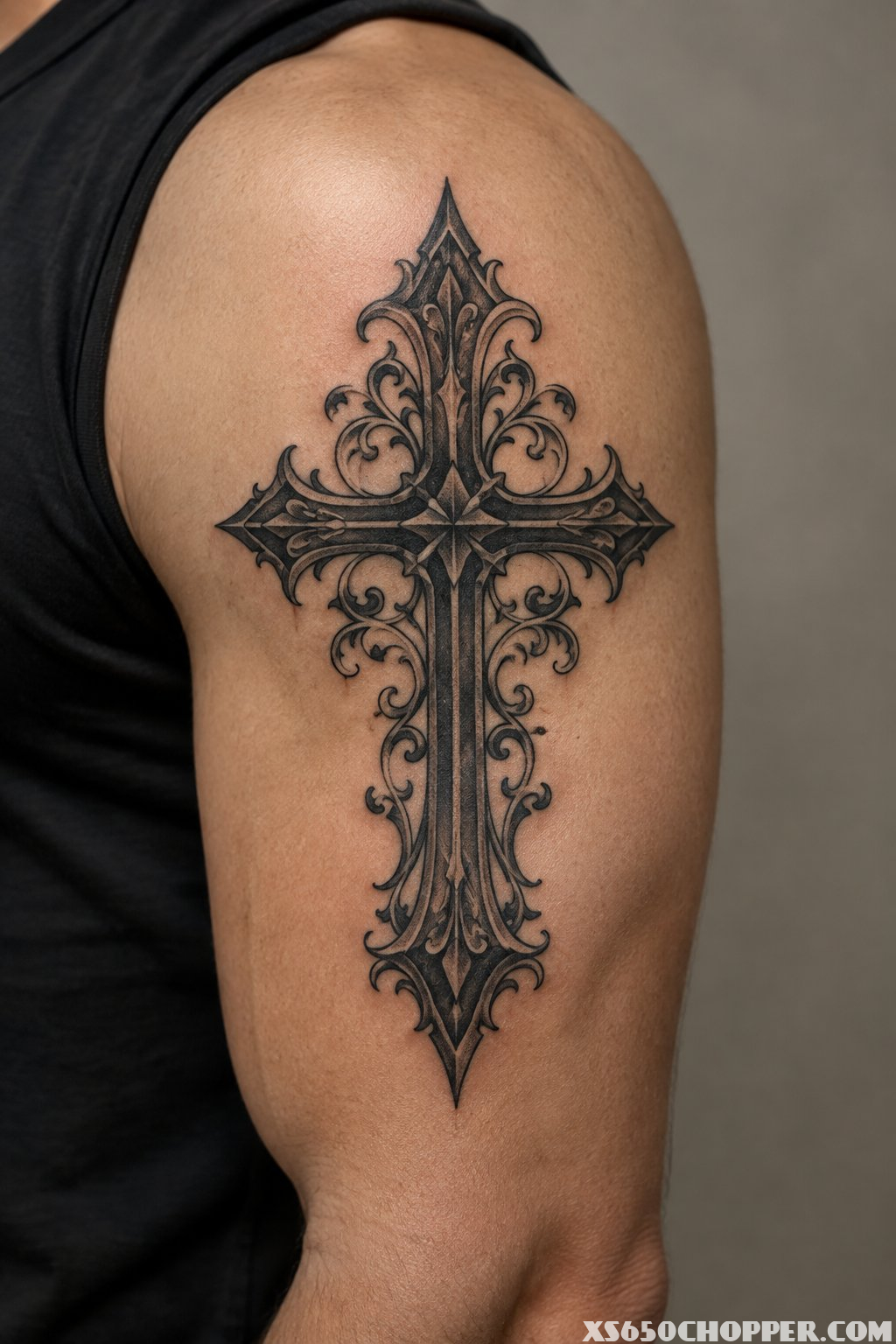
A Gothic cross with ornamental filigree suits you if you prefer dramatic architecture, pointed shapes, and historic religious styling. Decorative curls and dark shading create an antique, cathedral-inspired effect.
The forearm, upper arm, or sternum gives filigree enough space to breathe. Black ink with selective gray shading keeps the design dramatic while preserving the fine ornamental lines.
PRO TIP
Ask for a simplified outer silhouette before approving the details. The cross should remain legible from several feet away.
6) Minimal Fine-Line Cross on the Wrist
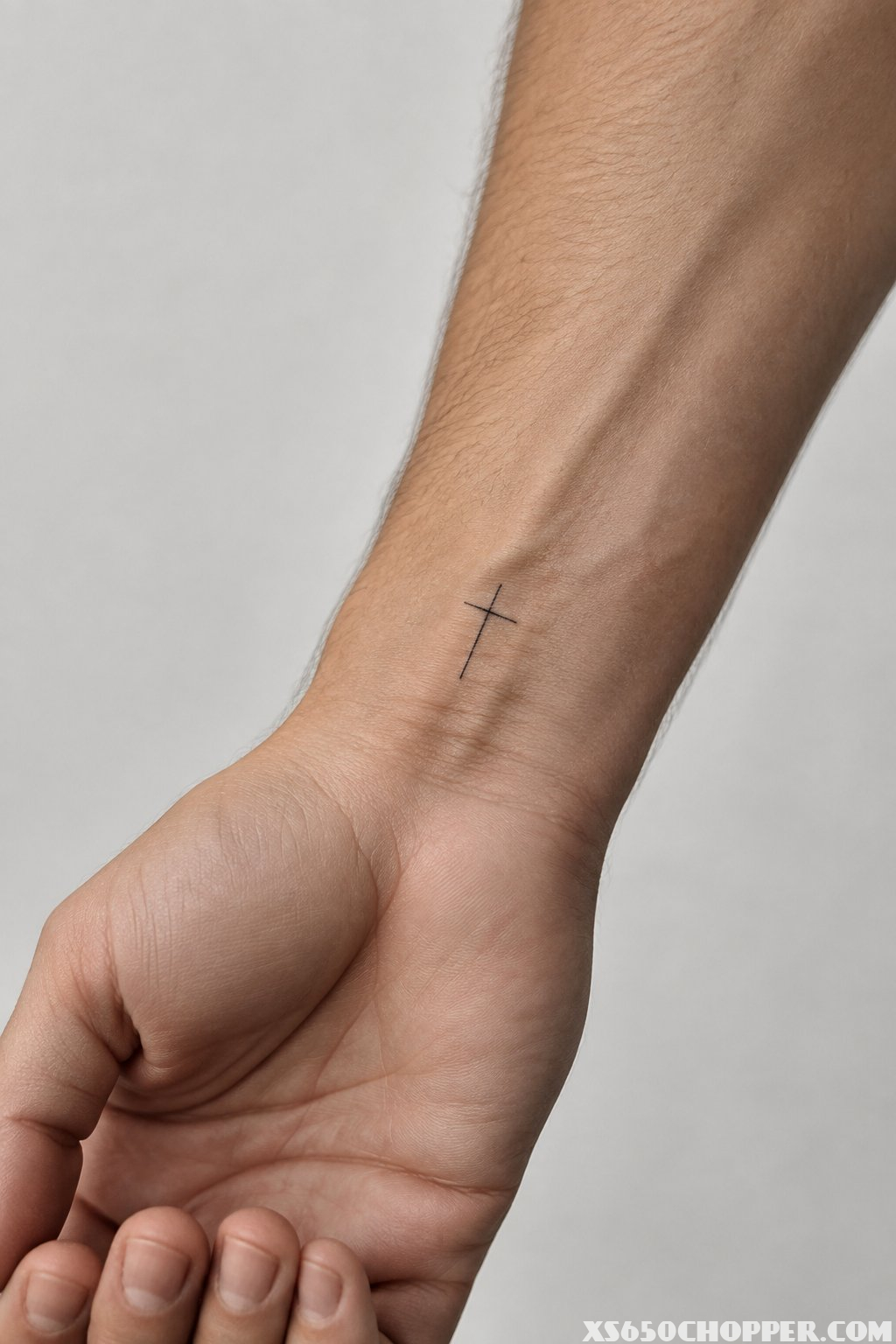
A minimal fine-line cross on the wrist provides a discreet reminder of faith or personal conviction. Its small scale works well for a first tattoo or a design you want visible during daily routines.
The inner wrist creates an intimate placement, while the outer wrist gives the symbol more public visibility. Fine-line tattoos require careful sizing because delicate marks need sufficient spacing to age cleanly.
PRO TIP
Avoid squeezing elaborate detail into a tiny cross. A clean outline with a modest width will stay clearer than miniature shading.
7) Crucifix With Jesus Portrait
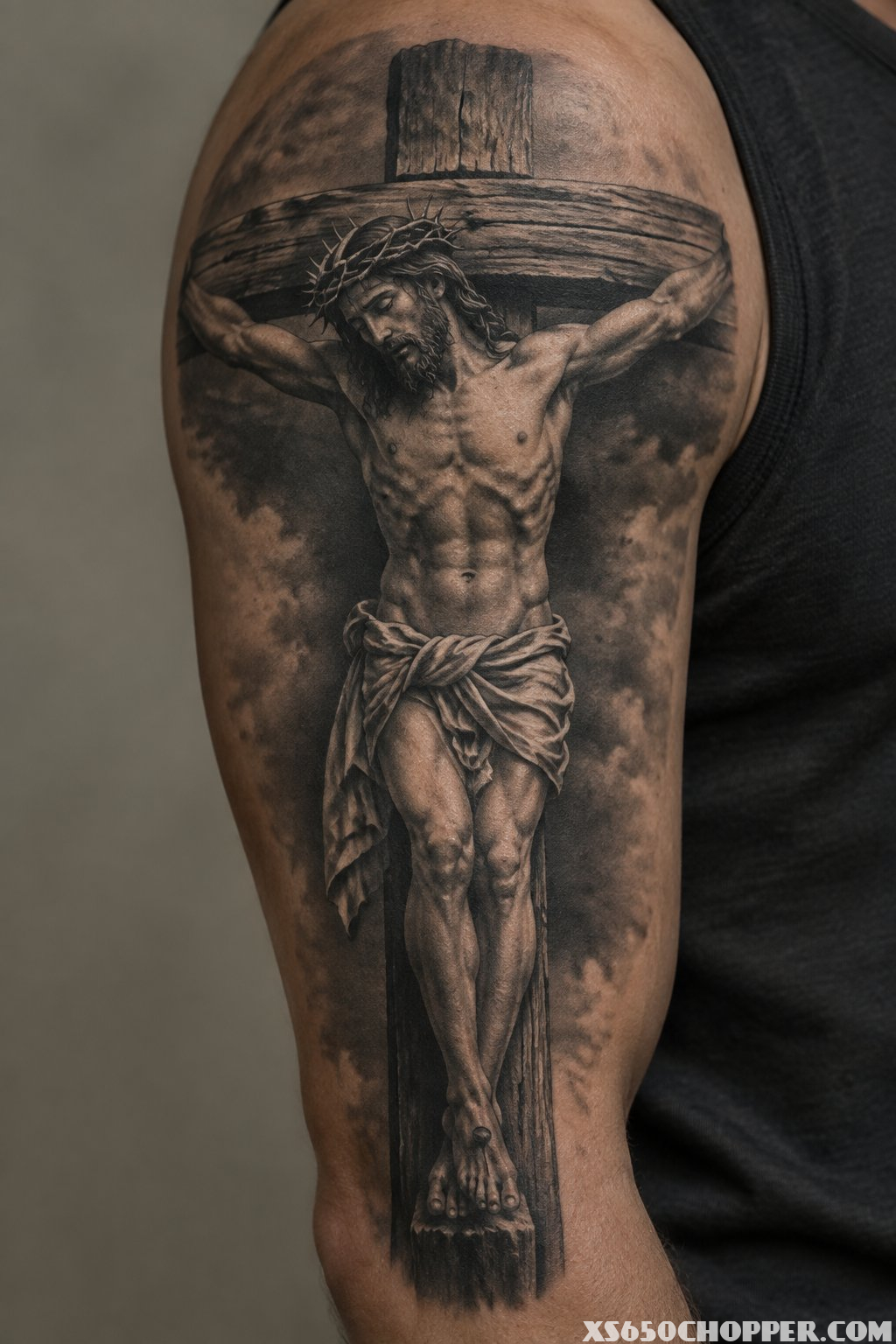
A crucifix with a Jesus portrait expresses devotion through the central figure of Christian faith. Facial expression, anatomy, crown details, and the cross itself require careful realism and respectful composition.
Your upper arm, chest, or back gives the artist room to build a recognizable portrait. Black-and-gray realism supports a solemn mood, while a small amount of muted color can draw attention to specific elements.
PRO TIP
Review healed portrait work from the artist before booking. Skin texture and long-term contrast strongly affect facial clarity.
8) Cross and Rose Half Sleeve
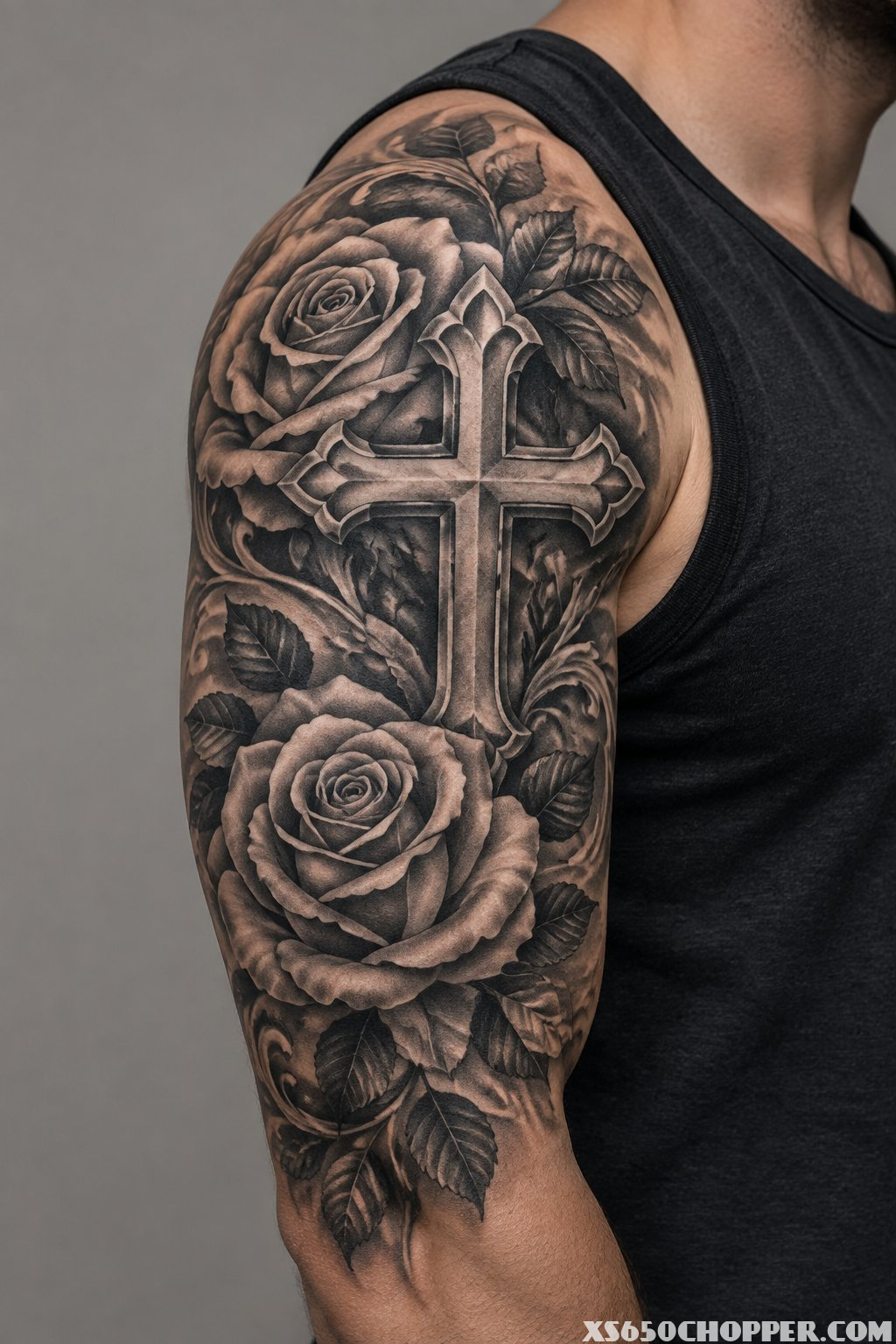
A cross and rose half sleeve pairs spiritual devotion with love, grief, sacrifice, or family remembrance. The cross supplies structure, while roses soften the composition and add opportunities for layered shading.
The upper arm gives you room to connect the elements through leaves, clouds, script, or ornamental transitions. Black-and-gray work creates a classic tone, and red roses provide a controlled color accent.
PRO TIP
Decide whether the cross or the roses should dominate before the stencil is placed. One clear focal point prevents the sleeve from feeling crowded.
9) Memorial Cross With Name and Dates
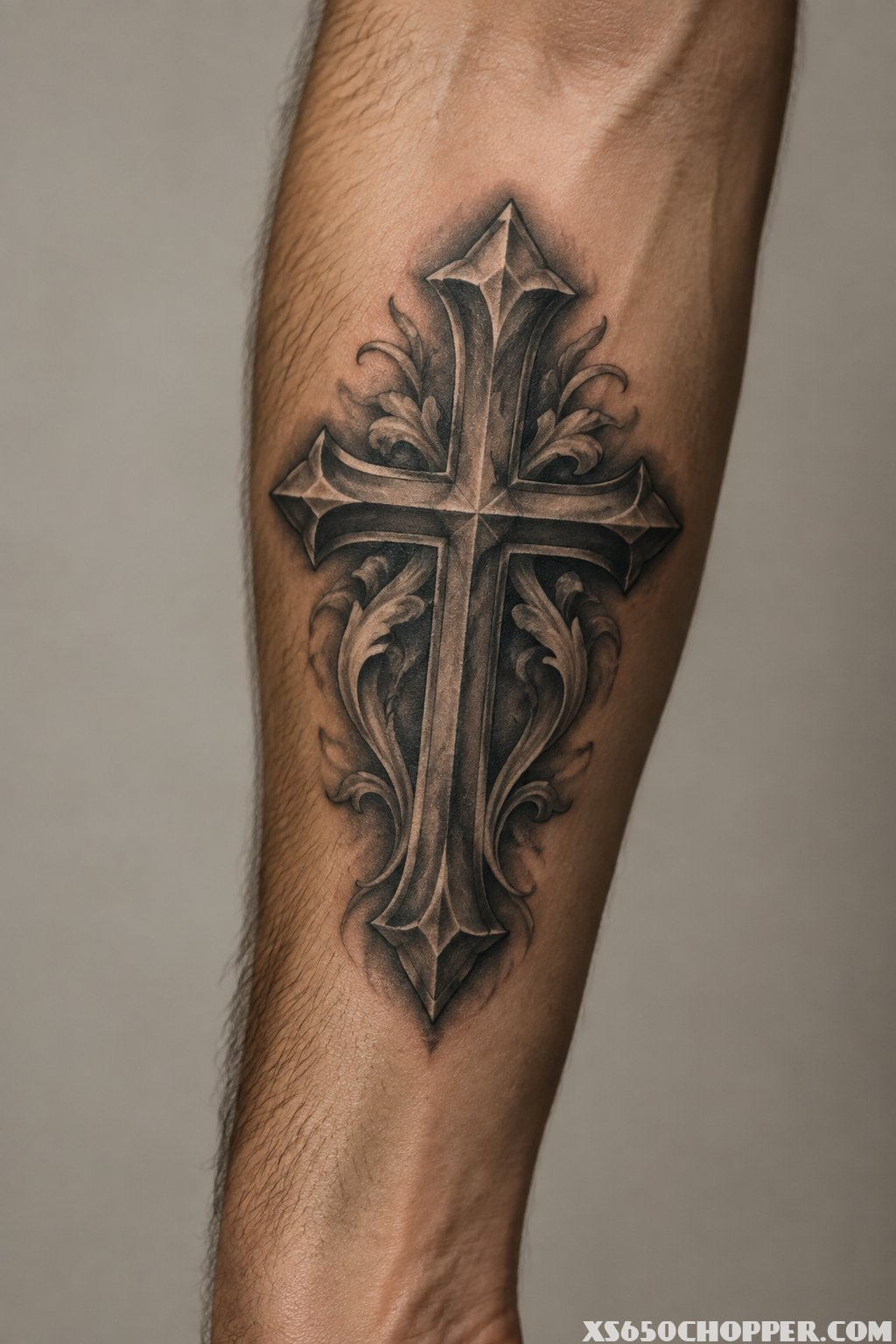
A memorial cross with a name and dates preserves a direct tribute to someone important in your life. The design can remain restrained with a clean cross and script, or expand into flowers, clouds, wings, or a portrait.
The forearm offers a visible location for a personal memorial, while the chest or back creates a more private tribute. Choose lettering that remains readable at the final size and matches the emotional tone of the piece.
PRO TIP
Verify every letter and date before tattoo day. Print the final stencil at its intended scale so you can inspect spacing and script clarity.
10) Cross With Heartbeat Line
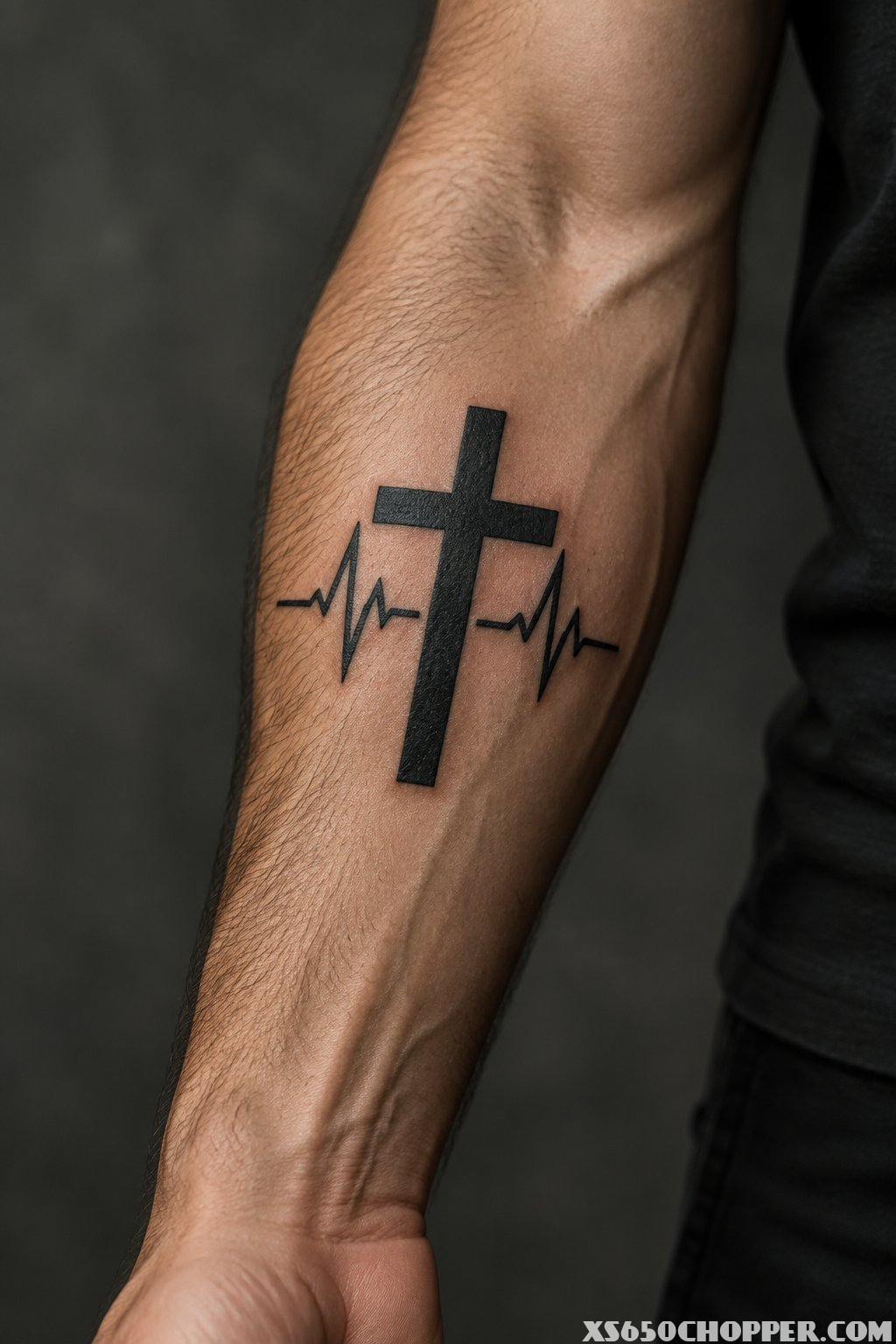
A cross with a heartbeat line links faith with life, survival, family, or a medical journey. The electrical line creates movement and gives a traditional symbol a contemporary edge.
The forearm works well because the line can travel horizontally while the cross provides vertical emphasis. Keep the heartbeat pattern bold enough to survive normal skin movement and long-term softening.
PRO TIP
Use one continuous visual path from the line into the cross. Awkward breaks at the connection point can make the design look assembled instead of intentional.
11) Templar Cross With Shield Emblem
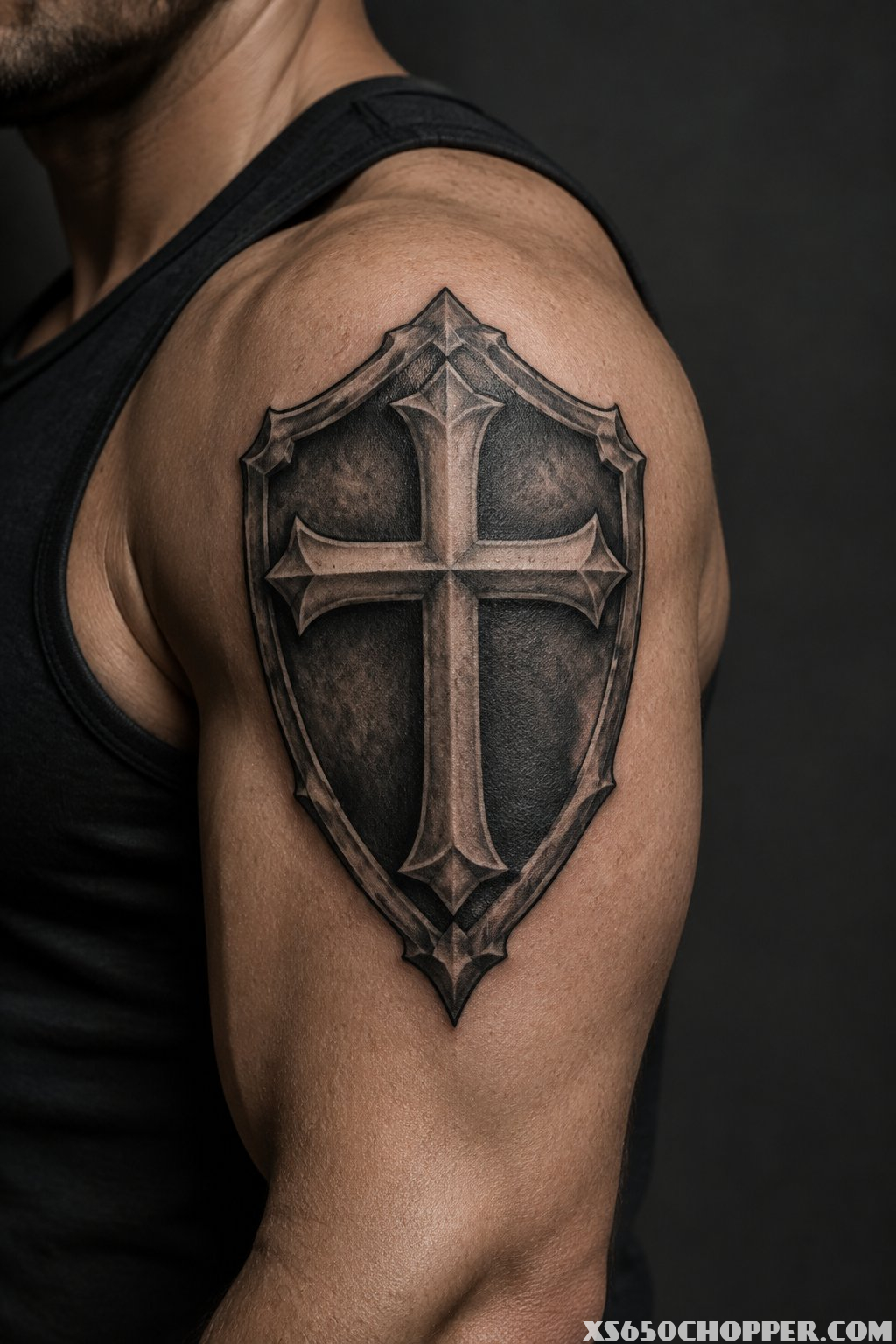
A Templar cross with a shield emblem conveys courage, discipline, protection, and historical interest. The shield creates a strong frame for the cross and gives the tattoo a heraldic identity.
Your upper arm, shoulder, or chest supports the symmetrical geometry of the design. Heavy blackwork produces a commanding result, while restrained shading adds depth to the shield without weakening its outline.
PRO TIP
Research the symbols you plan to combine. Historical insignia can carry meanings beyond personal faith, so intentional selection keeps the tattoo aligned with your message.
12) Praying Hands With Rosary Cross
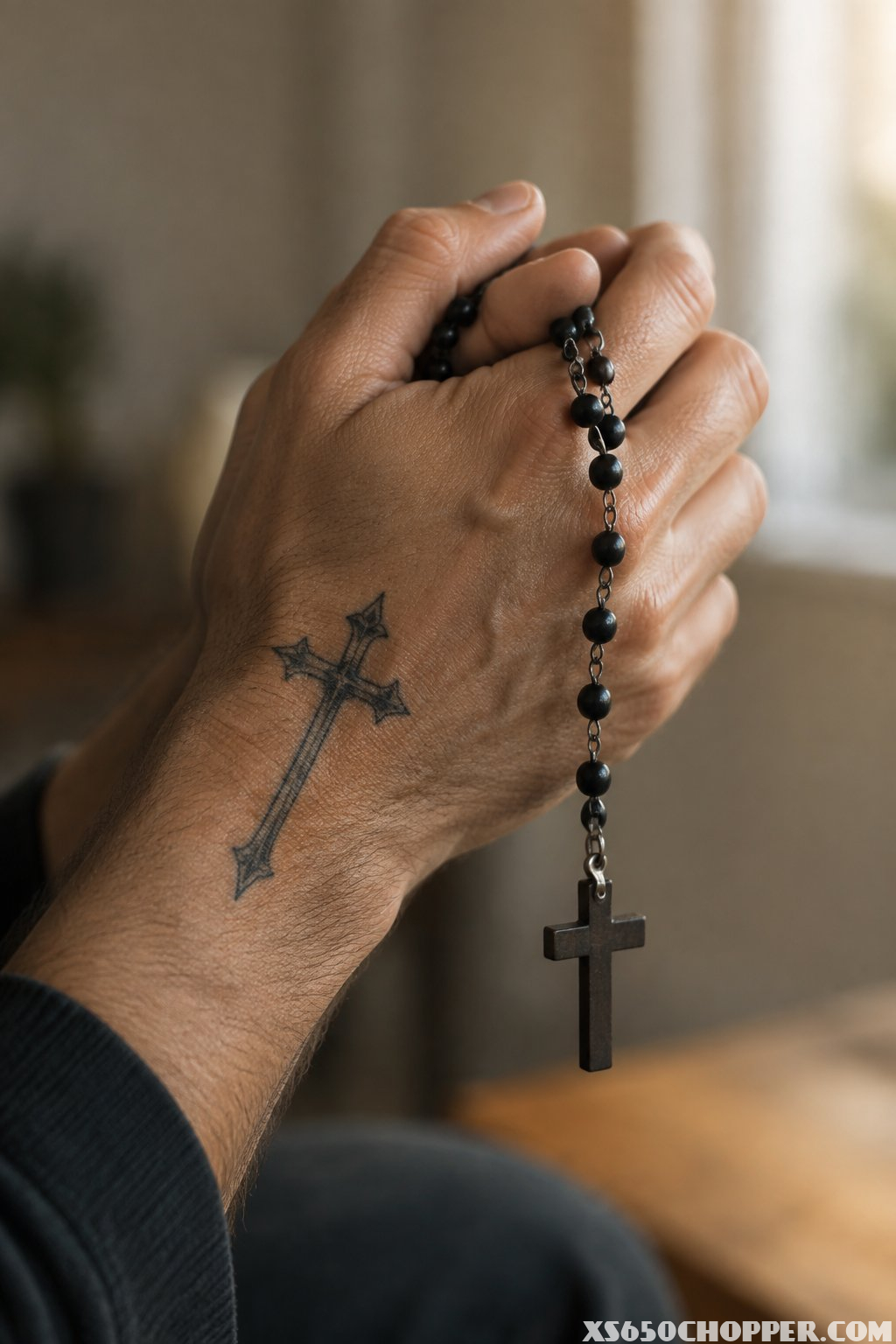
Praying hands with a rosary cross communicate prayer, devotion, gratitude, and spiritual discipline. The hands create an emotional focal point, while the rosary adds a recognizable religious detail.
The forearm and upper arm provide enough surface for realistic fingers, beads, and fabric folds. A skilled black-and-gray artist can build depth through soft shadows while keeping the cross visible.
PRO TIP
Prioritize hand anatomy during the consultation. Correct finger proportions and natural knuckle placement determine whether the image feels reverent and convincing.
13) Stone Cross With Cloud Background

A stone cross with a cloud background suggests endurance, hope, solitude, and faith through difficult conditions. Weathering marks give the cross age, while dramatic light creates a strong emotional atmosphere.
The back, chest, or calf provides room for the landscape and atmospheric shading. Graywash is well suited to stone texture, distant clouds, and beams of light.
PRO TIP
Reserve the darkest values for the cross outline and foreground rocks. Lighter cloud shading keeps the background from swallowing the main symbol.
14) Cross With Lion and Crown
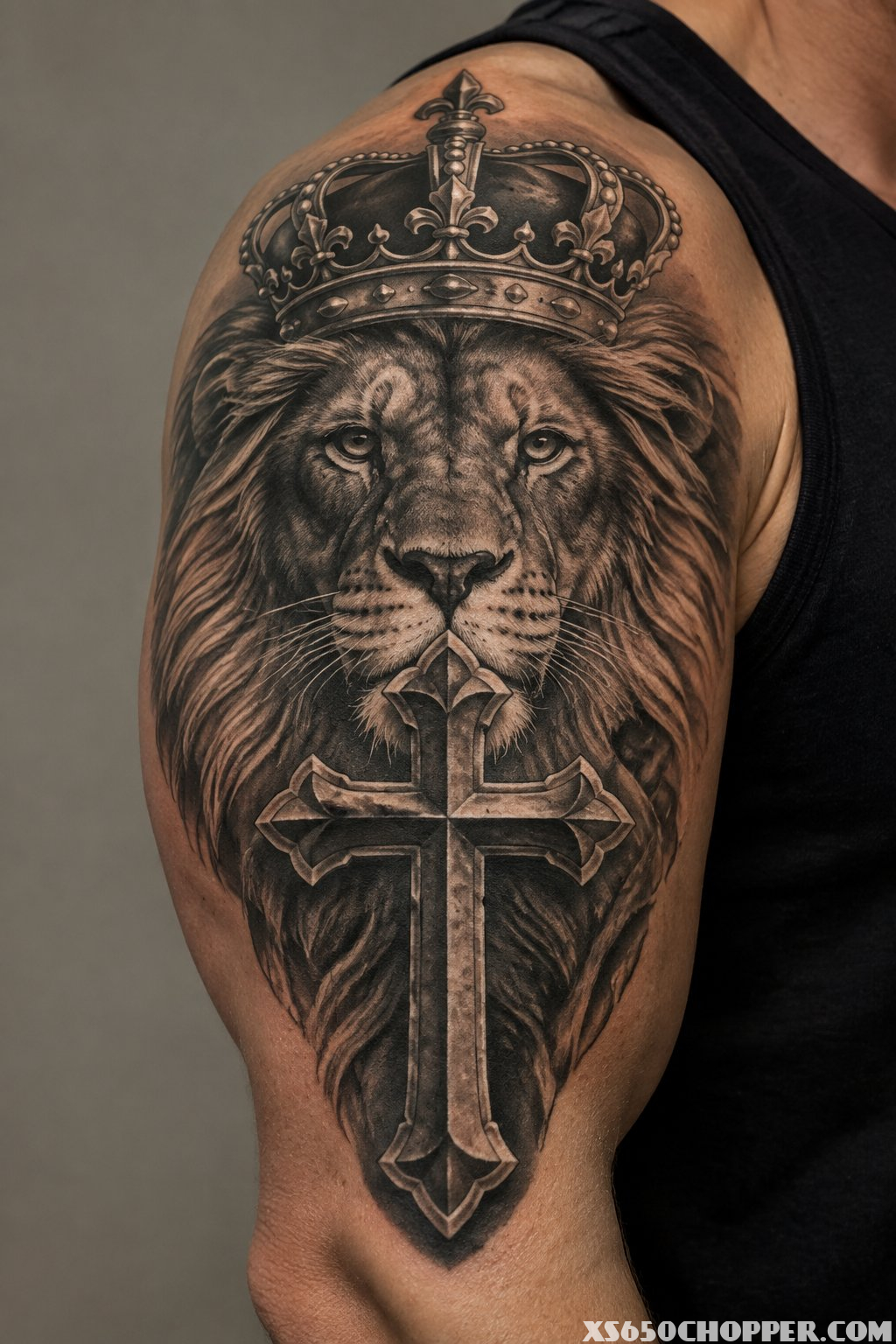
A cross with a lion and crown combines Christian symbolism with courage, leadership, royalty, and strength. The lion supplies a powerful focal point, while the crown adds authority and visual height.
The shoulder, upper arm, or chest gives each element room to remain recognizable. Realistic fur, metallic crown details, and clean cross geometry require an artist comfortable with both portrait-style shading and bold linework.
PRO TIP
Keep the lion’s face oriented toward the natural flow of the body. A forward-facing composition often feels strongest on the chest, while a side profile suits the upper arm.
15) Vertical Spine Cross With Bible Verse
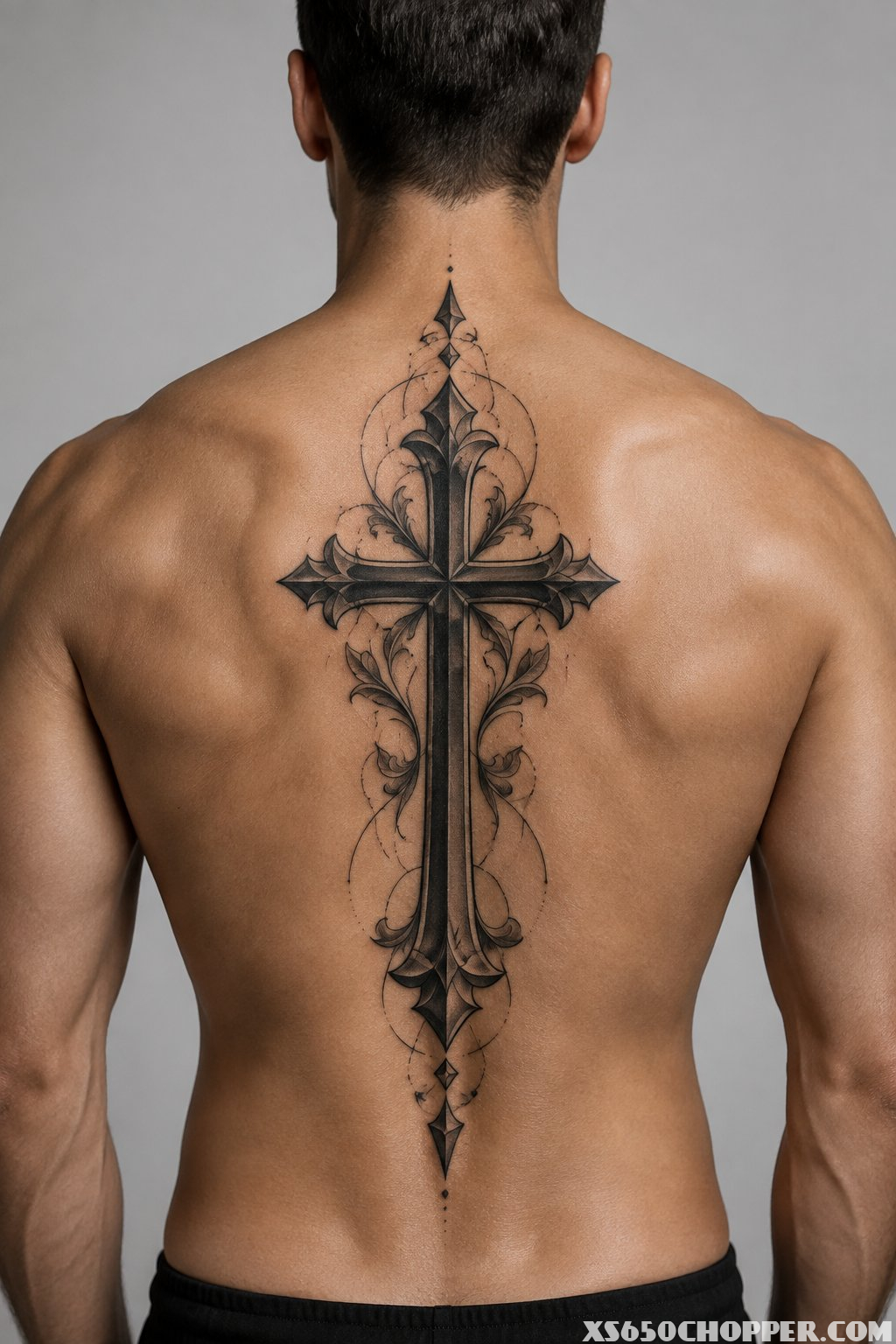
A vertical spine cross with a Bible verse creates a private, architectural composition centered on faith and personal conviction. The spine naturally reinforces the cross’s vertical form and gives the tattoo a strong sense of alignment.
Your upper back can support a large cross, lettering, and decorative elements such as rays or wings. Select a verse that remains meaningful over time, then choose lettering with enough spacing for long-term readability.
PRO TIP
Place the stencil while standing and sitting. Body movement changes how the spine aligns, so checking both positions helps keep the cross visually centered.
How to Choose a Cross Tattoo Design
What Does Each Cross Style Represent?
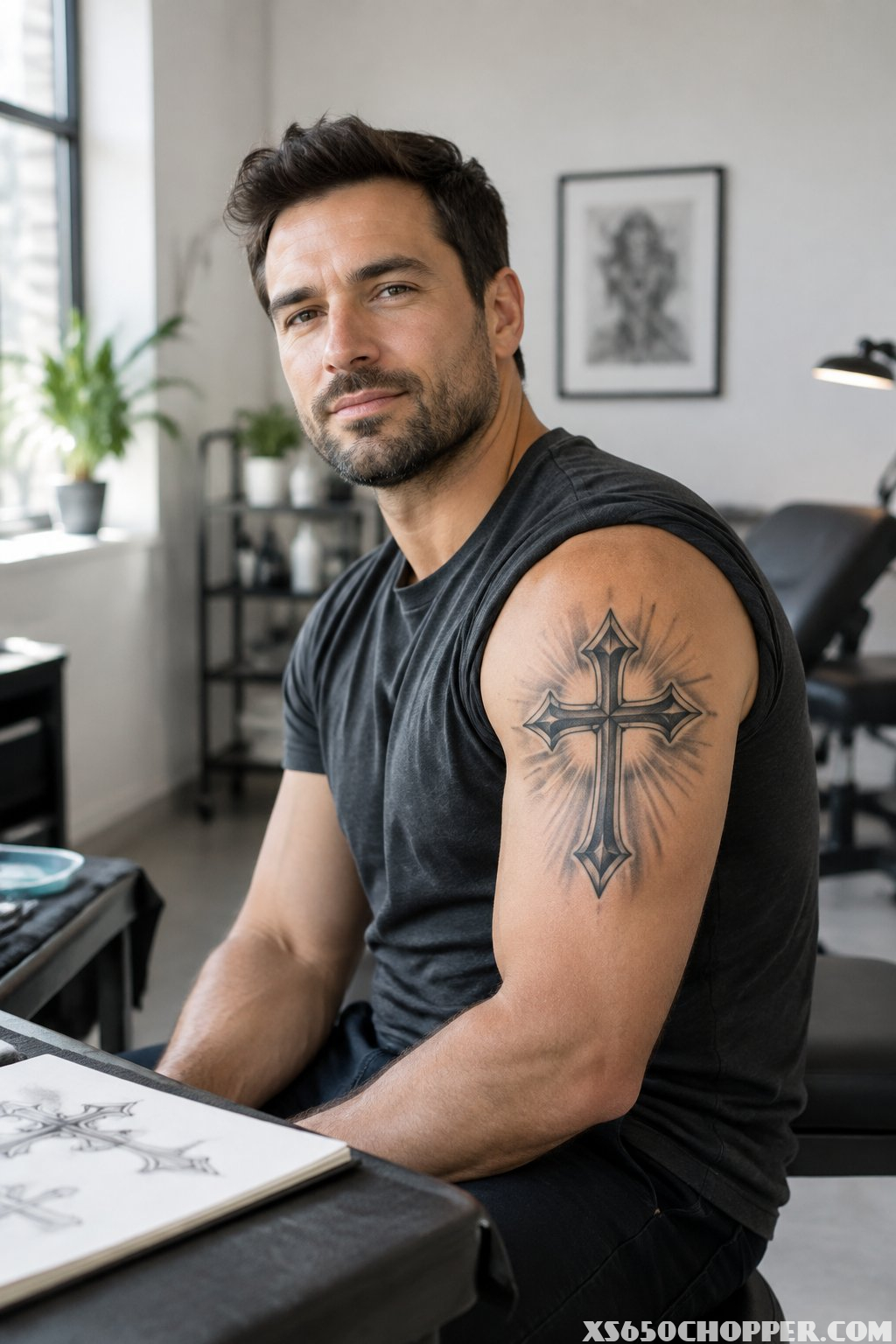
Celtic crosses connect faith with heritage and continuity. Crucifixes focus on devotion and sacrifice, while memorial crosses honor a person or chapter of your life. Gothic, tribal, and Templar designs add distinct visual language linked to architecture, heritage, protection, or strength.
Write down the meaning you want the tattoo to carry before choosing the artwork. That decision helps you remove decorative elements that compete with your central message.
Which Placement Fits the Design and Your Lifestyle?
Large scenes need the chest, back, thigh, or upper arm because those areas provide broad, stable surfaces. Wrists and forearms suit smaller symbols, lettering, and designs you want to see frequently.
Consider workplace visibility, sun exposure, exercise, and how the tattoo will move with your body. Your artist can adjust the stencil to follow muscle shape and preserve symmetry.
How Detailed Should the Artwork Be?
Choose detail according to the available skin area and the design’s viewing distance. Fine filigree and portraits need enough scale for open lines, while bold blackwork holds its shape at a smaller size.
Ask to see a digital mockup or stencil at the intended dimensions. Check the smallest lines, lettering, and negative-space gaps before approving the final layout.
Before Your Tattoo Appointment
How Do You Find an Artist for Religious Tattoo Work?
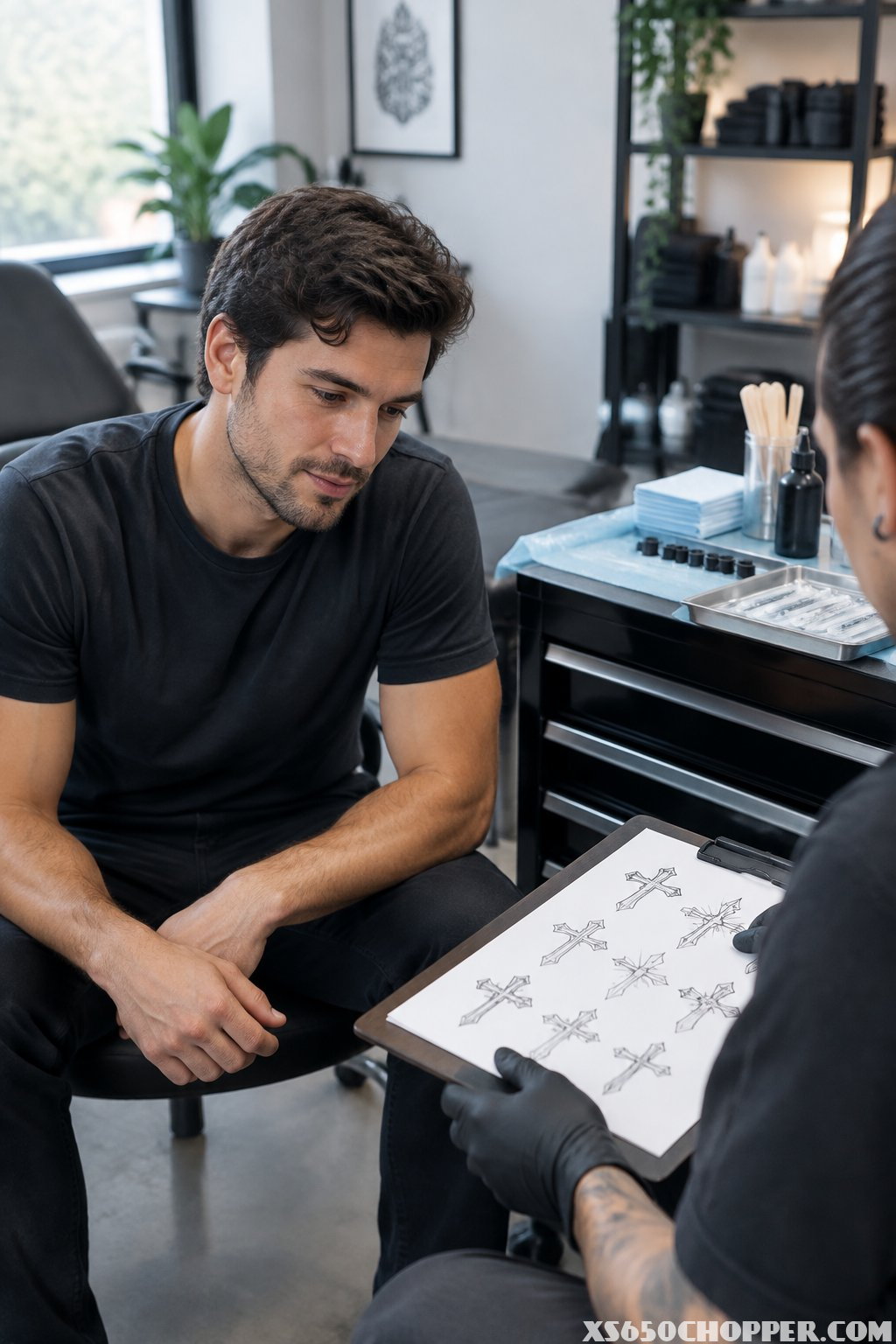
Review portfolios for healed work, religious imagery, lettering, realism, or blackwork that matches your chosen design. An artist’s style should support the subject, especially when the tattoo includes a portrait, hands, facial features, or intricate knotwork.
Read the studio’s health and safety information, then schedule a consultation to discuss symbolism, scale, placement, and skin tone. Clear communication helps prevent decorative choices from changing the meaning you intend.
What Should You Bring to a Design Consultation?
Bring reference images, preferred scripture or dates, placement photos, and notes about the meaning behind the tattoo. Tell the artist which elements are essential and which details remain flexible.
Wear clothing that gives easy access to the placement area. Ask to review the spelling, proportions, stencil position, and expected session length before work begins.
How Can You Protect Fine Details During Healing?
Follow the artist’s cleaning and moisturizing instructions, keep the tattoo away from unnecessary friction, and avoid picking at peeling skin. Sun protection after healing helps preserve line contrast and shading.
Wait until the skin has fully settled before judging the finished appearance. Contact the studio if you notice unusual swelling, spreading redness, worsening pain, or other signs that need medical attention.