The five goatee styles that give you the clearest options with a bald head are the Circle Beard, Van Dyke, Classic Goatee, Anchor Beard, and Balbo Beard. Each shapes your lower face differently, from a soft rounded outline to a sharper, more angular profile.
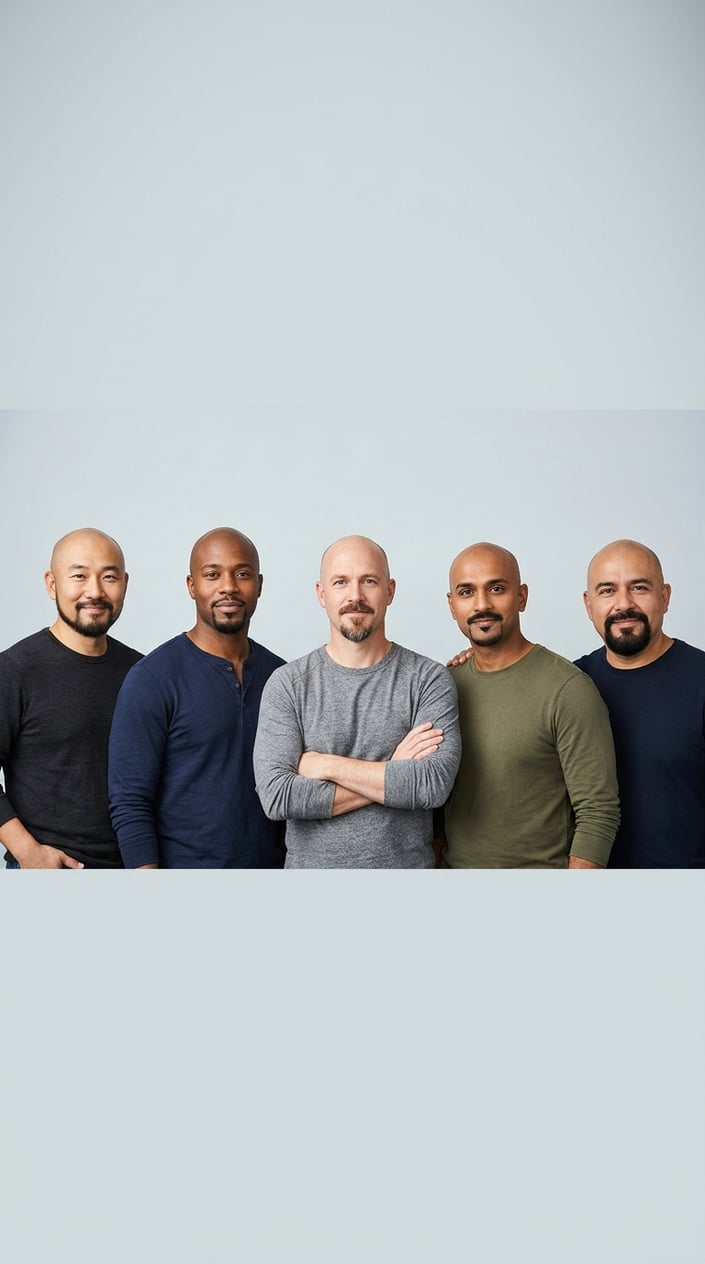
Your face shape and beard growth help determine which style will look balanced. Start with the shape that suits your features, then refine its length and edges as your facial hair fills in.
Quick picks:
- Best balanced look: Circle Beard
- Best defined contrast: Van Dyke
- Best minimal coverage: Classic Goatee
- Best sculpted shape: Anchor Beard
1) Circle Beard

A Circle Beard gives you a neat, rounded frame by joining your mustache to the hair around your chin. Its continuous outline creates a cohesive look that suits many face shapes and works well at short or medium length.
Keep the curve smooth around your mouth and chin. Trim the cheeks and neck cleanly so the rounded shape stays distinct, and check both sides in good light to keep the outline even.
PRO TIP
Use a detail trimmer around the mouth, then soften the outline with a slightly longer guard. That keeps the circle defined without making the edge look harsh.
2) Van Dyke

A Van Dyke pairs a mustache with a separate pointed chin beard for a crisp, high-contrast shape. Keeping the cheeks clean makes the two parts stand out, while the pointed chin adds definition to your lower face.
Shape the chin beard into a tidy point and leave enough separation beneath the lower lip to preserve the style’s distinct outline. This look suits you if your mustache and chin hair grow evenly enough to create two clear shapes.
PRO TIP
Trim each side of the chin beard in small passes, checking the shape from the front between adjustments.
3) Classic Goatee

A Classic Goatee keeps hair on your chin while leaving your upper lip and cheeks clean. Its compact footprint gives you facial-hair definition with less coverage than a connected beard.
Set the width to follow your chin, then trim the edges so the shape looks deliberate from the front and side. Short, even growth keeps the style tidy; extra length gives your chin more visual emphasis.
PRO TIP
Start with a longer trimmer guard and reduce the length gradually, especially if you want to keep the chin beard short.
4) Anchor Beard

An Anchor Beard combines a shaped chin beard with a soul patch and a separate mustache to form an anchor-like outline. Its pointed lower edge gives your face a more sculpted appearance, while the clean cheek area keeps the design easy to see.
Keep the chin point centered and the mustache balanced on both sides. The style needs clear edges around the mouth and along the chin, so check the outline regularly as the hair grows.
PRO TIP
Use a small mirror to inspect the chin point from below as well as straight on; this helps you keep its center aligned.
5) Balbo Beard

A Balbo Beard pairs a separate mustache with a broader chin beard that flares slightly along the lower face. Its added width creates a strong outline, which can balance a narrow chin or a face with more length.
Keep the mustache detached from the chin beard and shape the sides of the beard evenly. A defined lower edge helps the style read clearly, while a shorter length keeps the wider silhouette controlled.
PRO TIP
Mark the intended cheek and jaw edges with your trimmer before removing surrounding hair, then compare both sides in a front-facing mirror.
How to Choose a Goatee for Your Face Shape
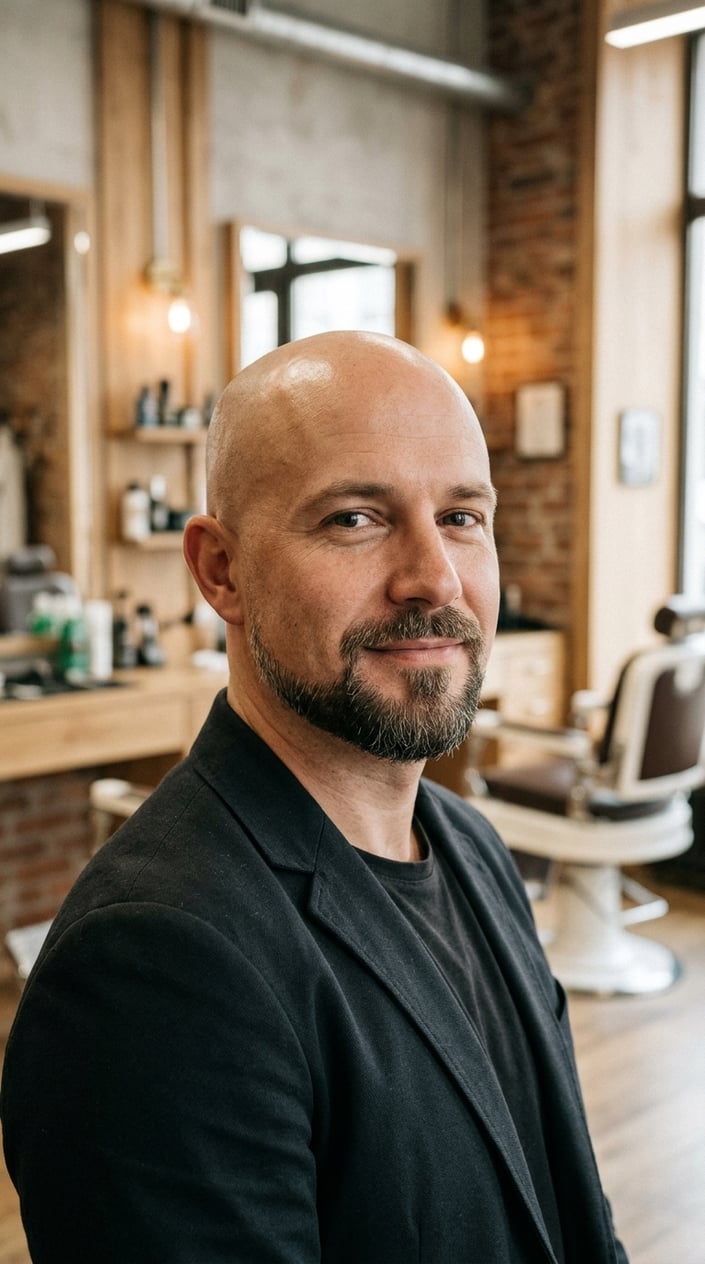
Choose a goatee that balances your face’s proportions: rounded or wider shapes suit many shorter faces, while a compact style can keep a longer face from looking more elongated. Use your chin length and cheek width as guides when choosing how much volume to keep below your mouth.
Which Styles Suit Round or Square Faces?
A Van Dyke or Anchor Beard adds a pointed outline that can bring definition to a round face. For a square face, a Circle Beard softens the angles around your chin, while a Balbo’s curved edges can complement a broader jaw.
Which Styles Work Best for Longer Faces?
A Circle Beard or Classic Goatee kept short limits extra length at the chin. If your face is long, keep the lower edge compact and choose a wider outline only when you want more visual width.
How to Get a Sharp, Balanced Look

A sharp look comes from even beard length, clean edges, and a scalp that receives the same grooming attention as your facial hair. Set your outline in good light and check the result from the front and side before you finish trimming.
How Can You Preview a Style Before Trimming?
Take a clear front-facing photo and a side-profile photo, then use a photo editor with facial-hair overlays to compare shapes. You can also ask a barber to mark the outline before you commit to trimming; begin with a longer guard so you have room to adjust.
What Scalp and Facial-Hair Grooming Keeps the Look Polished?
Wash your beard regularly and use a comb to reveal uneven growth before trimming. Keep your scalp clean and moisturized, and apply sunscreen to exposed skin when you spend time outdoors. Refresh the beard edges as they grow in, with special attention to the mustache and chin outline.