

You get a crisp goatee line by trimming your hair to an even length, setting a balanced outline, and cleaning up the surrounding skin with controlled passes. A clear centerline and matching guide points help you keep each side even as you shape the edges.
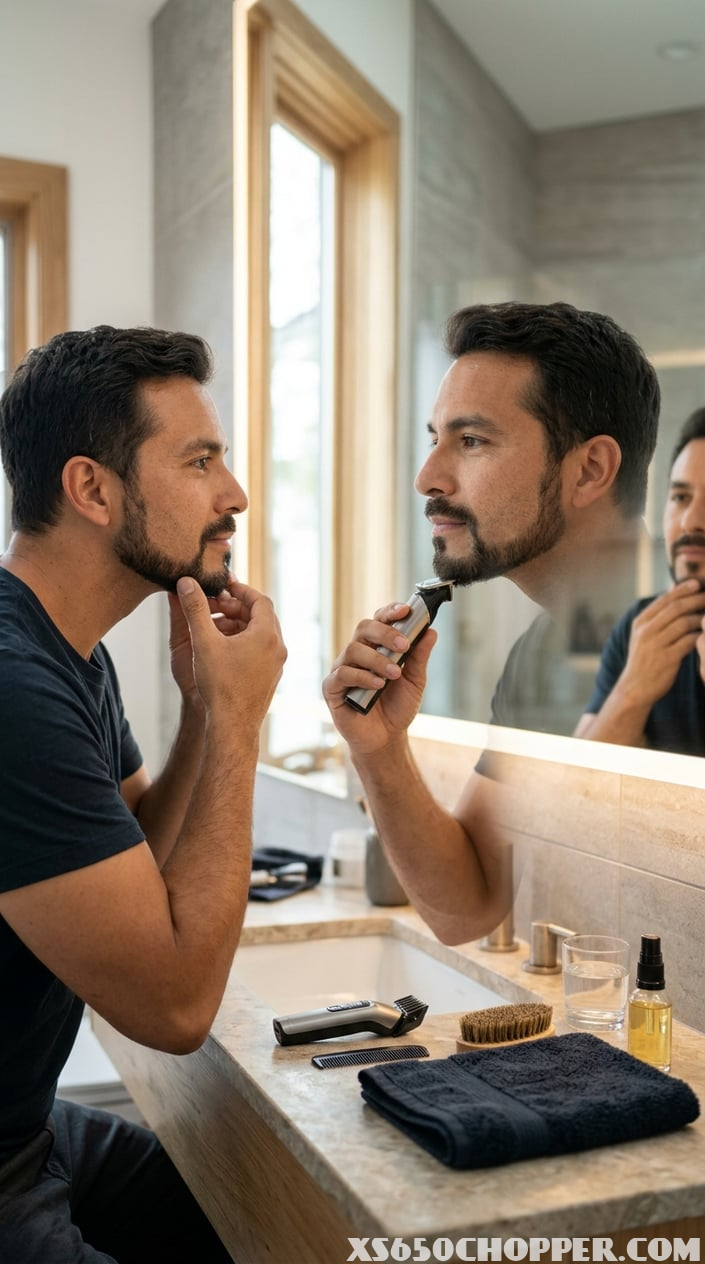
Work with clean, dry facial hair and good lighting so stray hairs and uneven edges are easy to spot. Take off small amounts at a time; you can always trim more.
1) Set Out Your Trimmer, Comb, and Razor

Set out a beard trimmer with guards, a precision trimmer, a comb, and a razor before you start. A mirror with clear lighting helps you see both sides of your face, while a clean blade gives you better control around the outline.
Check that your trimmer is charged and that the guards fit securely. Choose a razor that feels comfortable in your hand for shaving the cheeks and neck.
PRO TIP
Keep a second mirror nearby so you can check the neckline from below.
2) Wash and Dry Your Facial Hair

Wash your goatee to remove oil, food residue, and product, then dry it fully before trimming. Clean, dry hair gives you a more consistent view of its length and natural shape.
Pat your face with a towel instead of rubbing the hair in several directions. If you use beard oil or styling product, apply it after trimming.
PRO TIP
Give damp hair time to dry before you choose a guard; wet strands can lie flatter and appear shorter.
3) Comb the Goatee Into Its Natural Direction
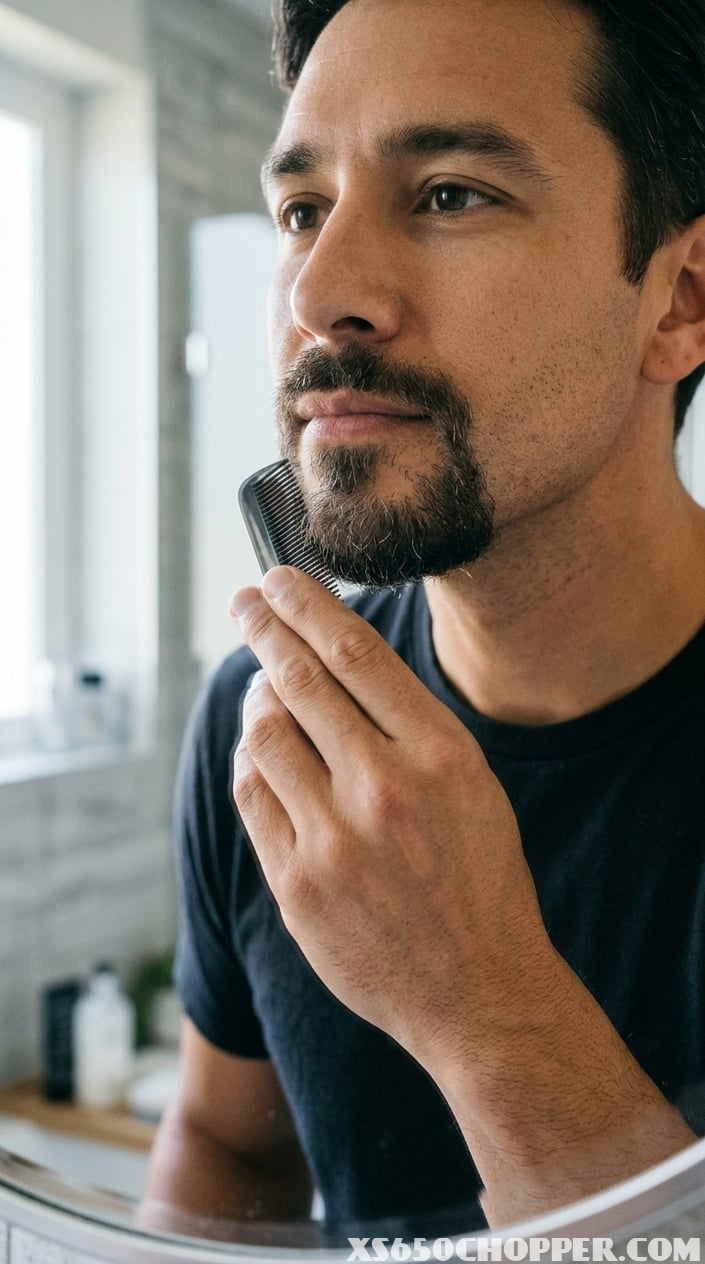
Comb your goatee in the direction it grows so the hairs settle into a uniform shape. This reveals long strands that stick out and gives you a reliable surface to trim.
Use short, gentle strokes around the chin and beneath the lower lip. If your mustache grows in a different direction, comb it separately to keep its outline clear.
PRO TIP
Comb once more after trimming to catch hairs that shifted during your first pass.
4) Trim the Length With a #2 to #4 Guard

Start with a #4 guard, about 12 mm, and move to a #2 guard, about 6 mm, if you want a shorter goatee. Run the trimmer through the hair in steady strokes, following its growth direction.
A longer starting guard leaves room to refine the length without cutting too much at once. Keep your pressure light and check the result from the front before making another pass.
PRO TIP
If you are unsure which length suits you, begin with the longest guard and reduce the setting gradually.
5) Find the Centerline Beneath Your Lower Lip

Use the center beneath your lower lip as the reference point for shaping the goatee. A balanced centerline helps you judge the chin’s width and keep the left and right edges aligned.
Look straight ahead in the mirror, relax your mouth, and identify the midpoint between your chin and lower lip. Keep your head level while you set the shape.
PRO TIP
Use a washable skin-safe pencil to mark the center if the midpoint is hard to judge.
6) Choose a Width That Suits Your Face

Choose a goatee width that feels balanced with your face and chin. A broader shape can complement a longer face, while a narrower outline creates a more compact look.
Check the intended width from the front with your face relaxed. Keep the edge shape consistent on both sides, and leave enough room for the mustache and chin hair to connect if that is the style you want.
PRO TIP
Set the width before you shave the cheeks so you can preserve the outline you chose.
7) Mark Matching Guide Points on Both Sides
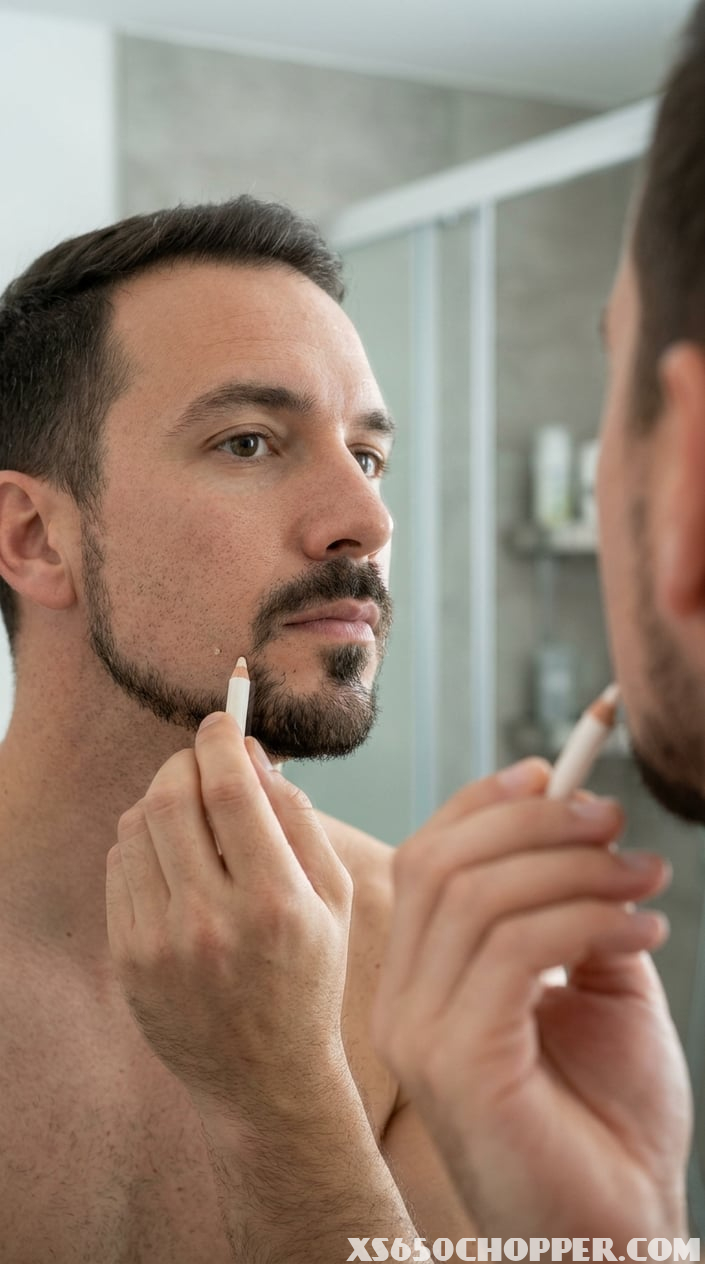
Mark matching guide points on either side of your goatee to establish its width and height. Use the centerline as your reference, then compare each point in the mirror before outlining.
Place small marks where the cheek edges should meet the chin shape. Keep the points subtle and use a washable, skin-safe pencil if you need a visible guide.
PRO TIP
Check the guide points with your head straight; a tilted angle can make matching marks look uneven.
8) Outline the Goatee From the Center Outward
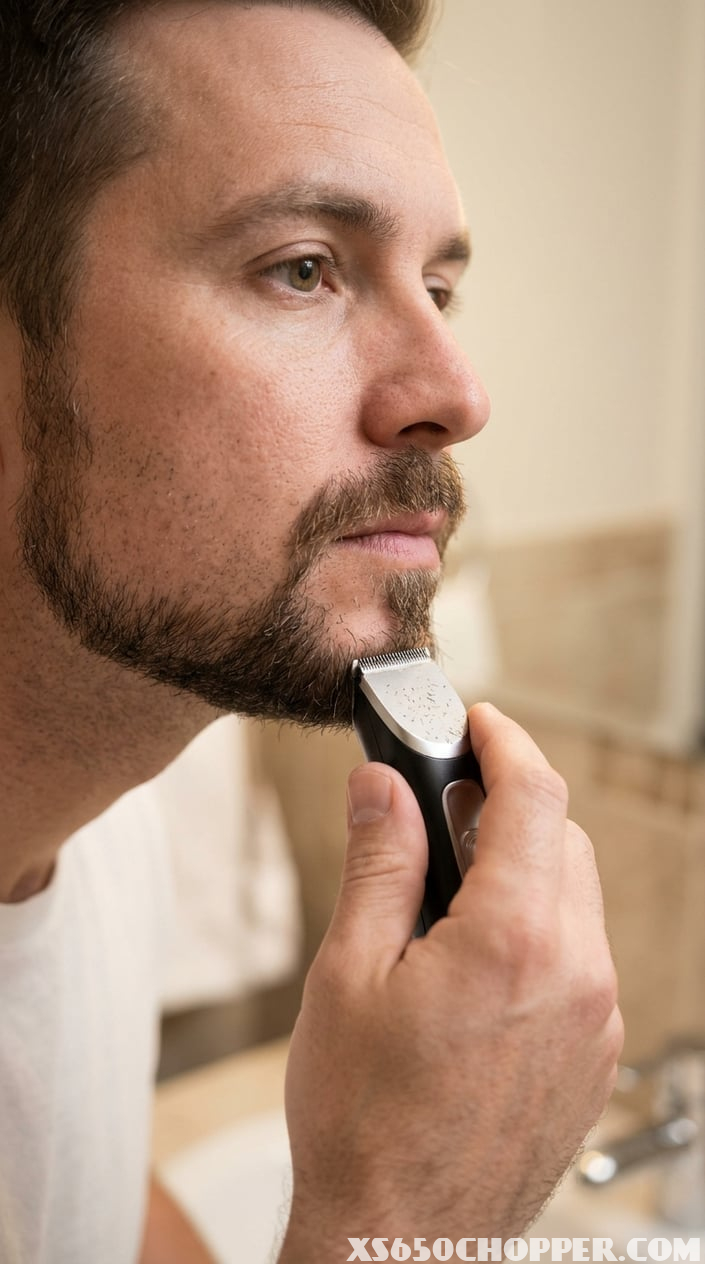
Use a precision trimmer to define the outline, working from the center toward each side. Short, careful strokes help you follow the guide points and maintain a clean edge.
Keep the trimmer steady and make small adjustments as you approach the corners of your mouth and jaw. Step back to check the full shape before sharpening any section further.
PRO TIP
Use the trimmer’s corner for tight curves, then check that both sides meet the same points.
9) Shape the Mustache to Match the Chin

Trim your mustache so its length and edges look balanced with the chin portion of your goatee. Comb it into place, then use a guarded trimmer for length and a precision trimmer for the outline.
Clear hairs that fall over your upper lip, taking small passes along the bottom edge. If your style includes connected sides, keep the junctions even on both sides of your mouth.
PRO TIP
Relax your lips while trimming so their movement does not distort the mustache line.
10) Shave the Cheeks Outside the Outline
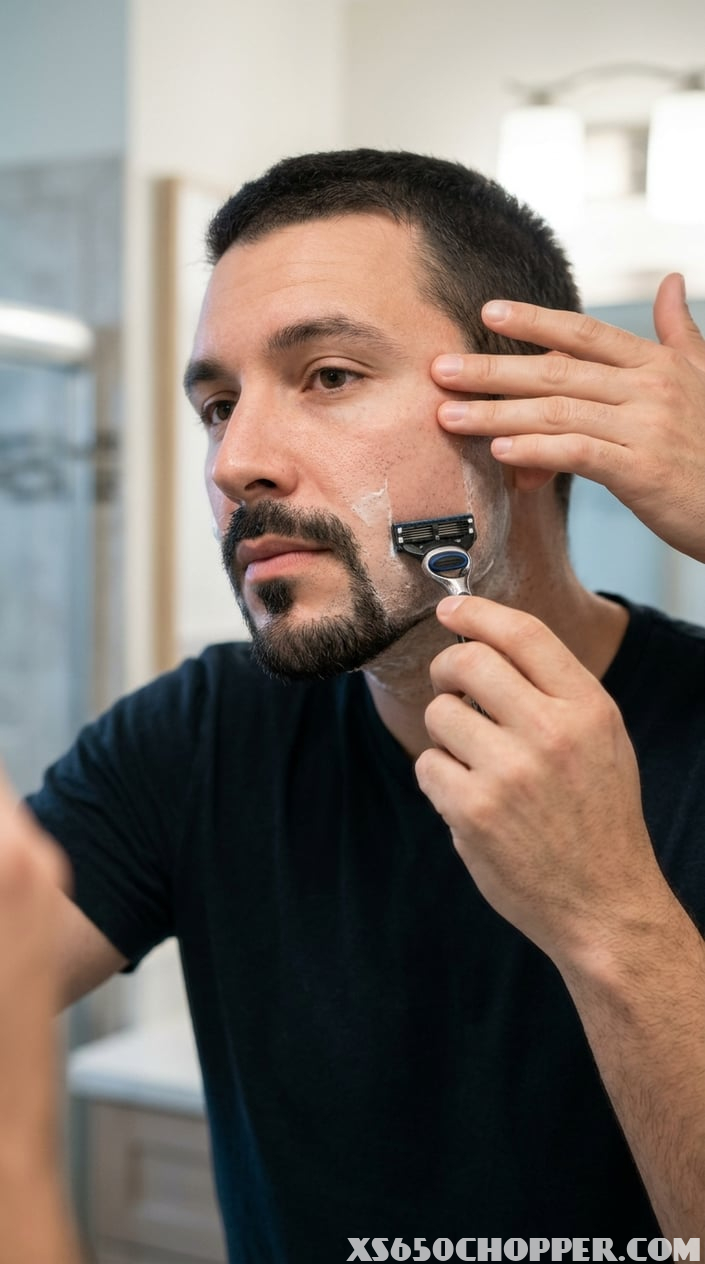
Shave the cheek hair outside your outline to make the goatee edges look crisp. Use a razor with a light touch and follow the shape you created with the precision trimmer.
Rinse the blade as needed and keep the skin comfortably taut near the edge. Check each side as you go, removing only the hair beyond the line.
PRO TIP
Use short strokes near the outline, where a long pass can cut into the shape.
11) Set the Neckline About Two Finger-Widths Above the Adam’s Apple
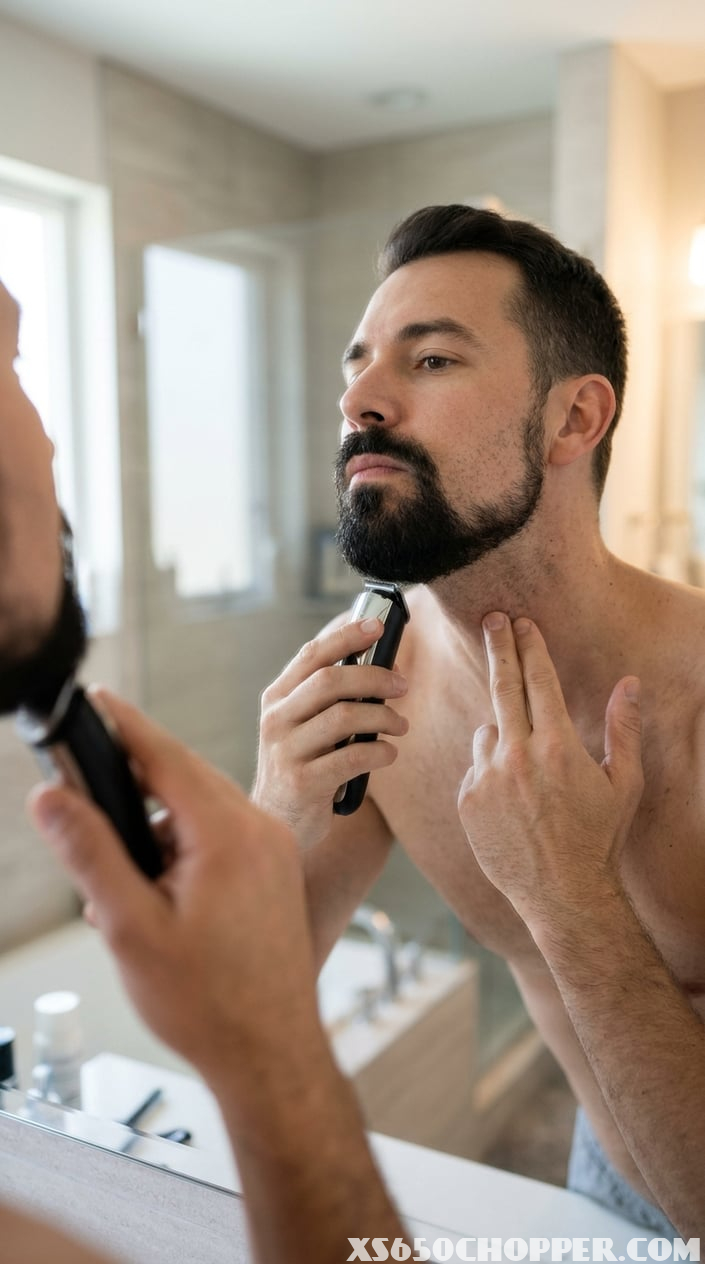
Set the lower edge of your neckline about two finger-widths above your Adam’s apple, then shape it to follow the curve beneath your jaw. This placement keeps the neck clean while leaving the goatee’s chin area intact.
Tilt your head slightly to see the area clearly, then trim below the chosen line. Check the neckline with your head level before shaving the remaining neck hair.
PRO TIP
Keep your chin relaxed while you check the line; stretching your neck can shift the skin and change how the edge looks.
12) Check Symmetry and Clean Up Stray Hairs
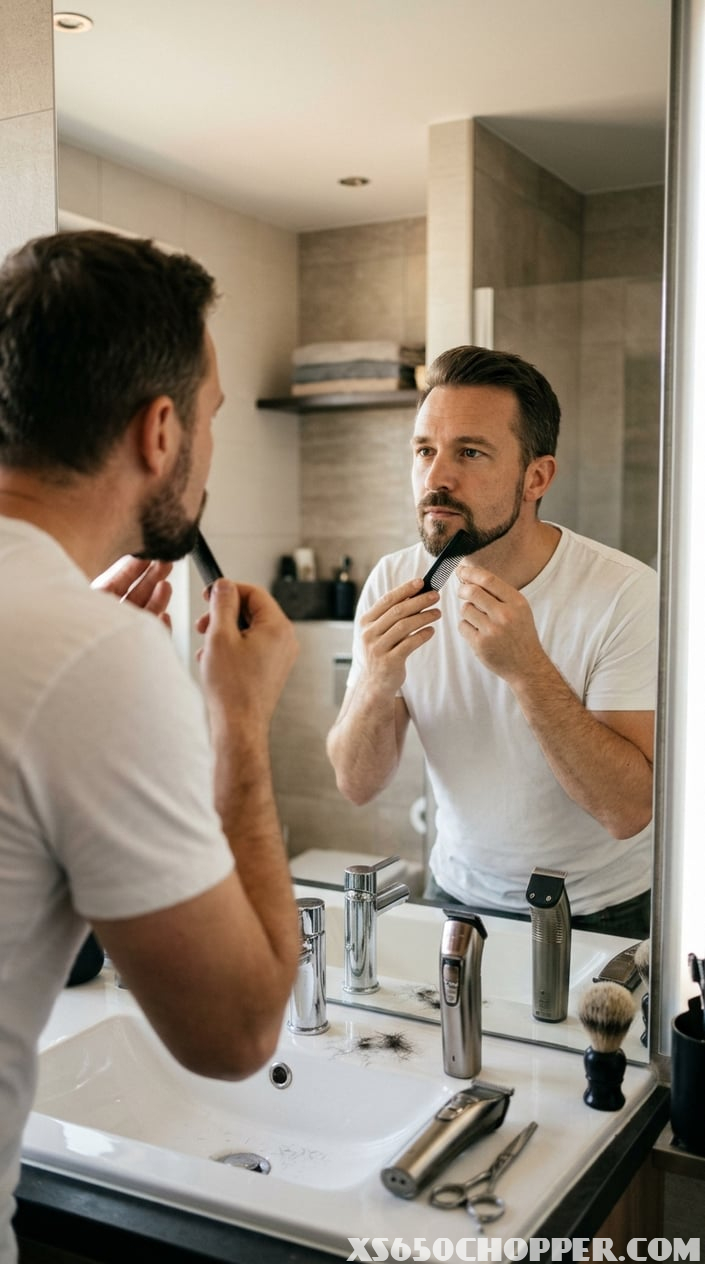
Check your goatee from the front with your head level, then correct any uneven edges with the precision trimmer. Compare the width, corners, and neckline before removing stray hairs.
Comb the goatee into place and look at the outline from both sides. Use the razor for loose hairs outside the shape, then rinse your face and check the result in clear light.
PRO TIP
Pause between corrections and inspect the full shape; repeated close-up trimming can make you lose track of the overall balance.
How to Keep Your Goatee Looking Crisp

Keep your goatee crisp by checking the outline regularly and refreshing it with small, controlled touch-ups. Trim clean, dry hair and use the same mirror angle when you assess the shape.
How often should you touch up the edges?
Touch up the outline when new growth starts to blur the shape, which may be every few days depending on your growth rate. Use a precision trimmer for the edges and shave the surrounding skin as needed.
When should you adjust the guard length?
Adjust the guard when the goatee’s overall length looks uneven or has grown beyond the shape you want. Start with a longer setting, then step down gradually until the hair sits at your preferred length.