A hardtail welded in his own shop, a clutch cover wearing his own name, and a friendly challenge that finally dragged a stalled project off the bench.Year1975ModelYamaha XS650StyleHardtail bobberBuilderJim Wachtman
Every garage has one: the project that slides quietly to the bottom of the list, year after year. It is not abandoned, exactly. It is simply outranked — by paying work, by family, by the fact that a shop only holds so many hours. Jim Wachtman’s 1975 Yamaha XS650 bobber sat in that position for a long while, a bike that existed mostly as a plan and a parts pile.
What finally moved it back onto the lift was not a deadline. It was another builder with the same idea, and a challenge between friends.
The challenge that restarted everything
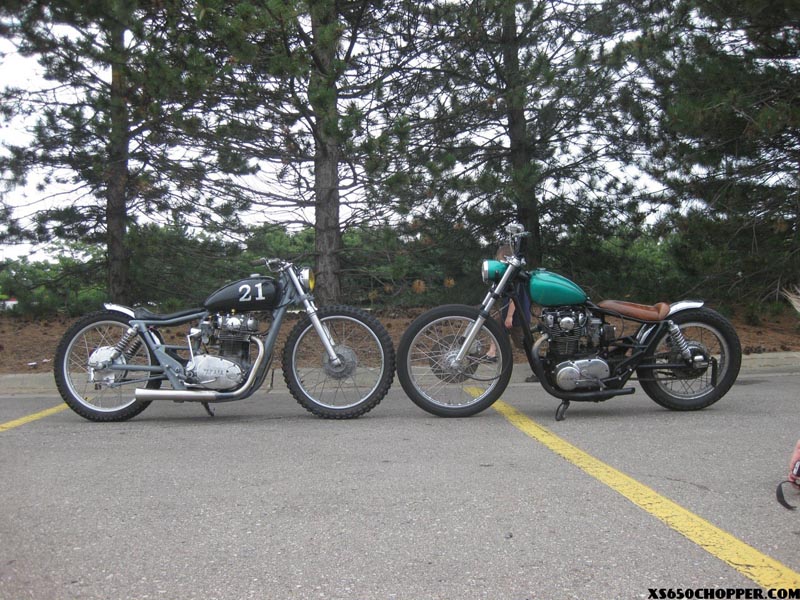
A coworker mentioned he was planning an XS650 bobber of his own. Wachtman said he was building one too. That was all it took — a friendly biker build-off, two rigid twins in progress at once, and the quiet competitive pressure of not being the guy who never finishes.
“When I mentioned that I was building one too, we decided to have a little friendly biker build-off. It turned into a lot of fun and gave us both the motivation to get our projects finished.”Jim Wachtman
It is an old story in hot rodding and an even older one in motorcycles: nothing accelerates a build like a rival who lives twenty minutes away. The difference here is what the motivation produced. Rather than assembling a catalog bike, Wachtman went the harder route and made most of it himself.
Cut, welded, and squared by hand
The chassis starts with a TC Bros hardtail welded onto the stock frame — a known quantity, and a sensible place to begin. Everything downstream of it is one-off. The rear fender and its struts were made rather than bought, the exhaust was built from scratch, and the frame and bracketry were sent out for powder coat so the finished assembly reads as one clean, deliberate object instead of a collection of parts.
Fabricated by the owner
- TC Bros hardtail welded to the stock frame, with the frame re-squared afterward
- Brake mounts — fabricated and fitted to the hardtail
- Gussets — drilled lightening holes at the neck and backbone
- Seat mounts — built to sit the solo saddle tight on the backbone
- Kickstand — one-off, sized for the lowered rigid stance
- Brackets and linkages — including the forward-control mounting
- Chain tensioners — designed and machined from scratch
- Exhaust — built in-house, satin black with slotted heat shields
- Rear fender and struts — hand-formed, not catalog parts
- Rear sprocket — machined by Wachtman’s son
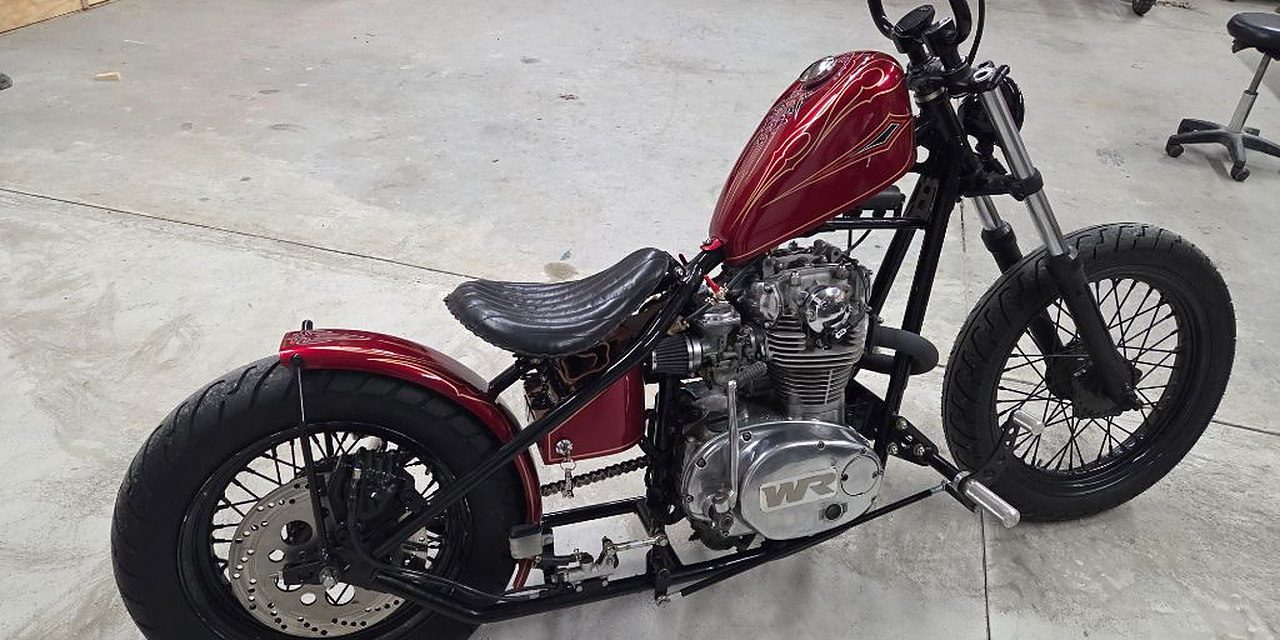
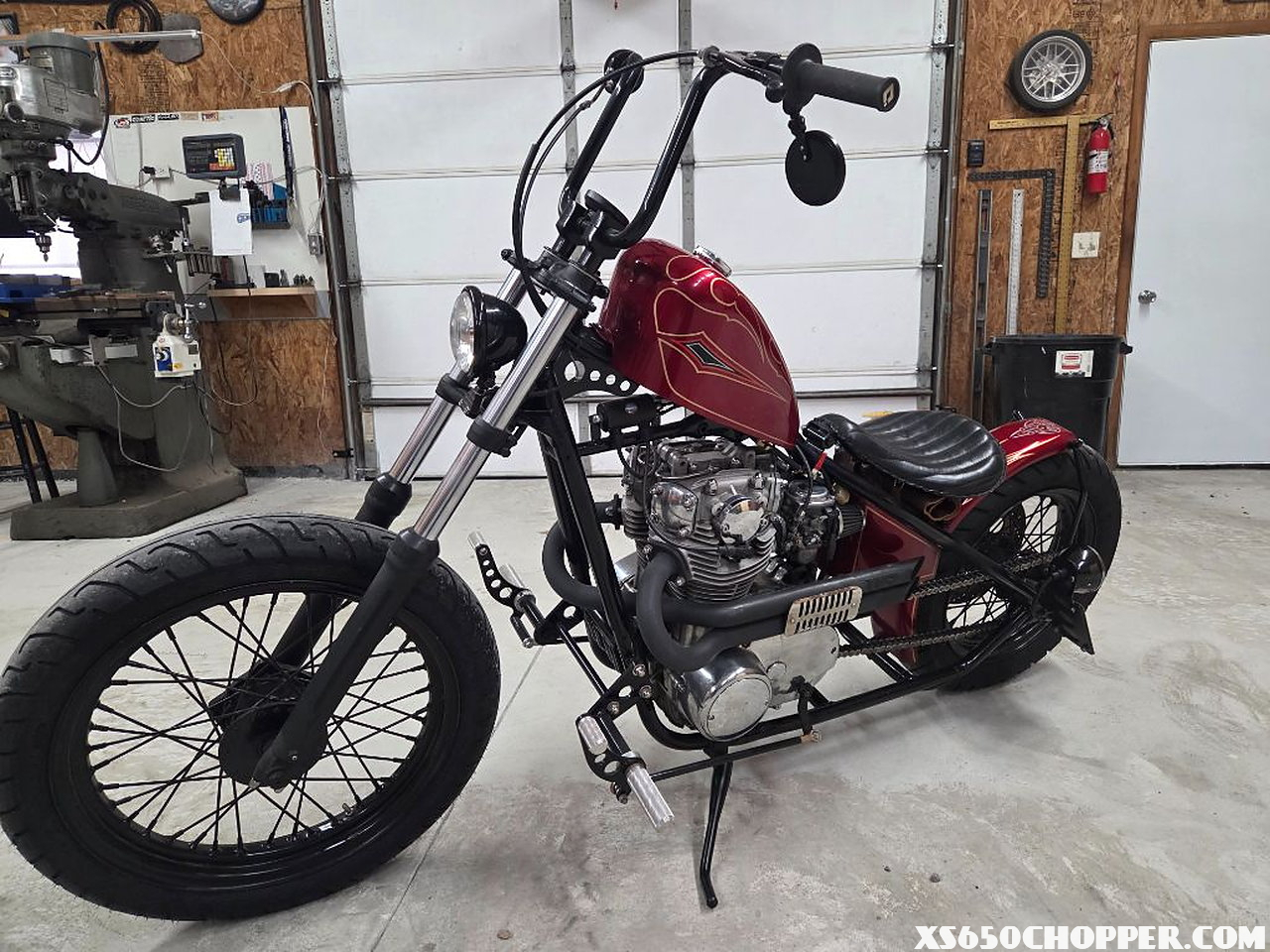
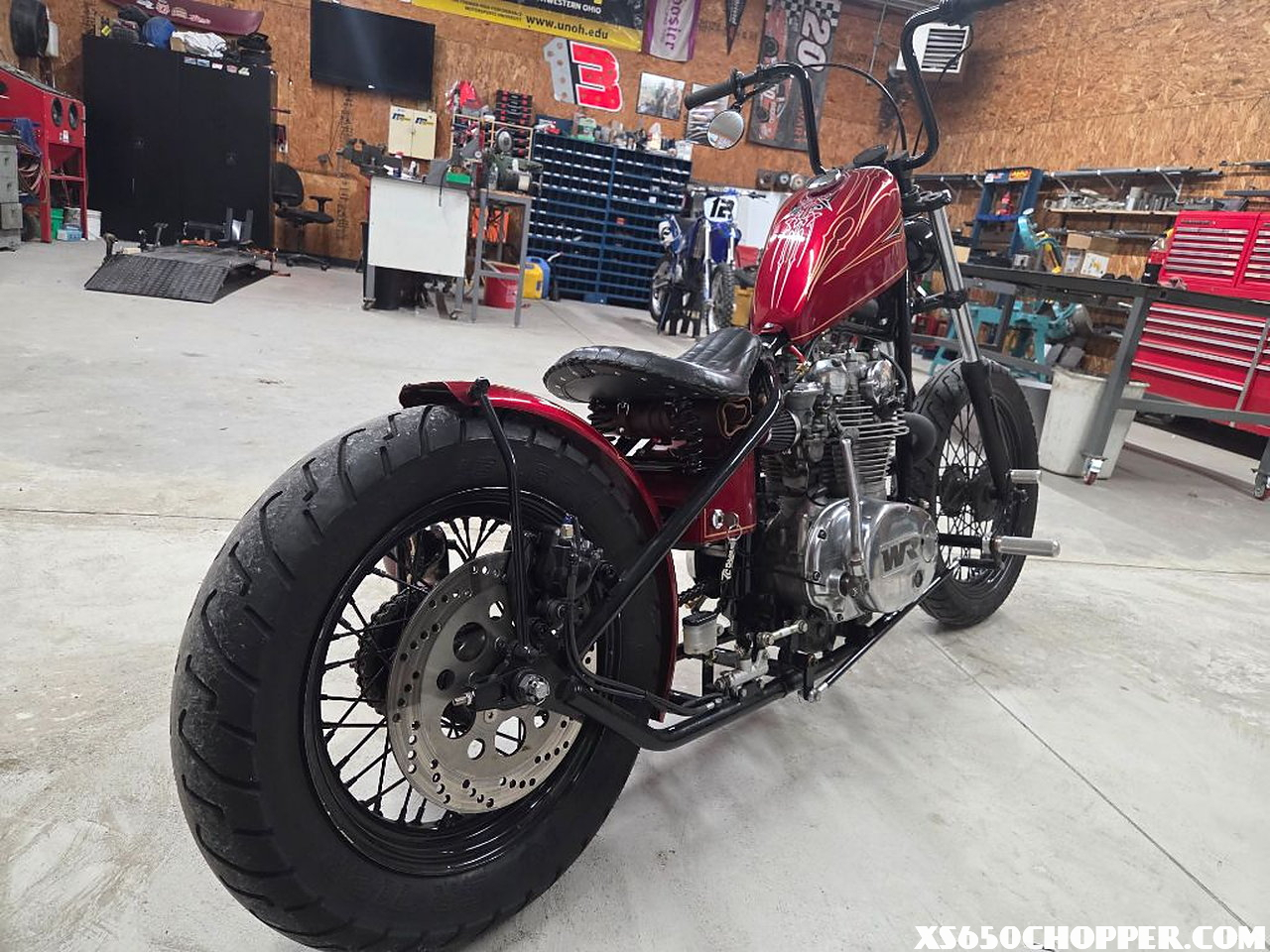
The photographs show what that attention buys. The rear fender hugs the tire at a consistent gap along its whole arc, held by thin tubular struts that all but vanish against the background. The gusset plates carry drilled lightening holes — functional, and a nice piece of visual rhythm at the neck. Nothing looks improvised, which is the tell of a frame that was cut and re-squared rather than simply bolted together.
Made, not bought
Wachtman is a machinist, and the build is where that shows. He machined a Wachtman Racing logo into the clutch cover — cut into metal, not applied as a decal — and polished the engine cases to set it off. In the photos the “WR” mark on the right-side cover is the first thing the eye finds, sitting proud of a case that has been brought back to a finish the factory never offered. It is a signature, and it lands the way a signature should: quietly, in polished aluminum, on a part most riders never look at twice.
Two details deserve a mention because they solve problems rather than decorate:
- The “fake” oil tank. A hand-formed cover that hides the wiring and the Antigravity four-cell battery, giving the rigid frame the visual emptiness a good bobber needs.
- The shaved fork legs. Removing the front brake mounts sounds minor until you see how much cleaner the front end reads without the lugs.
Paint, pinstripes, and the last five percent
Wachtman sprayed the candy red himself, over a gloss black frame, and the color does most of the visual work: deep enough to go almost black in the shadows of the shop, then lighting up along every edge and radius when the overheads hit it. Painting your own bike is a gamble. Done badly, it is the thing everyone notices. Done well, it disappears into the design.
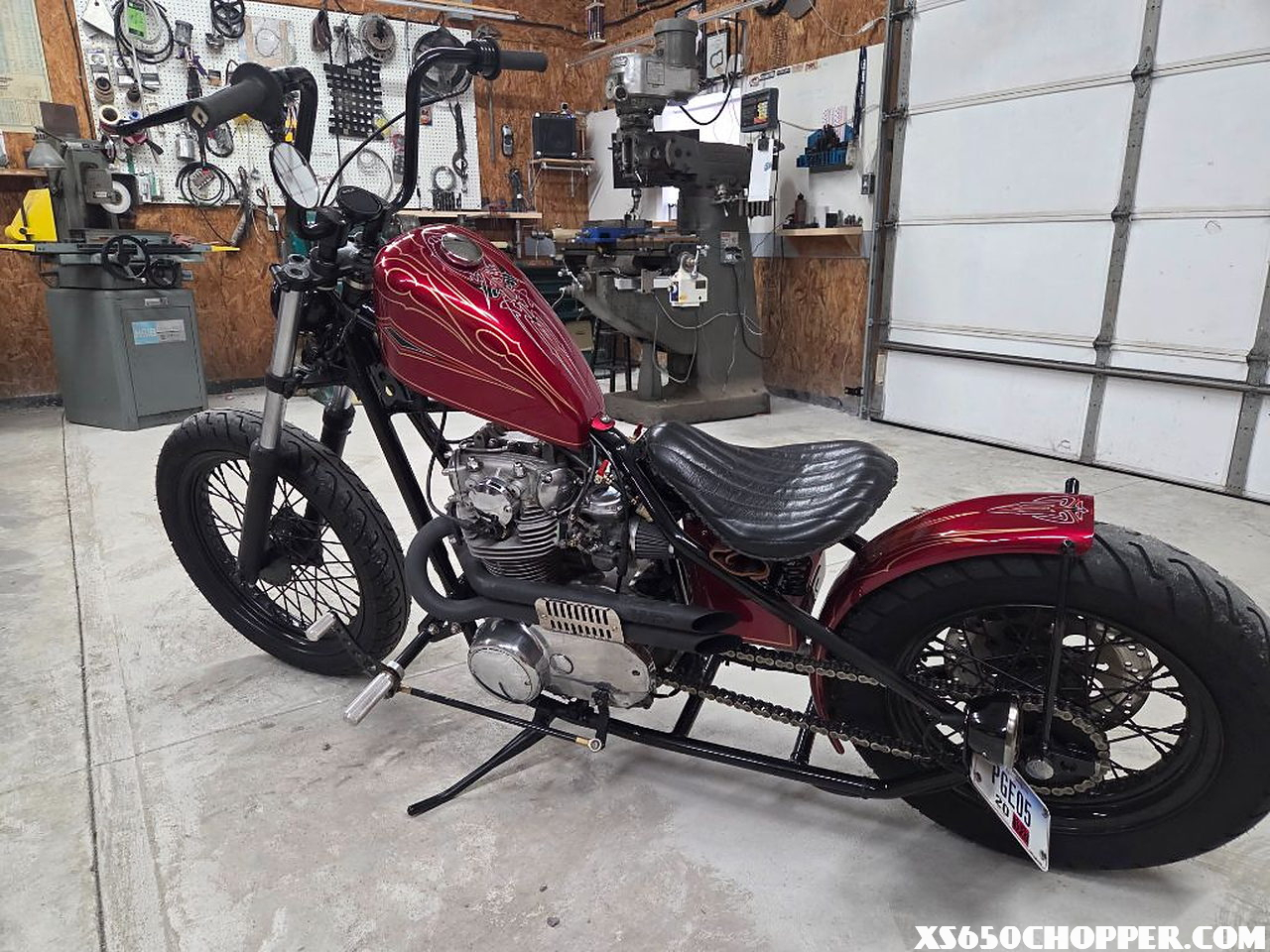
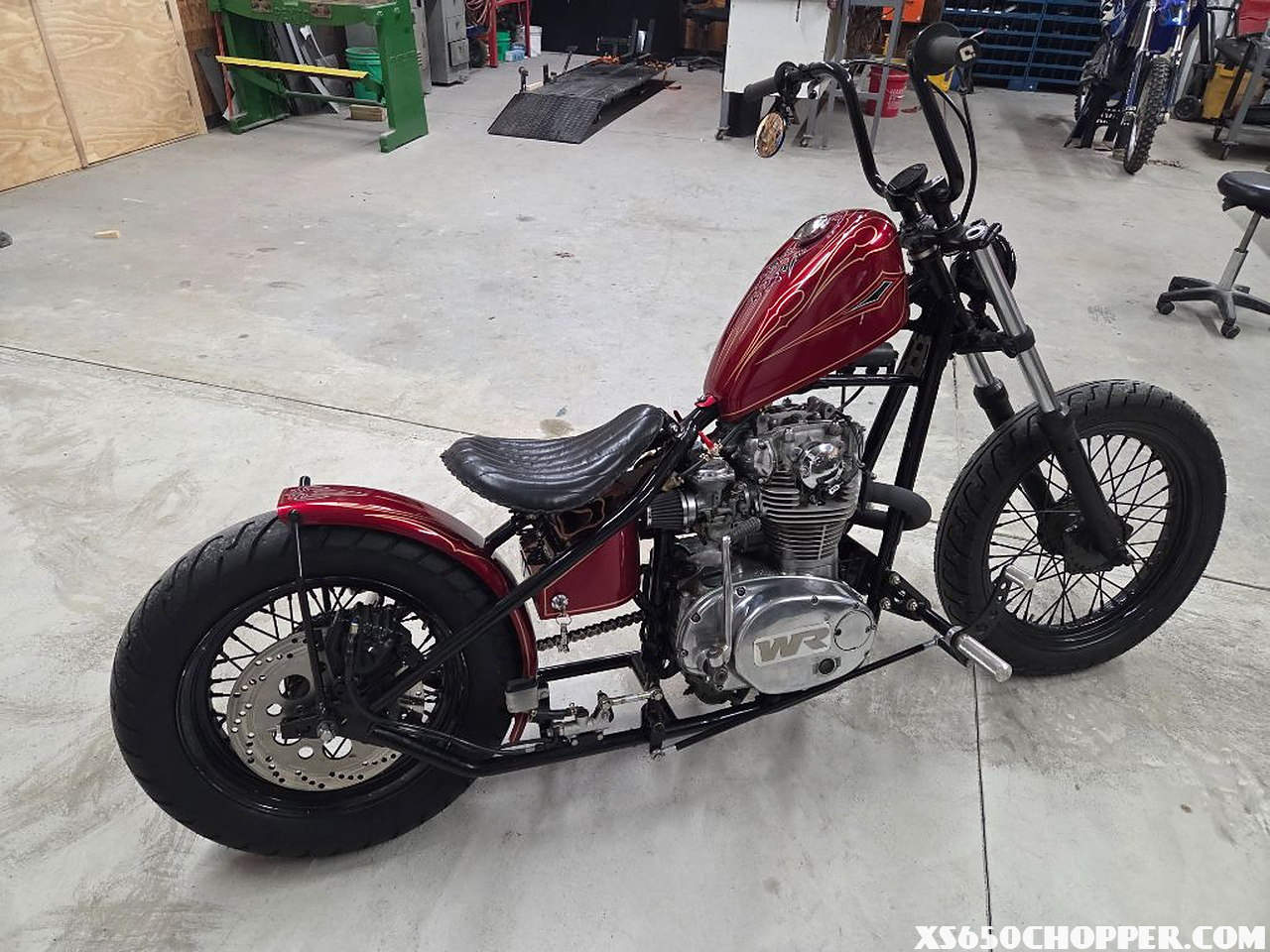
Then Todd Hanson laid the pinstriping, and that is the part that turns a well-painted custom into a period-correct one. Gold and cream lines flow the length of the tank, break into scrollwork and flame-style flourishes at the sides, and pick up again on the bobbed rear fender and the small electronics box below the seat. In the overhead shot, the striping runs from the flush filler cap back toward the seat in fine daggers — hand-work you can read at a glance, and the exact opposite of a vinyl kit.
Electrics, and a kick-only ritual
Underneath the traditional looks is a deliberately modern charging and ignition package: a Mike’s XS PMA charging system, XS Charge ignition, and a small four-cell battery doing the unglamorous work of stabilizing voltage. It is kickstart only — no button, no compromise on the clean right-hand side of the engine.
The cockpit is equally stripped: tall black bars, a single round mirror slung underneath, a compact digital gauge between the risers, and nothing else competing for attention. That combination is the practical answer to an old question — the XS650 twin is a genuinely good engine, and the usual failure point on a hardtail conversion is the charging system and the wiring that goes with it. Wachtman’s solution is the modern one, hidden inside a fake oil tank so the bike still looks like it was built in 1975.
The point of a rigid frame
A hardtail is a statement with consequences. The frame does not absorb anything, so the sprung solo saddle and the fat rear tire do all the work; the reward is a silhouette no swingarm bike can match — tank, seat, fender, tire, and a straight line from the steering neck to the rear axle.
Up front, the opposite instinct: a narrow spoked wheel, no fender at all, and a small black headlight bucket tucked between the sliders. That deliberate mismatch — heavy at the back, skeletal at the front — is what gives the bike its forward-leaning attitude even standing still on a kickstand.
And it gets ridden. That is the difference between a showpiece and a motorcycle, and Wachtman is clear about which one he built.
“It’s not just something to look at in the garage. It’s a custom bike built with my own hands, and it’s a whole lot of fun to ride.”Jim Wachtman
Nearly every part on it has a story, which is the quiet argument for doing the fabrication yourself. The chain tensioners were not ordered; they were drawn and cut. The sprocket was not sourced; his son made it. The name on the clutch cover is his own, and the paint under the pinstripes was sprayed by the same hands that welded the frame.
Specification
| Component | Detail |
|---|---|
| Year / Make | 1975 Yamaha XS650 |
| Builder | Jim Wachtman |
| Style | Hardtail bobber |
| Frame | TC Bros hardtail; owner-fabricated brake mounts, gussets, seat mounts, kickstand, brackets and linkages |
| Bodywork | Custom rear fender and struts; custom “fake oil tank” cover hiding wiring and battery |
| Controls | TC Bros forward controls; front brake mounts removed from fork legs |
| Engine | XS650 parallel twin, polished cases, machined Wachtman Racing clutch cover |
| Exhaust | Owner-built, satin black with slotted heat shields |
| Charging | Mike’s XS PMA |
| Ignition | XS Charge |
| Battery | Antigravity four-cell (voltage stabilization) |
| Starting | Kickstart only |
| Paint | Candy red, sprayed by the owner |
| Pinstriping | Todd Hanson |
| One-off parts | Machined chain tensioners; rear sprocket machined by Jim’s son |
| Finish | Powder coated frame, brackets and components |
Wheels: black rims laced with black spokes front and rear, fat blackwall rear tire, drilled stainless rear rotor, chain final drive.
Your build next
Every XS650 on this site started as photos in an email. If you have a build — finished, half-finished, or still a frame on a stand — send it in with the story of how it came together.
- Full side profile, shot square-on at axle height
- Front and rear three-quarters for stance
- One detail you are proudest of — a bracket, a paint job, a part you made
- The story: what you started with, what fought you, what you would do differently
Use the submission form on the site and include a few clear shots in daylight. Daylight beats shop lighting every time.