

Your haircut schedule should match its shape: book skin fades and buzz cuts every 2–3 weeks, short classic cuts every 4 weeks, tapers and medium scissor cuts every 4–6 weeks, and long styles every 8–12 weeks.

Your haircut’s outline changes as it grows, and styles with tight fades show that change sooner. Use the schedule that fits your cut as a starting point, then adjust it to your preferred level of definition and the way your hair grows.
1) Skin Fade: Every 2–3 Weeks

Book a skin fade every 2–3 weeks to keep the transition from bare skin to longer hair crisp. New growth softens the contrast near your temples and above your ears, changing the fade’s clean outline quickly.
If you like a very sharp finish, aim for the shorter end of that window. At three weeks, your barber can restore the blend and tidy your neckline; ask whether your top needs a trim at every visit.
PRO TIP
Bring a photo of your fade when you book. It helps your barber match the height and shape of the previous cut, especially if you want to keep the top length.
2) Buzz Cut: Every 2–3 Weeks
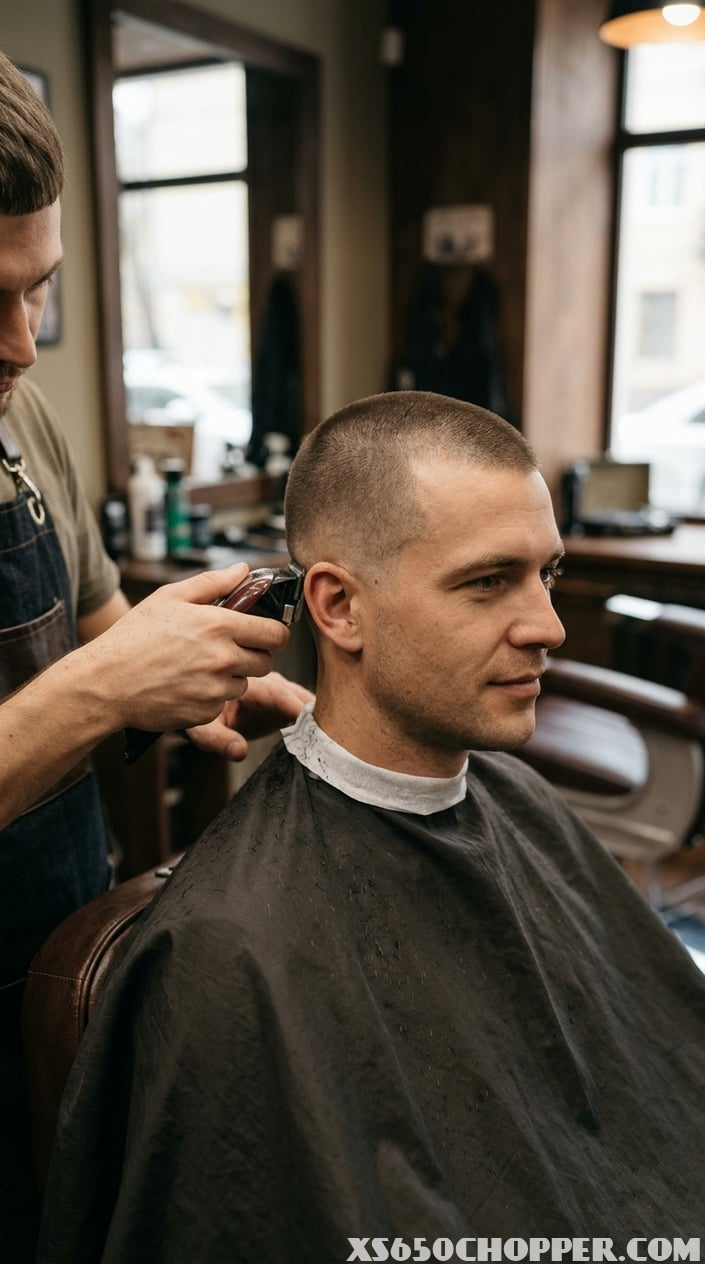
A buzz cut stays even and close with a trim every 2–3 weeks. Because the hair is uniformly short, a small amount of growth can change the overall length and make the sides feel fuller.
Choose a shorter interval if you keep your hair at a very low guard length. If you wear a slightly longer buzz, you may be comfortable booking closer to three weeks. Let your barber know the guard number you prefer so your length stays consistent.
PRO TIP
Check your crown and sideburns in natural light between appointments. Those areas can show uneven growth first, giving you a clear cue to book your next trim.
3) Short Classic Cut: Every 4 Weeks
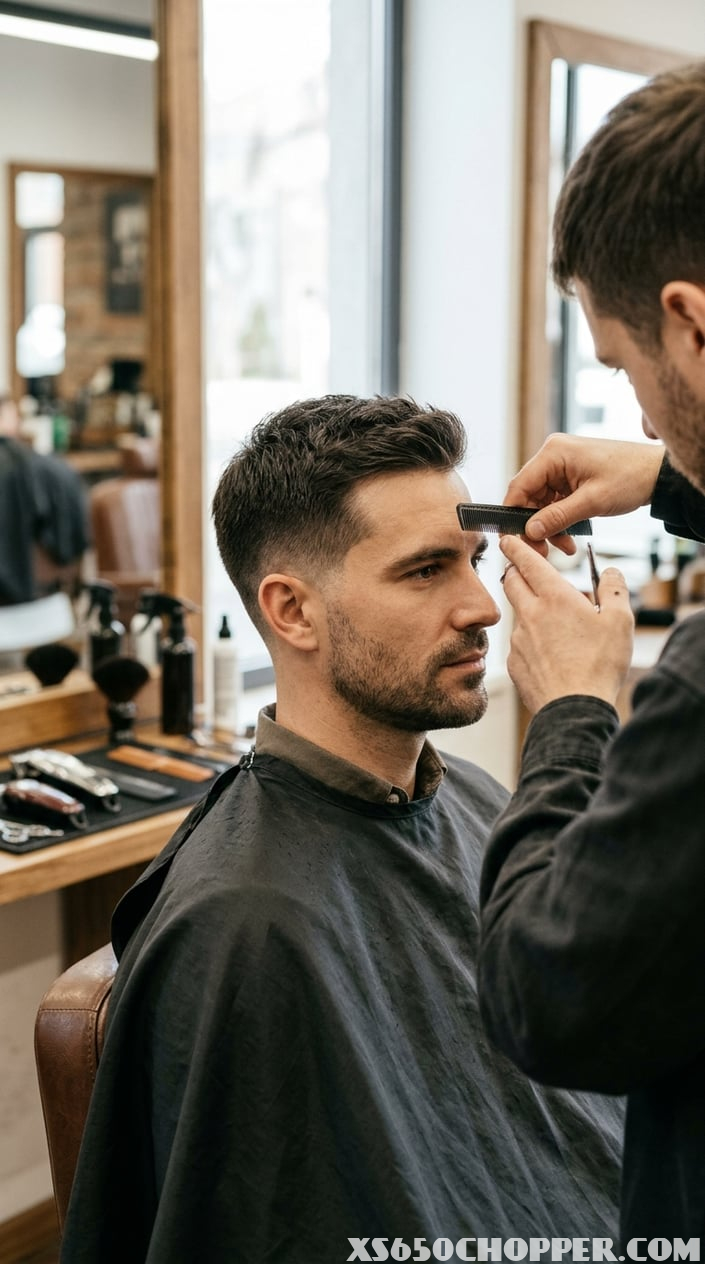
Schedule a short classic cut every 4 weeks to keep its sides neat and its shape easy to style. The extra length on top gives you some room to grow between visits, while the sides and neckline tend to look untidy sooner.
At your appointment, ask your barber to preserve the top length if you like its current proportions. A cleanup around the ears and neckline can refresh the cut without changing the silhouette you want.
PRO TIP
If you style your hair with a part, note where it sits before your appointment. That helps your barber maintain the shape you rely on when you style it at home.
4) Taper Cut: Every 4–6 Weeks

A taper cut generally needs a trim every 4–6 weeks, with a shorter interval for a sharper outline. Its gradual blend grows out more softly than a skin fade, so you have some flexibility in your booking date.
Choose four weeks if you want the area around your ears and neckline kept crisp. Six weeks suits a more relaxed finish, especially when you leave more length on top. Ask your barber to maintain the taper’s height so the outline keeps its intended shape.
PRO TIP
Tell your barber which edges you want cleaned up. A neckline and sideburn refresh can preserve your taper’s appearance when the rest of your hair still has the length you want.
5) Medium Scissor Cut: Every 4–6 Weeks
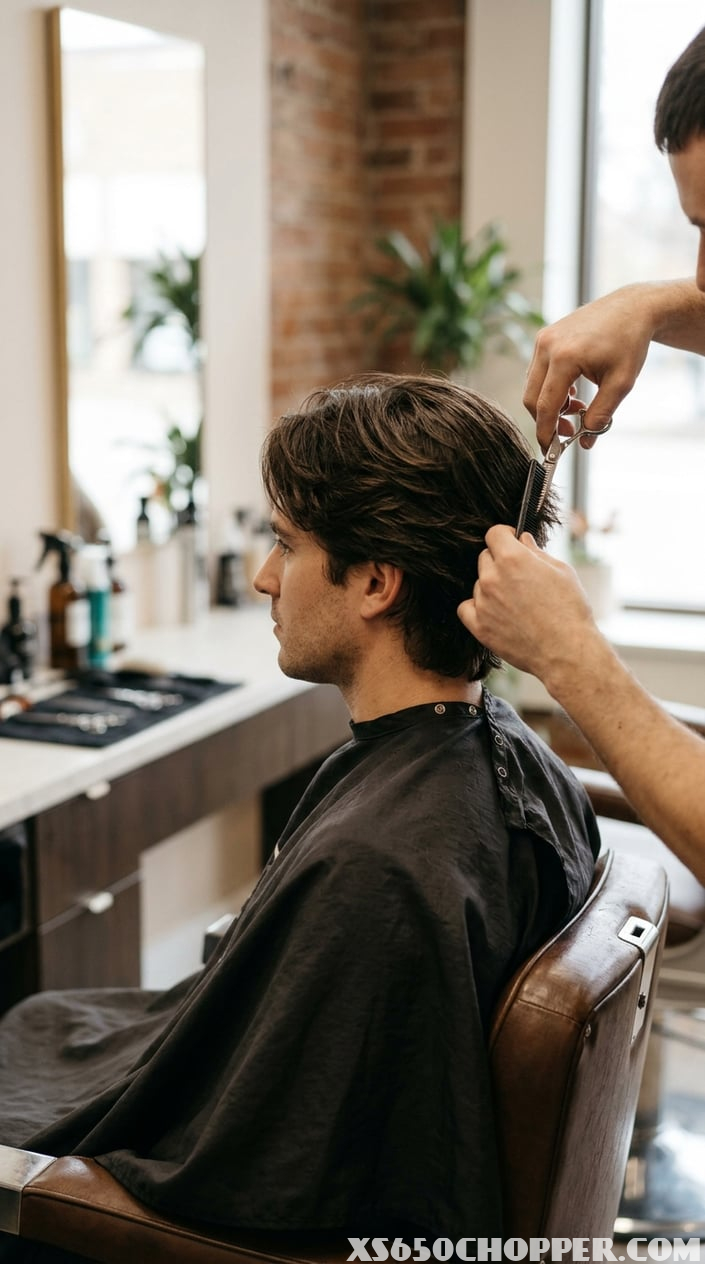
Book a medium scissor cut every 4–6 weeks to control its shape while keeping length. Hair that falls around your ears or forehead can start to feel heavier as it grows, even when you want to retain most of the length.
Use a four-week schedule if your style depends on a defined outline or layered shape. Stretch toward six weeks when you prefer a looser look and your hair still sits comfortably. Explain how much length you want to keep before your barber starts cutting.
PRO TIP
Ask for a light trim focused on the ends and shape when you’re growing your hair out. That gives you a chance to keep the length you’ve gained while tidying areas that feel bulky.
6) Long Hairstyle: Every 8–12 Weeks

A long hairstyle can go 8–12 weeks between trims when you want to maintain length. Longer hair gives small amounts of growth more room to settle, so your outline may stay comfortable for weeks after a short cut would lose its shape.
Book closer to eight weeks if your ends feel rough or your layers have lost their form. Twelve weeks suits a relaxed style that still falls the way you like. Tell your barber how much length you want removed before the trim begins.
PRO TIP
Bring a clear reference for your preferred length and shape. You can also ask your barber to show you the amount planned for removal before the first cut.
How to Choose Your Haircut Schedule
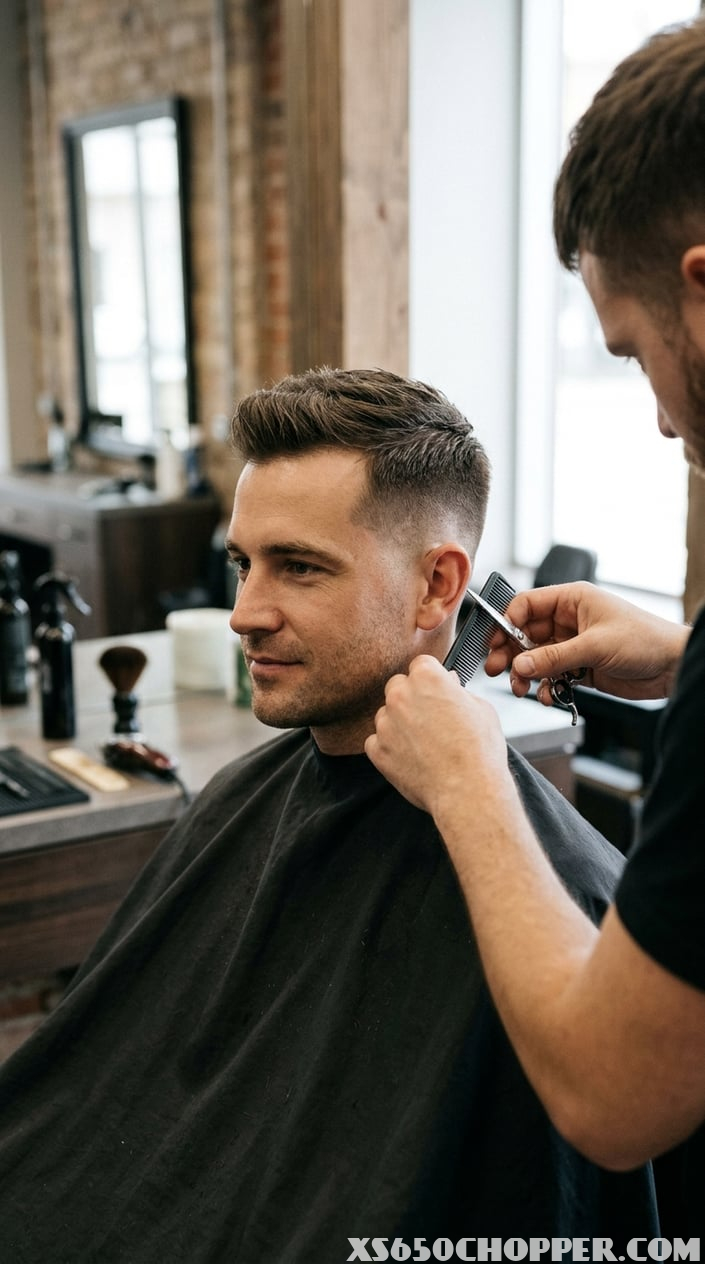
Choose your appointment interval by weighing your growth rate, the finish you want, and how your texture behaves as it grows. Your ideal cadence is the one that keeps your haircut manageable at home and within the shape you prefer.
How Quickly Does Your Hair Grow?
If your hair grows quickly, schedule the next visit toward the shorter end of the range for your cut. When growth is slower, you may be comfortable waiting longer, especially with a taper or longer style.
How Much Shape and Definition Do You Want to Maintain?
A crisp fade or closely cropped outline calls for more frequent trims. If you prefer a softer, grown-in finish, extend the interval and book when the shape starts to feel difficult to style.
How Does Your Hair Texture Affect the Timing?
Your texture affects how growth sits and how much bulk you notice. Curly or wavy hair can change shape as it gains length, while straight hair may show shifts in an outline more clearly. Use how your hair falls between appointments to fine-tune your schedule.
Signs It’s Time for a Trim

Book a trim when your haircut’s outline has lost the shape you want or styling takes more effort than it did after your last visit. Those changes give you a practical cue to adjust your schedule.
When Have the Sides or Neckline Lost Their Shape?
Check whether the hair around your ears has begun to cover them or your neckline looks uneven. If a fade has lost its contrast or your sideburns have grown past their preferred length, schedule a cleanup.
When Is Your Hair Harder to Style?
Pay attention when your usual part no longer sits neatly, your fringe falls into your eyes, or the sides puff out under your regular styling routine. If your haircut takes extra effort to settle each morning, a trim can restore its shape.