

A haircut can change how much of your forehead you notice by shifting the hairline’s visual frame. You can make your forehead look more prominent with styles that pull hair away from the front, add height, or expose the temples.
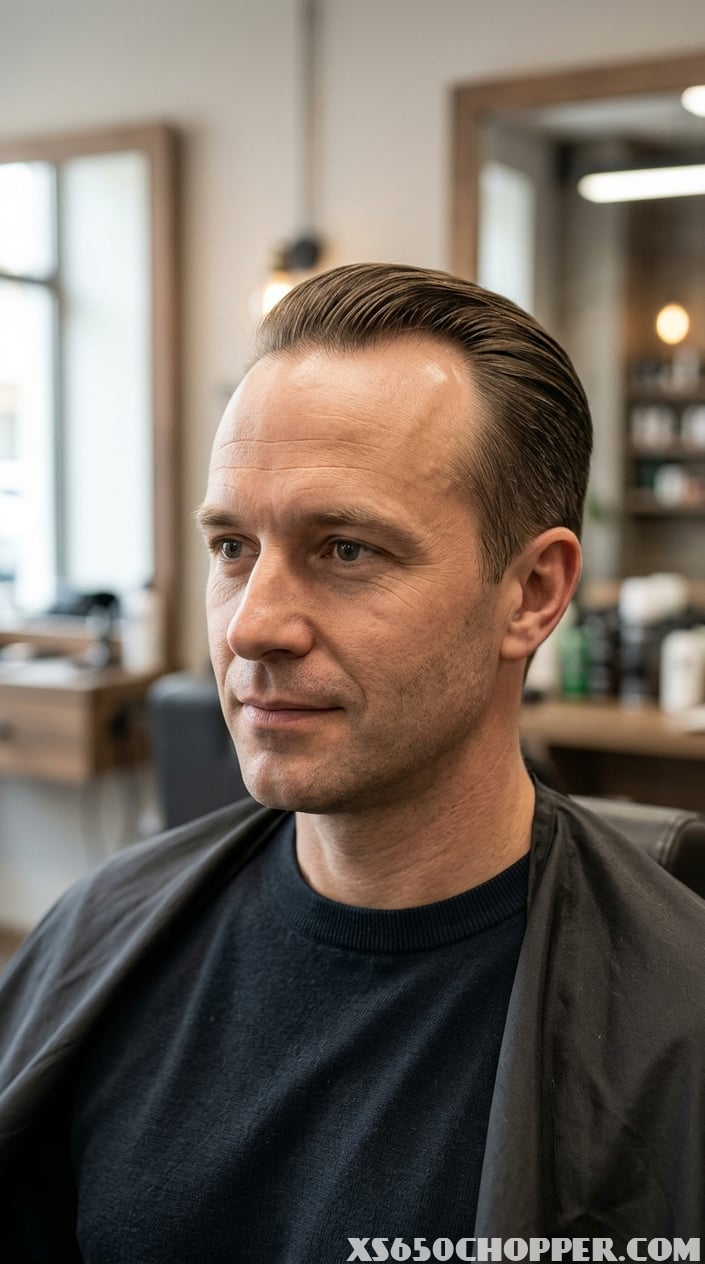
You can create more balance with texture, a softer outline, or a fringe that brings some hair forward. Your hair density, texture, and natural hairline will shape which adjustments work best.
1) Brushing All Your Hair Straight Back

Brushing all your hair straight back exposes the full hairline and draws attention to your forehead. The smooth direction also creates a clear line from the front of your hair to your temples.
Try a loose side sweep or a textured crop that leaves a few pieces forward. A small amount of matte paste helps keep movement without making the top look slick or compressed.
PRO TIP
Ask your barber to leave enough length at the front to style it forward or diagonally. You can test the shape with a low-shine product before committing to a shorter cut.
2) Choosing a Tall Quiff or Pompadour

A tall quiff or pompadour adds height above the forehead, making the upper part of your face look longer. The effect becomes stronger when the sides are tight and the front is swept fully upward.
Keep the front lower and textured if you like volume. A short, broken-up quiff preserves lift while reducing the vertical emphasis of a high, sculpted style.
PRO TIP
Tell your barber you want moderate height at the front, with enough length to create texture. At home, work product through the roots and direct the hair slightly forward.
3) Getting a High Skin Fade That Exposes the Temples

A high skin fade exposes the temples and creates a strong contrast between bare sides and the hair above. That sharp transition can make a wide or receding hairline stand out.
A low or mid fade leaves more coverage around the temples and gives the top a softer frame. Keeping the sides slightly fuller also helps connect the haircut to your natural hairline.
PRO TIP
Ask for the fade to start lower and blend gradually around your temples. Bring a reference photo that shows the fade height you want, not just the top styling.
4) Wearing a Center Part That Opens Up the Hairline

A center part separates the hair at the front and leaves the hairline visible on both sides. When the roots lie flat, the part can make the forehead look wider.
A soft side part or forward-swept texture breaks up that open space. If you prefer a middle part, ask for layers that fall diagonally across the front instead of splitting cleanly at the hairline.
PRO TIP
Style the part with a little root lift and keep the front sections loose. A defined, narrow part creates a stronger line than a natural-looking separation.
5) Cutting a Fringe Too Short to Provide Coverage

A fringe cut too short leaves the hairline exposed while drawing attention to its edge. A fringe with enough length to sit forward gives you more coverage and a softer frame.
A textured French crop or Caesar cut can work well when you want a short style with some forehead coverage. The fringe should suit your hair’s natural growth pattern, so a stubborn cowlick may call for a choppier shape.
PRO TIP
Ask your barber to check the fringe dry and in its natural fall before taking more length off. Hair can sit higher once it dries or gets styled.
6) Leaving the Top Flat and Separated
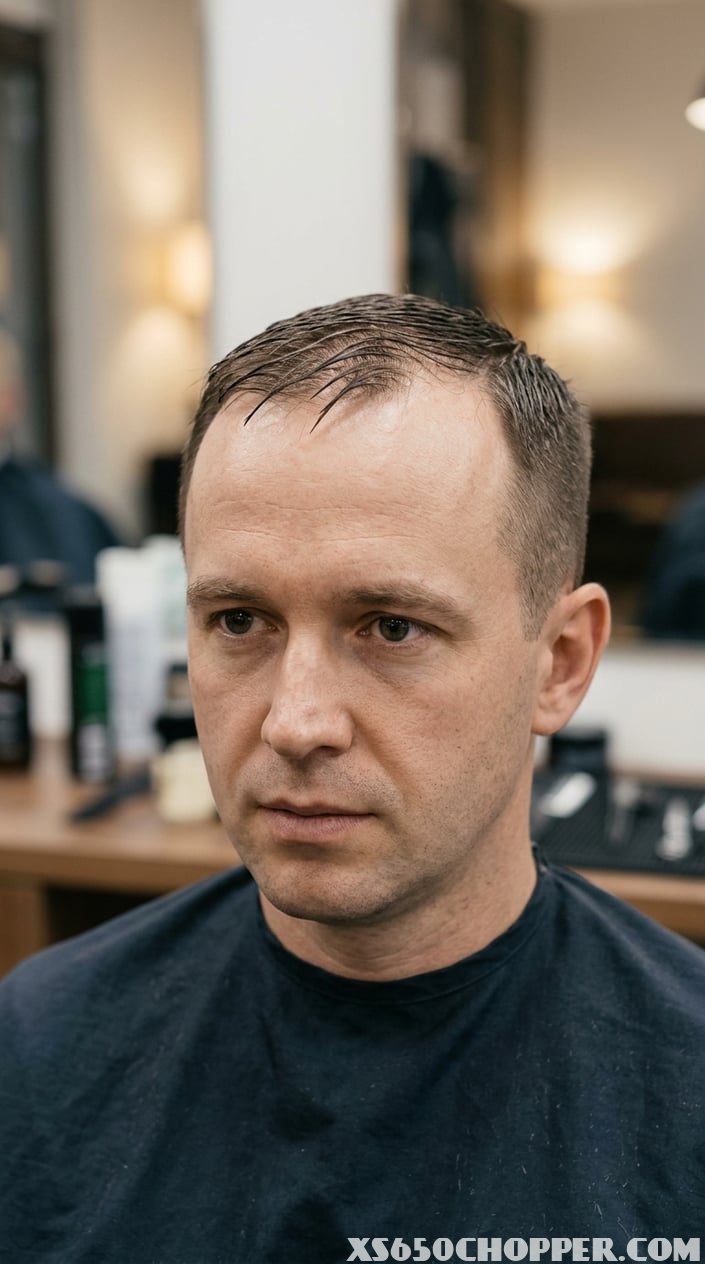
A flat, separated top creates visible gaps that leave more of your scalp and forehead in view. This effect stands out when the front pieces split apart or the hair lacks texture.
Ask for light layering or point-cut texture to help the top sit together. A small amount of matte styling cream adds separation without making strands look wet or stringy.
PRO TIP
Dry your hair forward or diagonally with your fingers, then use a pea-sized amount of product. Add more only if the front still separates.
7) Adding a Sharp Lineup That Highlights the Hairline
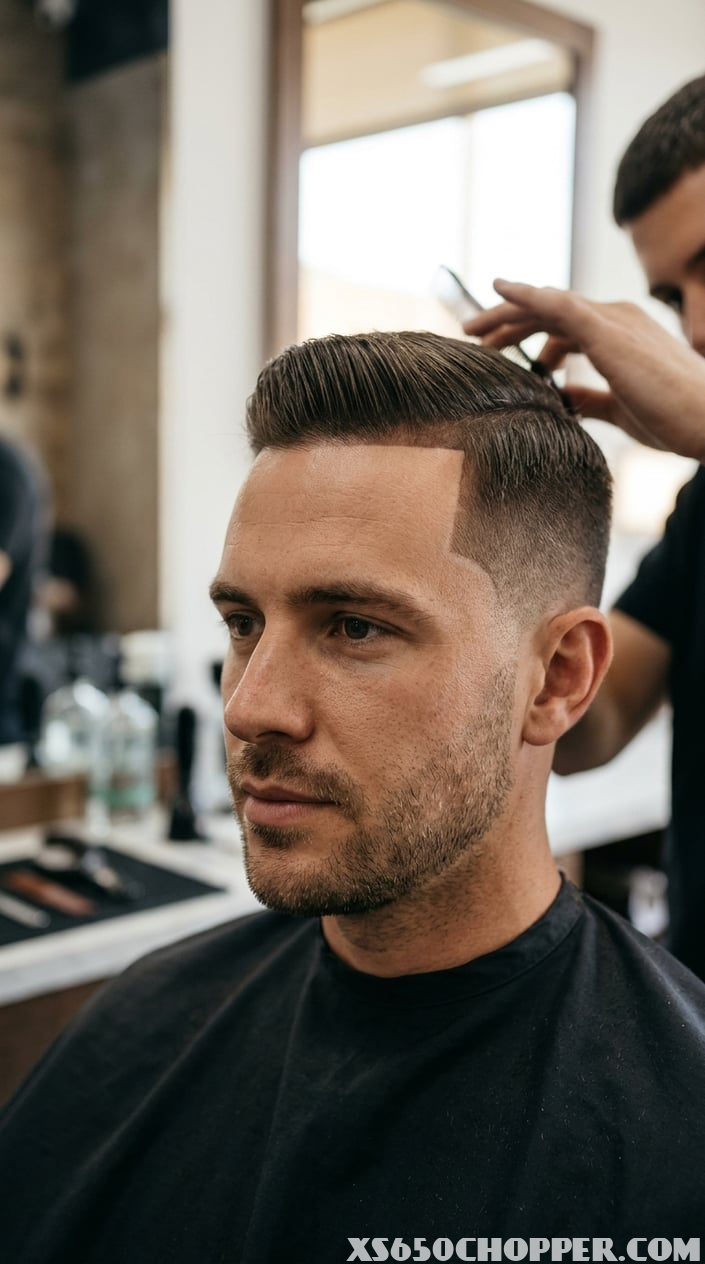
A sharp lineup draws a precise border around your forehead and temples. Its crisp geometry can make a high or uneven hairline more noticeable.
A softer natural edge keeps the outline less prominent. You can still get a clean finish by asking your barber to tidy stray hairs without pushing the corners back or carving a new shape.
PRO TIP
Use your natural hairline as the guide for edging. Ask your barber to preserve the temple corners and avoid lowering the front edge to create an artificial straight line.
8) Ignoring a Receding or Thinning Hairline

Ignoring a receding or thinning hairline can leave you with a cut that depends on coverage your hair no longer provides. A style that suits dense hair may separate at the front when your hair becomes finer.
A textured crop, short Caesar, or softly forward fringe can work with a changing hairline. Keep the length controlled and ask for a shape that follows your current growth pattern instead of relying on long strands to cover sparse areas.
PRO TIP
Tell your barber where your hair has thinned and how you style it each day. That detail helps them choose a length and texture that sit naturally at the front.
How to Choose a More Balanced Haircut
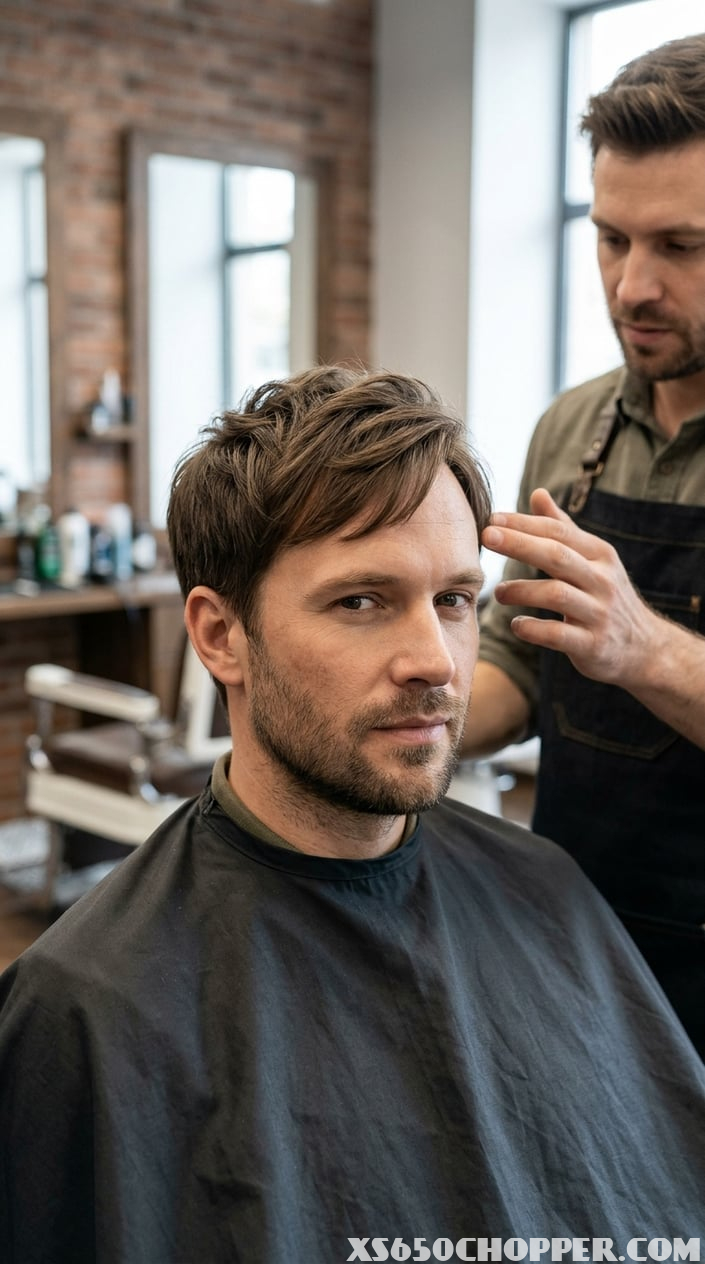
A balanced haircut works with your preferred coverage, hair texture, and current hairline. Choose a shape you can style consistently, then ask your barber to adjust the fringe and temple area to suit your features.
How Much Forehead Coverage Do You Want?
Decide whether you want a fringe to cover part of your forehead or a more open style with softer framing. A forward fringe gives more coverage, while a side-swept front breaks up the hairline without hiding it completely.
Which Fringe Styles Suit Your Hair Type?
Straight hair can hold a Caesar cut or textured crop with a choppy fringe. Wavy hair adds natural movement to a forward style, while coarse or curly hair may need extra length so the fringe does not spring up above the hairline.
How Should You Adapt the Cut for Thinning Hair?
Keep the top short enough to avoid stringy sections and use a matte product for light texture. A close crop can make thinning less defined, while a soft forward shape adds coverage where your hair remains dense.
What to Tell Your Barber

Give your barber clear instructions about fringe length, fade height, and how much of your hairline you want visible. Mention your natural part or cowlick so the finished cut follows the way your hair grows.
How Can You Ask for a Textured French Crop or Caesar Cut?
Ask for a short crop with texture on top and a fringe that reaches your preferred coverage point. For a Caesar cut, specify a short, forward fringe and a blend on the sides that keeps the temples from looking overly exposed.
Which Details Should You Avoid Around the Temples?
Ask your barber to keep the fade low or moderate if you want more temple coverage. Request a natural edge at the corners, with no pushed-back lineup or sharply carved shape that changes your hairline.