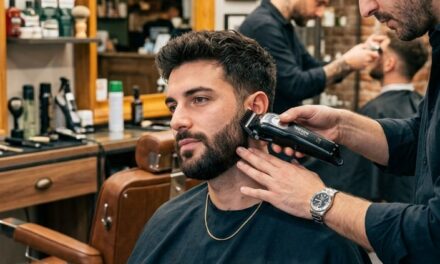

You have 13 goatee styles to choose from, including compact shapes for a clean outline and longer options that give your chin more definition. At 50 and beyond, your facial hair may include a mix of silver, white, and darker strands, so a shape that suits your growth pattern and grooming routine helps keep your look polished.

Choose a style that works with your face shape and the areas where your beard grows most evenly. You can keep the sides clean for a sharper outline or let a mustache add more presence.
Quick picks:
- Best classic choice: Circle Beard
- Best for a defined chin: Anchor Beard
- Best for a bold mustache: Goatee With a Handlebar Mustache
1) Circle Beard

A circle beard gives you a tidy, connected outline around your mouth. It combines a rounded goatee with a mustache, while the cheeks and jaw stay clean-shaven.
This compact shape suits you if you want facial hair that frames your mouth without covering much of your face. Keep the lower edge rounded and the connection between mustache and beard even; a gap can change the look into a different style.
PRO TIP
Trim the outline in small passes, checking both sides in a mirror so the curve stays balanced.
2) Classic Chin Goatee

A classic chin goatee keeps the hair on your chin and leaves your upper lip and cheeks bare. Its simple shape puts the focus on your chin and needs little styling.
Keep the sides neat and choose a length that follows your chin without extending far below it. This style works well when your chin growth is denser than your mustache or cheek growth.
PRO TIP
Use a comb to set the hairs downward before trimming, so you avoid cutting the center shorter than the edges.
3) Van Dyke

A Van Dyke pairs a pointed chin beard with a separate mustache. The clean gap between them gives your facial hair a crisp, deliberate shape.
You can keep the mustache narrow for a restrained finish or give it more width to balance the point of your chin. A defined lower tip helps the style read clearly, especially when your beard hair is gray or white.
PRO TIP
Check the space between the mustache and chin beard from the front and both profiles to keep the separation even.
4) Anchor Beard

An anchor beard traces your jawline and chin, then joins a mustache to create an anchor-like outline. Its angular shape adds definition around your lower face.
This style suits you if you want more structure than a small chin patch provides. Keep the jawline portion narrow and the chin point cleanly shaped; extra width can make the outline lose its distinct profile.
PRO TIP
Set the jawline edges first, then shape the chin point so both sides meet neatly beneath your mouth.
5) Balbo Beard

A Balbo beard combines a shaped chin beard with a mustache that remains disconnected from it. The cheeks stay mostly bare, giving you a defined lower-face outline.
You can adjust the chin section’s width to suit your jaw and keep the mustache full enough to balance it. This look works well when you prefer visible structure and can maintain clean cheek and neck edges.
PRO TIP
Use a detail trimmer to preserve the small gap between your mustache and chin beard.
6) Extended Goatee (Hollywoodian)

An extended goatee carries the chin and mustache hair outward along your jaw while leaving your cheeks mostly shaved. The added width creates a stronger frame than a compact goatee.
This style suits you when your growth extends evenly from the chin toward the jaw corners. Keep the cheek boundary clean and the lower edge close to your natural jawline for a controlled shape.
PRO TIP
Ask your barber to establish the jaw outline first; you can maintain that boundary between appointments with a trimmer.
7) Petite Goatee

A petite goatee keeps a small patch of hair directly beneath your lower lip or on the center of your chin. Its compact footprint gives you a subtle way to define your mouth and chin.
Choose this style if your growth is sparse across the cheeks or you prefer a restrained amount of facial hair. Keep the patch symmetrical and trim stray hairs around its edges for a deliberate finish.
PRO TIP
Start with a wider outline, then reduce it gradually until the shape looks balanced from the front.
8) Goatee With a Soul Patch

A goatee with a soul patch connects or closely pairs chin hair with the small patch beneath your lower lip. The added detail draws attention to the center of your face.
You can wear the patch as a slim bridge or leave a narrow strip of bare skin between it and the chin beard. Keep its width in proportion to your goatee so the center remains tidy.
PRO TIP
Trim the soul patch with a precision attachment and check its alignment with your philtrum, the groove above your upper lip.
9) Long Goatee

A long goatee lets you grow the chin section well below your jawline while keeping the cheeks clean. The extra length makes your chin beard the main feature of your look.
This style suits you if your chin hair grows steadily and you are comfortable combing and trimming it. A shaped bottom edge keeps the length controlled, while regular conditioning helps prevent coarse ends from looking untidy.
PRO TIP
Comb the beard downward before trimming its length, then take off a little at a time to preserve the shape.
10) Goatee With a Chevron Mustache

A chevron mustache adds a broad, downward-sweeping upper lip to your goatee. This pairing gives you a fuller frame around the mouth and a clear focal point.
Keep the mustache dense enough to show its shape, with the edges trimmed away from your lip. A neat chin beard balances the heavier upper section and keeps the style looking intentional.
PRO TIP
Trim the hair over your upper lip while your mustache is dry, following its natural growth direction.
11) Goatee With a Handlebar Mustache

A handlebar mustache gives your goatee a more expressive profile, with the ends styled outward or upward. The contrast between the curved mustache and defined chin beard creates a distinctive look.
Choose this pairing if you enjoy shaping your mustache as part of your routine. Keep enough length at the ends to form the curves, and use a small amount of mustache wax to hold them in place.
PRO TIP
Train the ends with a comb after washing, then apply wax sparingly so the mustache keeps a flexible finish.
12) Disconnected Goatee

A disconnected goatee separates the mustache from the chin beard with a visible strip of bare skin. That clean break gives you a crisp, modern outline.
You can keep the chin section rounded or pointed, depending on how much definition you want. Make the gap consistent on both sides, and shave stray hairs regularly to preserve the separation.
PRO TIP
Use a detail trimmer to mark the gap, then shave the surrounding skin for a clean boundary.
13) Faded Goatee

A faded goatee blends shorter facial hair at the sides into fuller hair on your chin and mustache. The gradual transition gives your outline a softer, barbered finish.
This style suits you if your hair density changes across your face or you want a smooth transition into your shaved cheeks. A barber can set the fade, and you can preserve its outline with regular edge maintenance.
PRO TIP
Bring a reference photo to your barber and agree on where the fade should begin before the first trim.
How to Choose a Goatee Style
Your best goatee shape follows your face proportions, beard density, and available grooming time. A barber can help set a precise outline, especially if you are trying a style with a fade or angular edges.

Which Goatee Shapes Suit Different Face Shapes?
For a round face, a longer or pointed chin beard adds vertical emphasis. If your face is long, a compact, rounded goatee keeps the chin from looking more elongated. A square face pairs well with curved edges that soften the jaw’s strong lines.
How Should Facial-Hair Density Guide Your Choice?
Choose a shape that follows your strongest growth areas. Dense chin hair supports a classic or long goatee, while lighter cheek growth suits compact options such as a petite goatee or circle beard. If your mustache grows unevenly, a chin-only style keeps the outline simple.
How Much Daily Upkeep Are You Comfortable With?
A compact chin goatee needs occasional trimming and edge cleanup. Longer shapes require combing and more frequent attention to stray hairs, while a handlebar mustache adds daily styling. Choose a routine you can maintain comfortably.
Grooming a Goatee With Gray Hair
Silver and white goatee hair looks neat when you keep its outline clean and manage dryness with gentle grooming. Your trimming routine should suit the length and texture of your beard.

How Can You Keep Silver Hair Looking Neat?
Wash your beard with a gentle cleanser, then apply a small amount of beard conditioner or oil if the hair feels dry. Comb it into place and trim uneven ends; pale hairs can stand out against darker skin or clothing when they grow beyond the outline. Keep your cheek and neck boundaries tidy with a detail trimmer.
When Should You Trim or Comb a Longer Goatee?
Comb a longer goatee before trimming so you can see its natural length and direction. Remove split or uneven ends in small amounts, then comb it again to check the shape. A quick daily comb keeps the strands aligned, while a trim every few weeks helps maintain your chosen length.