
A desert rave outfit works best when you build it in layers: start with breathable sun coverage, add protection against wind and dust, then keep a warm layer ready for night. You can weatherproof your Wasteland look by pairing breathable, sun-protective clothing with a dust-resistant shell and secure, easy-to-adjust details.
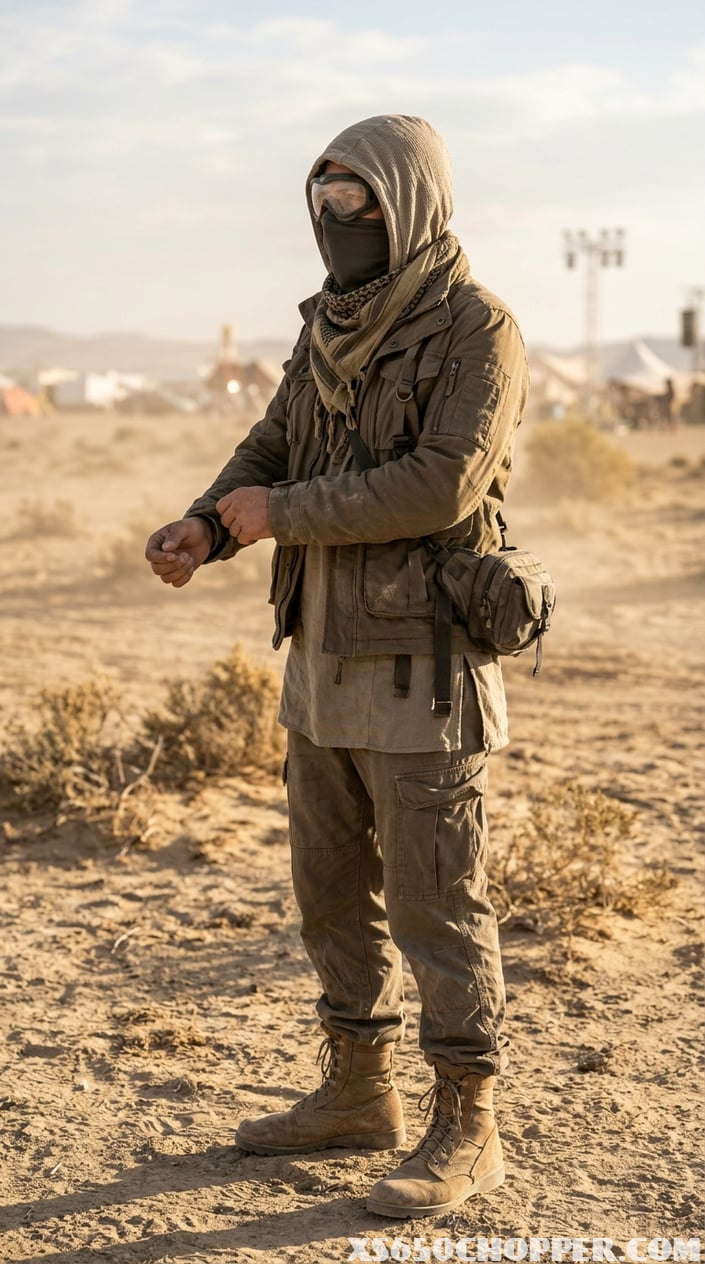
Your outfit still needs to support movement and fit the event’s rules. Choose finishes and accessories that suit the materials you’re wearing, and test the complete look before you pack.
1) Start With a Breathable UPF 50+ Base Layer

A lightweight UPF 50+ base layer gives you sun coverage while helping heat escape. Choose a close-fitting long-sleeved top made for warm-weather activity, with seams that sit comfortably under your costume pieces. UPF 50+ fabric blocks at least 98 percent of UV radiation when used as directed.
Check the garment’s care label to preserve its rated protection, and keep the fit loose enough to allow airflow. A breathable synthetic or merino-blend fabric can dry faster than heavy cotton after sweat or a splash.
PRO TIP
Wear the base layer through a full dance session before the event. Check for hot spots beneath straps, armor panels, or jewelry.
2) Choose Ventilated Ripstop Pants and Overshirts

Lightweight ripstop pants and a ventilated overshirt give you durable coverage without trapping as much heat as heavy costume fabrics. Look for a weave with reinforced threads, a flexible waistband, and vents or mesh panels where airflow helps. A roomy overshirt adds protection to your arms and shoulders while leaving space for air to circulate.
Keep pockets flat and secure so they don’t catch on accessories or fill with grit. If your pants have drawcords, tuck or fasten the loose ends before dancing.
PRO TIP
Sit, squat, and lift your arms in the full outfit. A seam that pulls in a changing room can rub or split after hours of movement.
3) Pack a Lightweight Wind- and Dust-Resistant Shell

A lightweight shell with a close-fitting hood and adjustable cuffs helps shield your layers from wind and blowing dust. Choose a compact fabric that packs down easily, then check that the hood stays in place when you turn your head. A breathable shell is more comfortable during active wear than a heavy coated jacket.
Treat “water-resistant” as a fabric feature, not a guarantee that seams or zippers will keep you dry in sustained rain. Follow the care instructions, and pack the shell where you can reach it quickly.
PRO TIP
Secure drawcords and check that the zipper pull is easy to use with your gloves or accessories on.
4) Add a Removable Merino Layer for Cold Nights
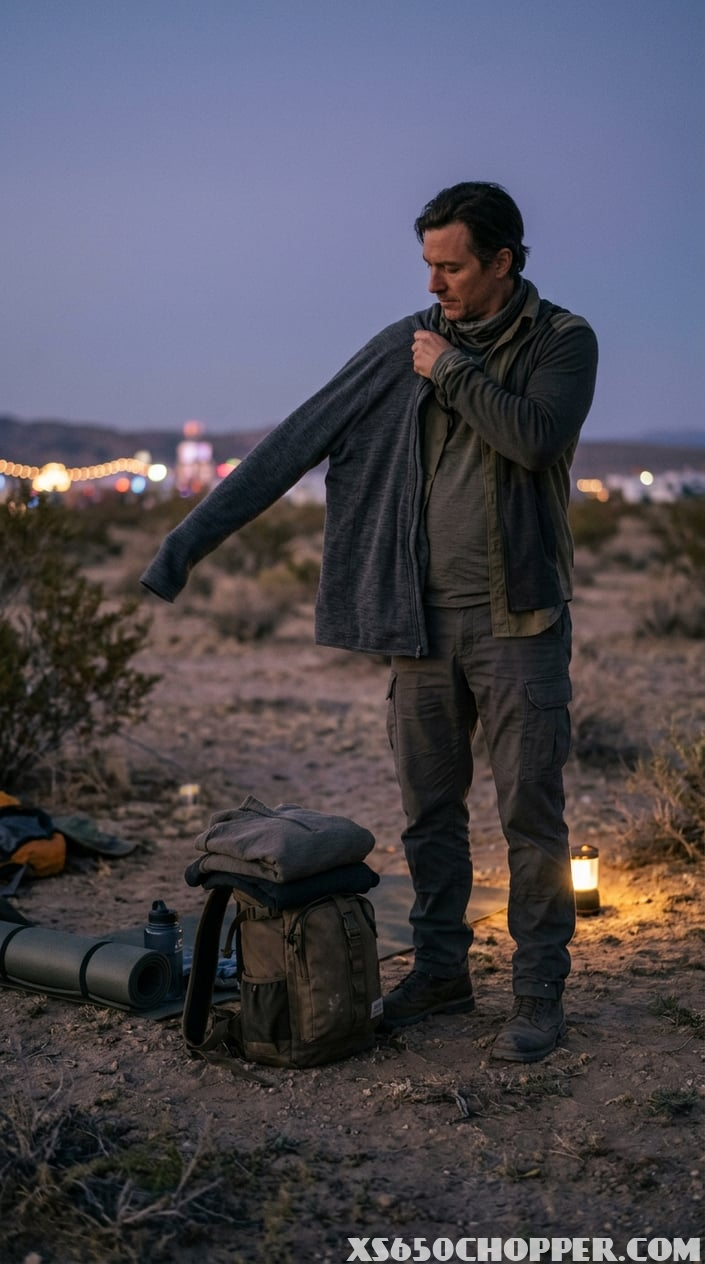
A removable merino layer helps you stay comfortable when desert temperatures drop after sunset. A thin merino top or compact sweater adds warmth without taking up much pack space. Choose a cut that fits over your base layer and under your shell, so you can adjust without rebuilding your outfit.
Keep the layer accessible as evening approaches. If you sweat while dancing, open the shell or remove a layer before you cool down.
PRO TIP
Check the night forecast for the event location and pack for the lowest expected temperature, not only the daytime high.
5) Wear Closed-Toe Boots with Low-Profile Gaiters

Closed-toe boots with low-profile gaiters help keep grit out while protecting your feet on uneven ground. Choose boots with a secure heel, room for your toes, and soles suited to walking and dancing. Gaiters should sit snugly over the boot opening without restricting ankle movement.
Break in your boots before the event and wear the socks you plan to use. Check that gaiter hooks, straps, or closures stay clear of laces and don’t create pressure points.
PRO TIP
Carry blister dressings in your day pack, and address rubbing as soon as you notice it.
6) Pair Sealed Goggles with a Breathable Neck Gaiter
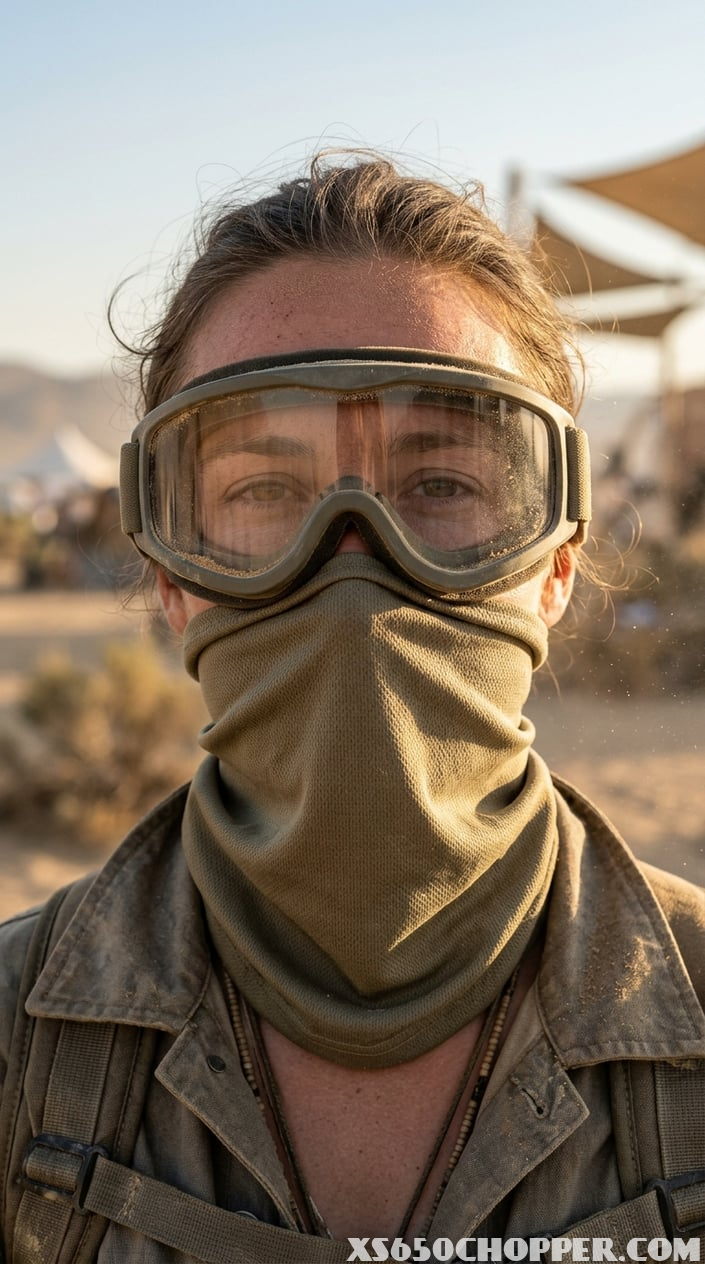
Sealed goggles and a breathable neck gaiter help reduce exposure to windblown dust around your eyes, nose, and mouth. Choose goggles that fit comfortably around your face and work with your hood or headwear. A soft gaiter should cover the area you want protected while allowing comfortable breathing.
Keep the fabric clean and dry, and bring a spare gaiter in a sealed bag. Follow venue rules for face coverings, especially where staff need to identify attendees.
PRO TIP
Test the goggles with your full headwear setup. Check for slipping, fogging, or pressure across the bridge of your nose.
7) Cover Costume Zippers and Reinforce Loose Closures
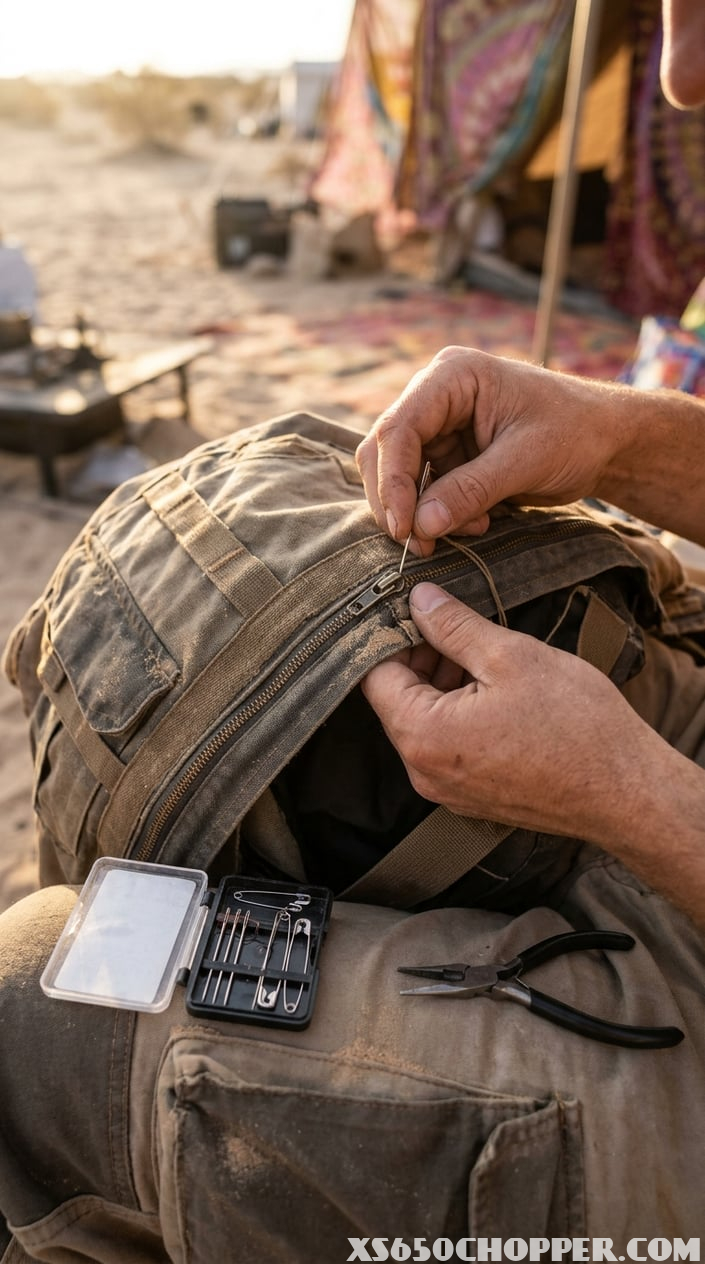
Cover exposed zippers and secure loose closures so grit has fewer openings to enter and accessories are less likely to snag. A fabric storm flap can shield a zipper, while a small hook-and-loop tab or snap can keep a flap in place. Reinforce loose buttons and costume fasteners with stitching before the event.
Use closures that you can operate quickly, especially on pieces you may need to remove for temperature changes. Avoid placing pins or sharp hardware where they can scrape skin or catch nearby clothing.
PRO TIP
Carry a few safety pins and a small repair kit, then use them only where they won’t poke through the garment or contact your skin.
8) Treat Fabric Shells with Nikwax TX.Direct

Nikwax TX.Direct is a water-repellent treatment for compatible waterproof garments and can help restore their water-shedding finish. Use it on a clean shell that the care label identifies as suitable for treatment. Follow the product directions for application and drying, and check the garment label before treating costume fabrics or trims.
The treatment is intended for water repellency; it does not seal every seam or turn a non-waterproof costume into a waterproof garment. Test on an inconspicuous area if you’re unsure how a fabric or color will respond.
PRO TIP
Clean the garment first and apply the treatment exactly as directed on its packaging. Dirt and residue can interfere with the finish.
9) Protect Leather and Metal Details with Material-Specific Finishes

Use a finish made for each material to help protect leather and metal details without damaging your costume. Choose leather conditioner or protectant according to the leather type and manufacturer’s care guidance. For metal hardware, remove dust and moisture with a soft cloth, then use a suitable protective product if the metal’s finish allows it.
Keep sprays and polishes away from nearby fabric, skin, and decorative coatings. Test any product on a hidden spot and allow treated pieces to dry fully before wearing them.
PRO TIP
Pack leather and metal accessories separately from damp clothing to limit transfer and abrasion during travel.
Test Your Outfit Before the Festival
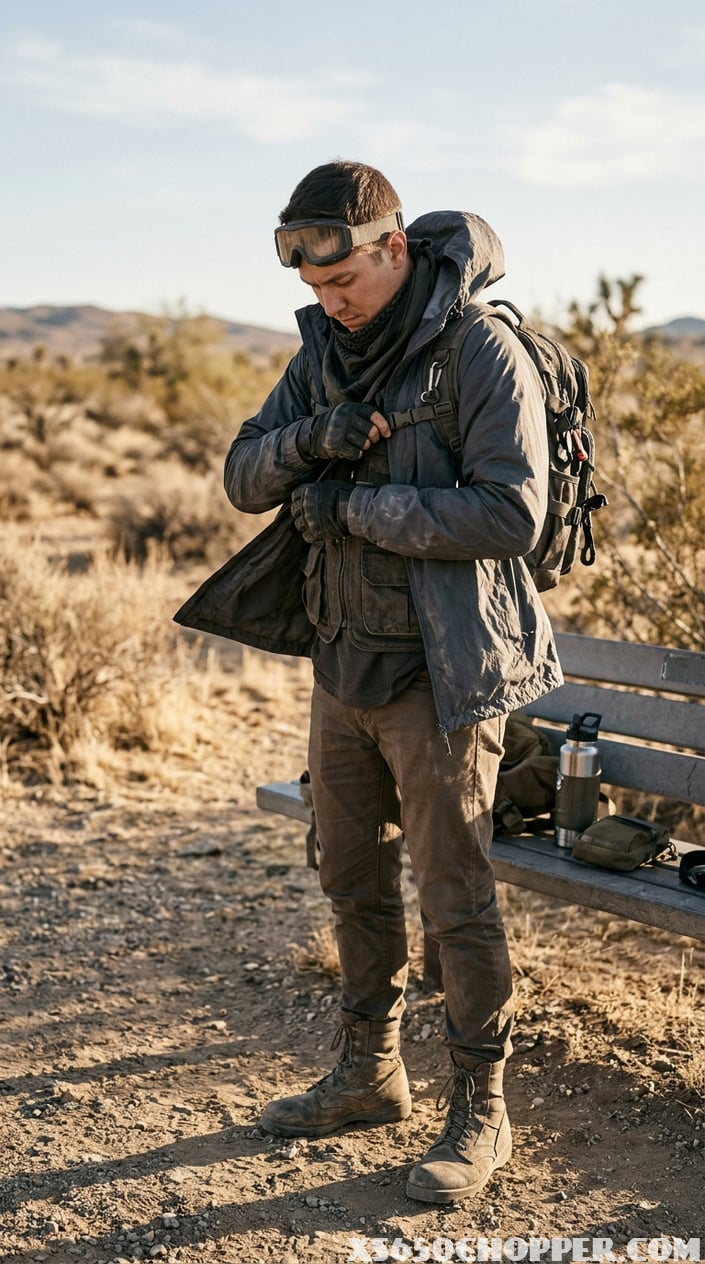
A full outfit test helps you catch fit, temperature, and rule issues before you arrive. Wear every layer and accessory together, then check how the pieces work while you move and adjust them.
Can You Move and Dance Without Chafing or Snagging?
Dance, walk, crouch, and reach overhead in your full outfit. Check straps, hems, closures, and armor edges for rubbing or catches, then adjust or reinforce the problem areas.
Does the Outfit Work in Both Direct Sun and Cooler Evening Air?
Try the outfit in warm conditions and test how quickly you can add or remove layers. Keep the shell and warm layer accessible, and confirm that each piece fits over the layers beneath it.
Do the Venue’s Rules Allow Your Face Coverings and Costume Accessories?
Review the event’s current entry rules for face coverings, props, and costume accessories before packing. Choose approved items and keep any required identification easy to access.