Clipper guard numbers give you a consistent way to request a men’s haircut length. For the most versatile short cut, choose a Number 2 at 1/4 inch (6 mm), because it keeps the scalp covered while staying neat and easy to maintain. Shorter guards create a sharper buzzed finish, while longer guards leave enough hair for light texture and styling.
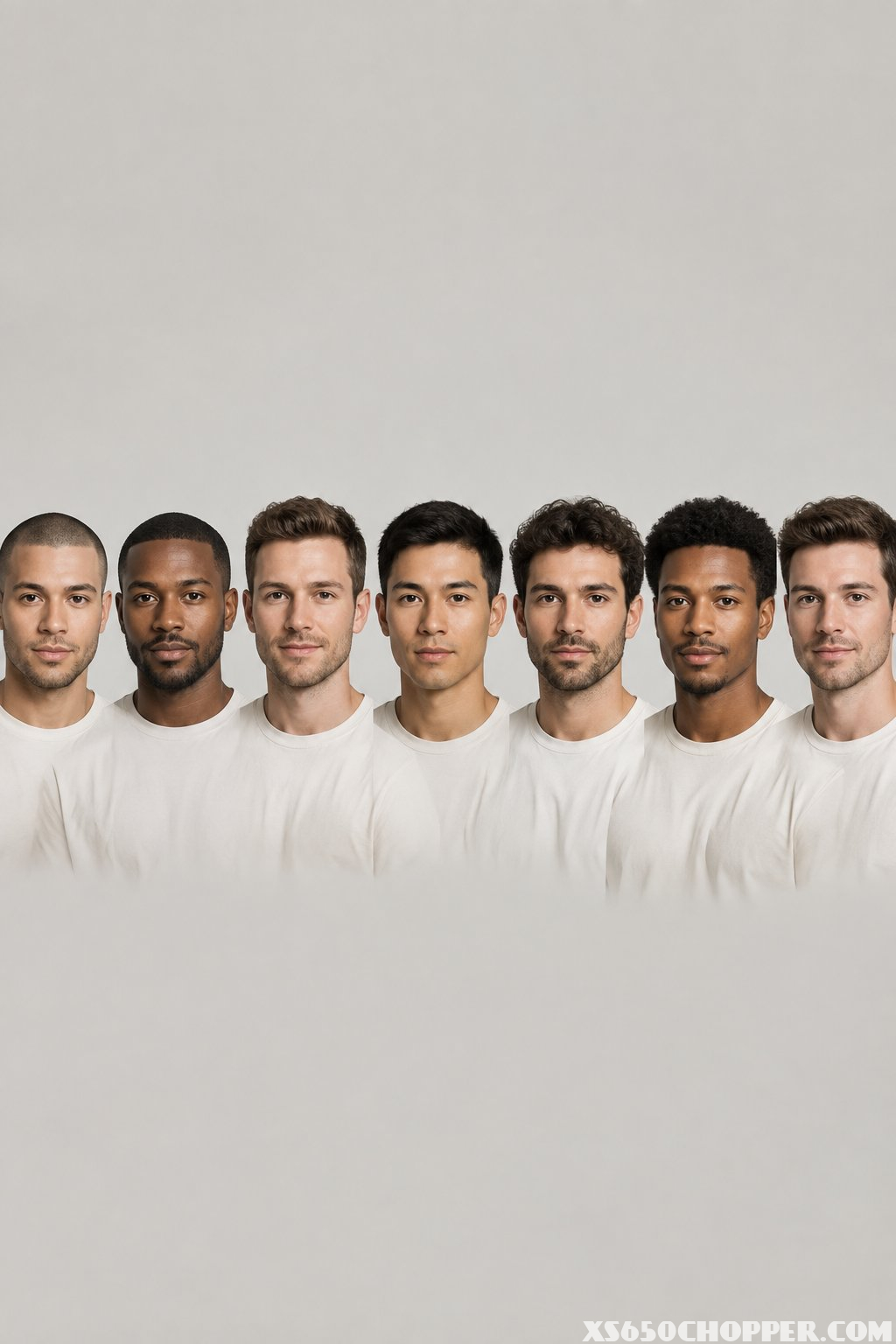
The numbered system runs from Number 1 through Number 8, with each guard leaving a specific amount of hair. A standard clipper-size chart places Number 1 at 1/8 inch and Number 8 at 1 inch, so every step adds roughly 1/8 inch of length.
1) Number 1 Haircut: 1/8 Inch (3 mm)
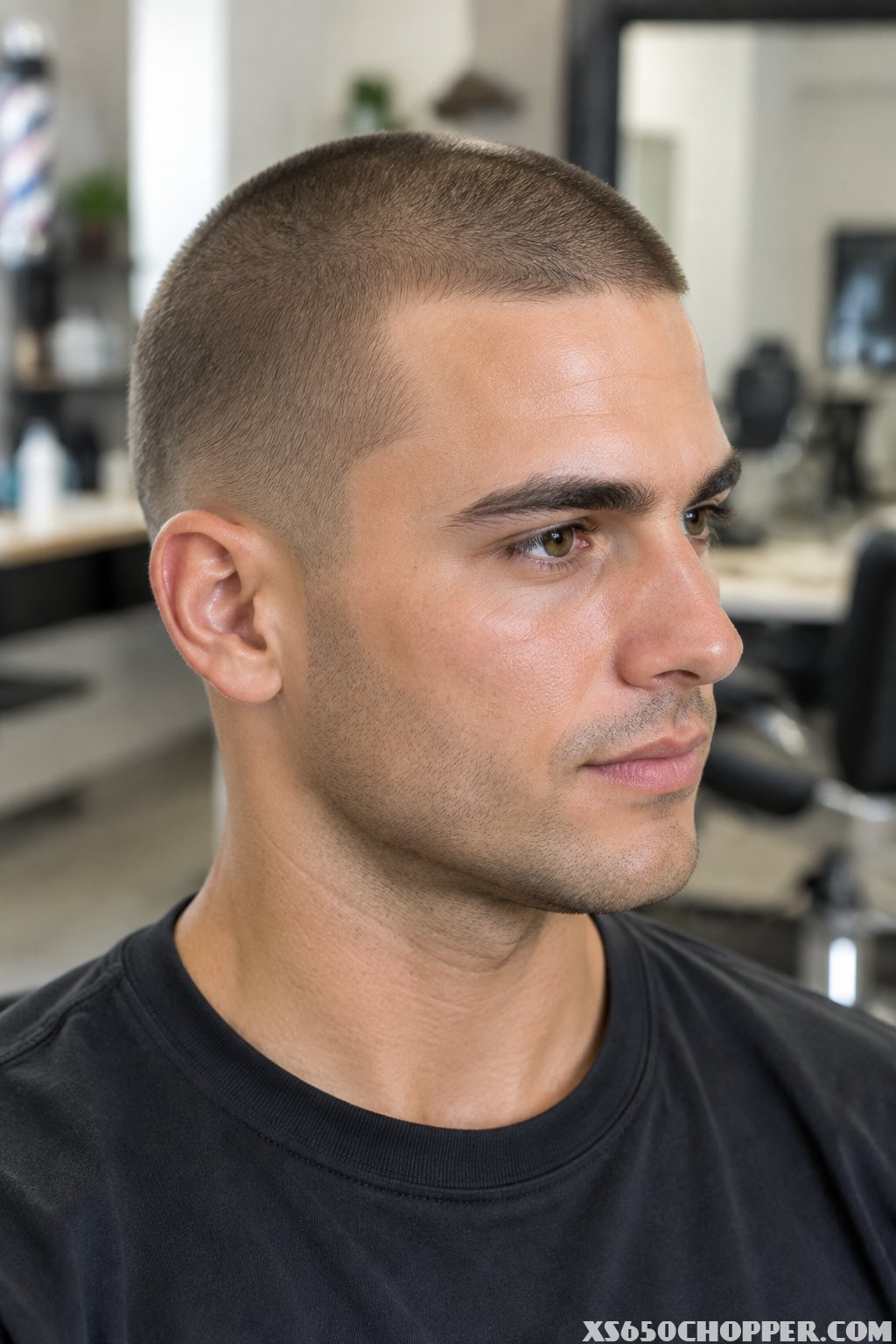
A Number 1 haircut leaves 1/8 inch, or about 3 mm, across the clipped area. It creates a close buzzed appearance with visible scalp, especially under bright light or on finer hair.
This length works well for sharp fades, clean side panels, and low-maintenance cuts. It gives your barber a compact base for blending into a longer top or a skin-close perimeter.
Hair density and head shape show clearly at this length. Ask for a slightly longer guard around the crown if you want more coverage in an area where the hair grows unevenly.
PRO TIP
Use sunscreen or a hat when your scalp is exposed to strong sun, particularly during the first few days after cutting.
2) Number 2 Haircut: 1/4 Inch (6 mm)
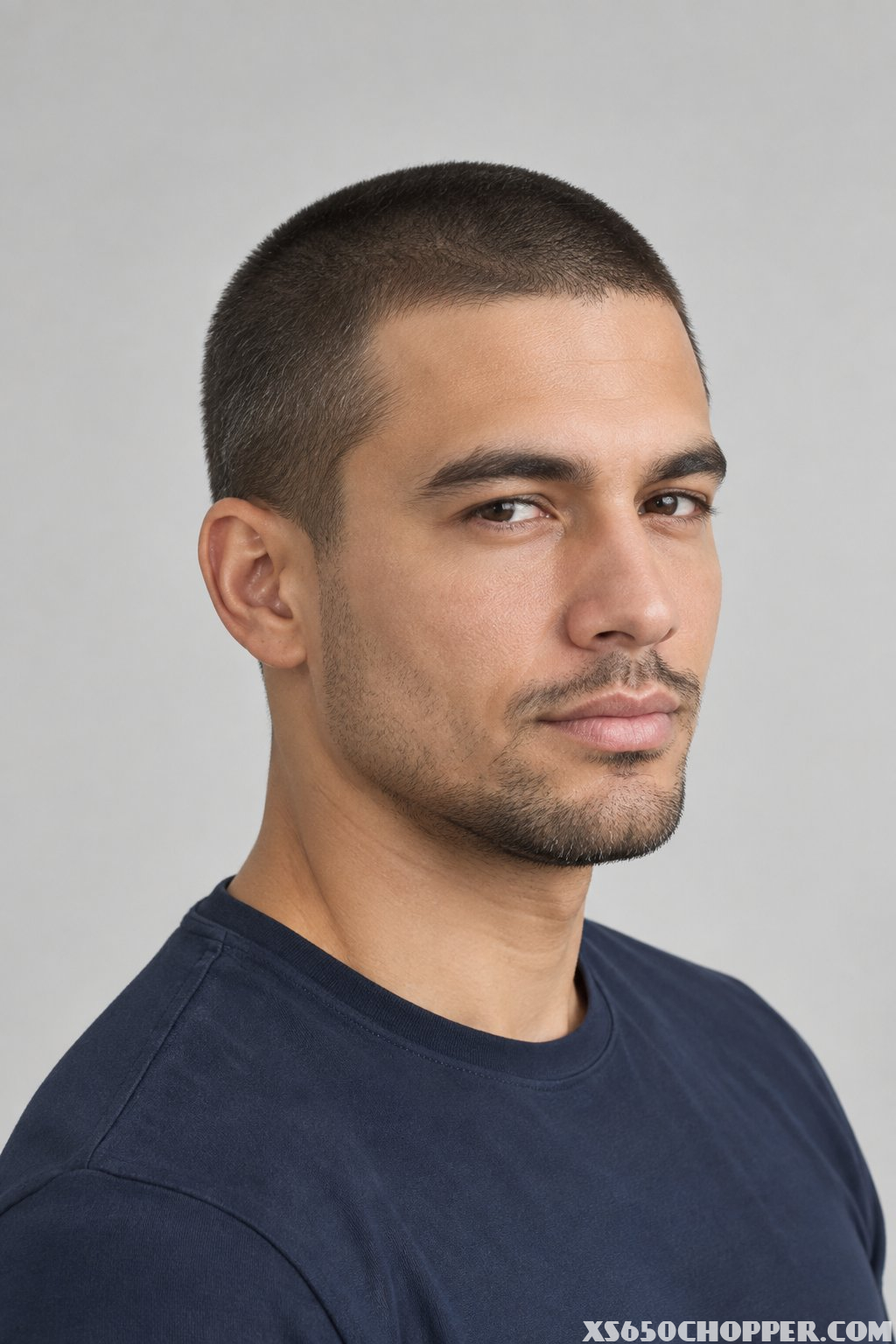
A Number 2 haircut leaves 1/4 inch, or 6 mm, and gives you the most balanced short-buzz finish. The extra coverage softens scalp visibility while keeping the shape tidy and masculine.
This guard suits uniform cuts, low fades, high fades, and short textured styles. It also handles coarse or dense hair well because the remaining length gives the cut a fuller visual finish.
The sides can stay at Number 2 while the top moves to Number 3 or Number 4 for subtle contrast. Tell your barber whether you want a uniform buzz or a blended transition.
PRO TIP
Request a clean neckline and sideburn shape with your Number 2 so the short length looks intentional as it grows.
3) Number 3 Haircut: 3/8 Inch (10 mm)
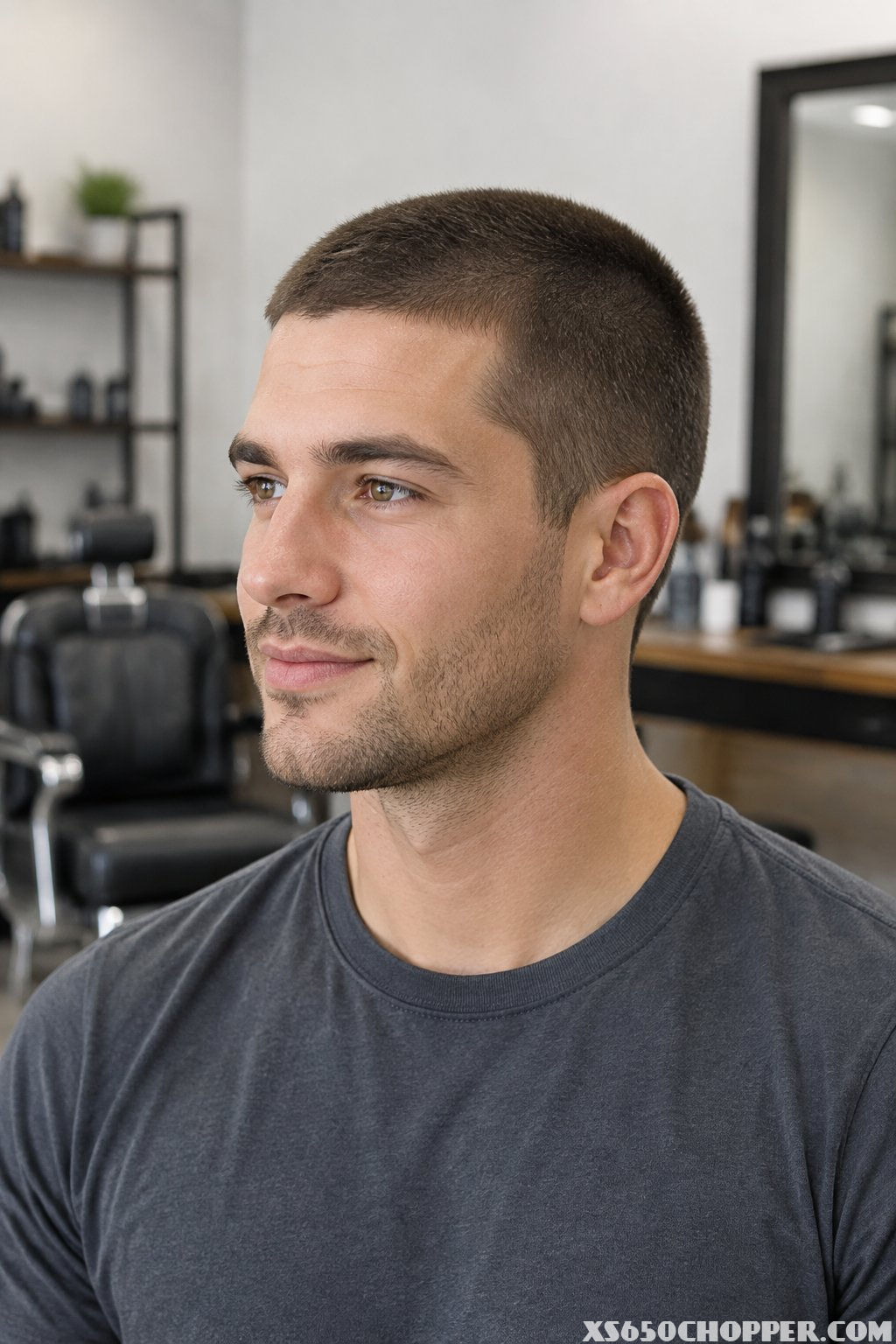
A Number 3 haircut leaves 3/8 inch, or about 10 mm, with enough length to show texture and natural direction. It looks fuller than a Number 1 or Number 2 while remaining distinctly short.
This guard is useful for an even all-over cut, a longer fade foundation, or a short top paired with tighter sides. Wavy and curly hair may show more character at this length, depending on curl pattern.
Number 3 also provides more room to disguise minor scalp variations and uneven growth. Your barber can taper the edges while keeping the main body at the same guard.
PRO TIP
Ask for the grain to be checked before the final pass, since hair that changes direction at the crown can look uneven when clipped uniformly.
4) Number 4 Haircut: 1/2 Inch (13 mm)
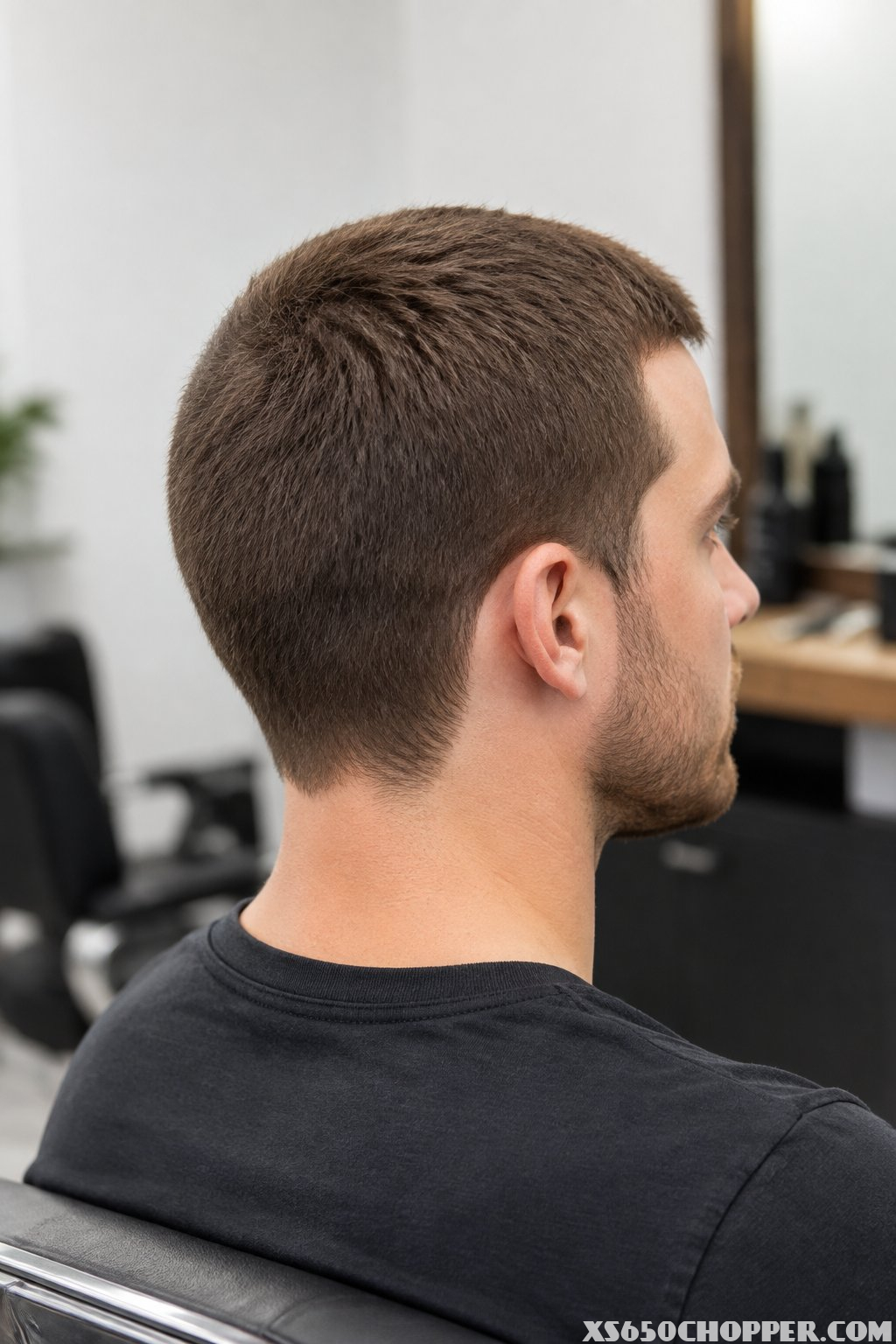
A Number 4 haircut leaves 1/2 inch, or 13 mm, creating a fuller short style with visible texture. It is long enough to retain more of your natural shape while staying easy to wash and maintain.
You can wear this length as an even clipper cut, a crew-cut base, or a blended top with shorter sides. Straight hair looks neat and compact, while wavy hair can gain a little movement.
This guard makes a practical transition from a buzz cut toward a styled short haircut. A barber can use scissors on the top after establishing a Number 4 base if you want extra texture.
PRO TIP
Keep the top at Number 4 and taper the sides through shorter guards when you want a clean outline without losing top coverage.
5) Number 5 Haircut: 5/8 Inch (16 mm)
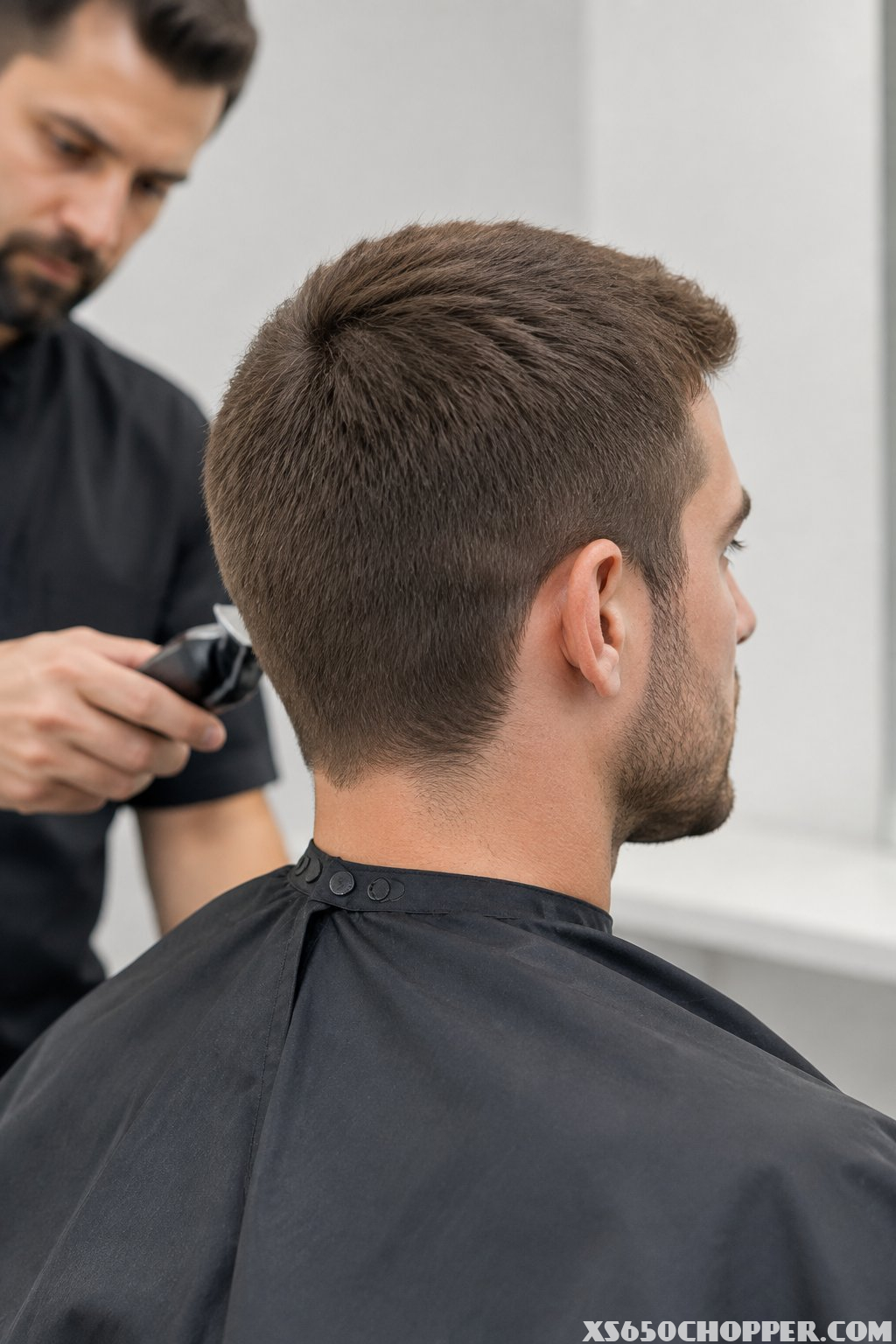
A Number 5 haircut leaves 5/8 inch, or approximately 16 mm, giving you a medium-short finish with clear hair direction. It sits between a clipped buzz and a conventional scissor cut.
This length works for short crops, textured tops, and conservative taper styles. You have enough hair to brush the top lightly, create a small amount of separation, or show natural waves.
Thick hair benefits from light debulking or texturizing at this length. Fine hair can retain a tidy outline without looking heavily shaved.
PRO TIP
Ask your barber to preserve weight at the front if you want the Number 5 top to support a short fringe or brushed-forward finish.
6) Number 6 Haircut: 3/4 Inch (19 mm)

A Number 6 haircut leaves 3/4 inch, or about 19 mm, and gives you a noticeably fuller short style. It supports more texture and direction than the shorter guards.
Use it for a substantial buzz cut, a short crop, or a top length that receives a low taper on the sides. Straight hair can be brushed or parted slightly, while textured hair gains room to form its natural pattern.
The longer guard also softens the visual contrast between the top and sides. Your barber can combine Number 6 on top with Number 2 through Number 4 around the sides for a gradual shape.
PRO TIP
Bring a reference photo showing the side profile if you want to keep the crown full, since crown length changes the finished silhouette.
7) Number 7 and Number 8 Haircuts: 7/8 to 1 Inch
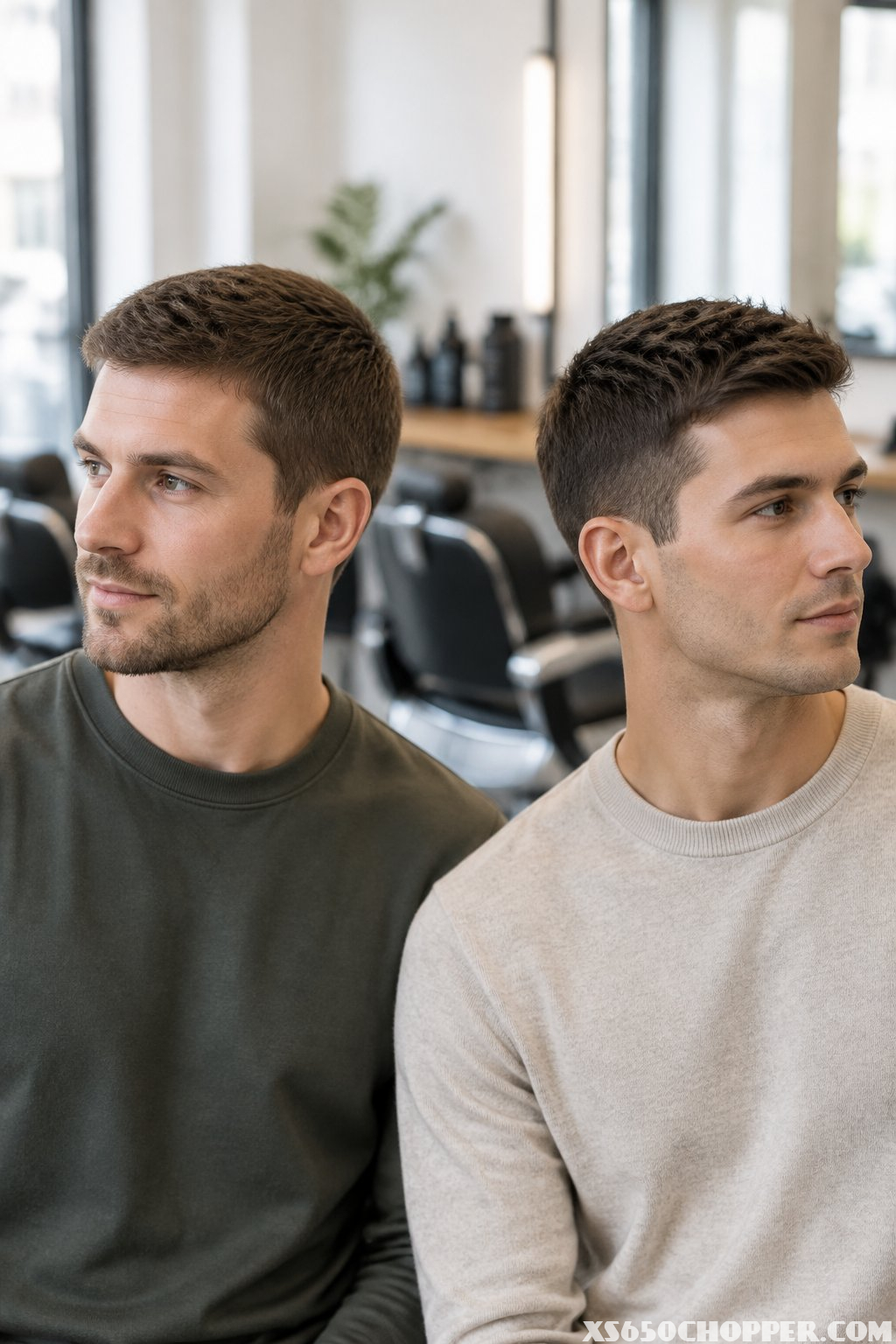
Number 7 leaves 7/8 inch, while Number 8 leaves 1 inch, giving you the longest standard clipper-guard lengths. These guards preserve enough hair for visible styling, texture, and natural volume.
Number 7 suits a short textured crop or a fuller buzz cut. Number 8 works well as a clipper-cut top that transitions into tapered sides, especially when you want a uniform length with a little styling flexibility.
At these lengths, hair direction and density influence the result more than scalp visibility. A barber may use scissors around the front, crown, or sideburns to refine the shape.
PRO TIP
Specify whether you want the guard used all over or only on top, because Number 7 and Number 8 produce very different results when paired with shorter sides.
How to Choose Your Clipper Guard Length
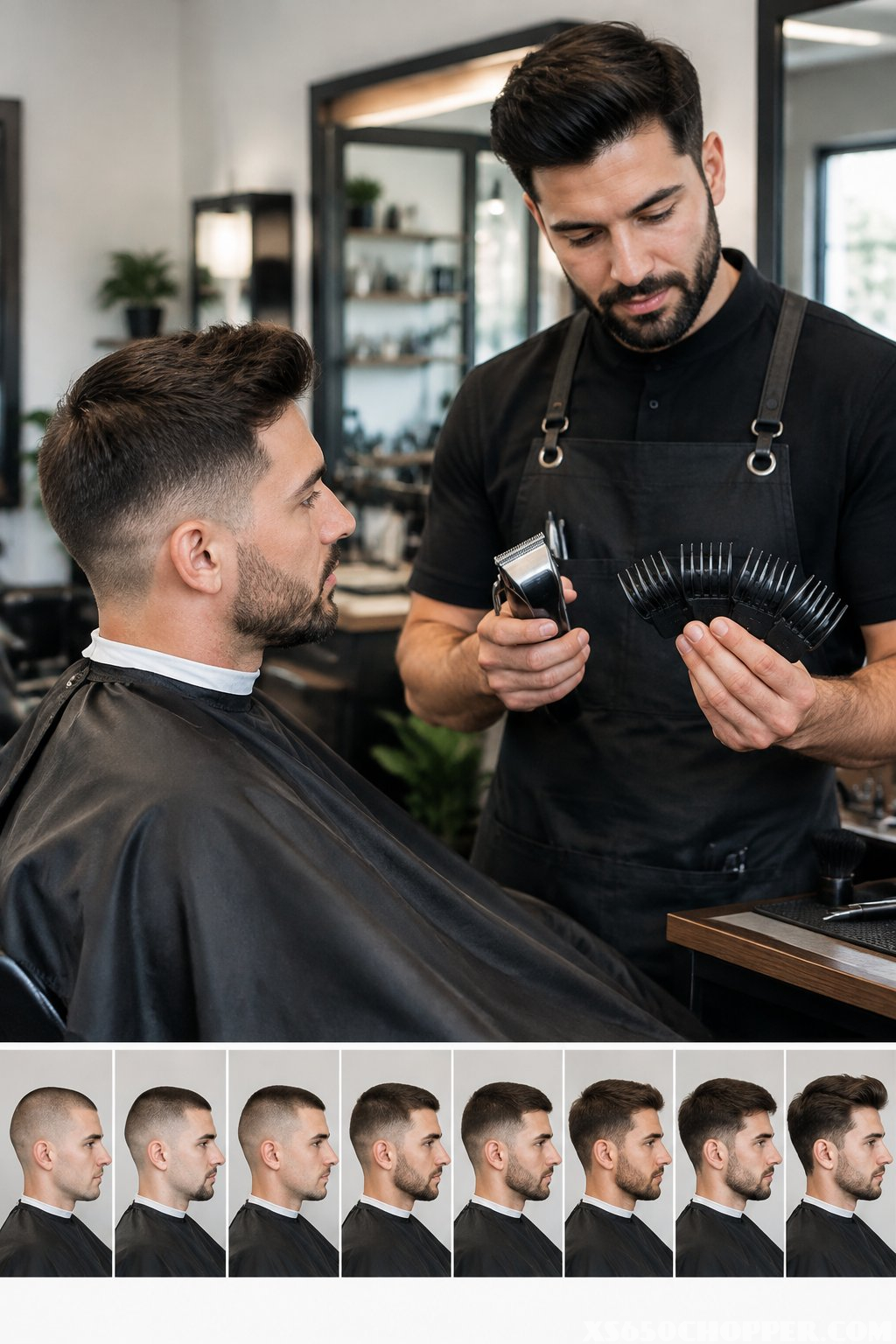
How Short Do You Want the Sides and Top?
Choose Number 1 or Number 2 for visibly close sides, Number 3 or Number 4 for balanced short coverage, and Number 5 through Number 8 for a fuller top. You can combine guards to create contrast, such as Number 2 on the sides with Number 6 on top.
A uniform guard gives you the cleanest maintenance routine. A graduated combination creates more shape around the temples, ears, and neckline.
Which Guard Length Works Best for Your Hair Density?
Dense hair can support shorter guards without looking sparse, while fine or thinning hair often benefits from extra length for coverage. Curly and wavy hair also appear shorter after clipping because the pattern contracts.
If your hair grows in different directions, a slightly longer guard gives your barber more room to even out the surface. Cowlicks and crown swirls deserve a specific check before the final cut.
Do You Want Enough Length for a Fade or Styling?
Choose Number 1 or Number 2 when you want tight fade sections, then leave Number 3 or longer above the blend. For styling, Number 4 through Number 8 gives you more control over texture, direction, and light product use.
Tell your barber which area should carry the length. “Number 2 on the sides and Number 6 on top” communicates more clearly than requesting a single number for the entire haircut.
How to Ask Your Barber for the Right Number Cut
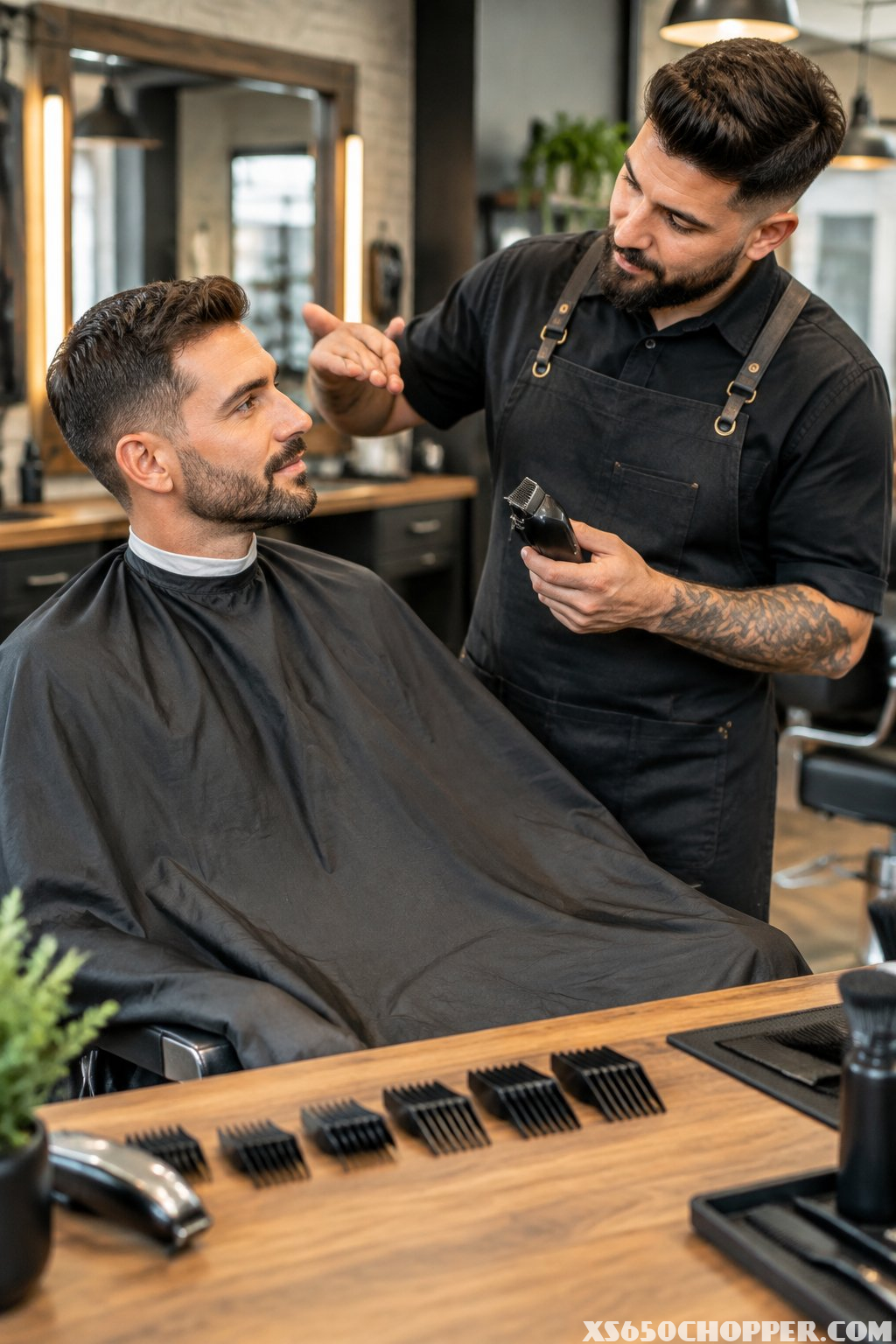
Should You Specify Different Numbers for the Sides and Top?
Yes, state the number for each area when you want a fade, taper, or styled top. A request such as “Number 2 on the sides, Number 4 around the parietal ridge, and Number 6 on top” gives your barber a clear starting plan.
Mention the desired finish at the neckline and sideburns as well. A tapered edge, natural neckline, or squared neckline changes the appearance even when the clipper length stays the same.
Why Should You Confirm the Clipper Brand and Guard System?
Guard measurements follow a common sequence, yet clipper systems can differ slightly in how attachments fit and cut. Confirming the intended length helps prevent confusion when a barber uses a brand with alternative guard markings.
Use both the number and measurement when possible. Saying “Number 2, about 1/4 inch” gives you a second reference point.
What Photo Details Help Avoid a Miscommunication?
Choose a photo showing the front, side, and back, then point out the length you want to copy. Lighting, hair density, texture, and head shape affect how the same guard appears.
Explain what you want preserved, such as top length, a low fade, or coverage at the crown. Your barber can then adapt the guard combination to your growth pattern while keeping the requested length as the guide.