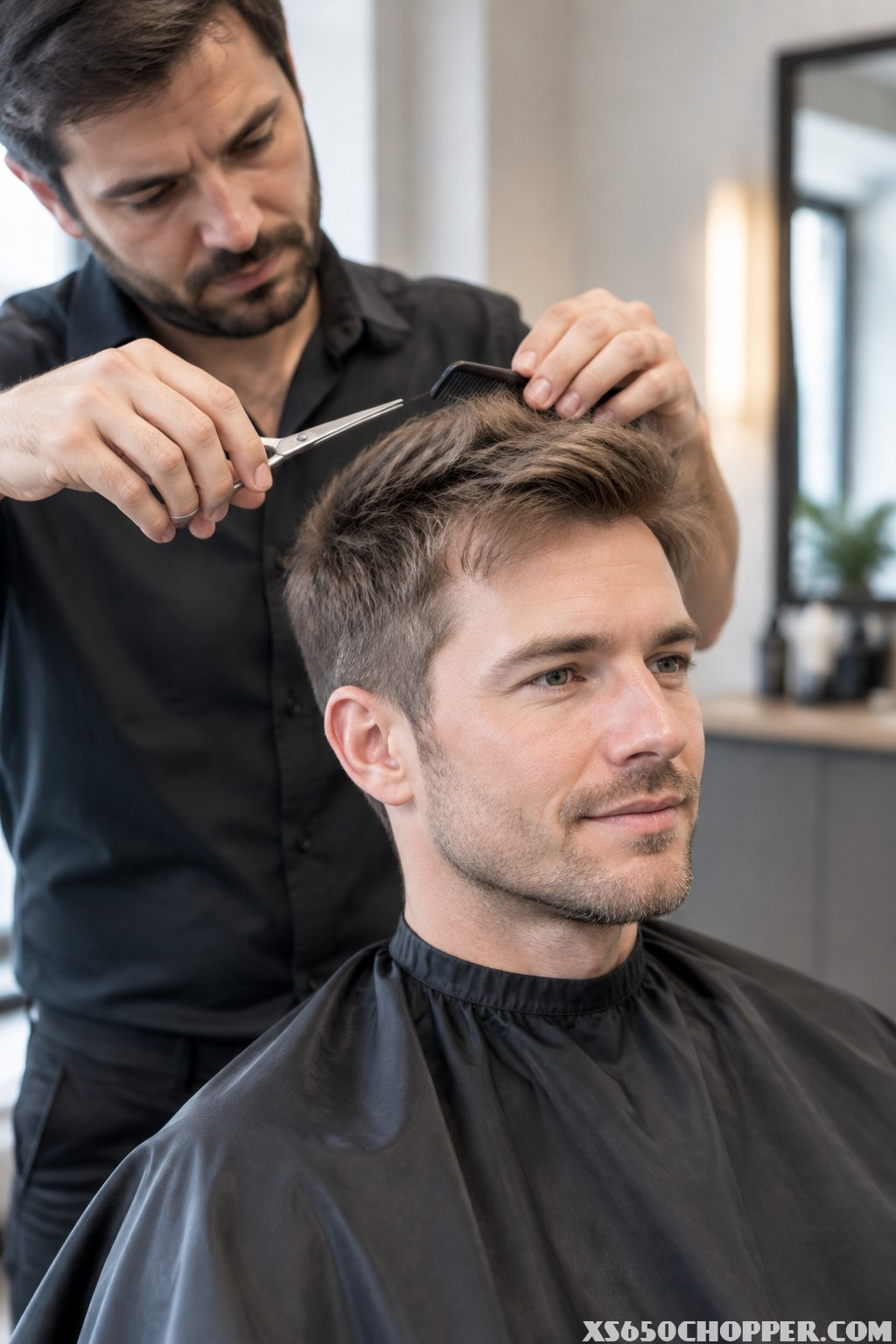
Fine or thin hair looks fuller when you control weight, direction, and texture through the cut. The best starting point for most men is a short textured crop with tapered sides because its compact length reduces limpness while choppy layers create visible lift. Your hairline, density pattern, and styling routine still determine which variation suits you.
Shorter cuts reduce the weight pulling fine strands downward, while matte texture gives the surface more separation. A clean taper also adds contrast around the sides, helping the top appear denser. Choose a cut you can maintain with light product and regular barber visits.
1) Short Textured Crop With Low Taper
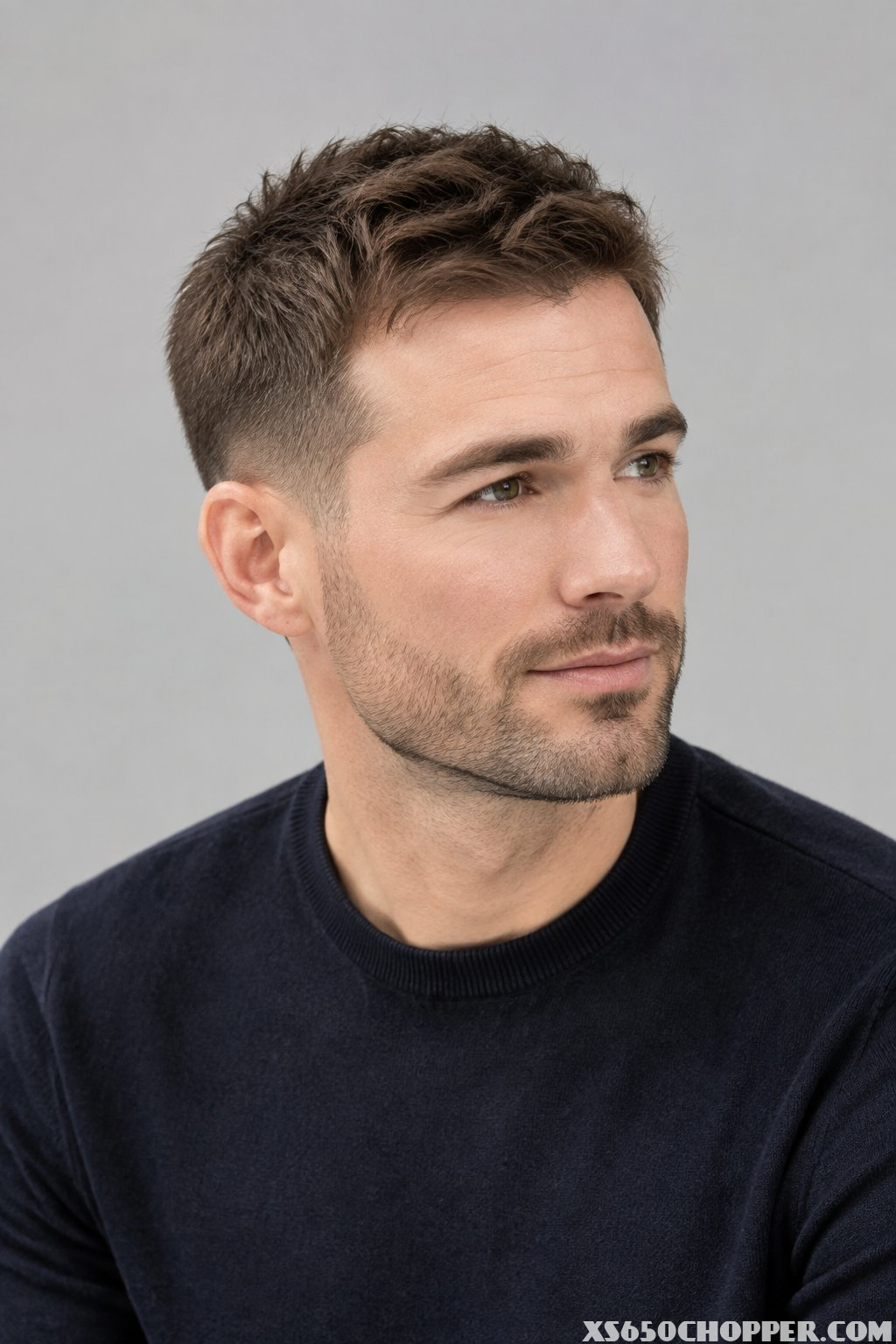
A short textured crop creates a fuller-looking top through choppy separation and controlled length. Keep the sides low-tapered so the haircut retains softness around the temples and does not make the top look overly narrow.
Ask your barber for point-cut texture across the top, with enough length to push forward or slightly upward. A pea-sized matte clay or styling powder gives the strands grip without creating a glossy, separated finish. This shape suits a receding hairline because the forward direction keeps attention near the fringe.
PRO TIP
Blow-dry your hair forward from damp, then lift the front lightly with your fingers as it dries.
2) French Crop With Forward Fringe
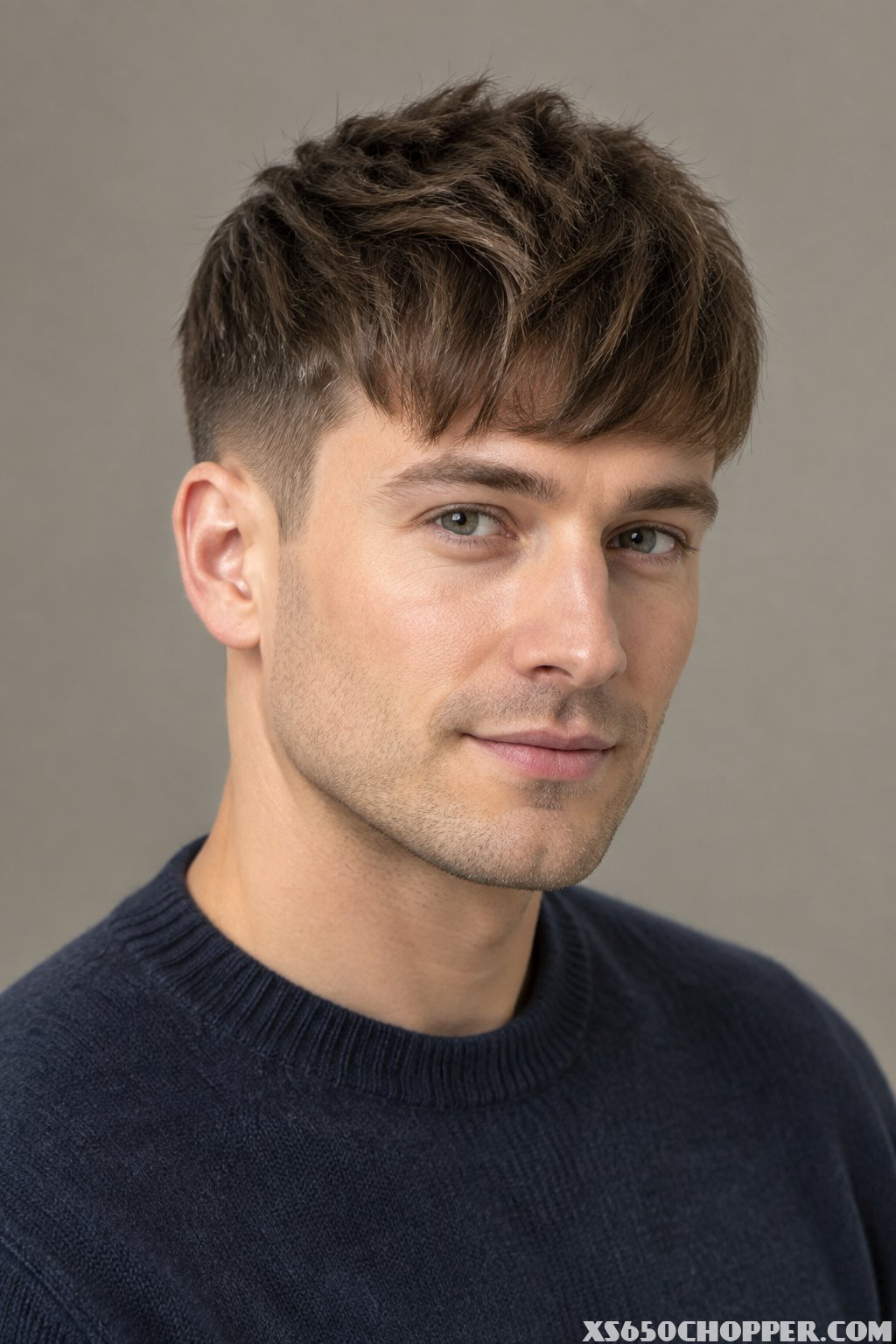
The French crop uses a compact top and forward fringe to create a strong, structured outline. Its short front helps disguise uneven density near the hairline while the textured surface keeps the cut from appearing flat.
Request a blunt or lightly choppy fringe based on your forehead and hairline. Keep the crown close enough to prevent drooping, then add texture through the top with point cutting. A dry matte paste works well when you want definition without stiffness.
PRO TIP
Apply product from the back toward the front so the fringe receives only the small amount left on your hands.
3) Classic Crew Cut With Textured Top
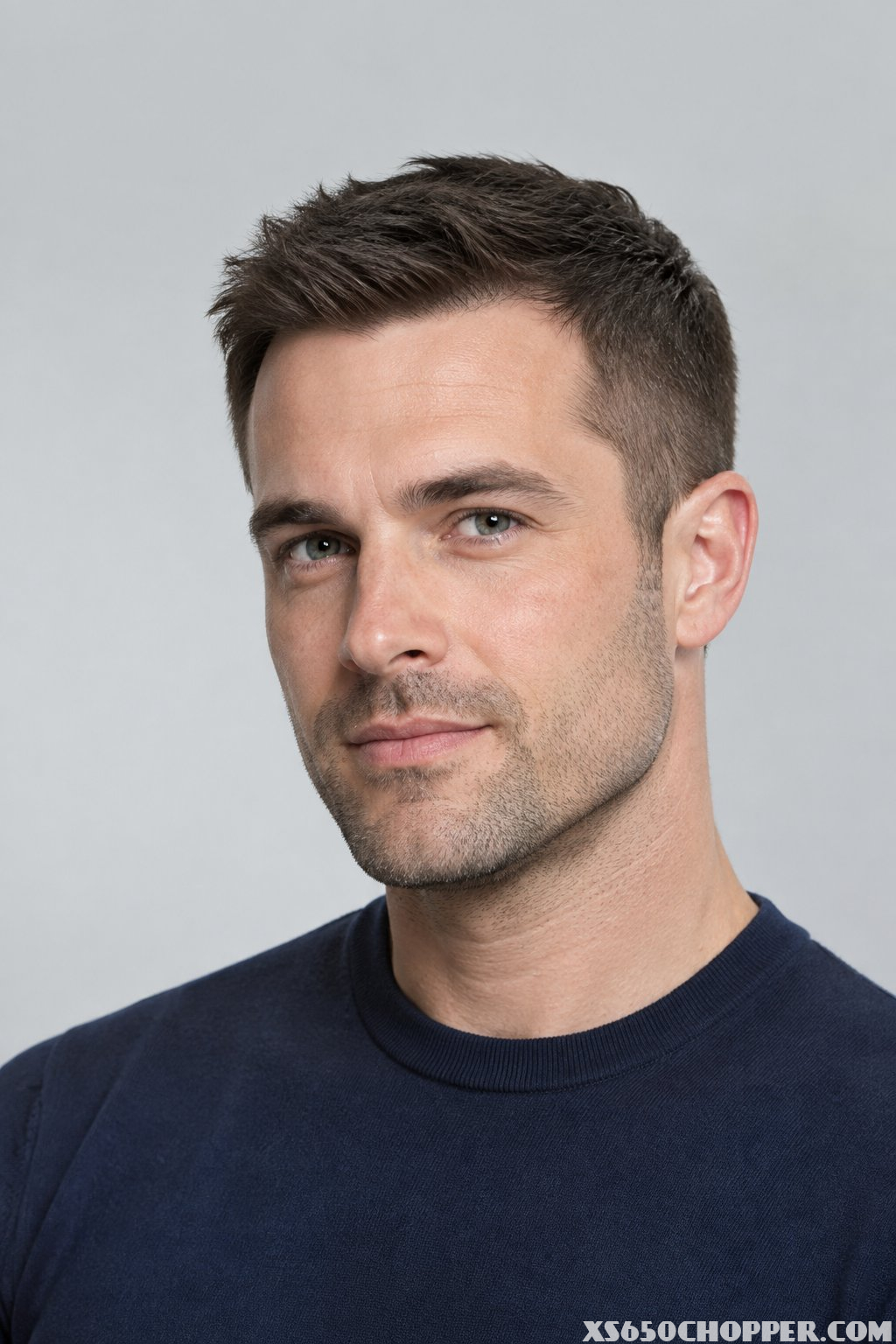
A textured crew cut gives fine hair a neat profile and keeps excess length from collapsing. Leave the front slightly longer than the crown so you can create modest lift while maintaining an easy daily routine.
Tell your barber to taper the sides and blend the top with scissors for a natural surface. The cut works well for active schedules because its shape remains controlled after a quick rinse and restyle. Use a lightweight molding cream when you want flexible movement.
PRO TIP
Direct your blow-dryer upward at the front for a few seconds before applying product.
4) Ivy League Side Part
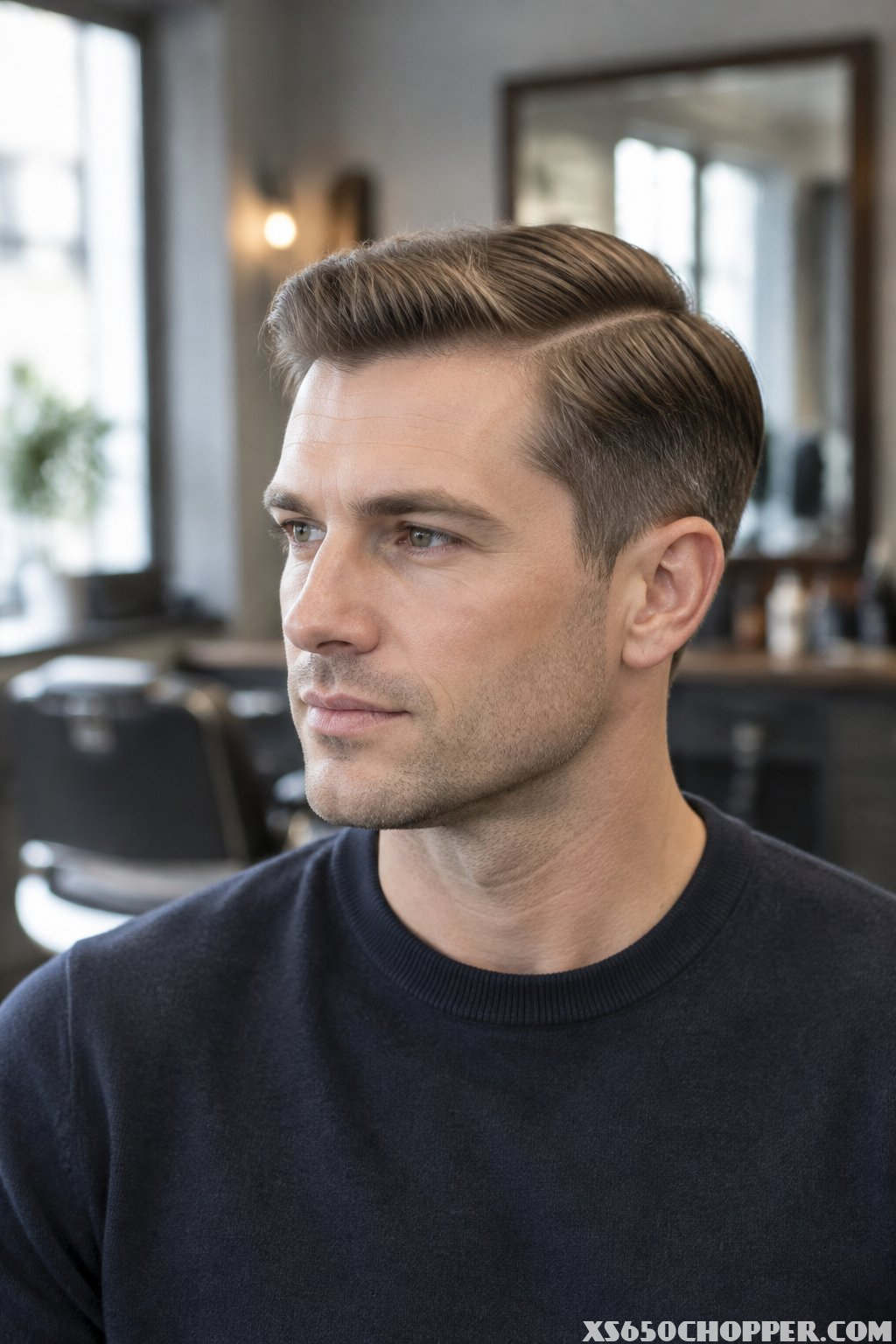
The Ivy League adds polish through a short side part with enough top length for controlled lift. A tapered outline keeps the style refined while the longer front gives you room to build height along the part.
Ask for scissor-cut texture on top and a gradual taper around the ears and neckline. Use a lightweight matte cream for a natural side sweep, or choose a small amount of clay when you need stronger hold. A defined part looks best when your hair naturally follows that direction.
PRO TIP
Create the part while your hair is damp, then dry away from it briefly before brushing the top back into place.
5) Short Quiff With Mid Fade
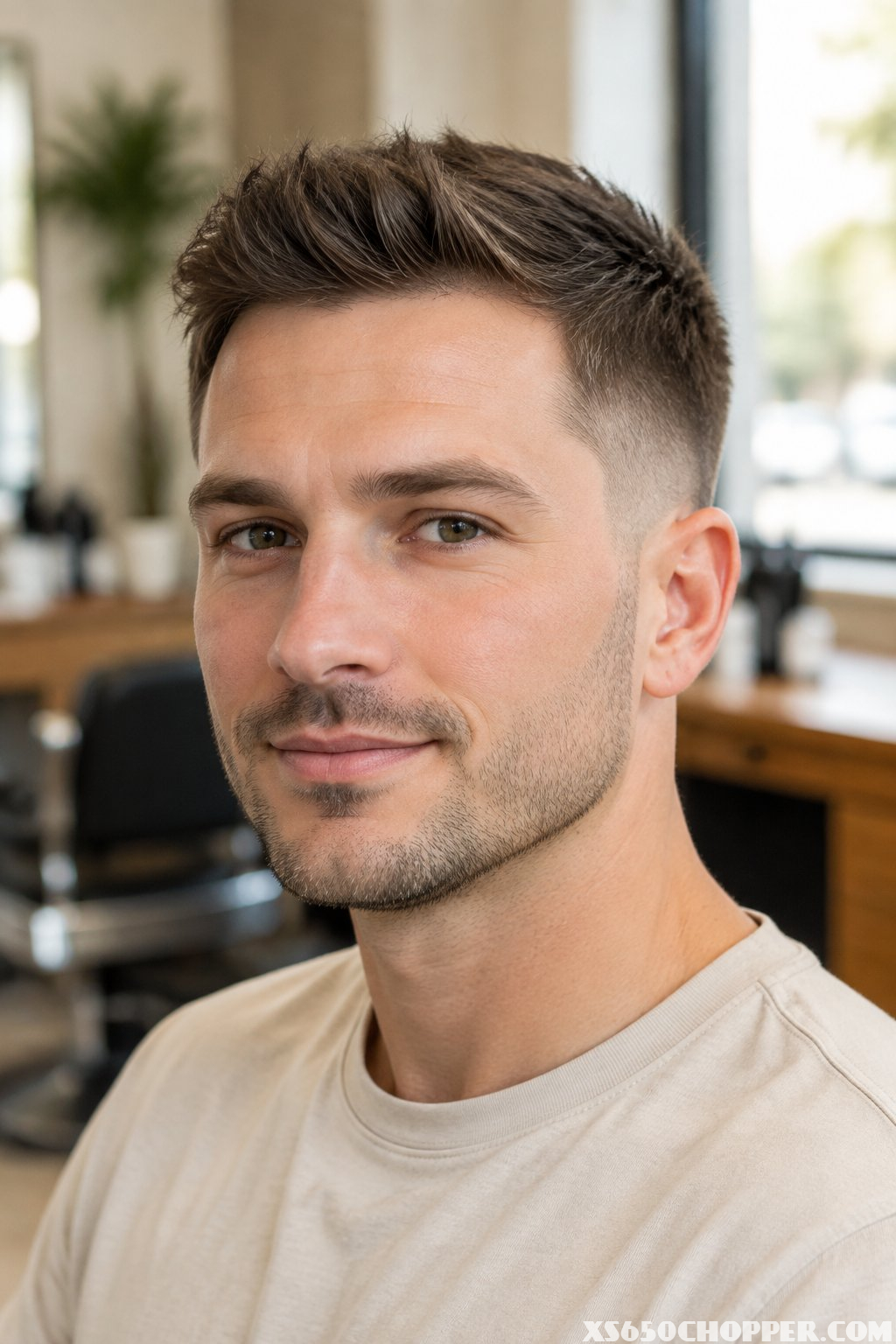
A short quiff builds height at the front and uses a mid fade to sharpen the silhouette. Keeping the quiff compact prevents fine strands from falling under their own weight during the day.
Have your barber preserve density through the front while tapering the sides higher around the temples. Blow-dry the front upward and slightly back, then finish with a dry paste. The style suits hair that has enough frontal density to support a small amount of lift.
PRO TIP
Use heat at the roots first, then cool the shape with a brief shot of cool air before adding product.
6) Buzz Cut With Skin Fade
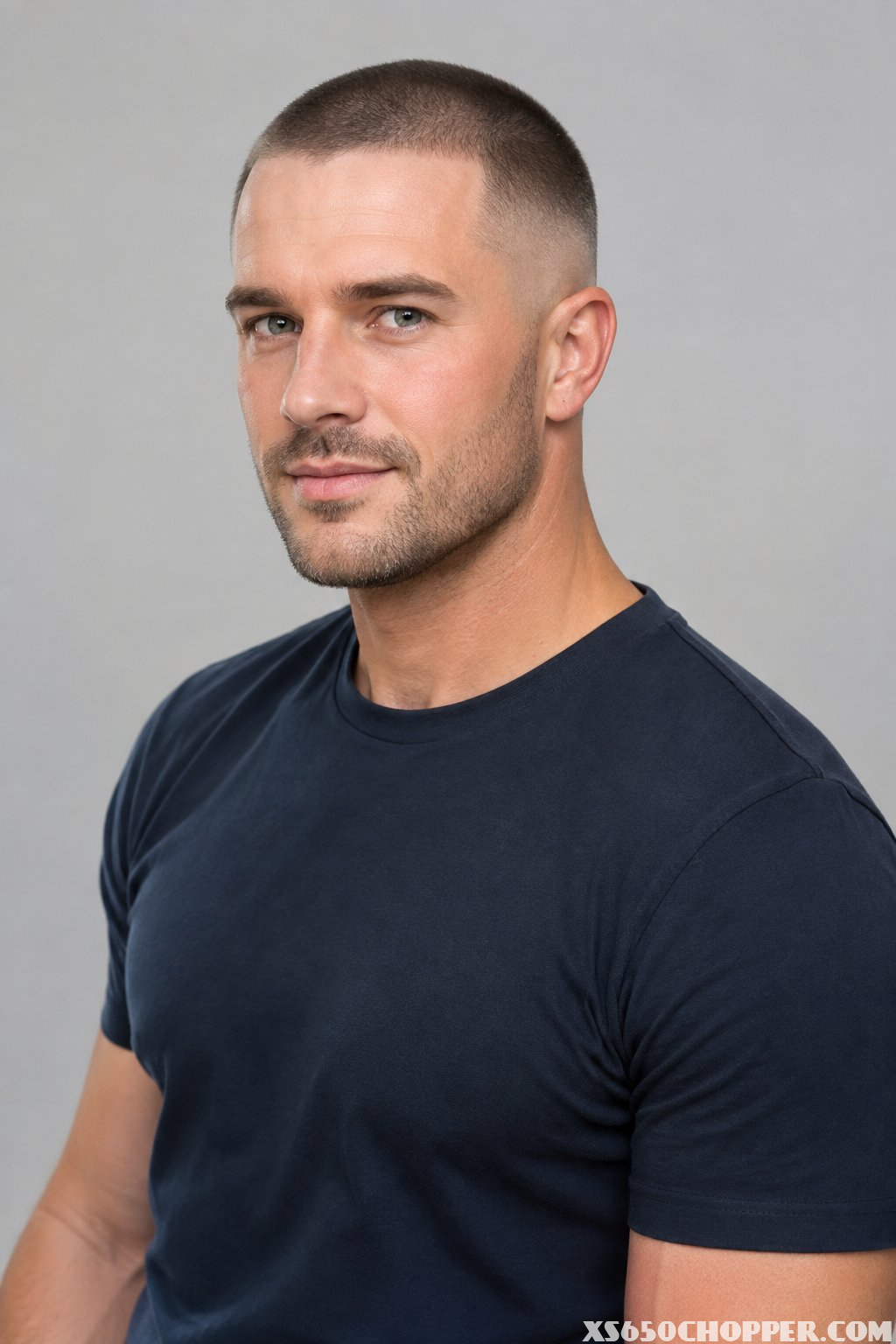
A buzz cut creates an even visual density by keeping the hair close to the scalp. The skin fade supplies contrast at the sides and gives the haircut a crisp, low-maintenance finish.
Choose a slightly longer guard on top if you want to soften scalp visibility. Your barber can adjust the top length around cowlicks, crown patterns, and hairline shape. This option works especially well when thinning is diffuse and styling no longer adds useful height.
PRO TIP
Ask for a gradual transition into the skin fade if a stark contrast would emphasize your temples.
7) Caesar Cut With Choppy Fringe
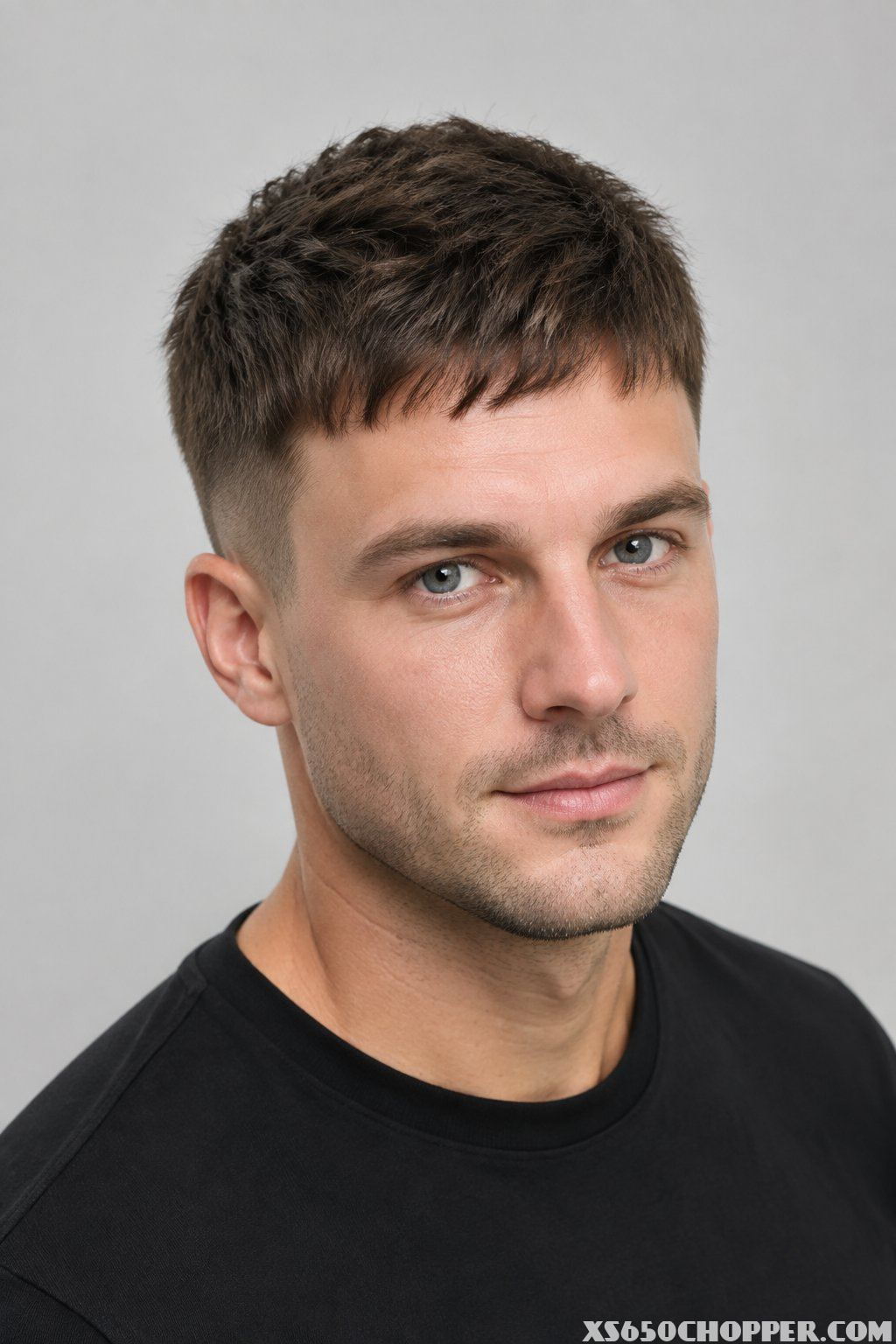
The Caesar cut uses a short forward fringe and compact top to frame the face while limiting droop. Choppy ends add irregularity across the front, helping fine hair look more textured.
Keep the fringe customized to your forehead height and natural hairline. A low taper preserves balance around the sides, while a close crop at the crown keeps cowlicks controlled. Rub a small amount of matte paste between your fingertips before pressing it into the top.
PRO TIP
Separate the fringe with fingertips after styling so the front looks textured without forming a heavy block.
8) Textured Side-Swept Crop
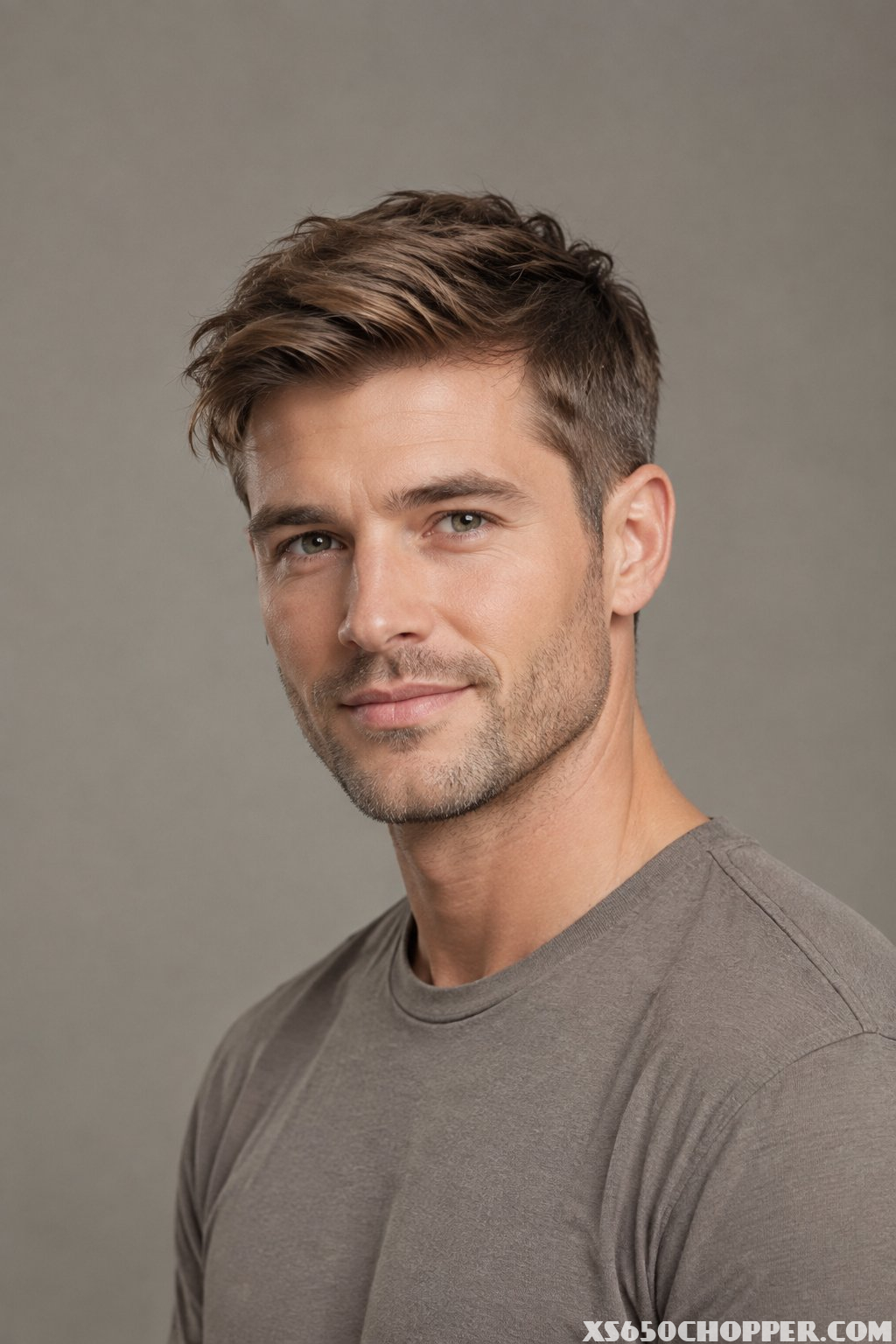
A textured side-swept crop gives you directional volume with a shorter, manageable shape. The sweep creates diagonal movement across the top, which helps break up areas where the scalp shows through.
Request a slightly longer top with sliced or point-cut ends, then keep the sides tapered. Follow your natural growth pattern when choosing the sweep so the style stays in place with minimal product. A lightweight volumizing mousse under a matte paste provides control without flattening the roots.
PRO TIP
Dry the roots in the opposite direction of the final sweep for a few seconds, then redirect the hair into position.
9) Faux Hawk With Tapered Sides

A textured faux hawk concentrates height along the center of the head and uses tapered sides to create shape. Its central direction helps you build lift with modest top length.
Ask for choppy texture from the fringe through the crown, with the sides left tapered instead of aggressively disconnected. Work matte clay upward through the center, then pinch a few pieces into place. This style suits you if you enjoy a more expressive finish and have enough top coverage for separation.
PRO TIP
Style the center in narrow sections so the hair keeps lift without becoming a single stiff ridge.
10) High and Tight With Short Textured Top

The high and tight keeps the sides very close and leaves a compact textured panel on top. That strong contrast makes the remaining top look more substantial while keeping daily styling brief.
Set the top length according to your crown density and preferred finish. Scissor texture prevents the panel from appearing too uniform, while a clean taper keeps the edges sharp. Use a dry styling powder when you want lift with almost no visible shine.
PRO TIP
Ask your barber to soften the transition near the temples if your hairline is uneven.
11) Short Pompadour With Taper Fade
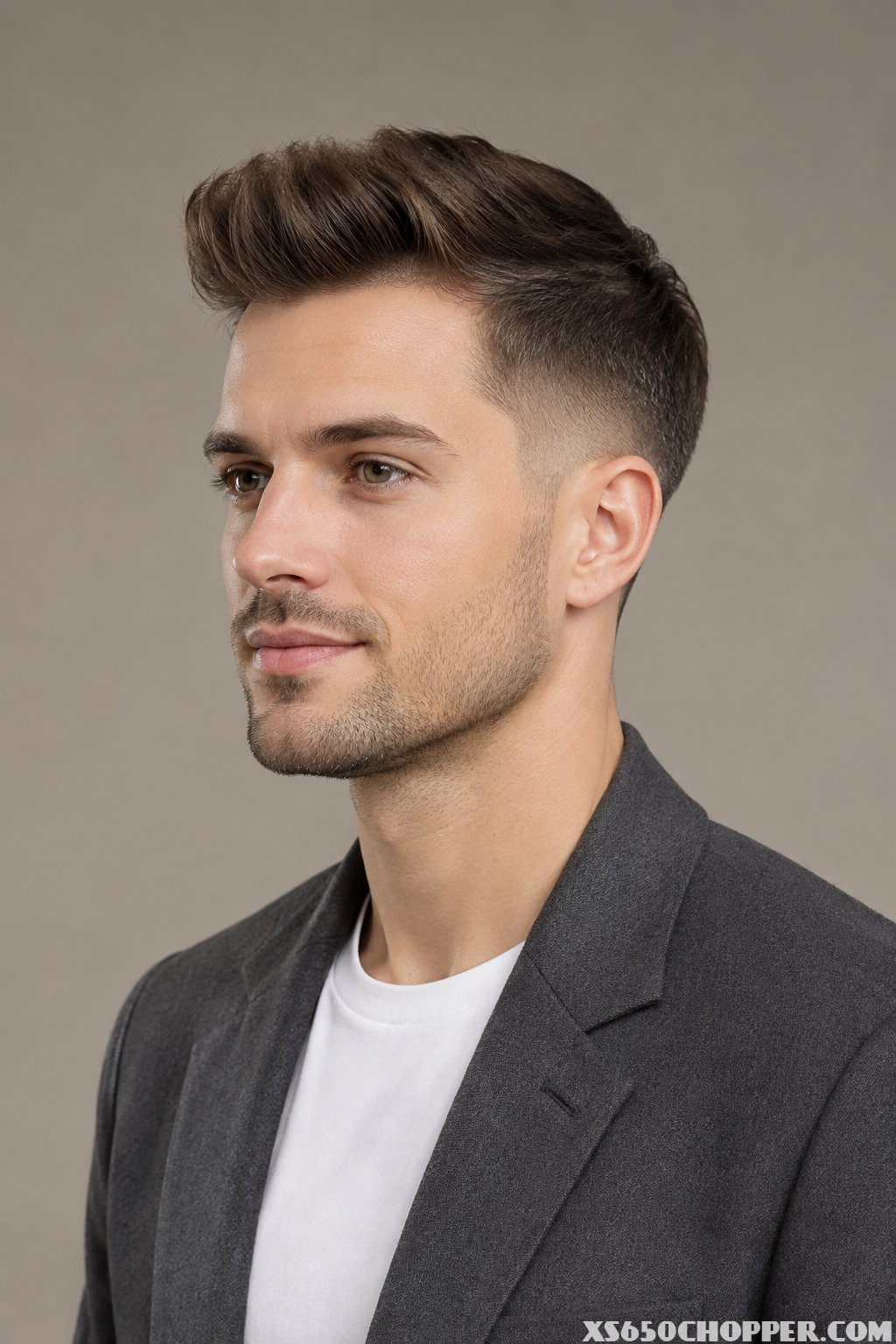
A short pompadour creates controlled front height through directed blow-drying and a tapered outline. Keeping the profile compact gives you the pompadour shape without requiring heavy length.
Preserve enough density at the front for a rounded lift, then ask for texture through the top to reduce weight behind the hairline. Apply volumizing mousse to damp roots and finish with a light matte cream. This cut requires more styling time than a crop, yet it delivers a polished result for work or formal occasions.
PRO TIP
Lift the front with a vent brush while drying, then smooth only the surface so the roots retain height.
12) Messy Layered Medium Crop

A messy layered medium crop adds movement through staggered lengths and a loose finish. The layers create separation across the top, while the medium length lets you shift the part or wear the fringe forward.
Ask for internal layers that preserve enough bulk at the roots. Excessive thinning shears can remove too much structure, so describe the amount of texture you want before the cut begins. A sea salt spray followed by a small amount of matte cream creates casual separation.
PRO TIP
Let the hair dry until slightly damp before scrunching in product, which keeps the layers airy and prevents overworked clumps.
How to Choose a Haircut for Fine or Thin Hair

Where Is Your Hair Thinnest?
Your thinnest area should guide the haircut’s direction, length, and contrast. A forward crop supports a receding front, while a close buzz cut can balance diffuse thinning across the scalp.
Crown thinning benefits from controlled length and texture that follows the growth pattern. Temple recession often looks cleaner with a low taper and a forward or diagonal fringe. Shorter cuts remain useful because they reduce the weight that pulls fine strands down, a point also reflected in guidance that favors short styles for thin hair from this haircut breakdown.
How Much Daily Styling Do You Want?
Choose a buzz cut, crew cut, or Caesar when you want a quick routine. A quiff, pompadour, or faux hawk needs heat direction and product placement to maintain lift.
Your morning routine should match the cut’s required control. If you rarely blow-dry, keep the top short and use texture built into the haircut. If you enjoy styling, preserve extra length at the front for more shape.
Which Face Shape and Hairline Are You Working With?
Your face shape determines where volume should sit. A taller front can lengthen a rounder face, while a flatter crop can balance a longer face.
Your barber should also account for cowlicks, widow’s peaks, and temple recession before setting the fringe or part. Bring a reference photo and identify the direction your hair grows naturally so the cut works with your pattern.
How to Make Fine Hair Look Thicker
Which Styling Products Add Volume Without Weighing Hair Down?
Lightweight mousse, volumizing powder, dry texture spray, and matte paste support lift without leaving a heavy coating. Apply small amounts in stages, focusing first on the roots and adding more only where the shape needs control.
Fine strands respond well to grip and separation. Rub paste between your palms until it spreads thinly, then work from the back toward the front. A few drops of lightweight pre-styler on damp hair can help distribute volume before drying.
Why Do Matte Finishes Work Better Than Wet-Look Products?
Matte finishes reduce reflected light and create a drier, more separated surface. Glossy gels and pomades group fine strands into shiny sections, which makes the scalp easier to see through.
Choose a product with flexible hold when you want movement, or use a matte clay for stronger control. Avoid saturating the hair, since excess product adds weight and reduces root lift.
How Often Should You Refresh the Cut?
Refresh a short textured cut every three to five weeks to preserve the taper, fringe shape, and top balance. Buzz cuts and high fades need more frequent edge maintenance when you want a crisp outline.
Bring your styling product to the appointment if your barber needs to see how the hair behaves after drying. Ask for adjustments around the crown and hairline as density changes, especially when the previous length no longer supports the same direction.