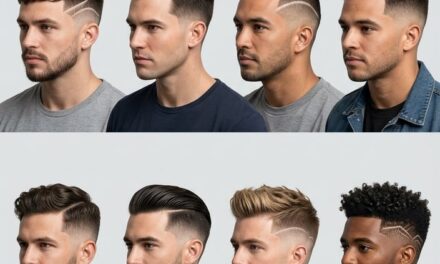
When summer heat arrives, shorter hair keeps your grooming routine simple, while a closely shaved scalp needs more sun protection. Your choice of length and shape also affects how visibly your hairline and thinning areas stand out.

For summer, an induction or burr cut gives you a clean, low-maintenance look, while fades and textured tops add shape without requiring much length. If your hair is thinning, an even, short cut can make the change look intentional and give you a straightforward starting point.
Quick picks:
- Best for minimal upkeep: Induction Cut
- Best for a little more coverage: Butch Cut
- Best for added definition: Mid Fade Buzz
1) Induction Cut

An induction cut takes your hair down to a very short, even length for a clean, close-cropped finish. It suits you if your hair is thinning across the top or you want to make a decisive change with minimal styling.
The short length keeps daily grooming simple, though it exposes more of your scalp to the sun. Ask your barber for an even guard length all over, or use a clipper with no guard if you want the closest clipper cut.
PRO TIP
Apply broad-spectrum SPF 30 or higher to exposed scalp, and reapply every two hours outdoors.
2) Burr Cut

A burr cut leaves a little stubble across your head, giving you a softer finish than a bare-looking induction cut. The short, consistent length works well if you want to reduce the contrast between thinner areas and denser hair.
Ask for a short guard all over, such as a #1 or #2, then adjust the length to suit your comfort level. A barber can check the crown and hairline before cutting to confirm that the same length looks even across your scalp.
PRO TIP
Start with a slightly longer guard if you are unsure how much scalp coverage you want.
3) Butch Cut

A butch cut keeps your hair short and uniform while leaving more visible coverage than a burr cut. It gives you a practical option if you want a classic buzz with enough length to soften the look of your scalp.
A #3 or #4 guard is a useful reference point for your barber, though the right length depends on your hair density and preference. Keep the edges natural or request a neat outline for a sharper finish.
PRO TIP
Check the crown under bright light before settling on a guard length, since thinning can show there first.
4) Brush Cut

A brush cut leaves enough length on top for the hair to stand slightly upright, with the sides kept close. Choose it if you want a little texture and lift while keeping summer styling quick.
The top can be clipped to a longer guard than the sides, then brushed into place with your fingers. If your hair is fine, a matte product used sparingly helps preserve texture without making the scalp look shiny.
PRO TIP
Ask for a modest difference between the top and sides if you want the cut to stay low-key.
5) High-and-Tight Buzz
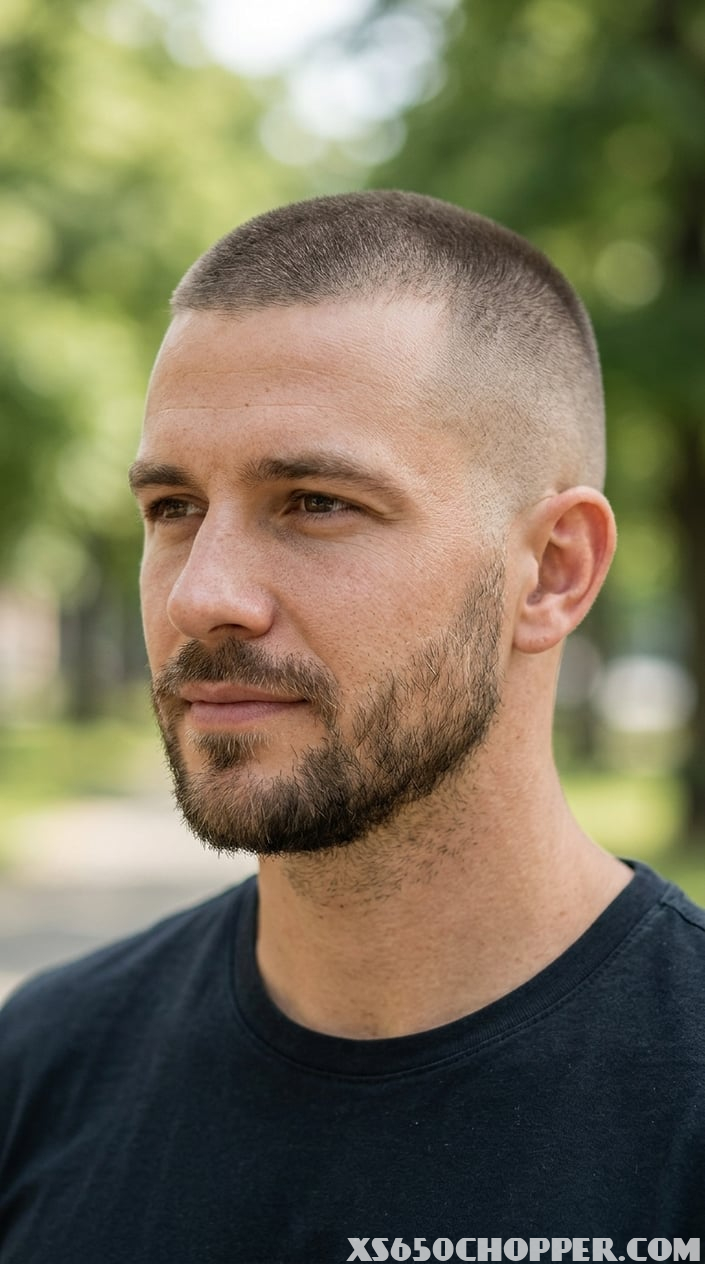
A high-and-tight buzz keeps the sides and back very short, with a slightly longer patch of hair on top. The strong contrast gives you a defined, military-inspired shape that draws attention upward.
Your barber can blend the short sides into the top or keep a more distinct transition. This style works best when the remaining hair on top has enough density to create a visible difference in length.
PRO TIP
Bring a clear reference photo and specify how high you want the short sides to begin.
6) Classic Crew Cut

A classic crew cut keeps the sides short and leaves the top slightly longer, with a subtle rise toward the front. It gives you a polished shape while keeping the hair short enough for warm weather.
Ask your barber to blend the sides smoothly and leave a manageable amount of length on top. If your hairline is receding, a soft front edge can make the transition look balanced.
PRO TIP
Use a small amount of matte paste to direct the front without adding shine.
7) Low Skin Fade Buzz
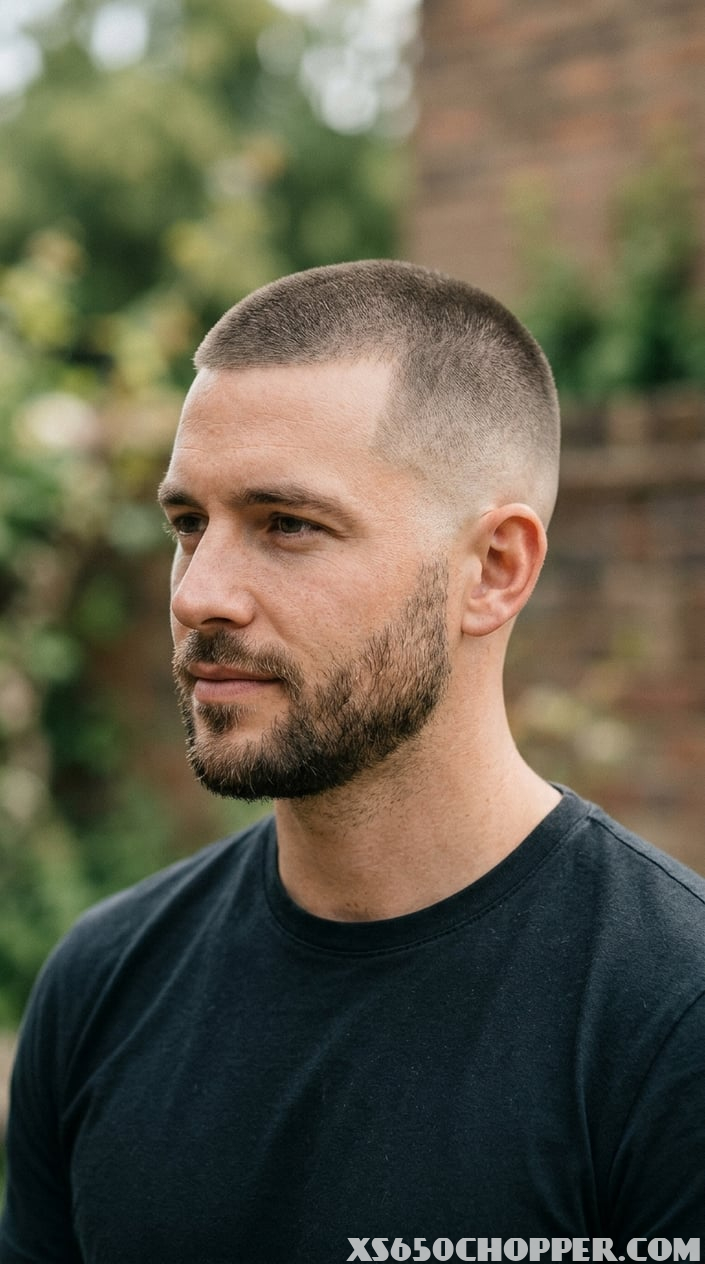
A low skin fade buzz tapers the hair down to bare skin near the ears and neckline, while keeping the fade low on your head. It gives you crisp edges without taking the shortest section high into the sides.
The top can stay at one short length, which keeps the cut easy to maintain. Because a skin fade grows out visibly, schedule regular cleanups if you want the transition to remain sharp.
PRO TIP
Ask for a low fade that follows your natural hairline around the temples and nape.
8) Mid Fade Buzz

A mid fade buzz places the transition around the middle of the sides, creating more contrast than a low fade. It suits you if you want a defined outline with a short, practical top.
Your barber can blend the fade into a uniform top or leave a little extra length near the front. If your temples are receding, a balanced fade can keep the sides neat without making the hairline the only focal point.
PRO TIP
Request a gradual blend if you prefer a softer transition between skin and hair.
9) Temple Taper Buzz

A temple taper buzz keeps most of your hair at one short length and narrows the hair around the temples and sideburns. It offers a subtle finish if you want clean edges without a full fade.
The taper can be paired with a natural neckline or a neatly trimmed nape. This approach suits you when your hair is short overall and you want definition around the face.
PRO TIP
Ask your barber to preserve your natural temple line if you want the taper to grow out smoothly.
10) Drop Fade Buzz
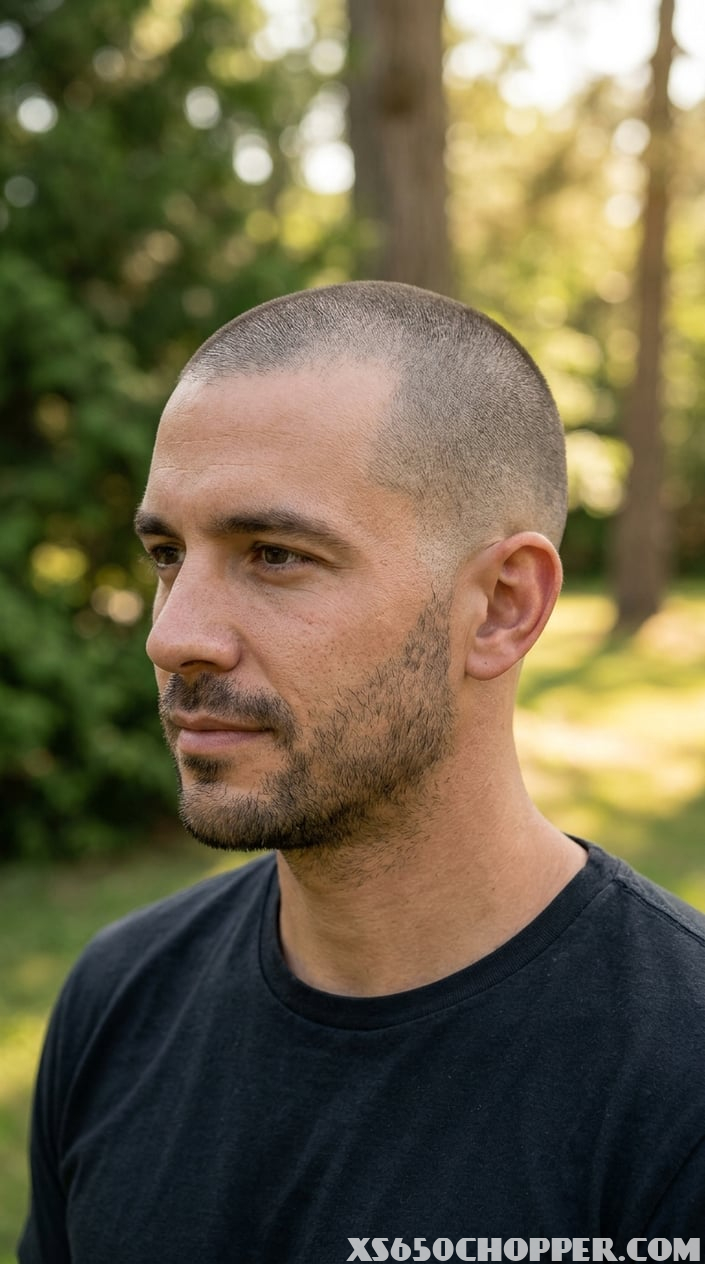
A drop fade curves down behind the ears, creating a rounded shape at the back of your head. Paired with a buzzed top, it gives you a distinct outline while keeping the haircut compact.
This fade works well if you want the back profile to look carefully shaped. Tell your barber how low you want the curve to sit, since a higher drop creates a stronger contrast.
PRO TIP
Ask for a side and back check before the cut is finished so you can confirm the curve.
11) Uniform Shadow Buzz

A uniform shadow buzz leaves short, visible stubble across your head without fading the sides. Its even tone gives you a restrained look that suits a receding hairline or diffuse thinning.
Your barber can use the same guard across the top, sides, and back, then clean up the edges. The short stubble keeps the routine simple while leaving a little more visual texture than a close shave.
PRO TIP
Keep the guard length consistent during touch-ups to avoid patches of uneven stubble.
12) Caesar-Inspired Buzz

A Caesar-inspired buzz combines short, even sides with a slightly longer top brushed forward. The short fringe gives you a defined front edge and can work well when your hairline is receding.
Keep the top close enough to lie neatly without daily styling. Your barber can shape the fringe lightly, leaving a natural line that suits your hairline.
PRO TIP
Request a short, textured fringe if you want the front to look soft and easy to maintain.
13) Textured Short-Top Buzz
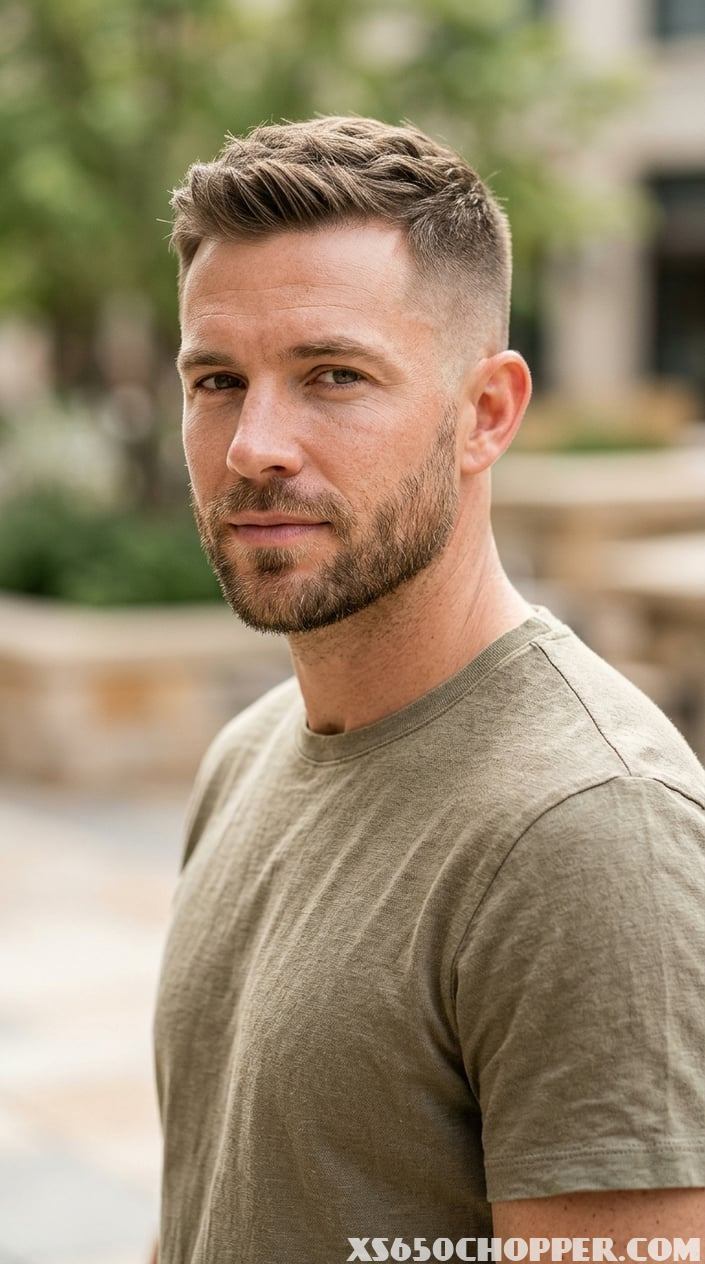
A textured short-top buzz leaves extra length on top and adds choppy definition, while the sides stay closely clipped. It gives you a more varied surface if your hair has enough density to show texture.
Your barber can use point cutting or clipper-over-comb work to break up the top. A small dab of matte styling cream helps separate the hair without weighing it down.
PRO TIP
Keep the top short enough that you can style it with your fingers in under a minute.
14) Short Flat-Top Buzz
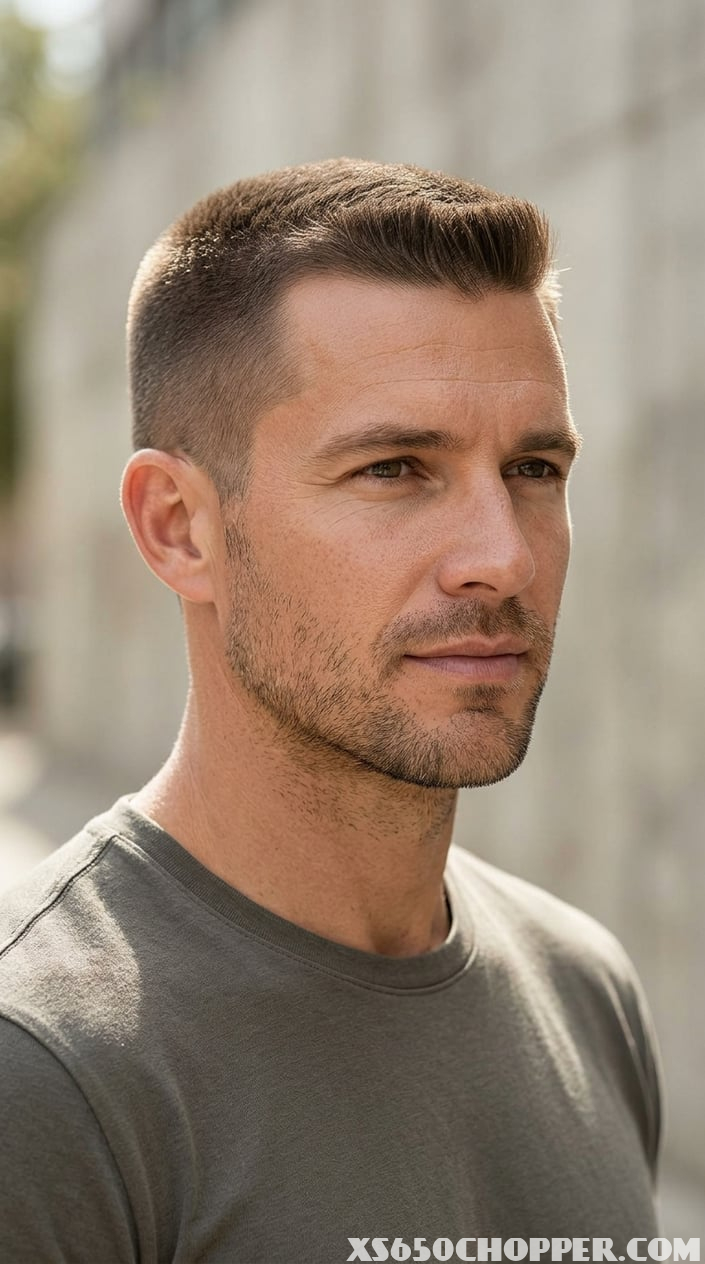
A short flat-top buzz keeps the top level and the sides clipped close, creating a squared silhouette. Choose it if you want a geometric shape that gives your haircut a clear profile.
This cut needs enough density on top to hold its flat surface. Your barber can keep the height conservative and shape the corners to fit your head.
PRO TIP
Ask for a low flat top if you want the squared outline without extra height.
15) Natural-Hairline Buzz

A natural-hairline buzz keeps your front edge close to its existing shape, with short hair clipped evenly around the head. It gives you a clean cut while preserving your natural temples and hairline.
This approach suits you if a sharply edged lineup would emphasize changes in your hairline. Ask your barber to tidy stray hairs while keeping the front edge soft and true to its existing pattern.
PRO TIP
Tell your barber to follow your natural hairline before any edge-up work begins.
16) Buzz Cut With a Full Beard

A short buzz paired with a full beard creates a clear balance between your scalp and facial hair. It gives you a defined overall shape if you prefer a substantial beard as part of your look.
Keep the buzz neat and maintain a deliberate beard outline around the cheeks and neckline. Your barber can connect the sideburn area to the beard with a taper for a smoother transition.
PRO TIP
Choose a beard length and shape that complement your jawline, then keep the sideburn blend tidy.
17) Salt-and-Pepper Buzz

A salt-and-pepper buzz keeps gray and darker strands short enough to create a neat, blended appearance. The close length gives you a simple shape that works with naturally changing hair color.
A uniform guard keeps the color pattern consistent across the head, while a soft taper around the ears adds a finished edge. Use a scalp moisturizer if frequent clipping leaves your skin feeling dry.
PRO TIP
Show your barber the length you want on top and around the sides so the gray pattern stays balanced.
How to Choose a Buzz Cut

Choose your buzz cut by matching its length and outline to your hair-loss pattern, head shape, and comfort with scalp exposure.
Which cut works with your hair-loss pattern?
If thinning is spread across your scalp, an even induction, burr, or uniform shadow buzz gives you a consistent finish. For recession concentrated at the temples, a Caesar-inspired fringe or a natural-hairline buzz keeps the front shape controlled. A barber can assess the crown and temples before selecting a guard.
How should head shape influence your choice?
A low fade keeps more visual weight around the sides, while a high-and-tight or short flat top emphasizes the upper shape of your head. If you want a softer outline, choose a uniform length or a low taper. Ask your barber to check the cut from the front, side, and back.
How short are you comfortable going?
A #3 or #4 guard leaves visible coverage, while a #1 or #2 creates a closer stubble finish. An induction cut exposes the most scalp. Start with a longer guard and go shorter after you see how the length looks in daylight.
Summer Scalp Care

Protect your scalp with broad-spectrum sunscreen, refresh your cut on a schedule that matches its length, and rinse sweat from your skin after outdoor activity.
How do you protect a closely shaved scalp from the sun?
Apply broad-spectrum SPF 30 or higher to all exposed scalp, including the crown and behind your ears. Reapply every two hours outdoors and after swimming or heavy sweating. A wide-brimmed hat adds physical coverage during extended time in direct sun.
How often should you refresh the cut?
Refresh a very short buzz every one to two weeks if you want the length to stay even. A longer butch or brush cut can keep its shape for several weeks between trims. Fades need more frequent edge-ups because their transitions become visible as the hair grows.
How can you keep your scalp comfortable in heat and sweat?
Rinse your scalp with water after exercise or heavy sweating, then pat it dry with a clean towel. Use a light, fragrance-free moisturizer if clipping leaves your skin dry, and avoid applying heavy products before spending time in the heat. A breathable hat helps limit direct sun while allowing airflow.