Your beard’s density and growth pattern come largely from genetics and age, so the most effective approach is to give growth time, support your health, and groom the hair you have. You can improve your beard’s appearance with consistent care and a shape that suits your growth pattern, while no grooming routine can guarantee new follicles or a thicker beard.

The Italian beard look is usually defined by a full, shaped beard with a clean outline and a gradual blend into the haircut. Your results depend on the hair your follicles produce, so focus on steady growth and a style that works with your natural density.
1) Let Genetics and Age Set a Realistic Growth Timeline

Your genes and age have the strongest influence on how quickly your beard fills in and where it grows. Facial hair can continue to develop through the late teens and twenties, and relatives’ growth patterns may offer a rough clue about your own.
Patchiness at one age does not predict your final beard. Track changes over several months in consistent lighting, and avoid comparing your early growth with someone whose beard has had more time to mature.
PRO TIP
Take a monthly photo from the same angles. This makes gradual changes easier to see than daily mirror checks.
2) Give New Growth 8–12 Weeks Before Judging It
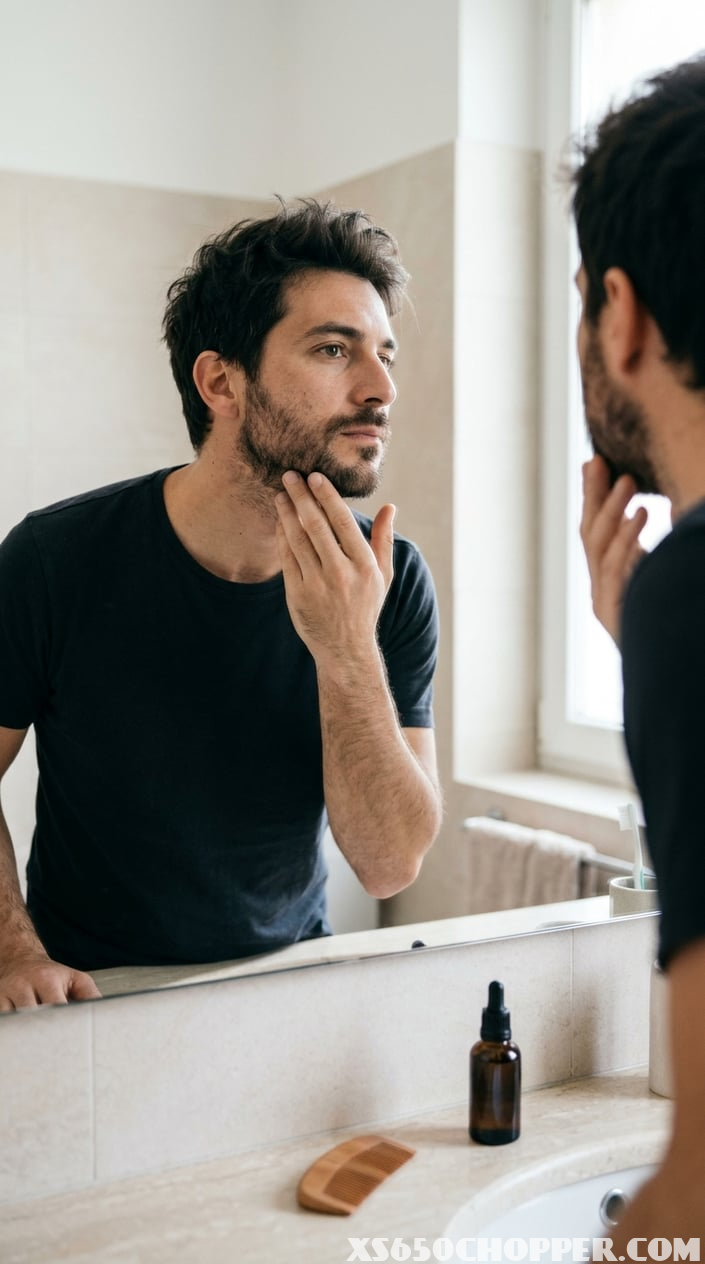
Let your beard grow for 8–12 weeks before deciding which areas are sparse. Short hairs can look uneven while they grow, and extra length helps reveal the pattern you can shape.
Keep the outline tidy if needed, while leaving the main growth untouched during your tracking period. If you change the length every few days, it becomes harder to tell whether coverage is improving.
PRO TIP
Choose a start date and take a photo at week one, week eight, and week twelve under similar lighting.
3) Eat a Balanced Diet With Enough Protein

A balanced diet with adequate protein supports normal hair growth and overall health. Include protein sources such as eggs, beans, fish, dairy, or lean meat, along with vegetables, fruit, and whole grains.
Severe calorie restriction and nutrient deficiencies can affect hair. Supplements do not create extra beard growth when you already get enough nutrients, and high doses of some vitamins can cause harm.
PRO TIP
If your diet is limited or you suspect a deficiency, ask a clinician about testing before adding supplements.
4) Get Consistent, Age-Appropriate Sleep

Consistent sleep supports the body’s normal functions, including healthy skin and hair. Adults should aim for at least seven hours each night; teens need more, commonly eight to ten hours.
A steady bedtime and wake time can make it easier to get enough rest. Sleep supports general health, though extra hours alone will not change the beard pattern set by your follicles.
PRO TIP
Set a regular wind-down time and keep your sleep schedule similar on weekends.
5) Cleanse and Moisturize the Skin Beneath Your Beard
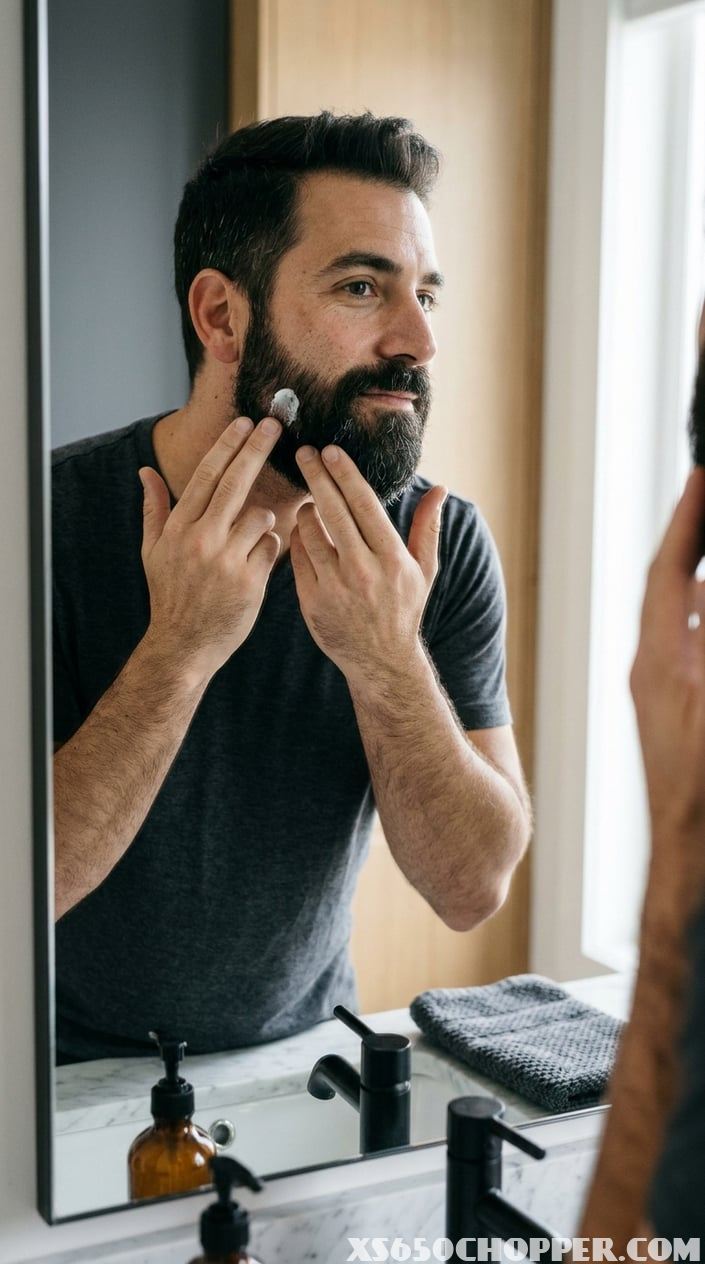
Clean skin and regular moisturizing help reduce dryness and irritation beneath your beard. Wash with a gentle facial cleanser, rinse thoroughly, and apply a fragrance-free moisturizer suited to your skin.
Use lukewarm water and avoid aggressive scrubbing, which can irritate the skin. If flakes persist or the area becomes red and itchy, a clinician can help identify the cause.
PRO TIP
Work moisturizer down to the skin with your fingertips, especially where longer hair makes application difficult.
6) Stop Shaving to Try to Make Hair Grow Thicker
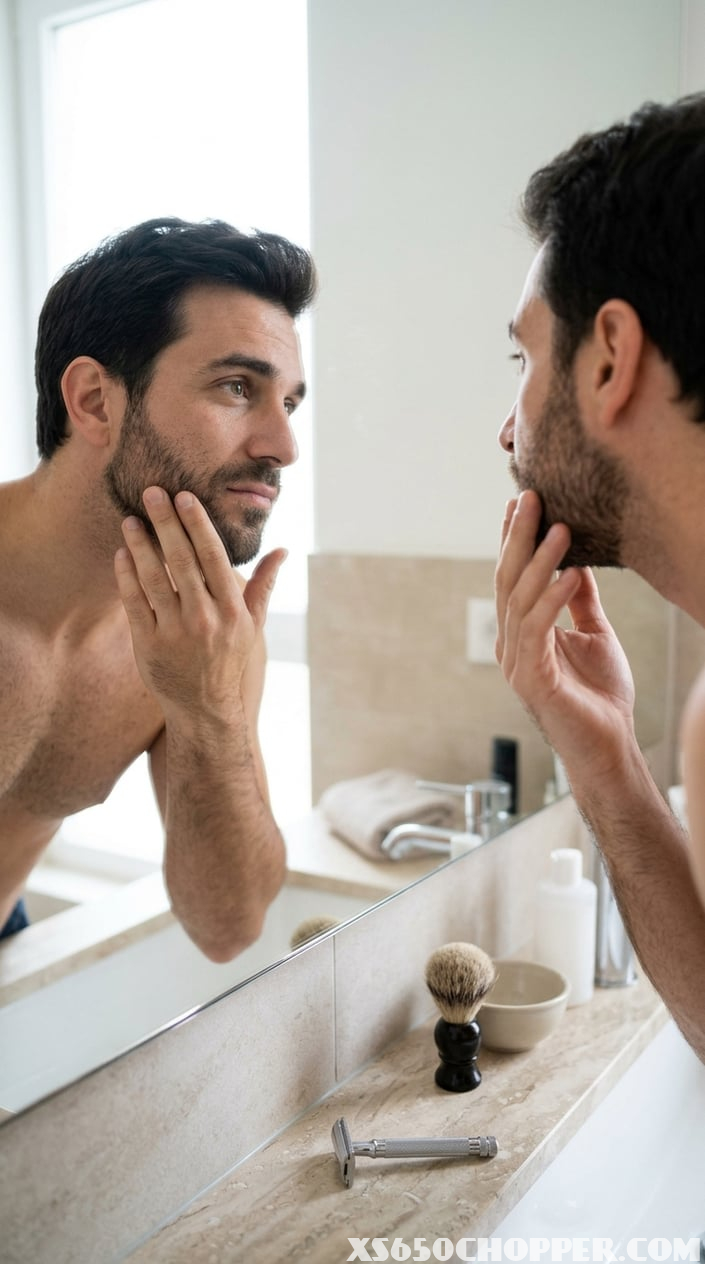
Shaving does not make beard hair grow faster, darker, or thicker. A razor cuts the hair shaft at the skin’s surface; the follicle beneath the skin controls growth.
Newly cut stubble can feel coarse because its ends are blunt. If you want to assess your natural coverage, let the hair grow and keep a record of its progress.
PRO TIP
Choose a growth period and put the razor away for the full 8–12 weeks, except for necessary edge cleanup.
7) Avoid Trimming Sparse Areas While You Track Growth

Leave sparse areas alone during your growth trial so longer hairs can add coverage. Trimming those spots early can make them look more exposed and prevents you from seeing how the surrounding hair settles.
You can still clean stray hairs outside the intended beard shape. Keep the main cheek, jaw, and chin lengths consistent until you have enough growth to choose a style.
PRO TIP
Use a small comb to lift longer hairs over thinner areas before deciding whether the shape needs adjustment.
8) Use Beard Oil to Soften Hair, Not to Promise Faster Growth

Beard oil can soften coarse hair and reduce the feeling of dryness, while it does not establish faster follicle growth. Apply a few drops to clean, slightly damp facial hair, then spread the oil through the beard and onto the skin.
Start with a small amount to avoid a greasy finish. Stop using a product if it causes itching, redness, or irritation.
PRO TIP
Rub the oil between your palms first, then work it in from the skin outward.
9) Brush Your Beard Daily to Keep It Neat
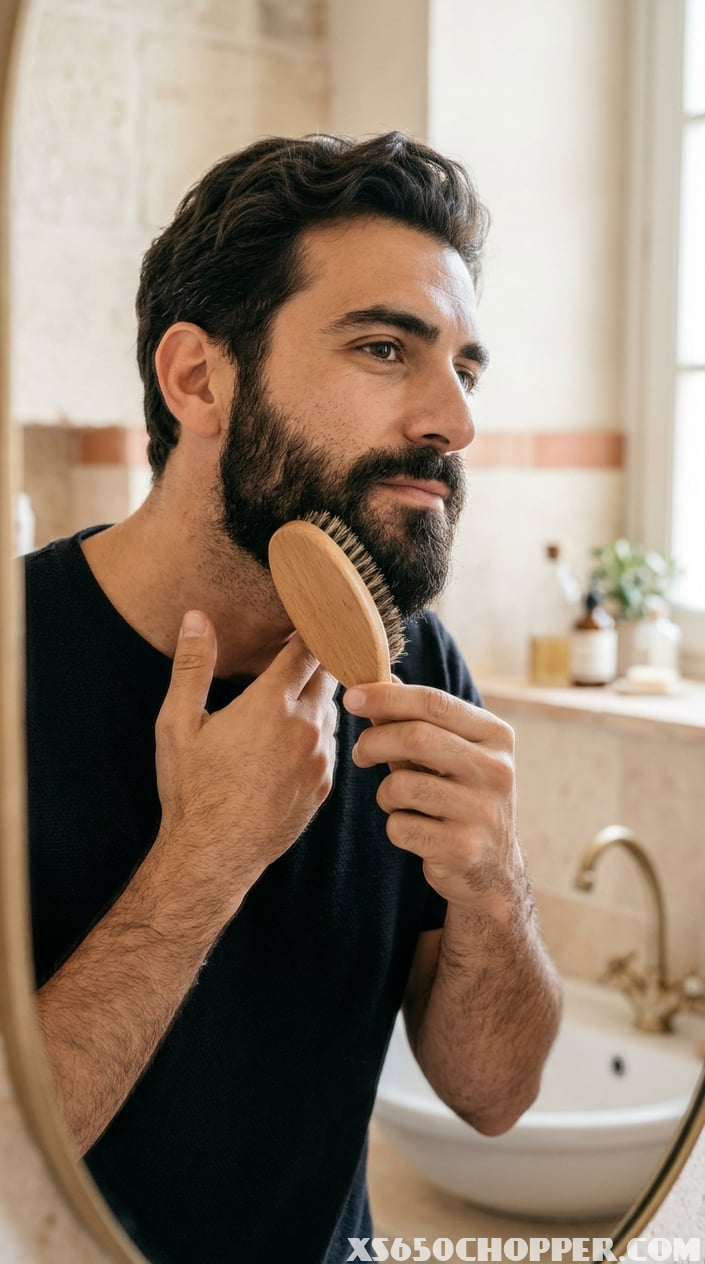
A daily brush helps align beard hairs and gives your shape a tidier appearance. Use a soft brush or a wide-tooth comb, especially when your beard is short or your skin feels sensitive.
Brush gently in the direction you want the hair to lie. Pulling hard through knots can tug on hair and irritate the skin underneath.
PRO TIP
Comb through longer facial hair after applying a small amount of beard oil to reduce snagging.
10) Keep More Length Along the Jawline

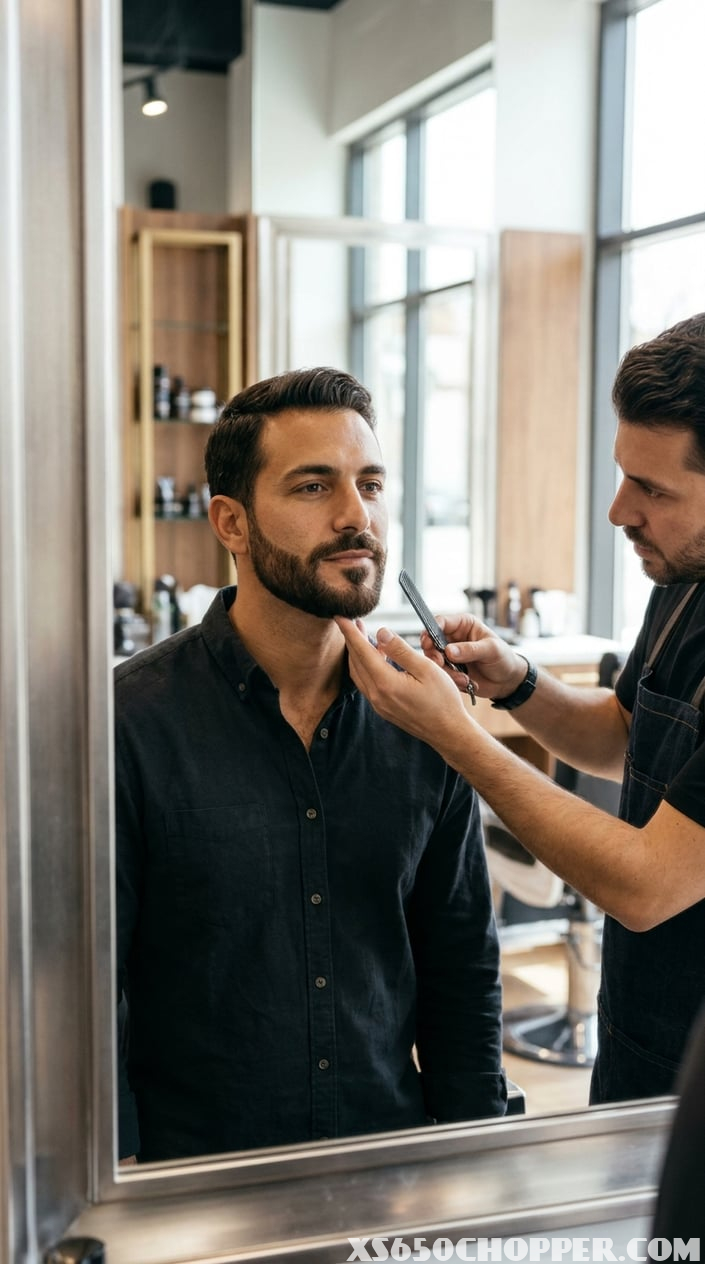
Keeping more length along the jawline can give an Italian-style beard a fuller, defined profile. Ask your barber to preserve that area while blending shorter hair toward the cheeks and sideburns.
The right balance depends on your growth pattern and face shape. A gradual taper can keep the outline polished without removing the visual weight from the jaw.
PRO TIP
Bring a reference photo to your barber and point out the jawline length you want to retain.
11) Blend the Sideburns Into Your Haircut With a Gradual Fade
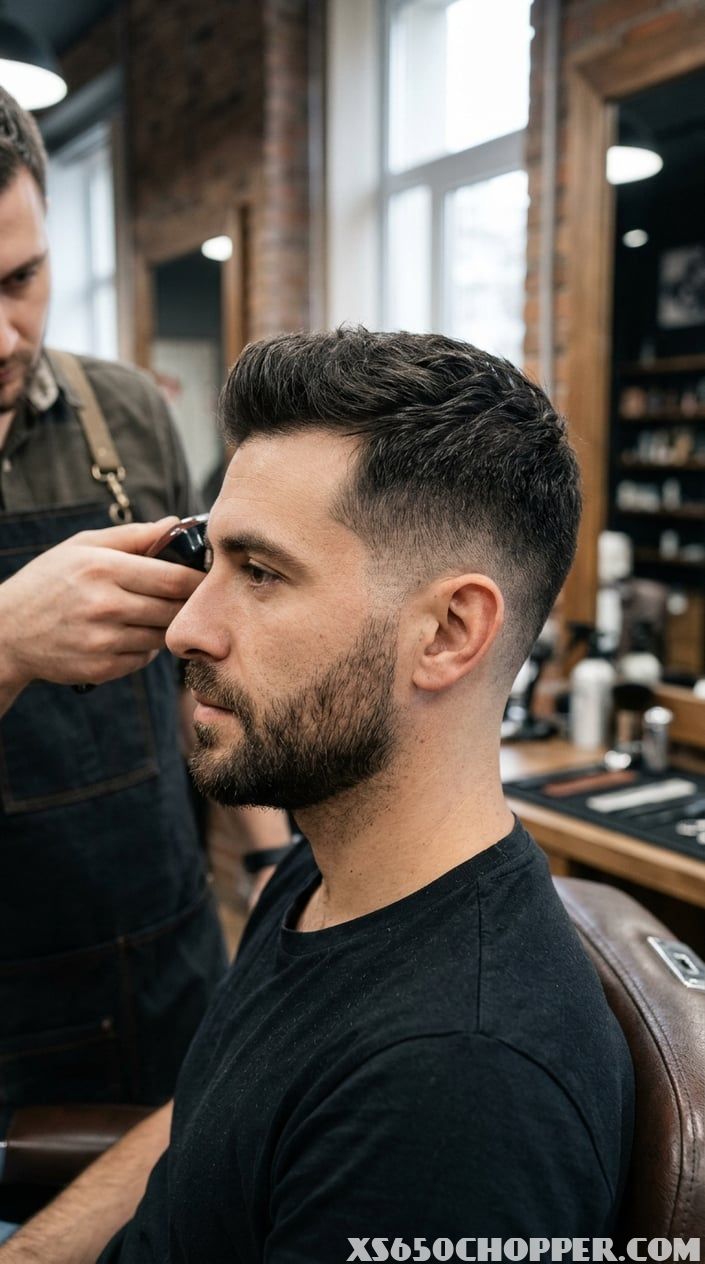
A gradual sideburn fade connects your haircut to your beard without a harsh step. The barber can taper the hair from the temple toward the fuller beard, adjusting the blend to your haircut and density.
A subtle transition is easier to maintain as the beard grows. Tell your barber how much length you want to keep before the fade begins.
PRO TIP
Schedule the haircut and beard trim together so the sideburn transition stays balanced.
12) Set a Clean Cheekline and Neckline Once Growth Fills In
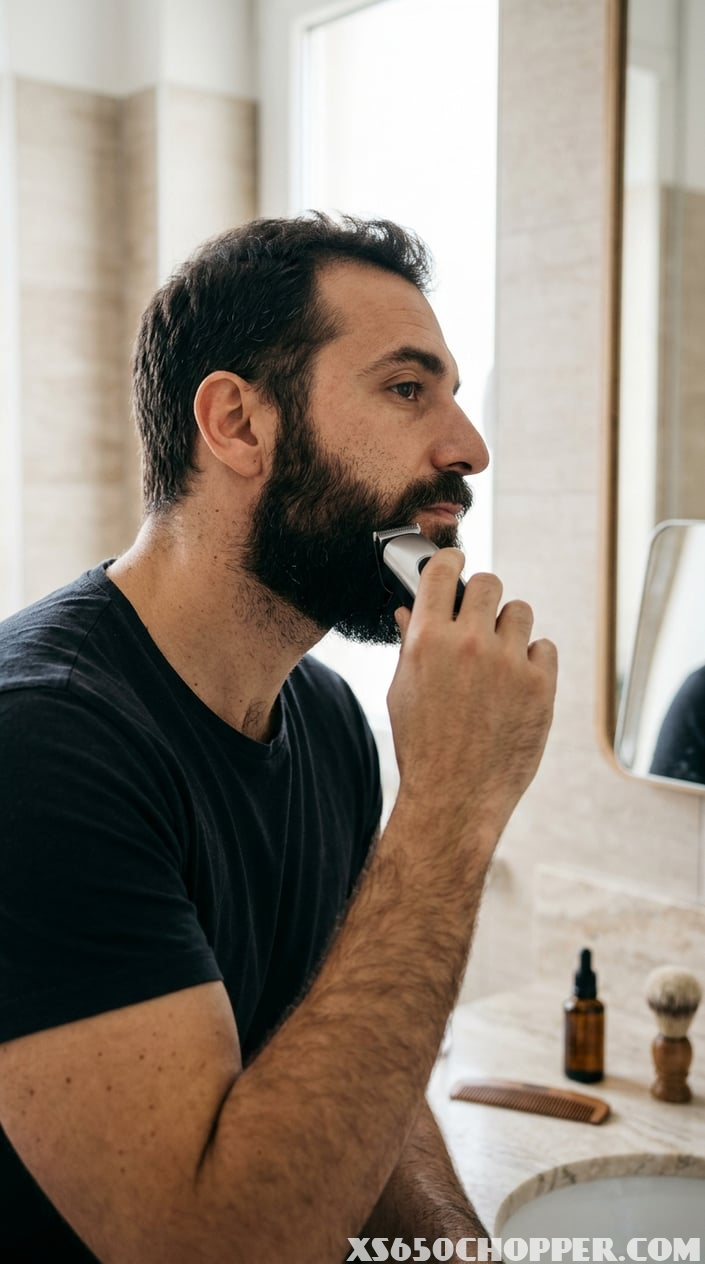
Shape your cheekline and neckline after you have enough growth to see the beard’s natural boundaries. A defined edge gives the beard a groomed finish, while removing too much can make the shape look smaller.
Follow your natural cheek growth and keep the neckline above the crease where your neck meets your jaw. Use a mirror and make small adjustments to keep both sides even.
PRO TIP
Mark the neckline lightly with a washable pencil before trimming, then check it from the front and both sides.
13) Keep the Mustache Tidy Along the Upper Lip
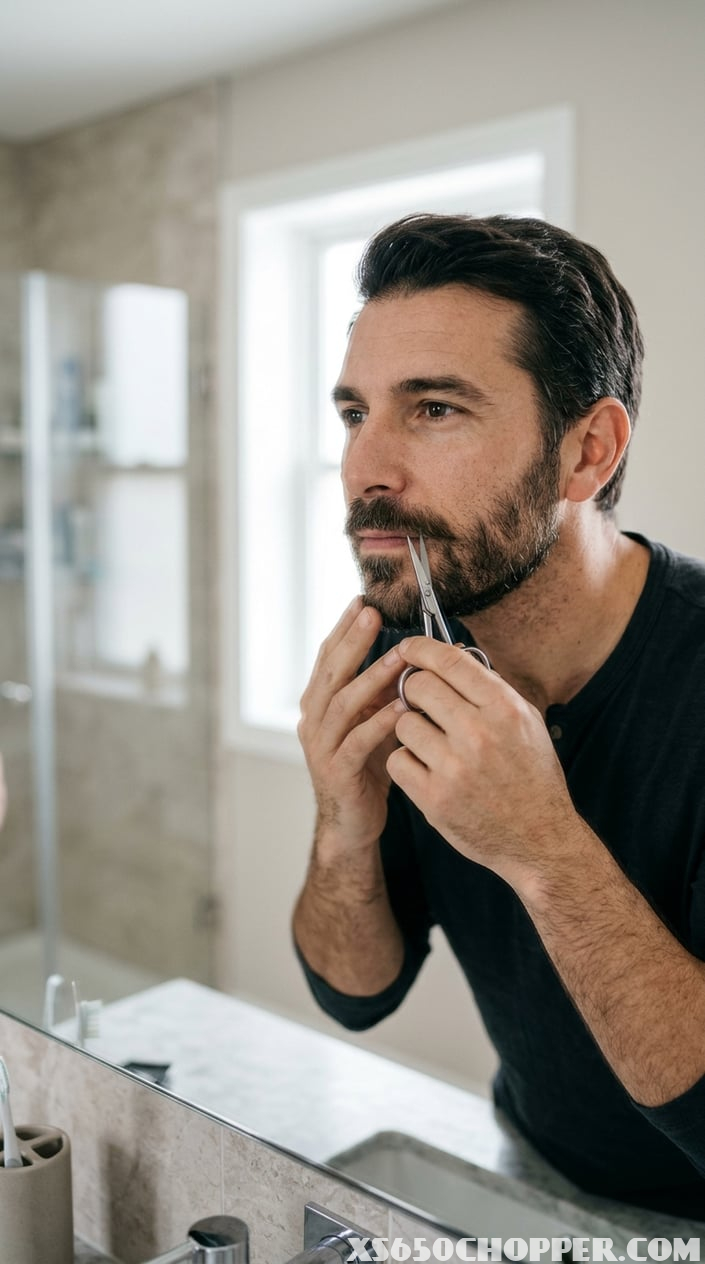
A neat mustache keeps the Italian beard shape clean around your mouth. Comb the hairs downward and trim only the ends that fall over your upper lip, using small scissors or a guarded trimmer.
Work slowly and check both sides as you go. Leaving enough length helps the mustache connect naturally with the rest of your beard.
PRO TIP
Trim a little at a time with dry hair, since wet hair can sit differently once it dries.
14) Ask a Dermatologist Before Trying Minoxidil or Growth Supplements

Talk with a dermatologist before using minoxidil on your face or taking products marketed for beard growth. Minoxidil is approved for certain scalp uses, and facial application is off-label; it can cause irritation and other side effects.
Supplements help when a clinician identifies a relevant deficiency. A dermatologist can review your health, medications, and skin condition before discussing whether a treatment is appropriate.
PRO TIP
Bring the product label and a list of medications or supplements to your appointment.
15) Choose an Italian Beard Shape That Matches Your Density

Choose an Italian beard shape that works with your natural density, face shape, and haircut. A fuller jawline with tidy edges suits dense growth; shorter, carefully blended sides can help a less even beard look intentional.
A barber can adapt the length and fade to the areas where your hair grows most strongly. Bring a reference image and ask for adjustments based on your own coverage.
PRO TIP
Ask the barber to preserve your strongest growth zones and shape the weaker areas around them.
How to Choose an Italian Beard Shape
Which face shapes suit a fuller jawline?
A fuller jawline can complement longer or narrower faces by adding visual width and structure. If your face is already broad, a closer trim at the sides with moderate jaw length can keep the proportions balanced.
How should beard density affect the style?
Let your densest areas guide the shape. A full beard can carry more length along the jaw, while patchier cheeks suit a shorter outline with a deliberate fade and tidy edges.
What haircut pairs well with an Italian beard?
A taper or fade can connect the sideburns smoothly to the beard. Keep the transition gradual and match its height to your haircut, beard length, and personal preference.
When to Seek Professional Advice

When is uneven growth worth discussing with a dermatologist?
Discuss sudden patchy loss, persistent irritation, or changes that appear alongside other symptoms with a dermatologist. A clinician can check for skin conditions and review possible causes before recommending treatment.
What should teens know before using beard-growth products?
Beard development varies through adolescence, and facial hair can continue changing into adulthood. Teens should avoid minoxidil and growth supplements unless a clinician specifically recommends them; a dermatologist or pediatrician can give age-appropriate advice.