
Choose a classic taper, textured crop, or layered cut if you want your hair to keep a balanced shape as it grows between appointments. These styles preserve their silhouette as added length softens the outline, so you have room to stretch the time between trims.

A haircut’s grow-out comes down to how its lengths connect. Blended sides, texture, and layers give new growth somewhere to go, while a sharply defined fade loses its crisp finish sooner.
Quick picks:
- Best for a polished shape: Classic taper
- Best for natural texture: Textured crop
- Best for growing longer: Layered medium-length cut
1) Classic Taper

A classic taper grows out cleanly because its gradual change in length keeps your outline soft. Your barber shortens the hair around the temples and nape while leaving enough length on the sides and top to maintain a connected shape as it grows.
Ask for a low, blended taper with a natural neckline if you want a longer interval between appointments. You can style the top with a small amount of cream or leave it loose for a more relaxed finish.
PRO TIP
Ask your barber to keep the taper low and avoid taking the sides too short. That leaves more room for growth before the outline looks bulky.
2) Textured Crop

A textured crop holds its shape as it grows because choppy layers make added length less noticeable. The short fringe and broken-up top keep the cut looking deliberate, even when the hair loses some of its freshly trimmed definition.
This style suits straight, wavy, or thick hair. Use a matte paste or clay to separate the top, working a small amount through dry hair with your fingers.
PRO TIP
Request a soft, textured fringe and blended sides. A blunt, heavy fringe can start to feel bulky as it gains length.
3) Ivy League
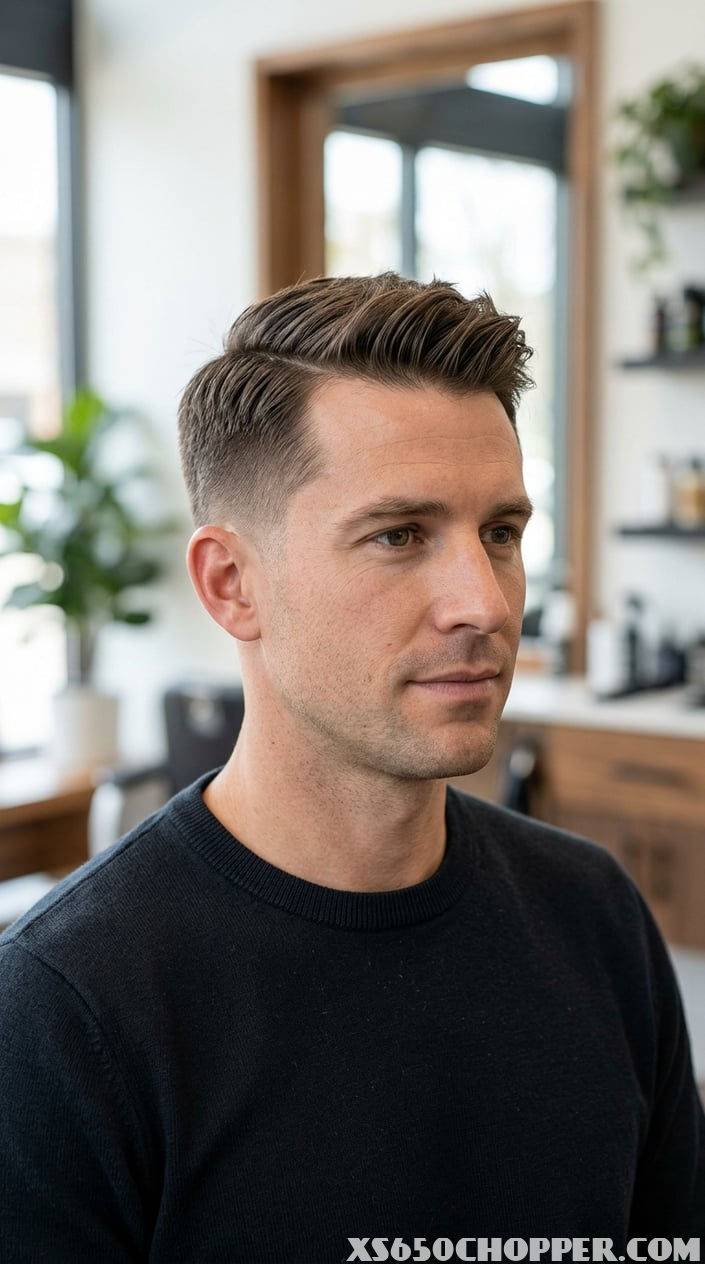
The Ivy League grows out neatly because its tapered sides and longer top maintain a tidy, connected profile. You get enough length to part or brush the top while keeping the sides close to the head.
A little extra length at the front gives you styling flexibility as the cut grows. Comb it to the side for a traditional finish, or use your fingers and a light cream for a softer shape.
PRO TIP
Ask for a scissor finish on top and a gradual taper around the ears. That gives your barber room to refine the shape at later appointments.
4) Crew Cut

A crew cut is easy to manage as it grows because its short top and close sides keep the silhouette simple. The slight extra length at the front adds shape, while the crown stays short enough to avoid a heavy, uneven outline.
You can wear it with minimal styling or add a touch of matte product to direct the front upward. A gradual taper gives the cut a softer grow-out than sharply disconnected sides.
PRO TIP
Tell your barber how short you want the sides and crown separately. That detail helps preserve the crew cut’s shape as each area gains length.
5) Low Taper Fade

A low taper fade grows out with a subtle outline because the shortest area stays close to your temples and neckline. The gradual blend keeps more weight on the sides, so the overall shape remains balanced as the fade softens.
This cut works well if you like a clean edge with a little more coverage than a high fade provides. Keep the top long enough to connect visually with the sides as it grows.
PRO TIP
Ask for a low fade that blends into a natural neckline. That keeps the grow-out softer around the back of your head.
6) Classic Side Part

A classic side part grows out gracefully because you can shift the part and styling as the top gets longer. The tapered sides and defined part give the cut structure, while enough length on top lets you adjust the shape between barber visits.
Use a comb and a small amount of lightweight pomade for a neat finish. If your hair has a natural part, ask your barber to follow it so the shape stays easy to manage.
PRO TIP
Request a soft part line instead of a shaved-in hard part. A natural part keeps the style flexible as your hair length changes.
7) Buzz Cut

A buzz cut grows out evenly because the hair starts at a consistent short length across your head. As it lengthens, the change is gradual and easy to manage with a quick wash and little styling.
Choose a uniform guard length for a simple shape, or leave the top slightly longer for more definition. Your hairline and head shape remain visible, so ask your barber to check the outline before finishing.
PRO TIP
If you want to grow beyond a buzz cut, let the top gain length while keeping the perimeter tidy. That helps the shape develop without leaving the sides overly full.
8) Curtain Haircut

A curtain haircut grows out well because its longer front pieces already frame your face as they gain length. A center or slightly off-center part gives the hair a natural direction, and soft layers help the sides fall into place.
This cut suits straight and wavy hair with enough length at the front to part. Use a light styling cream to control flyaways while keeping movement through the fringe.
PRO TIP
Ask your barber to keep the front long and add subtle layers around the sides. That preserves the curtain shape as the hair gets longer.
9) Layered Medium-Length Cut

A layered medium-length cut handles growth smoothly because its layers distribute weight as your hair gets longer. The shape stays light around the sides and crown, helping you avoid a solid, rounded outline.
Your barber can tailor the layers to your texture and the way your hair falls. Wear it loose with a small amount of cream, or tuck the sides behind your ears as the length increases.
PRO TIP
Ask for layers that follow your natural fall. Removing too much weight can leave finer hair looking sparse, while thick hair may need more shaping through the sides.
10) Bro Flow

A bro flow grows out naturally because its medium length is designed to move back and away from your face. The style works especially well with wavy hair, which adds direction and volume as it gains length.
Keep the sides and back balanced with light shaping, and use a leave-in conditioner or styling cream to reduce frizz. You can sweep the hair behind your ears as it gets longer.
PRO TIP
Ask your barber to shape the outline while preserving your length. Small adjustments around the ears and nape help maintain flow without sacrificing progress.
11) Shoulder-Length Layered Cut

A shoulder-length layered cut grows out with a consistent shape because its length and layers work together from the start. Layers help the hair sit around your shoulders and reduce excess weight through the ends.
You’ll need enough length for the front and back to move freely. A leave-in conditioner helps with detangling, while periodic shaping keeps the ends even as you continue growing your hair.
PRO TIP
Ask for a light trim focused on the ends and perimeter. Keeping the layers intact helps your hair retain movement as it grows.
How to Choose a Haircut That Grows Out Well
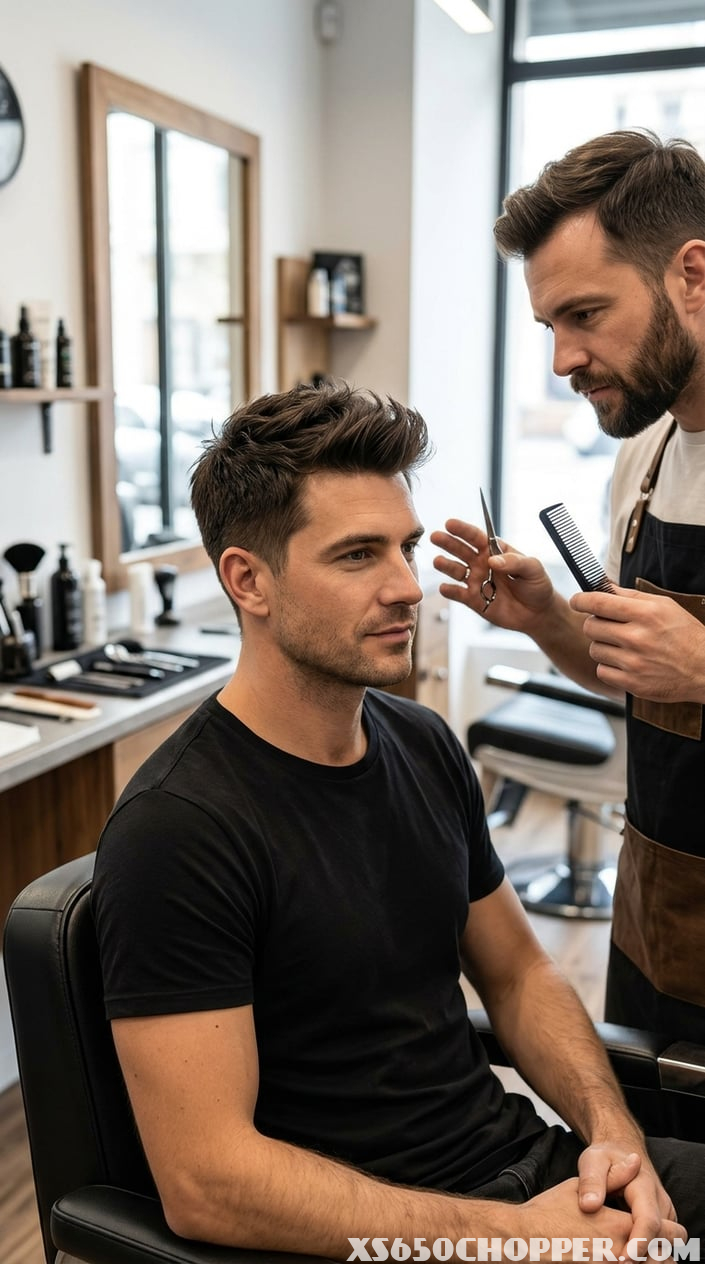
Choose a haircut with lengths and layers that suit your hair’s natural behavior and your preferred routine. A good match lets your hair keep a readable shape as it gains length.
How Does Your Hair Texture Affect the Best Choice?
Your texture influences how a cut sits as it grows. Straight hair shows changes in length clearly, so a taper or layered shape helps maintain definition. Wavy and curly hair gains visible volume as it lengthens, making layers useful for managing bulk and supporting movement.
Tell your barber how your hair behaves after washing and drying. That helps them plan the shape around your natural wave, curl, or growth pattern.
How Much Styling and Upkeep Do You Want?
A crew cut, buzz cut, or textured crop calls for little daily styling. Medium and longer cuts need more time for detangling and shaping, especially when you wear them loose.
Consider how often you want a barber appointment, too. A soft taper or layered style lets you keep length while periodic trims maintain the outline.
How to Maintain Your Haircut as It Grows
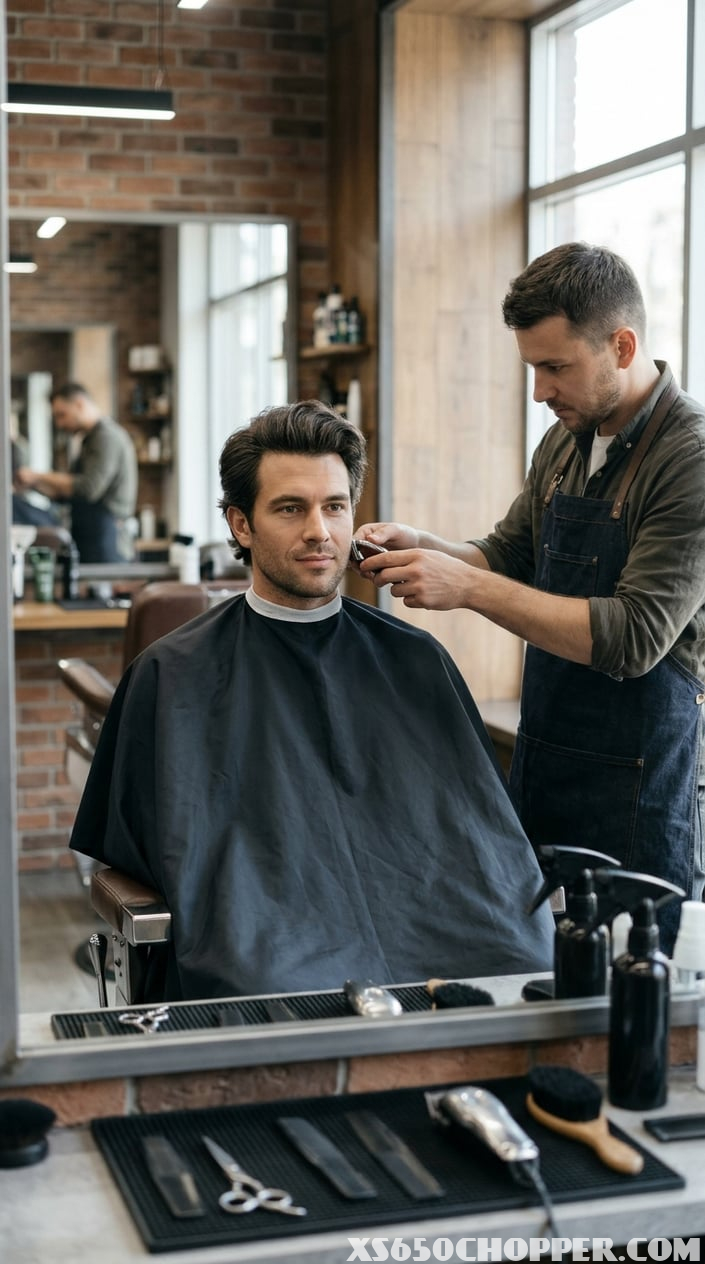
Maintain your haircut by preserving its shape with small, targeted trims as the length changes. Regular care helps keep the outline balanced while you work toward your preferred length.
When Should You Get a Maintenance Trim?
Book a trim when the sides start to puff out, the fringe interferes with your styling, or the neckline loses its shape. Short cuts need more frequent shaping to keep their outline crisp; longer styles can go longer between appointments when the layers still fall as intended.
If you’re growing your hair, tell your barber your length goal before the cut. They can clean up the edges and ends while preserving the length you’re building.
What Should You Ask Your Barber to Leave Alone?
Ask your barber to preserve the top length, fringe, or layers you’re growing, and identify any areas that need only a light cleanup. Be specific about your goal, such as keeping the sides soft or maintaining length at the nape.
Bring a reference photo that shows the shape you want at its current length. That gives your barber a clear guide for which edges to refine and which sections to leave untouched.