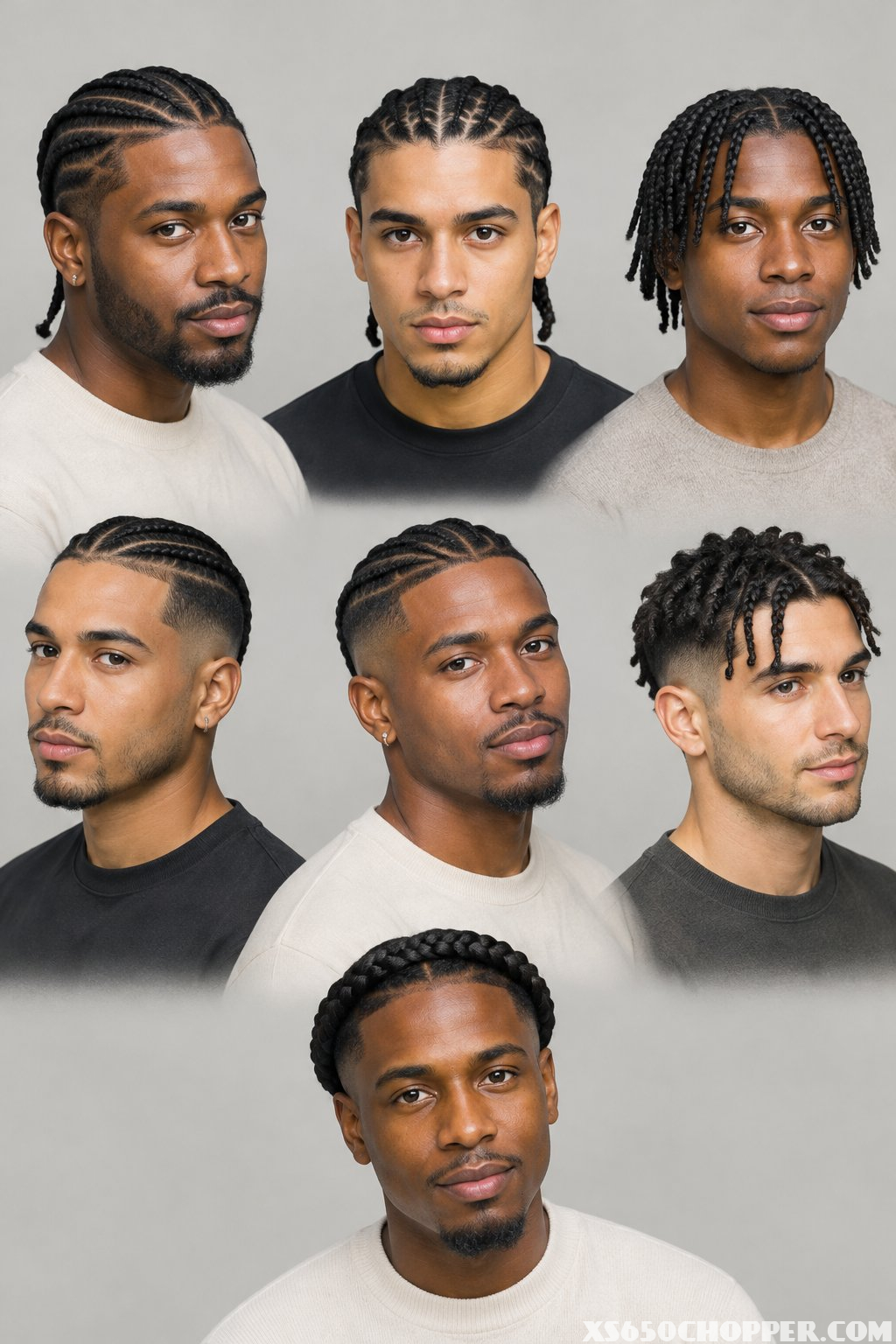
You can choose from 17 braids for men with short hair, including scalp-hugging cornrows, two-strand twists, and short box braids. These styles use clean parting and braid direction to give shorter cuts definition, with fades and tapers adding extra contrast.
Your hair needs enough length for a stylist to grip and secure each section. Share your preferred pattern and the amount of upkeep you want, then ask the braider to check your length and scalp comfort before starting.
1) Straight-Back Cornrows
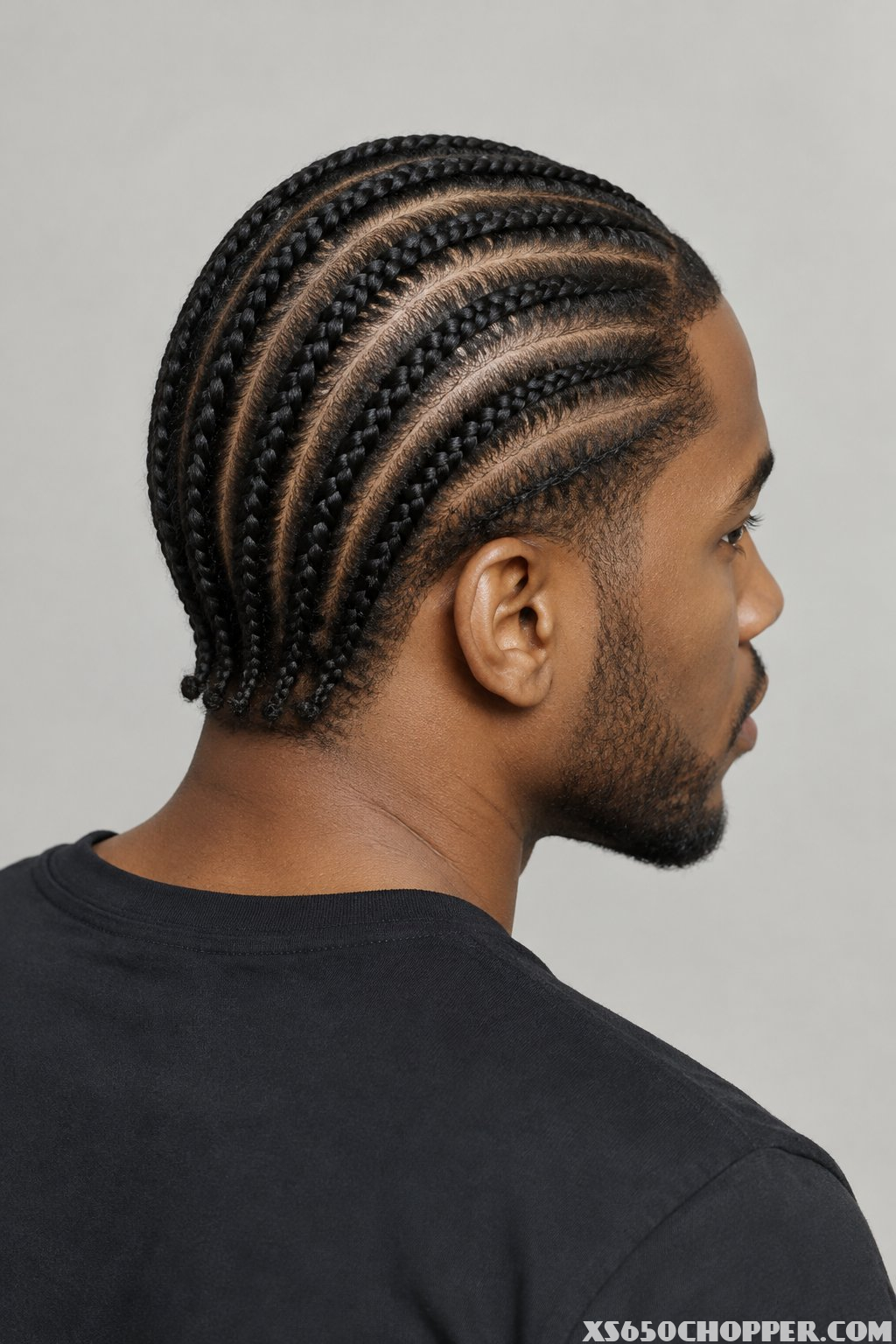
Straight-back cornrows give you a crisp, low-profile style with parallel rows running from your hairline toward the crown. The simple layout puts the parting and braid neatness in focus, so it suits short hair especially well.
Ask your braider to map the rows to your head shape and keep the braid size consistent. You can choose a few larger cornrows for a bolder look or more narrow rows for added detail.
PRO TIP
Bring a clear reference showing the row count and direction you want, and tell your braider if any area feels tender during the appointment.
2) Cornrows With a Low Fade
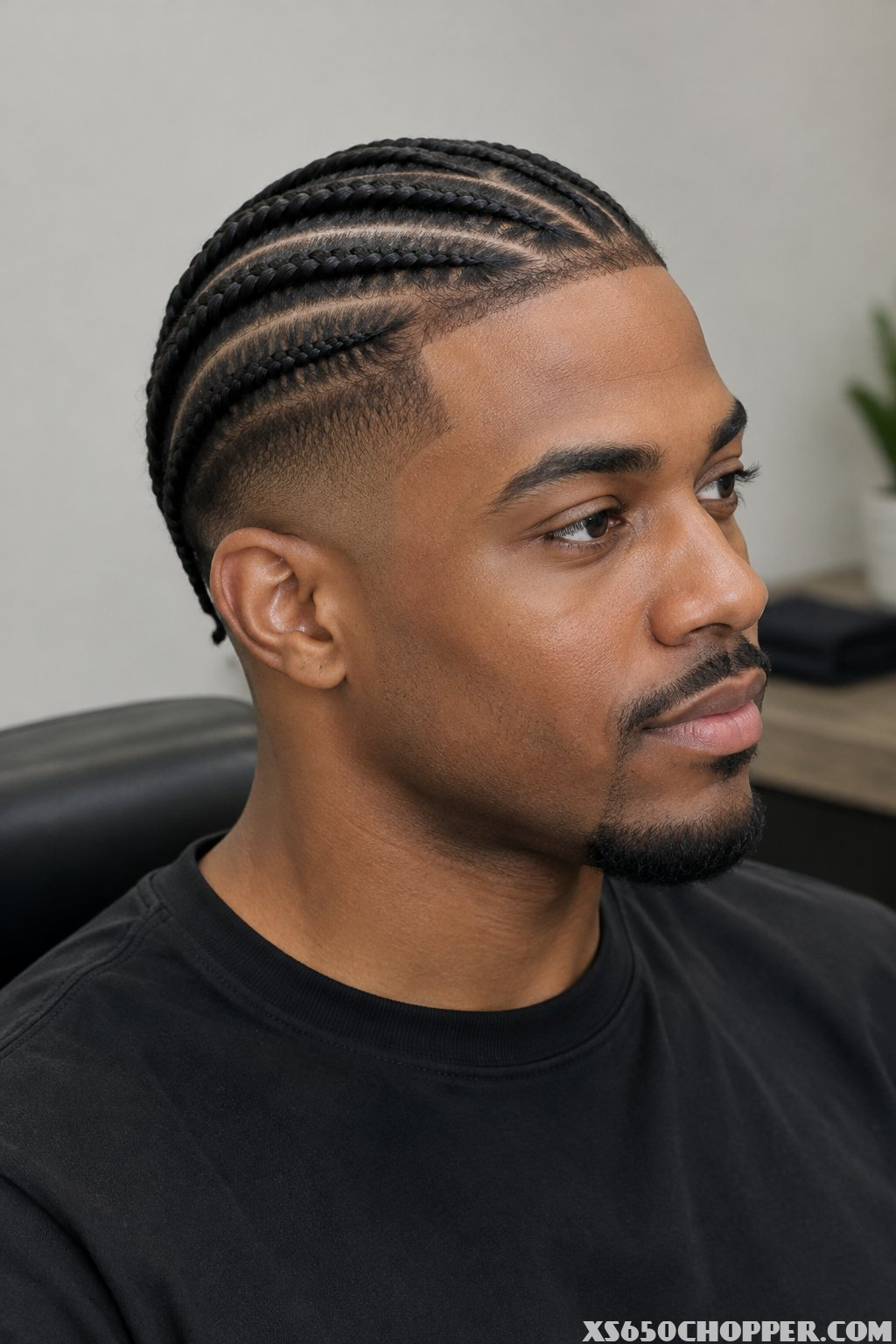
A low fade pairs neat cornrows with a gradual cut that stays close to the ears and neckline. The braid pattern remains the focus while the lower sides look clean and defined.
Choose this combination if you want visible scalp detail on top with a subtle fade around the edges. Have your barber coordinate the fade height with your cornrow start points for a tidy transition.
PRO TIP
Book the haircut before braiding, or coordinate both services so the fade line and braid parts align cleanly.
3) Stitch Braids
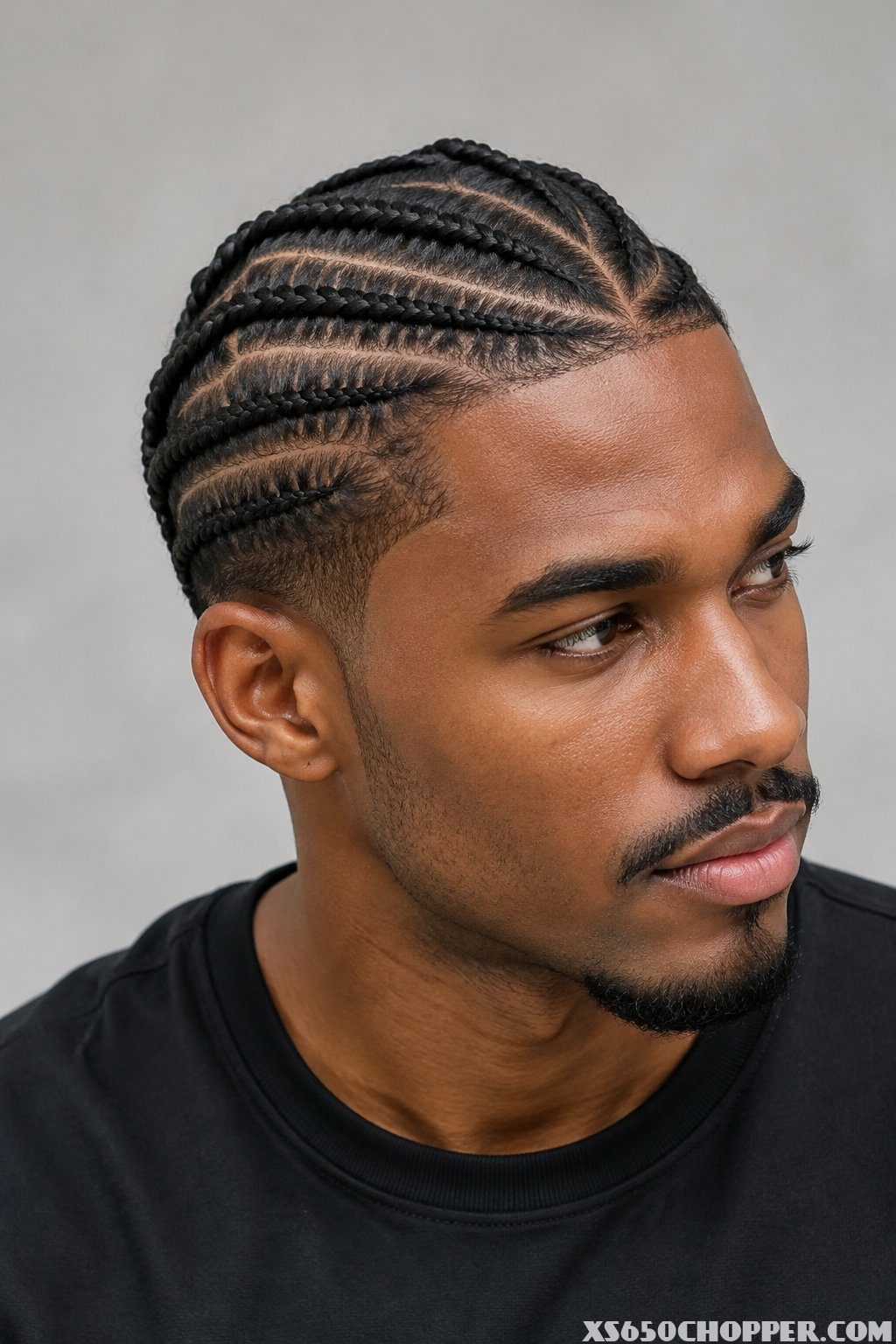
Stitch braids use sharply defined part lines that create a precise, segmented look across your scalp. They bring extra structure to short hair without needing long hanging braids.
This pattern works well when you want a clean, graphic finish. Your braider can vary the number and width of the rows to suit your hair density and the space available on your head.
PRO TIP
Ask for clear parting and comfortable tension; a crisp pattern should feel secure without pulling at your hairline.
4) Zigzag Cornrows
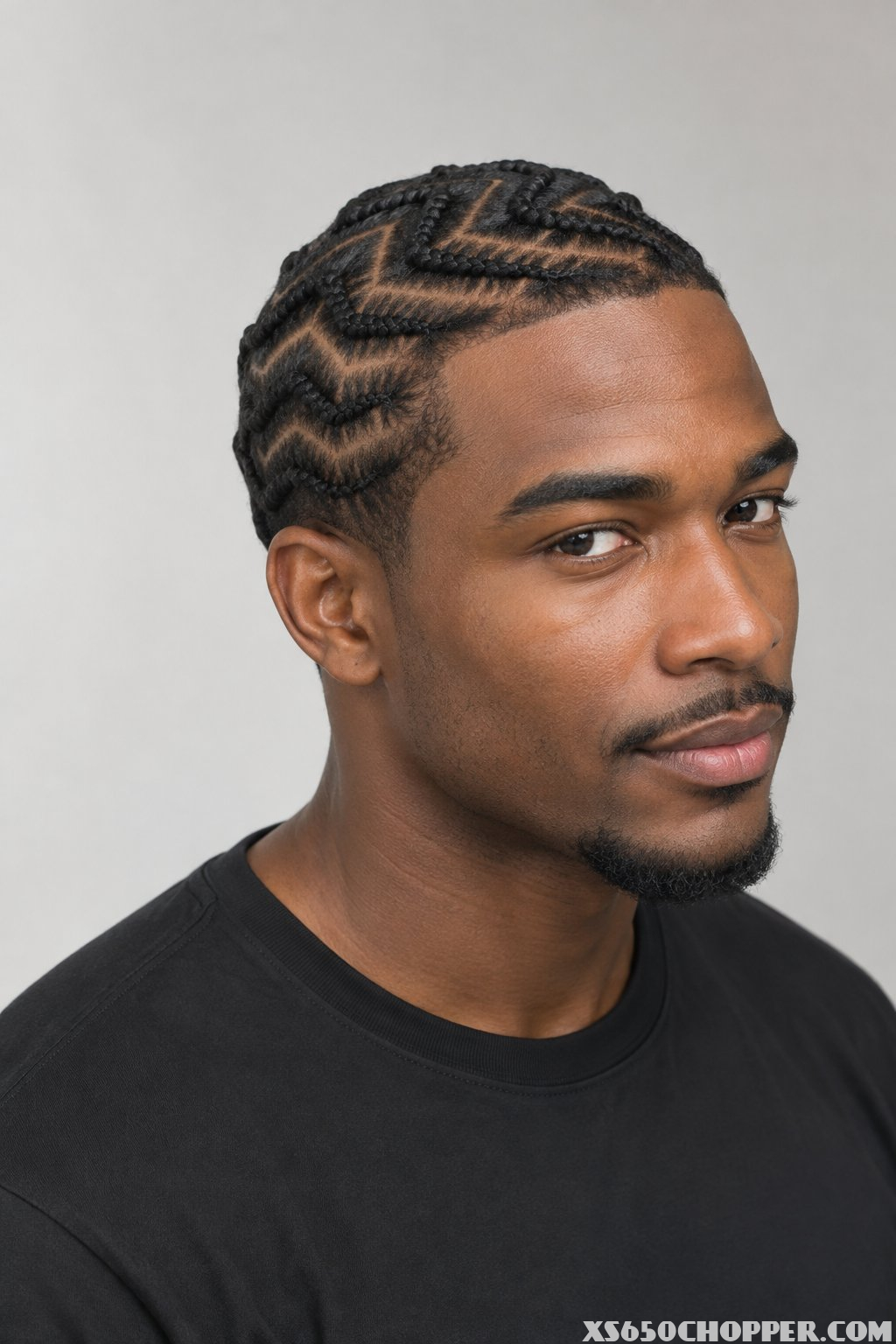
Zigzag cornrows bring movement to your style through rows that change direction across the scalp. The geometric pattern stands out on short hair, where each part remains easy to see.
Show your braider whether you want a subtle zigzag or a more intricate layout. A smaller number of wider rows can make the design easy to read, while tighter sections add detail.
PRO TIP
Keep the rest of your cut simple so the zigzag pattern has room to stand out.
5) Curved Cornrows
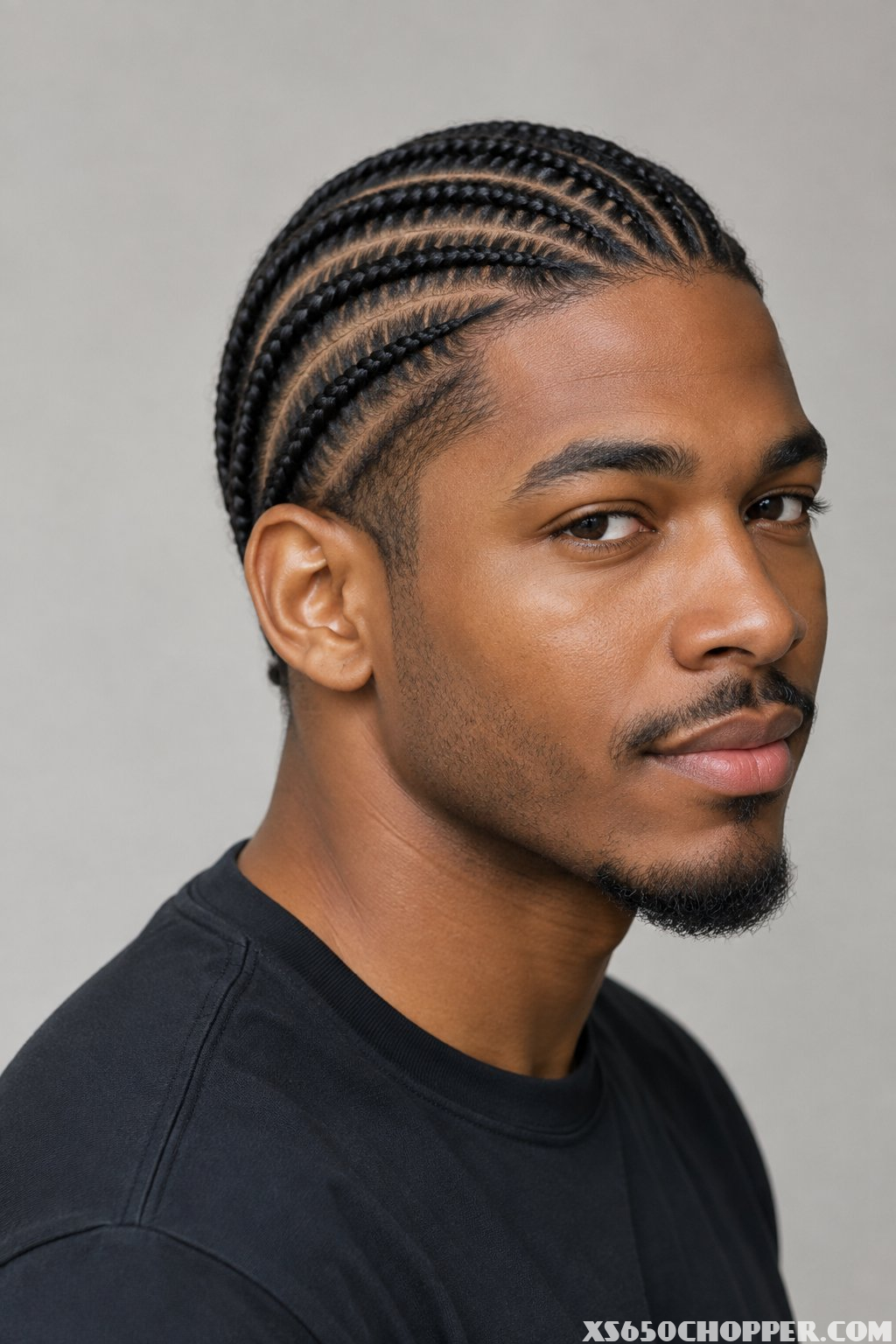
Curved cornrows trace sweeping lines across your scalp for a softer, more fluid pattern. They offer a distinctive alternative to straight rows while keeping the hair close and manageable.
Ask your braider to shape the curves around your crown and natural hairline. This approach helps the design follow your head’s contours and keeps the rows balanced from different angles.
PRO TIP
Choose a simple curve layout if your hair is very short, since wider sections make the pattern easier to define.
6) Feed-In Cornrows
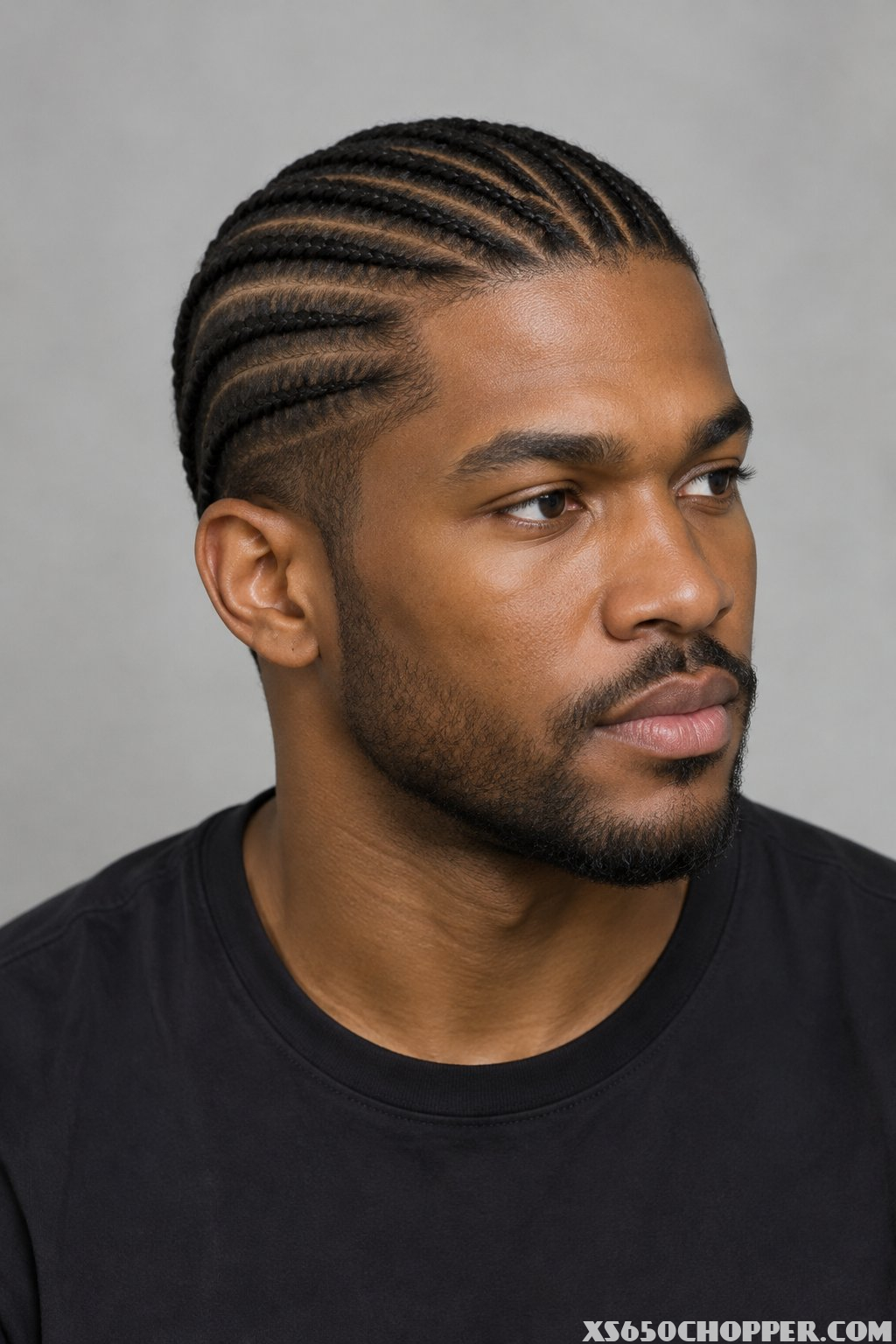
Feed-in cornrows build gradually from the hairline, creating a smooth start and an even braid. Your stylist can use the technique to add length or fullness while keeping the rows streamlined.
This option suits you if your hair is short and you want longer-looking cornrows. Discuss added hair, color, and the finished length before the appointment so the result matches your routine and preferred look.
PRO TIP
Ask your braider to keep added hair lightweight and to check that the first few stitches feel comfortable at your hairline.
7) Cornrows With a High Fade
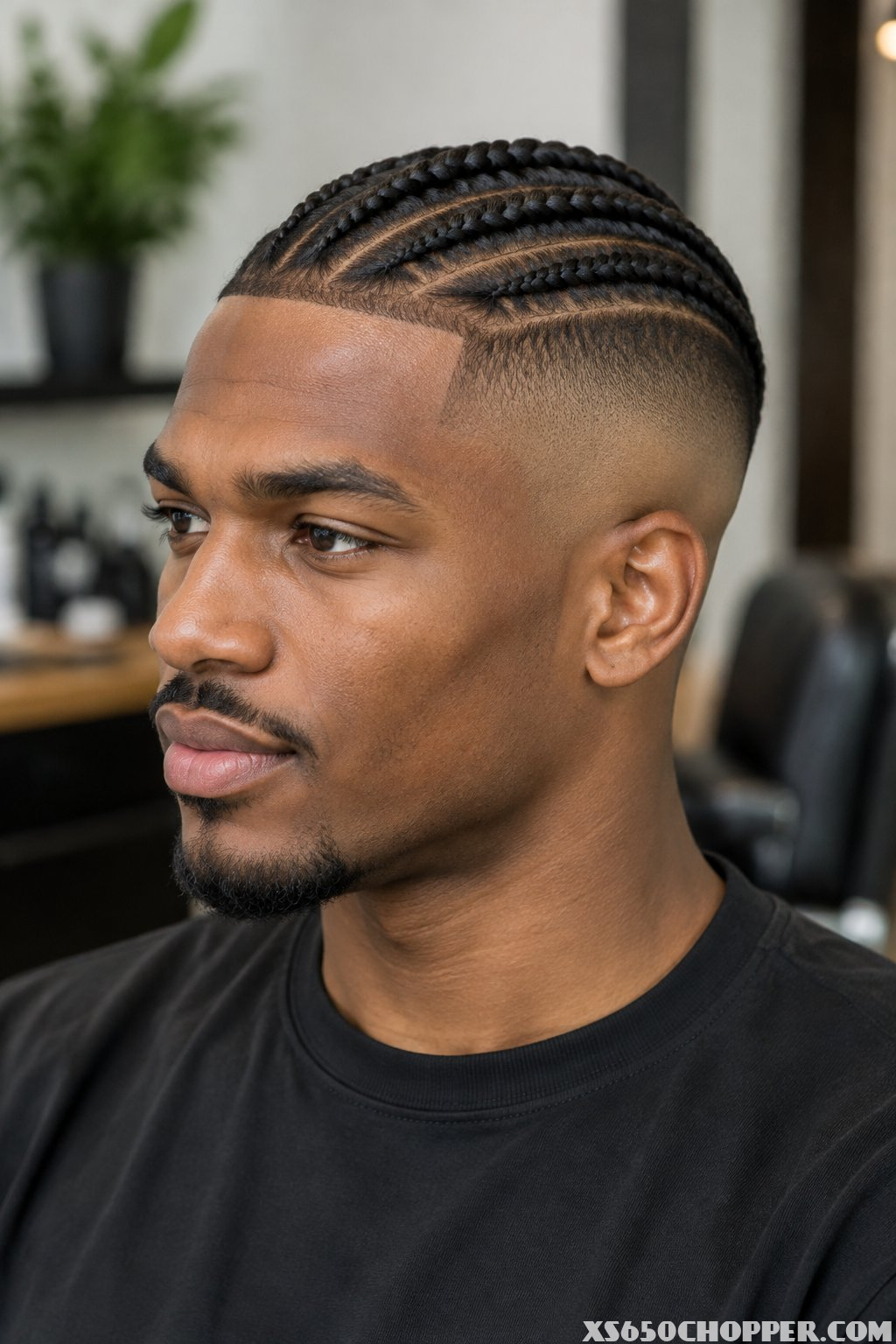
A high fade creates a strong contrast between short sides and cornrows on top. The exposed sides make the braid layout prominent and give your cut a sharp outline.
This pairing works best when you want a bold, defined shape. Tell your barber how high you want the fade to sit, since that choice changes the balance between the braids and the cut.
PRO TIP
Ask for the braid pattern to suit the top section that remains after the fade is shaped.
8) Two-Strand Twists
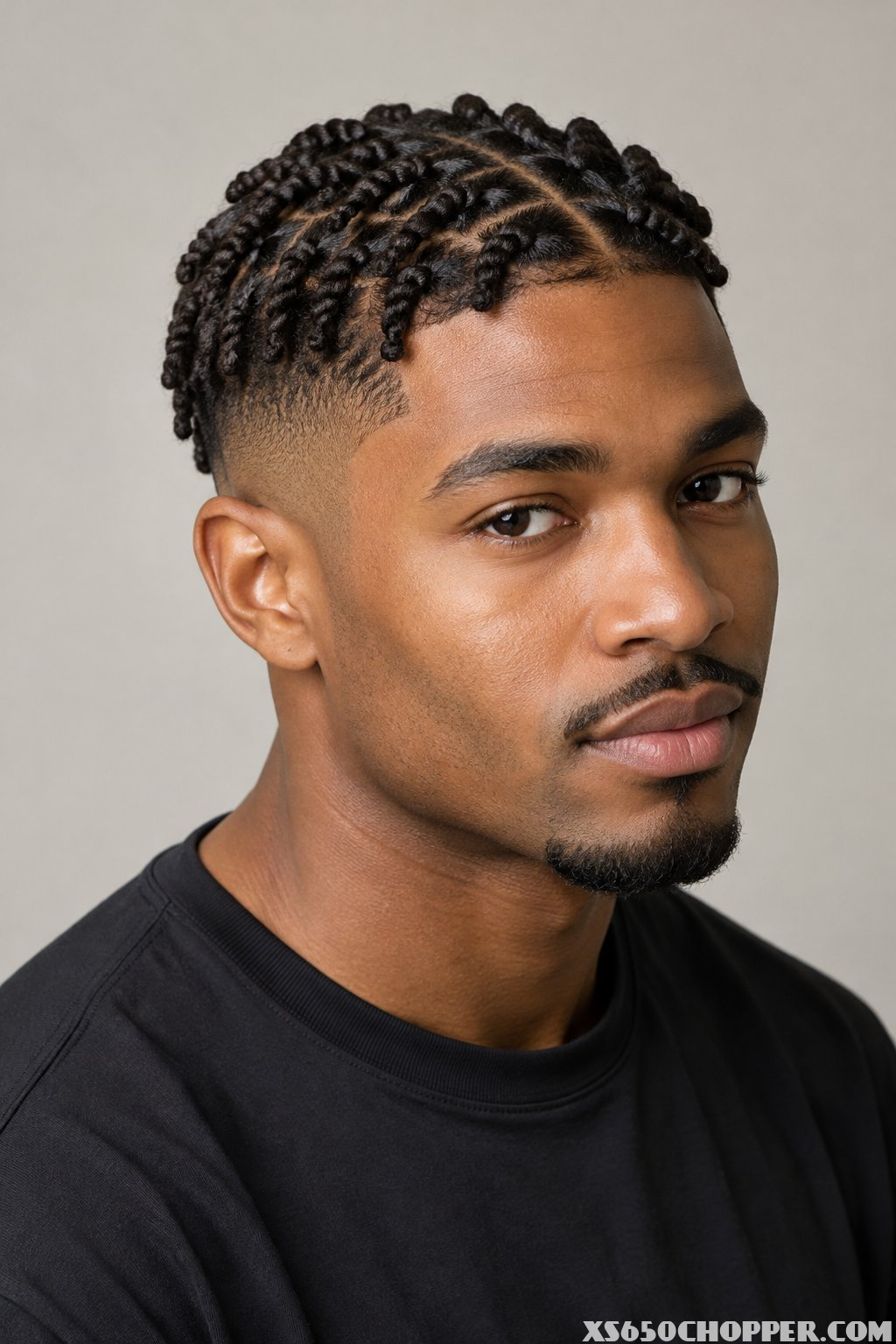
Two-strand twists give short hair a textured look with each section formed by winding two strands together. They create visible definition across the scalp and offer a softer finish than tightly laid cornrows.
Your hair’s curl pattern and length affect how clearly each twist holds. Ask your stylist to size the sections for your density and desired amount of definition.
PRO TIP
Start with moisturized, detangled hair, and ask for a test twist to confirm the size and feel before the full style.
9) Short Box Braids
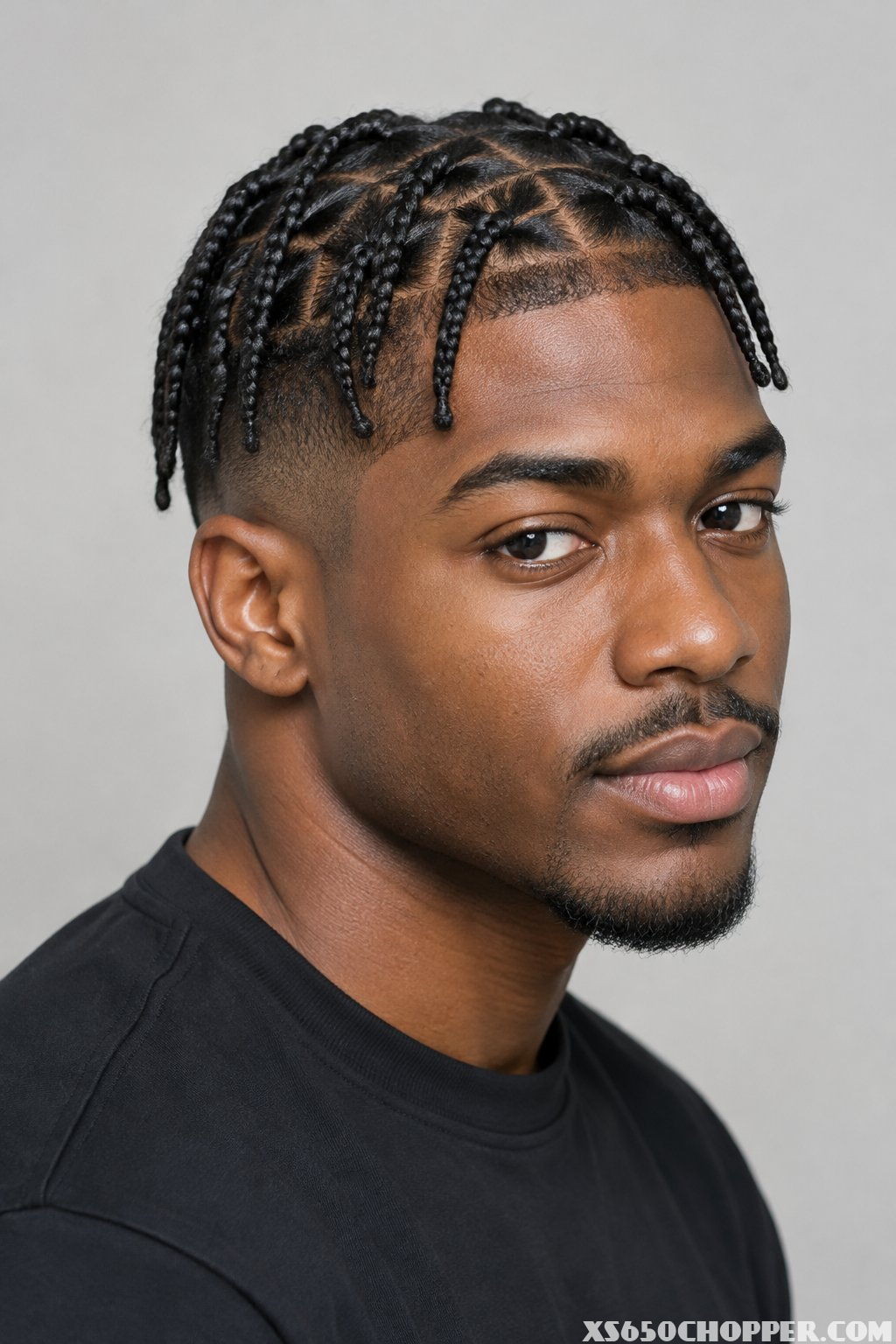
Short box braids divide your hair into individual square or rectangular sections, giving you a defined style with free-hanging ends. Their clean grid adds shape even when the braids stay close to your head.
You can choose smaller sections for a detailed finish or larger ones for a more relaxed appearance. Your stylist can adjust the part size to work with your hair density and available length.
PRO TIP
Keep the sections light and even so the braids sit comfortably and the grid looks balanced.
10) Cornrows With a Temple Fade
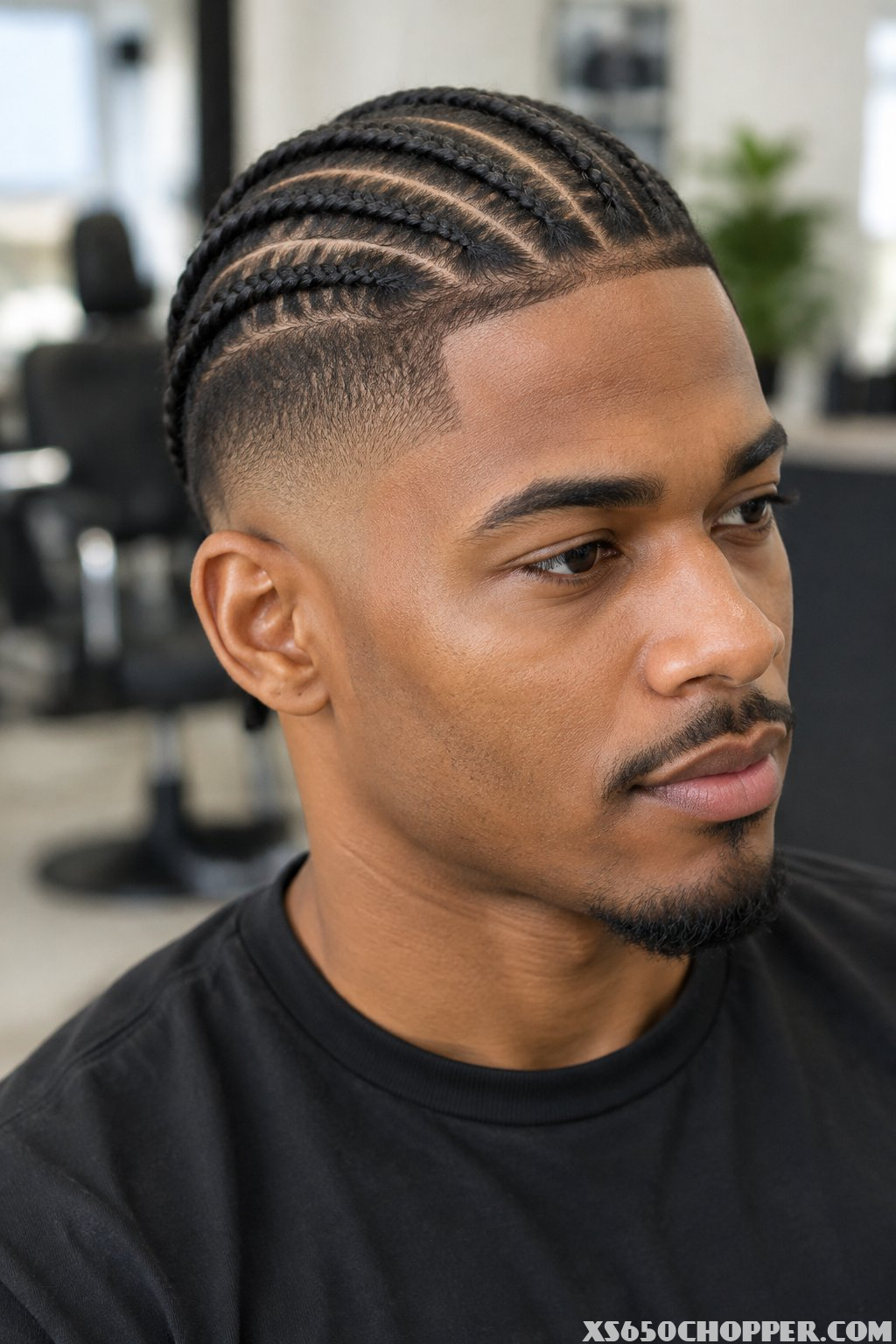
A temple fade cleans up the hair around your temples while leaving most of the sides fuller. Paired with cornrows, it frames your face and gives the front of the style a crisp finish.
Choose this detail if you want a defined hairline with a more gradual change around the sides. Your barber can shape the temple area to complement the direction of your front braids.
PRO TIP
Agree on the hairline shape before the cut, especially if you prefer a natural edge.
11) Diagonal Cornrows
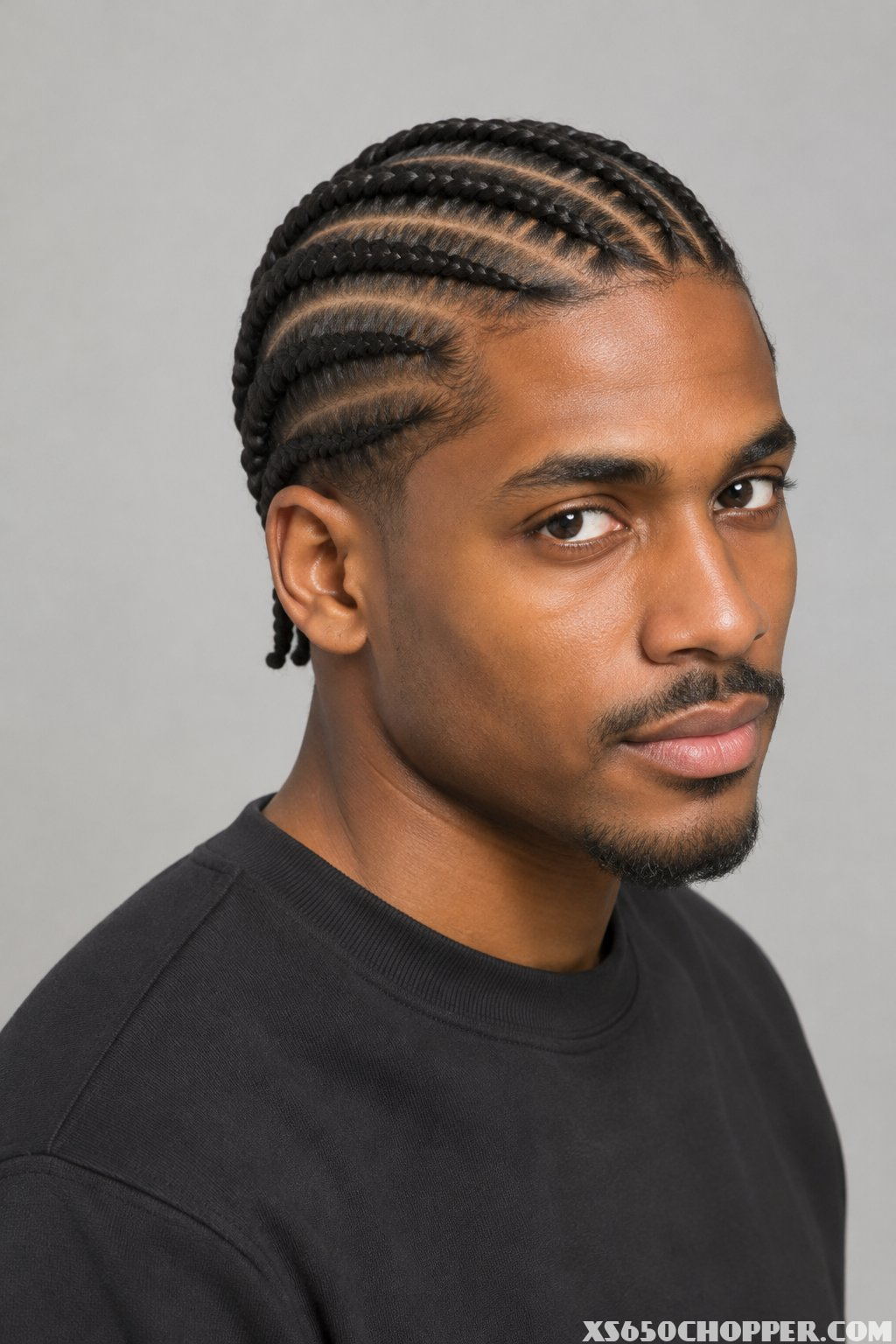
Diagonal cornrows run across your scalp at an angle, adding direction and visual movement to a short style. Their slanted rows create a clear pattern without relying on extra length.
Ask your braider to angle the rows toward the crown or one side, depending on the look you want. Consistent spacing helps the design read clearly from the front and profile.
PRO TIP
Use a reference with the same viewing angle you care about most, since diagonal parts look different from the front and side.
12) Cornrows With a Burst Fade
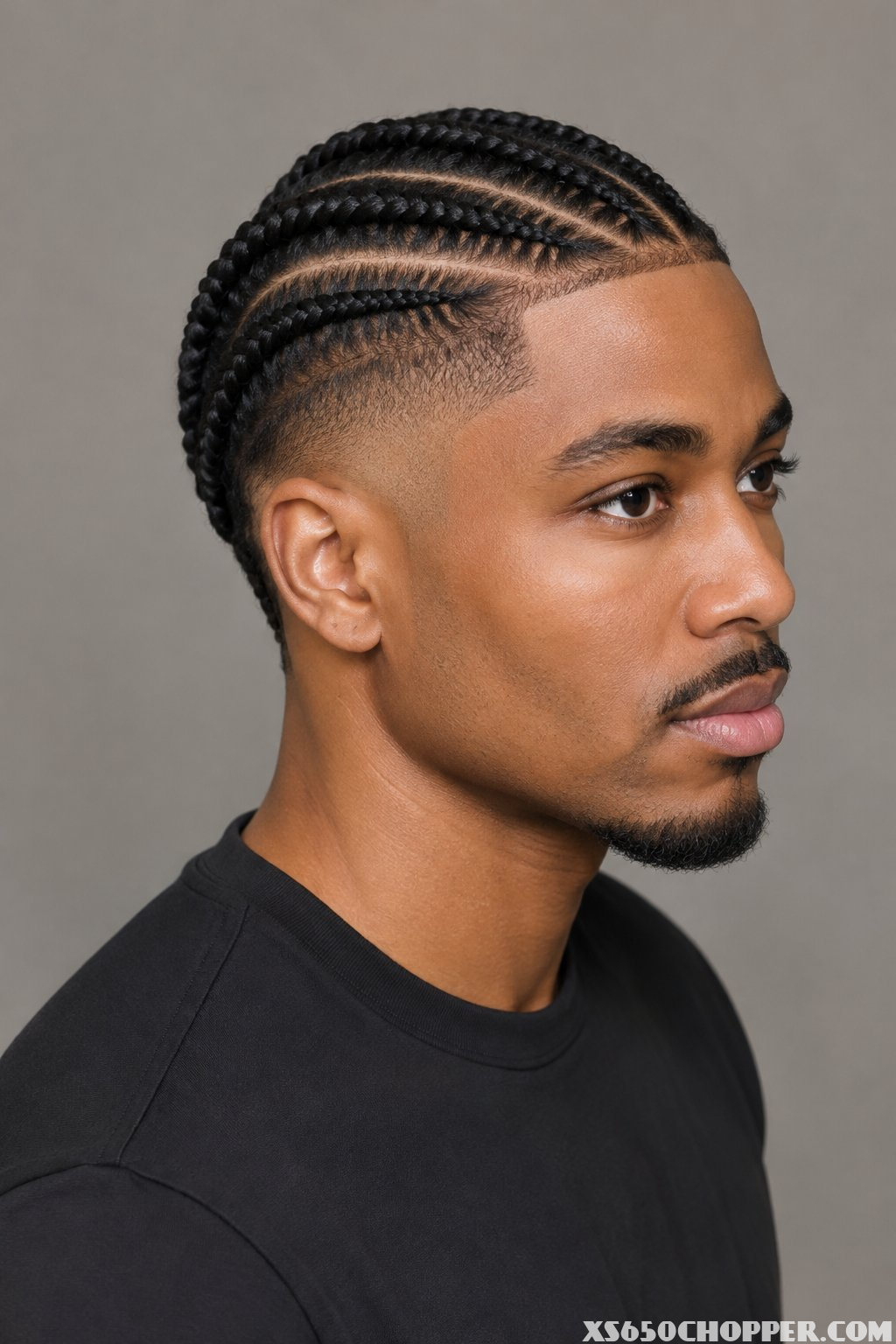
A burst fade curves around the ear, leaving more length toward the back and crown. It adds a rounded, high-contrast frame to cornrows on top.
This pairing suits you if you want a fade with a distinct shape around the ears. Ask your barber to set the curve and fade height to complement your braid layout.
PRO TIP
Confirm how much hair you want left at the back before the fade begins, since that area defines the burst shape.
13) French Braids With a Taper
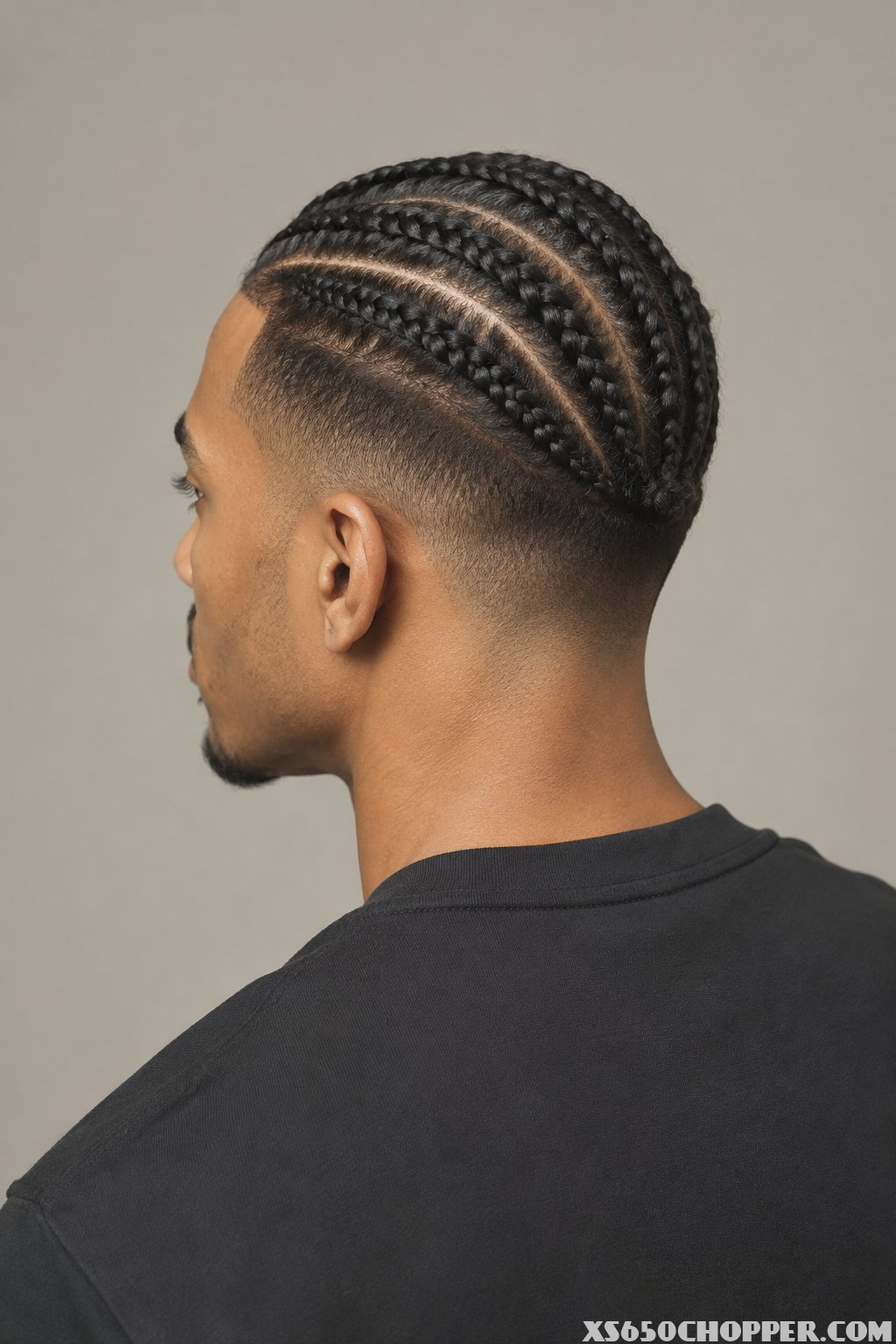
French braids gather hair into each braid as they move along the scalp, while a taper cleans up the sideburns and neckline. The combination gives you a contained, polished style with a neat perimeter.
This look works for short hair that has enough length for your braider to grip and incorporate. Your stylist can shape the taper to keep the edges tidy without taking too much height from the sides.
PRO TIP
Ask for the taper to preserve the hair needed around your braid starts and ends.
14) Dutch Braids With a Fade
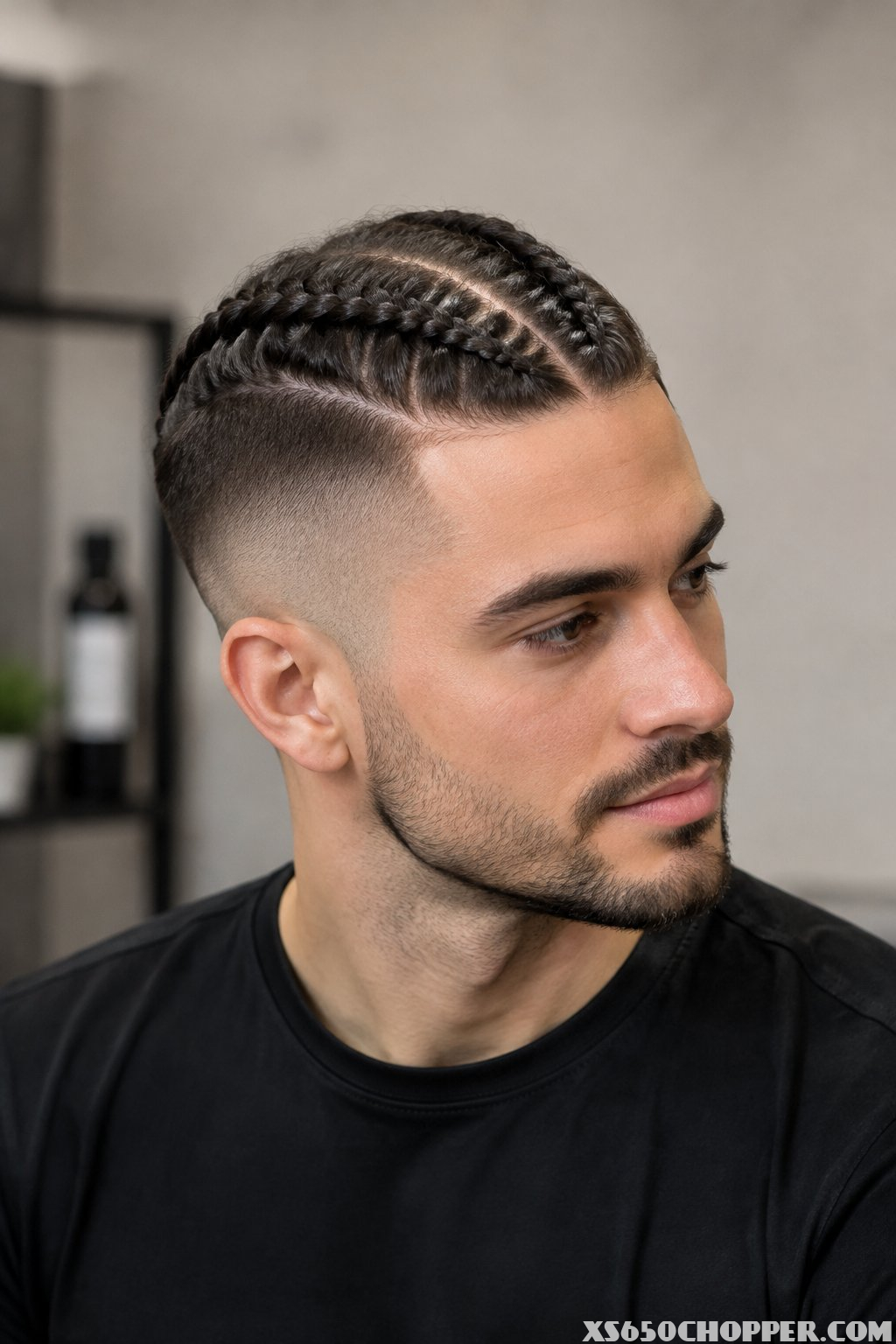
Dutch braids sit raised above the scalp because the strands cross under one another as the braid forms. A fade sharpens the outline and gives the raised rows extra definition.
Choose this style when you want braids with visible dimension and a clean cut around the sides. Your braider can adapt the braid count to the top length and width of your head.
PRO TIP
Keep the fade and braid schedule coordinated so fresh edges do not disrupt the finished pattern.
15) Cornrows Into a Short Ponytail
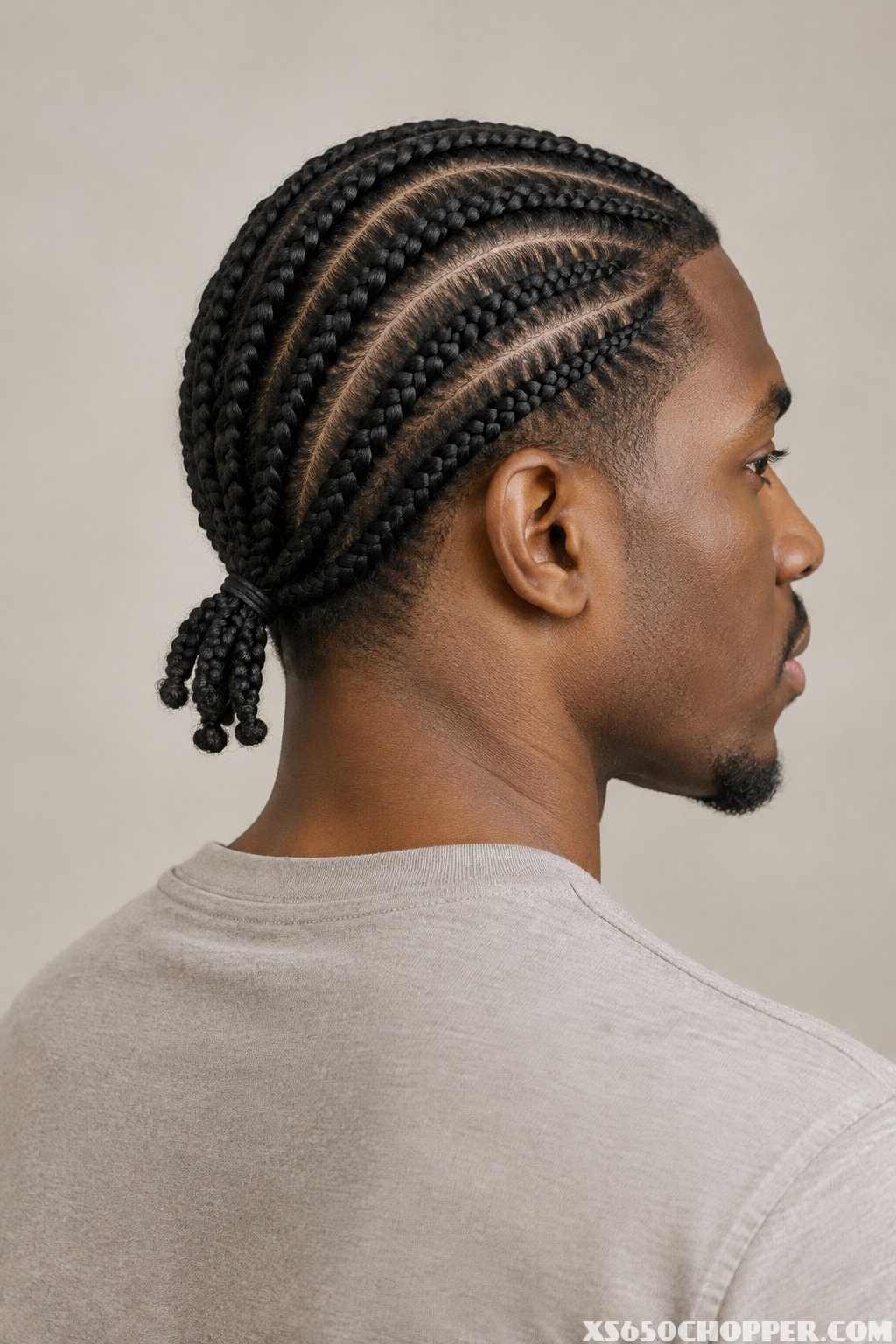
Cornrows gathered into a short ponytail keep the sides and top organized while pulling the ends together at the back. You need enough length at the crown and back to secure the gathered braids.
Ask your braider to check the ponytail length before starting and to place the rows so they meet comfortably. A small elastic or wrap keeps the ends collected without adding much bulk.
PRO TIP
Keep the tie loose enough to avoid strain at the point where the braids gather.
16) Cornrows With a Braided Design
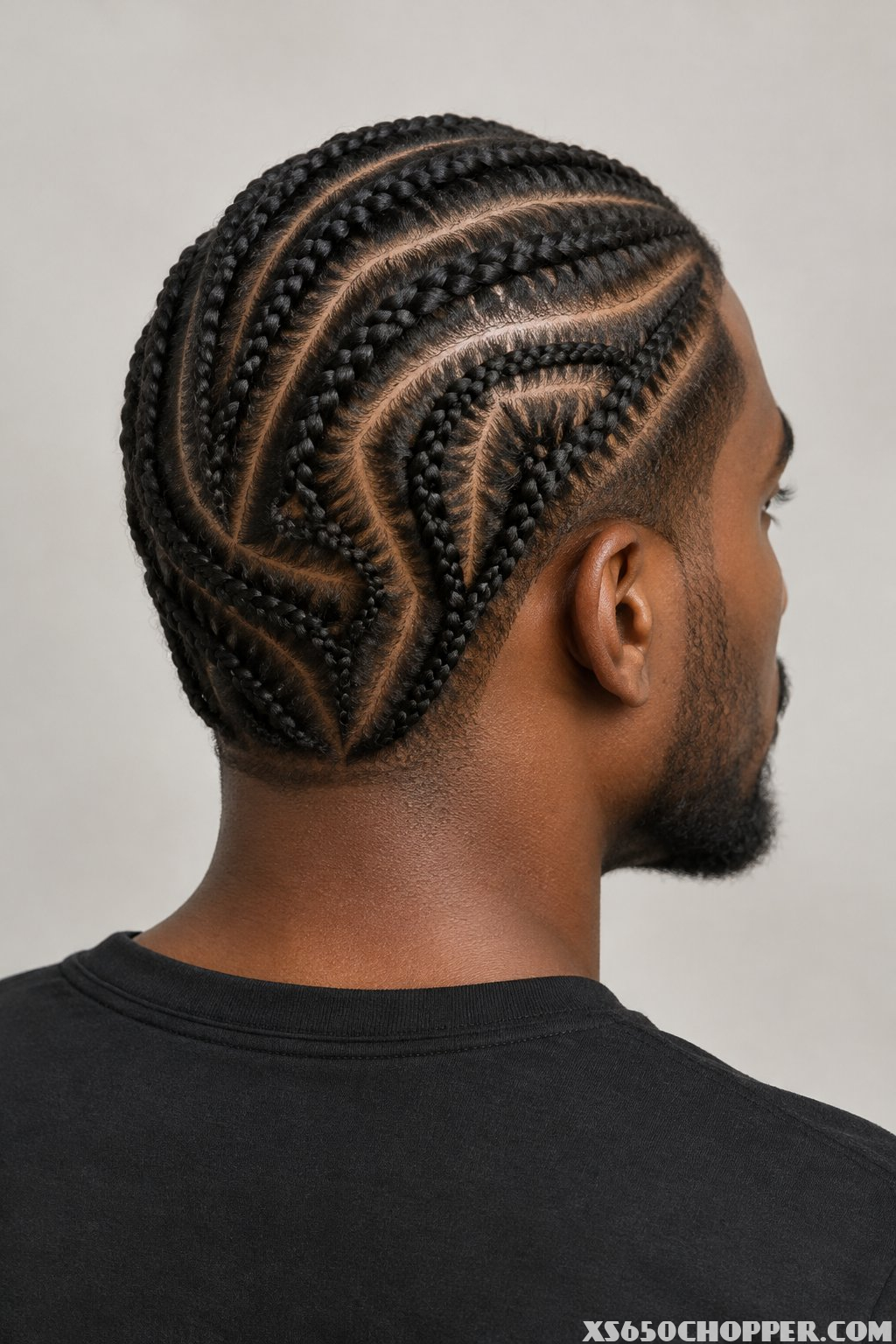
Cornrows with a braided design combine functional rows with a focal pattern, such as intersecting lines or a curved accent. The design gives short hair a custom look through parting and braid direction.
Share a reference and ask your braider how the pattern will sit with your hairline and crown. A compact design with clear sections stays legible on a shorter top.
PRO TIP
Choose one main design element so the pattern remains easy to see as the braids settle.
17) Short Braids With a Line-Up
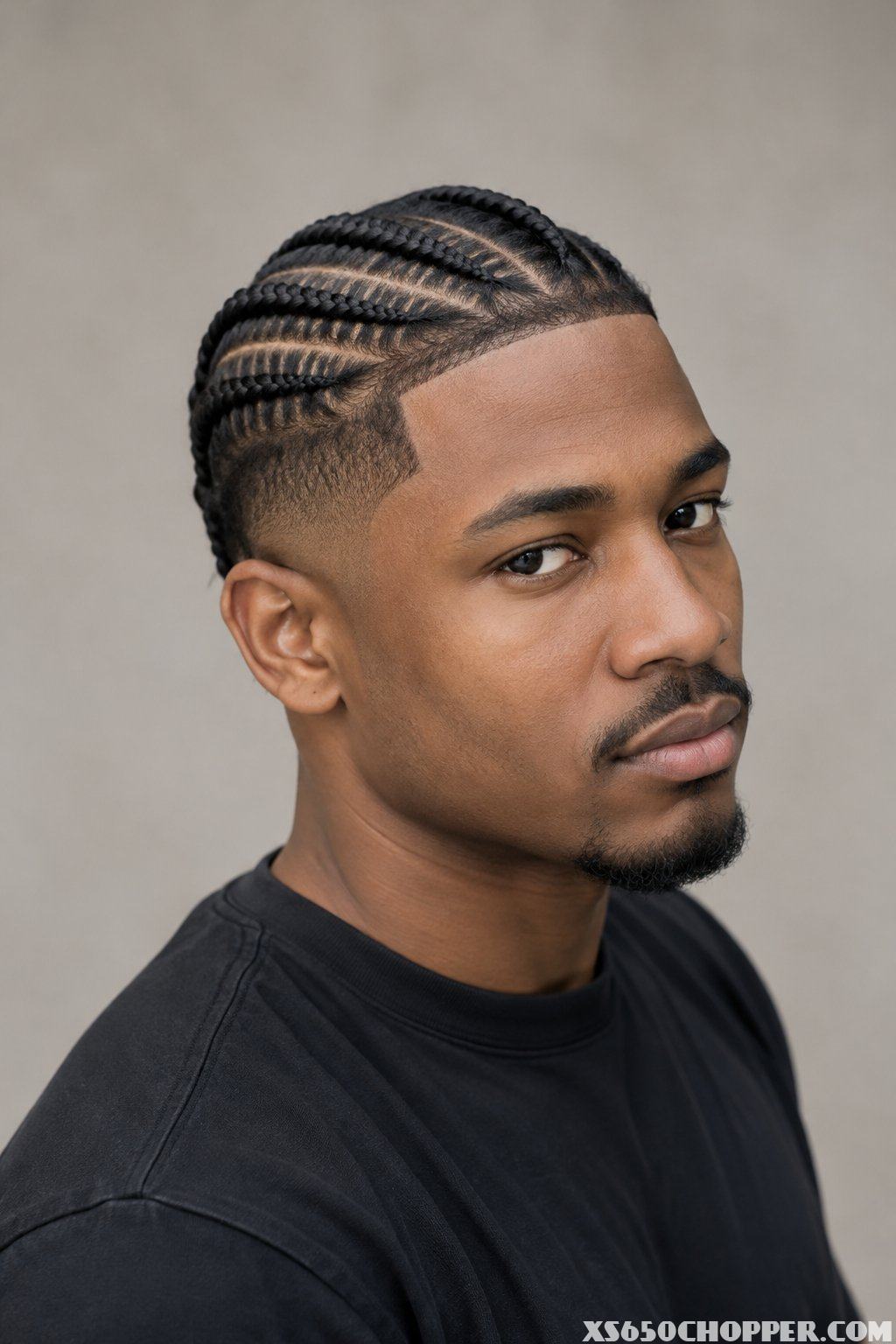
A line-up gives short braids a crisp frame around the forehead and temples. The sharp outline adds definition to a simple braid pattern and works with cornrows or individual braids.
Ask your barber for an edge shape that complements your natural hairline. You can keep the braid pattern understated and use the line-up as the main detail.
PRO TIP
Request a light touch around the hairline to preserve its natural shape.
Choosing Braids for Short Hair
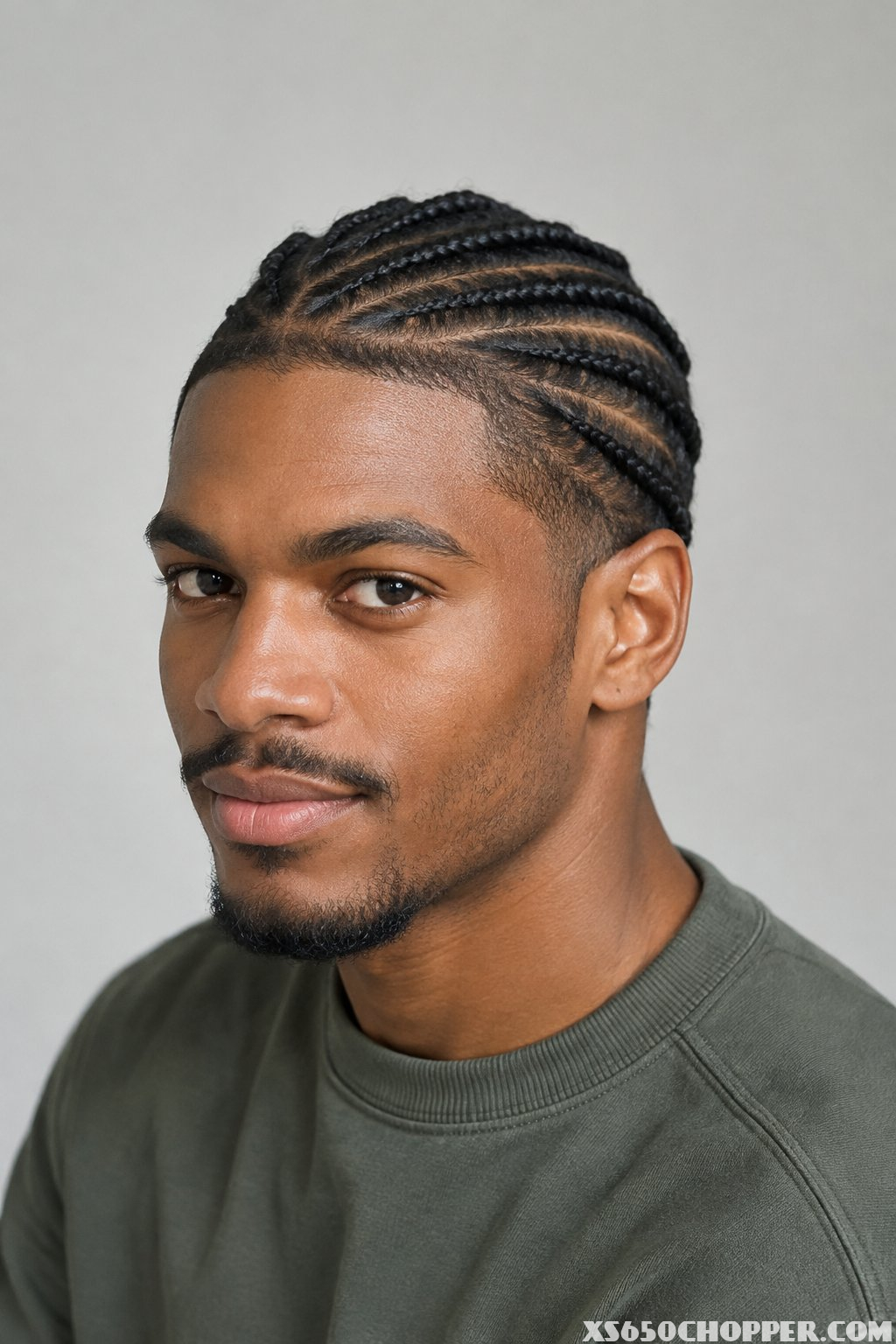
Choose a braid style that fits your available length, preferred pattern, and approach to fades or tapers. A braider can assess whether your hair will hold the design comfortably.
How Much Length Do You Need?
Your braider needs enough length to grip each section and secure the braid. The required length varies with texture, shrinkage, braid type, and section size, so an in-person assessment gives you the clearest answer.
If your hair is close-cropped, ask about styles that suit your current length or whether you want to grow it out first. Avoid choosing a pattern from a reference without checking how its length compares with yours.
Which Braid Pattern Suits Your Hair and Face Shape?
A straight-back or diagonal pattern gives you clear direction, while curved and zigzag rows create a more graphic effect. Your face shape can help guide where the rows begin and how they frame your temples.
Show your braider your hairline and crown, then discuss row size and direction. Hair density and growth patterns also influence how a design sits.
When Should You Choose a Fade or Taper?
Choose a fade for more contrast around the sides, or a taper for a smaller, more gradual cleanup at the edges. Your choice affects how much hair remains around the braid pattern.
Discuss the cut before braiding so the fade or taper and the rows work together. If you want to keep more coverage at the sides, ask your barber for a lower, softer finish.
Preparing for Braids and Maintaining Them
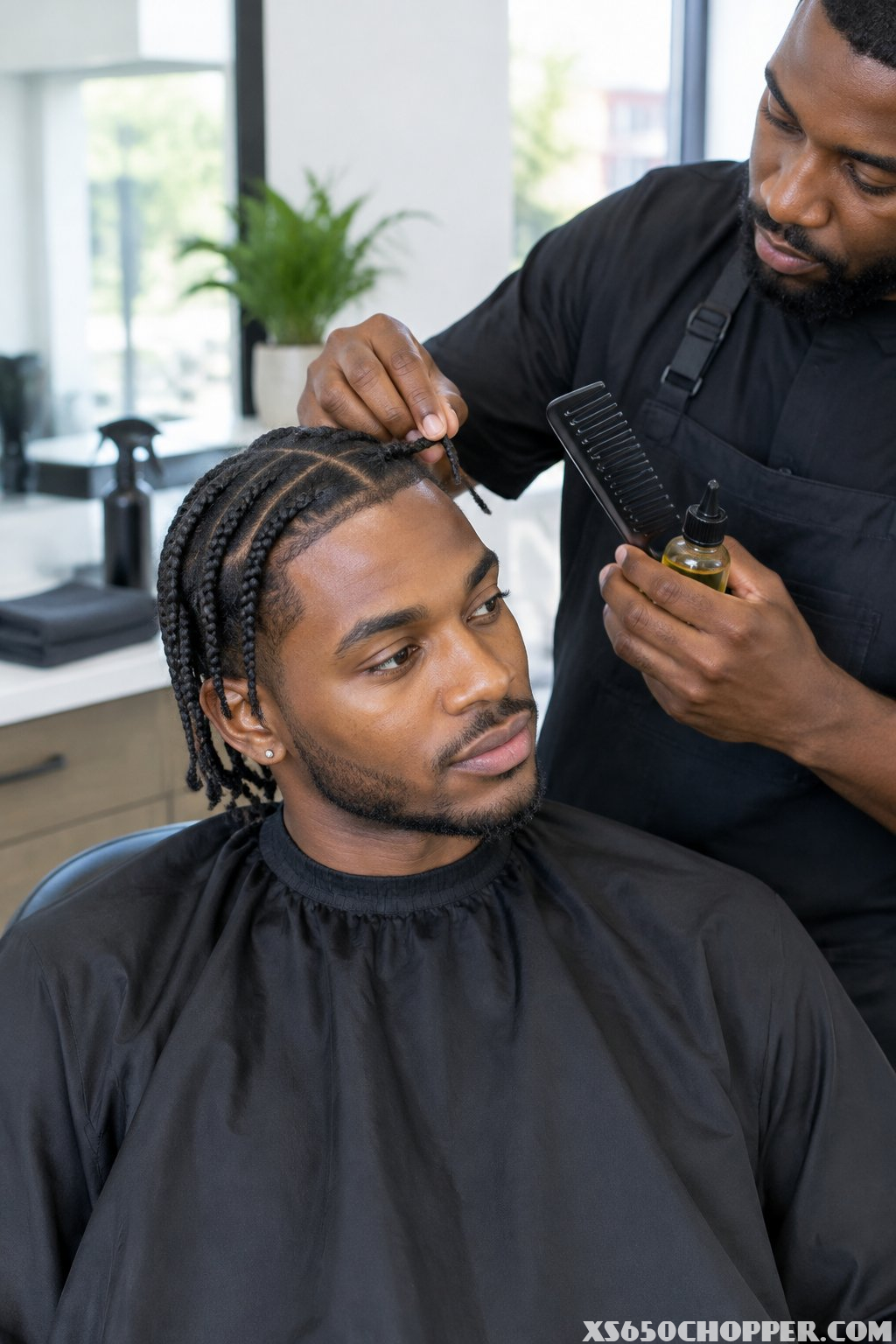
Prepare your hair and scalp before the appointment, then keep the braids clean and comfortable while you wear them. Pay attention to tenderness, itching, and buildup so you know when to adjust your routine or take the style down.
How Should You Prepare Your Hair and Scalp?
Arrive with clean, detangled hair and a comfortable scalp. Follow your braider’s guidance on washing and conditioning, and mention any irritation or sensitive areas before the service begins.
Bring a reference for the pattern and discuss braid size, length, and any added hair. This helps your stylist plan the parts and estimate the time required.
How Can You Keep Braids Neat Without Excess Tension?
Cover your braids with a satin scarf or bonnet while you sleep to limit friction. Clean your scalp gently with a diluted shampoo or a product recommended by your braider, then dry it thoroughly.
Use light moisture on your scalp and braids as needed. Persistent soreness, bumps, or a pulling sensation call for prompt adjustment or removal.
When Should You Take Braids Down?
Take your braids down when they loosen, collect buildup, or cause ongoing discomfort. Your hair and scalp condition, braid size, and style all affect how long the look stays comfortable.
Undo the braids gently and detangle in sections, working from the ends toward the roots. Cleanse and condition your hair after removal, then give your scalp a break before another tightly styled look.