
A fade changes how much contrast you see around the sides and back, so choosing its starting point shapes the whole cut. You can choose from eight guy haircut fades: low taper, low, mid, high, burst, drop, temple, and skin fades.

Choose a low fade for a subtle outline, a mid or high fade for more visible contrast, or a burst fade to emphasize a rounded shape around your ear. Your top length and texture help determine which version will look balanced.
Quick picks:
- Best subtle option: Low Taper Fade
- Best balanced contrast: Mid Fade
- Best bold contrast: High Fade
- Best rounded outline: Burst Fade
1) Low Taper Fade

A low taper fade keeps most of your sides full while cleaning up the hair around your temples and neckline. It suits you if you want a neat edge with a restrained transition.
Because the taper affects a smaller area, you can pair it with a range of top styles, including curls, waves, and a textured crop. Ask your barber to keep the taper low and preserve the shape above your ears.
PRO TIP
Bring a clear reference for the temple and neckline finish, since “low taper” can describe different amounts of cleanup.
2) Low Fade
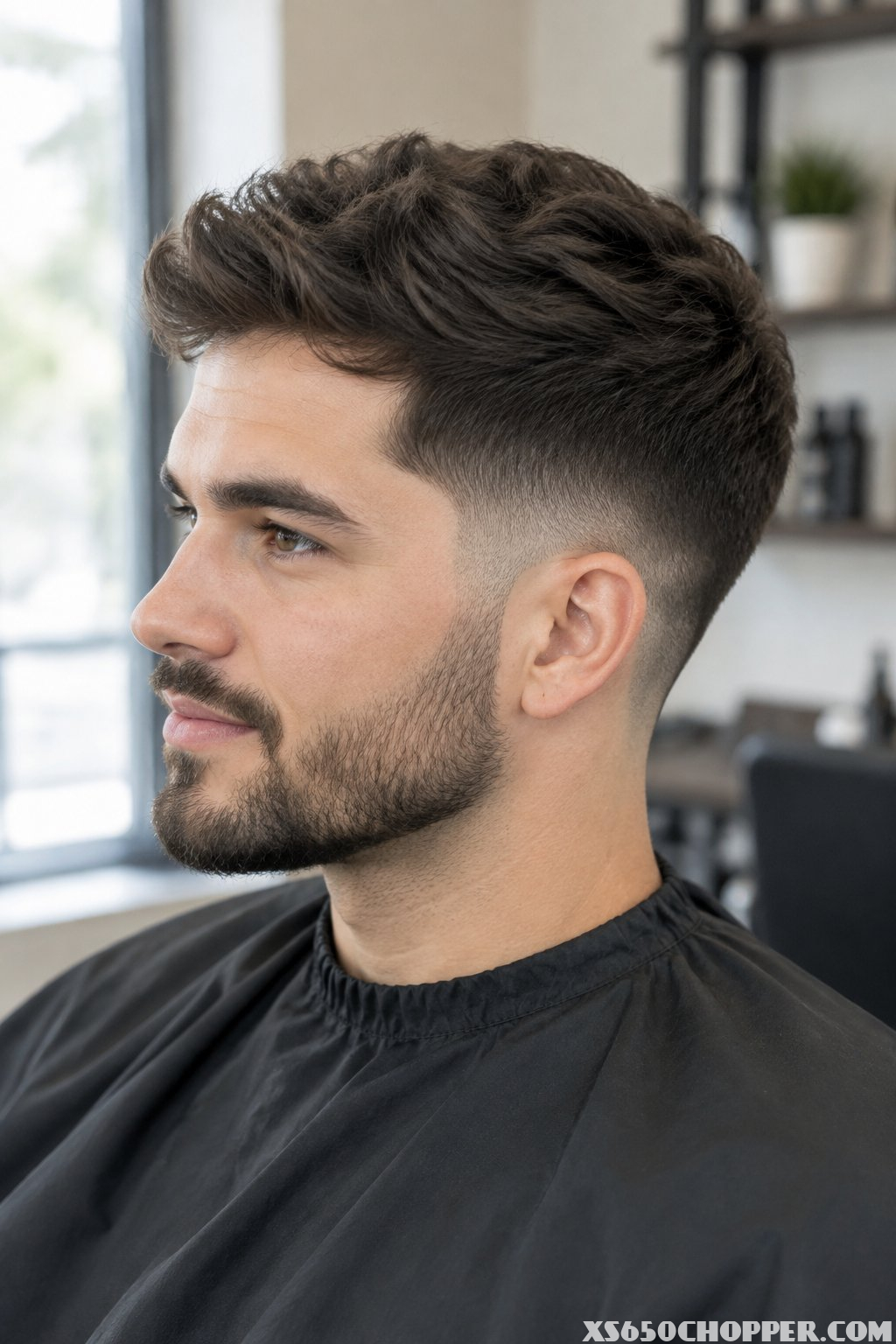
A low fade begins just above your ears and follows the lower edge of your head. It gives you a clean outline while leaving more hair visible on the sides than a mid or high fade.
Choose this placement if you want a measured change in contrast that works with a side part, short curls, or a longer top. Tell your barber how close you want the fade to reach the skin, since the height and finish are separate choices.
PRO TIP
Ask for a low fade that follows your natural head shape if you want the sides to retain a fuller appearance.
3) Mid Fade
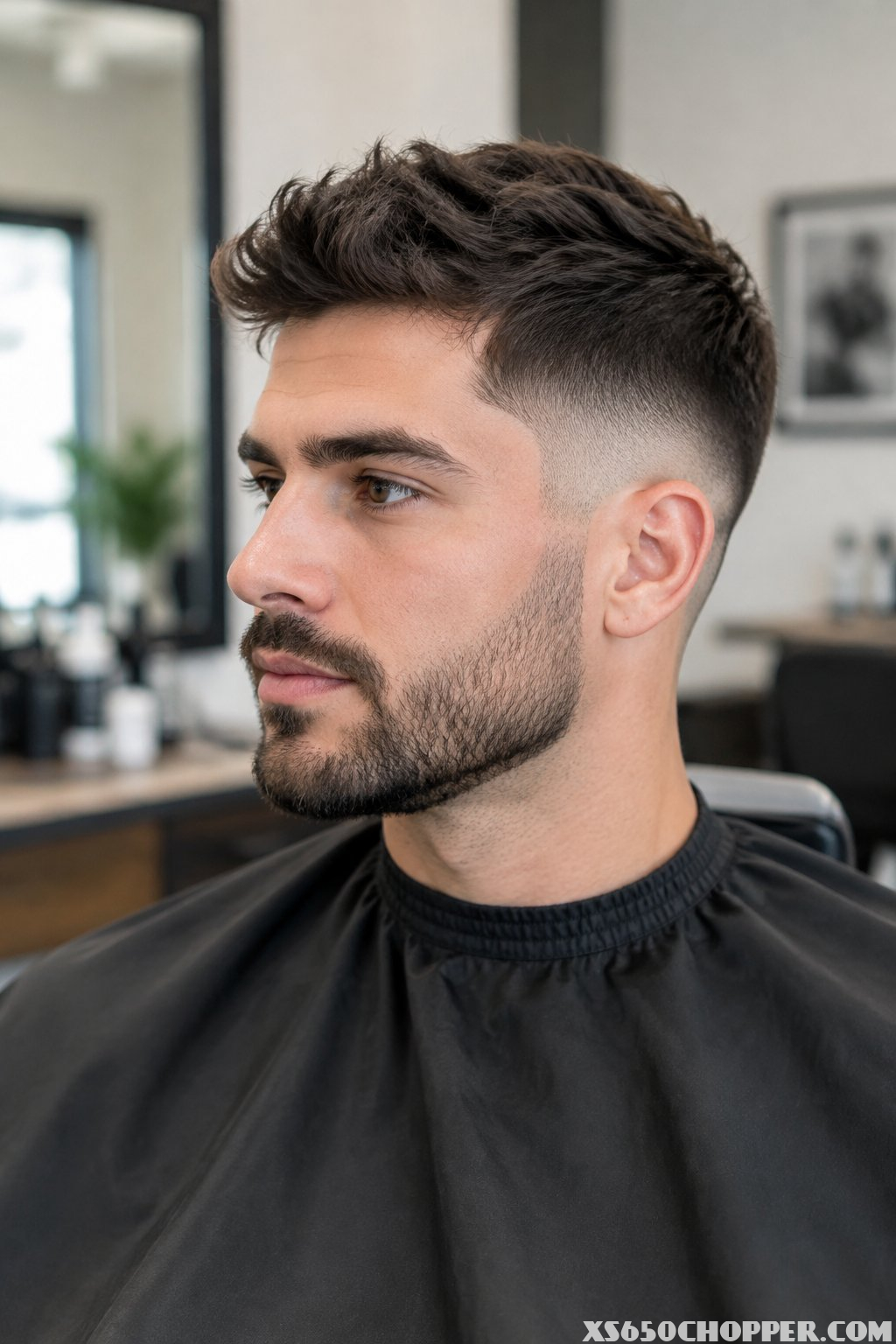
A mid fade starts around your temples, placing the transition between a low fade’s subtle outline and a high fade’s stronger contrast. You get a versatile shape that keeps the sides tidy without taking the blend too high.
This placement pairs well with textured tops, short pompadours, and curly styles. If you want a softer result, request a gradual blend; for a sharper look, specify a closer finish near the bottom.
PRO TIP
Use “mid fade” to set the starting height, then tell your barber whether you want a soft or high-contrast blend.
4) High Fade
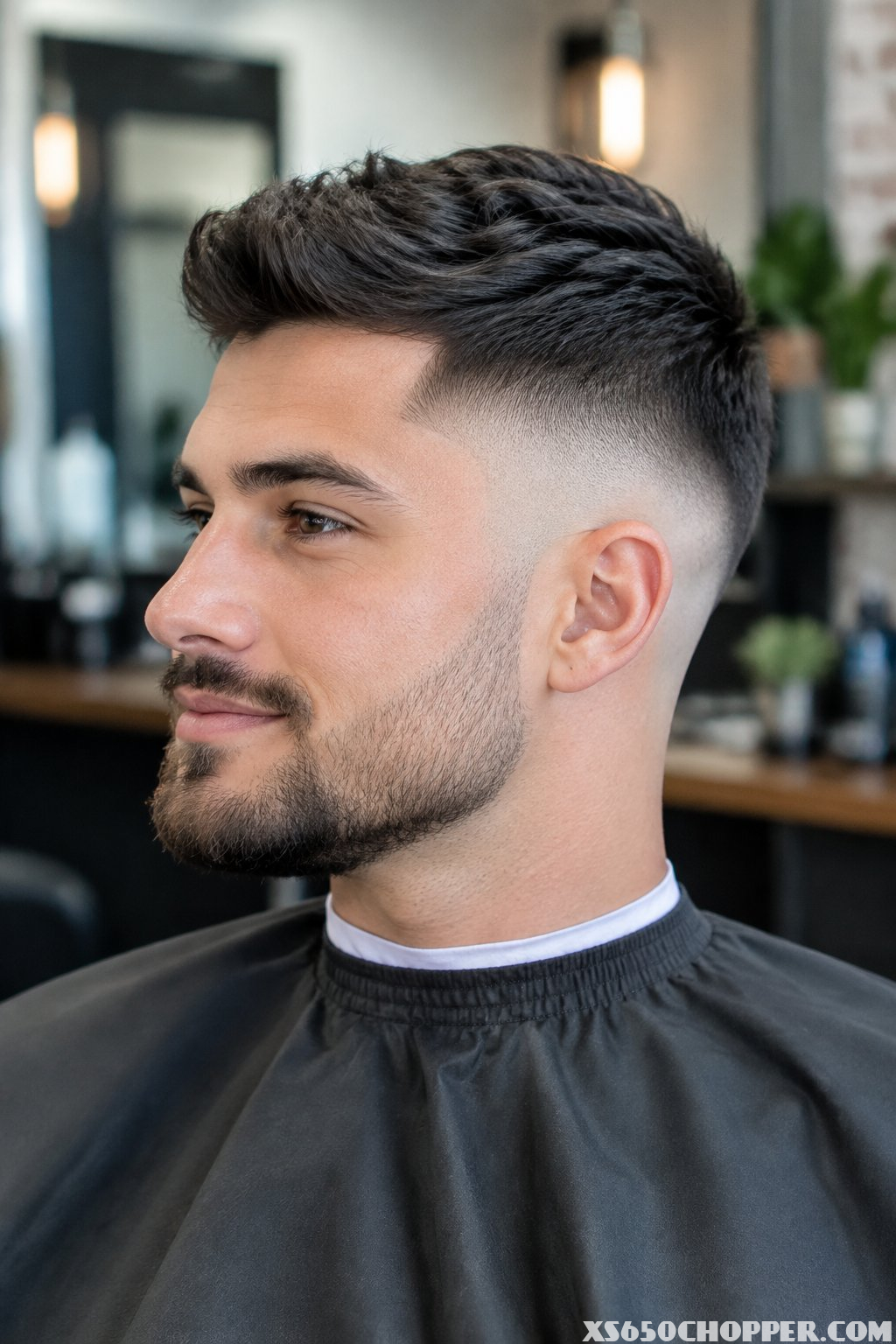
A high fade starts well above your temples and creates the strongest contrast among the standard low, mid, and high placements. It leaves a compact area of longer hair on top, giving your cut a defined silhouette.
Choose a high fade if you want the sides to look close and the top to stand out. It works with short crops, textured styles, and longer tops that you want to style upward.
PRO TIP
Ask your barber to show you where the blend will begin before the cut, especially if you want to keep more length around the crown.
5) Burst Fade

A burst fade curves around your ear in a semicircle, leaving more length toward the back of your head. That rounded outline draws attention to the area around your ear and works especially well with a mohawk, curls, or a textured top.
You can ask for a low, mid, or high burst fade to control how far the blend rises. Be specific about how much hair you want left at the back so the shape complements your chosen top style.
PRO TIP
Name the top style you plan to wear with the burst fade, then ask your barber to shape the curve around it.
6) Drop Fade
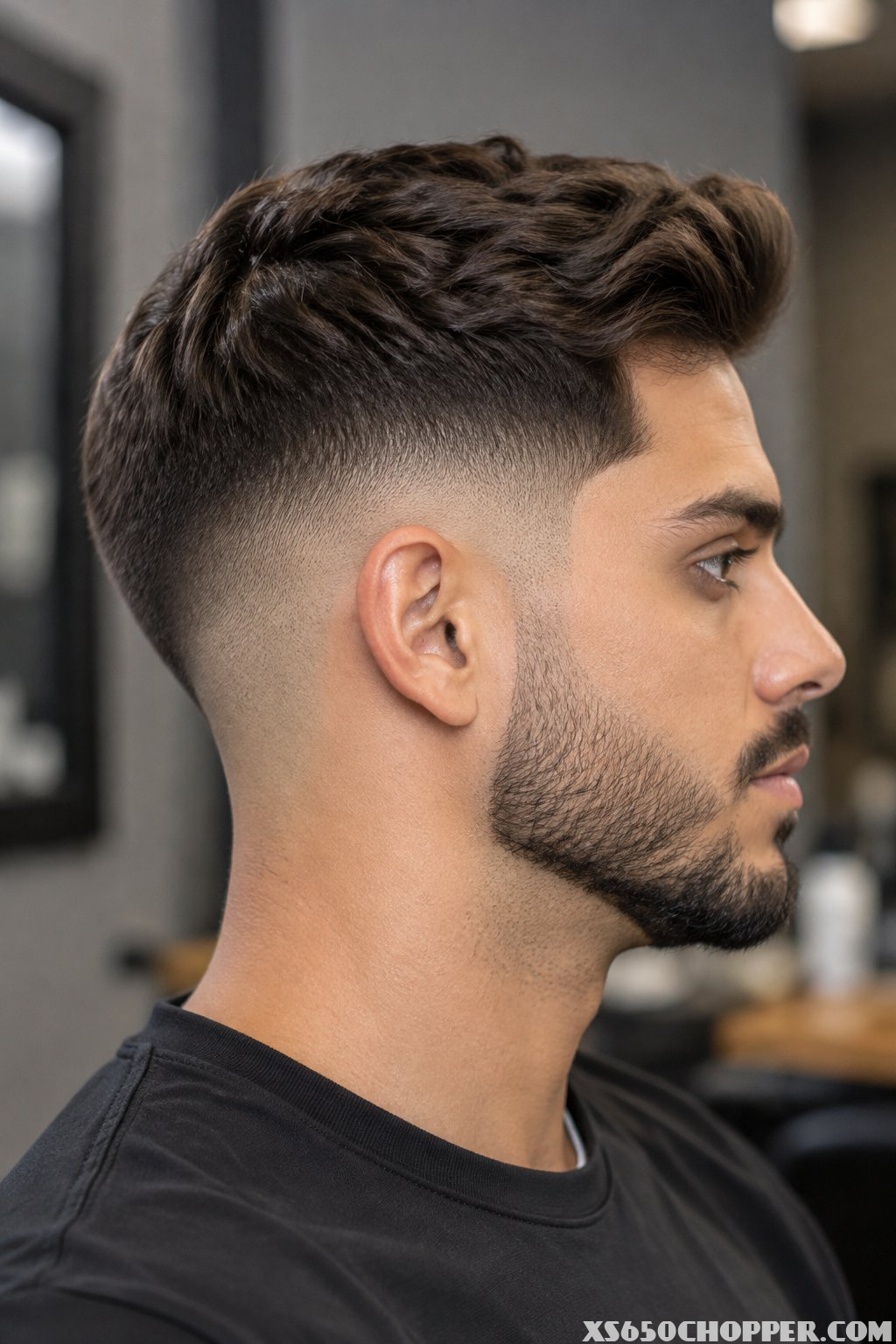
A drop fade dips behind your ear and follows the curve of your head toward the nape. This lowered arc gives your haircut a shaped profile and can add definition to a textured top or pompadour.
You can combine a drop with a low, mid, or high fade. Describe both the height and the dip so your barber knows where the blend should sit at the sides and back.
PRO TIP
If you want a noticeable curve, ask your barber to preserve the drop behind your ear instead of carrying the blend straight across.
7) Temple Fade

A temple fade cleans up the hair at your temples and sideburns while leaving more length across the rest of your sides. It gives you a crisp frame around your face without changing the full outline of your haircut.
This option pairs well with waves, curls, and short styles that benefit from a clean temple edge. You can also combine it with a taper at the neckline for a coordinated finish.
PRO TIP
Ask your barber to keep the temple blend narrow if you want to retain fullness above and behind your ears.
8) Skin Fade

A skin fade takes the hair down to bare skin at the bottom of the blend, creating a crisp contrast with the longer hair above. You can choose a low, mid, or high placement to set where that close finish begins.
This finish makes the fade line more visible as the hair grows out, so plan regular trims if you want to keep the outline sharp. Tell your barber whether you want the skin portion limited to the very bottom or carried higher.
PRO TIP
Specify both “skin fade” and its height, such as “low skin fade,” to communicate the finish and placement.
How to Choose the Right Fade

Choose your fade by deciding where you want the blend to start, how much contrast you prefer, and how the shape will support your hairstyle.
How high should the fade start?
A low fade keeps the transition near your ears and neckline. A mid fade begins around your temples, while a high fade places the blend farther up your head and creates a stronger contrast.
How much contrast do you want?
For a softer outline, choose a low taper or low fade. A skin finish makes the bottom look crisp and close; a longer guard leaves a softer shadow of hair.
Which fade works with your hairstyle?
Match the fade shape to the top: a burst fade frames mohawks and curls, while a drop fade follows the curve behind your ear. A temple fade suits styles where you want a defined front edge and fuller sides.
What to Tell Your Barber
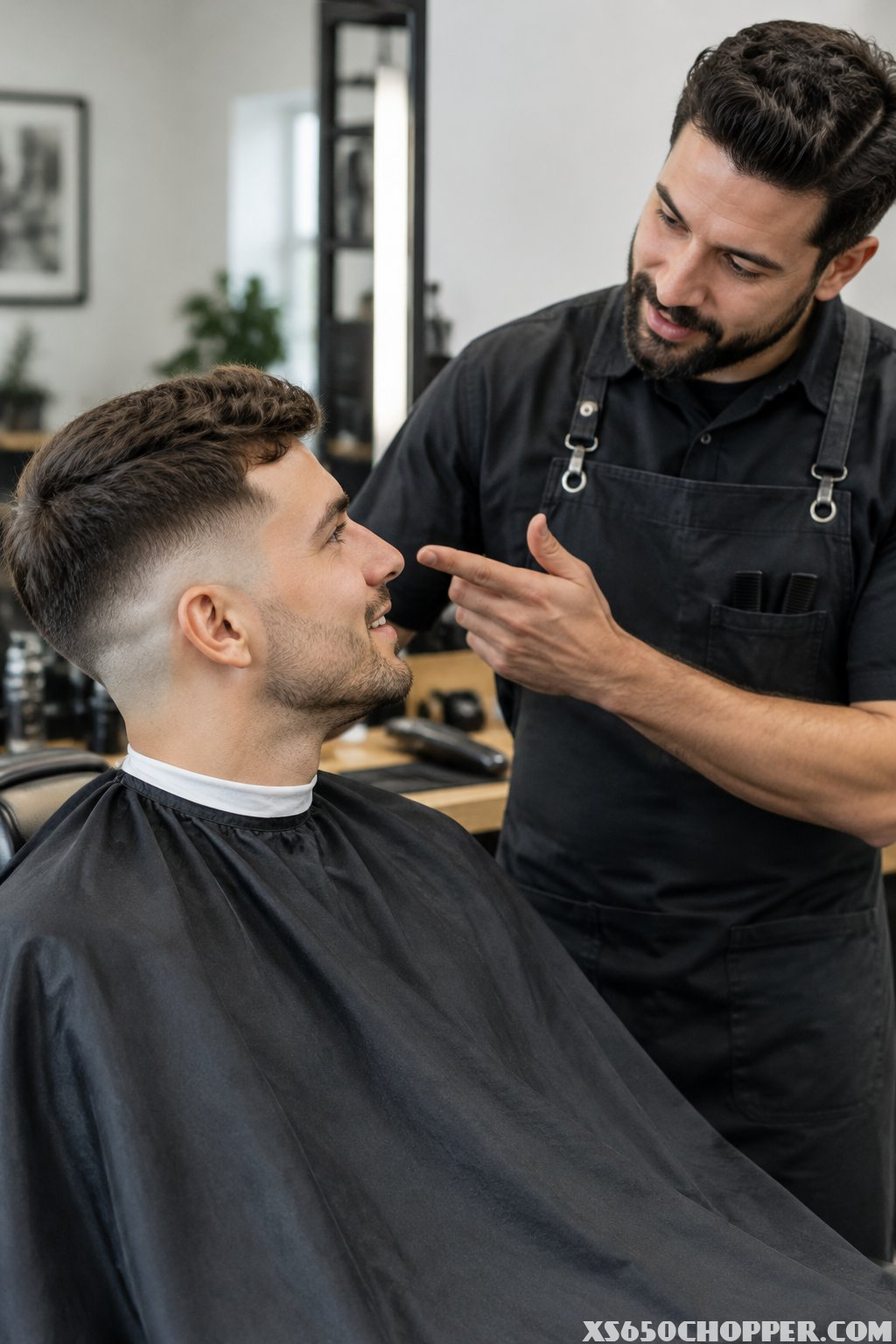
Tell your barber the fade’s height, the shape you want around your head, and how close you want the shortest section cut. A reference photo helps clarify the finished outline.
How can you describe the fade height?
Use a clear label such as low, mid, or high, then point to where you want the blend to begin. Add a shape detail when needed, such as “drop fade behind the ear” or “burst fade around the ear.”
When should you specify a skin finish or guard length?
Specify the finish whenever you want the shortest part to reach bare skin or retain visible stubble. If you know your preferred guard number, give it to your barber; otherwise, describe the result you want and ask for a quick check before the fade goes shorter.