TikTok gives you a wide range of men’s haircut inspiration for 2026, from low-maintenance crops to longer, layered styles. You can choose from 20 TikTok-inspired guy haircuts, including textured fringes, tapers, mullets, and classic short cuts.
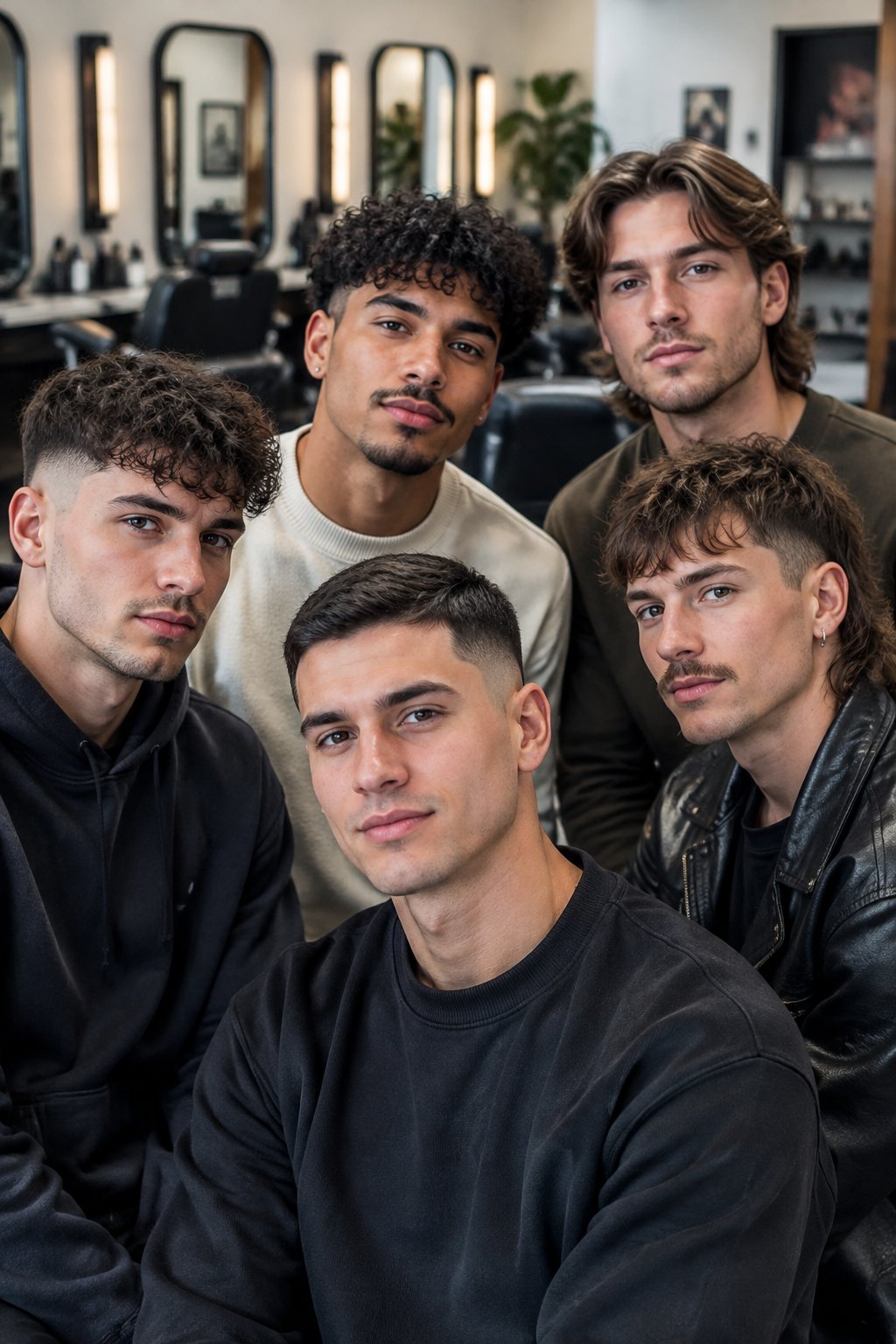
A clear reference helps you and your barber agree on shape, length, and finish. Bring a photo that shows the sides and back, then use the details below to find a cut that suits your hair and routine.
1) Textured Fringe With a Low Taper
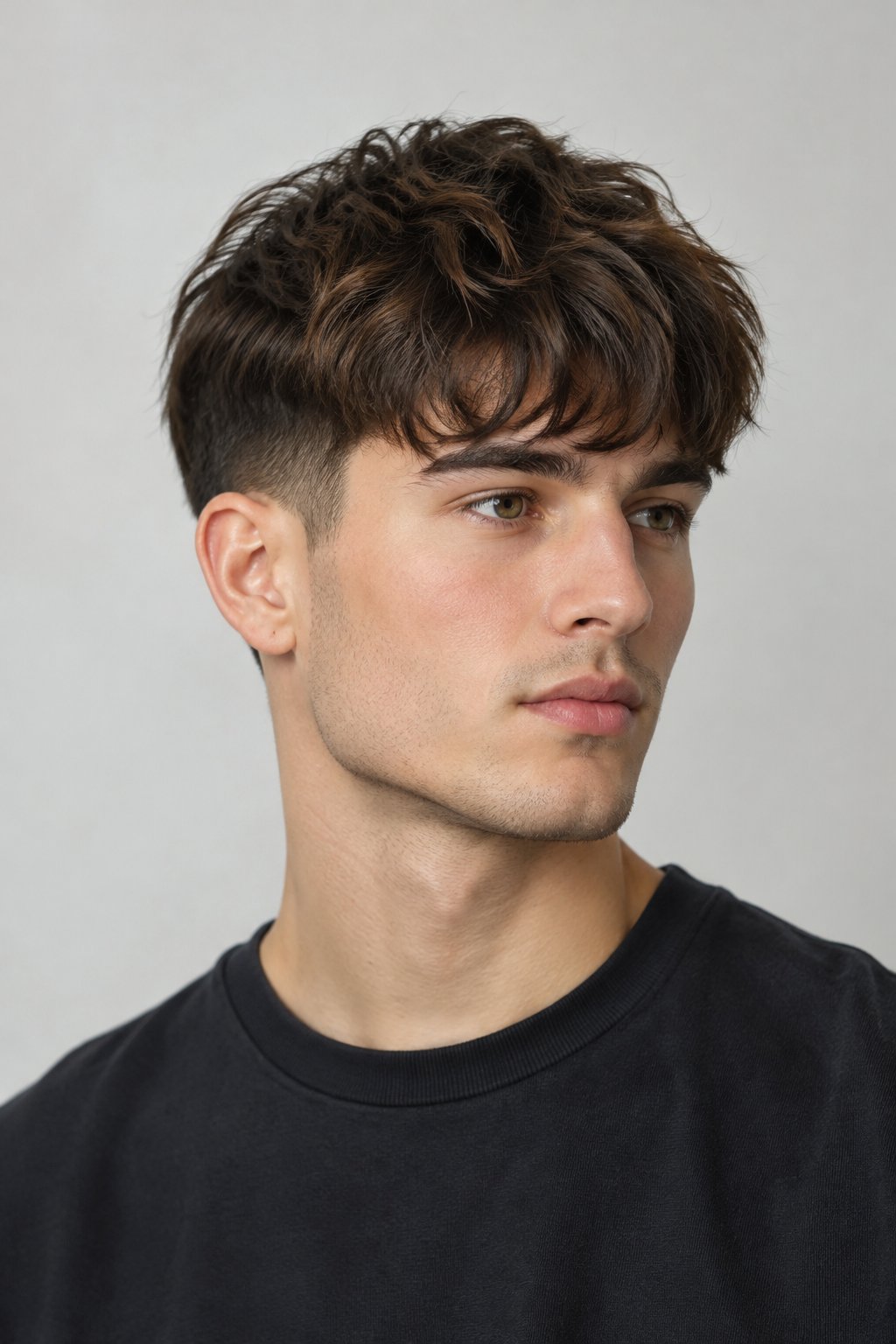
A textured fringe with a low taper gives you a relaxed top and a clean outline around the ears and neckline. Ask your barber to keep enough length in front for the fringe to fall naturally, with choppy layers for movement.
Style it with a small amount of matte paste, working it through dry or slightly damp hair. This cut suits straight or wavy hair and keeps the sides neat as the top grows out.
PRO TIP
Show your barber where you want the fringe to sit when it falls forward, since that length shapes the whole look.
2) Modern Mullet
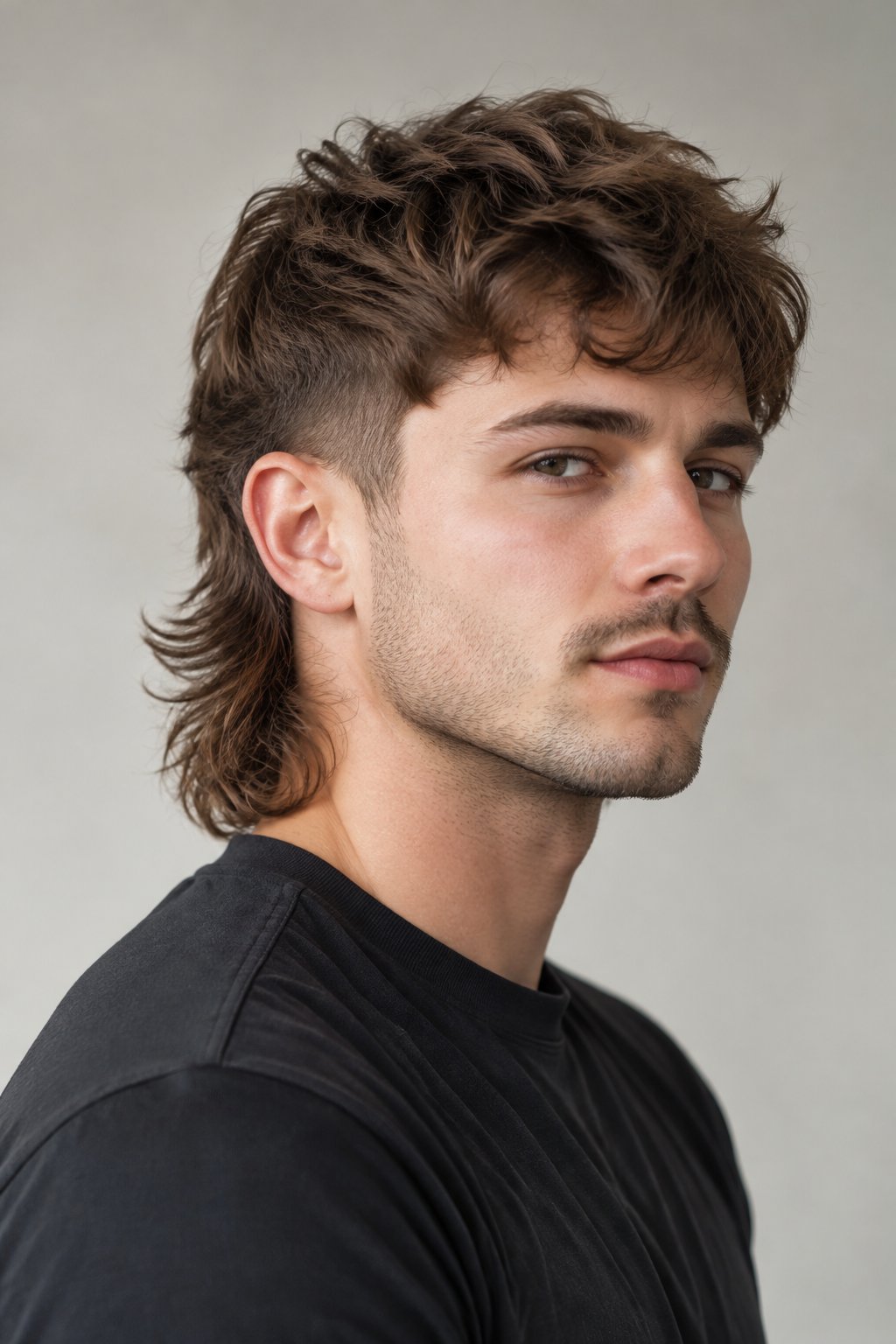
A modern mullet pairs shorter sides with extra length through the back and a textured top. You can keep the transition soft for a subtle shape or choose a sharper fade for more contrast.
The cut works well with wavy or curly hair, which adds natural movement to the back. Use a light styling cream to define the layers without flattening them.
PRO TIP
Ask for a gradual connection between the crown and back if you want a wearable mullet that grows out smoothly.
3) Blowout Taper
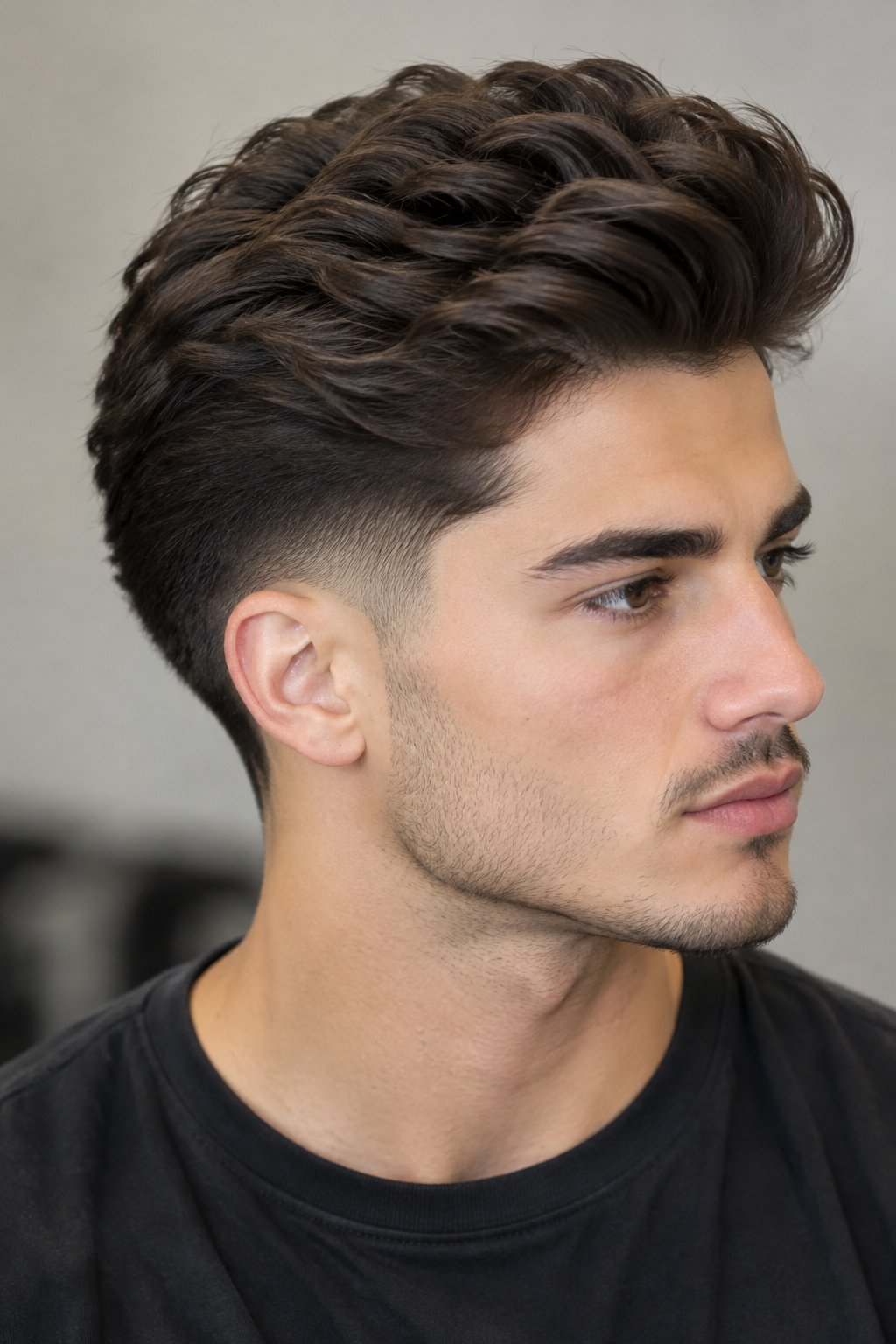
A blowout taper gives you lifted volume at the crown and a gradual taper around the temples and neckline. The fuller top creates a rounded silhouette, especially when you style the hair upward and away from your face.
This shape suits thick, wavy, or curly hair that holds volume. Use a blow-dryer with a vent brush, then finish with a light-hold product to keep the top airy.
PRO TIP
Ask your barber to preserve enough length at the crown so the blowout has room to lift.
4) Curtain Middle Part

A curtain middle part frames your face with longer sections that split near the center. Request layers around the front so the hair falls into place instead of forming a heavy, straight line.
You’ll need enough length to reach around the cheekbones or ears, depending on your preferred shape. A small amount of cream helps smooth flyaways while keeping the part loose.
PRO TIP
Bring a reference with a similar hairline and length, then ask your barber to place the part where your hair naturally separates.
5) French Crop With a Skin Fade
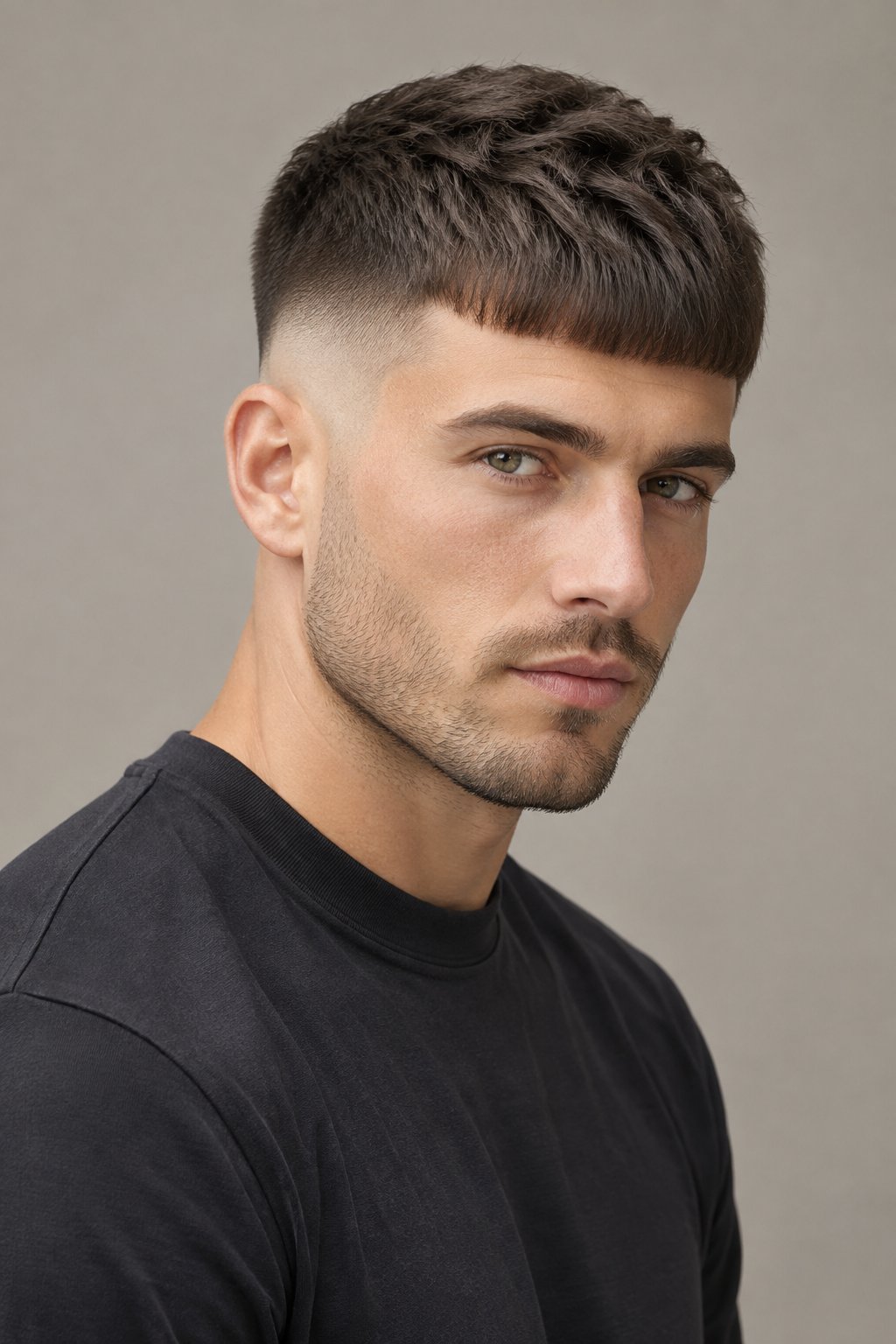
A French crop with a skin fade combines a short, forward fringe with sides faded down to the skin. The compact top keeps styling quick, while the fade gives the outline a crisp finish.
This cut works across many hair textures and is especially practical if you like short hair. Use a matte clay to add texture to the top and keep the fringe defined.
PRO TIP
Specify how high you want the skin fade to start, since a high fade changes the proportions of the cut.
6) Comma Hair

Comma hair features a curved section of fringe that bends toward the forehead like a comma. The shape is most visible with a soft side part and enough length at the front to create the curve.
Use a blow-dryer and a round brush to direct the fringe inward, then set it with a light styling cream. Straight or slightly wavy hair makes the curved detail easy to define.
PRO TIP
Ask your barber to leave the front longer than the sides, then show the direction you want the fringe to sweep.
7) Wolf Cut
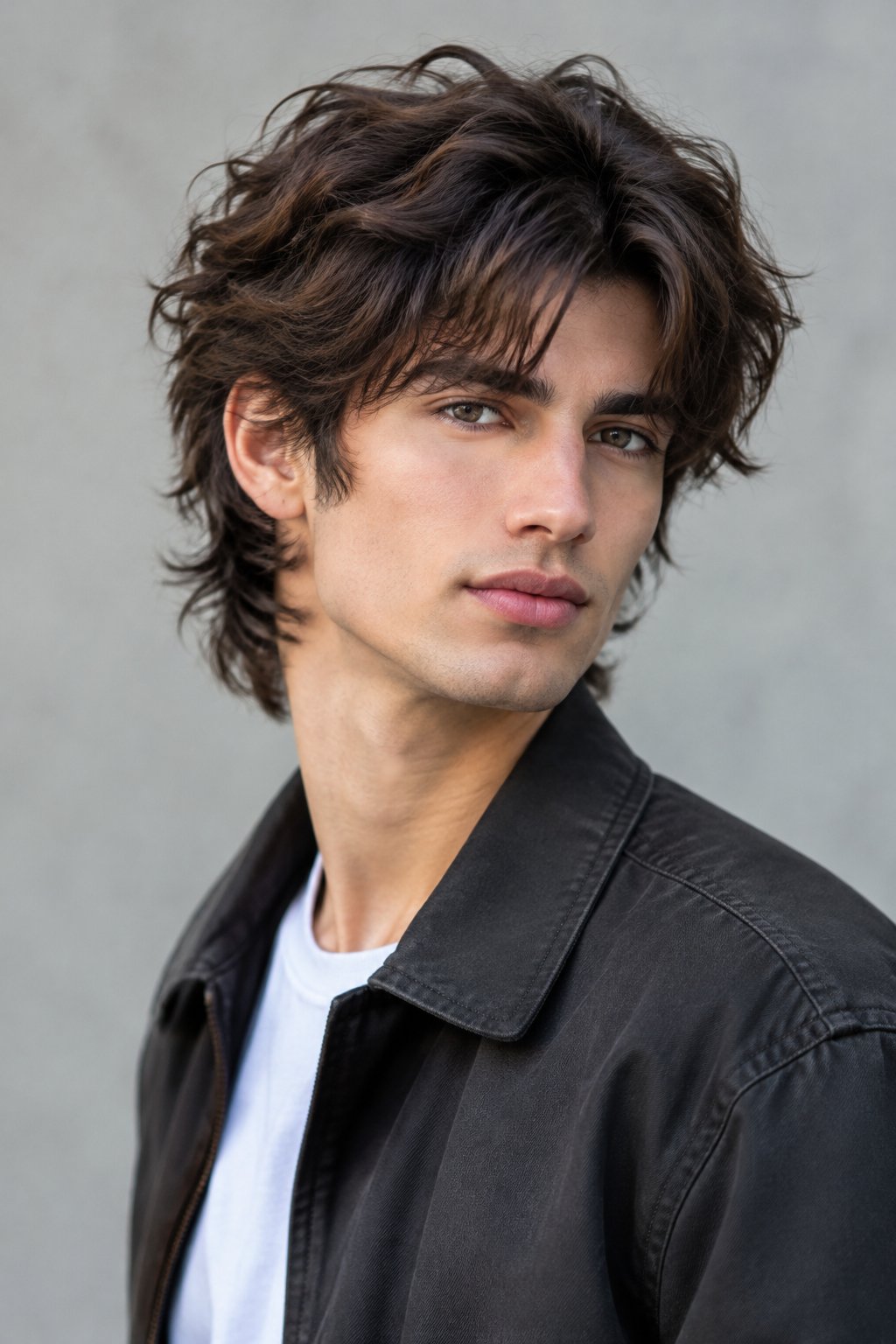
A wolf cut gives you a layered, shaggy shape with volume at the crown and length toward the back. The uneven texture keeps the silhouette loose, so it suits wavy or curly hair especially well.
Style it with a light cream or texturizing spray and let your natural pattern show. Regular shaping keeps the layers from becoming bulky around the sides.
PRO TIP
Ask for face-framing layers that match your preferred length, since shorter front pieces create a more dramatic shag.
8) Slick Back With a Taper
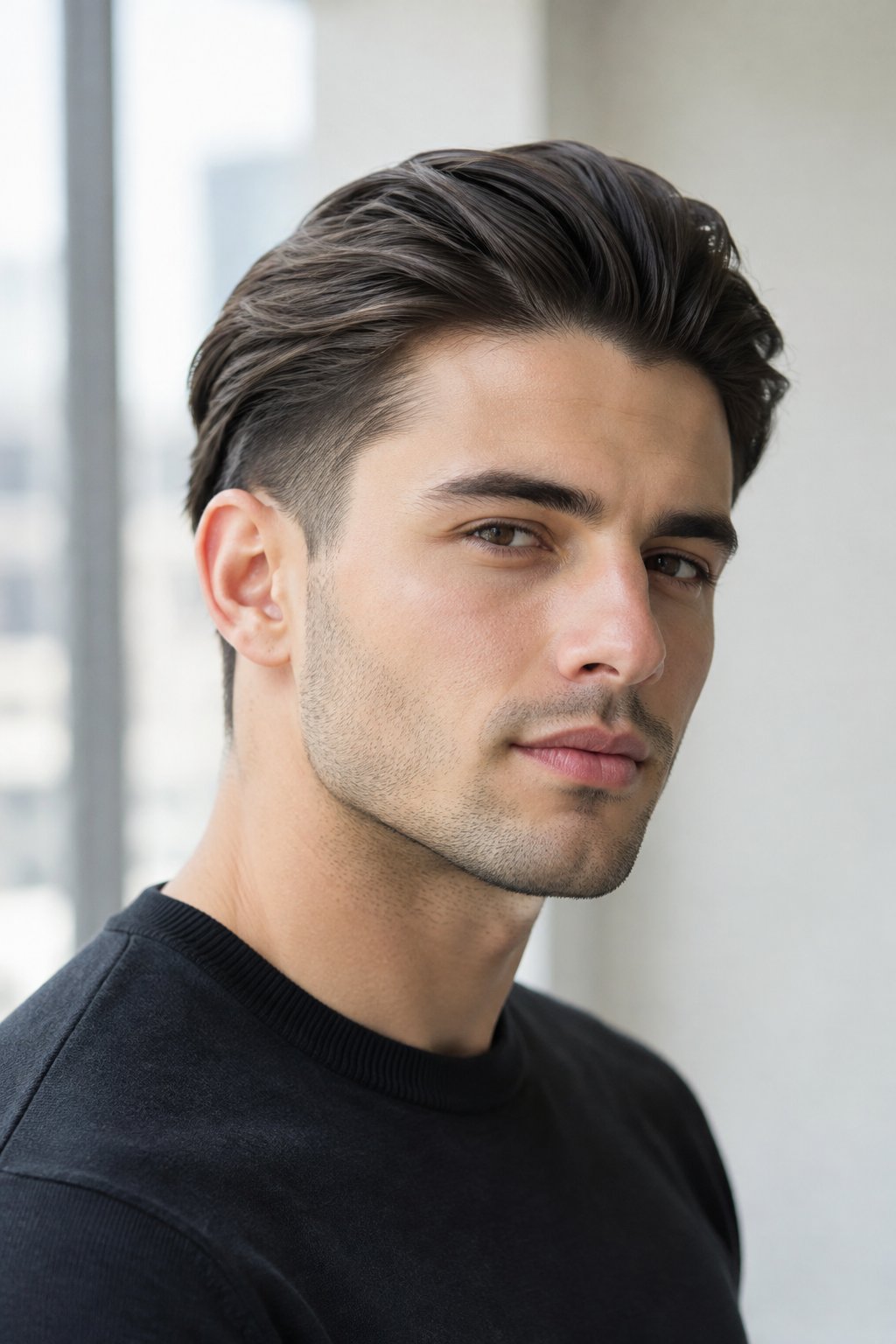
A slick back with a taper keeps the sides neat while directing the longer top away from your face. The taper gives you a gradual finish at the temples and neckline without removing too much bulk.
Comb damp hair back with a styling cream or pomade, choosing a low-shine finish for a softer effect. This look works best when the top has enough length to stay swept back.
PRO TIP
Tell your barber how you part your hair, so the top can be cut to follow your natural direction.
9) Curly Taper Fade
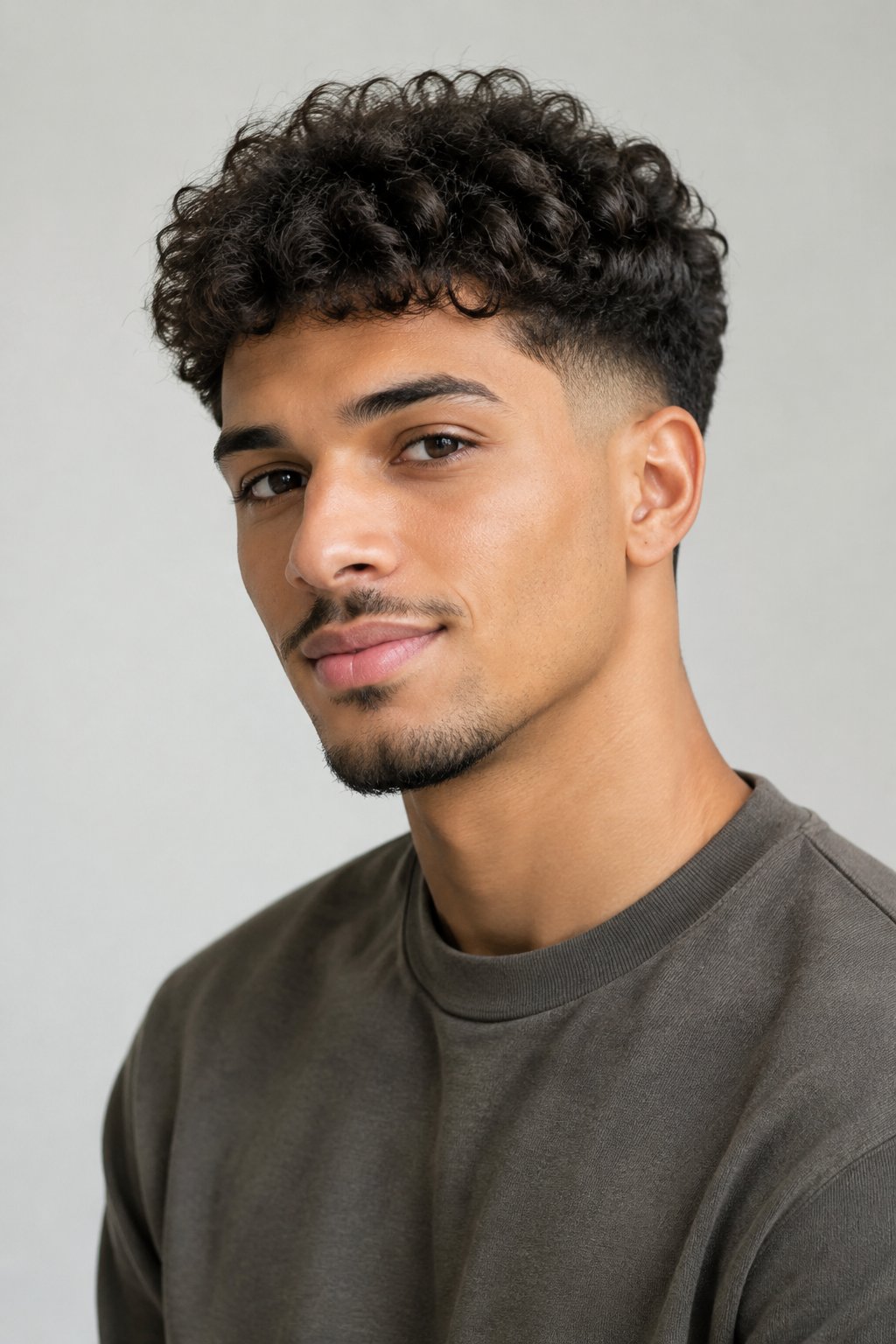
A curly taper fade keeps your curls full on top and gradually shortens the hair around the temples and neckline. The clean perimeter helps the curl shape stand out while preserving texture.
Use a curl cream on damp hair and let it dry with minimal handling. Ask your barber to cut curls with their natural shrinkage in mind, so the finished length matches your preference.
PRO TIP
Bring your hair in its natural curl pattern, with minimal product, so your barber can assess its shape.
10) Bro Flow

A bro flow uses medium-length layers that sweep back from the face and move with your hair’s natural texture. It gives you a relaxed shape with enough length to tuck behind your ears.
Ask for light layering around the sides and back to reduce bulk while keeping the ends full. A leave-in conditioner or light cream helps control frizz without making the hair stiff.
PRO TIP
Keep the front long enough to sweep back comfortably, then schedule trims to maintain the layered outline.
11) Buzz Cut With a Lineup
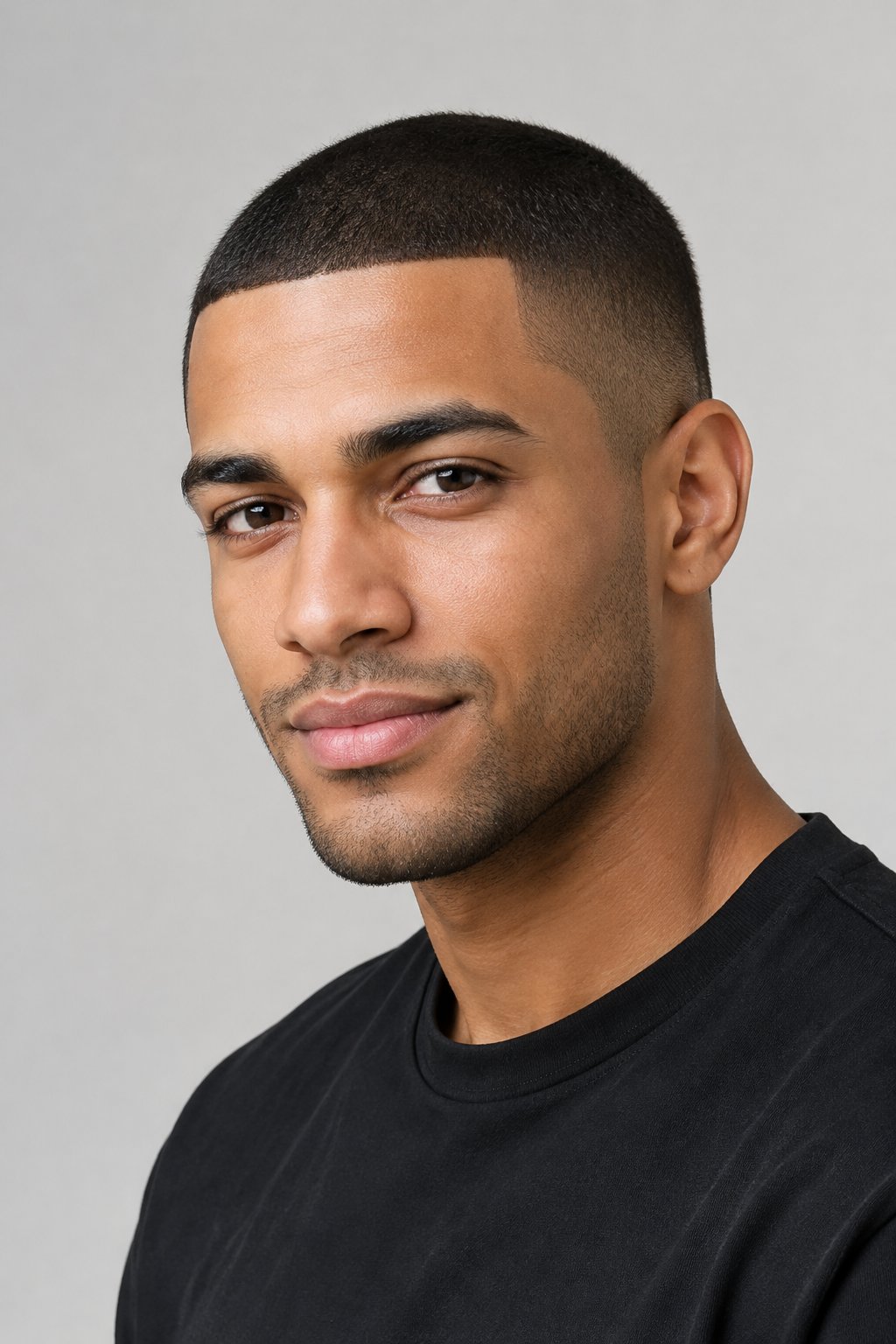
A buzz cut with a lineup gives you an even, low-maintenance length with sharp edges at the forehead and temples. You can choose a single guard length or a subtle fade through the sides.
The close cut puts your hairline and head shape in clear view, so discuss the lineup before your barber starts. A small amount of scalp moisturizer helps keep the finish comfortable.
PRO TIP
Bring a photo showing the edge shape you want, especially if you prefer a natural hairline over a squared outline.
12) Classic Side Part With a Low Fade
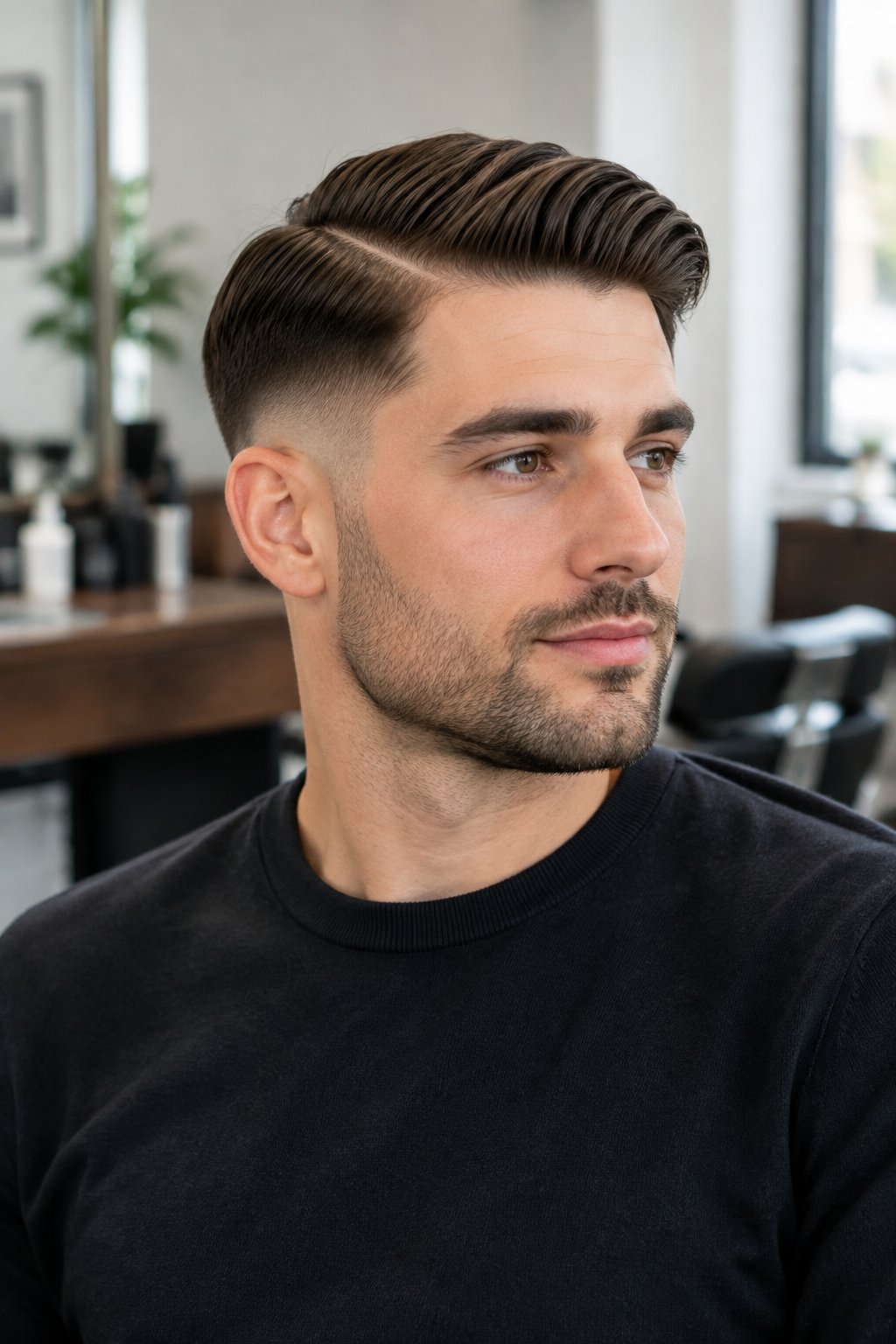
A classic side part with a low fade gives you a defined part and a clean, understated outline. Keep the top long enough to comb across, with a low fade that starts close to the ears.
A comb and light pomade create a neat finish, while a matte product gives the part a more casual look. The shape suits straight or slightly wavy hair.
PRO TIP
Ask for a natural part if you prefer flexibility, or a shaved part line if you want a more defined separation.
13) Textured Crop
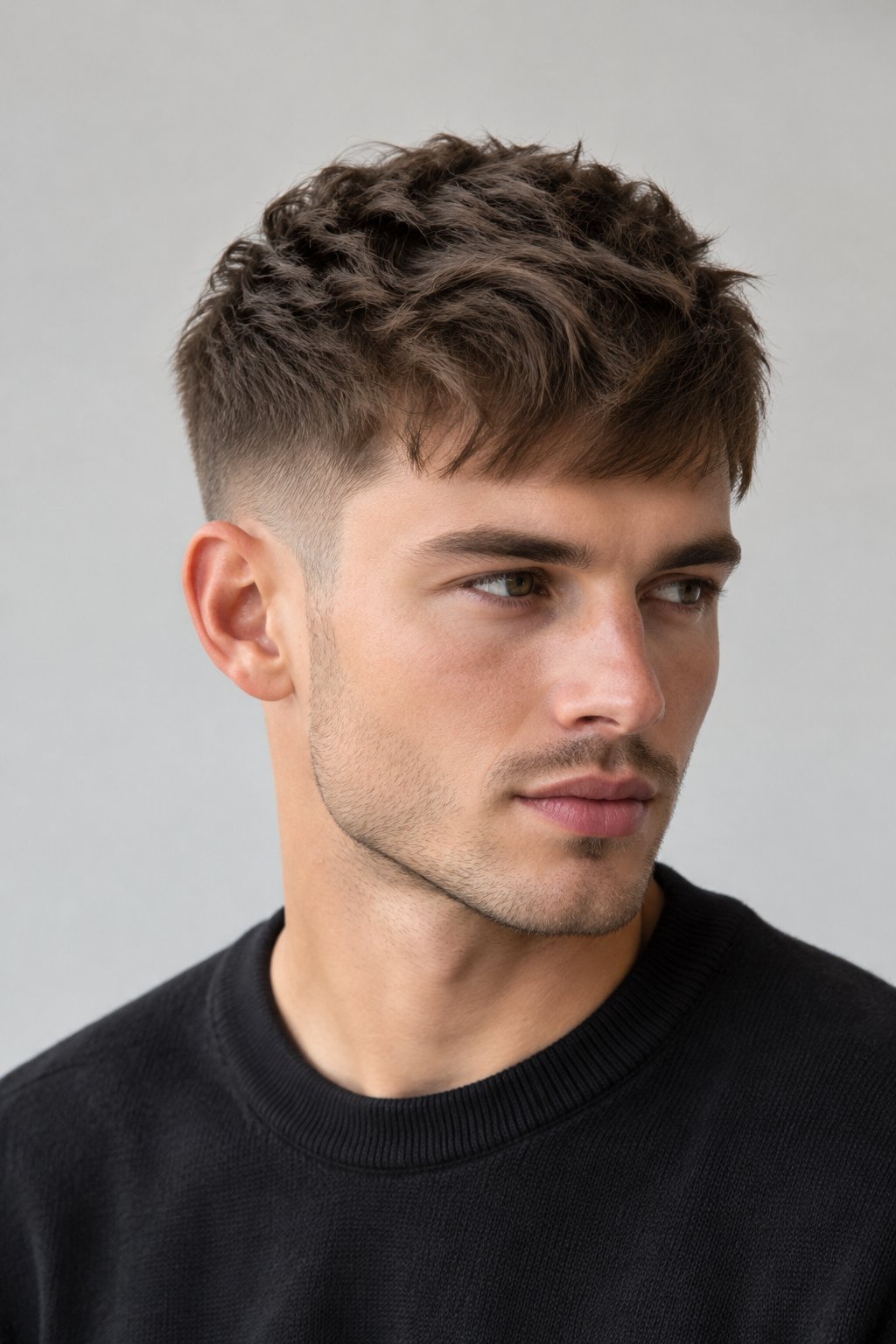
A textured crop keeps the top short and layered, with a compact fringe and tidy sides. Point-cut ends add separation, so the shape looks defined with minimal styling.
Work a pea-sized amount of matte paste through dry hair, pinching sections to bring out the texture. The cut suits straight, wavy, and lightly curly hair.
PRO TIP
Ask your barber to leave the fringe at a length that sits comfortably on your forehead when dry.
14) Modern Pompadour

A modern pompadour builds height at the front and sweeps the top back into a controlled shape. Shorter sides balance the volume, with a taper or fade chosen to match how much contrast you want.
Use a blow-dryer to lift the roots, then apply a small amount of pomade or styling cream. Thick hair holds the height well, while layered cutting can make the top easier to shape.
PRO TIP
Ask your barber to keep the front long enough for lift and explain how much daily styling time you want to spend.
15) Short Quiff
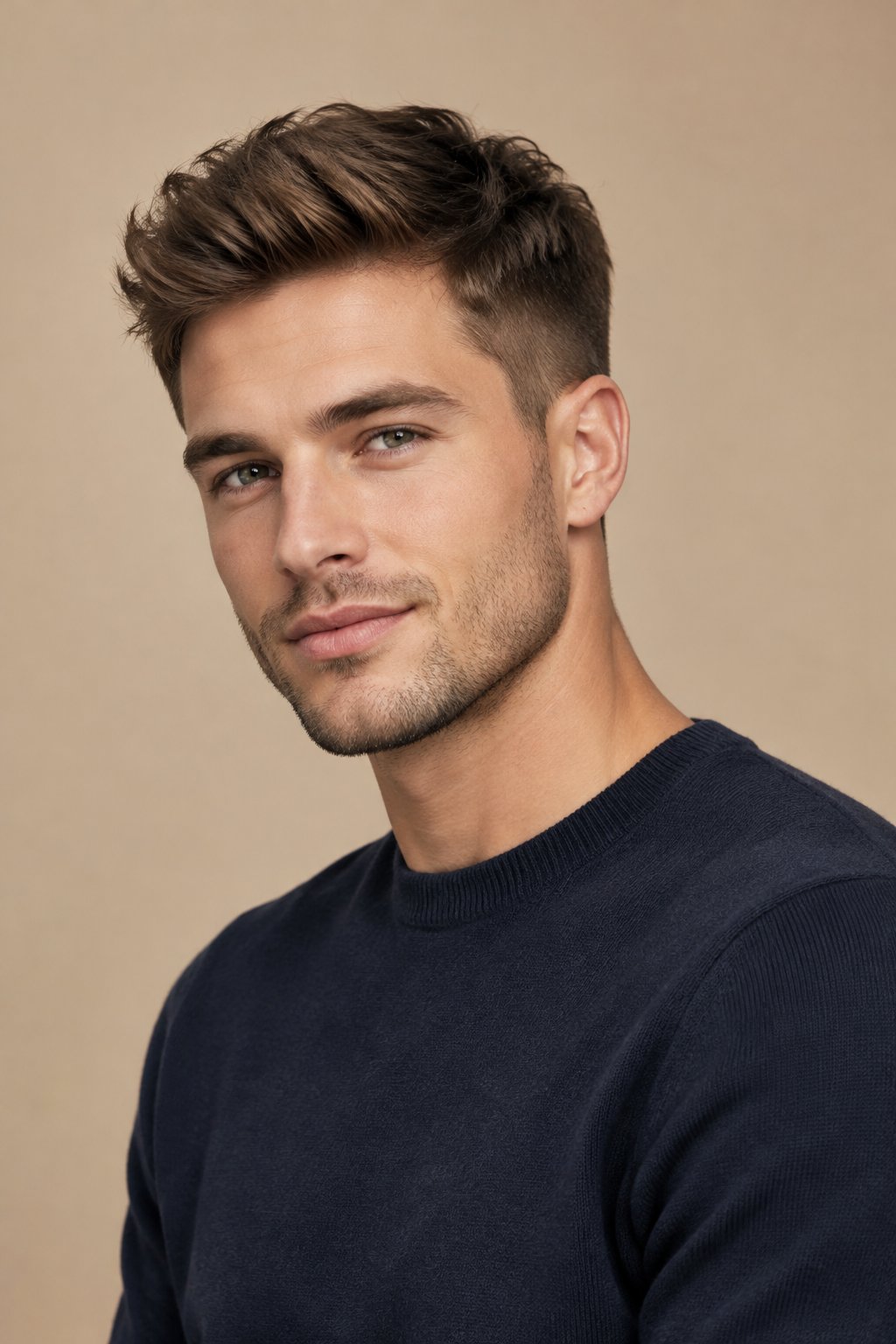
A short quiff gives you a modest lift at the front with a clean, easy-to-manage top. The sides can be tapered or faded, while the front stays longer to create the signature rise.
Blow-dry the front upward with your fingers, then use a matte product for light hold. This shape suits straight or wavy hair and works well when you want a polished finish without a long top.
PRO TIP
Ask for a gradual length increase toward the front so the quiff blends into the rest of the top.
16) Two-Block Cut
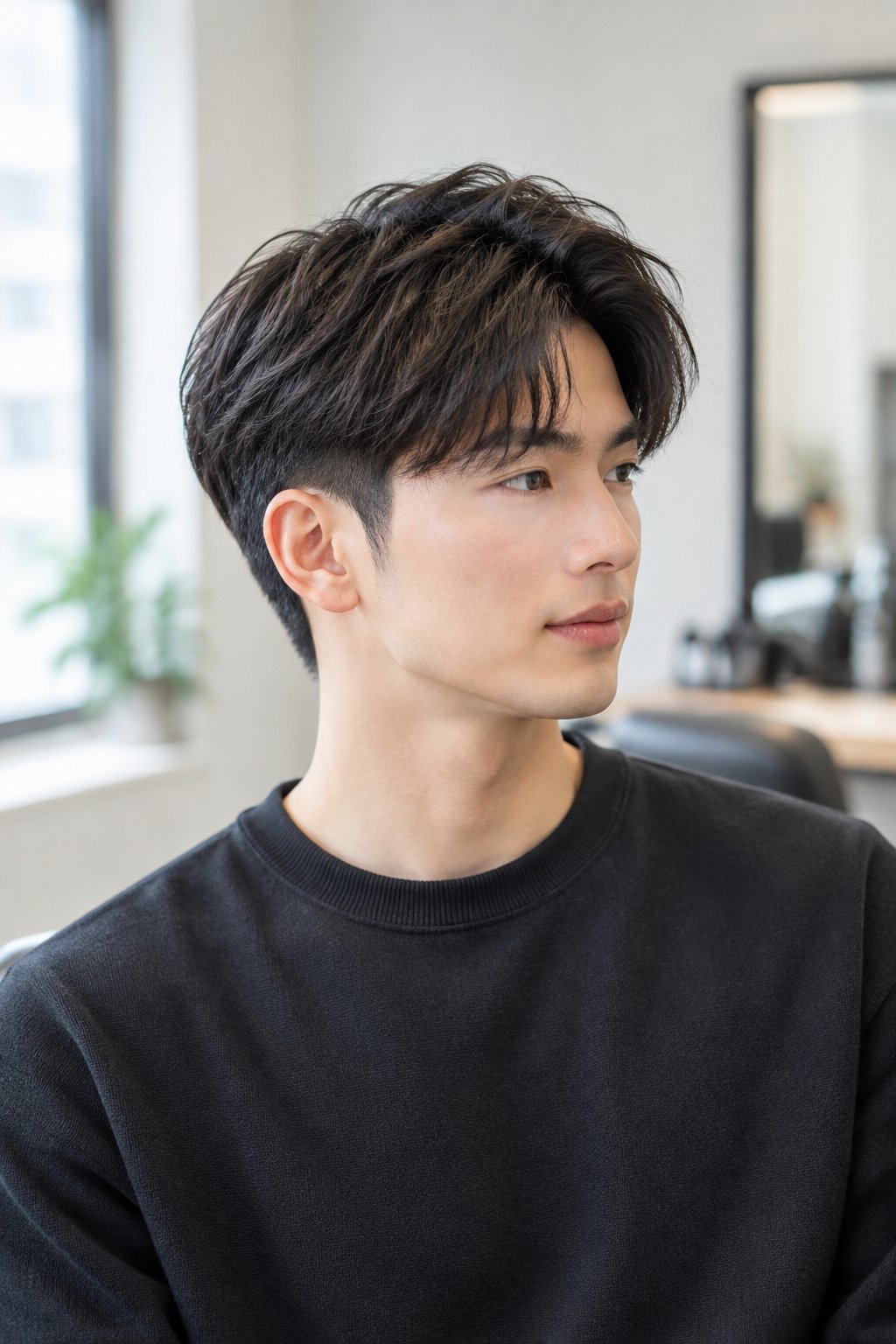
A two-block cut separates a longer top from shorter sides and back, creating a distinct two-layer shape. You can wear the top forward, parted, or swept across, depending on its length.
The cut works well with straight or wavy hair and benefits from light layers that reduce weight. Use a styling cream to keep the top smooth while retaining movement.
PRO TIP
Ask your barber how the shorter section will sit around your ears, since that detail defines the cut’s silhouette.
17) Burst Fade Mohawk
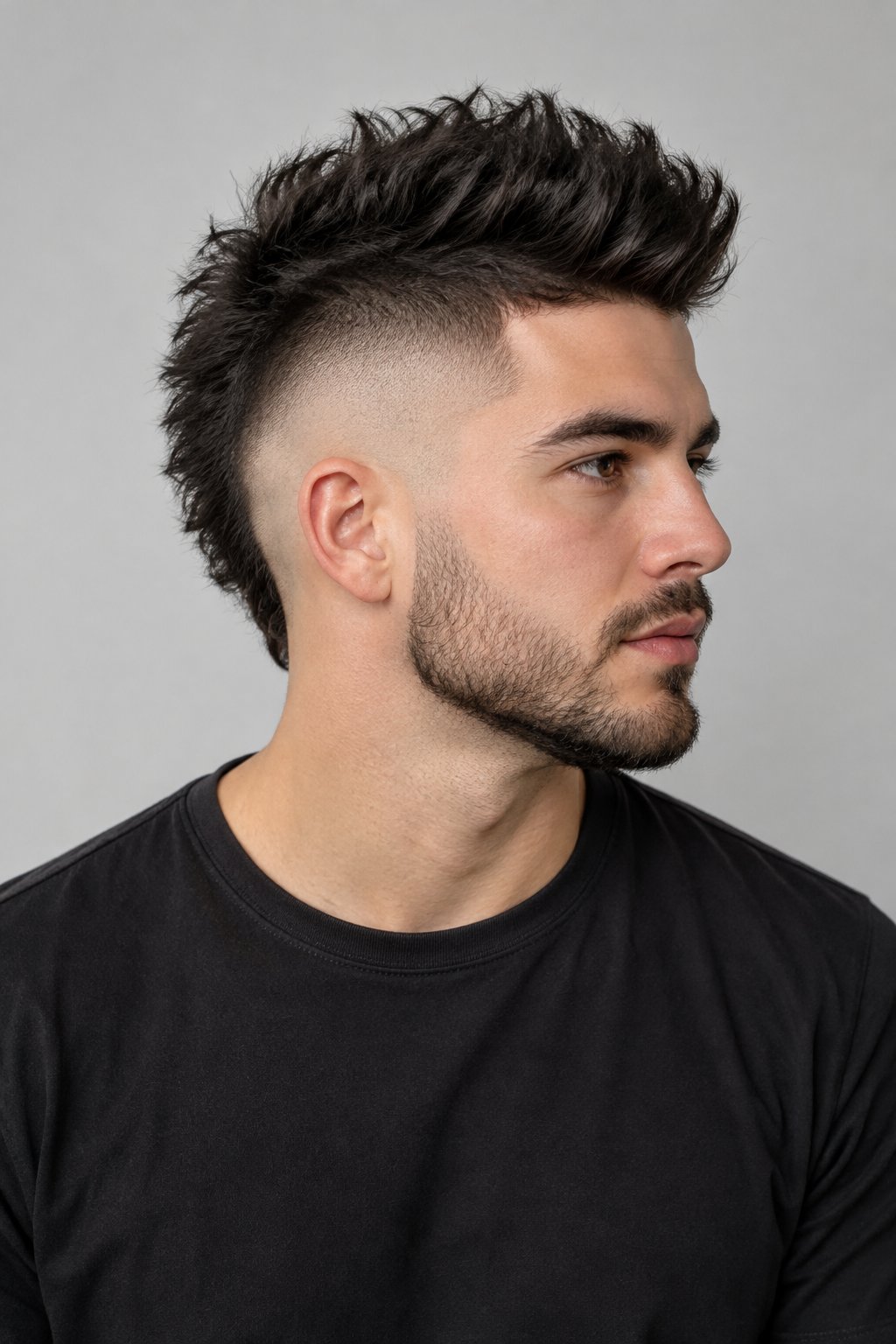
A burst fade mohawk leaves a strip of longer hair through the center while the fade curves around the ears. The shape adds definition and works particularly well with curls or textured hair.
Keep the center long enough to show its pattern, then use curl cream or a light styling product to define it. The fade needs regular barber visits to keep its curved outline crisp.
PRO TIP
Show your barber the width you want through the center, since a narrow strip gives the cut a sharper profile.
18) Edgar Cut
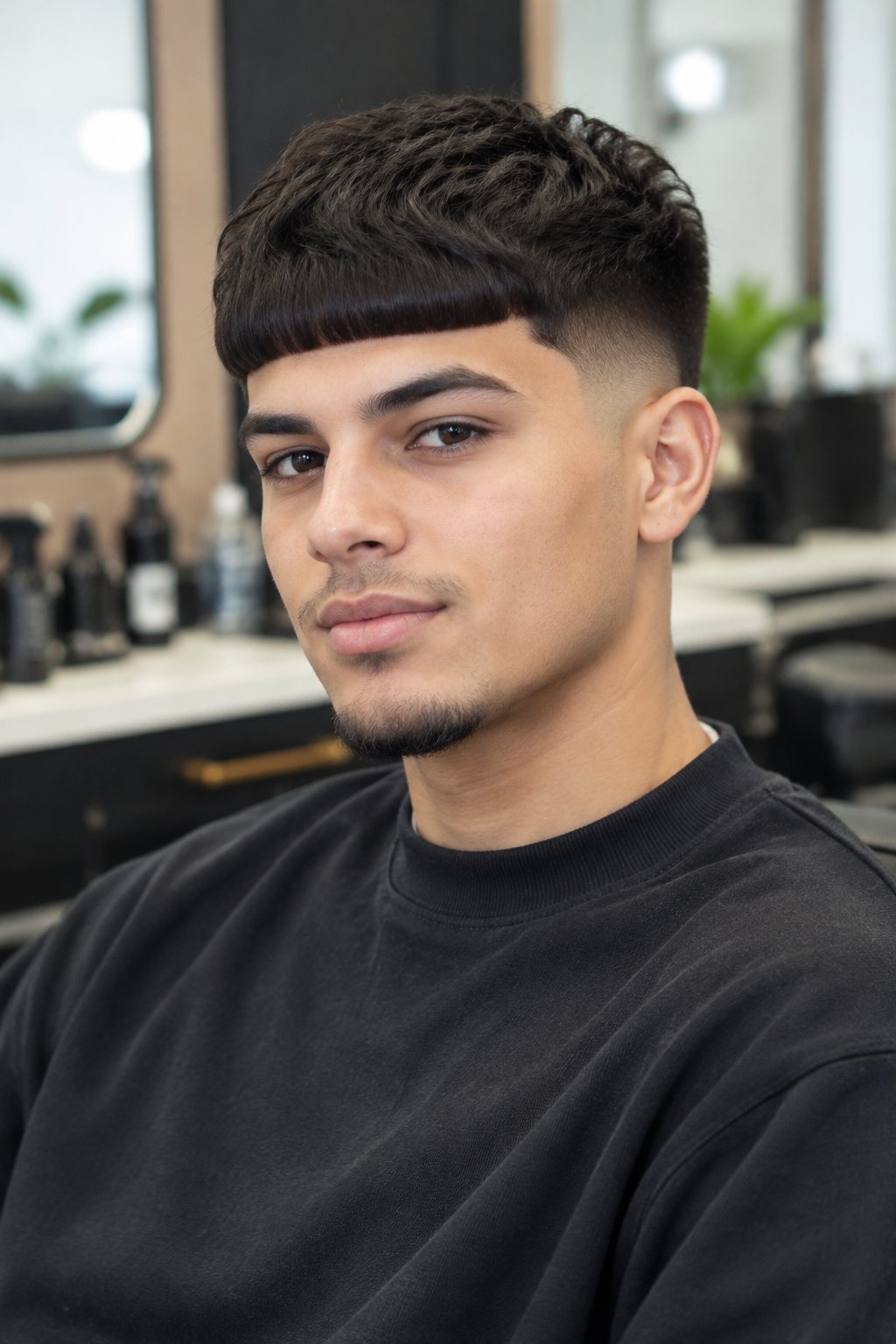
An Edgar cut pairs a blunt, forward fringe with short sides and a compact top. The straight fringe creates a strong line across the forehead, while a taper or fade shapes the sides.
A small amount of matte clay helps separate the top without softening the fringe’s outline. Ask for the front length to suit your hairline and the amount of forehead coverage you prefer.
PRO TIP
Bring a front-facing reference and agree on the fringe length before your barber creates the blunt edge.
19) Ivy League

An Ivy League cut combines a short, tapered shape with enough length on top to part or brush to the side. It gives you a tidy look that works for everyday wear and more formal settings.
Use a comb and a small amount of styling cream to guide the top into place. Ask for a soft taper at the sides and a top length that allows your preferred part.
PRO TIP
Tell your barber whether you want to comb the top forward, across, or back, since each direction calls for a slightly different balance.
20) Caesar Cut
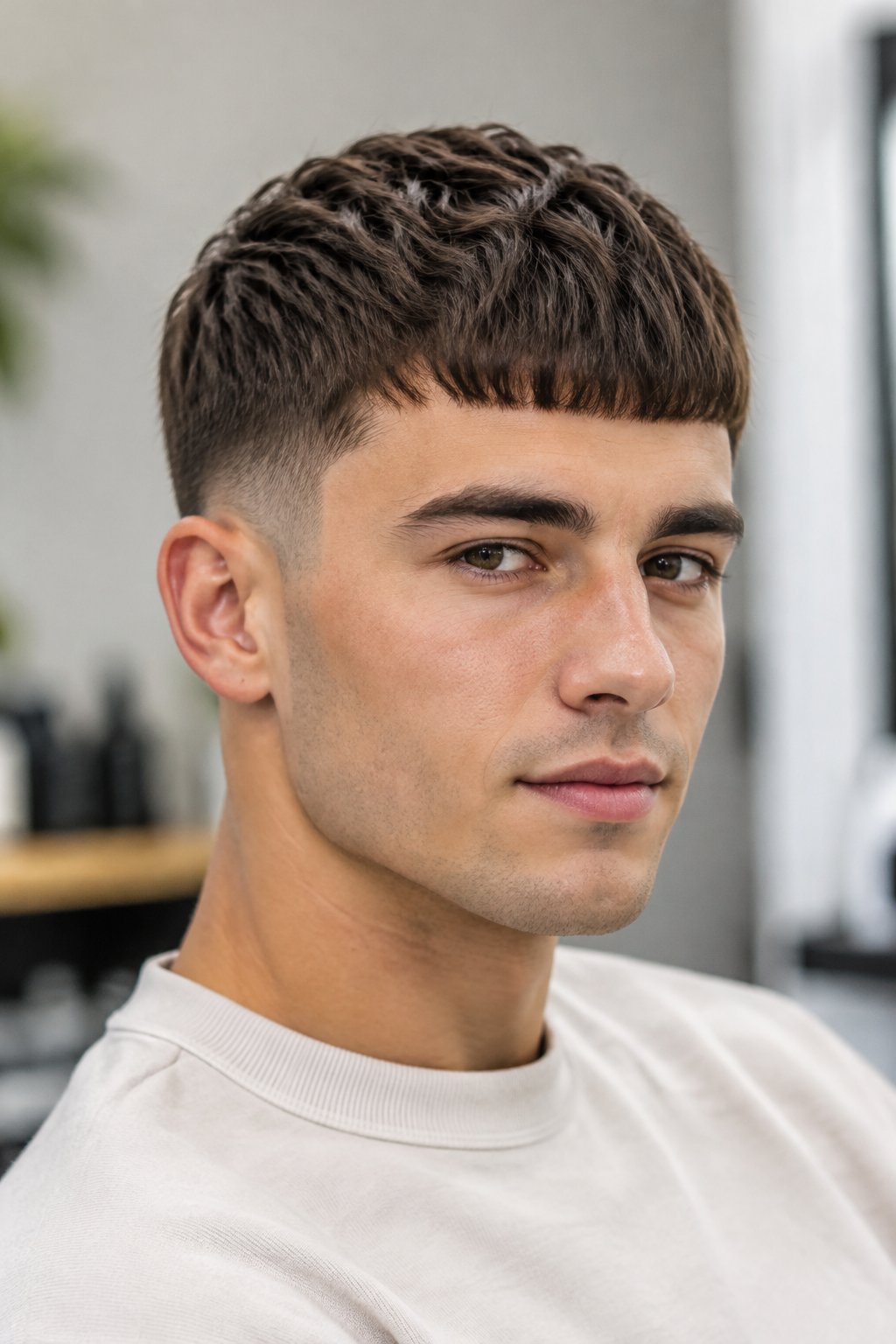
A Caesar cut features short, even layers and a small fringe brushed forward. Its compact shape keeps your morning styling routine quick and gives you a clean, structured outline.
A little texture paste adds separation across the top, while a low taper keeps the edges neat. The style works with straight, wavy, or curly hair when the top length is tailored to your texture.
PRO TIP
Ask for a short, textured fringe if you want a softer finish, or a straighter edge for a more defined profile.
How to Choose a TikTok-Inspired Haircut

Choose a cut that works with your hair’s natural texture and the amount of upkeep you want. A reference video can show movement, while a still photo helps you and your barber assess the shape.
Which cuts work with your hair texture?
Straight hair shows precise lines and works well with a side part, Caesar cut, or two-block style. Wavy hair adds movement to a bro flow, wolf cut, or curtain part. Curls bring natural volume to a curly taper, blowout taper, or burst fade mohawk.
For thick hair, ask about layers that control bulk without removing the shape you want. Fine hair can look fuller with a textured crop or short quiff that adds lift at the roots.
How should face shape and maintenance affect your choice?
Use proportions as a guide: added height can lengthen the appearance of your face, while fringe and side volume can create a more balanced outline. Ask your barber to adapt the reference to your hairline, head shape, and preferred length.
Fades and sharp lineups need frequent touch-ups to keep their edges crisp. Longer styles require enough length to sit in place, plus a styling routine that suits your day.
What to Tell Your Barber
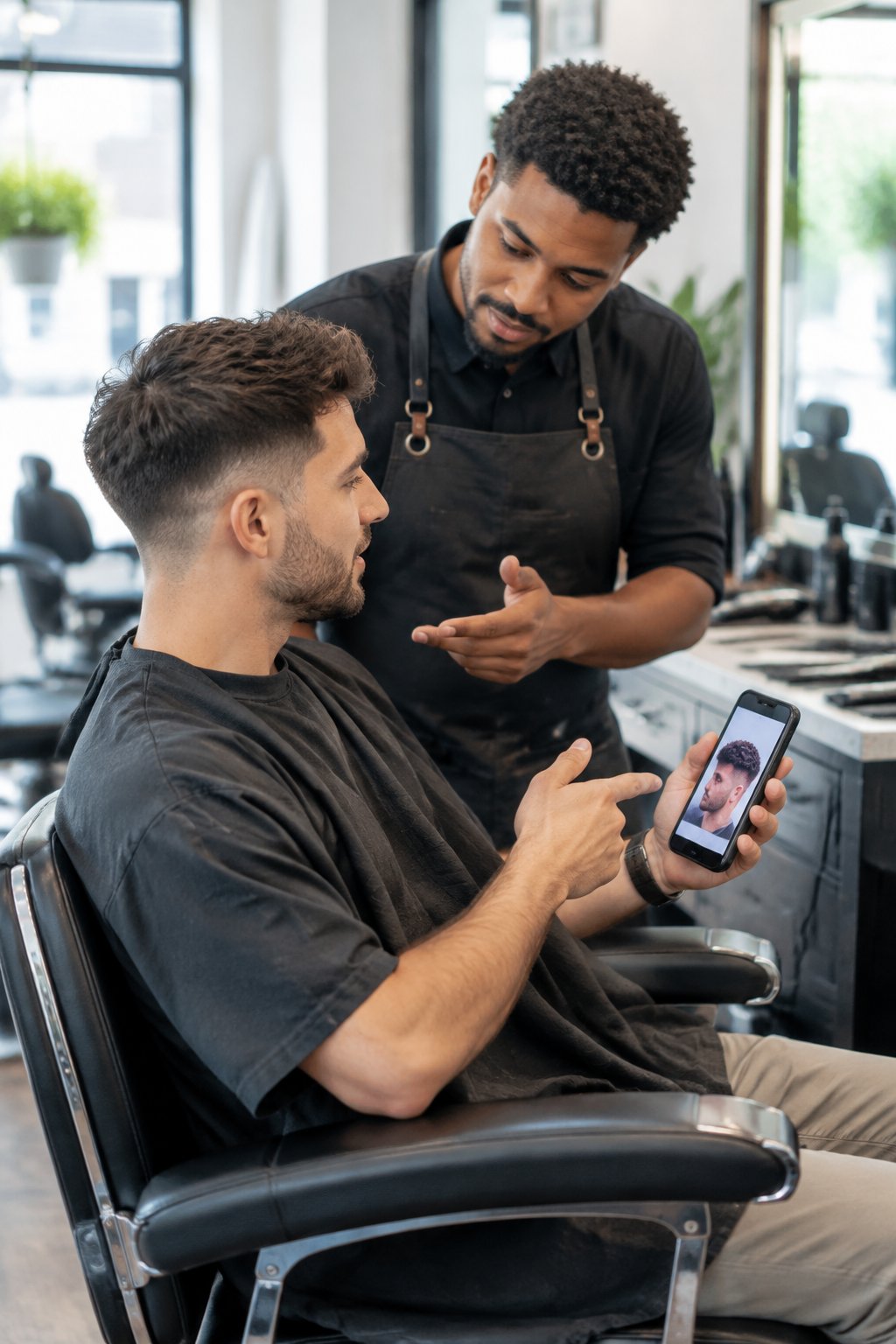
Give your barber a reference and describe the specific details you want to keep. Clear instructions about the outline, top length, and finish help turn a social-media look into a cut suited to your hair.
What details should you point out in a reference photo?
Choose a reference that shows the front and sides, and bring a second angle if the back shape matters. Point out the fringe, fade height, part, or layers you want your barber to preserve.
Mention any differences between your hair and the reference, such as curl pattern, density, or hairline. That gives your barber useful context for adjusting the shape.
How can you describe the length, taper, and finish?
Use measurements or familiar landmarks when you can: specify the top length, where the fade begins, and how close you want the sides cut. For a taper, explain whether you want it around the temples and neckline or carried higher.
Describe the finish with clear terms such as textured, smooth, natural, or sharply lined. Before the cut starts, repeat the agreed length and ask your barber to confirm the fade height.