A uniform buzz cut is the strongest starting point for reducing contrast between thinning and fuller areas because you keep the hair close and even across your scalp. If you want more shape, a crew cut or low taper adds detail while keeping the sides short; fades and fringes draw more attention to particular parts of your hairline.
Your face shape, hair texture, and comfort with scalp exposure all affect which length feels right. Ask your barber to start conservatively, then go shorter after you see how the guard length looks in natural light.
Quick picks:
- Best for even coverage: Uniform Buzz Cut
- Best for a very short finish: Induction Cut
- Best for a little more length: Crew Cut
- Best for crisp sides: Low-Fade Buzz Cut
1) Uniform Buzz Cut
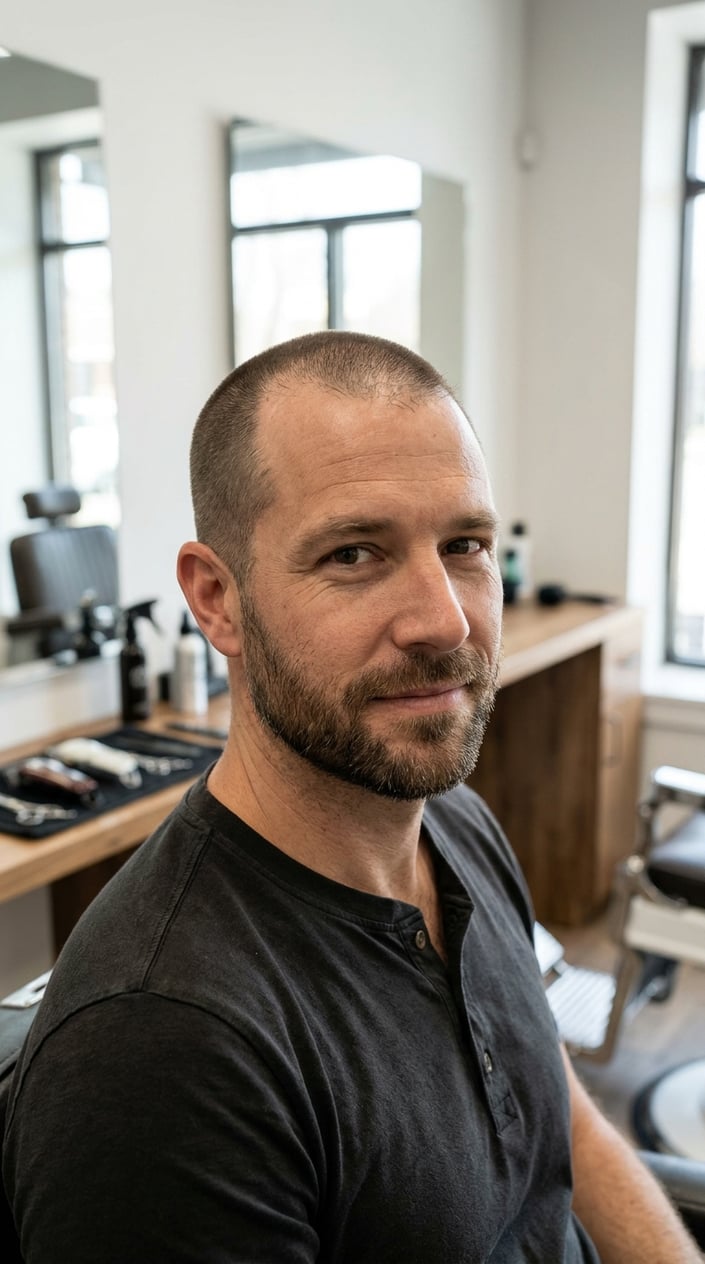
A uniform buzz cut gives you even length across the scalp, which helps reduce the visual contrast between a receding hairline and denser areas. Ask your barber for one guard all over, such as a #2 or #3; the shorter guard shows more scalp.
This straightforward shape suits most hair textures and keeps the temples from becoming a focal point. Your hairline remains visible, so the cut works best when you want a clean, balanced look instead of added fringe.
PRO TIP
Have your barber start with a longer guard. You can always go shorter after checking the length in daylight.
2) Induction Cut
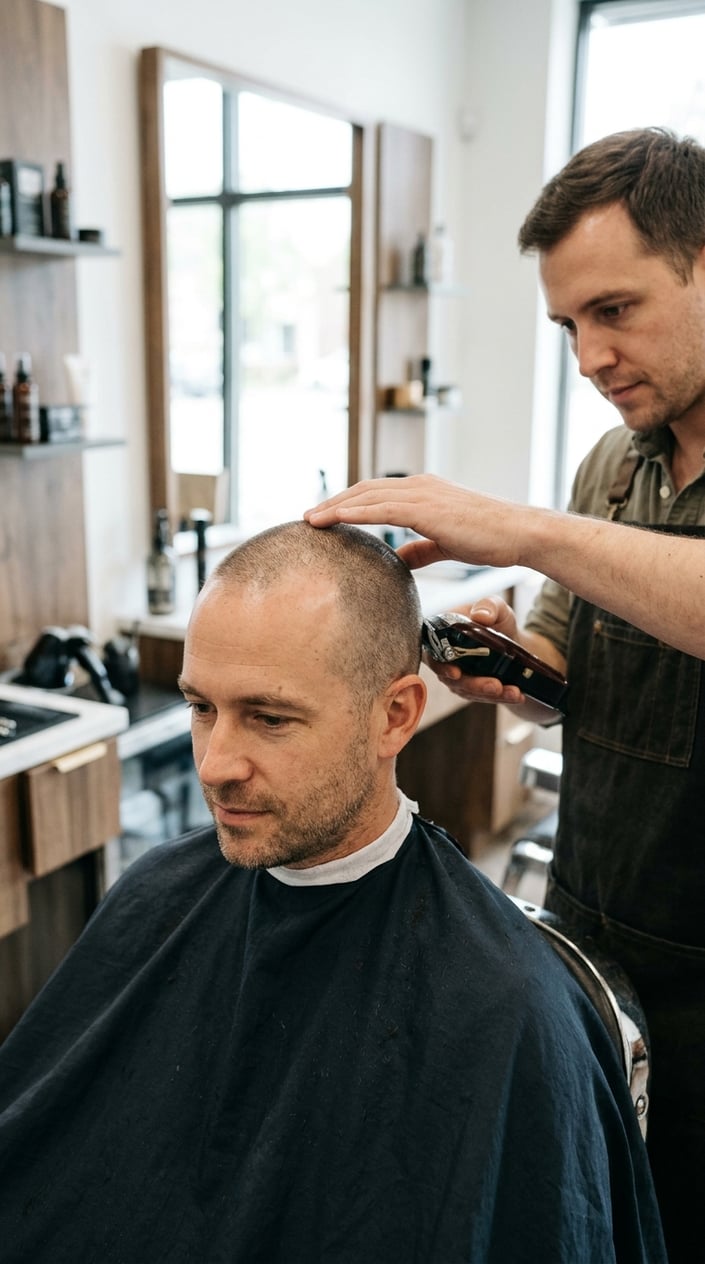
An induction cut keeps your hair extremely short and even, reducing the difference between thinning spots and fuller growth. Ask for a clipper cut with no guard or a very short guard, and discuss your scalp visibility before the clippers start.
This close finish suits you if you prefer a spare, low-fuss shape. It also puts your natural hairline and scalp fully in view, so check for marks or uneven pigmentation if that affects your comfort.
PRO TIP
Request a small test patch at the back before committing to a no-guard cut.
3) Burr Cut

A burr cut leaves a touch more length than an induction cut while keeping the whole head close and consistent. Ask for a short guard all over, commonly a #1, then adjust the length to suit your scalp and hair density.
The subtle extra coverage softens the starkness of a bare-clipper finish. Your temples still show, though the uniform length makes the transition between hairline and crown feel less pronounced.
PRO TIP
Ask your barber to use the same guard from front to back for a true burr silhouette.
4) Butch Cut
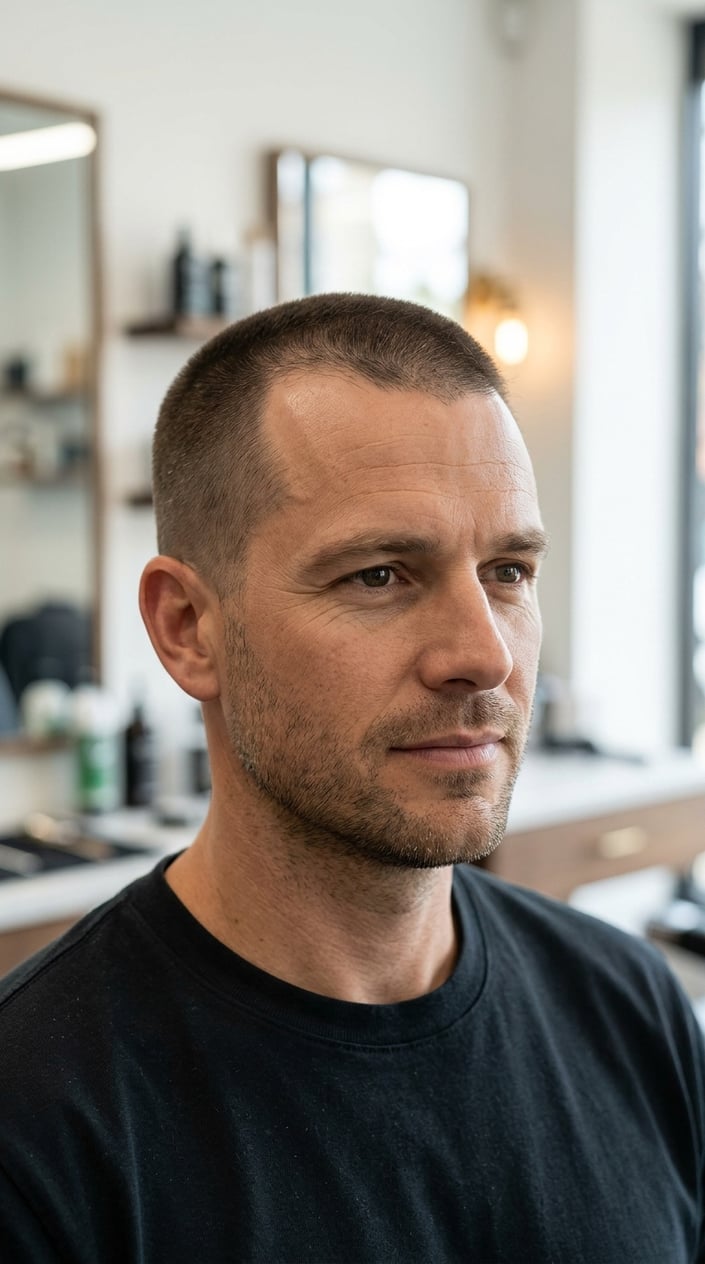
A butch cut gives you a little more coverage while keeping the sides and top at a consistent length. Ask for a #3 or #4 guard all over; this leaves enough hair to soften scalp show-through while maintaining a neat outline.
Choose this cut if you want an easy grow-out and have enough density to carry the extra length evenly. Thin patches may stand out more as the hair grows, so ask your barber to check the crown before settling on a longer guard.
PRO TIP
Keep the first trim conservative and compare the top with the crown before choosing a longer setting.
5) Crew Cut
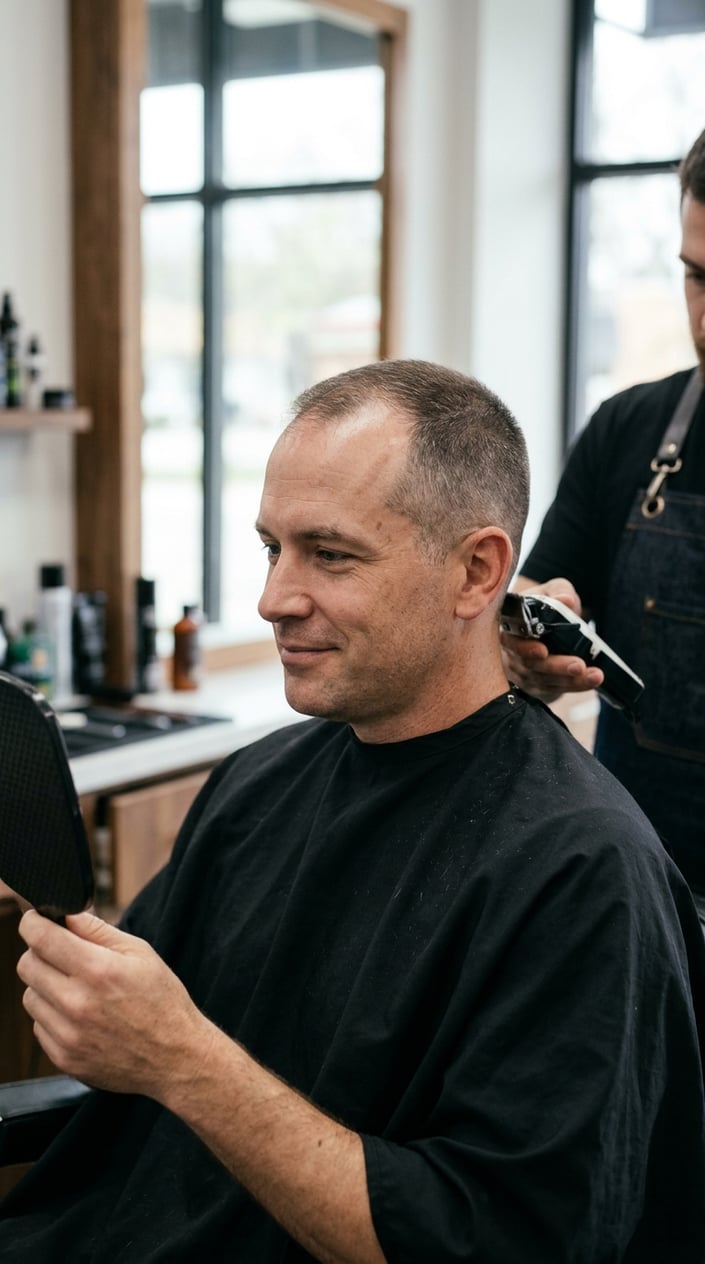
A crew cut adds a modest length difference, with a slightly longer top and shorter sides that give your head more shape. Ask for a short, blended top and a tidy taper at the sides; your barber can keep the front low and natural.
This option works well if you want more styling shape than a one-guard buzz. The longer top needs enough density to look even, so keep it close if thinning across the front or crown is prominent.
PRO TIP
Tell your barber you want a low-profile crew cut, with no tall lift at the front.
6) High-and-Tight Buzz Cut

A high-and-tight buzz cut keeps the sides very short and leaves a compact patch of slightly longer hair on top. Ask for a high fade or close clipper work around the sides, with a short, even top.
The sharp side contrast creates a strong outline, which suits you if you like a crisp military-inspired shape. It also draws attention to the top and temples, so choose a softer, lower transition if your hairline is your main concern.
PRO TIP
Ask your barber to keep the top short enough to blend naturally with your front hairline.
7) Caesar Buzz Cut

A Caesar buzz cut pairs short sides with a cropped, forward fringe that gives the front a defined edge. Ask for a short Caesar with a textured fringe and a close, even finish through the sides.
The fringe can soften the look of a receding front when you have enough hair to form it. Keep the front short and irregular; a dense, blunt line can make the hairline look more pronounced.
PRO TIP
Ask your barber to point-cut the fringe, trimming small sections vertically for a softer edge.
8) Textured Buzz Cut
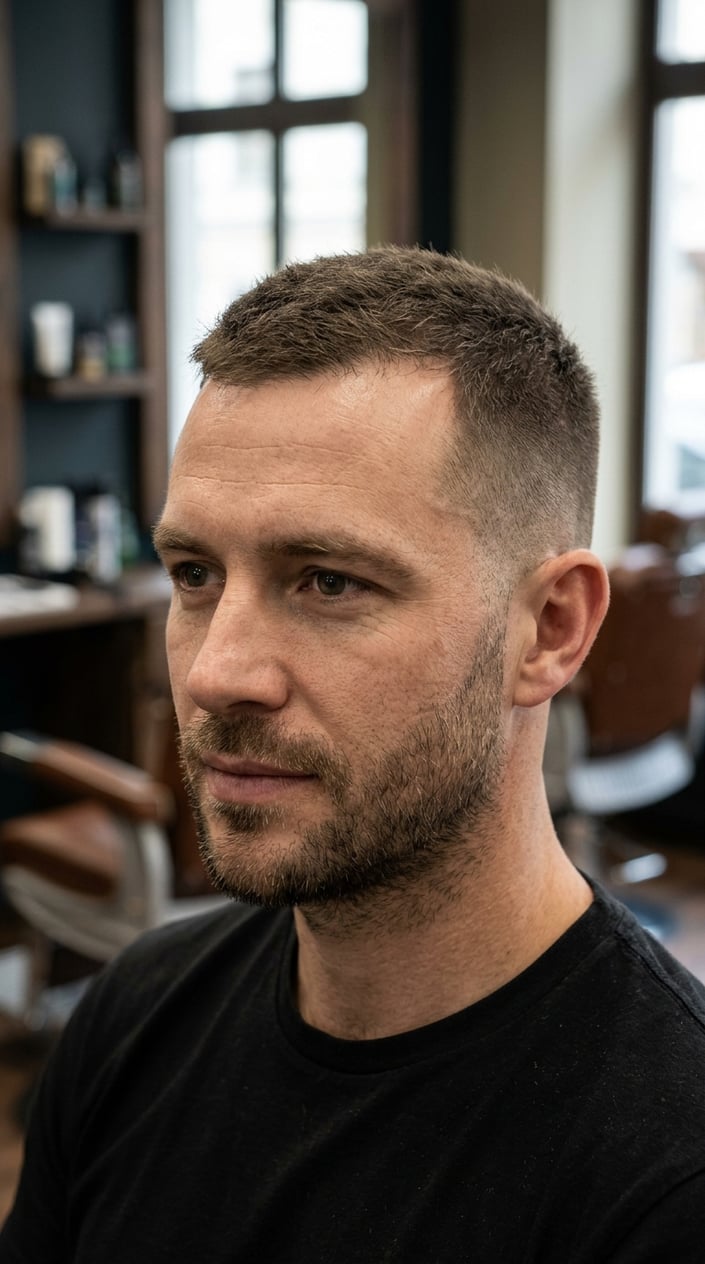
A textured buzz cut adds a little separation on top while keeping the silhouette short and controlled. Ask for a short scissor or clipper cut with choppy texture, plus a soft taper at the sides.
This style suits you if your hair has enough density to show the texture. A matte styling paste adds definition without shine, which keeps sparse areas from looking more exposed.
PRO TIP
Use a pea-sized amount of matte paste and work it through dry hair with your fingertips.
9) Buzz Cut With a Low Taper

A low taper cleans up the sideburns and neckline while leaving most of your hair at a consistent short length. Ask for a low taper around the ears and nape, with a uniform buzz through the top.
The subtle transition keeps the sides neat without creating a high-contrast band beside your temples. This is a useful choice if you want a polished outline and prefer your natural hairline to stay unaltered.
PRO TIP
Specify “low taper only” so the fade stays close to your ears and neckline.
10) Low-Fade Buzz Cut
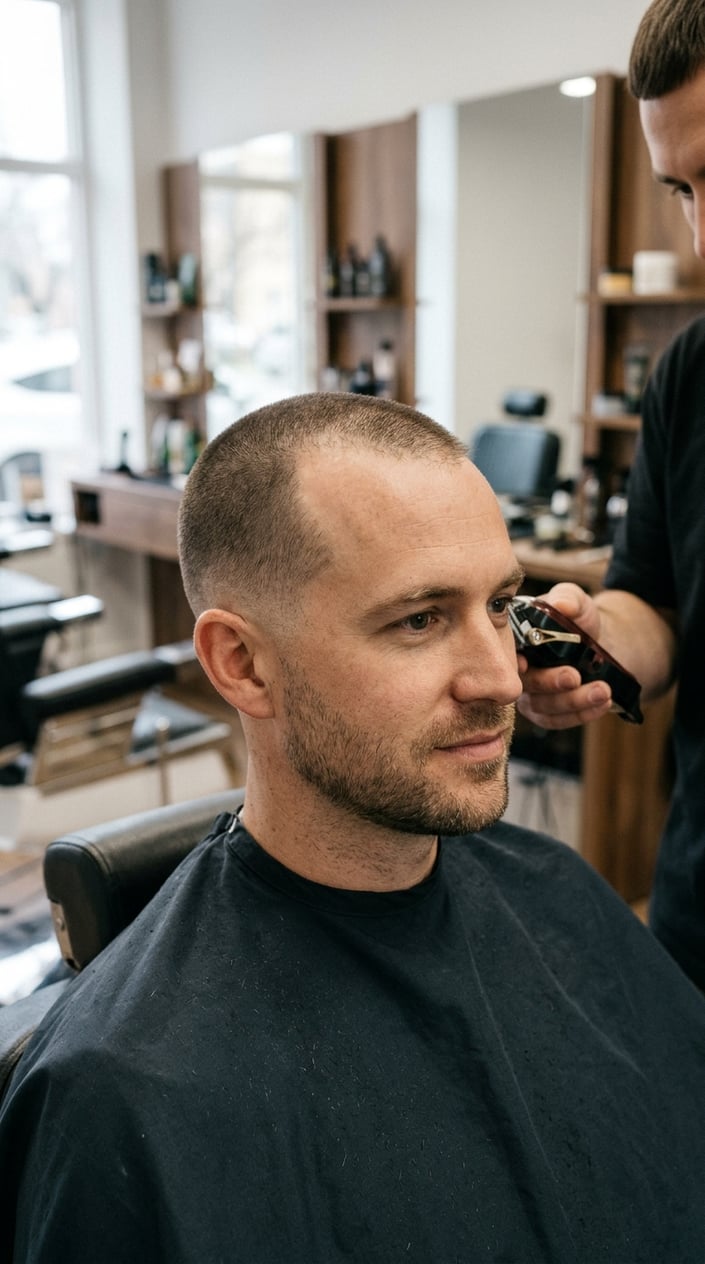
A low fade blends the hair close to the skin near the ears, then gradually darkens as it rises. Ask for a low fade with a short, even top to keep the main contrast near the lower sides of your head.
The low placement preserves more fullness around the temples than a high fade. Your hairline stays visible, while the fade gives the cut a crisp edge that needs regular cleanup to stay sharp.
PRO TIP
Book a side cleanup when the fade grows out, and keep the top length unchanged between visits.
11) Mid-Fade Buzz Cut
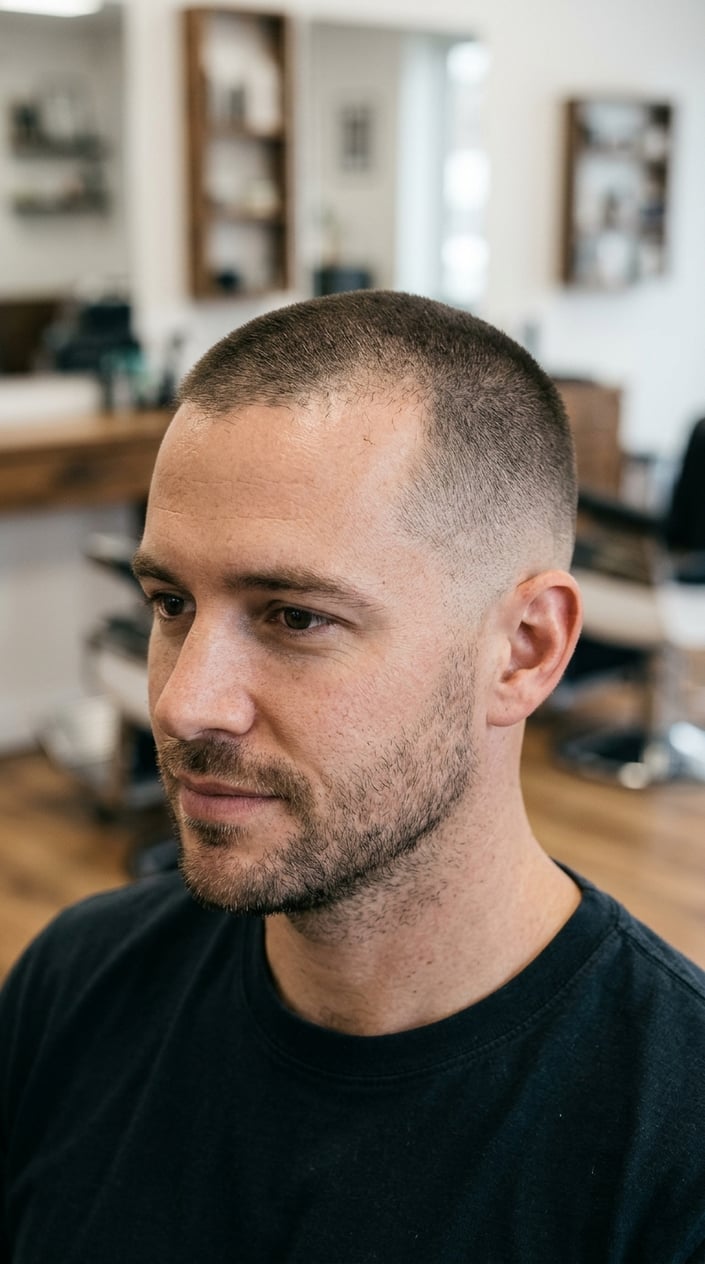
A mid-fade buzz cut starts its blend around the temples, giving the sides a more noticeable gradient than a low fade. Ask for a mid fade with a short, balanced top and a natural front edge.
This shape has a sharper profile, though the fade places added attention near your temples. Choose it when you want defined sides and feel comfortable with a more visible transition beside the hairline.
PRO TIP
Bring a reference photo showing the fade height you want; “mid” can mean different placements to different barbers.
12) Temple-Fade Buzz Cut

A temple fade tapers the hair around the temples while leaving the back and much of the side length fuller. Ask for a low temple fade with a short buzz on top and a natural hairline finish.
This detail adds definition around the face without fading the entire side. Since the blend sits near the corners of your hairline, it emphasizes that area, so request a soft transition if you want a less pronounced outline.
PRO TIP
Ask your barber to preserve your natural corners instead of pushing the hairline back for a sharper edge.
13) Short Flat-Top Buzz Cut
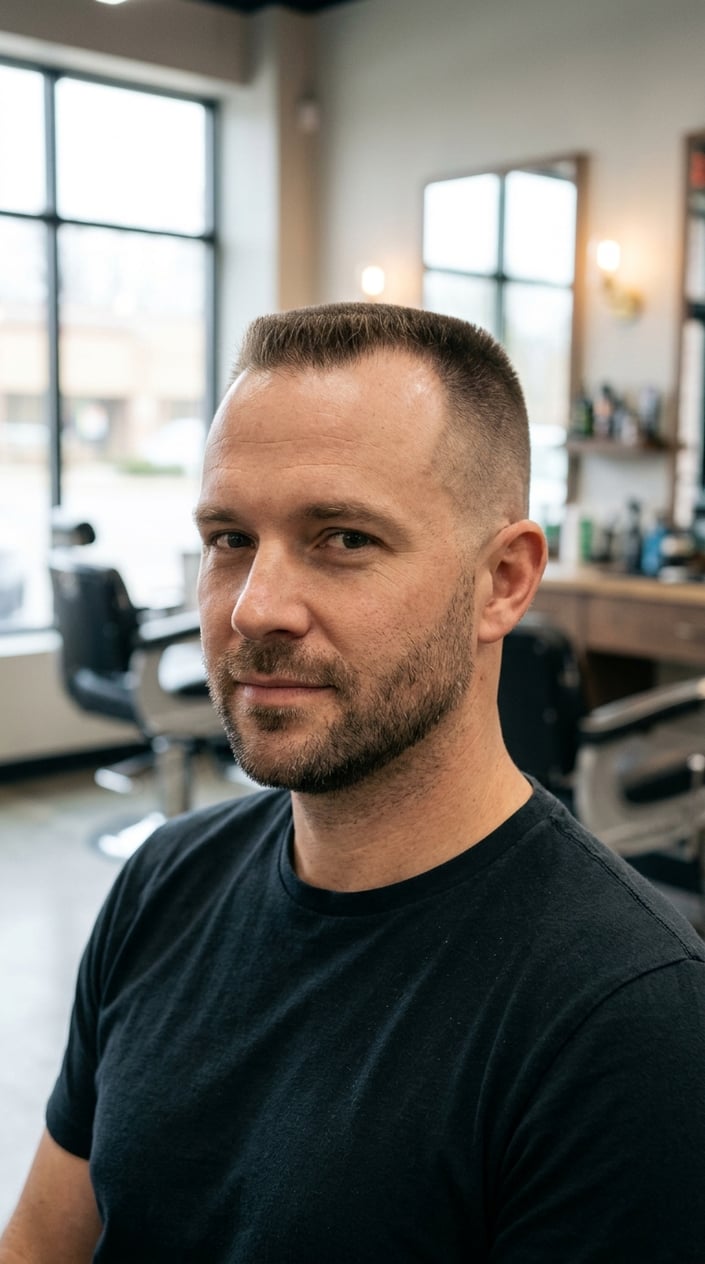
A short flat-top buzz cut keeps the top level and the sides closely trimmed, creating a clear, squared silhouette. Ask for a low flat top with a short fade, and let your barber assess whether your top has enough density for a clean plane.
This cut suits dense, straight, or tightly coiled hair that holds a defined shape. The squared outline draws attention to the top and front, so a flatter, softer version is easier to wear with temple recession.
PRO TIP
Request a low height at the front to keep the shape balanced with your natural hairline.
14) Afro-Textured Buzz Cut

An afro-textured buzz cut keeps coils short and even, creating a compact shape that reduces contrast across the scalp. Ask your barber for a clipper length suited to your curl pattern and a natural line-up that follows your existing growth.
Your curl texture can provide a close, uniform finish at short lengths. A sharp line-up creates a crisp frame and may call attention to temple recession, so ask for a softer edge if you want the hairline to look less defined.
PRO TIP
Show your barber how your hair sits dry, since tightly coiled hair can look shorter after it contracts.
15) Buzz Cut With a Beard

A buzz cut with a beard balances a short scalp silhouette with facial hair that adds shape around your jaw. Ask for an even short buzz and a beard trim that follows your natural cheek and neckline growth.
This pairing shifts some visual weight to your lower face, while the close cut keeps thinning areas from competing with longer hair. Match the beard length to your face shape and grooming routine; a beard needs regular edging to stay intentional.
PRO TIP
Keep the beard neckline clean and leave its natural cheek line intact for a balanced finish.
How to Choose a Buzz Cut for a Receding Hairline
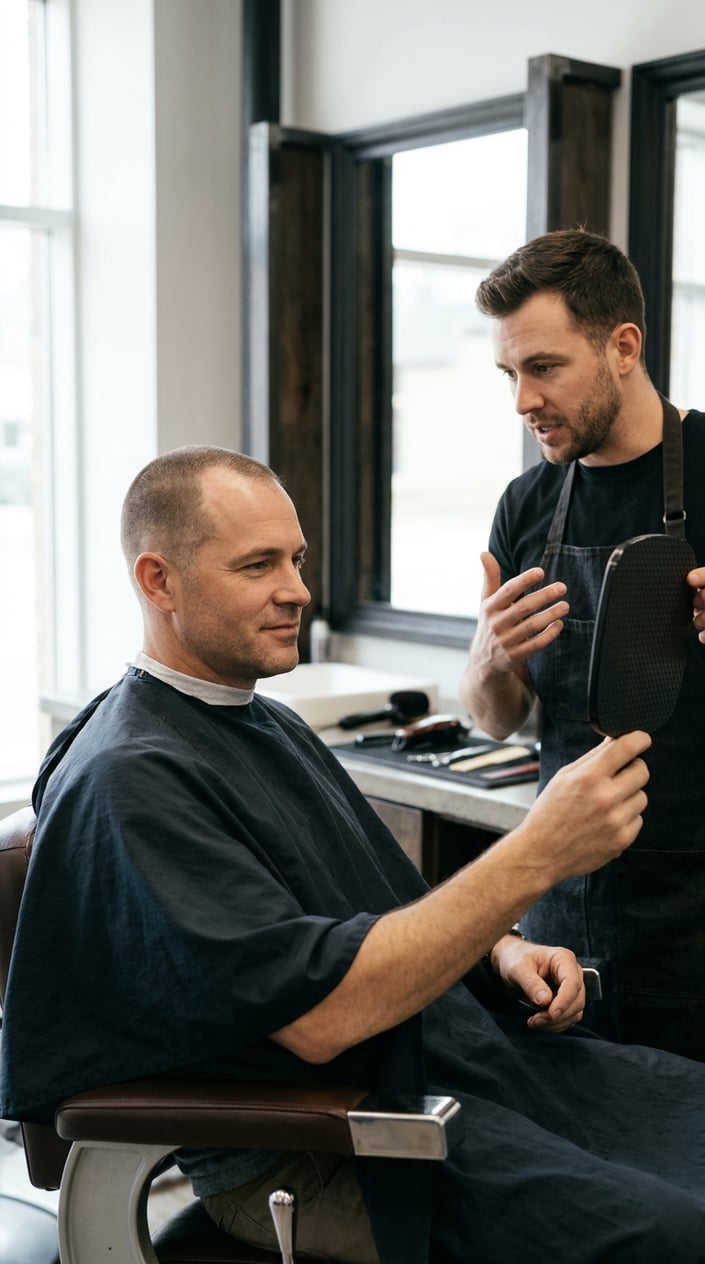
Choose a buzz cut by matching its length and outline to your face shape, hair density, and comfort with scalp exposure. Bring a clear reference photo and tell your barber which areas you want kept soft or emphasized.
How should face shape affect the cut?
Use a little more height on top to add length to a round face, and keep the silhouette flatter if your face is long. Square faces suit close, even cuts, while a low taper softens the outline around a narrower face.
How short should you go?
Start with a #3 or #4 guard if you want coverage and a cautious first change. A #1 or shorter creates a closer finish with more scalp visible; ask your barber to test a small area before taking the whole head down.
When should you keep the hairline natural?
Keep your natural edge when temple recession is a concern or you want a low-maintenance finish. A pushed-back line-up creates a sharper border, while a soft natural outline blends more easily as your hair grows.
9 Buzz Cut Maintenance Tips That Save You Time and Money
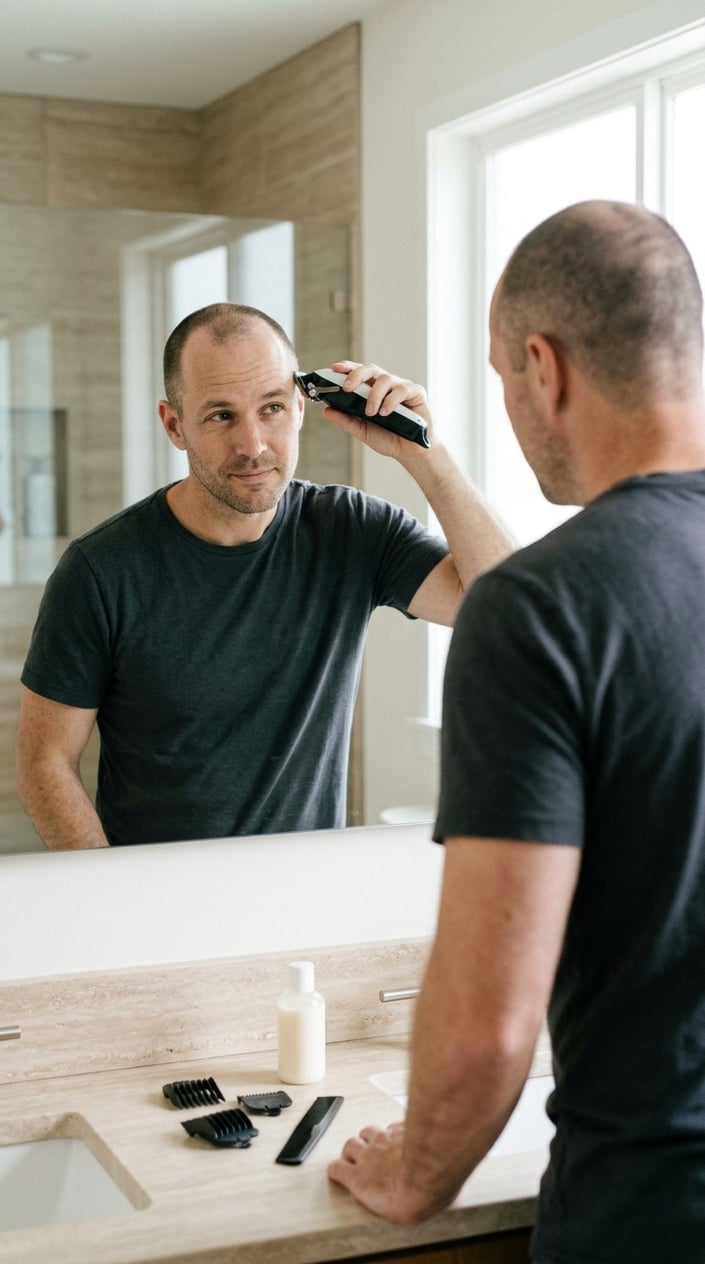
A steady trim routine and careful clipper setup help you keep a buzz cut even without paying for a full cut every time. Use these nine habits to avoid rushed fixes and unnecessary barber visits.
Set a realistic trim schedule
Trim every two to four weeks for a consistently close buzz, adjusting the interval to your preferred length and how quickly your hair grows. A longer guard gives you more room between trims.
Use the right clipper guard
Use the same guard across the top when you want an even length. Start with a longer guard, then step down only after checking the result.
Clean and oil your clippers
Brush hair out of the blades after each trim and apply clipper oil as directed by the manufacturer. Clean blades move more smoothly and help prevent snagging.
Trim on clean, dry hair
Wash away product and let your hair dry fully before clipping. Dry hair gives you a more consistent read on length and helps the guard move evenly.
Check the cut in good lighting
Use bright, even light and check the front, sides, crown, and back with a second mirror. Run your hand over the scalp to find spots the mirror misses.
Maintain faded sides between barber visits
Use a barber for the fade and keep your at-home touch-ups limited to the neckline or sideburn edges. Clipper-over-comb work and fade blending take practice, and a high patch can mean a corrective cut.
Protect your scalp from the sun
A close cut leaves more scalp exposed, so apply broad-spectrum SPF 30 or higher to uncovered areas. Reapply according to the label, especially after sweating or swimming.
Use a gentle cleanser and moisturizer
Wash your scalp with a gentle cleanser, then apply a light, fragrance-free moisturizer if it feels dry. Skip heavy product buildup that makes a short cut look greasy.
Compare at-home trims with barber visits
Add up your clipper cost, replacement blades, and time against the price of regular barber appointments. A home trim suits a uniform one-guard cut; book a barber when you want a fade, taper, or precise shape.