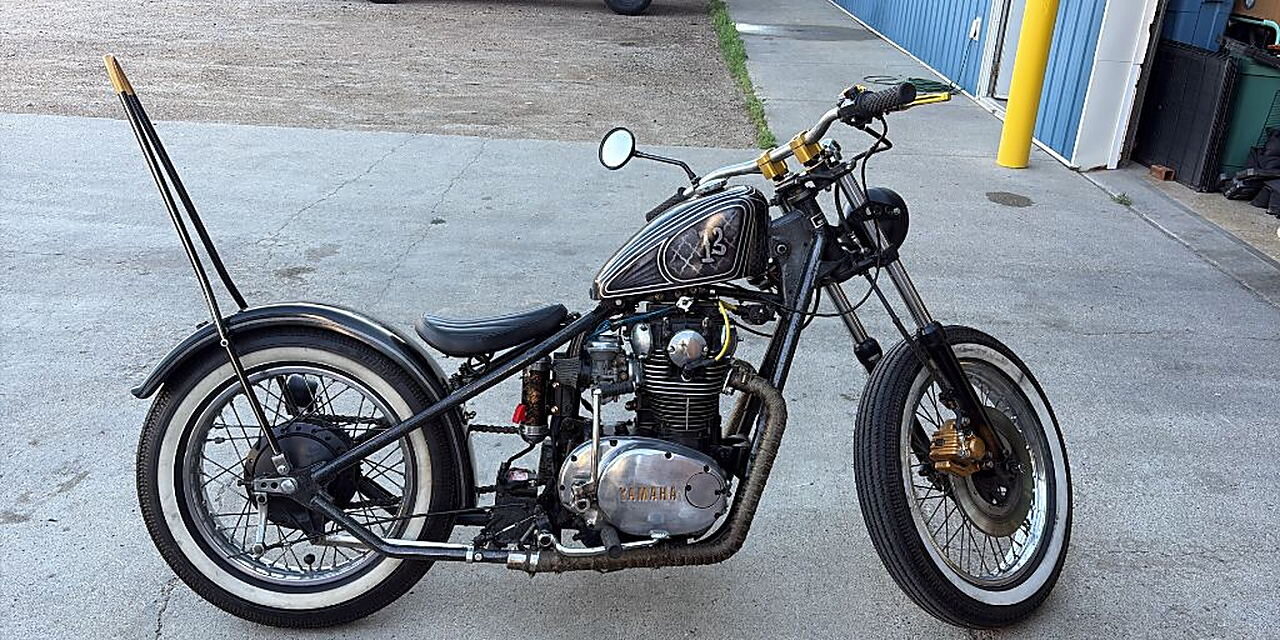
Brian’s first chopper build — black and gray, Southern California attitude, and a whole lot of rattle can
Every XS650 has a story about how it came back from the dead. Brian’s starts with a non-running 1978 project bought in late 2025 and ends with a tall-sissy-bar chopper that looks like it rolled out of a 1970s Southern California garage — which, more or less, is exactly the point.
He named the build the Yamachopper, and it’s his first one — done almost entirely in his own garage.
From Project to Chopper
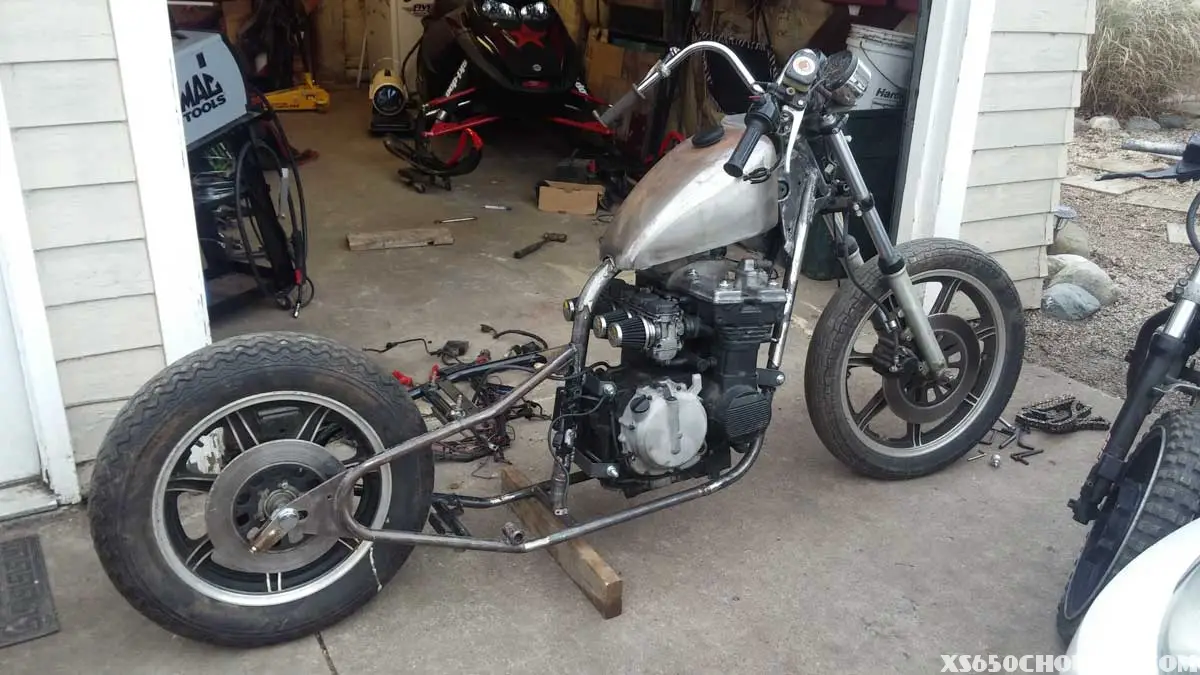
“Bought this in late 2025 as a non-running project. Spent several months now building her to what I wanted. New brakes, BS38 carbs rebuilt, built a new sissy bar, adjusted and remounted the tank, new bars, completely rewired and built a new wiring cabinet, new fuel lines, electronic ignition — PAMCO, upper and lower oil filters, a lot of cleaning up rattle can black paint sprayed all over the motor, wheels and multiple little parts. My favorite part was laying down new paint, trying to give it a Southern California kind of look, but in black and gray but without all the bright colors. It is my first chopper build, and it has definitely been a challenging but enjoyable experience.”
That’s a genuinely complete refresh in one winter’s worth of weekends: brakes, fuel and ignition systems, wiring, bodywork and paint. The BS38 carb rebuild and PAMCO electronic ignition are the two upgrades that change how an XS650 actually behaves day to day — the factory points setup is fine right up until it isn’t, and a fresh set of 38mm carbs on a sorted twin is one of the best things you can do for a bike that sat.
The Paint Is the Star
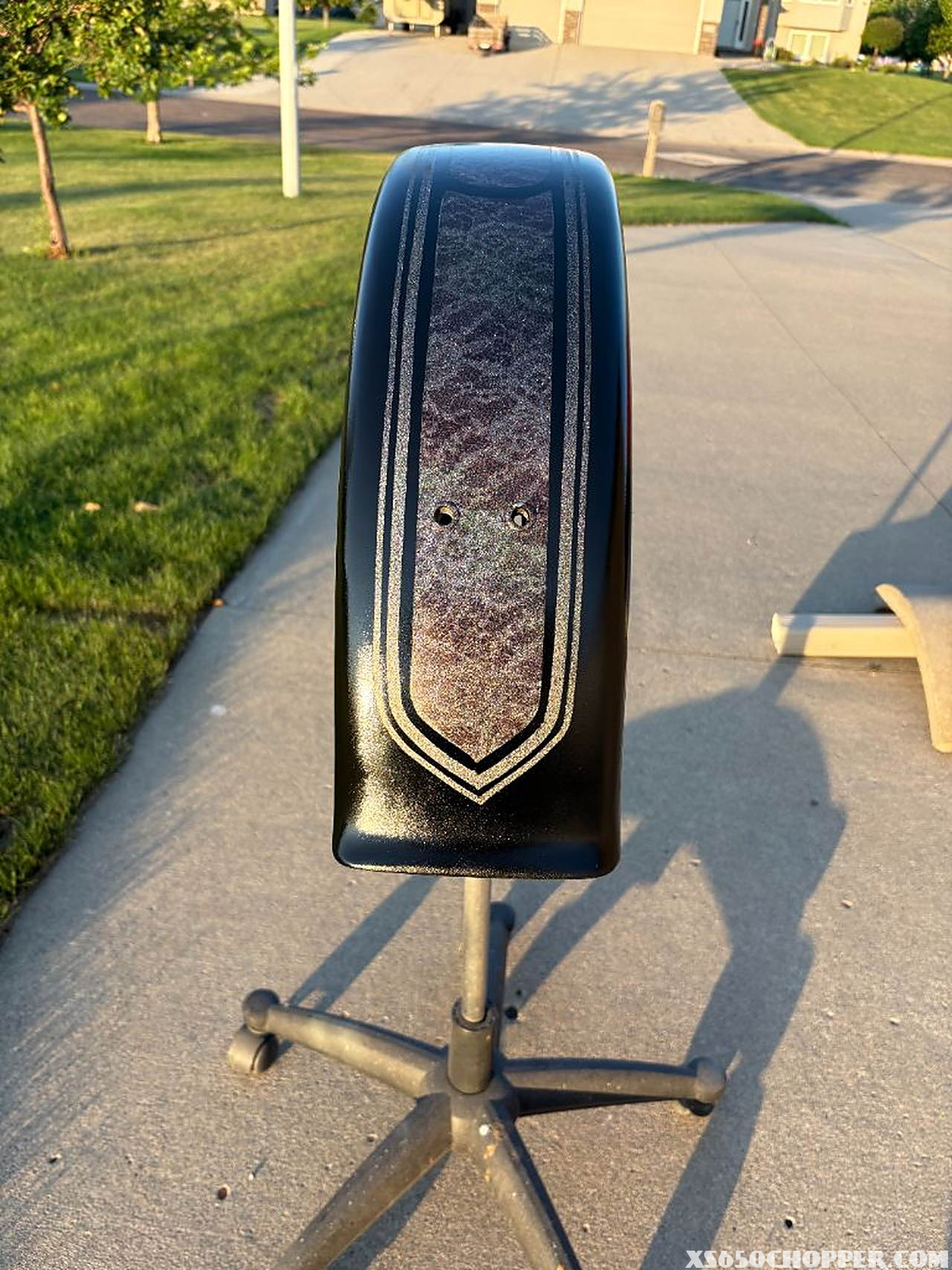
Brian says the paint was his favorite part of the build, and the photos make it easy to see why.
The base is a deep, dark black carrying a heavy metalflake that shifts toward a subtle purple-bronze in direct sun. Over that, sweeping concentric silver-flake pinstripes frame a central panel filled with a Moroccan quatrefoil lattice pattern and a stenciled “13” in silver flake — a clean, deliberate bit of 1970s custom language rather than a copy of any one period bike.
The rear fender carries the same treatment: a pointed chevron panel bordered in double silver metalflake pinstripes, filled with a marbled, crystallized lace pattern that catches light at angles.
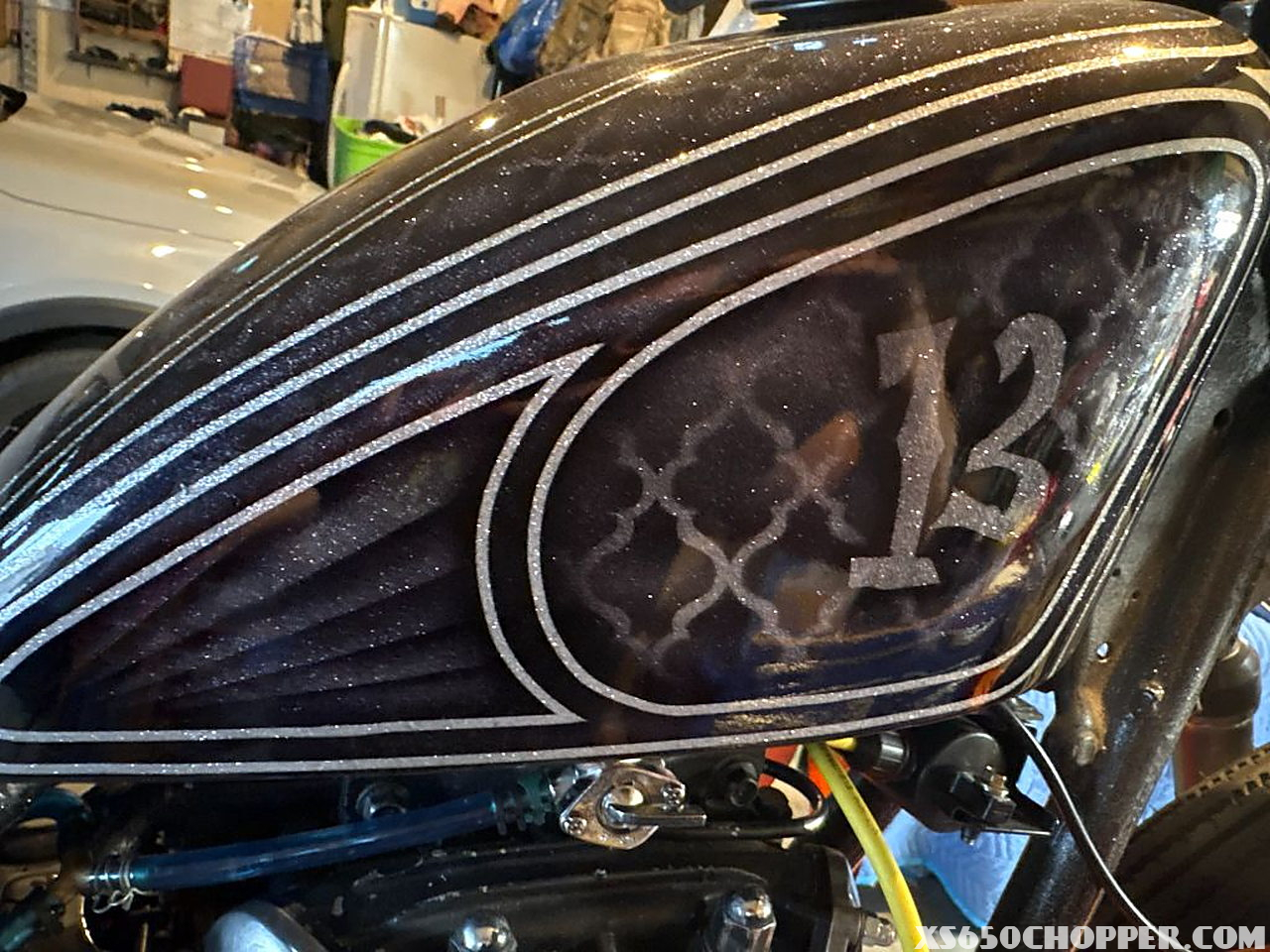
It’s the detail that pulls the whole “black and gray, but not boring” brief together. Black-on-black reads flat; adding flake and lace to a black-and-gray palette is what gives it depth without ever reaching for a bright color.
The Chassis and Stance
The tank sits high on the backbone, a small teardrop unit that Brian remounted and repositioned — a deliberately stripped-down look that leaves the top end of the engine exposed.
Up front, low-rise drag-style bars sit on tall gold-tone risers, with black grips and gold-accented levers, and a single round mirror on the left. A compact black bullet headlight hangs low between the triple trees, and the front end is clean enough to run without a front fender at all.
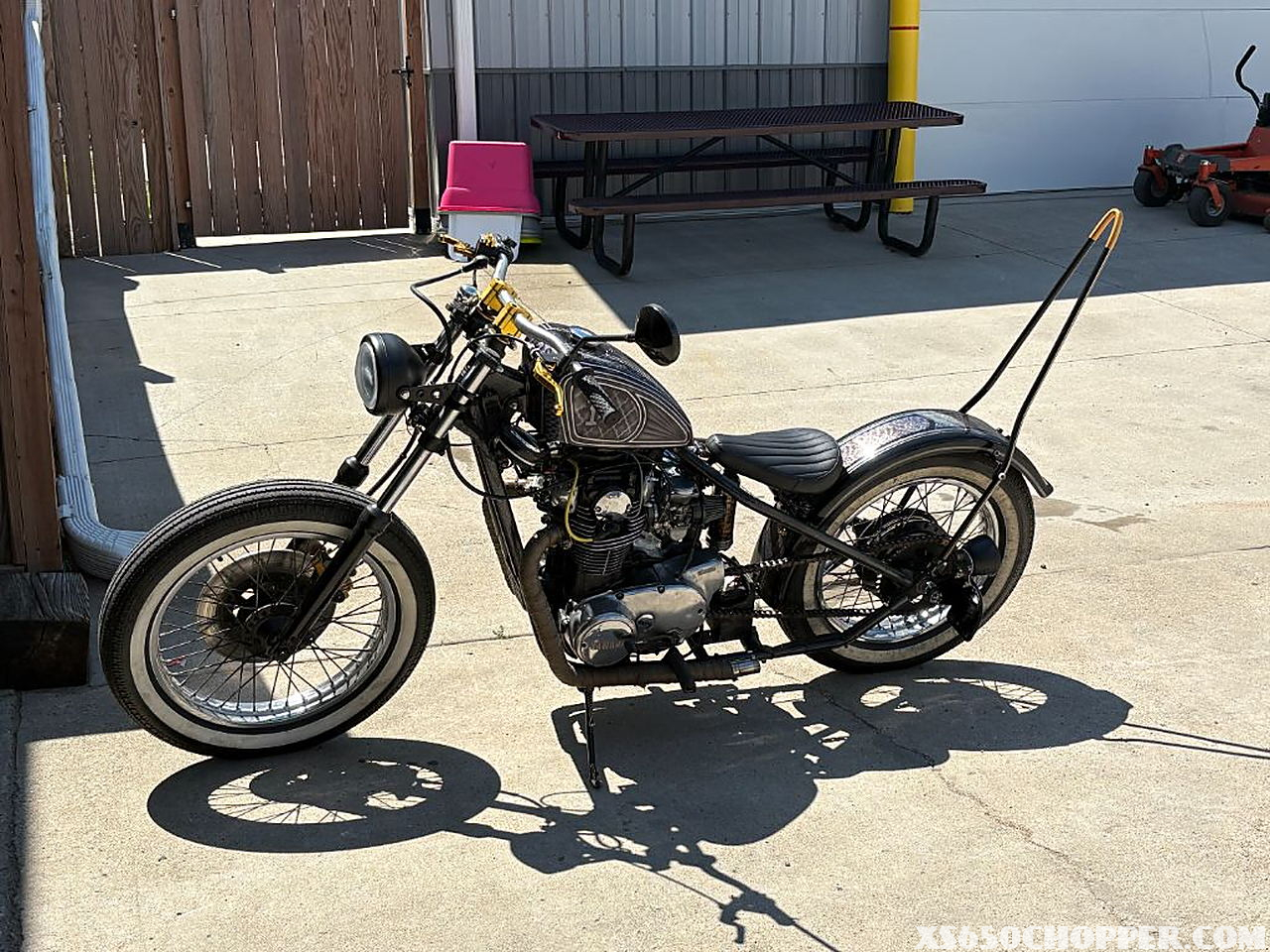
The rear is where the chopper DNA really shows. Brian built a new sissy bar — tall, slender, upright tubing rising well above the seat line — mounted over a closely radiused bobbed rear fender. The seat is a low-profile black solo saddle tucked tight against the tank, which is exactly right for the look: nothing between the tank and the rear tire that doesn’t need to be there.
Wheels, Engine and Details
- Wheels: chrome wire-spoke rims front and rear, laced to black hubs, wrapped in vintage-style wide whitewall tires — the single biggest visual throwback on the bike.
- Exhaust: pipes routed low and tight, headers wrapped in tan fiberglass heat wrap, exiting straight past the rear frame.
- Engine: the air-cooled parallel twin wears black-finned barrels and head with polished aluminum side covers; the “YAMAHA” script is still legible on the case. External pod filters feed those rebuilt BS38s, and the kicker is still there.
- Blackout work: a lot of the smaller parts got the rattle-can treatment, which is what makes the chrome and the paint pop rather than competing with it.
- Wiring: completely redone, with a new wiring cabinet tucked away — the invisible work that decides whether a bike is actually enjoyable six months later.
Build Specs at a Glance
| Area | What Was Done |
|---|---|
| Build name | 1978 XS650 Yamachopper |
| Builder | Brian — his first chopper build |
| Starting point | Non-running 1978 XS650 project, bought late 2025 |
| Brakes | New |
| Carburetion | BS38 carbs rebuilt |
| Ignition | Electronic — PAMCO |
| Fuel system | New fuel lines; tank adjusted and remounted |
| Oil system | Upper and lower oil filters |
| Electrical | Complete rewire with a new wiring cabinet |
| Bars | New low-rise bars on tall gold-tone risers |
| Rear | Custom-built sissy bar; bobbed rear fender |
| Paint | Black and gray, silver metalflake pinstriping, lace panels, “13” graphic |
| Finish work | Black refreshed on engine, wheels and small parts |
| Style | Southern California influence, no bright colors |
First Build, No Shortcuts
There’s a specific kind of bike that comes out of a first chopper build: one where the builder is still learning, but has clearly thought about what he wants it to look like. The black-and-gray paint, the tall bar out back, the whitewalls — none of it is accidental, and none of it needed a big budget. It needed time and a willingness to tear into a non-running bike and rebuild it end to end.
“It has definitely been a challenging but enjoyable experience,” Brian says. From the outside, that reads like an understatement.
Want your XS650 featured? Send us your build photos and the story behind them — every bike has one.