A well-chosen gym outfit helps you move freely, manage sweat, and feel prepared before your first set. For most men, the Black Nike Dri-FIT Tank, 7-Inch Shorts, and Metcon 9 Outfit is the strongest all-purpose choice because breathable fabric, practical coverage, and stable training shoes suit lifting, circuits, and conditioning.
Your workout type should guide the details. Lightweight shorts and ventilated tanks suit intense sessions, while joggers, long sleeves, or a hoodie add comfort during warm-ups and cooler gym environments. A clean color palette also makes it easier to build outfits from pieces you already own.
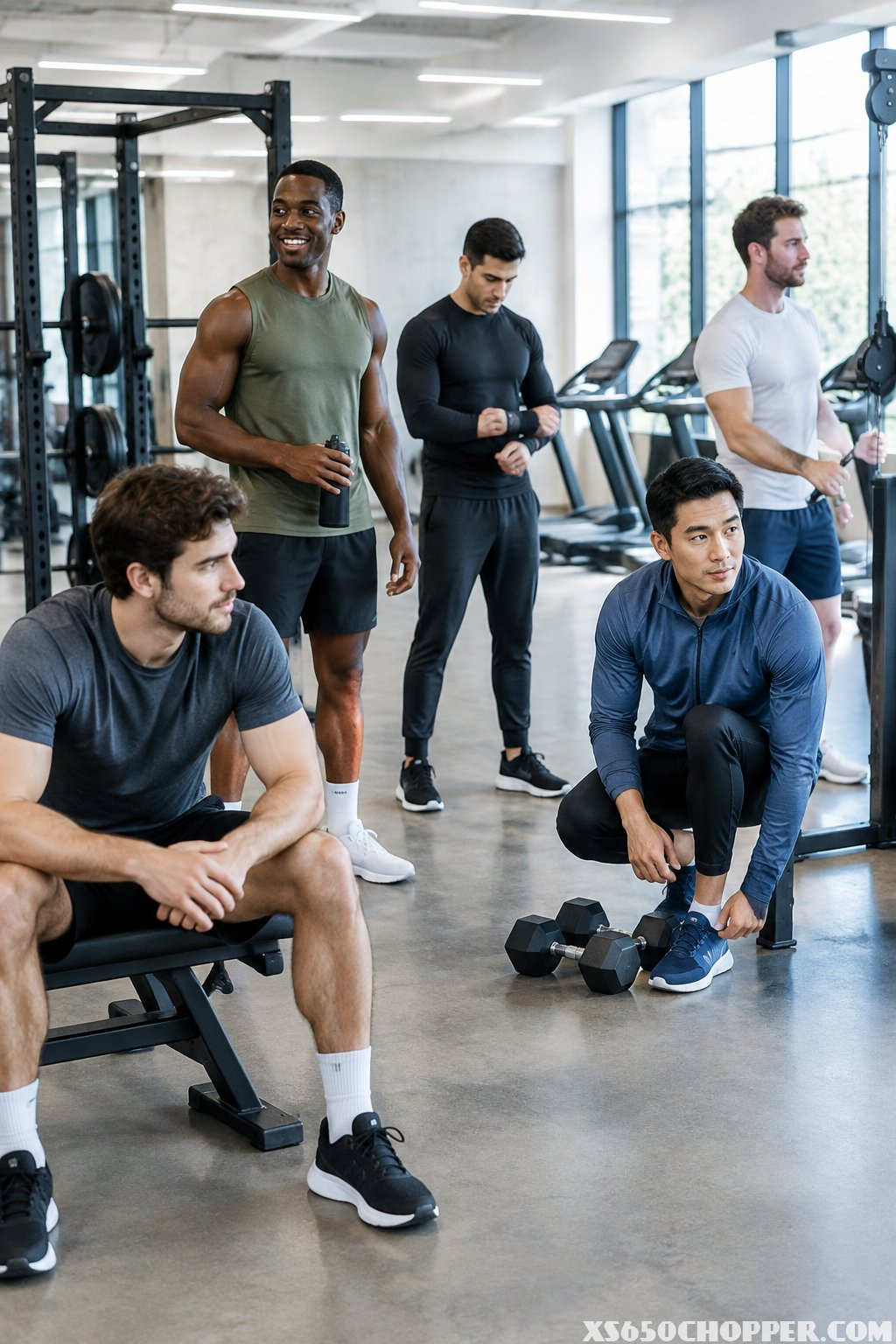
Quick picks:
- Best all-purpose: Black Nike Dri-FIT Tank and Metcon 9
- Best for lifting: Charcoal Fitted Tee and Training Joggers
- Best for cardio: Navy Compression Shirt and 5-Inch Shorts
- Best layered look: Slate Quarter-Zip and Tapered Joggers
1) Black Nike Dri-FIT Tank, 7-Inch Shorts, and Metcon 9 Outfit
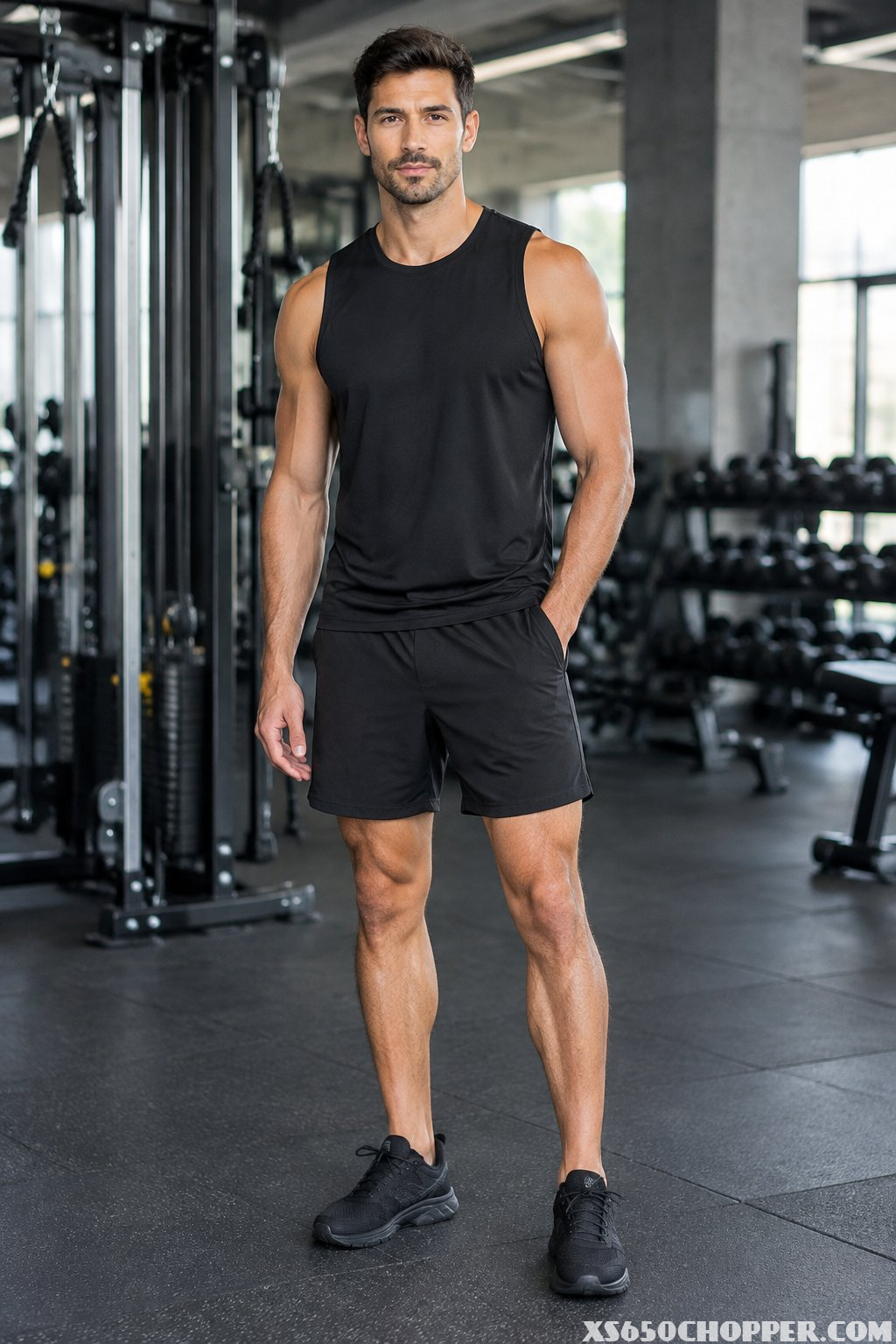
This combination gives you dependable coverage, ventilation, and a stable base for mixed training. The black tank keeps your shoulders and arms unrestricted, while 7-inch shorts provide useful coverage during squats, lunges, and machine work.
Nike Dri-FIT fabric helps move moisture away from your skin during demanding sessions. Metcon 9 shoes add a firm platform for lifting while supporting short bursts of conditioning. Keep accessories minimal with black crew socks and a compact training watch.
PRO TIP
Choose shorts with a secure liner or drawcord so you can move through deep squats without adjusting your waistband.
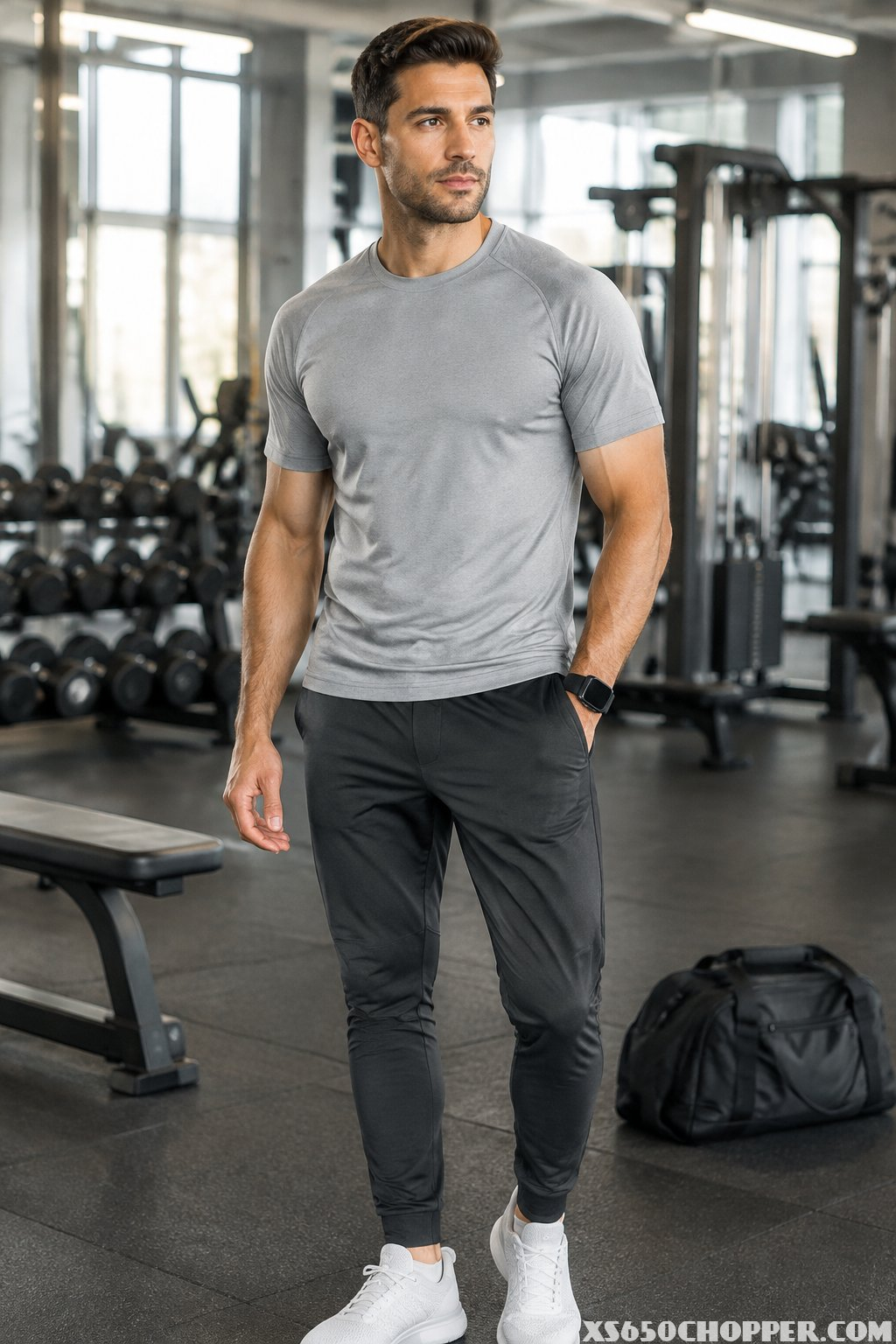
2) Charcoal Fitted Tee, Black Training Joggers, and White Sneakers
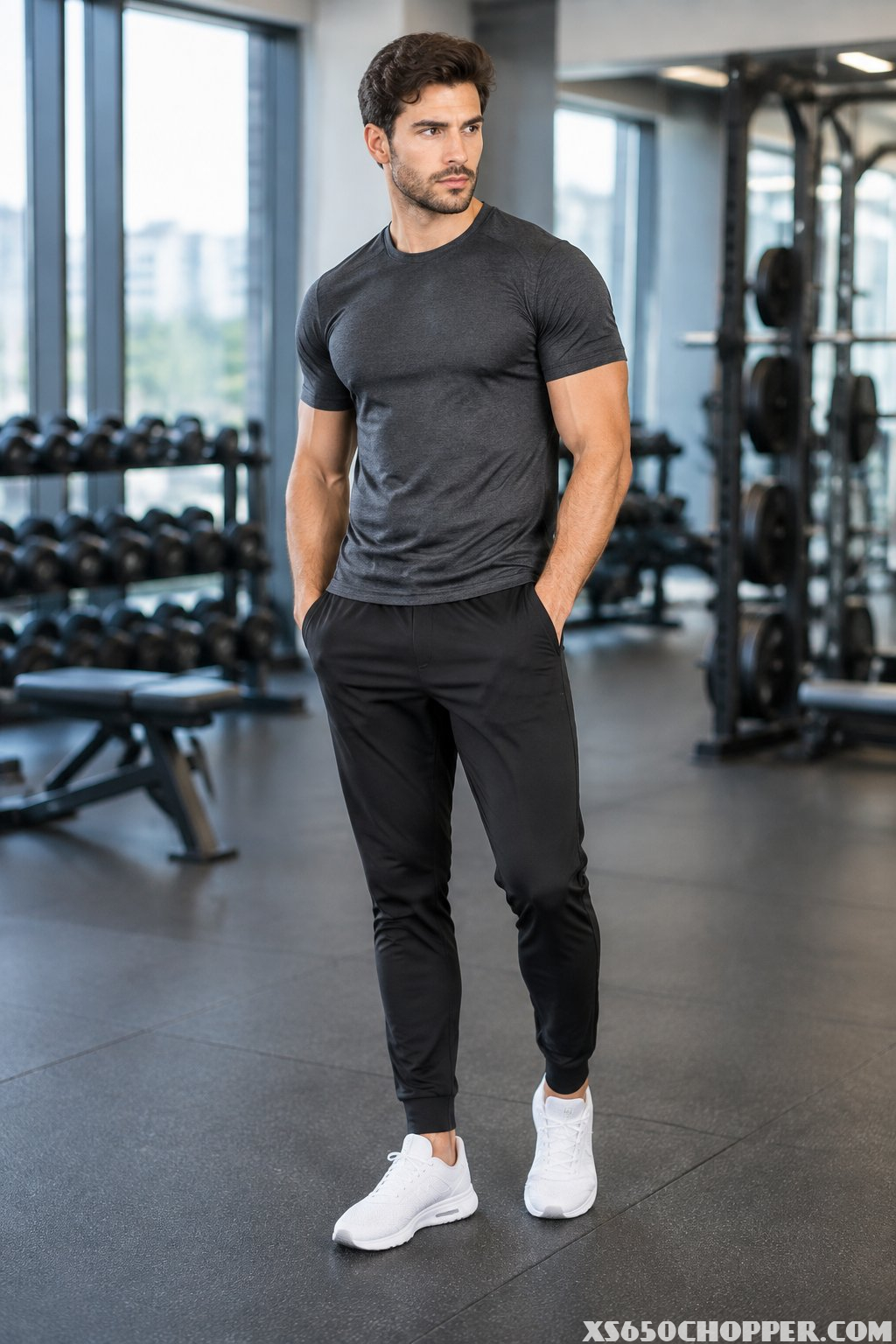
A charcoal fitted tee with black joggers creates a streamlined outfit for strength training and general gym sessions. The fitted upper keeps fabric away from barbells and cables, while tapered joggers offer warmth during rest periods.
White sneakers brighten the dark base and give the outfit a clean finish. Choose a stretch jersey tee and joggers with articulated knees so the silhouette stays neat during deadlifts, presses, and mobility drills.
PRO TIP
Match the sneaker sole to your training surface, especially if you combine free weights with treadmill work.
3) Navy Compression Shirt, 5-Inch Shorts, and Running Shoes
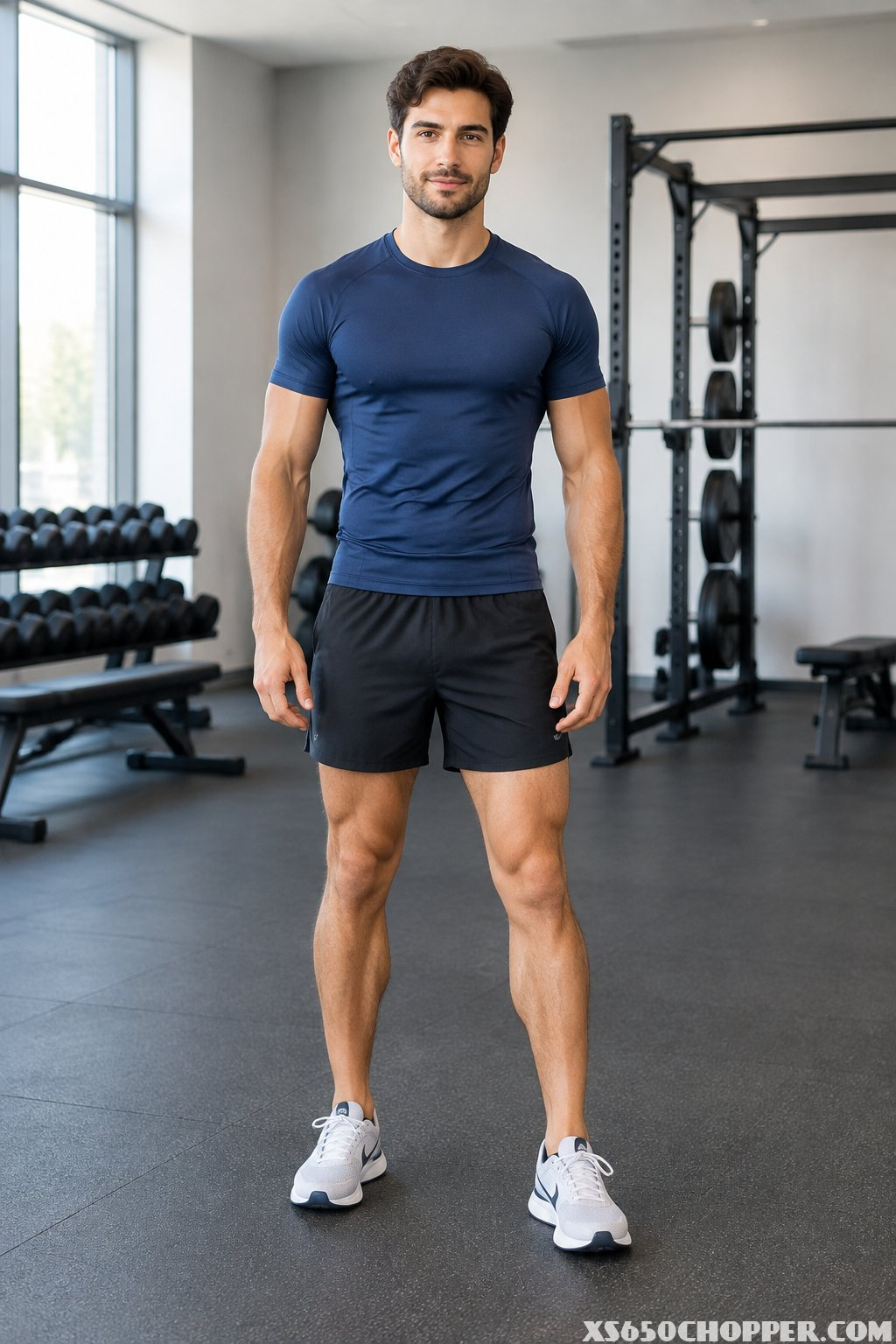
This outfit suits cardio, HIIT, and high-volume training because the close-fitting shirt reduces loose fabric while 5-inch shorts maximize leg movement. Navy adds visual depth without the intensity of a bright color.
Running shoes cushion repeated steps on treadmills, rowers, and gym floors. Look for shorts with a zipped pocket for a key or card, and select a compression top that feels supportive without restricting your breathing.
PRO TIP
Wear moisture-wicking socks with a smooth heel seam to reduce friction during intervals.
4) Oversized Heather Gray T-Shirt, Black Shorts, and Converse Chuck 70s
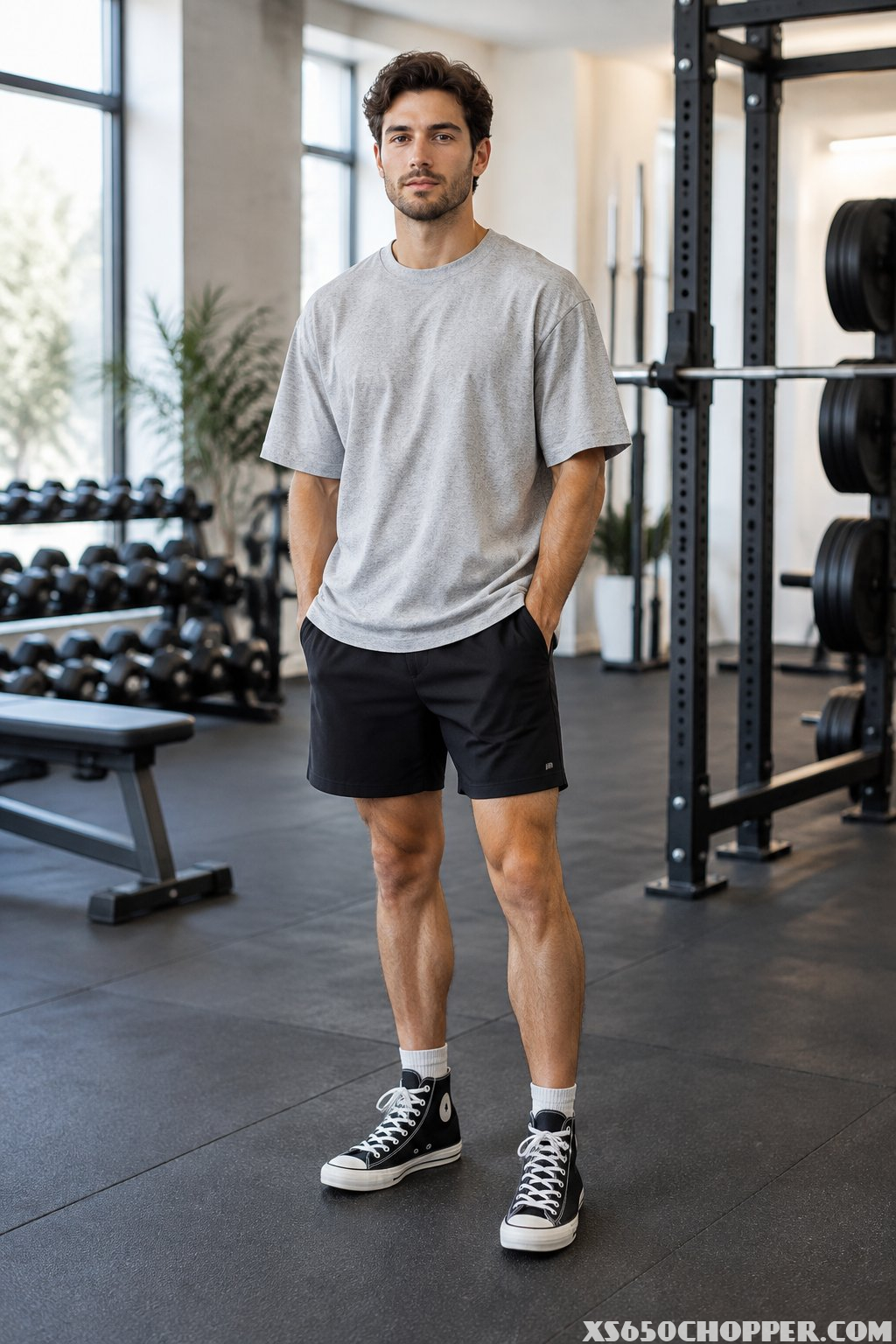
An oversized gray tee creates a relaxed streetwear look for warm-ups, light lifting, and casual gym sessions. Black shorts keep the proportions balanced, while high-top Chuck 70s bring a flat, recognizable profile.
The shoes work well for controlled strength movements where a stable, flat sole feels useful. Select a shirt with moderate volume so sleeves and hem stay clear of equipment, and reserve the outfit for sessions that do not require maximum ventilation.
PRO TIP
Tuck one side of the tee slightly during warm-ups to define your shape without losing the relaxed fit.
5) Olive Gymshark Arrival T-Shirt, Black Shorts, and Trainers
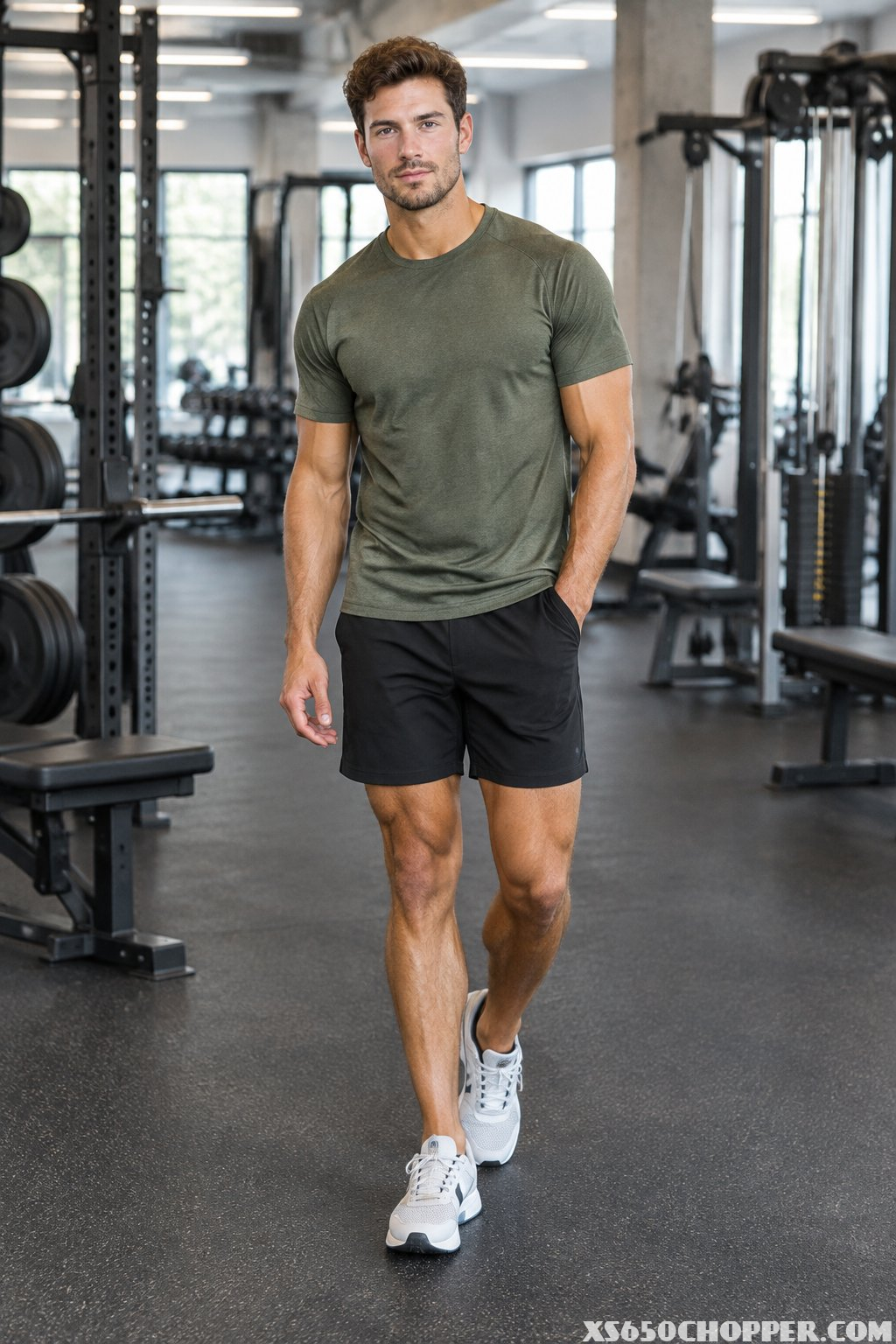
Olive adds muted color to a dependable black-and-neutral gym wardrobe. The Gymshark Arrival T-Shirt gives you an athletic silhouette, while black shorts keep the outfit practical for lifting, circuits, or machine work.
Use lightweight trainers with enough lateral support for side steps and sled work. Black or charcoal socks maintain the grounded color palette, and a simple black gym bag keeps the look coordinated from the locker room to the training floor.
PRO TIP
Pair olive with charcoal, cream, or black when you want color without a loud contrast.
6) White Stringer Tank, Tapered Joggers, and Black High-Tops
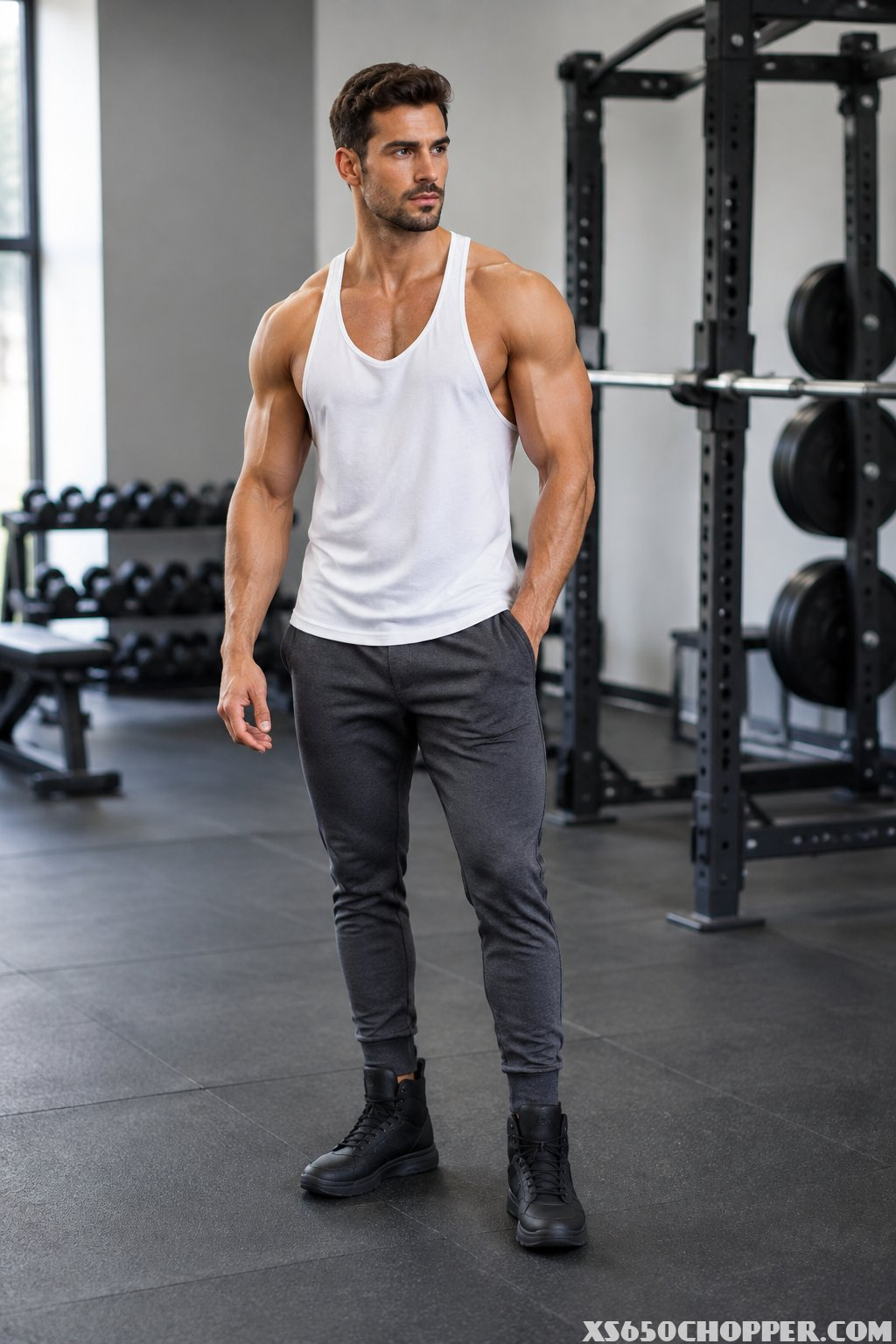
A white stringer tank delivers maximum arm mobility and a bold bodybuilding-inspired look. Tapered joggers add coverage through the legs, while black high-tops anchor the high-contrast outfit.
Choose joggers with stretch panels or a flexible waistband for leg presses and lunges. The white top also makes sweat easier to notice, so moisture-wicking fabric and a spare shirt are useful for longer sessions.
PRO TIP
Add a lightweight zip jacket for the commute and remove it once your warm-up raises your body temperature.
7) Black Under Armour HeatGear Compression Top and Training Shorts
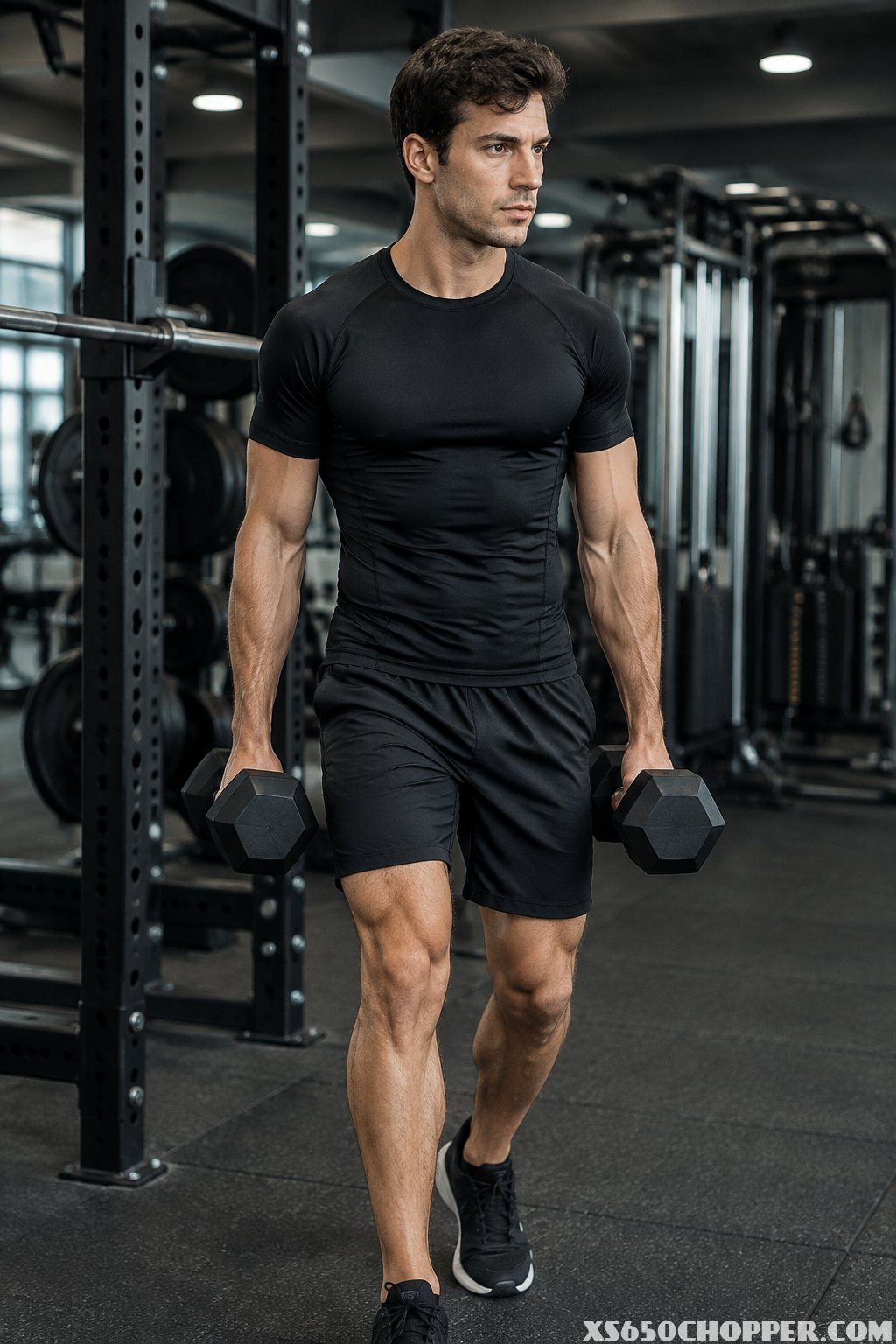
This all-black Under Armour HeatGear combination keeps your profile clean and your clothing close to the body during dumbbell work. The compression top supports unrestricted shoulder movement, while training shorts allow airflow through the legs.
Use this outfit for lifting, circuits, or indoor conditioning. Add a subtle logo detail through socks or shoes if you want visual interest without breaking the monochrome effect.
PRO TIP
Check the armholes and waistband before training so the compression layer feels secure through overhead movements.
8) Stone Performance Polo, Navy Shorts, and Clean White Trainers
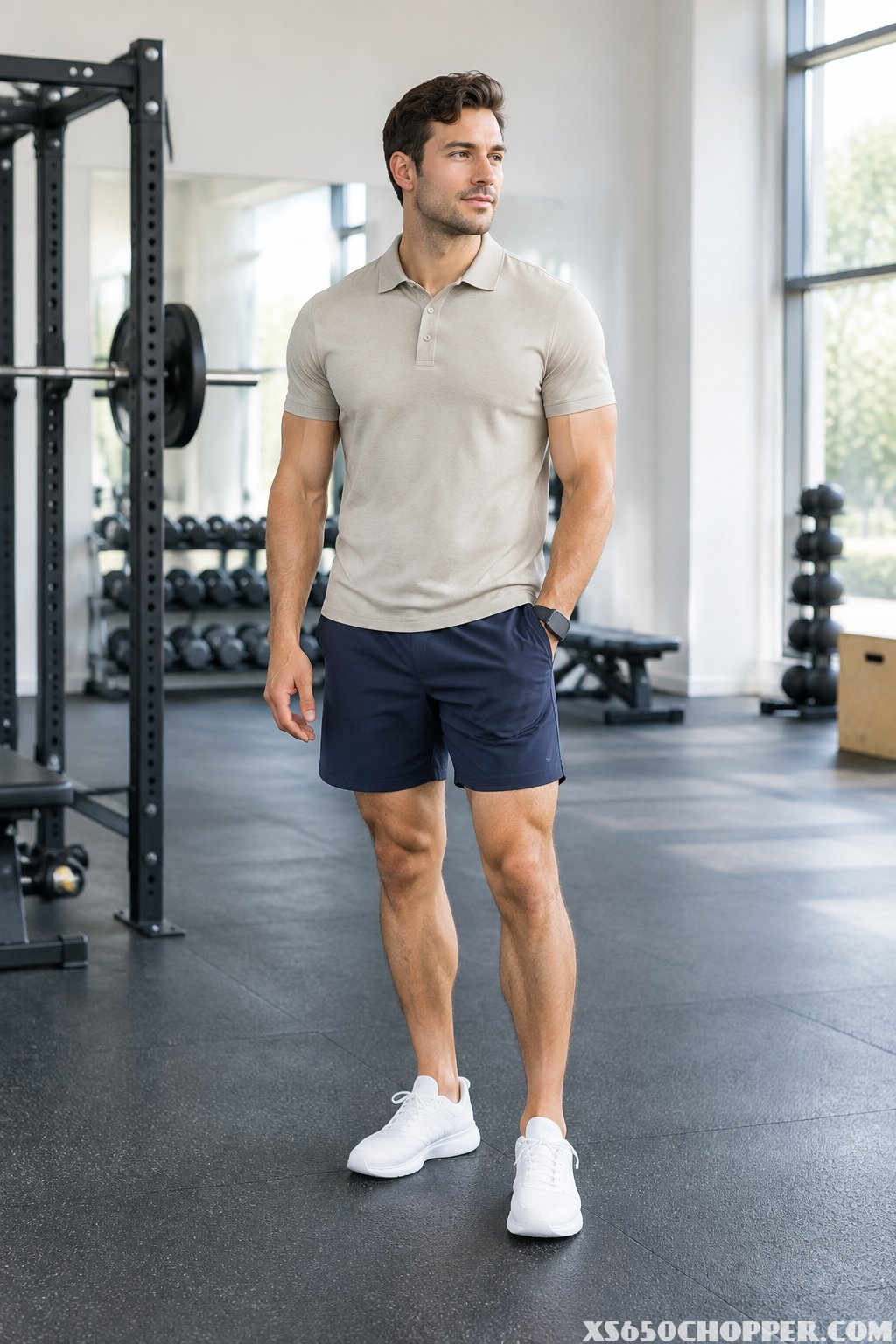
A stone performance polo gives you a polished gym look with the mobility of athletic fabric. Navy shorts ground the light top, and clean white trainers keep the outfit sharp for low-impact cardio, mobility sessions, or a gym-to-errands schedule.
Choose a polo with stretch and a vented hem so the collar does not come with a restrictive fit. Keep the shorts above the knee to preserve a modern proportion and prevent excess fabric during movement.
PRO TIP
Leave the polo untucked for training, then add a clean overshirt when you need a more finished casual outfit.
9) Burgundy Performance Tee, Black Compression Shorts, and Running Shoes
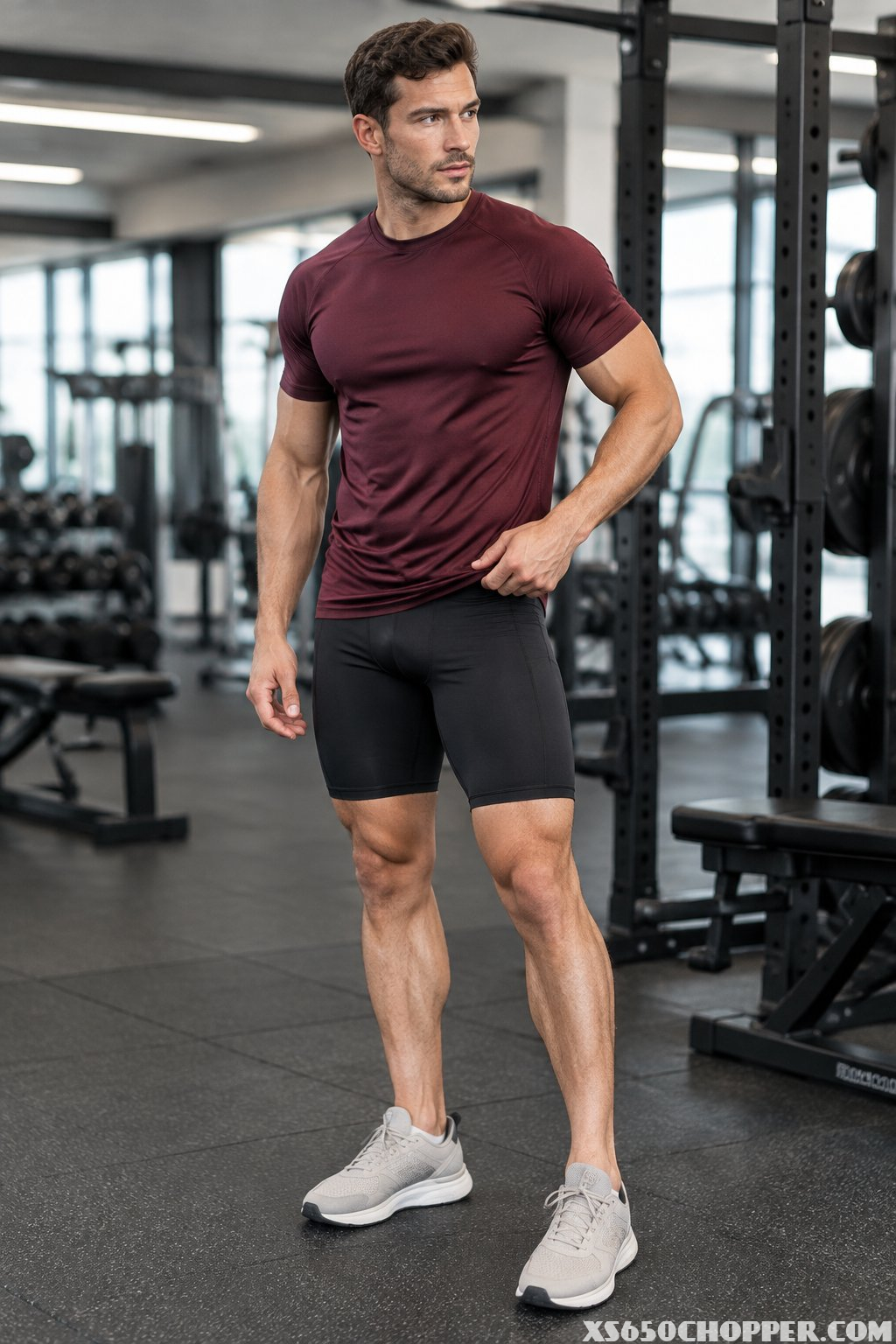
Burgundy gives a performance outfit a strong color accent while black compression shorts provide support and a secure base. A breathable performance tee works well for treadmill intervals, strength circuits, and conditioning blocks.
Running shoes complete the setup with cushioning for repeated foot strikes. Choose a longer outer short if you prefer additional coverage, or keep the compression layer visible for a more athletic silhouette.
PRO TIP
Use burgundy with black, navy, or gray accessories so the shirt remains the outfit’s main color.
10) Monochrome Black Hoodie, Slim Joggers, and Nike Air Max Sneakers
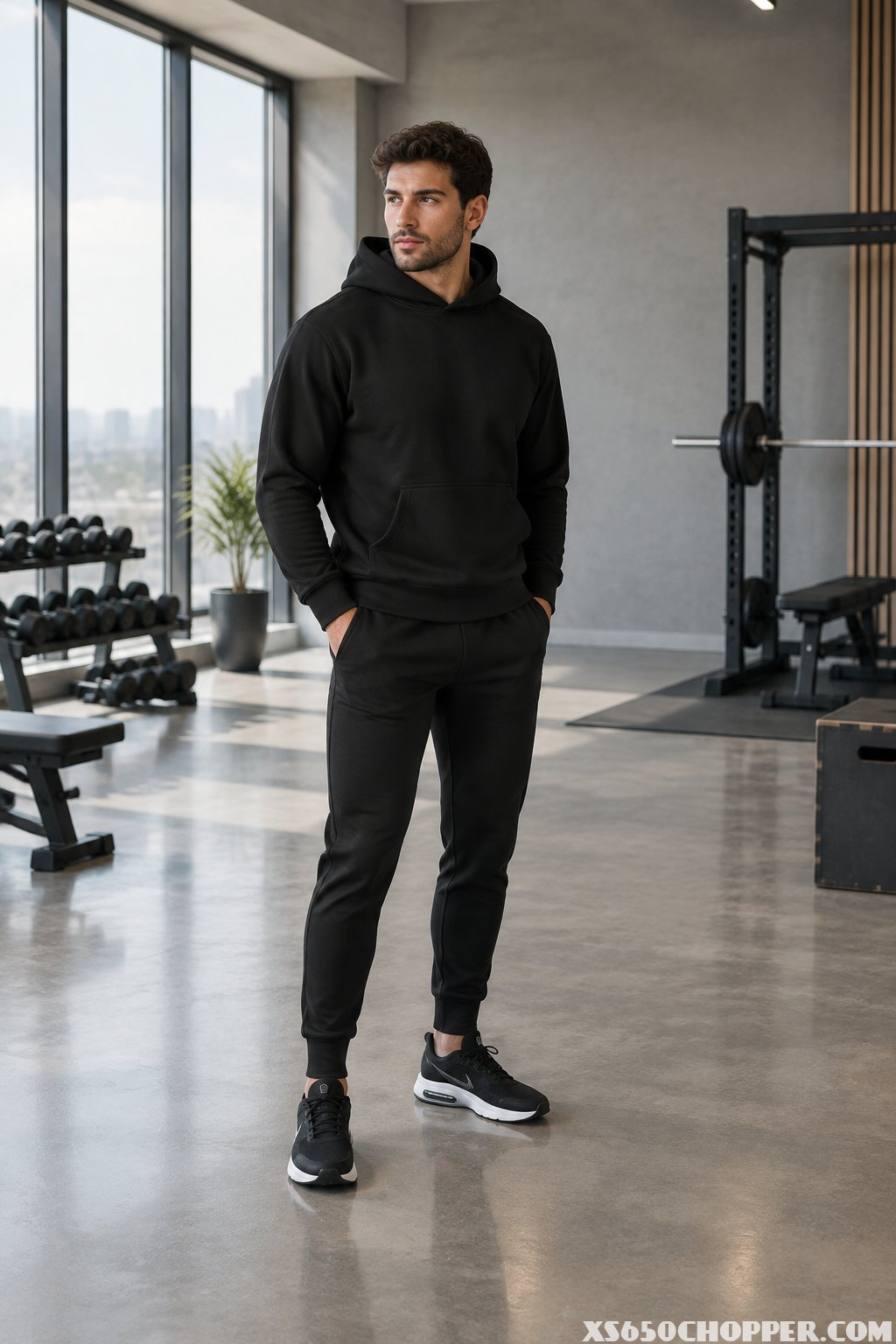
A black hoodie and slim joggers create a comfortable warm-up uniform with a strong monochrome profile. Nike Air Max sneakers add cushioning and a visible design element while keeping the outfit suitable for light training and gym travel.
Choose a hoodie with a manageable hem and sleeves so fabric stays clear of machines. Remove the layer as your session intensifies, then keep the joggers and sneakers for cooldown work.
PRO TIP
Wear a fitted performance tee beneath the hoodie so the outfit transitions smoothly when you start sweating.
11) Cobalt Blue Tank, Light Gray Shorts, and White Cross-Trainers
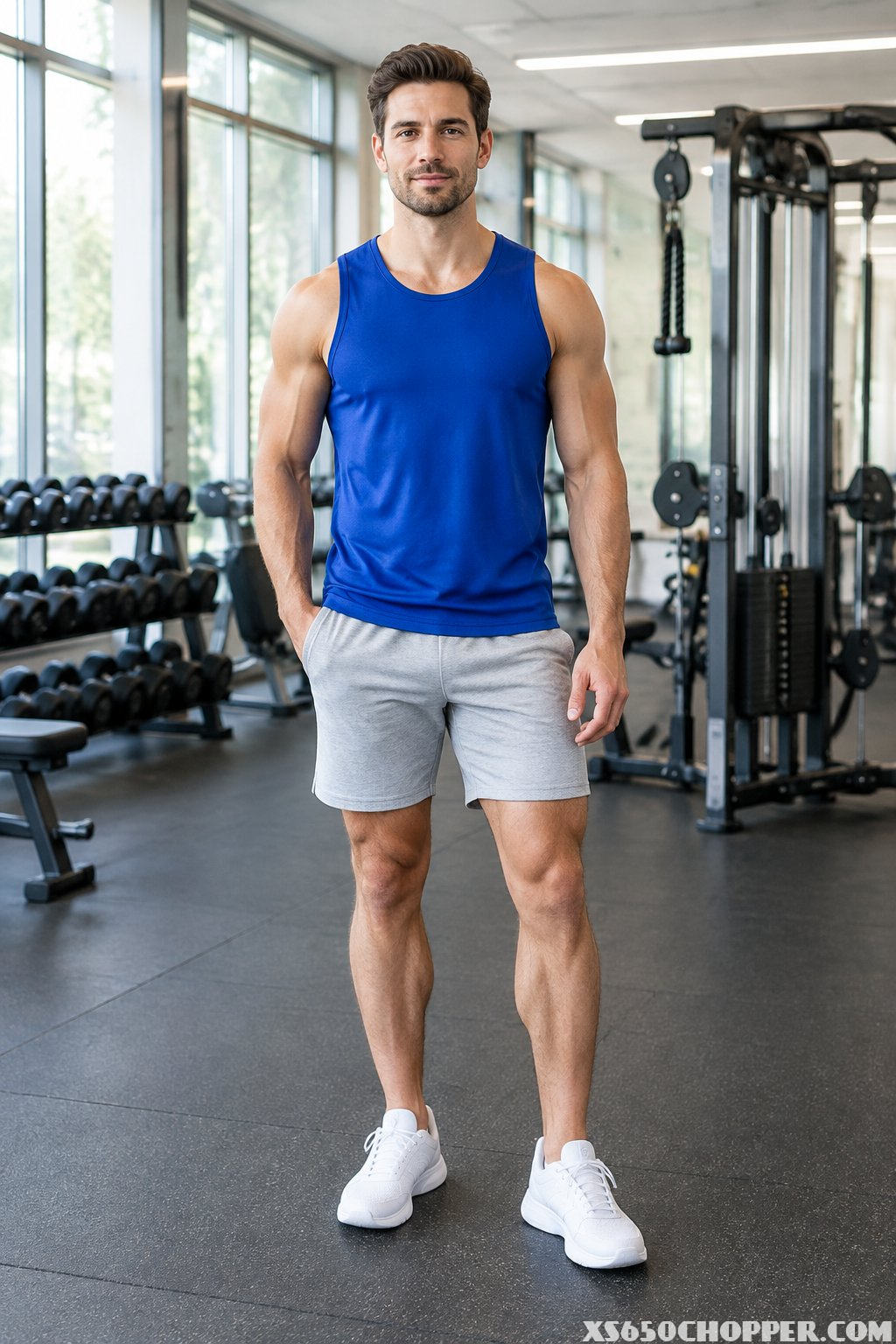
Cobalt blue brings energetic color to the gym while light gray shorts soften the contrast. White cross-trainers support a versatile routine that includes lifting, lateral drills, and short cardio intervals.
Pick a tank with a cut that clears the shoulder joint without exposing excess fabric around the armholes. A neutral watch or black water bottle keeps the accessories from competing with the bright upper layer.
PRO TIP
Repeat the white from your shoes in your socks or logo details to make the color combination feel intentional.
12) Earth-Tone Long-Sleeve Training Top, Black Shorts, and Trail Trainers
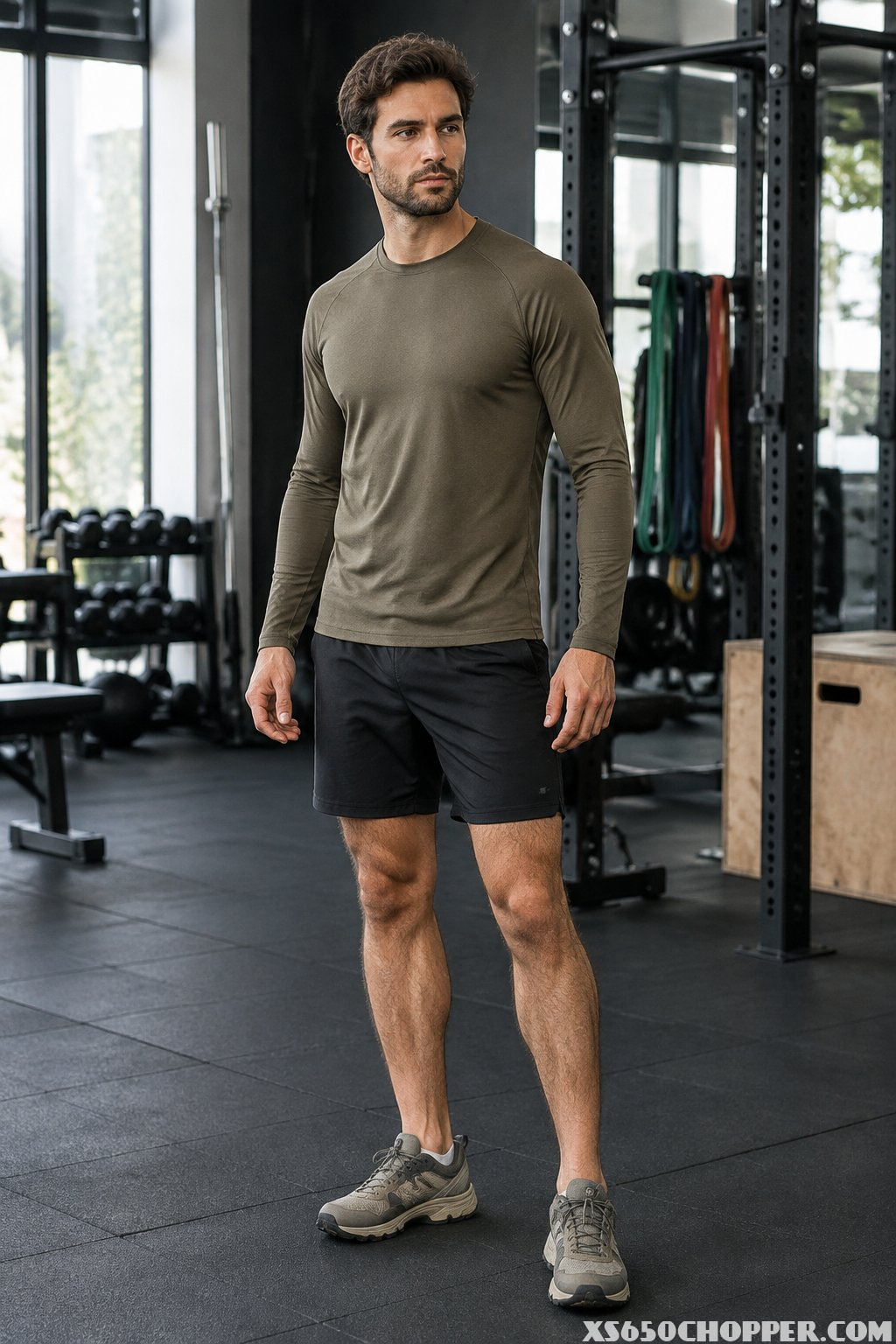
An earth-tone long-sleeve top gives you warmth and understated color for early sessions or cooler training spaces. Black shorts keep the lower half light and mobile, while trail trainers add a rugged visual edge.
Use this outfit for functional training, incline work, or gym sessions that include outdoor movement. Confirm the shoe tread suits the indoor floor, since aggressive lugs can feel less comfortable on smooth surfaces.
PRO TIP
Push the sleeves to your forearms during lifting so you retain warmth without covering your wrists.
13) White Dri-FIT T-Shirt, Navy Shorts, and New Balance 9060 Sneakers
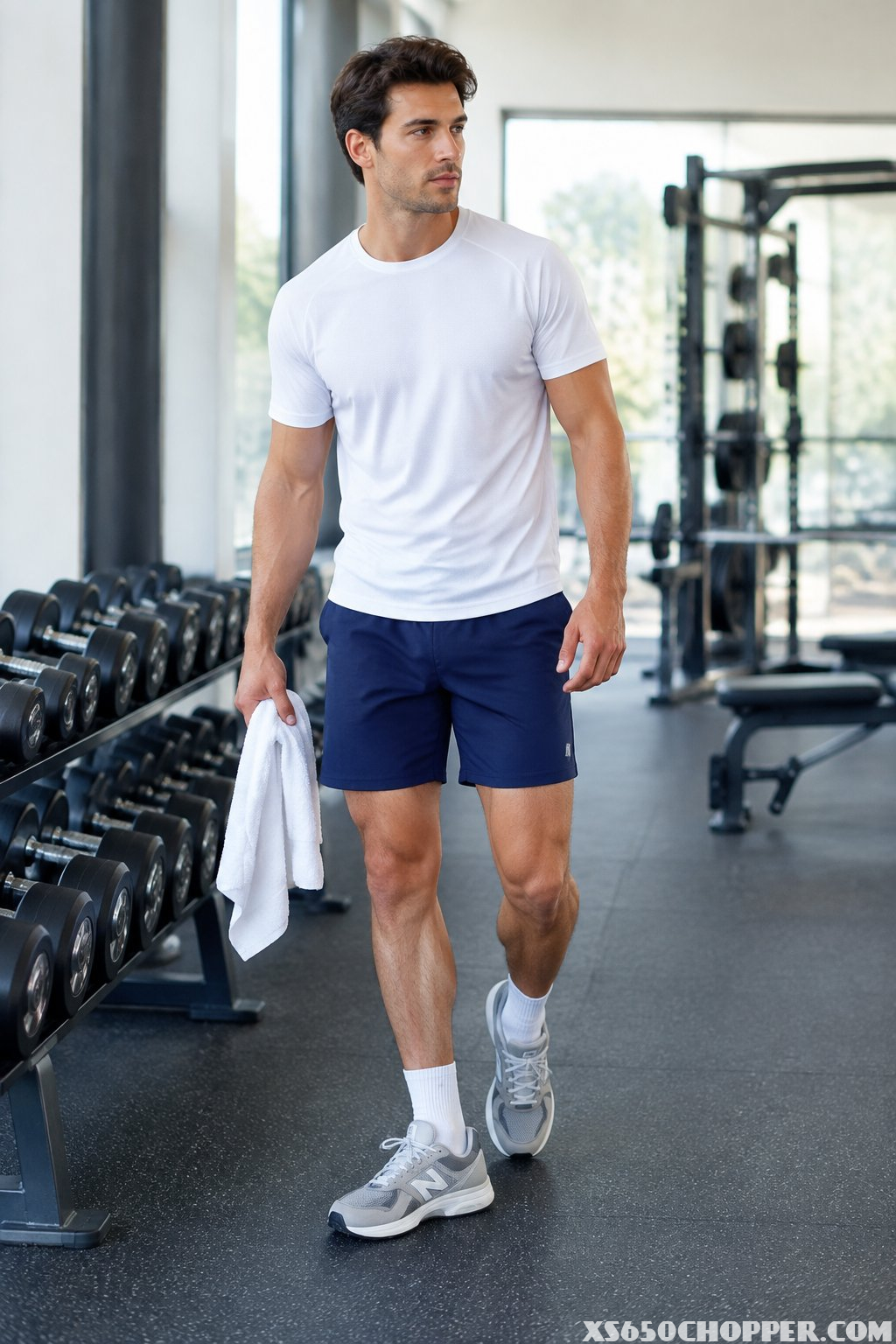
A white Dri-FIT T-shirt and navy shorts form a crisp athletic foundation, while New Balance 9060 sneakers add a contemporary, substantial shape. The outfit works for general training, walking, and gym sessions that blend machines with light weights.
Keep the shirt close enough to avoid catching on equipment while allowing shoulder movement. Gray-and-white shoes connect the clean top to the darker shorts without introducing another strong color.
PRO TIP
Choose darker navy shorts when you want the white shirt and layered sneaker details to stand out.
14) Slate Quarter-Zip, Tapered Joggers, and Minimal Leather Trainers
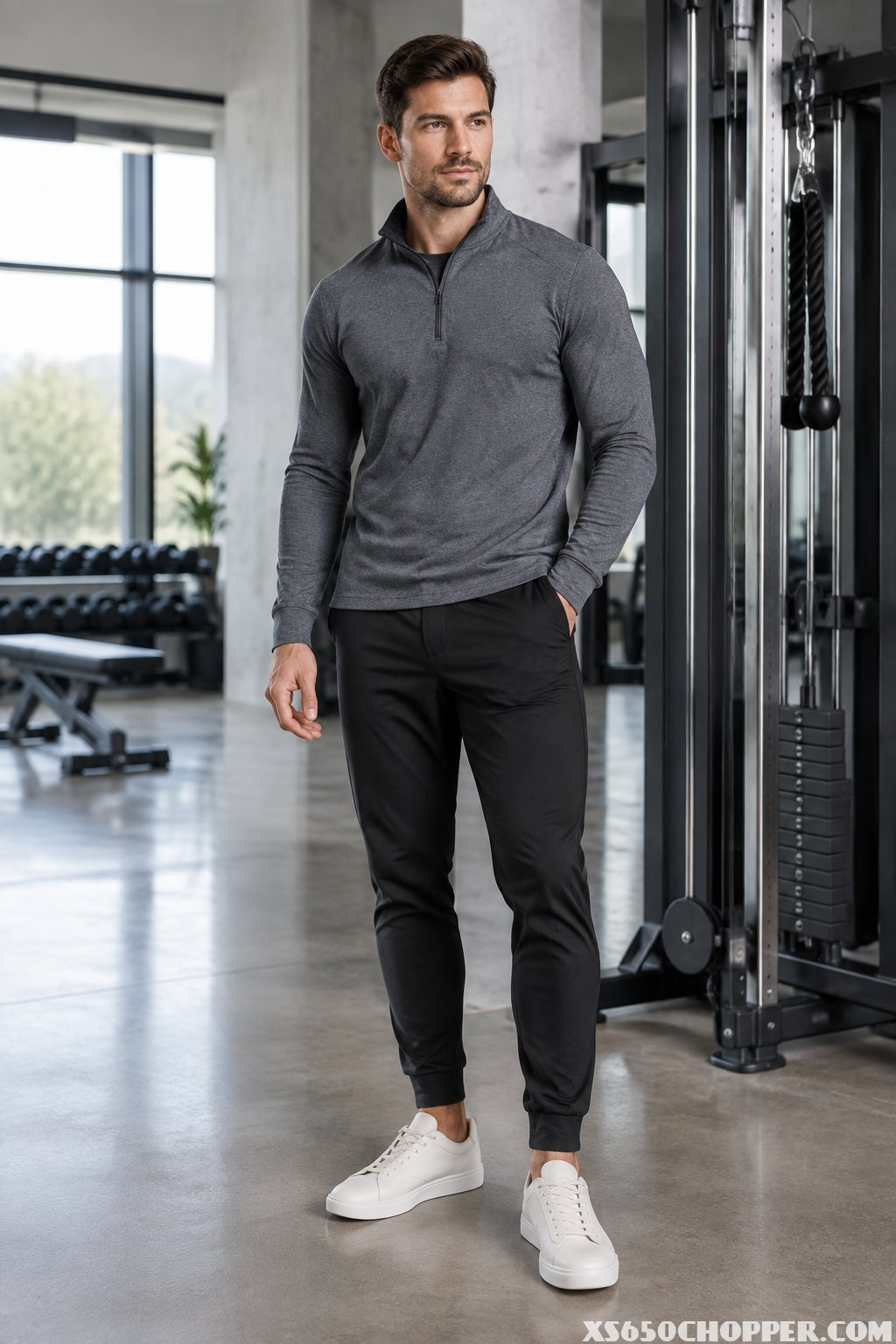
A slate quarter-zip gives you a refined layer for warm-ups and travel, while tapered joggers preserve a clean athletic shape. Minimal leather trainers make the outfit suitable for casual settings around the workout.
Keep this look for warm-ups, mobility sessions, low-impact training, or gym commutes. Once the workout becomes intense, change into footwear and fabric designed for the movement demands of your session.
PRO TIP
Choose a quarter-zip with a smooth interior so it layers comfortably over a fitted performance tee.
15) Color-Block Windbreaker, Black Running Tights, and Performance Runners
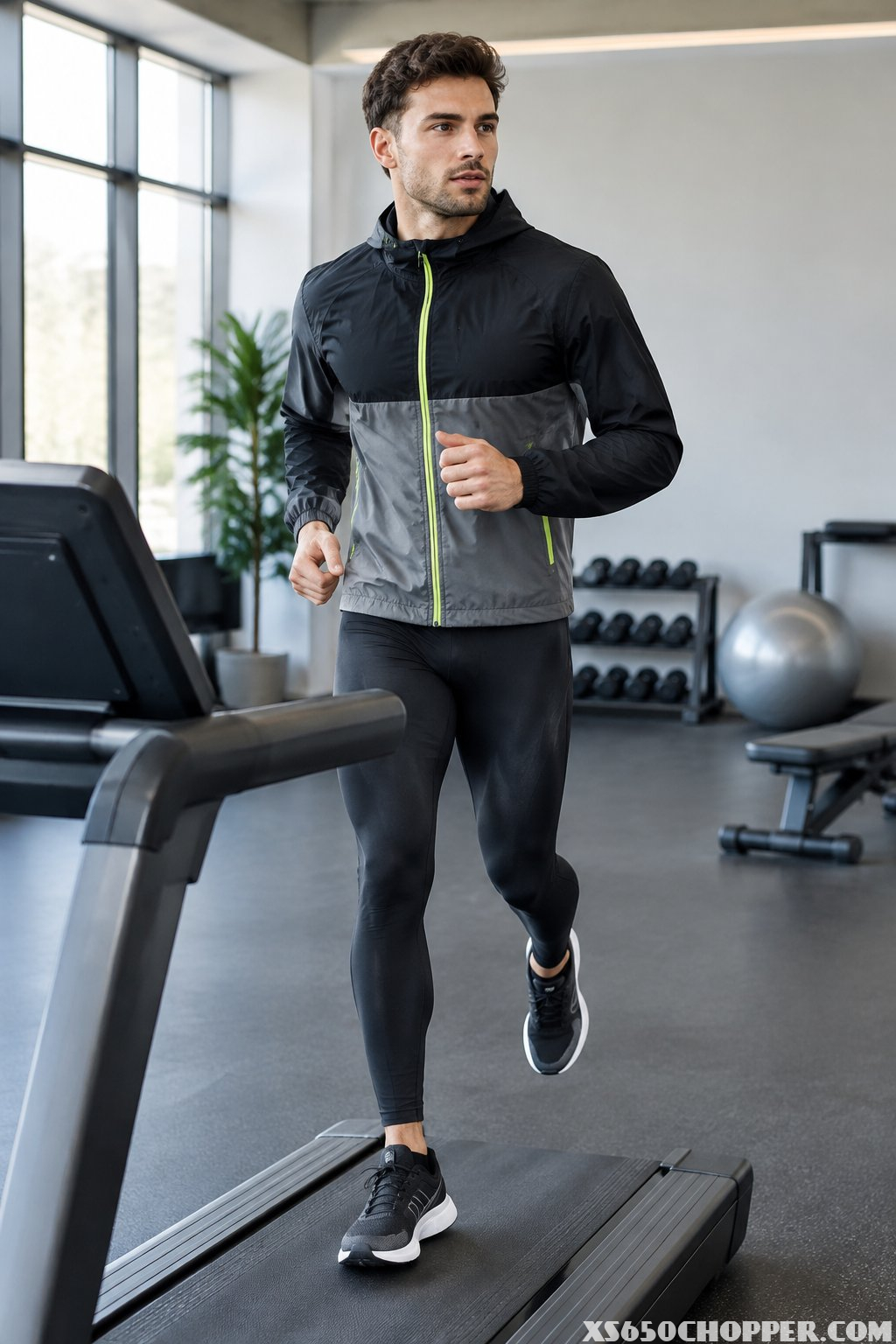
A color-block windbreaker adds visual energy and a lightweight barrier for outdoor runs or cool gym commutes. Black running tights create a streamlined base, while performance runners support repeated movement and changes of pace.
Wear the jacket open during warm-ups and remove it when your body heats up. Look for breathable panels and a secure pocket, especially if the outfit will carry you from outdoor training into an indoor workout.
PRO TIP
Keep the tights matte and the windbreaker brighter so the color-block design stays balanced.
How to Choose a Gym Outfit for Your Workout
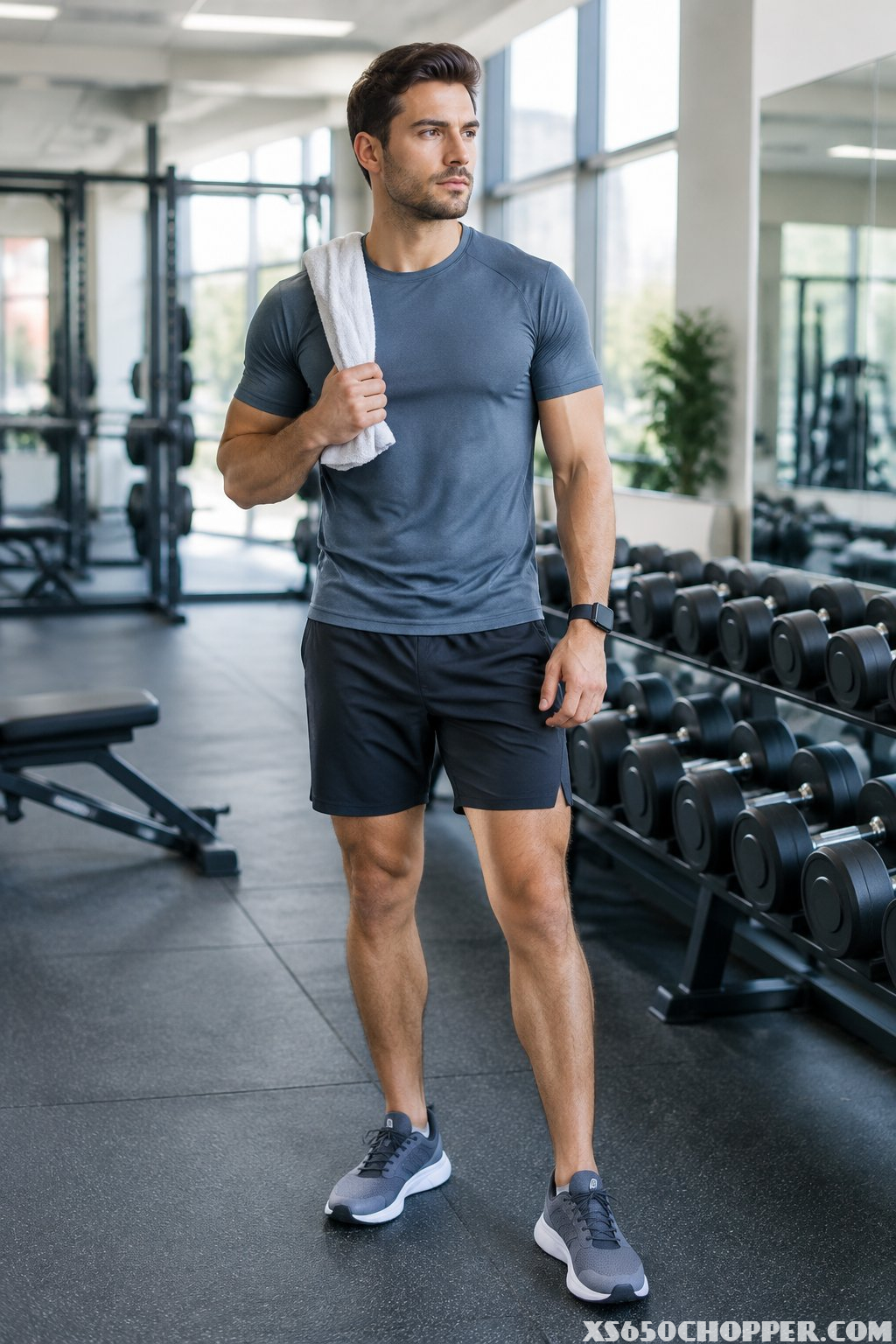
What Should You Wear for Weightlifting?
Weightlifting calls for a close-fitting top, flexible bottoms, and stable shoes. A fitted tee or tank keeps fabric away from bars and cables, while shorts or tapered joggers allow you to check leg and hip alignment.
Choose a firm, flat-feeling sole for heavy lifts and avoid bulky cushioning when stability is your priority. Secure waistbands and stretch fabric help you move through squats, hinges, presses, and pulls without constant adjustments.
What Works Best for Cardio and HIIT?
Cardio and HIIT work best with lightweight, moisture-wicking layers and shoes designed for repeated impact or rapid direction changes. Five- to seven-inch shorts provide airflow and coverage, while a breathable tee or compression top keeps excess fabric controlled.
For mixed sessions, select cross-trainers with lateral support. Running shoes suit treadmill work and sustained forward motion, while a light jacket helps during outdoor warm-ups.
How Should Gym Clothes Fit?
Your gym clothes should follow your movement without squeezing your breathing or creating loose fabric around equipment. Tops need room across the shoulders, bottoms should stay secure at the waist, and hems should clear the knees when your workout requires deep flexion.
Test the fit with a squat, overhead reach, and forward bend before buying. Pay attention to seams, drawcords, pockets, and liners because small construction details affect comfort throughout a full session.
Details That Make a Gym Outfit Look Better
Which Colors Are Easiest to Mix and Match?
Black, charcoal, navy, white, gray, and olive form a flexible gym color palette. These shades combine easily across tops, shorts, joggers, jackets, and shoes, allowing you to create multiple outfits from a small wardrobe.
Add one stronger color, such as cobalt or burgundy, when you want a visible focal point. Repeating one neutral in your socks, shoes, or bag helps the outfit feel coordinated.
How Can Shoes Change the Look and Performance of an Outfit?
Shoes influence both the outfit’s proportions and how secure you feel during movement. Flat, stable designs suit controlled lifting, cushioned runners suit sustained forward motion, and cross-trainers cover workouts that combine strength with lateral drills.
Visually, substantial sneakers create a modern streetwear effect, while minimal trainers produce a cleaner appearance. Match the shoe to your session first, then use color and shape to complete the outfit.
When Should You Add Layers?
Add layers for warm-ups, outdoor commutes, cool training spaces, and sessions that alternate between low and high intensity. Quarter-zips, hoodies, windbreakers, and long-sleeve tops give you adjustable coverage.
Choose pieces that open quickly and fit over your base layer without restricting the shoulders. Remove bulky layers before heavy lifting or high-output intervals, and keep a breathable tee underneath for the rest of your workout.