For a round face, an Italian Extended Goatee or Anchor Beard adds definition through chin length; for an angular face, a Short Boxed Beard or Full Beard can balance prominent lines with cheek coverage.
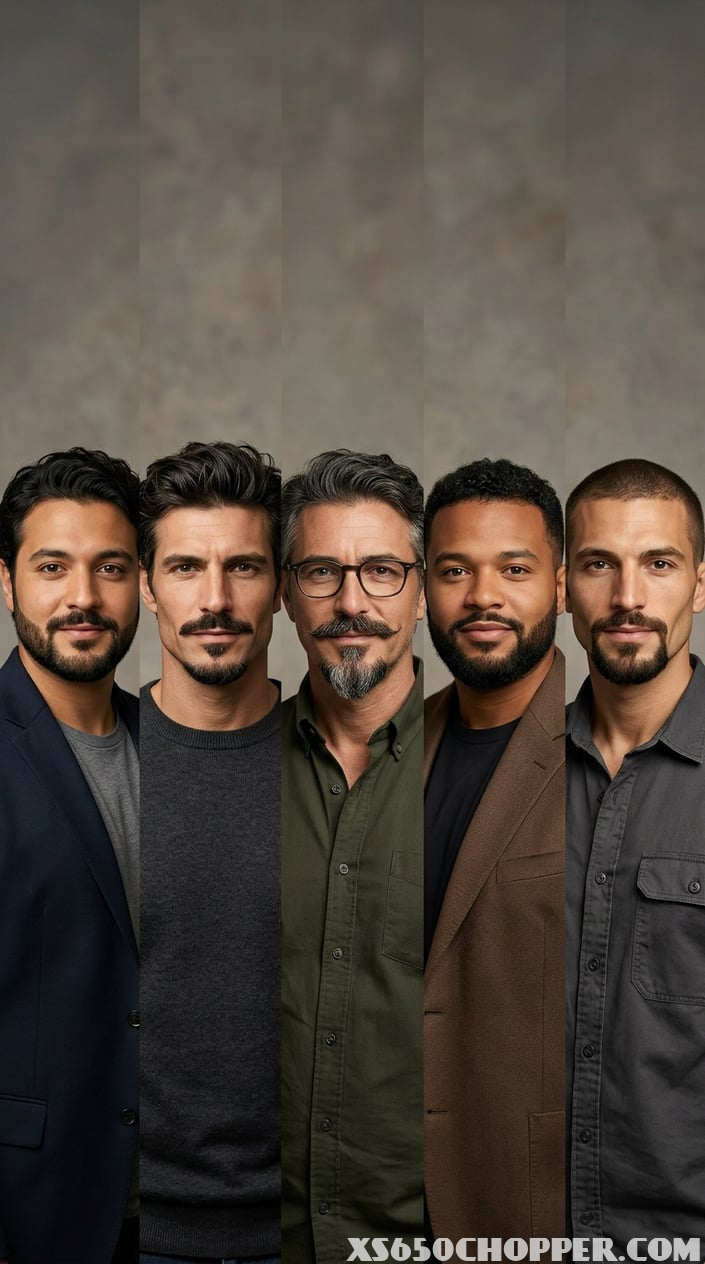
Choose a shape by deciding where you want visual length or width: concentrated chin growth elongates the face, while fuller cheeks create a broader outline. Clean edges and careful tapering help each style look intentional.
Quick picks:
- Best for round faces: Italian Extended Goatee
- Best for angular faces: Italian Short Boxed Beard With a Low Fade
- Best for fuller coverage: Italian Full Beard With Tight Faded Sides
1) Italian Extended Goatee

An Italian Extended Goatee adds vertical emphasis to a round face with a defined chin section and clean cheeks. The moustache connects to beard growth around the mouth, extending along the chin without filling the full cheek area.
Ask for a narrow, elongated outline if your face is round. For an angular face, keep the chin section shorter and soften its bottom edge to avoid adding extra length.
PRO TIP
Set the lower edge just below the chin’s natural point, then maintain the cheek area with a close shave so the shape stays distinct.
2) Italian Anchor Beard

An Italian Anchor Beard suits a round face when you want a sharper outline around the mouth and chin. Its moustache and chin beard form an anchor-like shape, while the cheeks stay mostly bare.
A compact anchor preserves balance on angular faces; a slightly longer chin section gives round faces extra vertical definition. Ask your barber to keep the lines symmetrical and the lower point neat.
PRO TIP
Check the shape from the front before trimming the chin point. Small differences between the two sides stand out against clean-shaven cheeks.
3) Italian Short Boxed Beard With a Low Fade
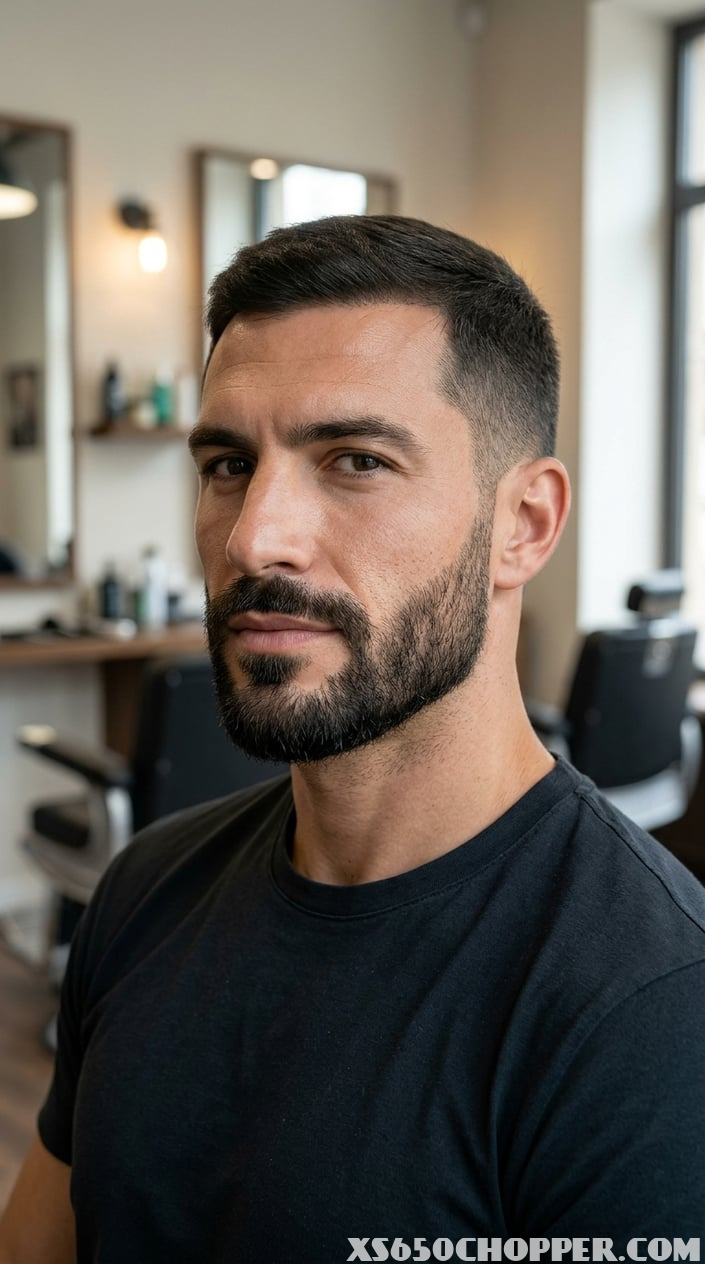
An Italian Short Boxed Beard With a Low Fade gives you close cheek coverage and controlled edges that work across round and angular faces. The low fade reduces bulk near the sideburns while the short boxed outline keeps the beard tidy along the jaw.
For a round face, pair the fade with a little extra length at the chin. For an angular face, keep the chin more even with the cheeks to maintain a balanced profile.
PRO TIP
Ask for a low fade that blends gradually into the beard, with the cheek line kept natural and clean.
4) Italian Designer Stubble With a Tapered Cheek Line

Italian Designer Stubble keeps facial hair close while a tapered cheek line adds a precise, groomed finish. Its light coverage suits angular faces that need minimal added width, and a defined neckline keeps the jawline visible.
If your face is round, leave the stubble slightly denser at the chin and taper the cheeks toward the sideburns. Keep the cheek line aligned with your natural growth for a shape that looks balanced as it fills in.
PRO TIP
Use a trimmer guard to maintain an even length, then define the cheek line with short, careful strokes.
5) Italian Full Beard With Tight Faded Sides
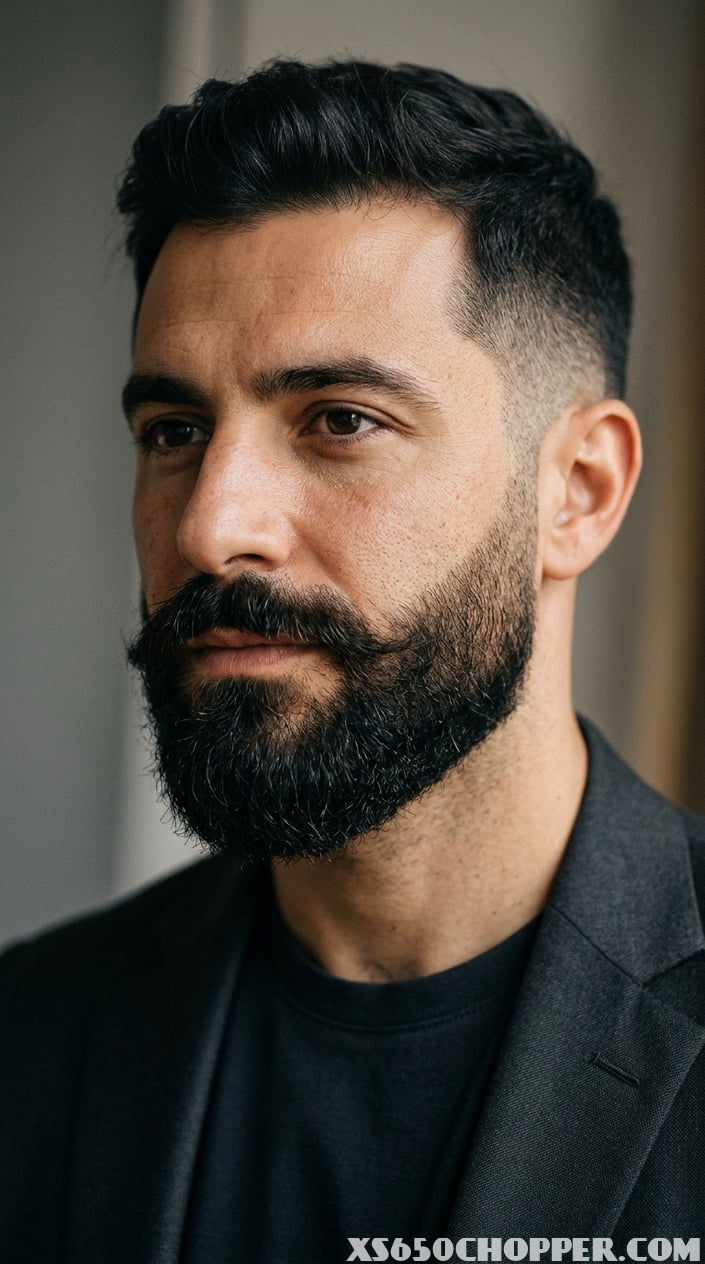
An Italian Full Beard With Tight Faded Sides adds substantial coverage while the fade keeps the outline controlled. Its fuller cheeks can balance a narrow or angular face, and a longer chin profile gives a round face more vertical emphasis.
Shape the cheek area to follow your natural growth, then taper the sideburns into the beard. Ask for a rounded lower edge to soften an angular jaw, or a more pointed chin outline to lengthen a round face.
PRO TIP
Keep the sides visibly shorter than the chin area when you want the beard to draw the eye downward.
How to Match a Beard Shape to Your Face
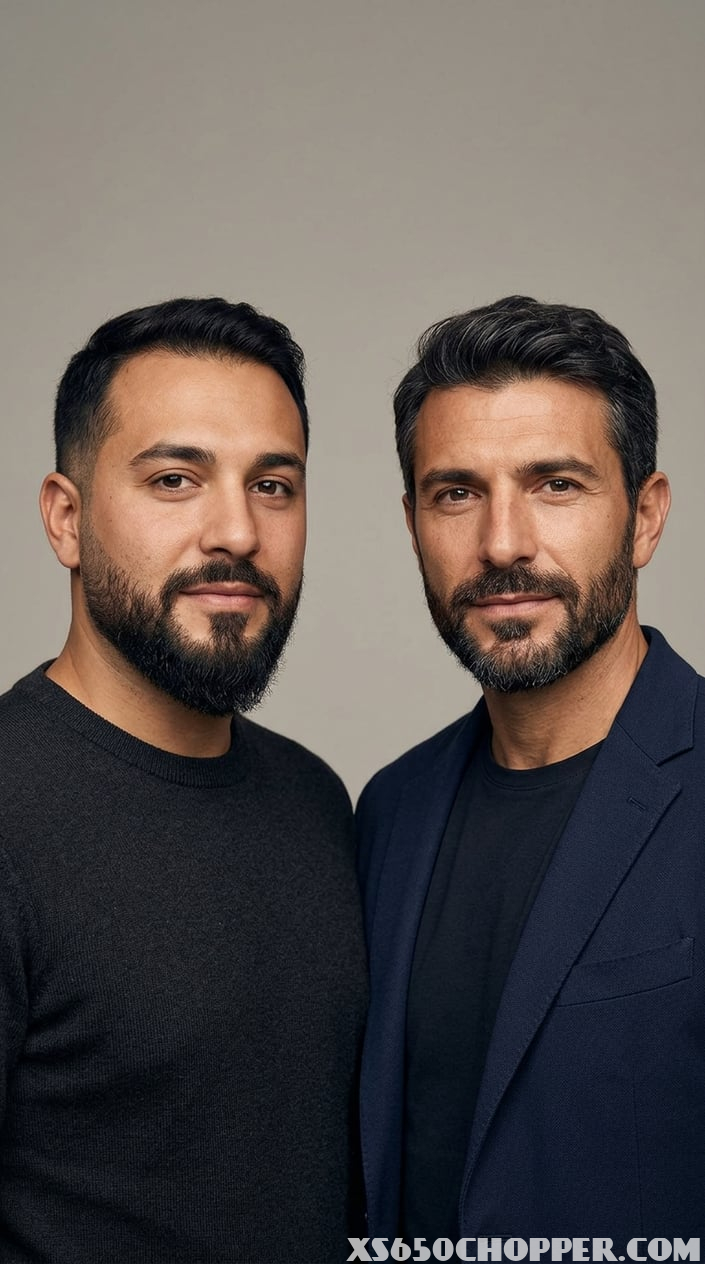
Match your beard to your face by placing coverage where it creates the proportions you want. Round faces benefit from vertical emphasis, while angular faces can use fuller cheek coverage or softer lower edges.
Where Should the Beard Add or Reduce Visual Width?
To make a round face look longer, keep the sides close and concentrate a little more length at the chin. To balance a narrow face, allow fuller growth across the cheeks and jaw. A tapered cheek line keeps either outline crisp.
How Do Chin Length and Cheek Coverage Affect Your Face Shape?
Extra chin length draws the eye downward and adds vertical emphasis. Fuller cheeks create a wider silhouette, while closely trimmed cheeks leave more of the natural jawline visible. Choose a chin length that complements your proportions and feels easy to maintain.
What to Tell Your Barber
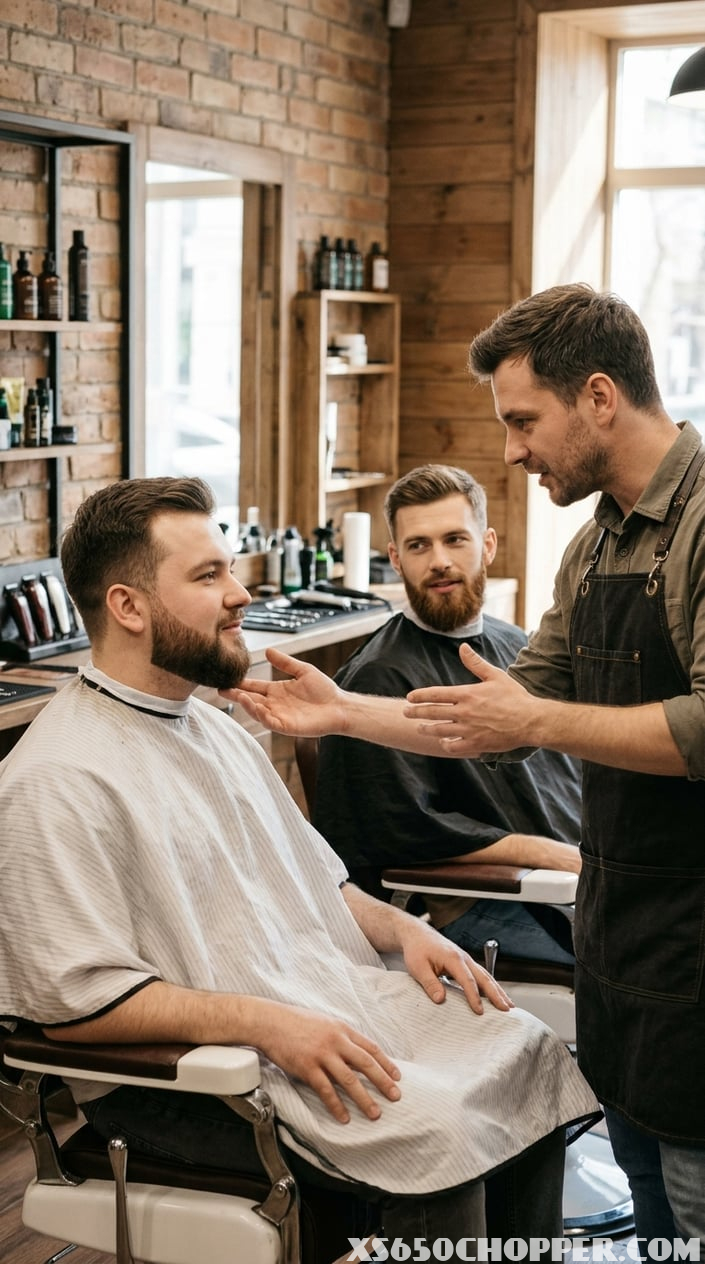
Tell your barber the face-shape effect you want, then specify the cheek line, chin length, and fade. A clear reference photo helps communicate the outline, while your natural growth pattern guides the final shape.
How Should You Describe the Cheek Line and Fade?
Ask for a tapered cheek line if you want a cleaner, narrower outline. Specify a low fade when you want the sideburns to blend gradually into the beard. For a softer appearance, keep the cheek line closer to its natural growth.
How Often Should You Tidy the Edges?
Tidy the neckline and cheek line every few days if you want crisp edges. Refresh the overall shape every one to two weeks, adjusting the timing to your growth rate and preferred length.