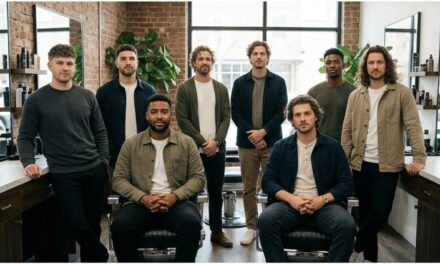

You can match your haircut and beard by balancing their length, volume, and shape; a textured crop with a short boxed beard gives you a versatile, neatly defined starting point.
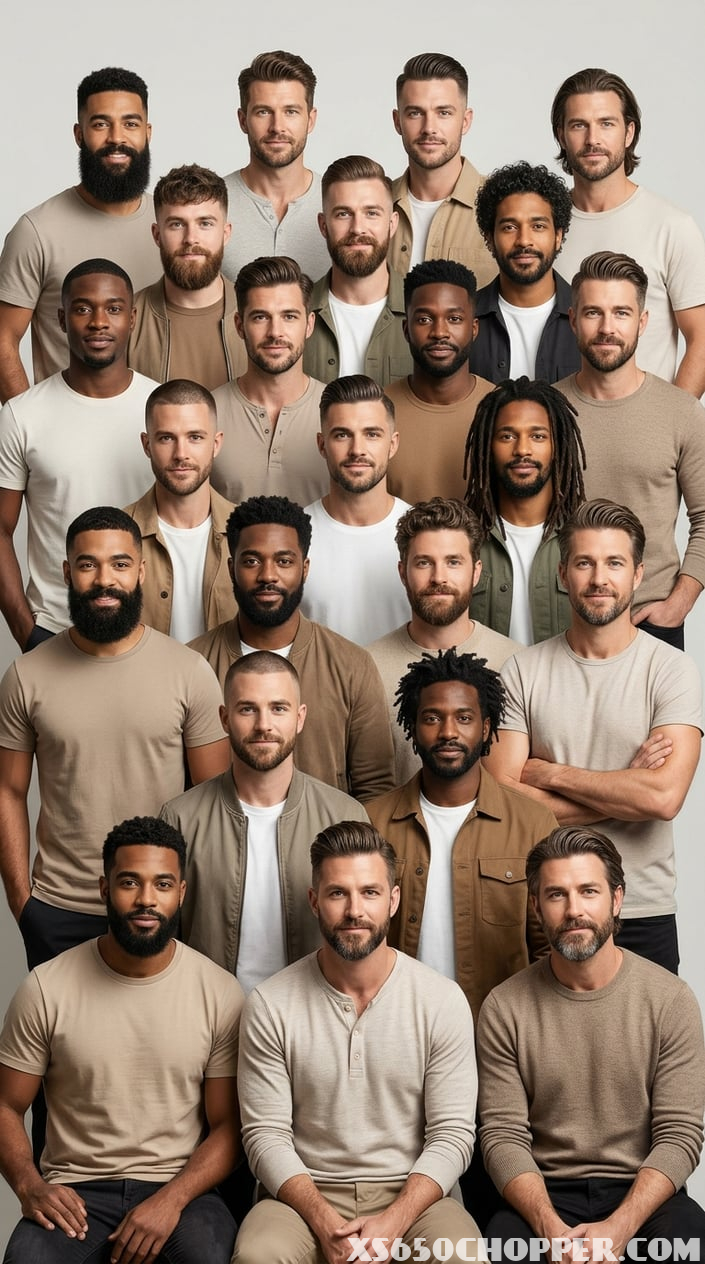
Choose a combination that works with your natural hair texture and the way your beard grows. A clean outline around your cheeks and neckline helps connect even contrasting lengths.
Quick picks:
- Best everyday pairing: Textured crop with a short boxed beard
- Best low-maintenance pairing: Buzz cut with heavy stubble
- Best for long hair: Man bun with a Bandholz beard
1) Textured Crop with a Short Boxed Beard
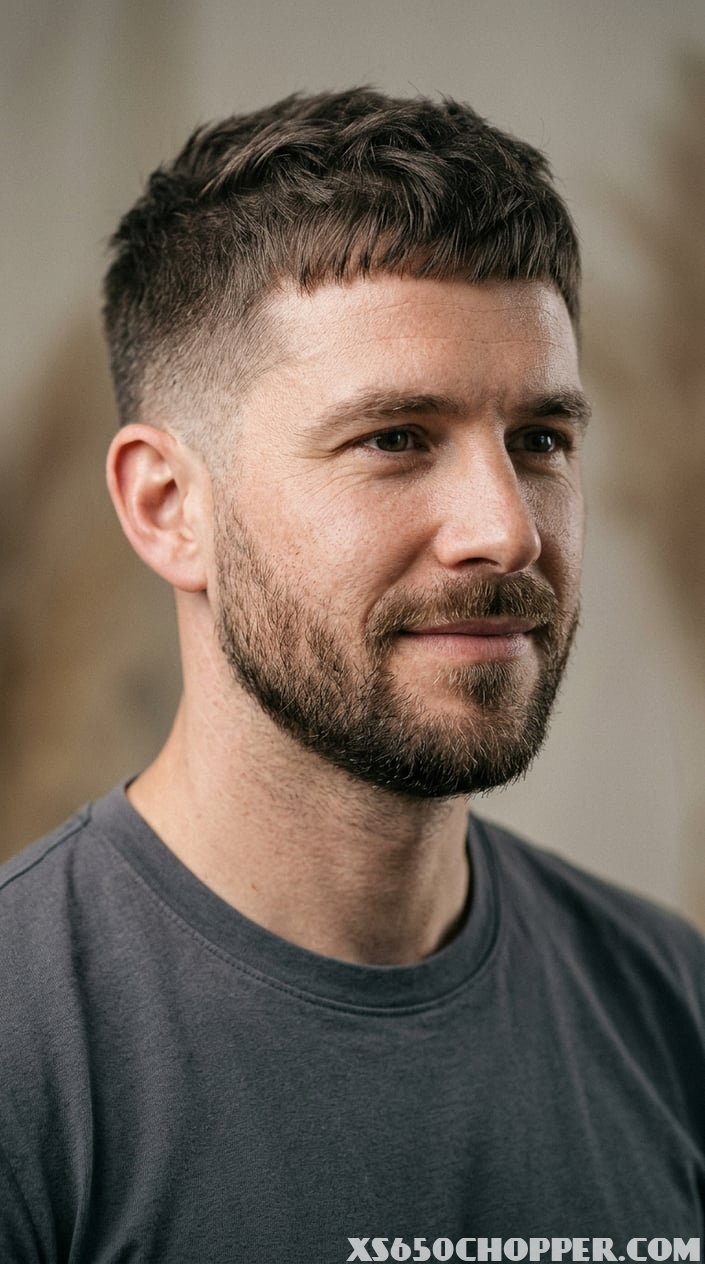
A textured crop and short boxed beard give you a balanced look with crisp, manageable edges. The short fringe adds texture across your forehead, while the beard’s defined cheek and neck lines frame your jaw.
Ask your barber for choppy texture on top and a tidy taper at the sides. Keep the beard even in length, with a clear outline that follows your natural growth.
PRO TIP
Use a small amount of matte paste to separate the top without making it look stiff.
2) Low Taper Fade Quiff with Heavy Stubble
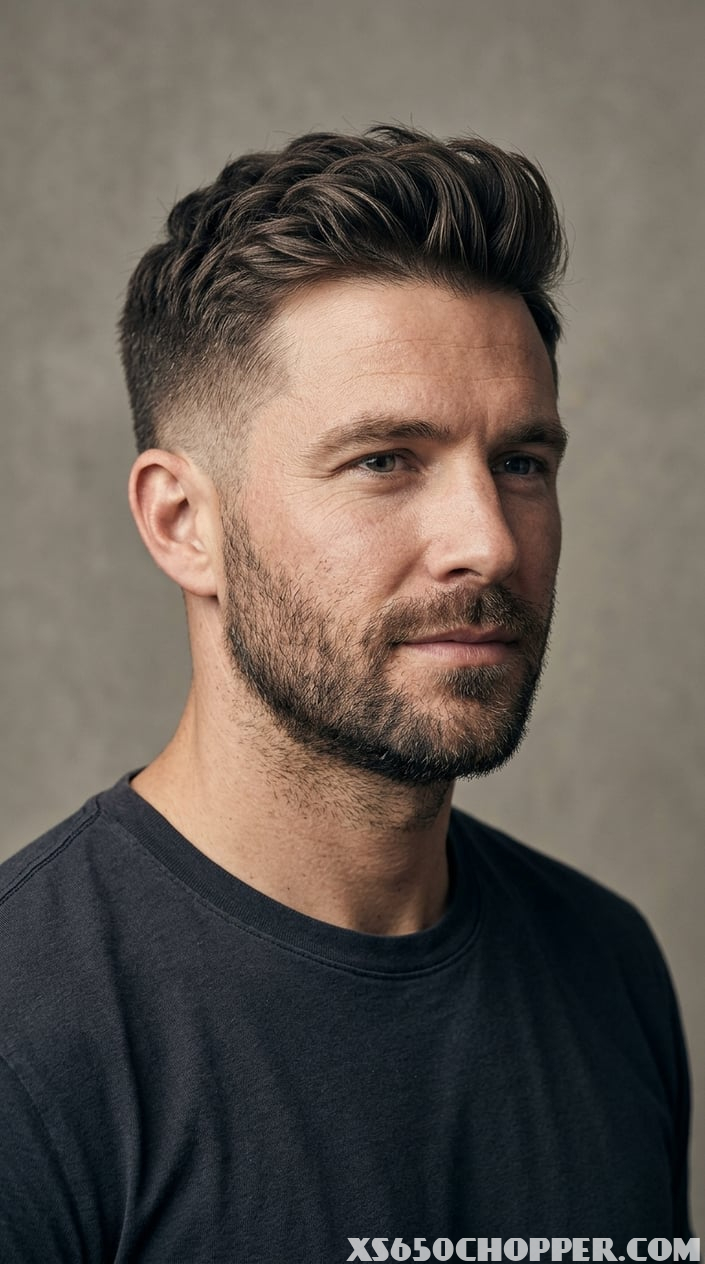
A low taper fade quiff pairs height on top with the rugged, close texture of heavy stubble. The taper keeps the sides controlled, while the lifted front draws attention upward.
Style your quiff with a blow-dryer and a light-hold product. Keep stubble at a consistent short length and clean up the neckline to preserve the contrast.
PRO TIP
Direct the front slightly up and back to keep the quiff structured without adding excess height.
3) Crew Cut with a Short Full Beard
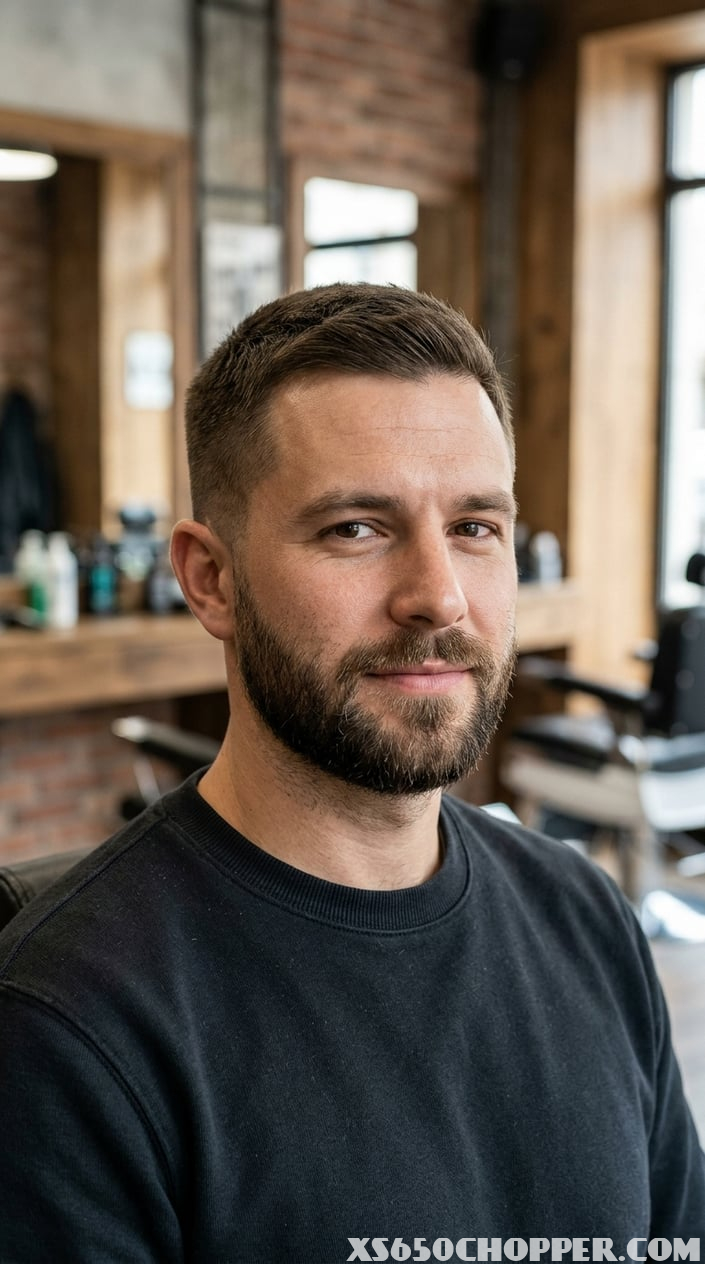
A crew cut with a short full beard gives you a compact silhouette with enough facial hair to define your jaw. The close sides and modest top keep the haircut simple, while an even beard adds visual weight below.
Ask for a crew cut that follows your head shape, then keep your beard trimmed to a uniform length. A soft cheek line suits a natural finish; a sharper line creates a more polished effect.
PRO TIP
Trim the mustache so it sits clear of your upper lip and blends smoothly into the beard.
4) Classic Side Part with a Corporate Beard

A classic side part and a neatly shaped corporate beard create a composed look for work and formal settings. The defined part gives your hair direction, while the beard adds a clean frame to your face.
Keep enough length on top to comb across and ask for tapered sides. Shape the beard close to the face, with a controlled mustache and tidy neckline.
PRO TIP
Use a comb and a small amount of styling cream to keep the part smooth while preserving natural movement.
5) Buzz Cut with Heavy Stubble
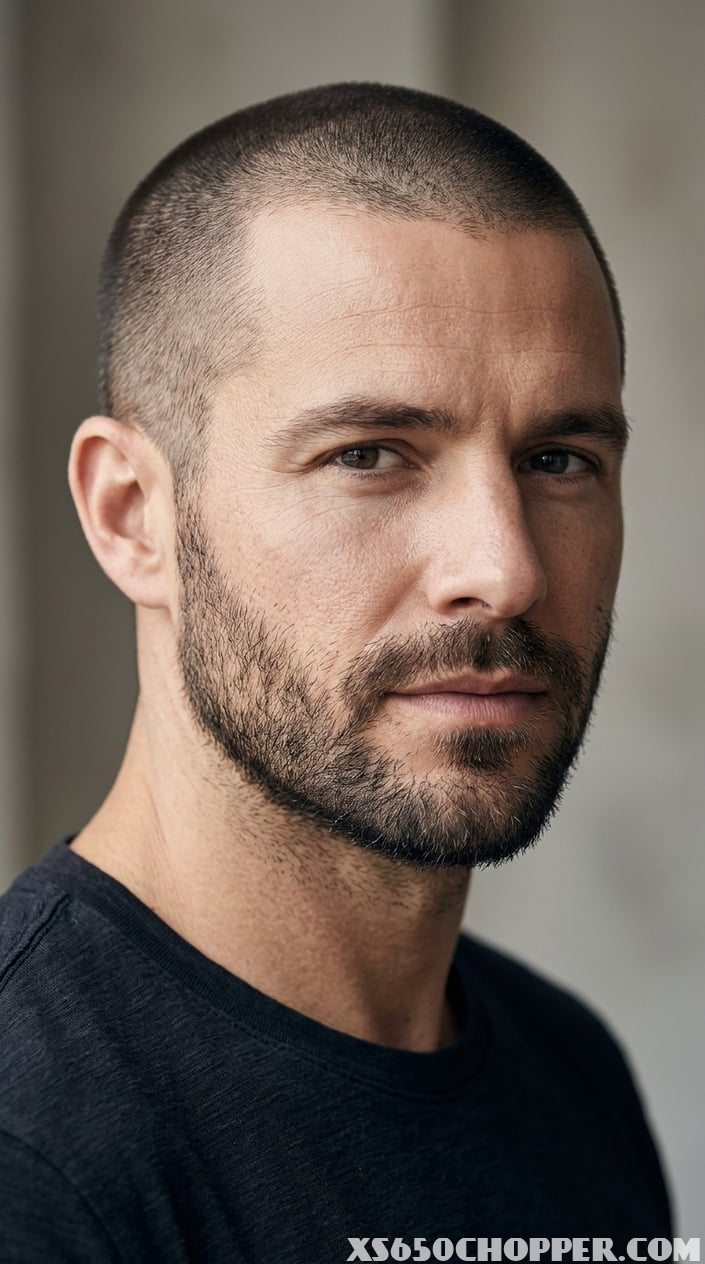
A buzz cut with heavy stubble gives you a low-fuss pairing with clear definition around the jaw. The close-cropped hair keeps attention on your features, and the stubble adds texture without a long beard shape.
Choose a buzz length that feels comfortable across your scalp, then maintain the stubble at an even setting. Clean the neckline to keep the short facial hair looking deliberate.
PRO TIP
If your hairline is a focus, ask your barber to keep the buzz length even and the edges natural.
6) Slicked-Back Undercut with a Full Beard
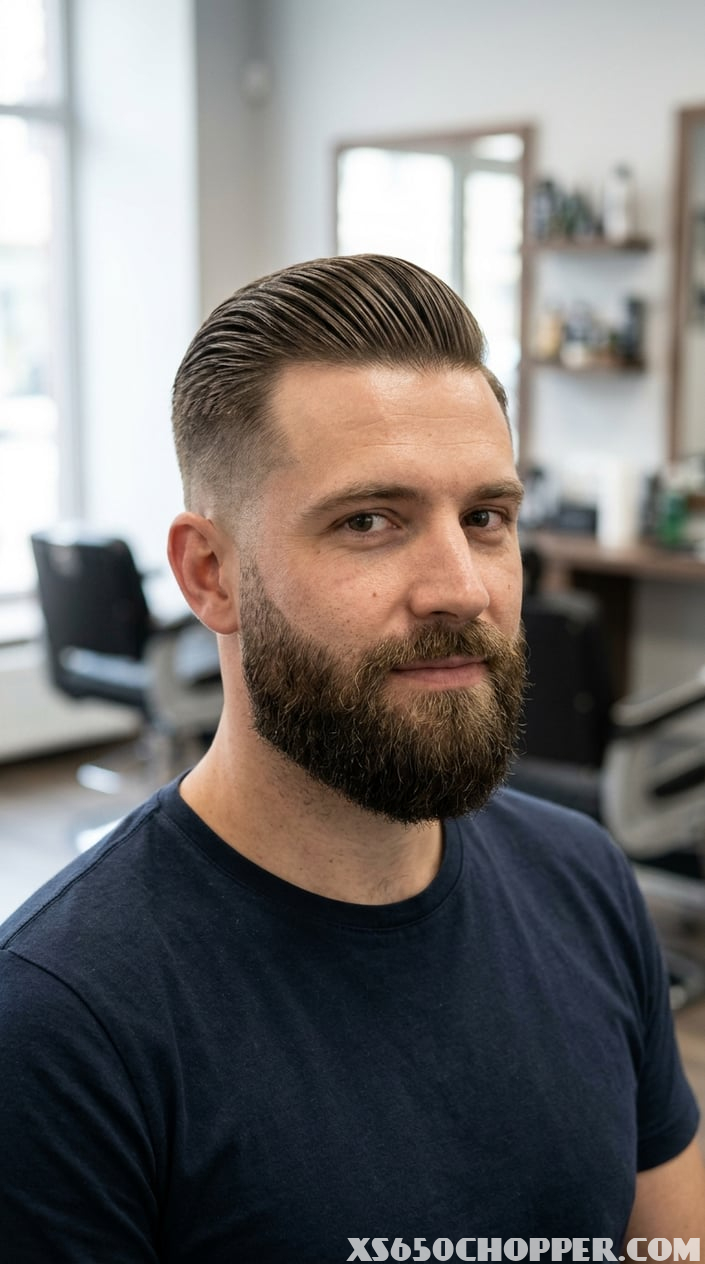
A slicked-back undercut balances a longer full beard with a strong, streamlined shape above. The contrast between close sides and swept-back length gives your hair definition, while the beard brings fullness around your lower face.
Use a comb to direct the top away from your forehead and choose a product with enough hold for your hair type. Shape the beard along the cheeks and neckline so its fullness looks intentional.
PRO TIP
Apply styling product to damp hair in small amounts, then add more only where you need extra control.
7) Curly Top Mid Fade with a Short Boxed Beard
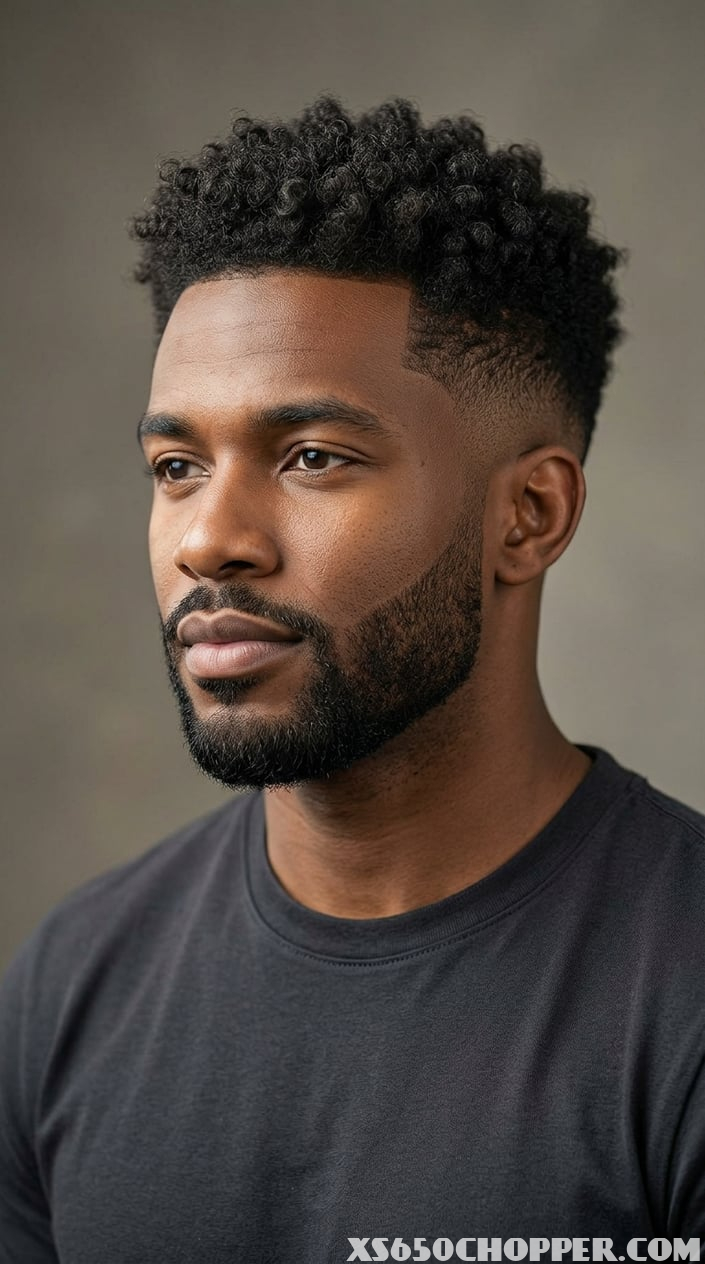
A curly top mid fade and short boxed beard let you show texture above and a clean outline below. The fade removes bulk at the sides, while the curls add height and movement.
Ask your barber to preserve the curl pattern on top and blend the fade smoothly into your temples. Keep your beard compact and shaped around the jaw to complement the haircut’s clear lines.
PRO TIP
Use a curl cream on damp hair and let your curls dry without frequent brushing.
8) Pompadour with a Sculpted Full Beard
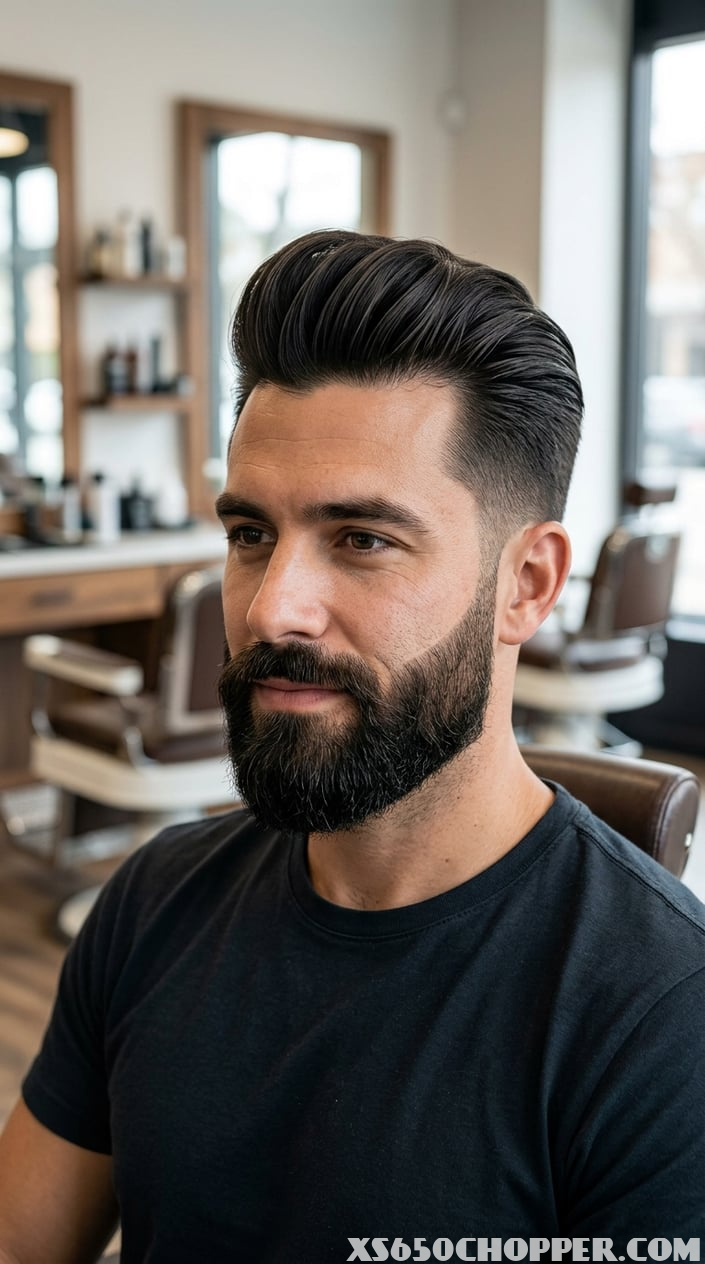
A pompadour with a sculpted full beard gives you volume above and a defined frame around your lower face. The lifted front adds height, while the beard’s shaped perimeter keeps the overall outline controlled.
You’ll need enough length on top to build the sweep. Blow-dry the front upward, then finish with a product that holds the shape; keep the beard brushed and trimmed along its edges.
PRO TIP
Ask for the beard to follow your jaw’s natural curve so its shape supports the pompadour without looking overly wide.
9) Wavy Bro Flow with a Natural Full Beard

A wavy bro flow and natural full beard create a relaxed pairing with texture throughout. The longer hair moves around your face, while the beard echoes that softness with a fuller outline.
Keep the layers long enough to fall naturally and use a lightweight leave-in product to control dryness. Trim stray beard hairs while preserving a shape that follows your cheeks and jaw.
PRO TIP
Let your hair dry in its natural direction, then use your fingers to reset the part and separate the waves.
10) Long-Hair Man Bun with a Bandholz Beard
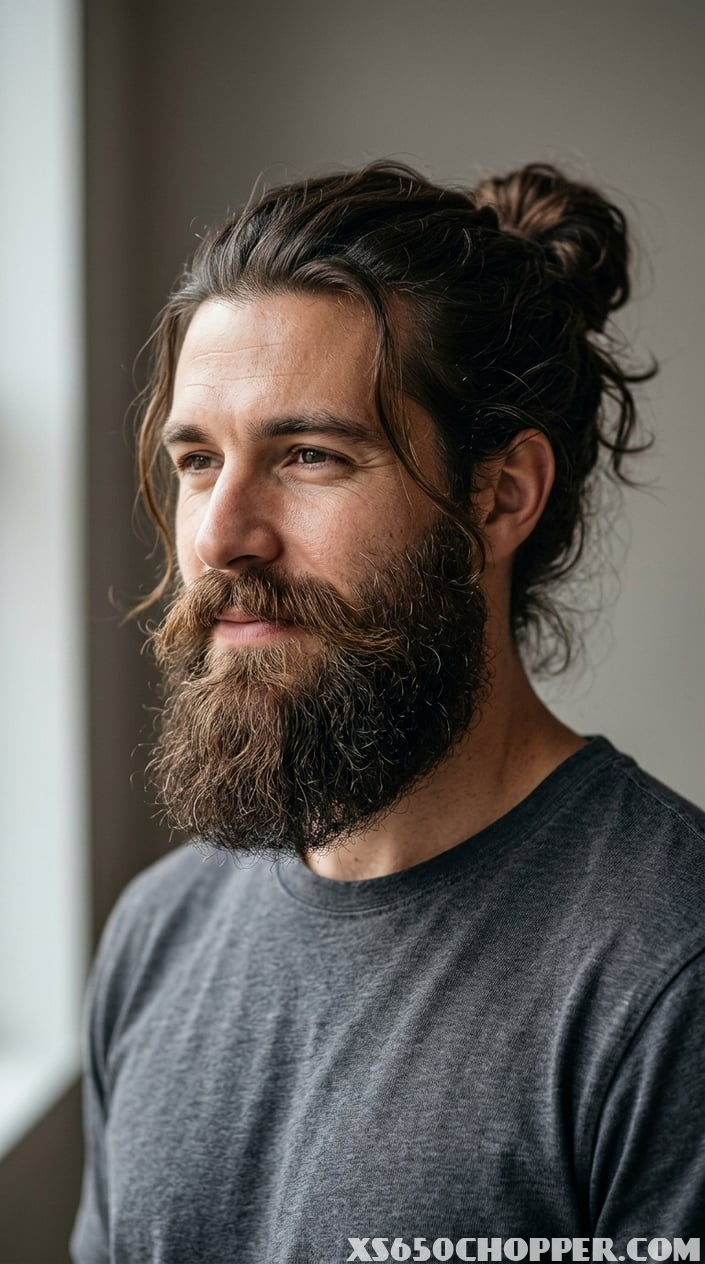
A man bun with a Bandholz beard pairs tied-back length with a prominent, natural-looking beard. Gathering your hair exposes your face, while the longer beard gives the look a strong lower outline.
Tie your hair loosely enough to avoid pulling at the roots. Brush the beard downward and trim its perimeter as it grows so the length keeps a deliberate shape.
PRO TIP
Use a soft hair tie and vary the bun’s position to reduce repeated tension in one spot.
11) Shaved Head with a Long Full Beard
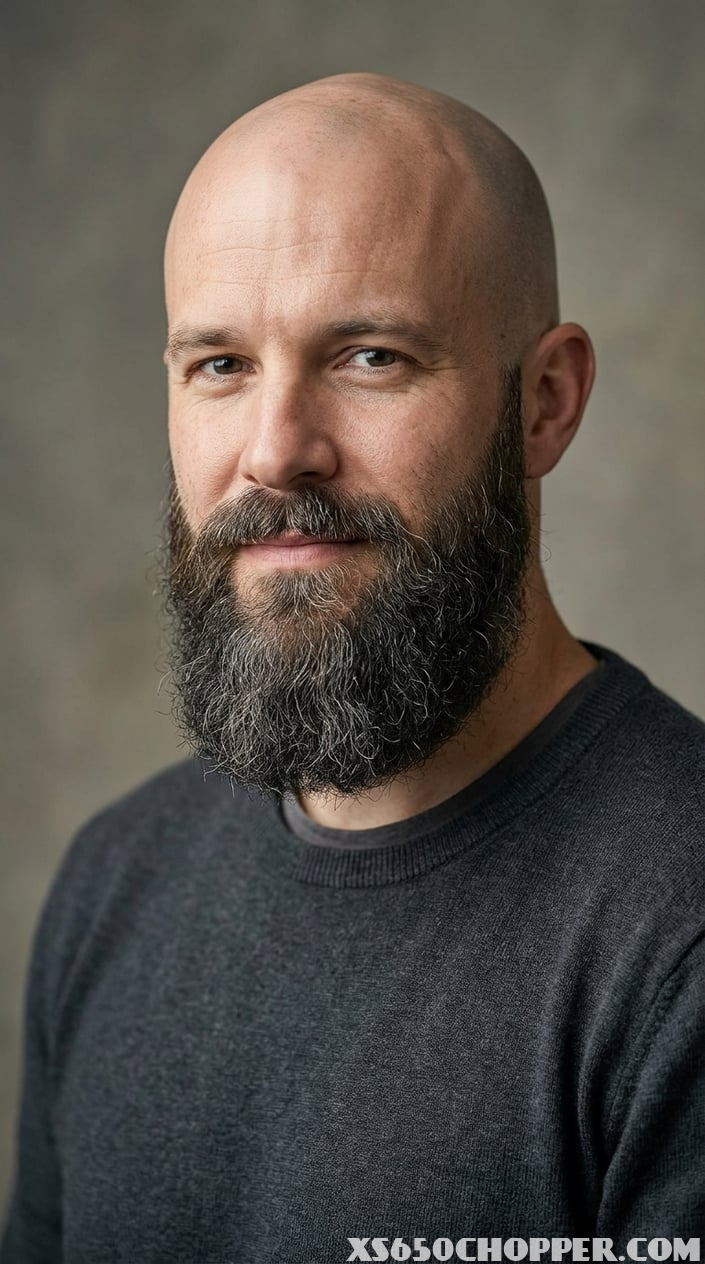
A shaved head with a long full beard puts the focus on the beard’s length and shape. With no hair above to compete for volume, your beard becomes the main framing feature.
Keep your scalp smooth with a routine suited to your skin, and brush the beard to prevent tangles. Shape the sides and bottom so the length looks balanced with your head and jaw.
PRO TIP
Apply beard oil sparingly through the length, then use a comb to distribute it evenly.
12) French Crop with a Circle Beard

A French crop with a circle beard gives you a compact haircut and a focused shape around the mouth and chin. The short fringe adds a strong line across the forehead, while the connected mustache and goatee draw attention to the center of your face.
Keep the sides close and the fringe textured. Trim the circle beard carefully around your mouth so the outline remains even.
PRO TIP
Use a detail trimmer to maintain the beard’s connection at the corners of your mouth.
13) Afro Taper Fade with a Shaped Full Beard

An Afro taper fade with a shaped full beard gives you a rounded hair silhouette with a defined facial frame. The taper cleans up the temples and neckline while preserving the natural volume of your hair.
Ask your barber to shape the top in keeping with your curl pattern and face shape. Keep the beard’s cheek and neck edges tidy, and moisturize both your hair and beard as needed.
PRO TIP
Bring a clear reference for the taper height you want, since a low and high taper create different outlines.
14) Faux Hawk with an Anchor Beard

A faux hawk with an anchor beard combines a raised center with a pointed beard shape around your mouth and chin. The hairstyle adds direction through the top, and the beard creates a defined focal point below.
Keep the sides shorter than the center and style the top toward the middle. Shape the anchor beard with a clean mustache and a narrow chin section.
PRO TIP
Use a small amount of firm-hold product to lift the center while keeping the sides close to your head.
15) Comb-Over Fade with a Ducktail Beard
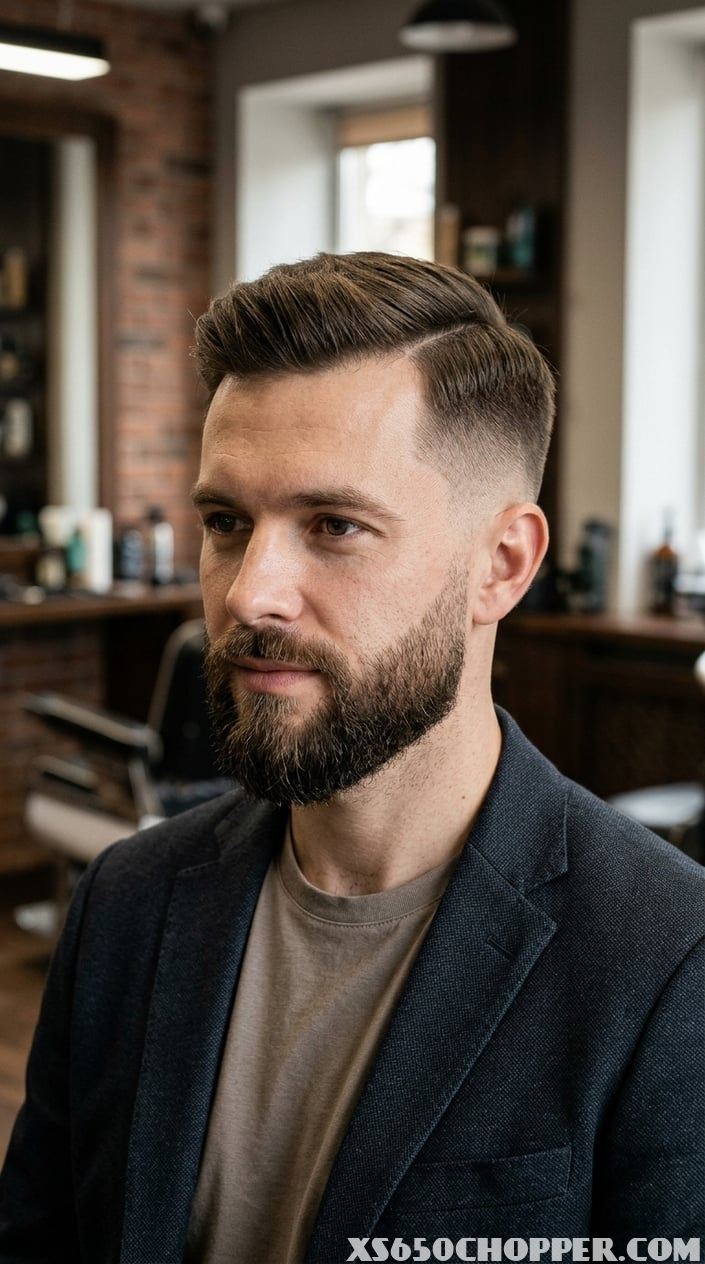
A comb-over fade with a ducktail beard pairs a neat side direction with a tapered point at the chin. The fade keeps your haircut crisp, while the beard adds length and structure along your jaw.
Ask for enough top length to comb across and a fade that blends into your sideburns. Shape the beard so its lower edges lead gently toward the chin.
PRO TIP
Comb the beard downward before trimming its outline so you can see its natural growth pattern.
16) Caesar Cut with a Goatee
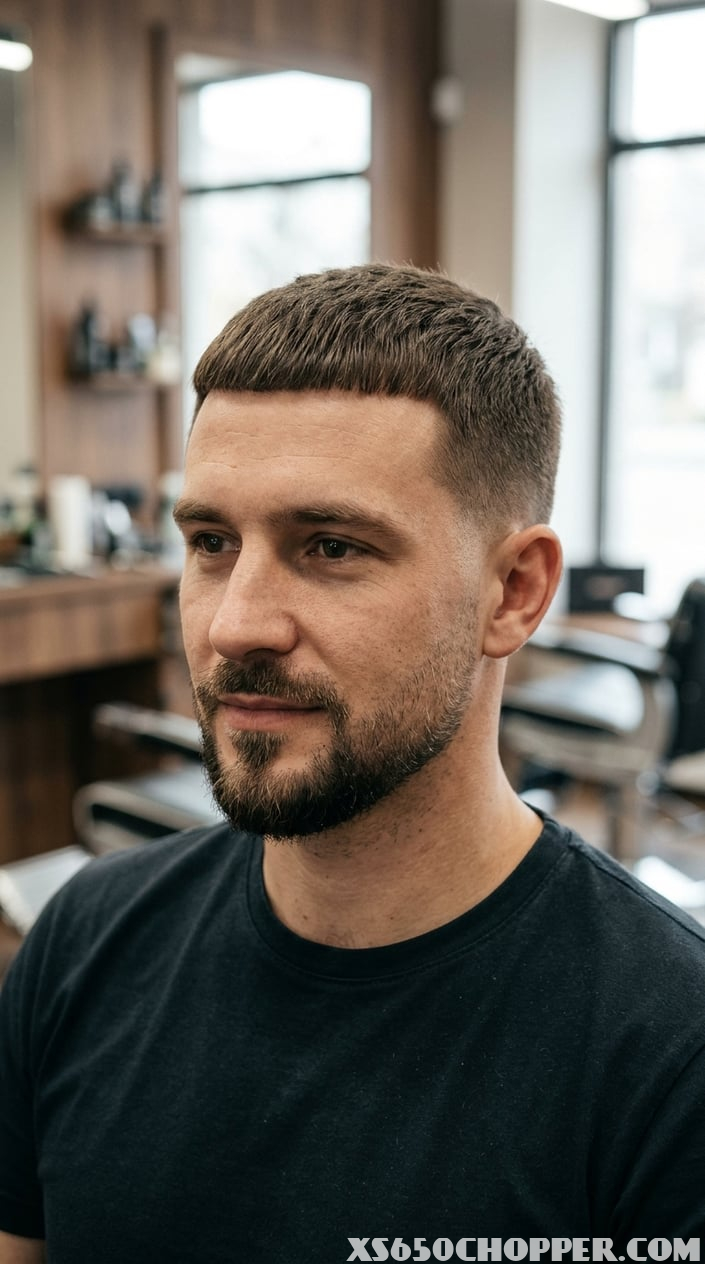
A Caesar cut with a goatee keeps your hair short and directs attention to the center of your face. The close, forward fringe gives the haircut a compact shape, while the goatee adds definition around your mouth and chin.
Keep the fringe even and the sides tidy. Trim the goatee to follow your chin, and keep the surrounding cheeks clean for a distinct outline.
PRO TIP
Ask for a fringe length that works with your natural hairline and sits comfortably above your eyebrows.
17) High-and-Tight with a Van Dyke Beard
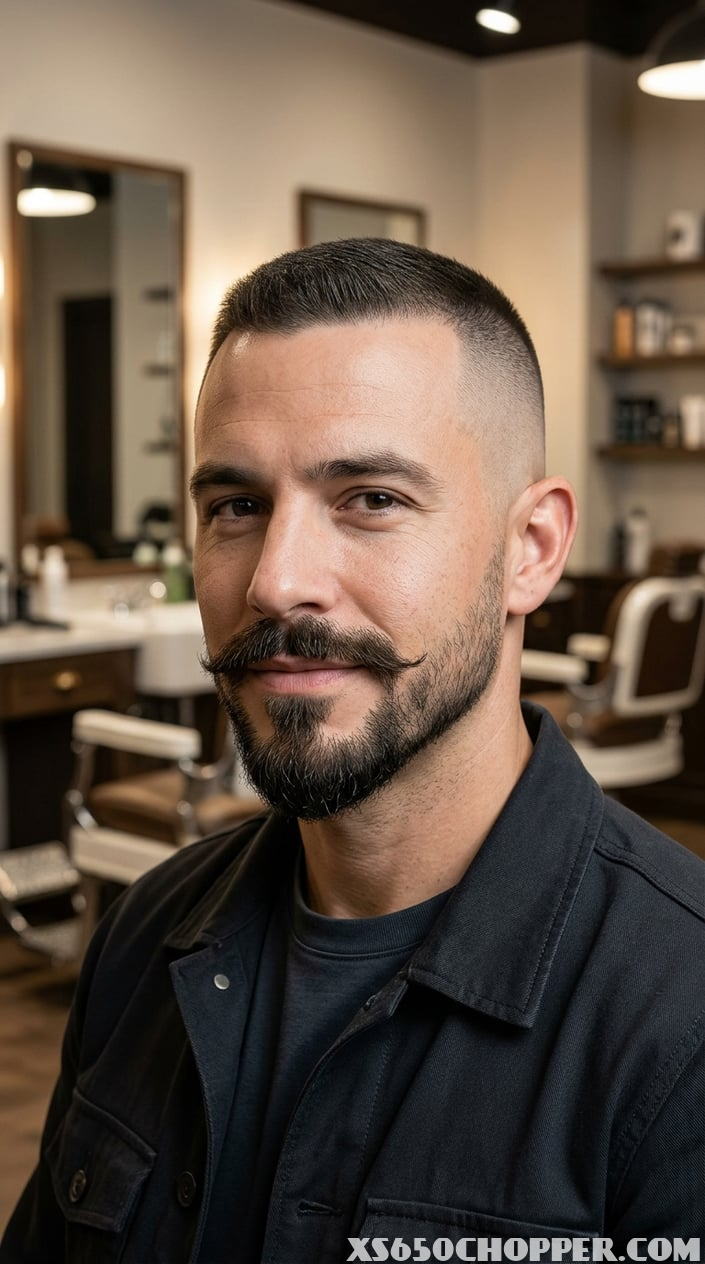
A high-and-tight with a Van Dyke beard pairs close sides with a separate mustache and pointed chin beard. The haircut’s compact shape gives the facial hair room to stand out.
Keep the sides very short and the top neat. Define the Van Dyke’s mustache and chin section with clean edges, preserving the gap between them if you prefer a classic outline.
PRO TIP
Use a mirror at face level when shaping the beard so you can check that both sides look even.
18) Modern Mullet with an Extended Goatee
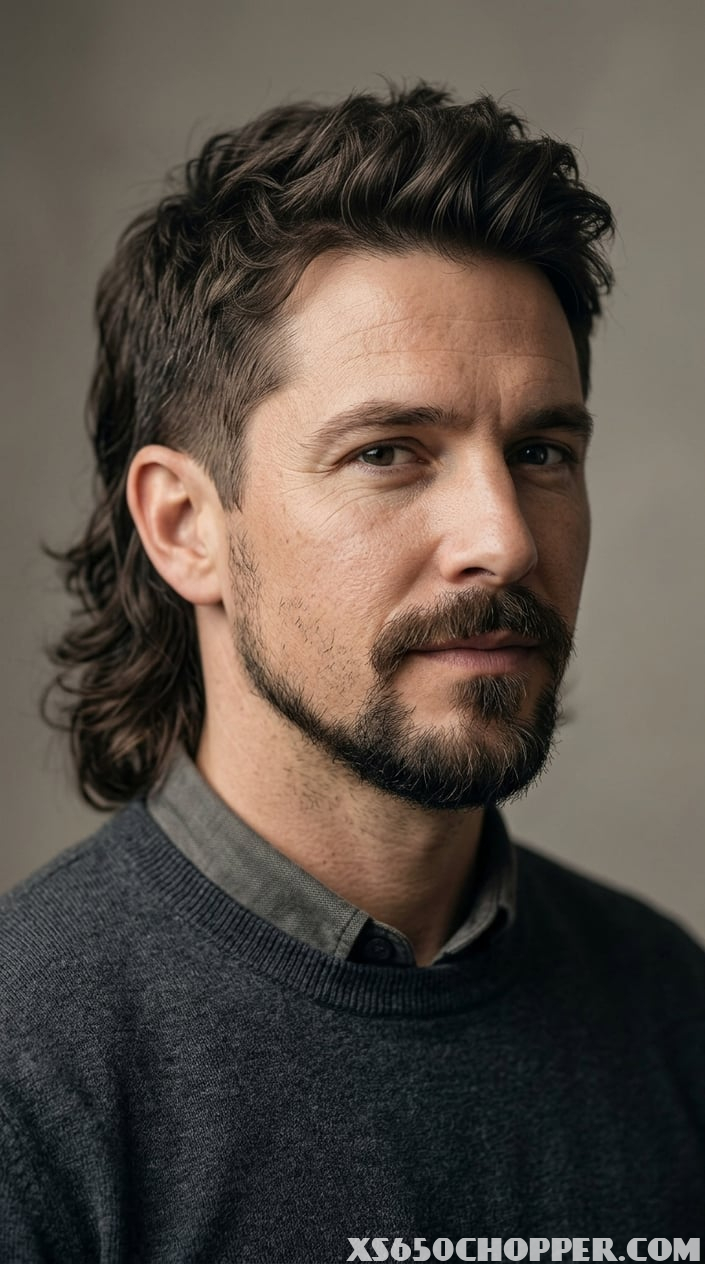
A modern mullet with an extended goatee combines length at the back with a narrow beard line that emphasizes your chin. The haircut’s changing lengths give you movement, while the goatee keeps the face framing more focused.
Keep the sides blended into the longer back and ask your barber to tailor the layers to your hair texture. Trim the goatee along the chin and jaw, maintaining a clear line through the mustache.
PRO TIP
Show your barber the back and side profiles you want, since the mullet’s outline changes from each angle.
19) Tapered Ivy League with a Balbo Beard
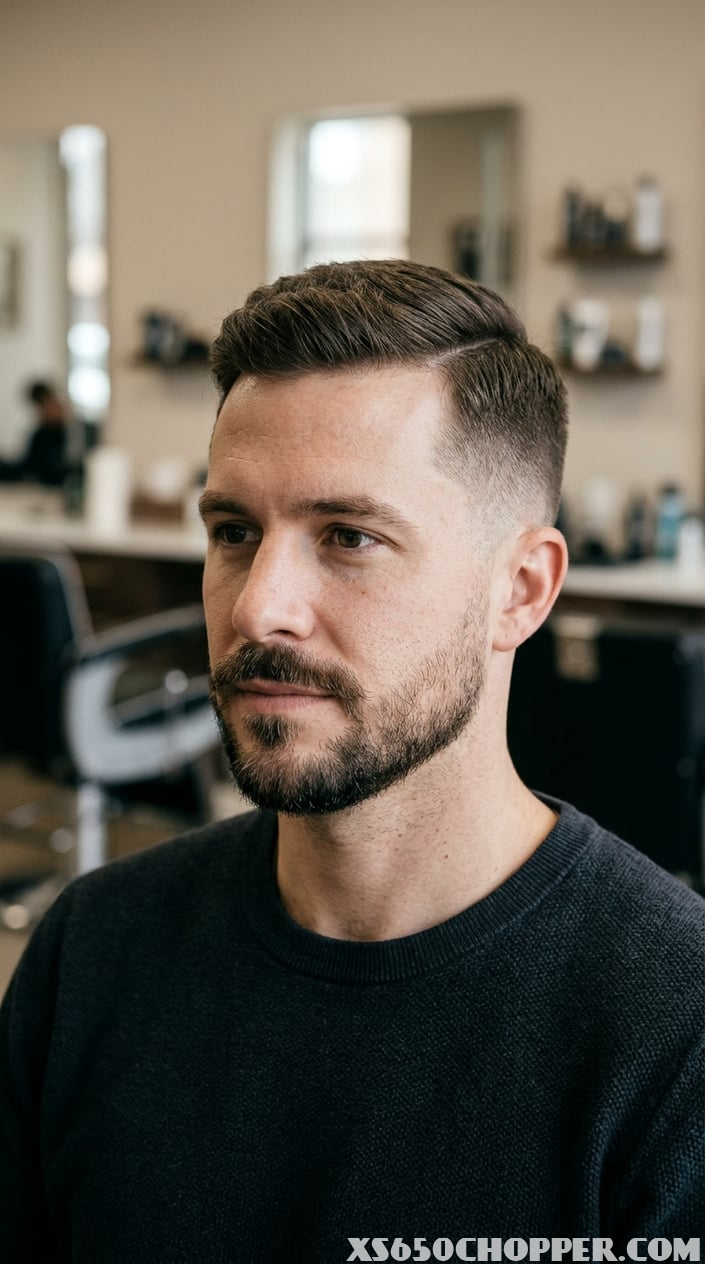
A tapered Ivy League with a Balbo beard gives you a polished haircut and a separated mustache-and-chin shape. The longer top can be parted or brushed up, while the taper keeps the sides refined.
Ask for enough length to style the top in either direction. Keep the Balbo’s cheek area clean and define its mustache and chin section with a precise trimmer.
PRO TIP
Use a comb to set your part while your hair is damp, then finish with a light styling product.
How to Match a Haircut with Your Beard

Match the visual weight of your hair with the fullness and outline of your beard. A voluminous pompadour pairs well with a shaped full beard, while a close buzz cut works with stubble or a compact beard.
How should hair and beard volume balance?
Keep strong volume in one area and use the other to define your overall shape. If your hair is long or full, a tidy beard outline helps keep the face visible; if your hair is closely cropped, a fuller beard adds weight around the jaw.
Which beard shapes complement each haircut?
Use the haircut’s lines as a guide: fades pair naturally with clean cheek and neck edges, while textured or longer styles work with softer beard outlines. Pointed shapes such as a ducktail or anchor beard add direction to a rounded silhouette.
Choosing by Face Shape and Upkeep

Choose a haircut and beard that add the proportions you want, then match the upkeep to the time you have for grooming. Height on top can lengthen your appearance, while beard fullness along the jaw can add width.
Which combinations suit different face shapes?
For a round face, try height on top with a shorter beard at the sides, such as a quiff with stubble. For a longer face, a crew cut with a fuller, shorter beard adds balance; for a square jaw, a side part with a softly shaped beard keeps the edges defined without making the outline too severe.
How much daily grooming will each look need?
Buzz cuts with stubble need little styling, though you’ll still need to maintain the hair length and beard edges. Quiffs, pompadours, curls, and longer styles need more daily shaping; full or long beards also benefit from brushing and regular trimming to keep their outline controlled.