Braids give you a sharp way to control texture, add visual structure, and reduce daily styling time. The right pattern can frame your face, complement a fade, or protect longer hair while keeping your look intentional.
For most men, stitch cornrows with a taper fade offer the strongest all-around upgrade because clean parting creates definition while the taper keeps the sides fresh. Your hair length, density, maintenance routine, and comfort with scalp tension should guide the final choice.
A skilled braider can adjust braid size, direction, part shape, and added length to suit your features. Use the ideas below to choose a style that fits your hair and the way you spend your week.
1) Stitch Cornrows With a Taper Fade
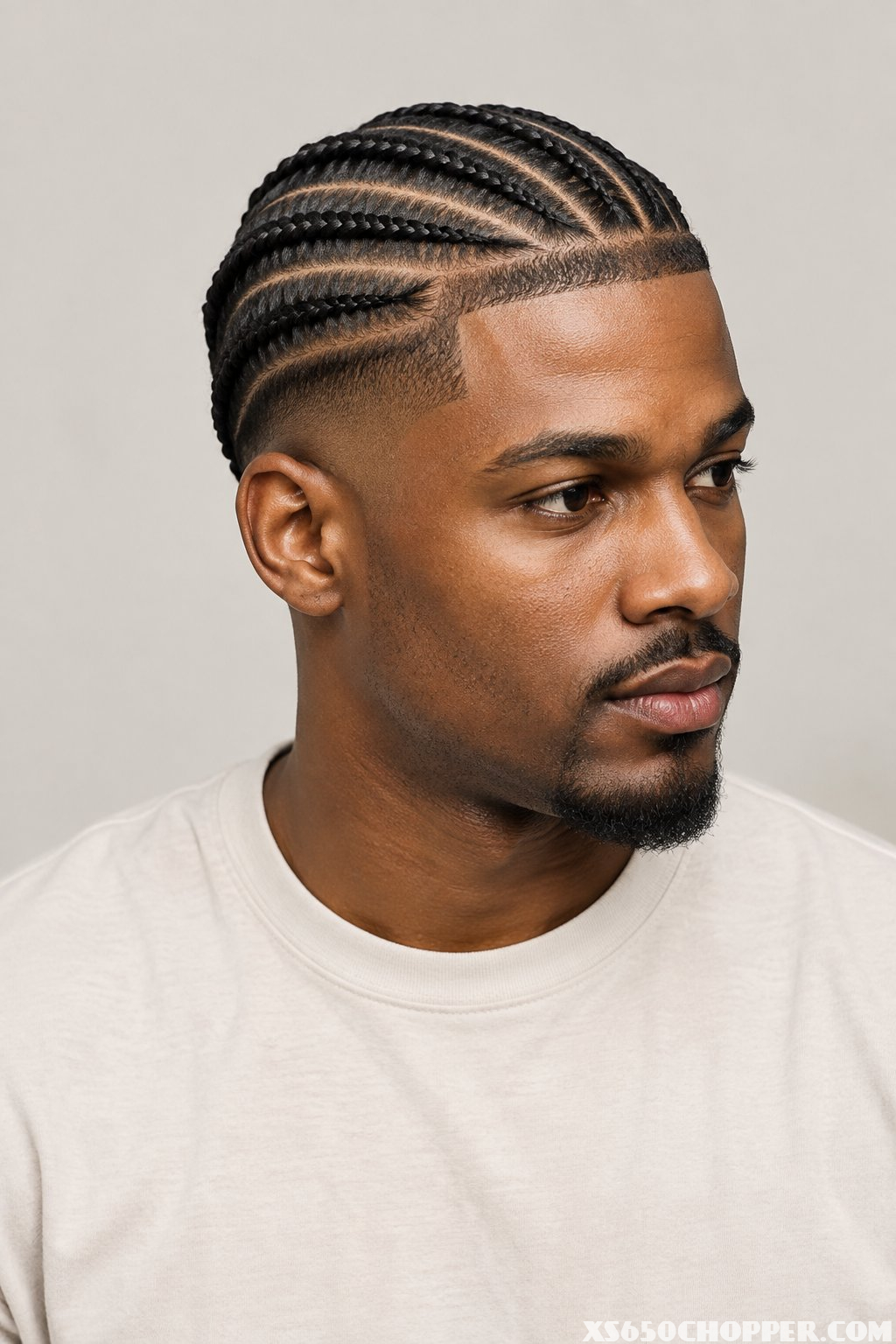
Stitch cornrows with a taper fade give you crisp scalp lines and a clean outline around the ears and neckline. The horizontal parting technique creates visible sections that make each braid look precise.
Ask your barber or braider for a low, mid, or high taper based on how much contrast you want. Medium-length hair supports neat rows while leaving enough length for a defined finish. Keep the taper edged every few weeks, and protect the braids at night with a satin durag or bonnet.
PRO TIP
Request consistent stitch spacing and light tension around the hairline. Tight braids can cause soreness and stress fragile edges.
2) Knotless Box Braids
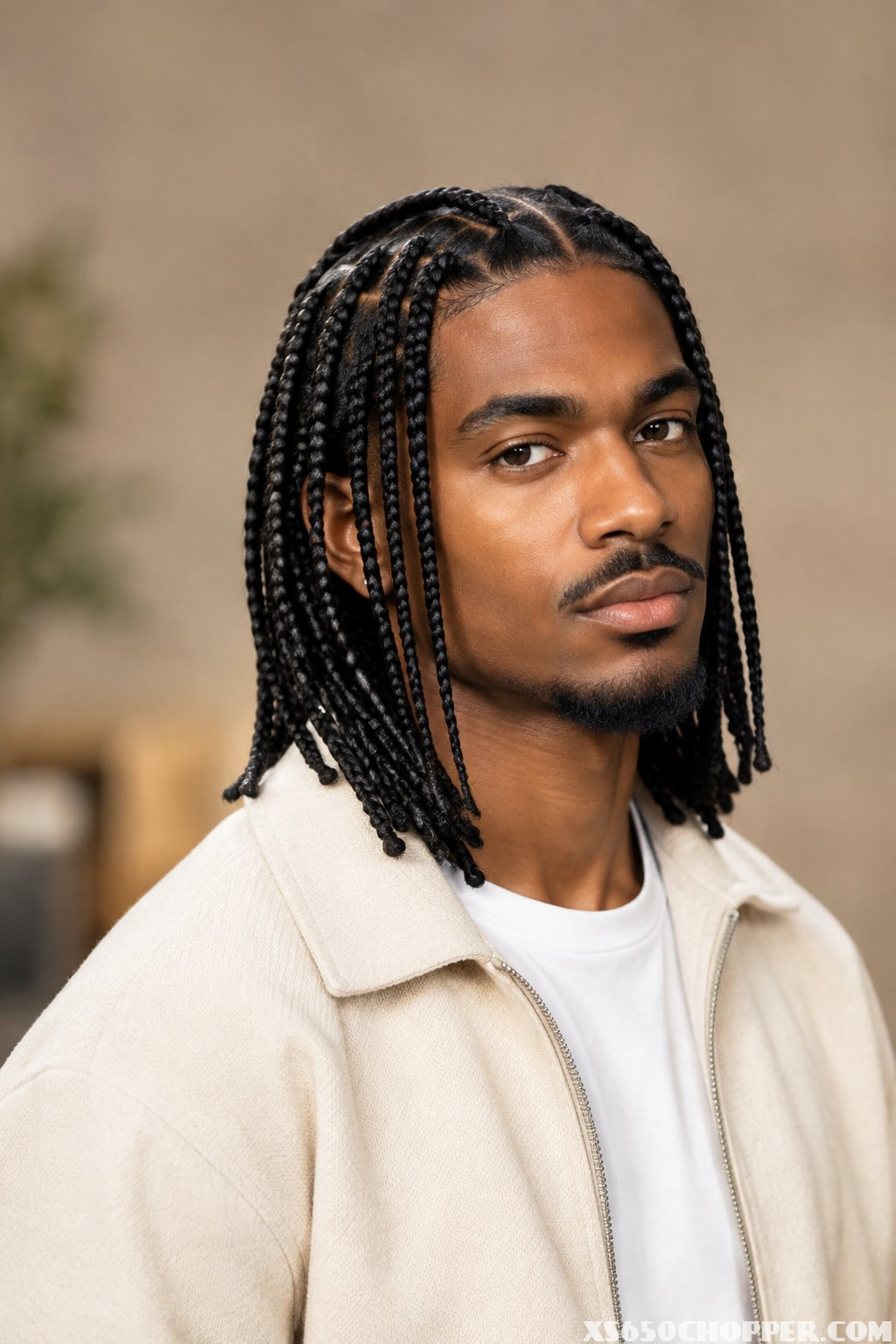
Knotless box braids start with your natural hair and add extension hair gradually, creating a flatter base with less bulk at the scalp. The result moves naturally and works well with short, medium, or shoulder-length finishes.
Choose larger parts for shorter appointment times and a bold shape. Smaller parts create more movement and styling options, though they require longer installation and more careful maintenance. Keep the parting clean by wrapping your hair at night and limiting heavy products along the roots.
PRO TIP
Tell your braider the exact length you want before installation. Extra-long extensions add weight, which can increase scalp tension.
3) Classic Straight-Back Cornrows
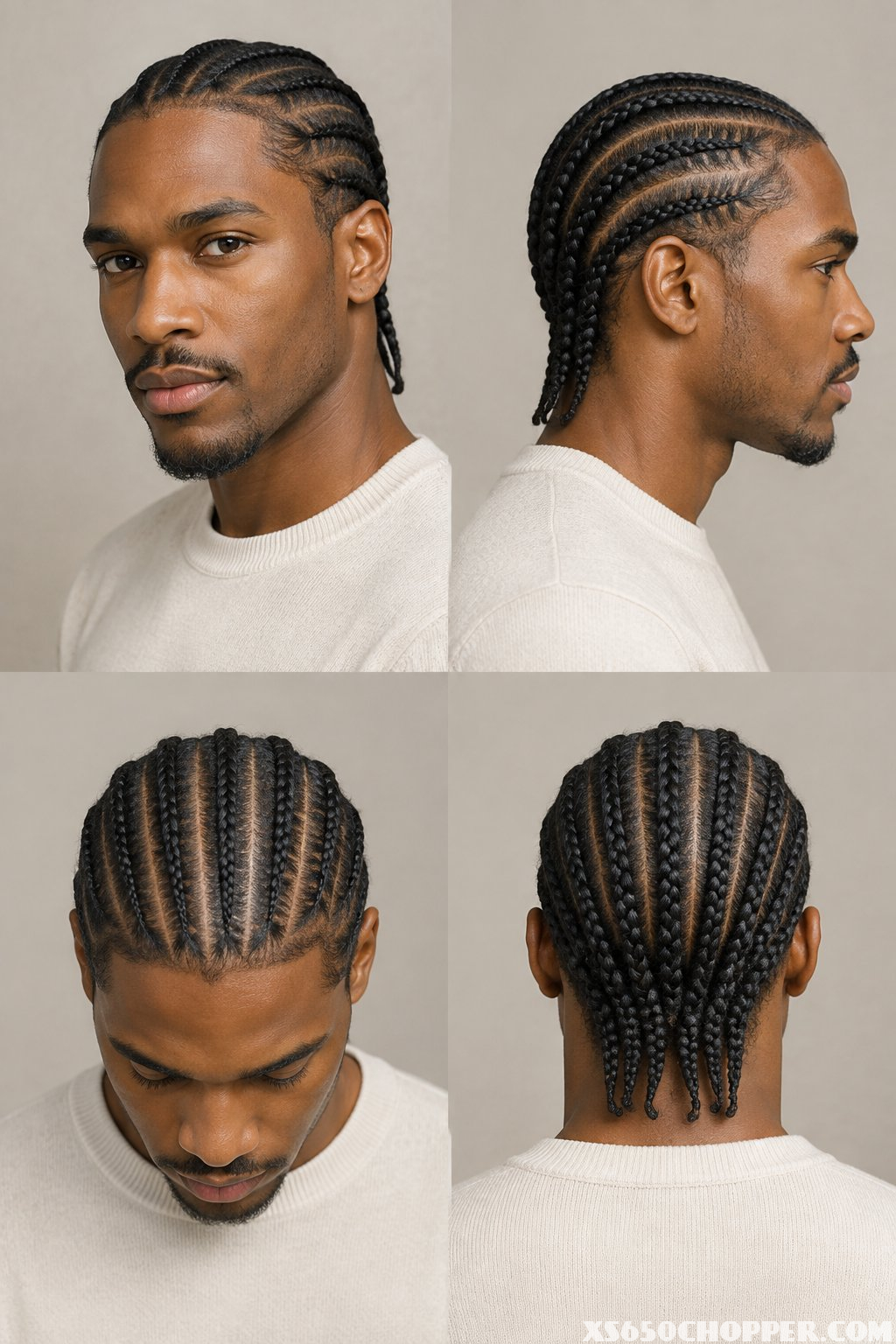
Straight-back cornrows run from your hairline toward the nape for a streamlined style with a traditional foundation. They suit active routines because the pattern stays close to the scalp and needs little daily styling.
Your braider can vary the number of rows to change the visual impact. Fewer thick cornrows look bold, while narrower rows create a more detailed finish. Clean your scalp gently with diluted shampoo applied along the parts, then dry the braids fully to prevent lingering moisture.
PRO TIP
Use a soft toothbrush with edge control for small flyaways along the front hairline. Apply a light amount so buildup does not collect around the parts.
4) Pop Smoke Braids
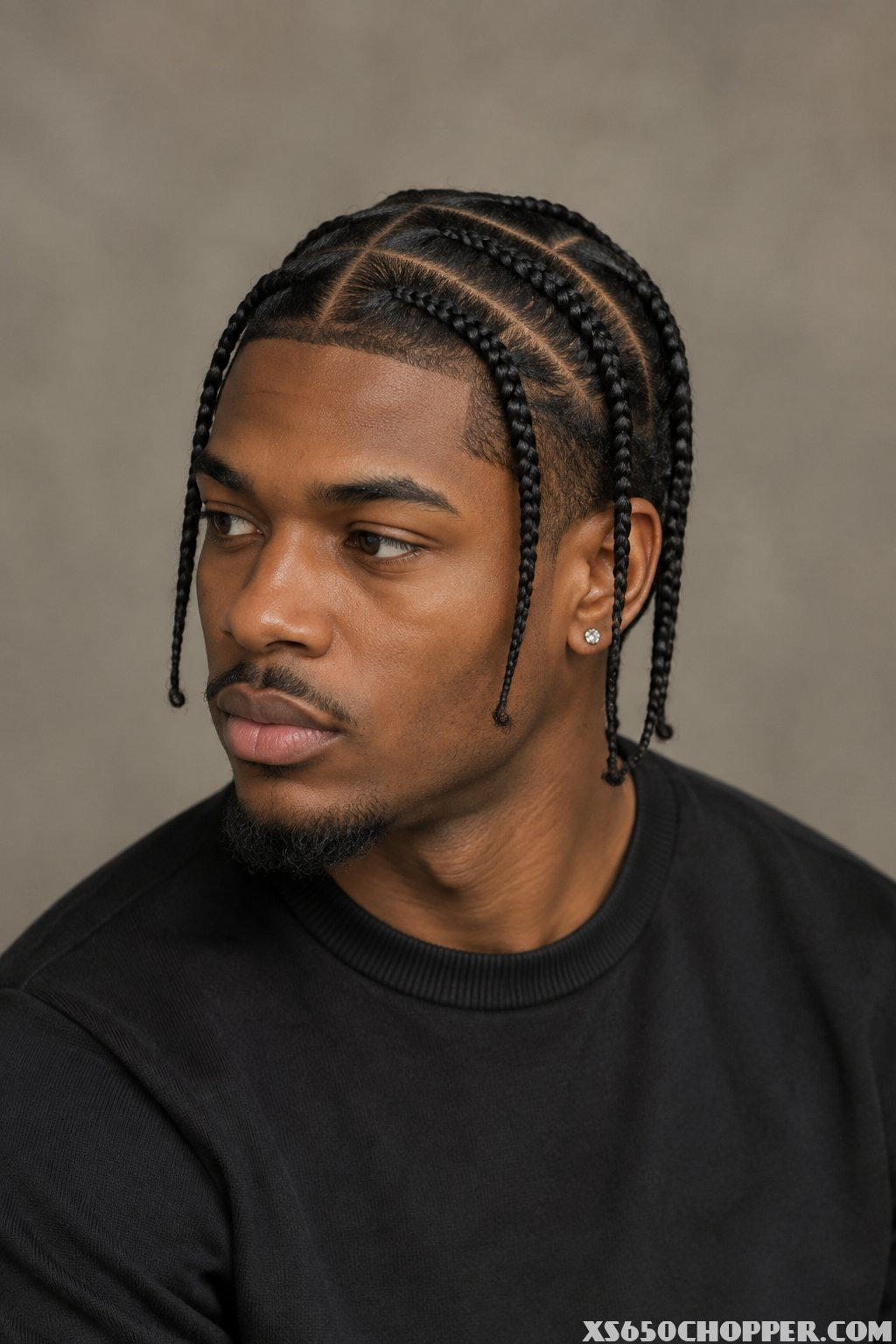
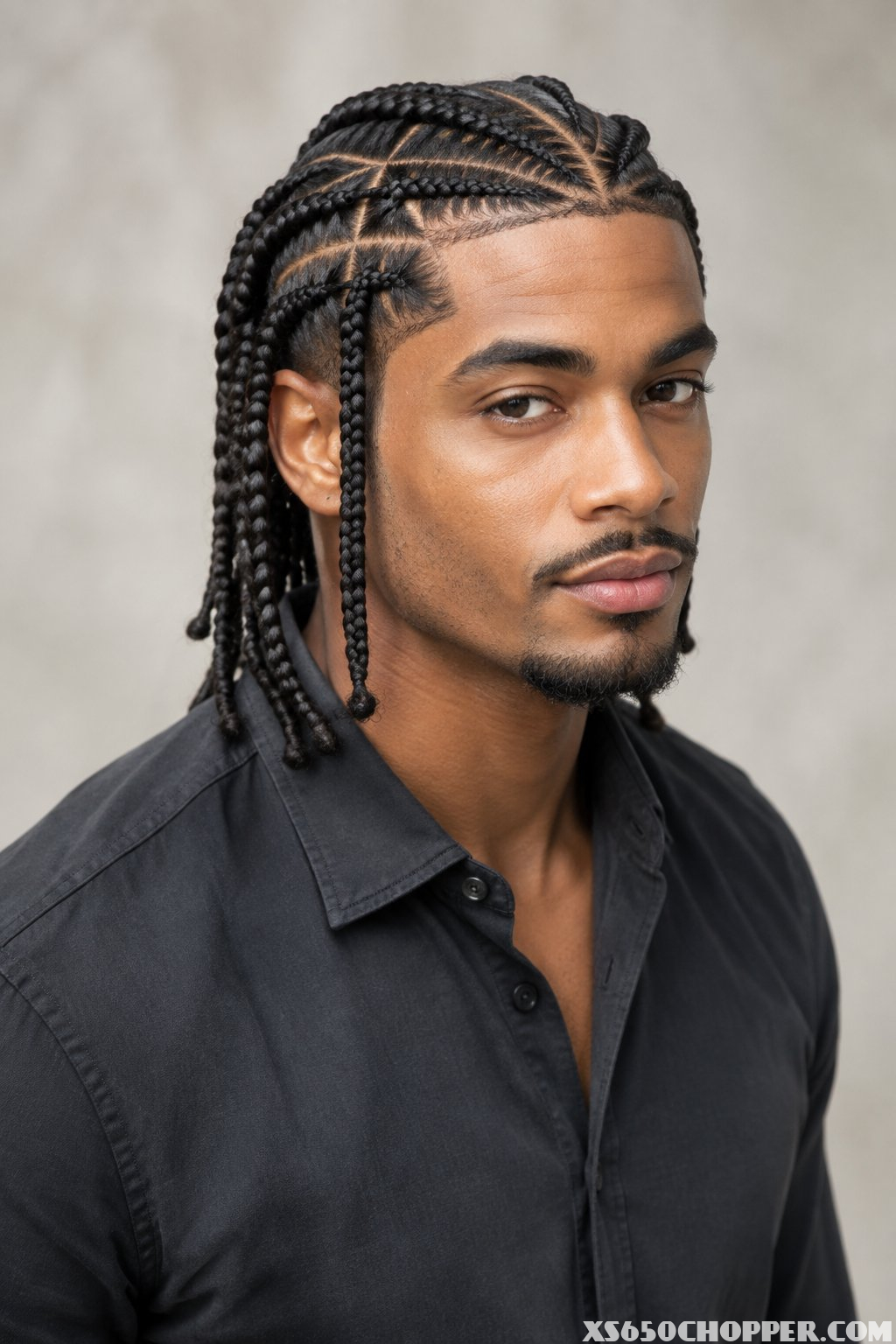
Pop Smoke braids use curved sections and hanging braids to create a recognizable, high-contrast pattern. The design adds width across the top and works well with a clean taper or faded sides.
This style needs enough length for each braid to lie smoothly and follow the curved parting. Show your braider a reference for the exact number and direction of the rows because variations can change the finished shape significantly. Keep the ends secured and avoid constant pulling when tying the braids back.
PRO TIP
Ask for balanced curves on both sides of the head. Symmetry keeps the pattern polished as the braids settle.
5) Feed-In Cornrows With Curved Parts
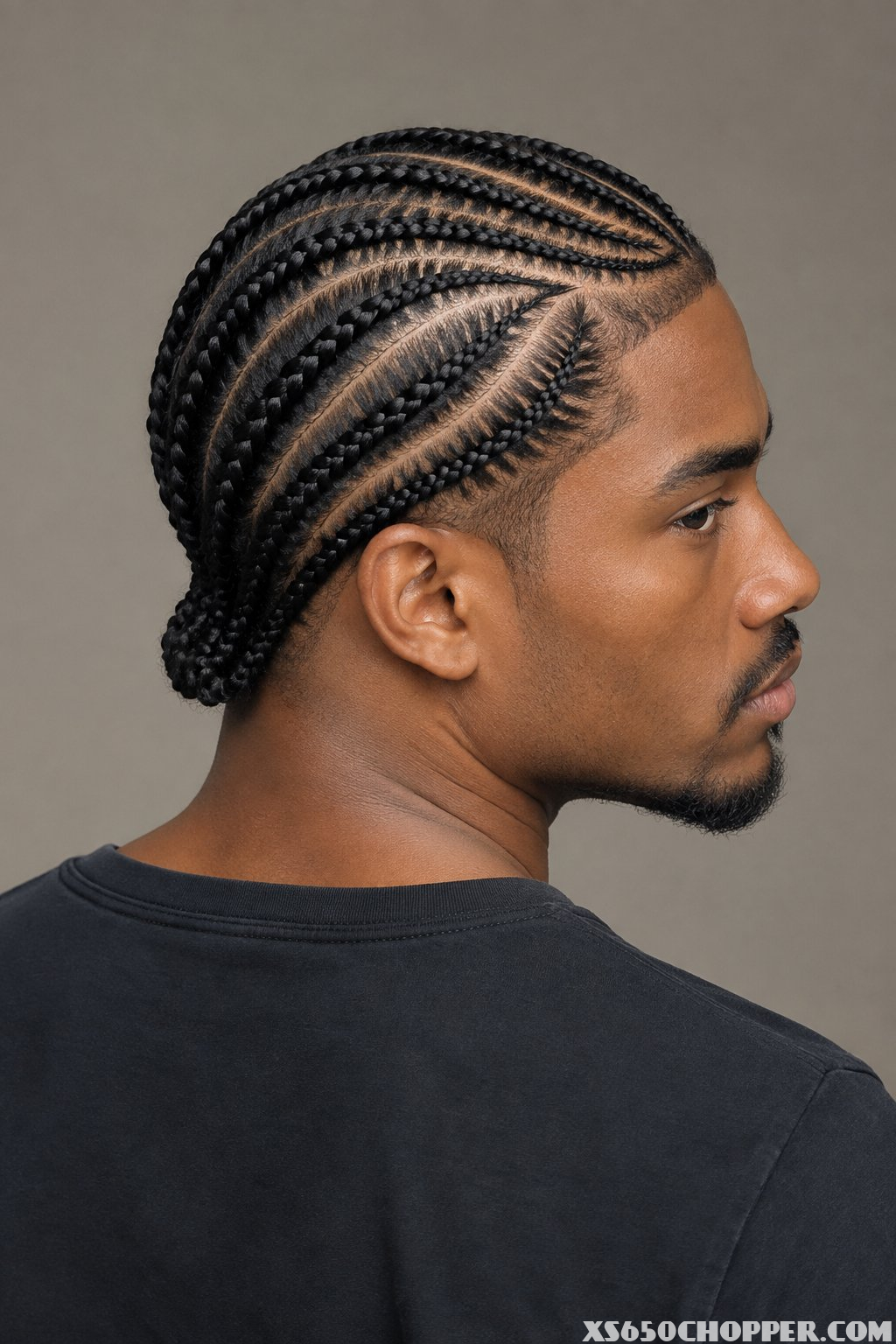
Feed-in cornrows with curved parts create a gradual braid size that looks smooth from the hairline through the lengths. Curved sections give the style more movement than straight rows and draw attention to your natural head shape.
Feed-in technique reduces the visible bulk at the front by adding hair in small increments. This makes the hairline appear cleaner and gives the braids a tapered beginning. Choose a moderate length if you want easier sleeping, washing, and drying.
PRO TIP
Keep the curved parts wide enough for your hair density. Extremely narrow sections can make installation slower and place extra stress on individual strands.
6) Box Braids With a High Fade
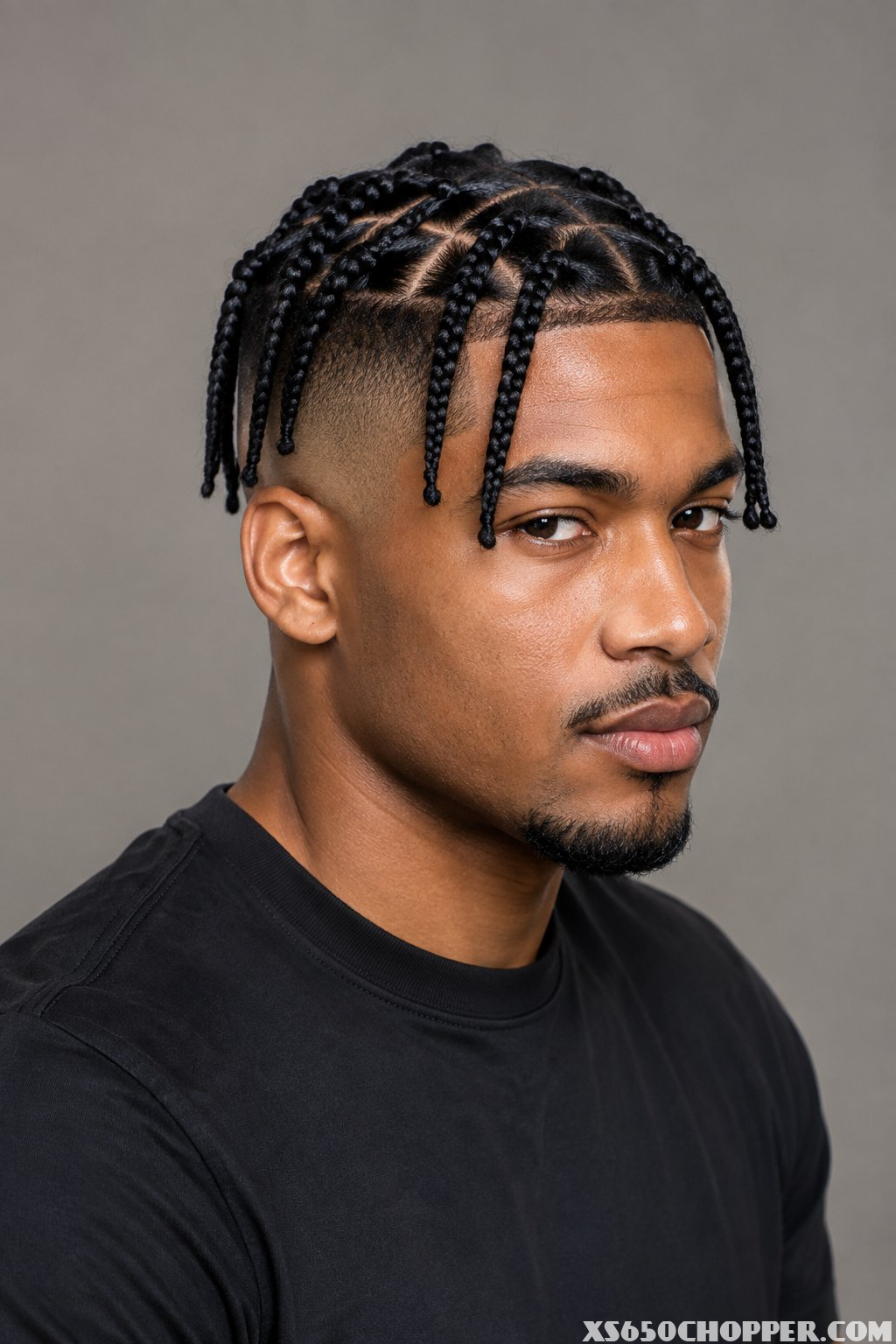
Box braids with a high fade combine individual braids on top with closely tapered sides for strong contrast. The cut exposes more of your temple and sides, so the top becomes the main focal point.
Large box sections create a substantial shape and reduce daily upkeep. Smaller sections provide more versatility for tying the braids back or changing the part. Keep your high fade sharp with regular barber visits, and moisturize the exposed scalp with a lightweight product.
PRO TIP
Match the braid length to the fade height. A high fade pairs well with medium or long top braids that create visible balance.
7) Two-Strand Twists With a Low Taper
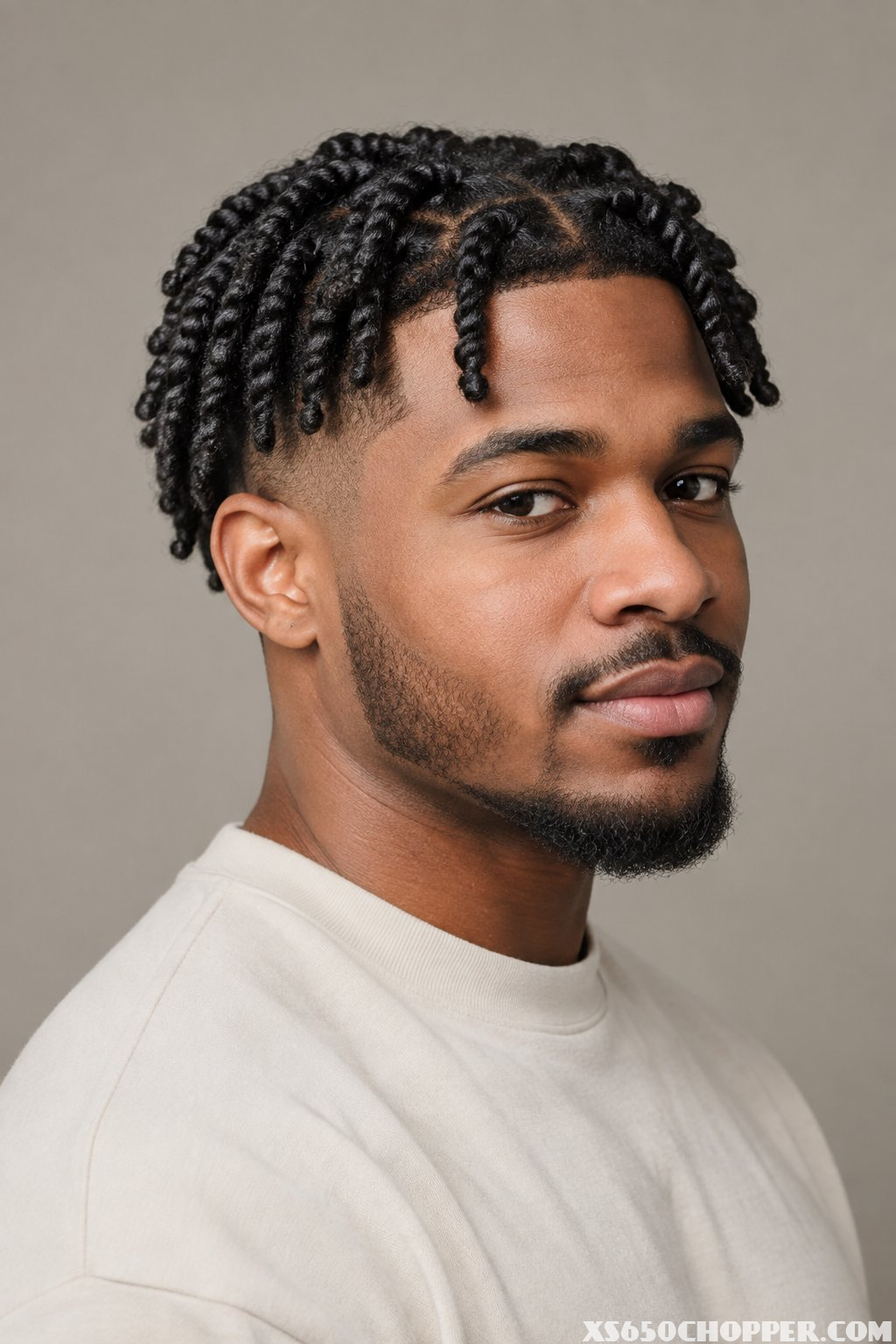
Two-strand twists with a low taper give you a softer textured finish with a clean perimeter. The twists preserve natural curl definition and require less scalp parting than many cornrow styles.
This option suits medium-length textured hair that can hold a twist without unraveling quickly. You can wear the twists loose, pin them back, or allow them to develop more texture as they age. Refresh the roots with a water-based moisturizer and avoid saturating the style before bed.
PRO TIP
Keep the twist size consistent from front to back. Uneven sections can make the style look patchy as shrinkage changes.
8) Fulani Braids With Beads
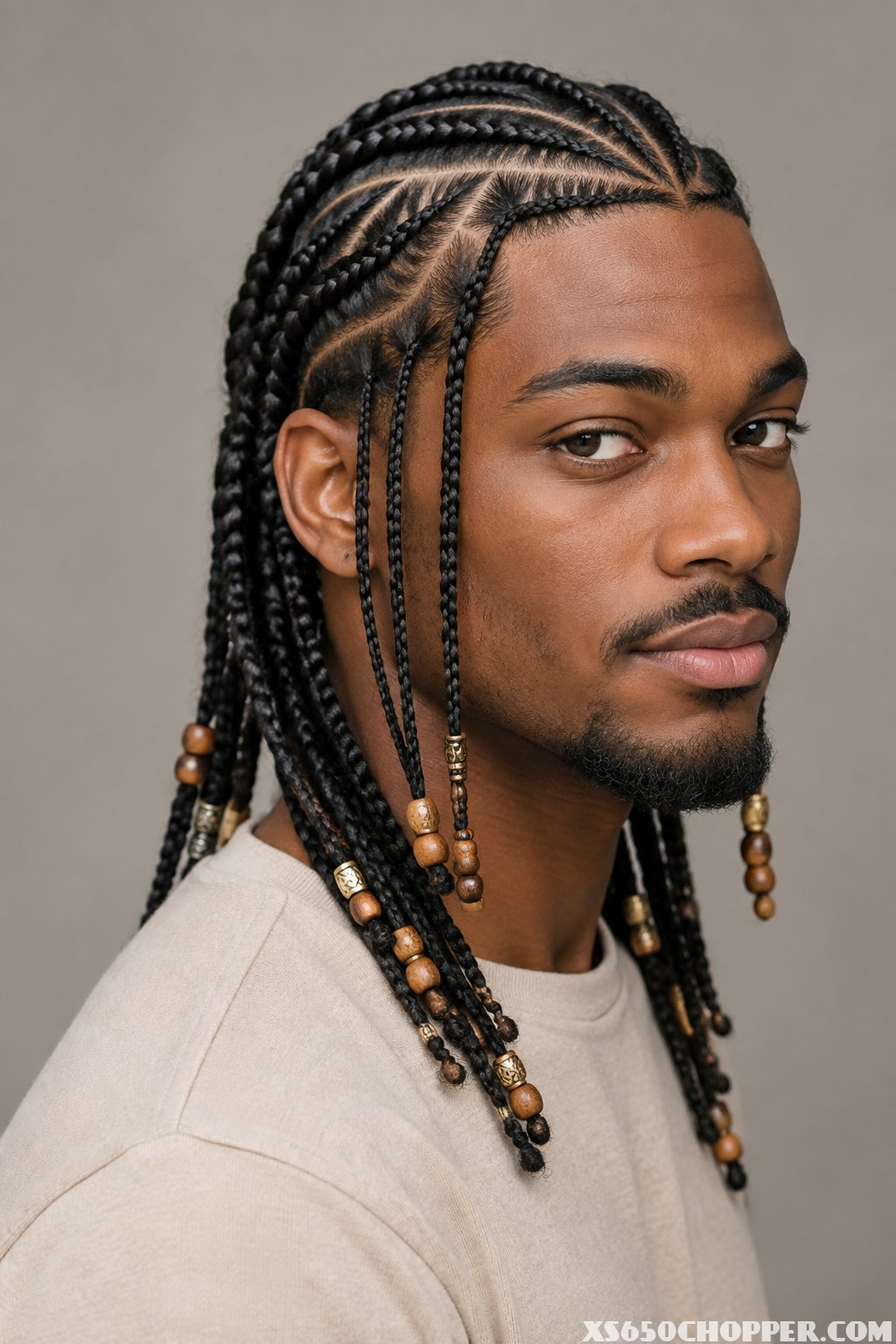
Fulani braids with beads combine cornrow direction changes, individual braids, and decorative accents. The layout gives you a distinctive style with strong cultural roots and plenty of room for personal detail.
Choose beads that feel comfortable and suit the braid length. Lightweight wooden, acrylic, or metal-look options reduce pulling at the ends. Your braider can place beads near the tips, along selected rows, or around face-framing braids for a controlled finish.
PRO TIP
Secure beads firmly without crushing the braid. Excess pressure can cause fraying when you remove them.
9) Zigzag Stitch Braids
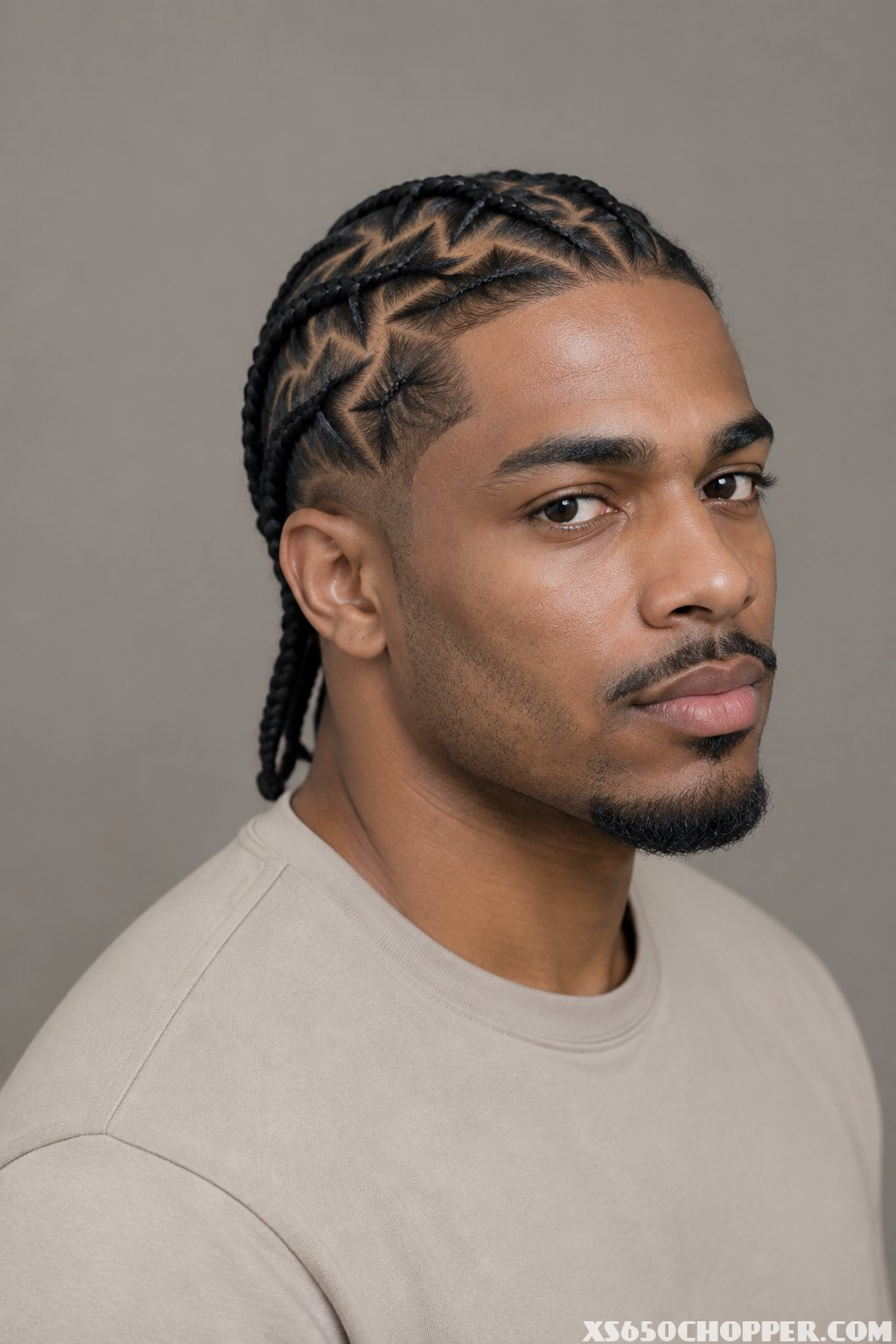
Zigzag stitch braids use angular parting to create a graphic pattern across your scalp. The design looks detailed from every angle and gives a traditional cornrow base a modern edge.
This style benefits from medium to high hair density because the zigzag sections need enough coverage to look continuous. Keep the braid thickness consistent so the pattern remains legible as your hair grows. A satin covering helps reduce fuzzing along the sharp part lines.
PRO TIP
Bring a reference showing the exact zigzag direction. Small changes in the angles create a noticeably different finished design.
10) Man Bun Cornrows
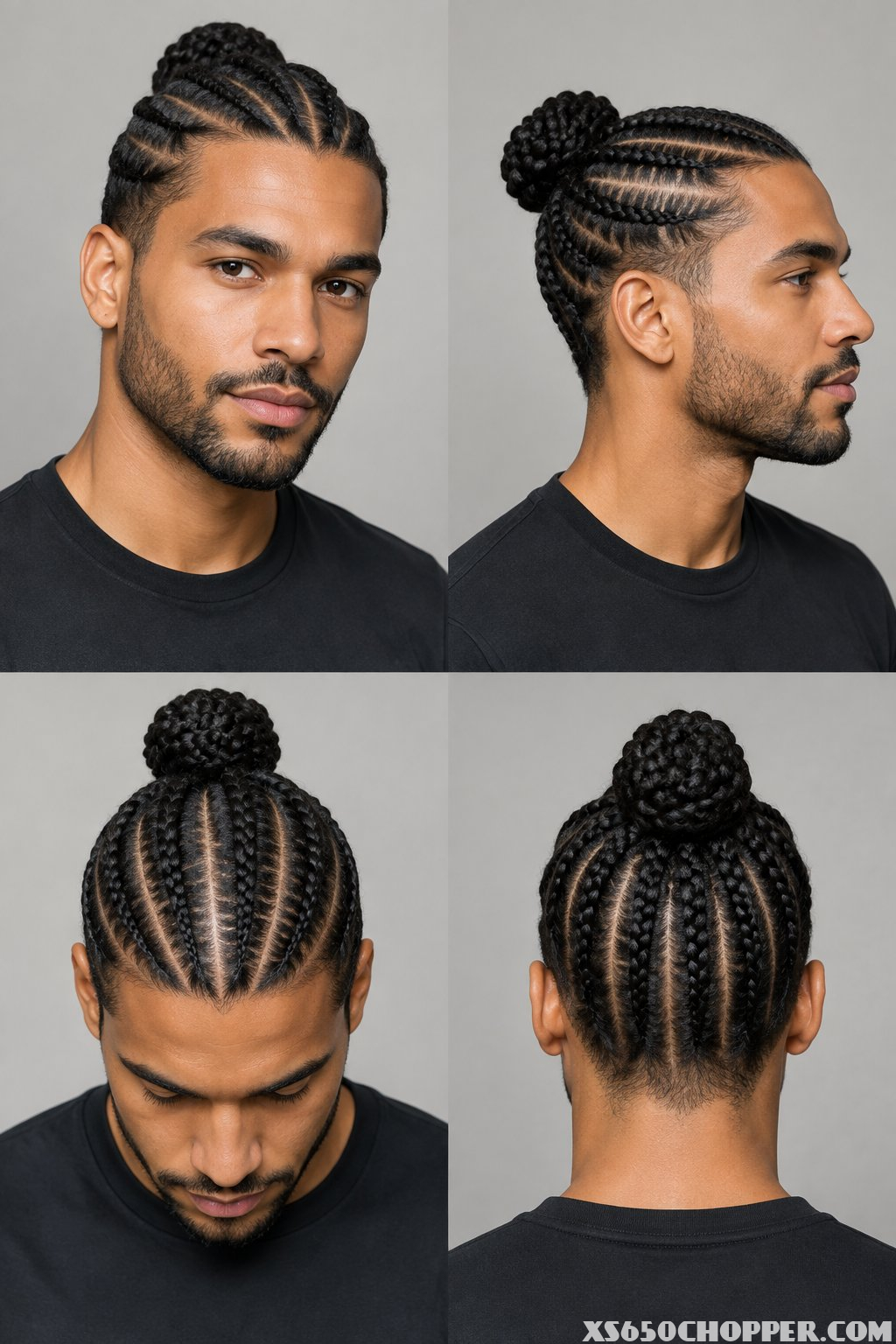
Man bun cornrows gather longer braids into a bun at the crown or back of your head. The style keeps the lengths controlled while preserving a structured pattern along the scalp.
Your hair needs enough length to reach the chosen bun position without excessive pulling. Ask for braid ends that remain flexible, then use a fabric-covered tie to secure them. Wear the bun at different heights during the week to distribute tension across your scalp.
PRO TIP
Keep the bun loose enough to move comfortably. A tight knot can create soreness around the crown and hairline.
11) Four Large Boxer Braids
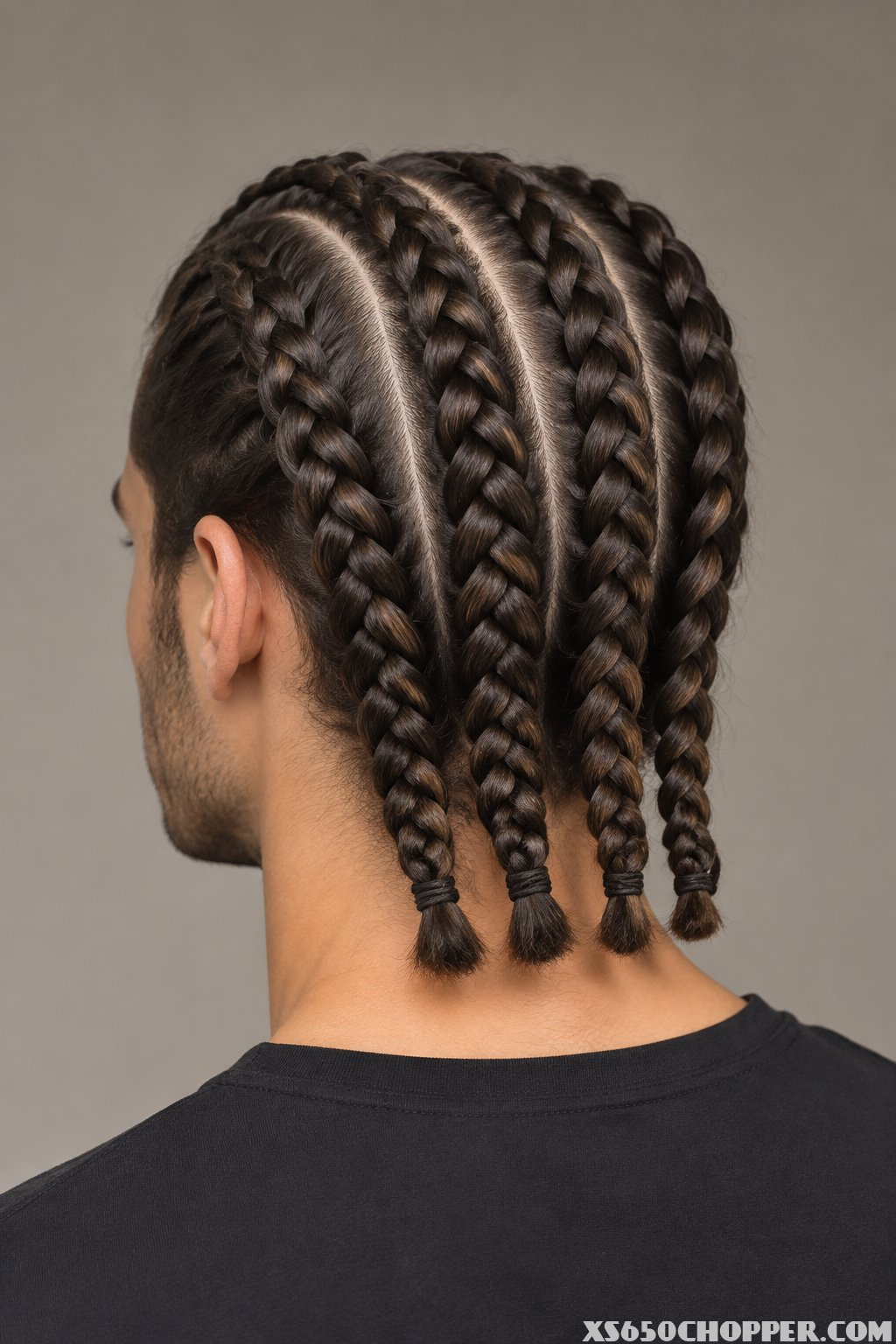
Four large boxer braids divide your hair into broad sections for a bold style with a fast, uncomplicated silhouette. The rows can run straight back or follow a slight curve toward the nape.
This design works well when you want fewer braids and an athletic finish. Sufficient length helps each braid stay secure, especially around the ends. Apply a small amount of styling cream to smooth loose strands before braiding.
PRO TIP
Ask for even section widths from the forehead to the nape. Balanced parts prevent one braid from looking heavier than the others.
12) Triangle-Part Box Braids
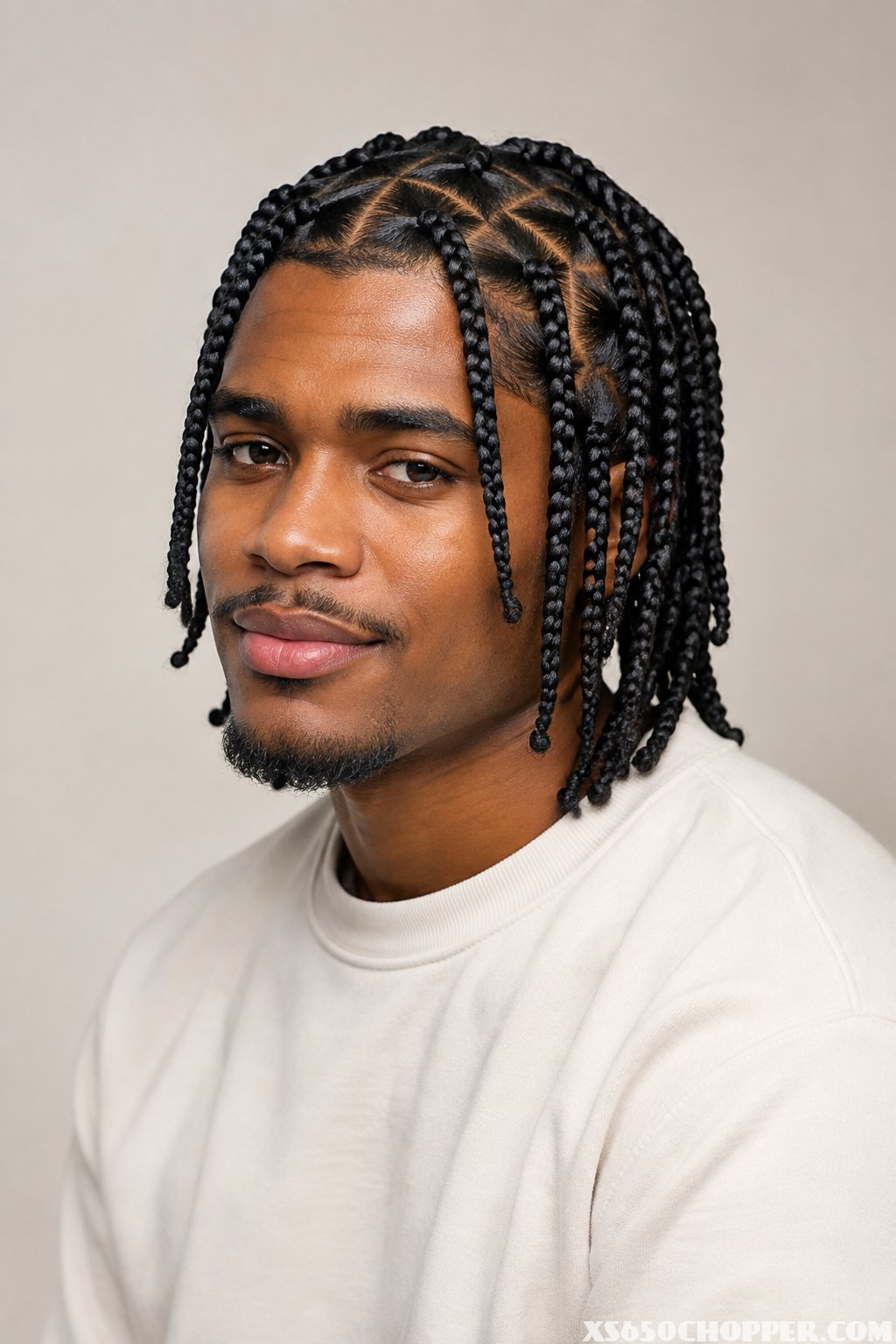
Triangle-part box braids replace square sections with geometric points that make the scalp pattern stand out. The shape adds visual interest even when you choose a simple braid length.
The parting requires careful layout before braiding begins. Medium or large triangles suit fuller hair and create a clear design, while smaller triangles produce a denser finish. Keep the roots moisturized with a light scalp oil and avoid scratching between the sections.
PRO TIP
Have your braider map the triangle pattern before adding extensions. Early adjustments are easier before the braid weight is installed.
13) French Braids With an Undercut
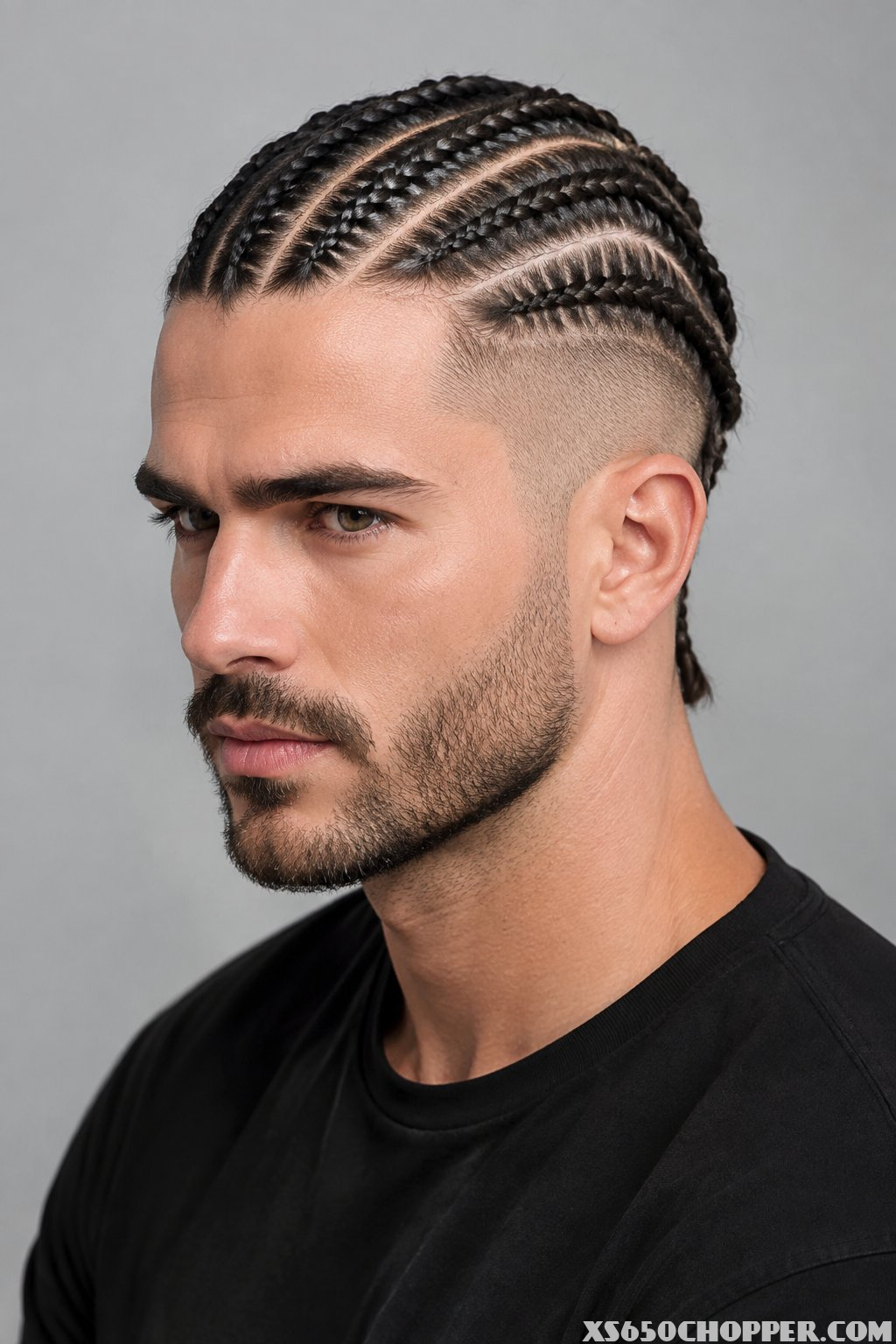
French braids with an undercut keep the sides closely shaved while the top hair is woven backward from the forehead. The contrast gives you a clean silhouette with a defined braided center.
This style suits straight, wavy, or textured hair with enough top length to maintain a secure weave. You can use two larger braids for a simple look or several narrower braids for added detail. Keep the undercut aligned with regular trims around the sides and neckline.
PRO TIP
Use a light styling cream before braiding the top. It improves grip while keeping the finished braids flexible.
14) Half-Up Box Braids
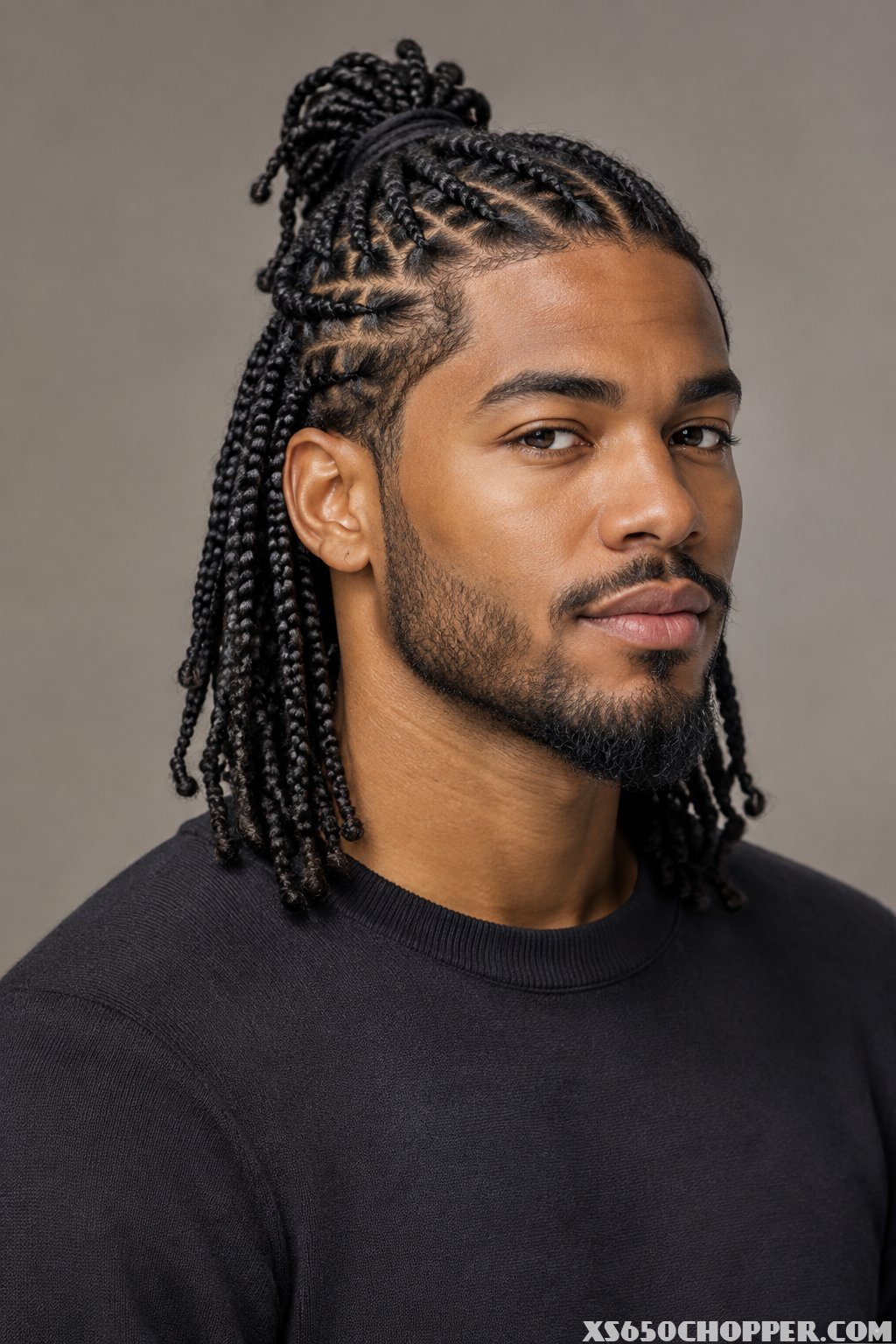
Half-up box braids keep the front and crown secured while the remaining braids hang freely. You get the convenience of a pulled-back style with movement through the lower lengths.
This arrangement works especially well with medium or long box braids. Use a soft tie or claw-style accessory that does not compress the roots. Change the placement occasionally to prevent repeated tension in one area.
PRO TIP
Gather the braids below the crown for a relaxed profile. Pulling from the hairline can make the front feel tight after several hours.
15) Micro Braids With a Temple Fade
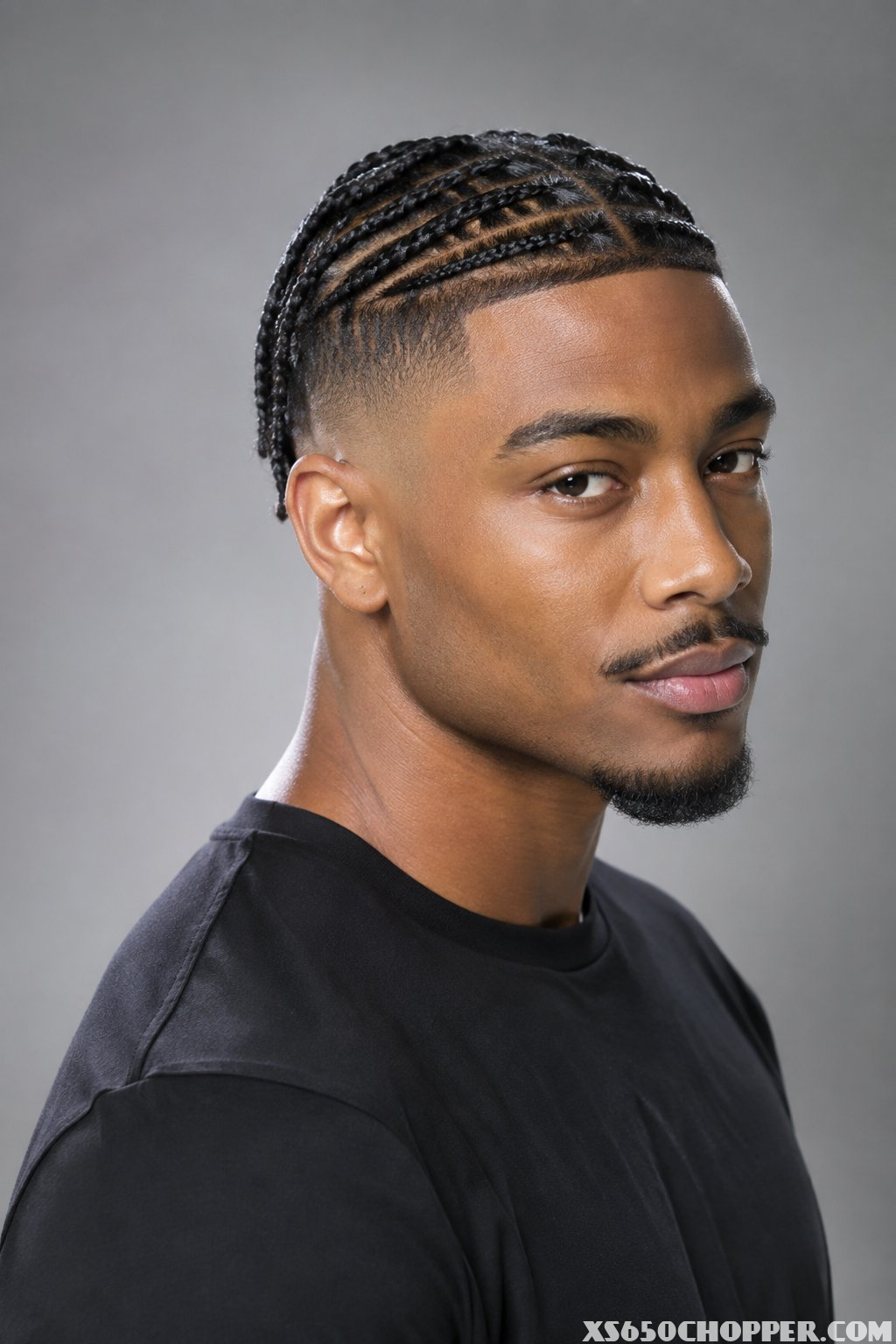
Micro braids with a temple fade create fine, detailed texture on top while the temples receive a clean taper. The small braid size gives you flexibility for loose wear, ponytails, or layered styling.
Micro braids require patience during installation and careful handling during removal. They work best with sufficient length and healthy strands that can tolerate many small sections. Keep the style light with minimal product at the roots, and cover it at night to reduce friction.
PRO TIP
Choose a professional who regularly handles small braids. Precise parting and controlled tension protect your edges and improve the style’s longevity.
How to Choose the Right Braids for Your Hair
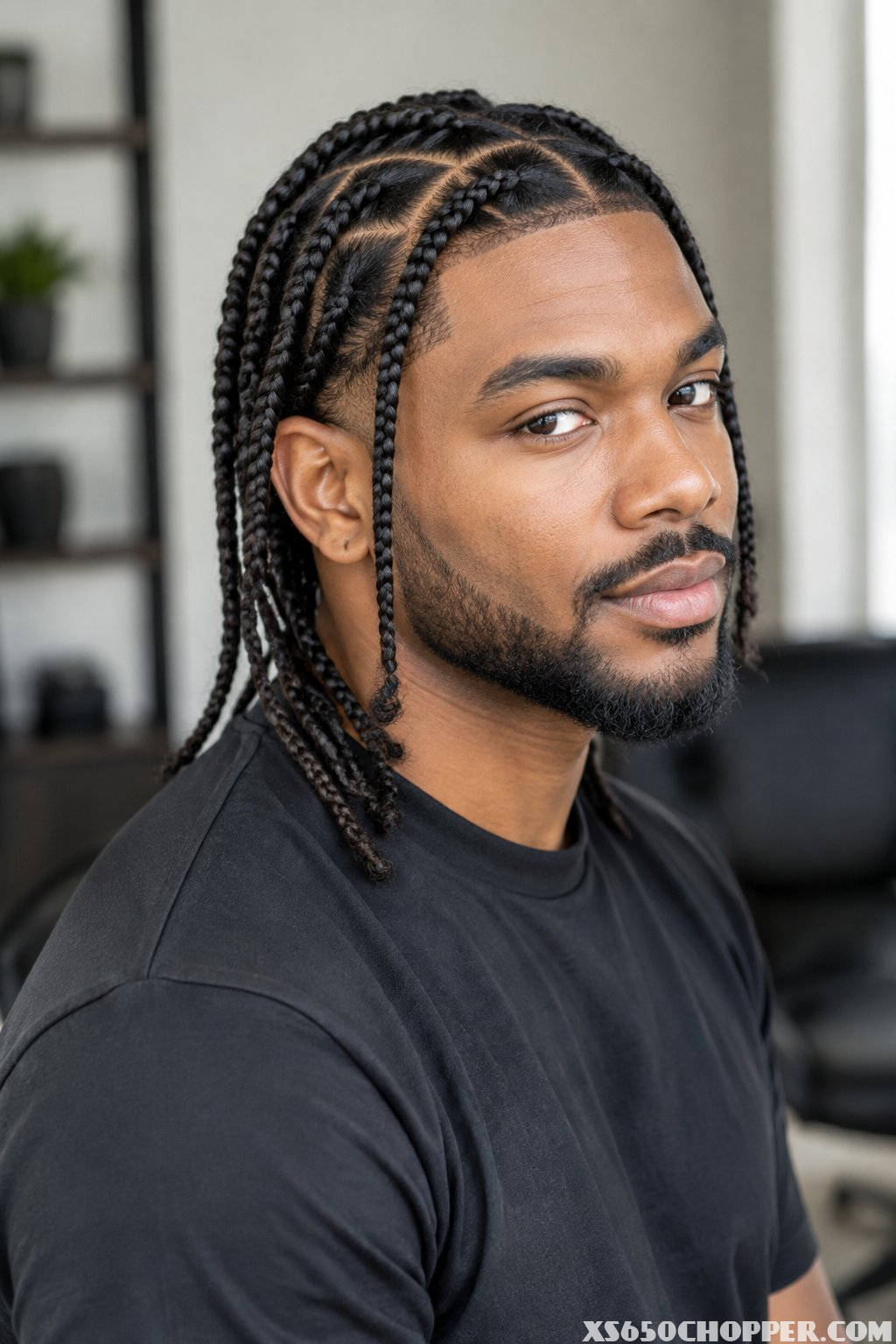
What Hair Length and Density Do You Need?
Your hair needs enough length for the braid to grip securely, with the exact requirement changing by style and texture. Shorter hair suits tight cornrows, French braids, and smaller feed-in designs, while longer hair supports box braids, man buns, and hanging styles.
Hair density also affects the finished appearance. Fuller hair can support larger sections and bold patterns; finer density often looks cleaner with lighter extensions and moderate braid sizes. Ask your braider to assess your hairline, crown, and areas of previous thinning before installation.
Which Braid Style Fits Your Daily Routine?
Choose cornrows or large boxer braids when you want a close-fitting style with minimal morning work. Box braids and twists provide more styling flexibility, while micro braids demand more time during installation and removal.
Your work setting, exercise routine, and sleep habits should influence braid length and weight. Shorter styles dry faster after washing and place less pull on your scalp.
Should You Add Extensions or Use Natural Hair Only?
Extensions add length, fullness, and styling options when your natural hair needs more support. Natural-hair braids feel lighter and simplify washing, though they rely on enough length and texture to stay secure.
Discuss extension weight before the appointment. Lightweight additions reduce strain, and a gradual feed-in at the hairline creates a flatter, more comfortable base.
Braid Care and Maintenance
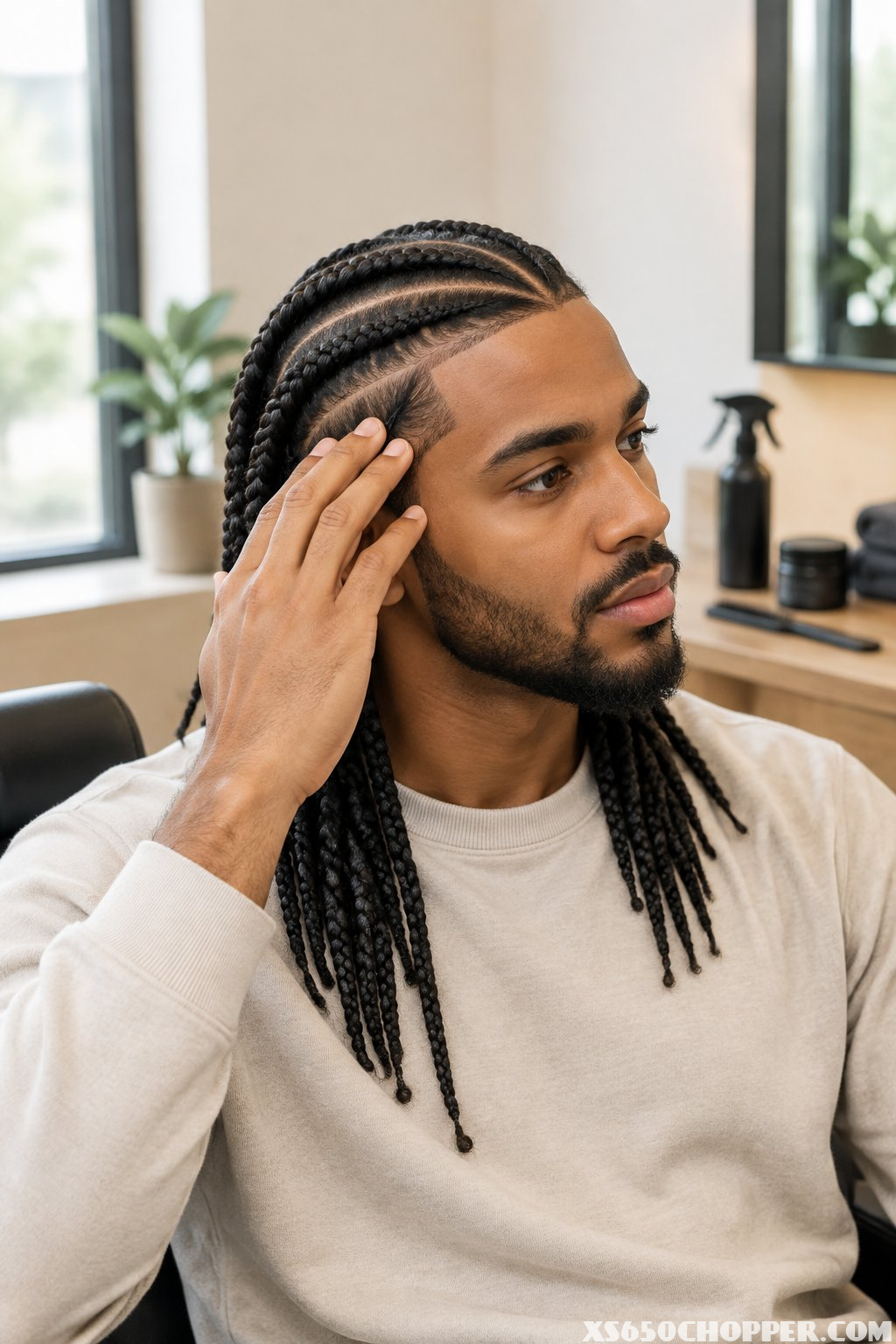
How Long Can Men Keep Braids In?
Many braid styles stay presentable for about two to six weeks, depending on growth rate, braid size, scalp care, and daily activity. Cornrows often show new growth sooner, while box braids can remain wearable longer when the roots and ends stay tidy.
Remove the style when the roots become heavily grown out, the braids begin matting, or your scalp feels persistently uncomfortable. Schedule a gentle takedown and detangle in small sections.
How Do You Wash and Moisturize Braids?
Clean your scalp with diluted shampoo every one to two weeks, adjusting the timing for sweat and product use. Apply the cleanser along the parts, massage with your fingertips, rinse thoroughly, and press water out with a towel.
Use a lightweight leave-in spray or scalp moisturizer after washing. Dry the braids completely before covering them, since trapped moisture can create odor and buildup.
What Signs Mean It Is Time to Take Braids Down?
Persistent pain, bumps, tenderness, excessive shedding, and visible thinning around the edges signal that your braids need attention. Remove added hair promptly if the style feels heavy or causes repeated pulling.
At takedown, separate each braid carefully, detangle with conditioner, and cleanse your scalp. Give your hair a short break before installing another tight or heavy style.